


ArdorComm Media Group

Monday, August 31, 2026 8:57 AM

healthcare reforms

Tamil Nadu to Launch Health Insurance Scheme for Elderly, Announces Major Healthcare Reforms

The Tamil Nadu government has announced a series of healthcare reforms, including a new health insurance scheme for senior citizens, annual free health check-ups for people aged 30 and above, and a major expansion of medical infrastructure and healthcare workforce. The announcements were made in the Tamil Nadu Assembly as the government outlined plans to modernise the State’s healthcare system and address emerging and future health challenges. The 87-year-old Tamil Nadu Public Health Act, 1939, will be replaced with a new comprehensive legislation designed to address contemporary healthcare requirements. The proposed law will also include a provision making unsupervised home births outside hospitals a punishable offence. The government also plans to establish ‘TN Medicity’, a world-class integrated healthcare hub bringing together clinical services, medical research, medical tourism and AYUSH facilities. An initial allocation of ₹10 crore will be made to prepare the Detailed Project Report for the proposed project. Free Annual Health Checks for People Above 30 Under the proposed ‘Nalam 360 – Annual Free Health Check-up for All’ initiative, residents aged 30 years and above will receive 14 basic health tests every year at no cost. The programme will be implemented across 1,257 government healthcare facilities in Tamil Nadu. The tests will cover key health indicators, including blood pressure, ECG, haemoglobin, complete haemogram, random blood sugar, urea, creatinine, total cholesterol, serum bilirubin, urine albumin and VIA screening. For the first time in the State, the Health Department will also introduce Home Based Diagnostic Services in metropolitan areas. The initiative will facilitate sample collection and testing at people’s homes through a public-private partnership model. New Health Policy and Institutions The government will introduce a ‘Positive Health Policy’ aimed at promoting holistic health and wellbeing at the individual, family and community levels. A ‘Nalam 360’ mobile application will accompany the initiative. Another proposed legislation, the ‘TN Institutions of State Importance in Health Care Act’, will facilitate the creation of institutions of State importance focused on delivering advanced and world-class medical services. Expansion of Healthcare Workforce To address staffing requirements, the government will create 2,500 permanent staff nurse positions. Existing nurses working on consolidated pay will also be absorbed into regular time-scale positions. In addition, 1,695 nursing posts on consolidated pay will be created at an estimated cost of ₹42.72 crore. The Medical Services Recruitment Board will recruit 3,594 medical personnel across 24 categories, including pharmacists, nursing assistants, village health nurses and ophthalmic assistants. The Health Department will also create 284 temporary super-speciality posts across 25 disciplines, including neurology, cardiology and nephrology. These positions will be placed on time-scale pay and are intended to strengthen access to specialised healthcare at the district level. The posts will also provide opportunities for doctors completing postgraduate medical education each year, particularly those posted in government hospitals under bond conditions. The government has further announced several infrastructure initiatives, including construction of new hospital buildings and procurement of additional medical equipment, as part of its broader effort to strengthen healthcare delivery across Tamil Nadu. Source: The Hindu
Tamil Nadu to Launch Health Insurance Scheme for Elderly, Announces Major Healthcare Reforms Read More »

NMC Clears Path for For-Profit Firms to Establish Medical Colleges

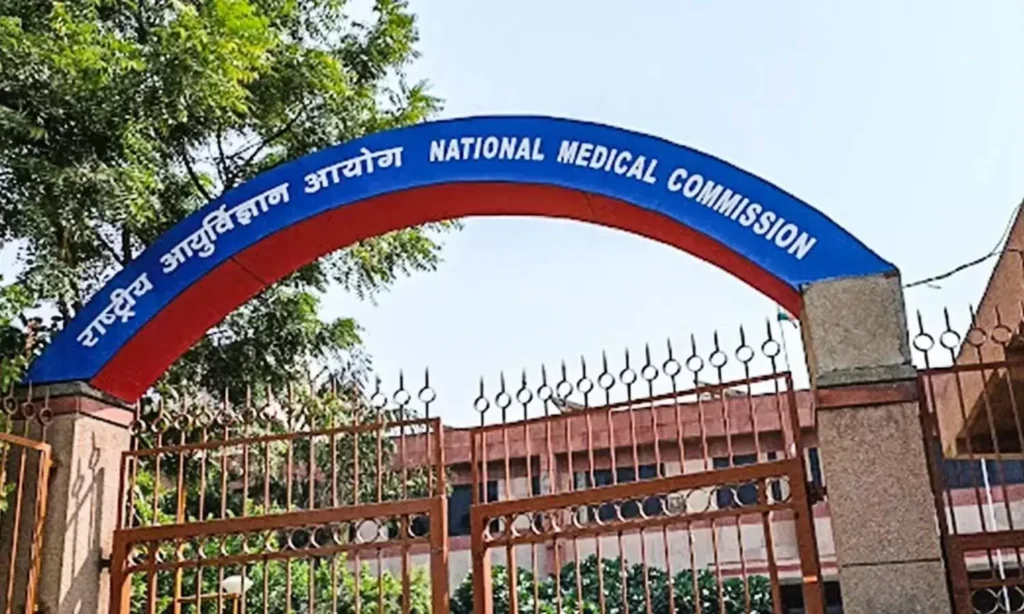
The National Medical Commission (NMC) has officially revised its regulations to allow for-profit companies to set up medical colleges in India, marking a significant shift from the earlier framework that restricted such institutions to non-profit Section 8 companies. Announcing the change, NMC Chairman Abhijat Chandrakant Sheth said the decision was taken at a recent board meeting and removes the clause that limited eligibility to non-profit entities. The revised policy now enables both non-profit and for-profit organisations to establish medical colleges, particularly under the Public-Private Partnership (PPP) model. Speaking at a press briefing at Dr NTR University of Health Sciences in Vijayawada, Sheth said the move is intended to improve the utilisation of resources in medical education by encouraging collaboration between public authorities and private players. He added that PPP-based medical institutions are already functioning effectively in states such as Gujarat. Sheth noted that while the PPP model will be implemented at the discretion of state governments, hospitals operating under such arrangements will remain under state oversight. As a result, patients will continue to receive treatment either free of cost or at subsidised rates. To maintain academic and institutional standards, the NMC has developed its own accreditation framework and Standard Operating Procedures (SOPs). The commission’s broader objective, Sheth said, is to expand access to quality medical education for the general population while aligning with global benchmarks. Highlighting ongoing reforms, he said the NMC is continuously updating its policies to reflect evolving needs in healthcare education. As part of these efforts, clinical research has been made mandatory, with increased emphasis on artificial intelligence, digital healthcare, and emerging medical technologies to future-proof medical training in India. Source: PTI

NMC Clears Path for For-Profit Firms to Establish Medical Colleges Read More »

50 Senior Doctors Resign from RG Kar Medical College Amid Protests Over Trainee Doctor’s Death

ArdorComm news

In a dramatic escalation of protests at RG Kar Medical College and Hospital, 50 senior doctors resigned on Tuesday, October 8, in solidarity with junior doctors who have been on hunger strike since Saturday. The protests were sparked by the alleged rape and murder of a trainee doctor, which has led to widespread unrest within the medical community. Social media posts and videos shared by hospital staff show senior doctors walking out to applause from students and colleagues. One doctor posted a video of the resignation walkout with a poignant message: “Safety in the workplace is basic. If you can’t ensure that, you have no right to demand services from doctors.” The protest has garnered significant attention, as doctors demand justice for their deceased colleague and call for systemic reforms at the hospital. Earlier in the day, 15 senior doctors had joined their junior counterparts in a symbolic hunger strike, further highlighting the growing frustration with the administration’s inaction. The junior doctors, who have been protesting for several days, are calling for improved security measures, increased staffing, and better working conditions at the hospital. They describe the current situation as being plagued by a “corruption-threat syndicate” and are demanding a safer, more transparent healthcare environment. Among their key demands are the implementation of a centralized hospital referral system, real-time monitoring of bed availability, and stronger security measures, including permanent female officers on campus. The mass resignation of senior doctors reflects the rising tension at RG Kar Medical College, with many doctors expressing disappointment in the lack of response from authorities. In a joint statement, the medical staff expressed their frustration: “There has been no response from the appropriate authority to solve and save our children from an impending health disaster.” Source: Business Standard

50 Senior Doctors Resign from RG Kar Medical College Amid Protests Over Trainee Doctor’s Death Read More »