ArdorComm Media Group

Sunday, November 8, 2026 10:22 PM

higher education

Keralam to establish 300 science centres, launch anonymous anti-ragging app for students

The Keralam government has announced plans to establish 300 science centres to promote scientific awareness among 15 lakh young people and introduce a mobile application that will allow students to confidentially report ragging and other campus-related concerns. Chief Minister V D Satheesan will launch both initiatives at Government Women’s College on Wednesday. He will also inaugurate the first sub-centre of the Jawaharlal Nehru Centre for Scientific Temper at an event scheduled for 11.30 am. Higher Education Minister Roji M John will preside over the programme, with Transport Minister C P John also expected to attend. The science outreach programme, led by the Kerala State Higher Education Council, aims to encourage scientific temper, humanism and critical thinking among students and the general public. It will cover 15 lakh young people through 300 centres across the state. As part of the initiative, the government will introduce online courses, educational handbooks and short video reels. An online course developed in collaboration with the Centre for Development of Imaging Technology (C-DIT) will also be launched. New app to enable anonymous campus complaints The government will introduce the Siddharth Student Welfare App to provide students with a secure and confidential channel to report ragging, safety concerns and other problems within educational institutions. The application will allow students to submit complaints anonymously, including through audio recordings, and notify the relevant authorities so that necessary assistance can be provided. The app has been named after J S Sidharthan, a 20-year-old veterinary student from Nedumangad who allegedly died by suicide in February 2024 after facing ragging by fellow students at the College of Veterinary and Animal Sciences in Pookode, Wayanad. The state government is also considering a draft of the Siddharth Anti-Ragging Act. The proposed legislation is intended to establish a legal framework for addressing ragging and enable the formation of a state-level anti-ragging commission, the minister said. Student aspirations survey also planned The government will additionally release a Student Aspiration Survey to assess the expectations, interests and aspirations of students pursuing higher education in the state. According to the higher education minister, these initiatives form part of a broader effort to strengthen scientific thinking, safeguard student welfare and create more inclusive, progressive and student-friendly higher education institutions across Keralam. Source: Indian Express

Keralam to establish 300 science centres, launch anonymous anti-ragging app for students Read More »

NTA empanels over 5,000 experts to strengthen question paper security

The National Testing Agency (NTA) has empanelled more than 5,000 academicians, scientists, researchers, educationists, professionals, translators and moderators to support various examination-related activities, including question paper preparation, translation, scrutiny and verification. The development is part of the agency’s wider efforts to strengthen examination security following the NEET-UG paper leak in May 2026, which triggered widespread protests and led to significant changes within the organisation. As part of its restructuring exercise, the NTA also removed around 600 subject matter experts and relocated its headquarters from Okhla in South East Delhi to the Government of India Press building on Minto Road. The agency has invited Expressions of Interest (EOI) from eligible academicians, researchers, scientists, educators and translators to join its three-year panel of subject matter experts. According to sources, the empanelment process is ongoing, with no fixed deadline for applications. Officials clarified that the selected individuals are not being recruited as employees but are being added to a verified panel after undergoing multiple levels of scrutiny. The expanded panel will contribute to developing a centralised question bank, allowing the NTA to maintain a large repository of questions and reduce the possibility of examination paper leaks. Under the proposed system, experts will be assigned responsibilities such as setting questions, translating examination material, vetting papers, moderating questions, verifying answer keys, mapping curricula and conducting research and psychometric assessments. The assignments will be structured to ensure that experts do not know which questions will eventually be selected or the examination for which they are being prepared. The NTA has introduced a four-stage verification mechanism for empanelment. Initially, applicants’ eligibility, academic qualifications, professional experience and supporting documents are examined. A dedicated subject matter committee subsequently evaluates their academic credentials, research contributions and experience in question paper preparation. Applicants who clear these stages undergo additional background verification. The agency also checks whether candidates have links with coaching institutes or have previously developed question bank material for students. To safeguard confidential examination-related information, all empanelled experts must sign a comprehensive Non-Disclosure Agreement (NDA). They are also required to reaffirm their confidentiality commitments before undertaking every assignment. The agency has already begun developing its question bank, with plans to finalise examination papers shortly before the scheduled tests. Officials said the objective is to enable the selection and assembly of questions just minutes before an examination begins, thereby reducing the risk of advance access or leaks. The system has reportedly started being implemented in some of the entrance examinations conducted by the NTA. The agency is responsible for conducting several major national-level examinations, including JEE (Main), CUET (UG and PG), UGC-NET, CSIR-NET and NEET. While most of these examinations are conducted in Computer-Based Test (CBT) mode, NEET is conducted in the pen-and-paper format. Additionally, the NTA is working towards adopting an ‘exam-agnostic’ framework to reduce dependence on individual technology providers, examination platforms or vendors. The proposed approach is aimed at creating a more flexible examination infrastructure while strengthening the overall conduct and security of national-level entrance tests. Source: Indian Express

NTA empanels over 5,000 experts to strengthen question paper security Read More »

ArdorComm Education Leadership Summit & Awards 2026, held on 30th October 2026 in Pune, Maharashtra

Bringing together some of the brightest minds and influential voices from India’s education ecosystem, the ArdorComm Education Leadership Summit & Awards 2026 successfully concluded in Pune, Maharashtra, on 30 October 2026. Organised by ArdorComm Media Group, the flagship event revolved around the theme “Maharashtra’s Education Without Boundaries: Building Institutions for the Future.” The summit served as a vibrant platform for academicians, educationists, institutional leaders, policymakers, technology experts, HR professionals, entrepreneurs, and EdTech innovators to deliberate on the evolving landscape of education and explore pathways towards building future-ready institutions. With Maharashtra continuing to strengthen its position as a leading destination for education, research, technology, and innovation, Pune provided an ideal setting for conversations around the future of learning, institutional transformation, and the growing intersection of education and industry. Exploring the Changing Landscape of Education As artificial intelligence, digital technologies, evolving industry requirements, and emerging skill demands reshape the education ecosystem, the summit brought important conversations to the forefront. Discussions highlighted the need for educational institutions to move beyond conventional approaches and embrace innovation, technology integration, experiential learning, and industry collaboration. The event emphasised the importance of building an education ecosystem that is inclusive, accessible, technology-enabled, and aligned with the aspirations of a rapidly changing workforce. Through insightful discussions and knowledge-sharing sessions, participants explored how institutions can strengthen their academic frameworks, encourage research and entrepreneurship, adopt emerging technologies, and equip learners with the competencies required to thrive in the future. Industry Leaders and Keynote Speakers The inaugural session, themed “Maharashtra’s Education Without Boundaries: Building Institutions for the Future,” commenced with a welcome address by Kumar Chandan Anand, Founder, CEO & Group Editor, ArdorComm Media Group. The session was graced by Deepak Singla (I.A.S.), Commissioner, Sports and Youth Services, Maharashtra State, as the Guest of Honour, and Dr. Suresh A. Patil, Joint Director, Directorate of Technical Education, Pune Region, Govt. of Maharashtra, as the Special Guest. The session also featured guest speakers Dr. Parag Kalkar, Pro Vice-Chancellor, Savitribai Phule Pune University, Pune, and Dr. Shankar S Mantha, President, Ramdeobaba University, Nagpur and Former Chairman, AICTE. The first panel discussion, titled “Who Owns the Future of Learning – Institutions, Industry or Technology?”, was moderated by Dr. Harshita Sharma, Founder – Director, Brainstorm International, Pune. The panel featured Dr. Rasika Panicker, Principal & Director, Rosary High School, Badlapur, Mumbai; Dr. Gaurav Tiwari, Founder Principal, P.P. Gagangiri Maharaj International School & Junior College, Khopoli; Debika Chatterji, Director – Principal, JBCN International School, Mumbai; and Dr. Rajesh Prasad, Principal, Bharati Vidyapeeth Deemed University College of Engineering, Pune. The second panel discussion, titled “Smart School Campuses: Are Schools Ready for the Intelligent, Connected Campus?”, was moderated by Dr. Seema Negi, Director Principal, Sanjeevani World School, Mumbai. The panel featured Swati Popat Vats, President, Podar Education Network, Mumbai; Ramesh Tupe, Chairman, SGT International School & Junior College, Mumbai; and Renu Nair, Regional Head, Kidzonia International School, Pune. The third panel discussion, titled “Building the Knowledge Economy: Can Universities Become Engines of Innovation, Entrepreneurship and Job Creation?”, was moderated by Dr. Manoj Apte, Professor & Director, Symbiosis Institute of Computer Studies and Research, Pune. The panel featured Dr. Shankar S Mantha, President, Ramdeobaba University, Nagpur and Former Chairman, AICTE; Prof. (Dr.) Sudarshan Sanap, Dean, Faculty of Engineering & Sciences, MIT Art Design and Technology University, Pune; Dr. Geetali Tilak, Vice-Chancellor, Tilak Maharashtra Vidyapeeth, Pune; Prof. (Dr.) Raviraja N. Seetharam, Vice Chancellor, Dr. Vishwanath Karad MIT World Peace University, Pune; and Sohom Dutta, Senior Vice President, Elevate Campuses Ltd. The fourth panel discussion, titled “The Human Advantage: What Skills Will Remain Irreplaceable in an AI-Driven World?”, was moderated by Dr. Madhavi Dhole, Director, SIES College of Management Studies, Navi Mumbai. The panel featured Dr. Vilas Sapkal, Vice Chancellor, MGM University, Chh. Sambhajinagar; Dr. Sohan Chitlange, Vice Chancellor, Alard University, Pune; and Prof. (Dr.) Manish Bhalla, Vice Chancellor, D Y Patil International University, Akurdi, Pune. The fifth panel discussion, titled “From Degrees to Demonstrable Skills: Is the Future of Employability Beyond Credentials?”, was moderated by Dr. Jaywant V. Shelar, Vice Chancellor, ITM Skills University, Navi Mumbai, Maharashtra. The panel featured Dr. Sunil Kumar, Vice Chancellor, Dr. P. A. Inamdar University, Pune, Maharashtra; Dr. Shashank D. Dalvi, Vice Chancellor, MGM Institute of Health Sciences, Navi Mumbai, Maharashtra; Dr. Ganesh Rao, Director – Pune Business School and Vice President (West) – AIMS, Maharashtra; Prof. (Dr.) Rajesh Madhukar Jalnekar, Director, Vishwakarma Institute of Technology, Pune, Maharashtra; and Dr. Manimala Puri, Group Director, ASM Group of Institutes, Pune, Maharashtra. Roundtable Discussion The summit also featured a special roundtable discussion titled “From Smart Classrooms to Intelligent Campuses: Powering Education Transformation Through AI & Innovation,” moderated by Saurabh Karemore, General Manager – West, D.Sol Biz, Samsung, and Niraj Kumar, Chief Manager, D.Sol Biz, Samsung. The roundtable brought together Pradeep Nayar, Chief Manager – Marketing, Samsung; Dr. Raj Salunke, Chairman, Sharada Group of Education, Solapur; Suresh Marutrav Kote, Chairman, Hind English Medium School, Gurukool, Pune; Dr. Harshita Sharma, Founder – Director, Brainstorm International, Pune; Ashok Sachdev, Founder & CEO, Chitrakoot International School, Ahilyanagar; Dr. Yasmin Pirzada, Founder & Trustee, Belvedere Spring School International, Mumbai; Mehjabeen Nadaf Khan, Founder & Director, BlueBird School, Hadaspur; Monal Dugad, Managing Director, Pushpa International School, Pune; Theo Hiwale, Managing Director, Royal International School, Pune; Dr. Nicholas Correa, Academic Director & Principal, Coral Bells International School, Navi Mumbai; Dr. Manisha Shewale, Director, Vikas Pratishthan’s CBSE & ICSE Schools & Maharashtra State Advisor (AIPA) & Core Member (WASP), Pune; Namrata Majhail, Director-Principal, The Orchid School, Pune; Gunjan Srivastava, Director Principal, The Orbis Schools, Pune; Jyotsna Mishra, Director, Alard Public School, Hinjawadi, Pune; Prof. (Dr.) Nilesh R. Berad, Director, MET’s Institute of Management, Nasik; Dr. Anamika Singh, Director, Modern Institute of Business Management, Pune; Nirmal Waddan, Director-Principal, The Kalyani School, Manjri, BK, Pune; Ashwini Kumar, Director-Principal, Pune Global School, Pune; Dr. Monika Gupta, Founder Principal & Director, Pushpa International School, Pune; Prof. Dr. K. P. Moholkar, Dean Academics, JSPM’S Rajarshi Shahu College of Engineering, Pune; Dr. Shalini Sinha, Director, Chetana’s RK Institute of Management and Research,


ArdorComm Education Leadership Summit & Awards 2026, held on 30th October 2026 in Pune, Maharashtra Read More »

AICTE introduces four schemes for 2026-27 to strengthen technical education institutions

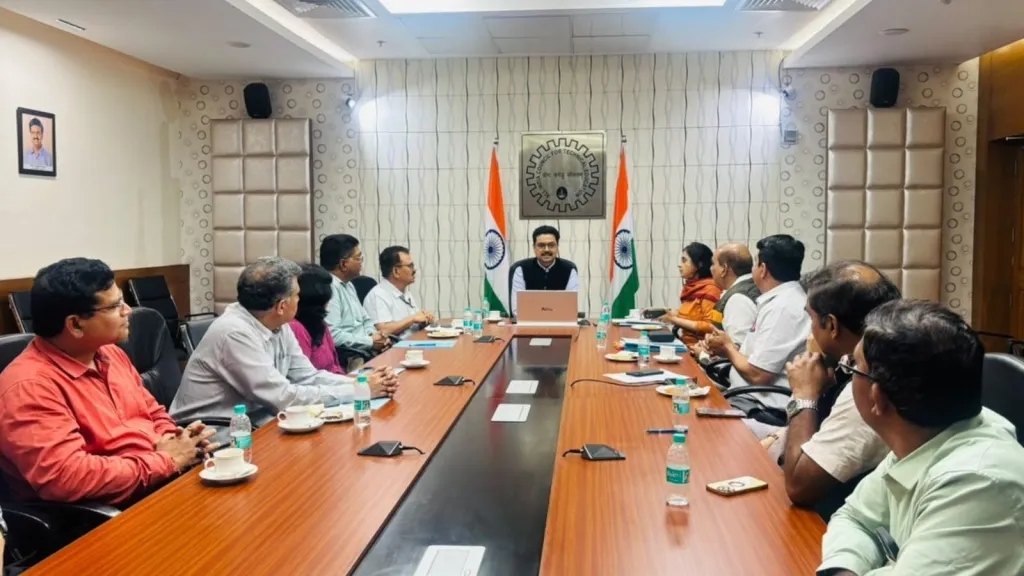
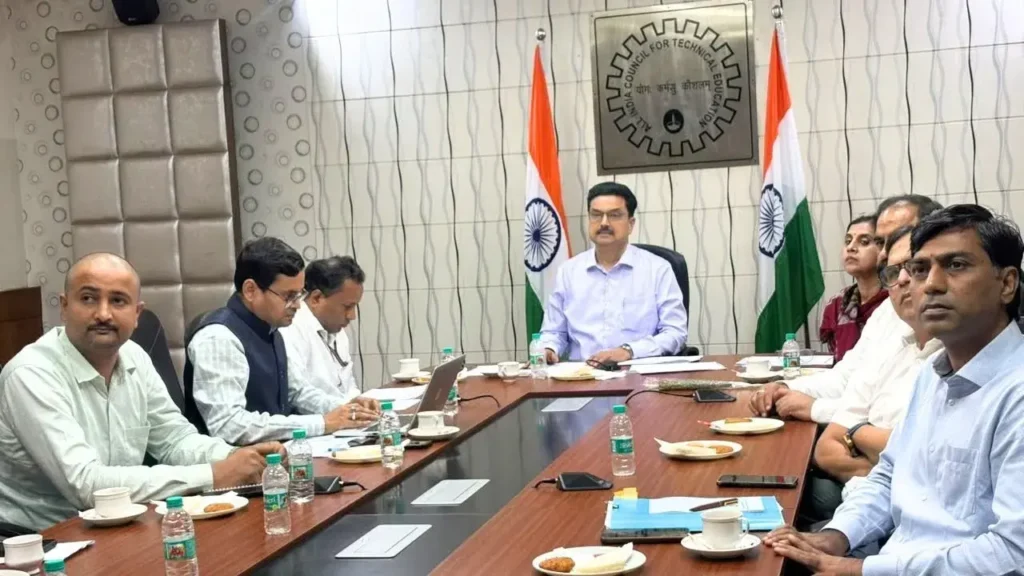
The All India Council for Technical Education (AICTE) has introduced four new schemes for the 2026-27 academic year to support the development of technical education institutions through improved infrastructure, practical learning, academic mentorship and research activities. AICTE Chairman Prof. Yogesh Singh announced the initiatives under the council’s Institutional Development Cell (IDC), in the presence of Member Secretary Prof. Shyama Rath. The four schemes include IDEA Lab, Modernisation and Restructuring for Outcome Based System (MODROBS), Margdarshan and Grant for Organising Conference (GOC). The announcement was shared through AICTE’s official social media platform on October 31. According to the council, the initiatives aim to expand institutional development opportunities across different districts and ensure that support is not confined to well-established technical education institutions. Each scheme has been designed to address a specific aspect of institutional growth, ranging from hands-on student learning and infrastructure upgrades to academic collaboration and research-oriented engagements. Four schemes and their key objectives IDEA Lab: The scheme aims to promote innovation and experiential learning by providing students with opportunities to apply concepts from science, technology, engineering and mathematics (STEM). It encourages hands-on experimentation, prototype development and the creation of practical solutions to real-world challenges. The initiative seeks to strengthen the learning-by-doing approach in technical education. MODROBS: Through the Modernisation and Restructuring for Outcome Based System scheme, AICTE intends to help institutions upgrade their existing academic infrastructure. The assistance will cover facilities such as laboratories, workshops and computing resources, enabling institutions to improve practical training, research and teaching capabilities. Margdarshan: This initiative is centred on academic mentorship and institutional capacity building. It will connect participating colleges with established and centrally funded institutions to facilitate knowledge sharing, improve academic standards and encourage the adoption of effective institutional practices. Grant for Organising Conference (GOC): The scheme will extend support to institutions conducting national and international academic conferences. It aims to encourage interaction among researchers, academicians and subject specialists, while providing platforms for presenting research outcomes, exchanging ideas and discussing emerging developments across disciplines. AICTE stated that the four initiatives are intended to strengthen technical education by making institutional development support more accessible across the country. The broader objective is to encourage innovation, improve academic infrastructure and create opportunities for collaboration among institutions. However, the council’s announcement did not specify the funding allocation, application deadlines or detailed eligibility requirements for individual schemes. Institutions interested in applying will need to consult the respective scheme guidelines for information on financial assistance, eligibility and application procedures. The latest initiatives reflect AICTE’s continued focus on improving the quality and reach of technical education in India, with particular emphasis on practical learning, institutional modernisation and stronger academic collaboration. Source: Indian Express  

AICTE introduces four schemes for 2026-27 to strengthen technical education institutions Read More »

82% of Indian Students Prefer Handwritten Notes for Better Retention Despite AI Adoption: Survey

Most Indian students recognise the benefits of artificial intelligence (AI) in completing academic tasks faster but remain concerned that excessive reliance on the technology could affect their ability to understand and retain study material in depth, according to the HP Futures 2026 global survey. The survey found that 82% of Indian students prefer traditional learning methods, such as handwriting or printing notes, to improve their memory and retain what they have studied. Despite these concerns, students acknowledge the importance of combining AI tools with essential skills such as creativity and critical thinking to succeed in the future job market, the report revealed. The findings also highlighted optimism about AI’s impact on employment. Around 78% of Indian students believe AI will create more job opportunities than it eliminates, while 87% expressed confidence in their ability to use AI tools effectively and responsibly in their future careers. Confidence in the education system was also high, with 92% of respondents in India believing that their education is preparing them for the job market. The report was developed by HP in collaboration with the Global Learning Council and the Education Leaders Forum. It brought together 58 experts from the education, policy and future-of-work sectors to examine how education systems can prepare young people for an AI-driven workplace. The survey covered more than 6,000 students worldwide, including 758 from India. The report called on policymakers in India and other countries to establish clear strategies for making critical thinking, creativity and other transferable skills integral to mainstream education rather than treating them as optional or extracurricular components. It also emphasised the need to prioritise literacy, numeracy and foundational learning while incorporating practical, engaging and creative teaching approaches. The findings underline the importance of balancing AI adoption with traditional learning practices and core intellectual skills to prepare students for an evolving employment landscape. Source: PTI

82% of Indian Students Prefer Handwritten Notes for Better Retention Despite AI Adoption: Survey Read More »

The Intelligent Campus Revolution: Are Schools and Universities Ready for the Future?

Education is undergoing a significant transformation as artificial intelligence (AI), connected devices, data analytics and digital infrastructure reshape how institutions teach, learn and operate. From smart classrooms and digital learning platforms to automated administrative systems and intelligent campus management, technology is becoming an increasingly important part of the education ecosystem. However, the shift towards intelligent campuses is about more than adopting new technologies. It involves rethinking how educational institutions deliver learning experiences, manage resources, support educators and prepare students for a rapidly changing world. As Maharashtra continues to strengthen its education ecosystem, an important question emerges: Are schools and universities ready to embrace the intelligent campus revolution? Beyond Smart Classrooms: Understanding the Intelligent Campus A smart classroom equipped with digital boards and online learning tools is only one part of a larger transformation. An intelligent campus connects various aspects of institutional operations through technology, enabling better coordination, informed decision-making and more responsive learning environments. AI-powered learning platforms can help educators identify students who may need additional academic support. Connected infrastructure can improve energy management, campus security and resource utilisation, while digital administrative systems can simplify admissions, attendance tracking and communication with parents and students. For universities, intelligent campuses can also support research collaboration, digital libraries, virtual laboratories and industry-linked learning opportunities. In schools, these technologies can make classroom experiences more interactive and help teachers adapt their approaches to different learning needs. The real value of an intelligent campus, therefore, lies not in the number of devices installed but in how effectively technology improves educational outcomes. The Role of AI in Transforming Teaching and Learning Artificial intelligence is emerging as a powerful enabler of personalised and adaptive learning. AI-supported platforms can analyse learning patterns, recommend relevant educational resources and provide timely feedback, helping students progress at their own pace. For teachers and faculty members, technology can reduce repetitive administrative work, assist in preparing learning materials and support the assessment process. This can create more opportunities for educators to focus on mentoring, critical thinking, creativity and meaningful student engagement. Nevertheless, technology cannot replace the human relationships at the heart of education. Teachers remain essential for developing values, encouraging curiosity, understanding individual circumstances and helping students navigate complex social and ethical questions. The challenge for institutions is to integrate AI responsibly, ensuring that technological tools complement educators rather than diminish their role. Building the Digital Infrastructure for Tomorrow An intelligent campus requires a strong and reliable technological foundation. High-speed internet connectivity, secure digital platforms, cloud-based systems, interoperable data infrastructure and appropriate cybersecurity measures are essential to support technology-enabled education. Institutions must also consider whether their existing infrastructure can accommodate emerging technologies without creating fragmented systems or unnecessary costs. Investing in digital tools without a clear implementation strategy can result in underused resources and limited educational benefits. Equally important is ensuring that technology remains accessible to all students. Differences in internet connectivity, access to devices, language proficiency and digital literacy can affect how effectively learners benefit from digital education. Schools and universities must therefore adopt inclusive strategies that combine infrastructure development with digital skills training, accessible learning resources and appropriate student support. From Technology Adoption to Institutional Transformation One of the biggest challenges in building intelligent campuses is moving beyond isolated technology projects towards institution-wide transformation. Successful implementation requires a clear vision, leadership commitment and collaboration among educators, administrators, technology providers and students. Institutions need to identify their priorities, establish measurable objectives and evaluate whether investments are improving teaching quality, student engagement, operational efficiency or employability. Professional development is equally important. Teachers and administrators need the knowledge and confidence to use digital tools effectively. Without adequate training and institutional support, even sophisticated technology may fail to deliver its intended benefits. Data governance and cybersecurity must also remain central to the transformation process. Educational institutions handle sensitive information relating to students, faculty members and institutional operations. Clear policies on data collection, access, privacy and responsible AI use are essential to maintaining trust. Universities as Engines of Innovation For higher education institutions, the intelligent campus offers opportunities that extend beyond classroom learning. Digital research infrastructure, collaborative innovation spaces and industry partnerships can help universities strengthen their contribution to research, entrepreneurship and economic development. By connecting academic programmes with emerging industry requirements, universities can create more opportunities for experiential learning, interdisciplinary research and skills development. Intelligent systems can also support institutional planning by helping leaders understand student needs, allocate resources and identify areas requiring improvement. However, technological advancement must be accompanied by academic freedom, ethical oversight and a commitment to producing socially responsible graduates. The objective should be to use technology to expand the possibilities of higher education while preserving its broader intellectual and social purpose. Preparing Students for an AI-Driven World As workplaces evolve, students will need more than technical knowledge to succeed. Critical thinking, communication, creativity, adaptability, collaboration and ethical decision-making will remain essential alongside digital and AI literacy. Educational institutions must create learning environments where students can apply knowledge to real-world challenges, work across disciplines and develop practical competencies. Project-based learning, industry engagement, internships and entrepreneurship initiatives can help bridge the gap between academic learning and professional expectations. An intelligent campus should ultimately prepare students not merely to use technology but to understand its implications, question its limitations and apply it responsibly. Are Schools and Universities Ready? Readiness for the intelligent campus revolution will differ across institutions. While some schools and universities may already have advanced digital infrastructure and established technology strategies, others may still be addressing fundamental challenges relating to connectivity, funding, training and access. There is no single model that every institution must follow. The way forward depends on institutional needs, available resources, student demographics and long-term educational priorities. What matters is a strategic approach that places learning outcomes at the centre of technological investment. Institutions must assess their current capabilities, identify practical priorities and introduce solutions that can evolve with changing educational requirements. The intelligent campus is not simply a destination defined by technology. It is an ongoing process of

The Intelligent Campus Revolution: Are Schools and Universities Ready for the Future? Read More »

IIT Kanpur Launches $1 Billion Fundraising Drive, Announces ₹180-Crore Innovation School in Noida

The Indian Institute of Technology (IIT) Kanpur has announced plans to establish a ₹180-crore school dedicated to innovation and entrepreneurship at its Noida campus, alongside a major fundraising campaign targeting $1 billion (approximately ₹9,000 crore) by March 2029. Named the Gautam School of Innovation & Entrepreneurship (G-SINE), the new institution aims to help students transform research and emerging technologies into commercially viable products and technology-driven startups. Its flagship MBA programme in Technology and Entrepreneurship is scheduled to commence in July 2027. The school forms part of IIT Kanpur’s ‘Greater Than Us’ campaign, which will support research and development across seven strategic technology domains: artificial intelligence, cybersecurity, drones, medical technology, sustainability, semiconductors and quantum technologies. Defence Minister Rajnath Singh launched the campaign in New Delhi on October 14. According to IIT Kanpur Director Manindra Agrawal, the institute has already secured commitments worth ₹4,155 crore from alumni, corporate donors, government bodies and other partners, representing nearly half of the overall fundraising target. G-SINE is being established with a ₹180-crore commitment from IIT Kanpur alumnus Rahul Gautam, with a memorandum of understanding signed during the campaign launch. Agrawal emphasised the importance of bridging the gap between laboratory research and commercial deployment. The school will focus on helping faculty members and students advance technologies towards market readiness, with entrepreneurship and startup development forming central elements of its approach. The institution will have dedicated full-time faculty members and degree programmes, covering areas such as AI, cybersecurity, digital health, biotechnology, drones and advanced manufacturing. It will also work alongside a proposed Deep Tech Hub at the Noida campus, providing students with access to product development and testing facilities. The institute’s Startup Incubation and Innovation Centre (SIIC), which has incubated 571 startups, will further support the initiative. The ₹9,000-crore fundraising campaign is structured around three pillars: Foundation, Talent and Frontier. Of the total target, ₹5,000 crore is earmarked for infrastructure, including research facilities, computing resources and student housing. Another ₹3,000 crore will support scholarships, doctoral fellowships and faculty recruitment, while ₹1,000 crore will be allocated to strategic technology initiatives. Agrawal said the campaign reflects IIT Kanpur’s commitment to strengthening India’s capabilities in strategically important technologies and reducing dependence on external technology ecosystems. The initiative builds on the institute’s existing specialised schools in medical sciences and technology, artificial intelligence and sustainability. IIT Kanpur also plans to establish dedicated funds to attract leading faculty members without financial constraints becoming a barrier to recruitment. Source: Indian Express  

IIT Kanpur Launches $1 Billion Fundraising Drive, Announces ₹180-Crore Innovation School in Noida Read More »

IIT Roorkee, University of Calgary Join Hands for Joint Doctoral Degree Programme

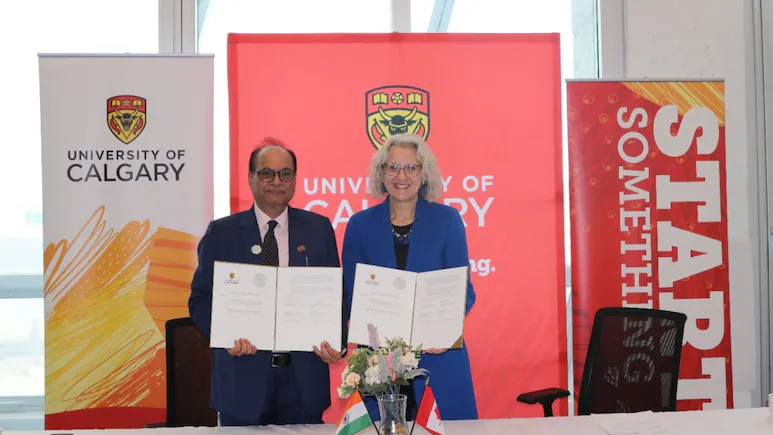
The Indian Institute of Technology (IIT) Roorkee has partnered with the University of Calgary (UCalgary) in Canada to introduce a Joint Doctoral Degree Programme (JDDP), aimed at expanding international research collaboration and academic exchange. The agreement was signed during a ceremony in Calgary, establishing a framework for both institutions to work together on advanced research and the development of technologies addressing global challenges. The programme will focus on key areas, including sustainable development, clean energy, the circular economy, water and wastewater management, critical minerals and semiconductor-related technologies. Through the initiative, doctoral scholars will benefit from joint supervision, interdisciplinary research opportunities and access to the academic infrastructure and research facilities of both universities. The partnership also aims to bridge the gap between research and real-world applications by encouraging innovation, entrepreneurship and technology commercialisation. IIT Roorkee Director KK Pant said the collaboration would open new avenues for interdisciplinary research, nurture globally competitive doctoral scholars and support efforts to address pressing societal and industrial challenges. University of Calgary Provost Sandra Davidson said the partnership would advance research collaboration while enabling doctoral students and faculty members from both institutions to explore new ideas, exchange knowledge and work together on significant research questions. Source: Indian Express

IIT Roorkee, University of Calgary Join Hands for Joint Doctoral Degree Programme Read More »

IIT Delhi, I4C and Amazon Launch ‘Raksham’ AI Cybersecurity Hackathon

The Indian Institute of Technology Delhi, in partnership with the Indian Cybercrime Coordination Centre (I4C) and Amazon, has launched ‘Raksham’, a national-level AI cybersecurity hackathon aimed at developing technology-driven solutions to emerging online threats. Organised by IIT Delhi’s student technical clubs, Aries IITD and Dev Club, the hackathon invites undergraduate and postgraduate engineering students from across India to develop AI-powered prototypes addressing challenges such as deepfakes, voice-cloning scams and online fraud. Registration and concept submissions are open until October 12, with students eligible to participate in teams of two to four members. Participating teams will be evaluated on factors including technical architecture, practical feasibility, responsible use of AI and the potential of their solutions to address cyber threats affecting millions of Indians. The top 30 teams will advance to a 48-hour in-person finale at IIT Delhi on October 24 and 25. During the finale, participants will build, test and demonstrate their prototypes before a jury comprising experts from academia, industry and the cybersecurity sector. According to IIT Delhi, high-impact projects and winning teams will also have an opportunity to showcase their innovations at Amazon Sambhav 2026. The hackathon comes as digital transactions and online activity typically increase during the festive shopping season, creating additional opportunities for cybercriminals to target consumers through scams and fraudulent schemes. IIT Delhi said the initiative will also strengthen the ongoing collaboration between the institute, I4C and Amazon under the #ScamSmartIndia initiative, with a focus on developing practical solutions to counter evolving forms of cybercrime. Source: Indian Express  

IIT Delhi, I4C and Amazon Launch ‘Raksham’ AI Cybersecurity Hackathon Read More »

AICTE Releases IIC 7.0 Ratings, Announces Results of Innovation Challenges

The All India Council for Technical Education (AICTE) has released the annual performance and star ratings for the Institution’s Innovation Council (IIC) 7.0 for the academic year 2024-25, recognising institutions for their efforts to foster innovation, creativity and entrepreneurship across campuses. The ratings were announced by AICTE Chairman Yogesh Singh and Member Secretary Shyama Rath through a post on X. The IIC ratings assess the performance of AICTE-affiliated institutions in promoting innovation-driven activities among students and faculty members. AICTE Chairman Prof. Yogesh Singh and Member Secretary Prof. @rath_shyama announced two significant milestones in India’s innovation ecosystem: 🔹 Annual Performance & Star Ratings of Institution’s Innovation Council (IIC) 7.0 for the Academic Year 2024–25, recognising institutions for their efforts in nurturing innovation, creativity and entrepreneurship. 🔹 2nd Round Results of YUKTI Innovation Challenge (YIC) and AICTE Productization Fellowship (APF) 2025, showcasing promising ideas and innovations with the potential to move from concept to meaningful solutions. These initiatives reflect AICTE’s continued commitment to building a culture where innovation goes beyond ideas—towards solutions that create real value for society. Congratulations to all the institutions, innovators, faculty members and students whose dedication continues to strengthen India’s innovation ecosystem. #AICTE #Innovation #IIC #IIC70 #YUKTI #YIC2025 #APF2025 #InnovationEcosystem #Entrepreneurship #HigherEducation #ViksitBharat — AICTE (@AICTE_INDIA) October 6, 2026 Alongside the IIC ratings, AICTE also declared the second-round results of the YUKTI Innovation Challenge (YIC) and the AICTE Productization Fellowship (APF) 2025. Both initiatives are aimed at identifying promising student innovations and helping innovators move their ideas beyond the conceptual stage towards practical applications and market-oriented solutions. AICTE said these initiatives form part of its broader efforts to strengthen the innovation and entrepreneurship ecosystem in higher education. The council also congratulated participating institutions, faculty members, students and innovators for their contributions to advancing India’s innovation landscape. Source: AICTE   

AICTE Releases IIC 7.0 Ratings, Announces Results of Innovation Challenges Read More »