ArdorComm Media Group

Monday, January 26, 2026 2:44 AM

Indian education system

Govt to Introduce Skill-Based Learning in Class 11 & 12 Under NEP 2020: Pradhan

ardorcomm news

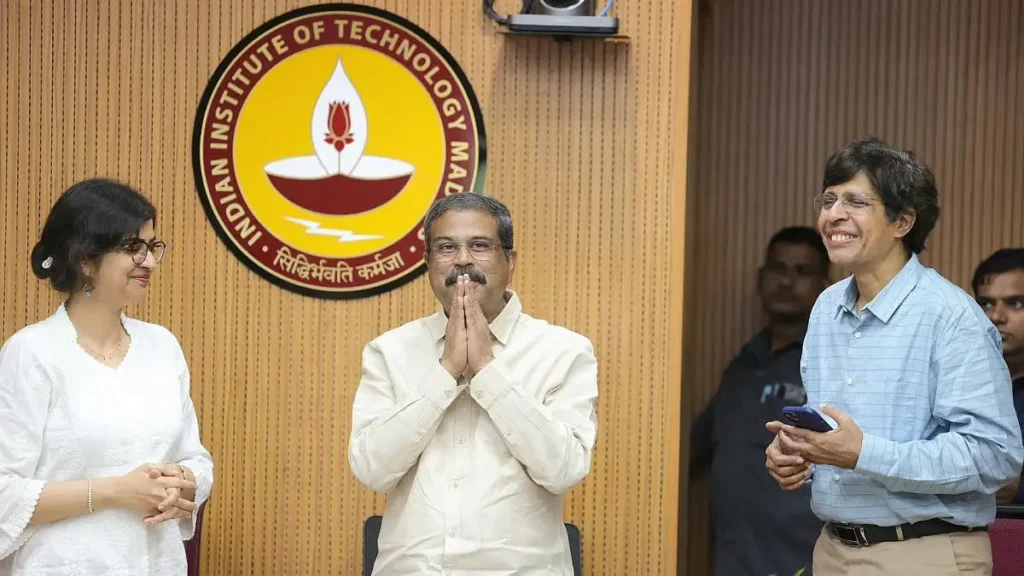
The government is preparing to integrate skill-based learning into the curriculum of Classes 11 and 12 in line with the National Education Policy (NEP) 2020, Union Education Minister Dharmendra Pradhan announced on Sunday. Speaking at the Dakshinapatha Summit 2025 hosted by IIT Madras, Pradhan emphasized the need for a major shift in teaching approaches to match the demands of the modern workforce. He noted that the earlier system focused heavily on degrees and certificates, while the new approach aims to build real-world competencies in students. “We are working to bring in skill-based subjects for Class 11 and 12 students. While qualifications are important, it is equally necessary to ensure that students are job-ready and capable,” the minister said. Pradhan also shared that his ministry is working to embed skill-based education from Class 6 onwards, making it a structured and compulsory part of schooling rather than an optional add-on. He reiterated that skill development forms a core pillar of NEP 2020, which envisions preparing learners for both higher studies and employability. Source: PTI

Govt to Introduce Skill-Based Learning in Class 11 & 12 Under NEP 2020: Pradhan Read More »

CBSE to Roll Out Open-Book Assessments for Class 9 from 2026-27

Starting from the 2026-27 academic year, the Central Board of Secondary Education (CBSE) will introduce open-book assessments (OBAs) for Class 9 students. The move, approved by the board’s Governing Body in June, is based on a pilot study that tested the feasibility and acceptance of the format in schools. The initiative aims to shift the focus from rote learning to competency-based education, in line with the National Curriculum Framework for School Education (NCFSE) 2023 and the National Education Policy (NEP) 2020. Under this system, students will be allowed to consult textbooks, class notes, and other approved materials during exams. The format will be applicable to core subjects such as languages, mathematics, science, and social science, and will be integrated into the three pen-and-paper tests conducted in each term. While CBSE will issue standard guidelines, schools will have the option to adopt the format. The decision follows a pilot project conducted after its approval in December 2023, which tested OBAs in Classes 9 to 12. Results revealed a performance range of 12% to 47%, highlighting difficulties in applying resources effectively and grasping interdisciplinary concepts. However, many participating teachers expressed confidence in the system’s potential to boost critical thinking skills. CBSE has previously experimented with similar formats, introducing the Open Text-Based Assessment (OTBA) in 2014 for Classes 9 and 11. In that model, students received reference materials months ahead of exams, but it was discontinued in 2017-18 due to limited success. To ensure smoother execution this time, the board plans to provide model question papers, detailed guidelines, and training for schools. Officials believe these measures will help students develop analytical and problem-solving abilities, aligning assessment practices with NEP 2020’s vision for future-ready learning. Source: NDTV

CBSE to Roll Out Open-Book Assessments for Class 9 from 2026-27 Read More »

Govt Forms Panel to Probe Coaching Dependency and Fairness of Entrance Exams

The Ministry of Education has constituted a nine-member committee to investigate the growing dependence of students on coaching centres, the phenomenon of ‘dummy schools,’ and the integrity and fairness of competitive entrance exams like JEE and NEET, officials confirmed. Chaired by Higher Education Secretary Vineet Joshi, the committee will delve into systemic shortcomings within the school education framework that push students towards coaching hubs. The panel will examine the limited emphasis on critical thinking, analytical reasoning, innovation, and conceptual understanding in traditional schooling — factors that fuel rote learning and, in turn, coaching culture. One major concern to be addressed is the rise of ‘dummy schools’ — institutions where students enroll merely for board exam eligibility while devoting their full attention to intensive coaching. These setups allow aspirants to bypass classroom learning altogether, focusing solely on entrance exam preparation. Many also exploit state domicile criteria through such enrollments to gain regional admission advantages, such as eligibility for the Delhi state quota in medical colleges. “The committee will study how dummy schools undermine formal education and promote exclusive dependence on coaching. It will recommend ways to address this growing issue,” a senior ministry official said. The panel will also scrutinize the current model of entrance exams to assess their fairness and relevance in the context of mainstream schooling. It will investigate whether the absence of formative assessments and a weak focus on concept clarity in school systems are inadvertently supporting the proliferation of coaching institutes. Another key focus area is the imbalance between the rising demand for quality higher education and the limited seats available in top institutions — a gap that often drives students toward costly and stressful coaching environments. The panel’s mandate also includes evaluating students’ and parents’ awareness of diverse career opportunities beyond elite engineering and medical colleges. It aims to assess the status of career counselling mechanisms in schools and recommend strategies to enhance career guidance systems nationwide. Alongside Vineet Joshi, the committee comprises the CBSE chairperson, joint secretaries from the school and higher education ministries, representatives from IIT Madras, IIT Kanpur, NIT Trichy, NCERT, and principals from Kendriya Vidyalaya, Navodaya Vidyalaya, and a private school. This initiative follows increasing concerns over the coaching industry’s practices, including rising student suicides, fire hazards, inadequate infrastructure, and questionable teaching methods. The government hopes the panel’s findings will lead to more balanced, student-centric reforms in education and examination systems. Source: PTI

Govt Forms Panel to Probe Coaching Dependency and Fairness of Entrance Exams Read More »

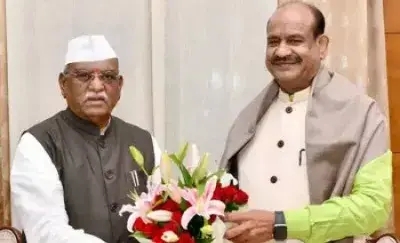
Rajasthan Governor Haribhau Bagade Stresses Role of Education in Nation-Building at Ajmer Conference

Rajasthan Governor Haribhau Bagade emphasized the crucial role of education in nation-building, calling on teachers to prioritize the holistic development of their students. Speaking at the All India National Educational Conference in Ajmer, Governor Bagade highlighted that education should not be limited to intellectual skills but should also integrate co-curricular activities to foster well-rounded growth. “These activities help students gain practical knowledge beyond book learning, which is vital for their overall development and success in life,” Bagade stated. He stressed that practical skills and life lessons learned outside traditional classrooms are essential for building a solid foundation in students. The governor also underlined the importance of early childhood education received at home, noting that children acquire valuable skills from their mothers and families. “Children start learning special skills at a young age from their family environment, which greatly contributes to their future growth,” he said. Addressing the broader impact of education on the nation’s future, Bagade urged teachers to embrace cultural values and ideals in the Indian education system. He encouraged incorporating the moral teachings of great personalities like Maharishi Dayanand Saraswati, which, according to him, would enrich students’ education and promote their comprehensive development. “Teachers have a vital responsibility in shaping not just academic growth but the overall character and moral foundation of their students,” Bagade added. He concluded by reiterating that a strong, values-based education is key to driving the progress of the nation. Source: Business Standard

Rajasthan Governor Haribhau Bagade Stresses Role of Education in Nation-Building at Ajmer Conference Read More »