

ArdorComm Media Group

Friday, October 9, 2026 7:20 PM

Indian education

Education Ministry Approves Five Centres of Excellence for Classical Indian Languages
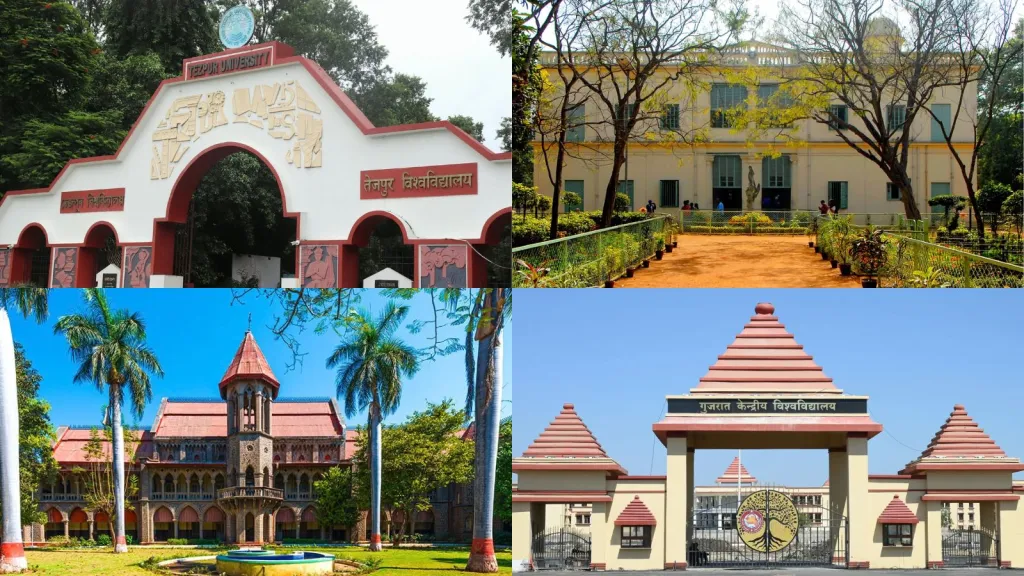
The Ministry of Education has approved the establishment of five Centres of Excellence dedicated to the study and preservation of classical Assamese, Bengali, Pali, Prakrit and Marathi, officials said. The centres will focus on strengthening academic research, digitising linguistic resources and preserving, promoting and disseminating the rich literary and cultural heritage associated with these languages. The Centres of Excellence will be established at five institutions across the country. Tezpur University in Assam will host the centre for Assamese, while Visva-Bharati University will undertake studies related to Bengali. The Central University of Odisha will house the Centre of Excellence for Pali, the Central University of Gujarat will focus on Prakrit, and the Deccan College Post Graduate and Research Institute in Pune will host the centre dedicated to Marathi. Welcoming the initiative, Odisha Chief Minister Mohan Charan Majhi highlighted the significance of the Pali centre at the Central University of Odisha. He said the initiative would strengthen the study, preservation and promotion of Pali, which has played an important role in India’s intellectual, spiritual and cultural traditions. The proposed centres are expected to create stronger academic ecosystems around the five classical languages through research, digital preservation and wider dissemination of linguistic and cultural knowledge. The initiative marks an institutional effort to support the preservation of India’s diverse linguistic heritage while creating greater opportunities for scholarly research and education in classical languages. Source: PTI

Education Ministry Approves Five Centres of Excellence for Classical Indian Languages Read More »
NCERT Faces 1,596 Vacancies as CBSE Reports 44% Staff Shortage: Parliamentary Panel

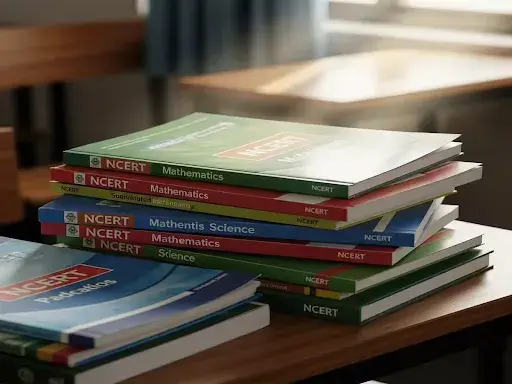
The National Council of Educational Research and Training (NCERT) is facing a significant staff shortage, with more than half of its sanctioned positions lying vacant, while the Central Board of Secondary Education (CBSE) has 44 per cent of its posts unfilled, according to a parliamentary committee report. The findings were highlighted in the Tenth Report (Eighteenth Lok Sabha) of the Committee on Estimates for 2026-27, which reviewed budget and policy aspects of affordable and quality education, including the functioning of CBSE. The report was presented in the Lok Sabha on Wednesday. The panel noted that NCERT has a critical role in shaping India’s school education system and supporting the implementation of the National Education Policy (NEP) 2020. The organisation has developed the National Curriculum Framework for Foundational Stage (NCFFS) and the National Curriculum Framework for School Education (NCFSE), besides working on new syllabi and textbooks aligned with these frameworks. However, the committee raised concerns over the scale of vacancies within NCERT. As of October 2025, NCERT had 2,844 sanctioned posts across its various branches, of which only 1,248 were occupied. This left 1,596 positions vacant. The vacancies included 145 academic posts, 131 school teaching positions, 916 ministerial posts and 404 ancillary positions. The committee called for urgent intervention by the Education Ministry, stressing that NCERT’s role as a national-level institution makes adequate staffing essential for the effective functioning of the country’s education system. The panel also highlighted what it described as a major shortage of permanent employees at CBSE. Of the board’s 2,117 sanctioned positions, 933 remained vacant, accounting for around 44 per cent of the total strength. Group C support staff accounted for the largest share of vacancies, with 595 posts unfilled. The committee expressed concern that CBSE’s dependence on temporary and contractual workers could affect the effective management of its operations, particularly sensitive examination-related responsibilities. The panel recommended that CBSE reduce its reliance on temporary personnel for critical examination work and undertake fast-track recruitment to fill vacant posts within a defined timeframe. It warned that the shortage of permanent staff could pose risks to the safety, quality and smooth conduct of major national-level examinations. The report also pointed out that CBSE is a self-financed autonomous organisation and does not receive grant-in-aid from the Ministry of Education. Meanwhile, CBSE’s expanding network has significantly increased the demands on its administrative infrastructure. The number of schools affiliated with the board rose from 3,787 in 1992-93 to 31,234 in 2024-25, as of October 8, 2025. The board currently functions through 25 regional offices and five sub-regional offices. The committee also noted the growing student base, with more than 17 lakh students appearing for Class 12 and over 23.8 lakh students enrolled in Class 10 in 2025. The panel’s observations underline the need to strengthen staffing and administrative capacity at both NCERT and CBSE as India’s school education ecosystem continues to expand. Source: PTI

NCERT Faces 1,596 Vacancies as CBSE Reports 44% Staff Shortage: Parliamentary Panel Read More »

India Tops International Physics Olympiad 2026 as All Five Participants Win Gold Medals

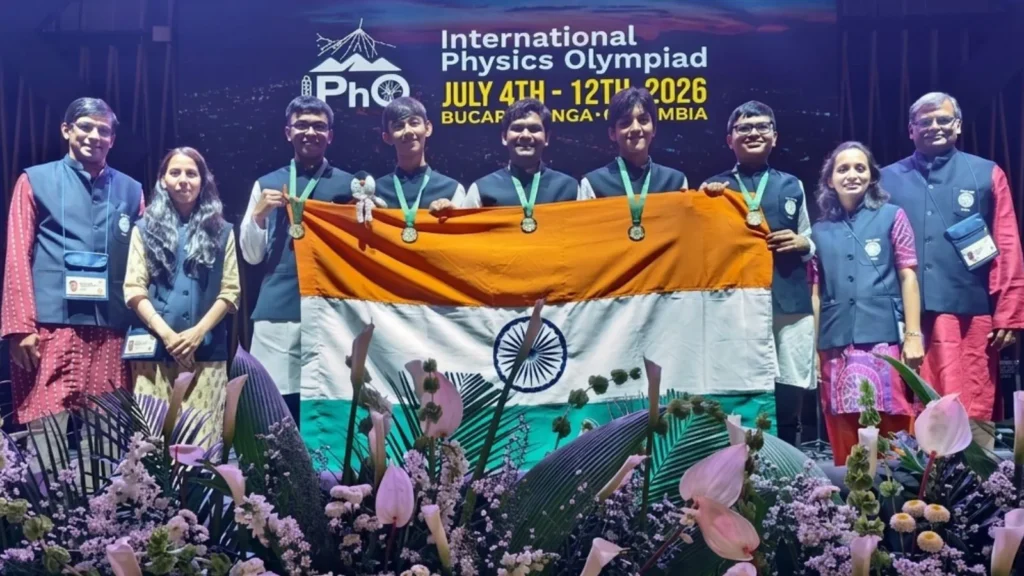
India delivered an outstanding performance at the 56th International Physics Olympiad (IPhO) 2026, with all five members of its national team securing gold medals. The achievement placed India in the joint first position alongside China, Kazakhstan, Russia, South Korea, and Taiwan at the prestigious global competition, held in Bucaramanga, Colombia. This year’s Olympiad featured 381 students representing 87 countries. According to the Homi Bhabha Centre for Science Education (HBCSE), a constituent unit of the Tata Institute of Fundamental Research (TIFR), this marks India’s 27th appearance at the International Physics Olympiad. The country has maintained an impressive record over the past decade, with every Indian participant returning home with either a gold or silver medal. India’s Gold Medal Winners The five students who brought home gold medals are: Kanishk Jain – Pune, Maharashtra Riddhesh Anant Bendale – Indore, Madhya Pradesh Rishit Garg – Dwarka, New Delhi Shresth Suraiya – Mumbai, Maharashtra Svarit Joshi – Ahmedabad, Gujarat The Indian delegation was led by Prof. Anwesh Mazumdar from HBCSE-TIFR and Dr. Leena Joshi of St. Xavier’s College, Mumbai. The team was supported by scientific observers Prof. Ananda Dasgupta of IISER Kolkata and Ms. Nisha Kelkar from Gogate-Joglekar College. Before competing internationally, the students underwent intensive preparation under the Physics Olympiad Cell at HBCSE. Their training included specialized orientation sessions and pre-departure camps conducted by experienced faculty members and Olympiad mentors. The International Physics Olympiad is regarded as one of the most prestigious science competitions for secondary school students worldwide, testing participants through challenging theoretical and experimental physics examinations. India’s clean sweep of gold medals in the 2026 edition further strengthens its reputation as one of the world’s leading performers in international science Olympiads. Source: Indian Express

India Tops International Physics Olympiad 2026 as All Five Participants Win Gold Medals Read More »

Historic 106-Year-Old School in J&K to Be Transformed into Heritage Institution

In a significant move to preserve educational legacy, the government has announced the redevelopment of one of Jammu and Kashmir’s oldest institutions, the Boys Higher Secondary School in Bhaderwah, into a heritage school. Originally established in 1920 as Amar Singh High School by Maharaja Pratap Singh, the institution holds the distinction of being the first high school in the Chenab Valley region. Located in Bhaderwah town of Doda district, the school has played a pivotal role in shaping generations of students for over a century. The foundation stone for the redevelopment project, estimated at ₹3.06 crore, was laid by Additional Deputy Commissioner Sunil Kumar Bhutyal in the presence of Principal and alumnus Kailash Chander. The initiative is being carried out under the ‘Prerna’ Heritage School scheme, aimed at revitalizing historic institutions into inspiring centres of learning. According to officials, the upgraded campus will offer an immersive educational environment while preserving the institution’s historical character. The project is also expected to strengthen emotional and cultural ties among alumni, many of whom have longstanding family connections to the school. Highlighting the significance of the initiative, Bhutyal noted that the redevelopment aligns with the broader vision of Narendra Modi to empower youth through meaningful educational reforms. The ‘Prerna’ initiative, he said, seeks to motivate students to become agents of positive change in society. Principal Kailash Chander described the development as deeply personal and historic, sharing that three generations of his family have studied at the institution. Leading the school after it has been granted heritage status, he added, is a moment of immense pride. The school’s academic affiliations have evolved over time, reflecting its longstanding prominence. Before India’s independence, it was affiliated with the University of the Panjab until 1947. It later came under the aegis of Banaras Hindu University and subsequently the University of Jammu and Kashmir. Since 1974, it has been affiliated with the Jammu and Kashmir State Board of School Education. During the 2015–16 academic session, the institution was renamed Model Higher Secondary School. With this redevelopment, the century-old institution is set to enter a new phase—blending heritage preservation with modern education, and continuing its legacy of academic excellence. Source: PTI  

Historic 106-Year-Old School in J&K to Be Transformed into Heritage Institution Read More »

CBSE reminds affiliated schools to strictly follow public disclosure rules

The Central Board of Secondary Education (CBSE) has issued a fresh advisory asking all its affiliated schools to strictly adhere to the Mandatory Public Disclosure norms, with a special focus on keeping their official websites updated with accurate information. The Board has warned that failure to comply may result in action under the CBSE Affiliation Bye-laws. In its communication, CBSE reiterated that maintaining a functional and informative website is a basic condition for both new and existing affiliations. Schools are required to upload comprehensive institutional details online, as specified under various clauses of the Affiliation Bye-laws, making digital transparency a non-negotiable requirement. The Board has directed schools to follow the revised format of Appendix IX and ensure that all prescribed information and documents are correctly uploaded on their websites by February 15, 2026. Under Clause 14.1 of the Bye-laws, schools are obligated to comply with all instructions issued by CBSE. As per Clauses 2.3.8 and 2.4.9, affiliated schools must display key details such as affiliation status, infrastructure facilities, fee structure, student strength, contact details, and complete information about teaching staff along with their qualifications. Schools must also upload valid, self-attested documents in the “Mandatory Public Disclosure” section in line with Appendix IX. CBSE has further reminded schools about Clause 14.5, which requires them to prepare and publish a detailed annual report on their websites by September 15 every year. The report should include the academic calendar, teacher qualifications and professional development, academic performance, sports achievements, environmental initiatives, PTA activities, decisions of the School Management Committee, and total student enrolment. The Board observed that despite multiple reminders, many schools continue to neglect website updates or upload incomplete, incorrect, or invalid information. In several cases, details related to teachers and their qualifications are missing from the Mandatory Public Disclosure section. CBSE stressed that such information is crucial for parents to evaluate a school’s academic standards and teaching resources, and plays a vital role in promoting transparency and accountability. The Board has cautioned that non-compliance will be considered a violation of Clause 12.2.3 of the Affiliation Bye-laws and may attract penalties as outlined in Chapter 12, according to the official statement. Source: Indian Express

CBSE reminds affiliated schools to strictly follow public disclosure rules Read More »

CBSE Postpones March 3 Class 10 and 12 Board Exams Due to Administrative Reasons

The Central Board of Secondary Education (CBSE) has announced a revision in the schedule of certain Class 10 and Class 12 board examinations slated for March 3, 2026, citing administrative reasons. As per the revised timetable, the Class 10 papers originally planned for March 3 will now be conducted on March 11, while the Class 12 examination scheduled for that day has been postponed to April 10. The rescheduled Class 10 exams include subjects such as Tibetan, German, NCC, Bhoti, Bodo, Tangkhul, Japanese, Bhutia, Spanish, Kashmiri, Mizo, Bahasa Melayu, Elements of Business, and Elements of Book Keeping and Accountancy. For Class 12, the Legal Studies paper, earlier fixed for March 3, will now take place on April 10. CBSE clarified that no other examination dates have been altered and urged schools to promptly inform students and parents about the changes. With this update, Class 10 board examinations will be conducted from February 17 to March 18, 2026. Class 12 exams will now conclude on April 10, instead of the earlier April 4 end date. All examinations will continue to be held in a single morning shift beginning at 10:30 am. The board had released a tentative schedule in September, followed by the final datesheet in November after incorporating several changes. Around 45 lakh students are expected to appear for board exams across 204 subjects in Classes 10 and 12 this year. Notably, CBSE will implement a two-phase examination system for Class 10 students in 2026. The first phase, mandatory for all candidates, will run from February 17 to March 6, while the optional second phase—aimed at score improvement—will be held from May 15 to June 1. Results for the first phase will be declared in April and for the second phase in June. The final marksheet will record the higher score from the two attempts, marking a shift away from the traditional single-exam model. Source: Indian Express

CBSE Postpones March 3 Class 10 and 12 Board Exams Due to Administrative Reasons Read More »

From bicycles to the Moon: NCERT brings India’s space journey into classrooms

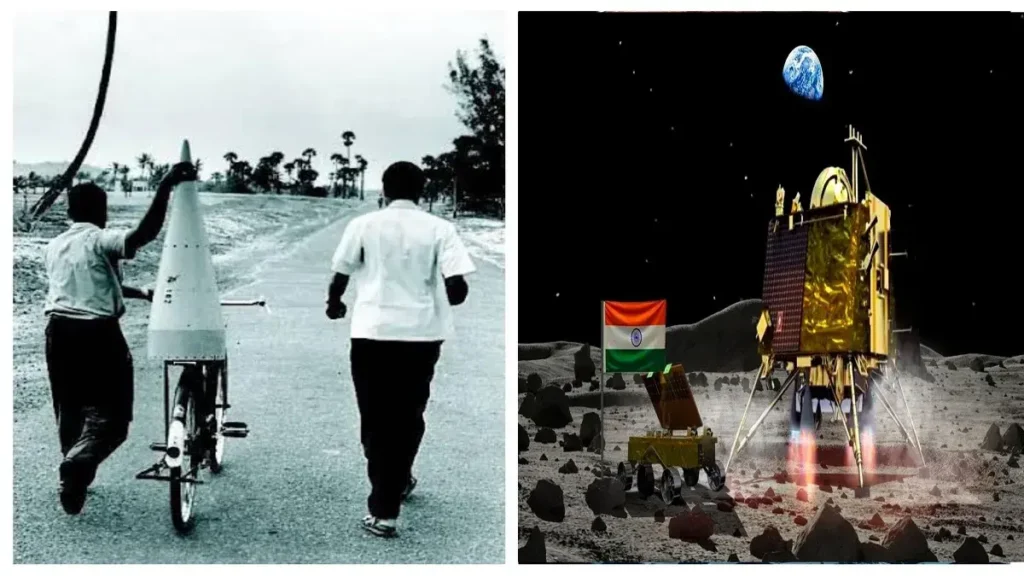
India’s space story — from humble beginnings of carrying rocket parts on bicycles and bullock carts to achieving landmark missions like Chandrayaan, Mangalyaan, and the upcoming Gaganyaan — has now been woven into NCERT’s new learning modules. The special set of two modules, titled “India: A Rising Space Power”, traces the evolution of the Indian space programme. It begins with the creation of the Indian National Committee for Space Research (INCOSPAR) in 1962 under Dr. Vikram Sarabhai, which later transformed into the Indian Space Research Organisation (ISRO), now counted among the world’s top space agencies. One of the modules highlights how India’s first rocket was so lightweight that its parts were transported using bicycles and bullock carts. Scientists avoided motorised vehicles since their electric and magnetic fields could interfere with delicate instruments, proving that simple means ensured success. The modules also honour India’s astronauts — Squadron Leader Rakesh Sharma, who became the first Indian in space in 1984, and Group Captain Shubhanshu Shukla, who in June 2025 became the first Indian to live aboard the International Space Station. They feature a quote from Prime Minister Narendra Modi: “Space may seem distant, but is an integral part of our daily life… India’s space programme is a perfect example of our vision of Scale, Speed and Skill.” Key milestones listed include: Chandrayaan-1 (2008): Discovered water molecules on the Moon. Mangalyaan (2013): Made India the first Asian nation to reach Mars, and the only country to succeed on its maiden attempt. Chandrayaan-2 (2019): Though its lander was lost, the orbiter continues to provide valuable lunar data. Aditya-L1 (2023): India’s first solar observatory at Lagrange Point-1, dedicated to studying the Sun and solar storms. Looking ahead, the modules also highlight the NASA-ISRO NISAR satellite, expected to deliver high-resolution global data every 12 days on ecosystems, glaciers, and natural disasters. Source: PTI

From bicycles to the Moon: NCERT brings India’s space journey into classrooms Read More »

CBSE Unveils Career Guidance Dashboard and Mental Health Support Network for Schools

In a significant step towards student empowerment and well-being, the Central Board of Secondary Education (CBSE) has launched two major initiatives for the academic year 2025-26 — the CBSE Career Guidance Dashboard and the Counseling Hub and Spoke School Model. Announced on August 7 at the CBSE Integrated Office in Dwarka, these initiatives aim to equip students with both future-ready career planning tools and robust psychosocial support systems within schools. The Career Guidance Dashboard, accessible at cbsecareerguidance.in, is a digital platform offering students a wealth of resources for exploring career options in a structured and informed manner. It is designed to support students at various academic levels as they make decisions about their future educational and career paths. Complementing this, the CBSE Counseling Hub and Spoke Model introduces a community-based approach to mental health support. Under this model, selected CBSE-affiliated “hub” schools will serve as training and resource centres, offering guidance and best practices to surrounding “spoke” schools within their region. This connected network encourages collaboration, peer learning, and the development of emotionally resilient school environments. “The hub and spoke model is not just about guidance — it’s about creating a culture of care and shared learning among schools,” CBSE stated in its official communication. The launch event drew participation from over 500 school leaders, wellness coordinators, and counselors from across the country. During the event, CBSE Chairperson Rahul Singh, IAS underscored how these initiatives reflect the vision of the National Education Policy (NEP) 2020, especially in making education more inclusive, student-centric, and technology-enabled. CBSE Secretary Himanshu Gupta, IAS also highlighted the urgent need for a more structured approach to mental health in schools and commended institutions that actively help students navigate academic and emotional challenges. A detailed session on the Counseling Hub and Spoke Model outlined its implementation roadmap, including roles, responsibilities, training protocols, and evaluation strategies to ensure consistent and measurable impact. The event also featured a keynote by Dr. Sanyam Bhardwaj, CBSE Controller of Examinations, who elaborated on the board’s post-NEP 2020 reforms. Panel discussions brought together voices from diverse schools, offering real-world insights into integrating career counseling and mental wellness into school systems. CBSE reaffirmed its commitment to holistic student development and called for stronger collaboration among educators, administrators, and mental health professionals. “With these initiatives, CBSE is reinforcing its mission to nurture not just academically successful students, but also emotionally and socially balanced individuals,” the Board said in its official statement. Source: Indian Express  

CBSE Unveils Career Guidance Dashboard and Mental Health Support Network for Schools Read More »

NSUI Appeals to PM Modi to Name Delhi University College After Manmohan Singh

The National Students Union of India (NSUI) has appealed to Prime Minister Narendra Modi to name a new college under Delhi University after former Prime Minister Manmohan Singh, honoring his legacy and transformative contributions to education and governance. In a letter addressed to the Prime Minister on Thursday, NSUI President Varun Choudhary emphasized that dedicating the institution to Manmohan Singh would inspire future generations. “His recent passing has left a profound void, and the most fitting tribute to his legacy would be to dedicate a premier educational institution in his name,” the letter stated. The appeal comes ahead of Modi’s scheduled event to lay the foundation stone of Veer Savarkar College in Roshanpura, southwest Delhi. The project is part of a broader initiative, which also includes academic blocks in Delhi University’s east and west campuses. Choudhary highlighted Singh’s significant contributions to India’s educational landscape, citing his role in establishing new IITs, IIMs, AIIMS, and a network of central universities. The NSUI further demanded the establishment of a central university dedicated to Singh and the inclusion of his life story in academic curricula, showcasing his journey from a post-Partition student to a global statesman. “Recognizing his unparalleled contributions to India’s progress is essential,” the NSUI letter asserted, calling for immediate action by the government. As the foundation-laying event approaches, the NSUI’s demand has added a political dimension to the inauguration, contrasting the choice of naming the college after Hindutva icon Veer Savarkar with honoring the legacy of a transformative leader like Manmohan Singh. Source: telegraphindia Photo Credit: telegraphindia

NSUI Appeals to PM Modi to Name Delhi University College After Manmohan Singh Read More »