ArdorComm Media Group

Wednesday, June 24, 2026 8:05 PM

Indian Universities

Over 1.2 Lakh Students Receive Degrees at Delhi University’s 102nd Convocation
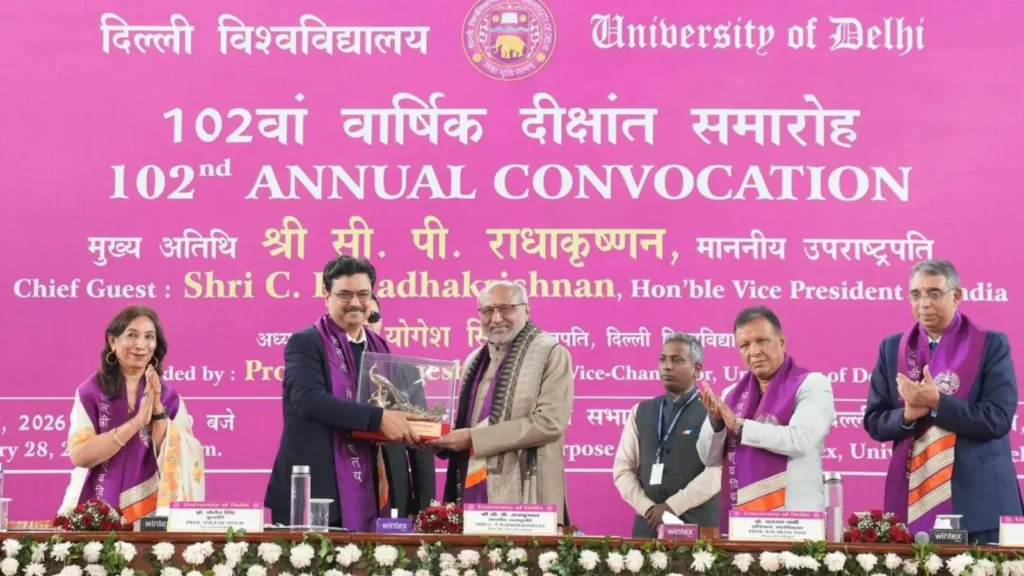
The University of Delhi conferred degrees upon more than 1.2 lakh students during its 102nd convocation ceremony held on February 28. The event was graced by Vice President C P Radhakrishnan as the chief guest, while Vice-Chancellor Yogesh Singh presided over the proceedings. In a symbolic gesture marking the university’s digital transition, the Vice President released the students’ digital degrees at the click of a button. According to the Vice-Chancellor, a total of 1,20,408 degrees were awarded this year. Among them, 50,780 degrees were presented to regular students — 24,748 men and 26,032 women. Additionally, 5,008 degrees were awarded to students of the Non-Collegiate Women’s Education Board (NCWEB) and 64,620 to learners from the School of Open Learning (SOL). Overall, 59,435 male and 60,973 female students received degrees at the ceremony. The university also granted 734 PhD degrees, including 385 to women and 349 to men. The Faculty of Arts accounted for the highest number of doctoral awards at 236, followed by Science with 139 and Social Sciences with 119. In recognition of academic excellence, 132 gold and silver medals and awards were distributed. Undergraduate and postgraduate students received 112 gold medals and one silver medal, along with 19 prize certificates. The total degrees awarded comprised 1,09,003 undergraduate students, 11,362 postgraduate students, and 43 students from the four-year undergraduate programme (FYUP), covering regular, NCWEB, and SOL categories. The VC also announced the awarding of 20 ‘centenary chance’ degrees, a special initiative introduced during the university’s 100th year to enable former students to complete their academic programmes. Addressing the gathering, Vice President Radhakrishnan described the graduating students as key contributors to the vision of ‘Viksit Bharat.’ He emphasised that universities must promote research and innovation rooted in Indian contexts while maintaining global competitiveness. Highlighting gender representation, he noted that women accounted for over 70 per cent of this year’s gold medallists. Reflecting on the institution’s growth, the Vice President remarked that Delhi University began with just three colleges, two faculties, eight departments, and 750 students. Today, it boasts 16 faculties, 86 departments, 90 colleges, 20 halls and hostels, more than 30 centres and institutes, 34 libraries, and a student strength exceeding six lakh. Commenting on the intense competition for admission, he shared that seats are filled promptly, with cut-off marks often reaching as high as 98 per cent. While acknowledging DU’s standing among India’s premier institutions, he urged the university to aim higher in global rankings — aspiring to break into the top 300, then 200, and eventually the top 100 universities worldwide, with the long-term goal of becoming the world’s leading university. Source: Indian Express

Over 1.2 Lakh Students Receive Degrees at Delhi University’s 102nd Convocation Read More »
NAAC Scraps Physical Inspections to Curb Corruption, Moves to Virtual Accreditation

In a landmark decision aimed at eliminating corruption and improving transparency, the National Assessment and Accreditation Council (NAAC) has announced an immediate suspension of physical inspections for colleges. Moving forward, all accreditation evaluations will be conducted online, replacing on-campus visits with virtual assessments. For universities, however, the transition will be hybrid—most inspections will occur remotely, but select reviewers will still visit campuses to ensure a level of direct oversight. The decision comes in the wake of the recent Central Bureau of Investigation (CBI) probe into the Andhra Pradesh-based Koneru Lakshmaiah Education Foundation (KLEF), where officials allegedly bribed NAAC inspectors to secure favorable ratings. In response, NAAC executive committee chairman Prof. Anil Sahasrabudhe stated, “We are committed to rooting out corruption. Cancelling physical visits will address this issue significantly, as every evaluation will now be recorded.” NAAC director Ganesan Kannabiran described the move as a “surgical strike against graft.” He emphasized that as a quality assurance agency, NAAC is determined to uphold the integrity of the higher education system by preventing manipulative practices. Meanwhile, the much-anticipated basic (binary) accreditation model—originally scheduled for launch in July 2024—has been postponed to April-May 2025. The updated timeline will also introduce maturity-based graded levels (MBGL), a framework designed to encourage institutions to elevate their academic and research capabilities. With around 650 institutions currently in the accreditation queue, nearly 50% of them undergoing a second cycle will have the option to retain their existing grades until the new system is in place. First-time applicants, however, may choose the upcoming basic accreditation model. “Integrating these new frameworks with advanced IT-based assessments will enhance objectivity while eradicating unfair practices,” Sahasrabudhe affirmed. Source: TOI

NAAC Scraps Physical Inspections to Curb Corruption, Moves to Virtual Accreditation Read More »

Universities Can Now Take Admissions Twice A Year: UGC Chairman

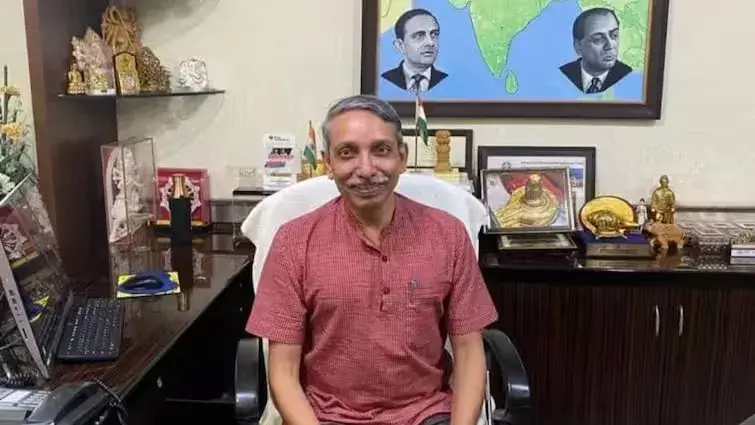
Indian universities and higher education institutions (HEIs) will now be allowed to conduct admissions twice a year, akin to foreign universities, announced UGC chief Jagadesh Kumar. The two admission cycles will be scheduled for July-August and January-February, starting from the 2024-25 academic session, according to a report by news agency PTI. “If Indian universities can offer admission twice a year, it will benefit many students such as those who missed admission to a university in the July-August session due to a delay in the announcement of board results, health issues, or personal reasons,” Kumar told PTI. “Biannual university admissions will help students maintain motivation since they do not have to wait one full year to be admitted if they miss admission in the current cycle. With biannual admissions in place, industries can also do their campus recruitment twice a year, improving employment opportunities for the graduates,” he added. The UGC chief elaborated that biannual admissions will facilitate higher education institutes (HEIs) in better planning their resource allocation, including faculty, labs, classrooms, and support services. This streamlined approach is expected to enhance the operational efficiency of universities. “Universities worldwide already follow a biannual admission system. If Indian HEIs adopt the biannual admission cycle, our HEIs can enhance their international collaborations and student exchanges. As a result, our global competitiveness will improve, and we will align with the global educational standards,” Kumar said. “If HEIs adopt biannual admissions, they need to work on administrative intricacies, good planning for increased use of available resources, and providing seamless support systems for the smooth transition of students admitted at dissimilar times of the year. HEIs can maximize the usefulness of biannual admissions only when they sufficiently prepare faculty members, staff, and students for the transition,” he added. Kumar, however, clarified that offering biannual admissions will not be mandatory for universities. HEIs with the necessary infrastructure and teaching faculty can choose to utilize this opportunity at their discretion. “Offering biannual admissions will not be mandatory for the HEIs, it is the flexibility that UGC provides to the HEIs which want to increase their student intake and offer new programs in emerging areas. To be able to admit students twice a year, HEIs must make suitable amendments to their institutional regulations,” he said.

Universities Can Now Take Admissions Twice A Year: UGC Chairman Read More »