ArdorComm Media Group

Saturday, June 13, 2026 5:17 AM

Inflation

India Posts 7.8% Growth in April–June, Services and Manufacturing Fuel Expansion
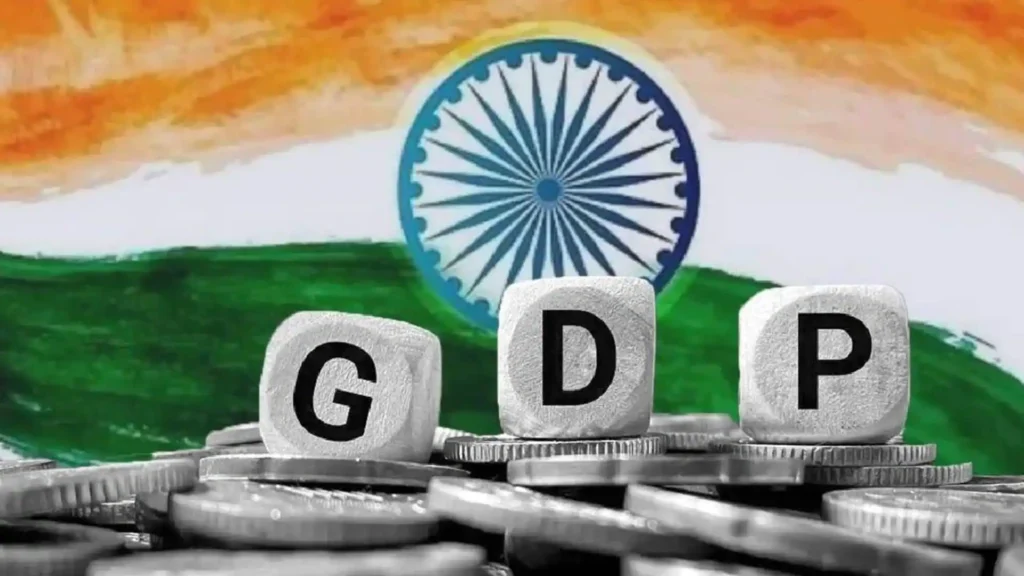
India’s economy surged 7.8% in the April–June quarter of FY 2025-26, outpacing expectations and reinforcing its status as the fastest-growing major economy worldwide. Robust demand, thriving services, and steady manufacturing are driving the momentum, placing the nation firmly on track to achieve a projected $7.3 trillion GDP by 2030 and secure its spot as the third-largest global economy. Broad-based growth across sectors India’s real GDP for Q1 FY26 stood at ₹47.89 lakh crore, up from ₹44.42 lakh crore last year, marking a significant improvement from the 6.5% growth recorded in the same period of 2024-25. On the supply side, agriculture grew 3.7% on the back of strong monsoons, manufacturing expanded 7.7%, construction advanced 7.6%, while services surged 9.3%. Gross Value Added (GVA) rose 7.6%, underscoring a widespread economic rebound. Economic Affairs Secretary Anuradha Thakur highlighted that growth is anchored in “strong fundamentals and resilient domestic demand,” citing steady gains across all key sectors. Services remain the star performer The services sector continued to shine with 9.3% growth, buoyed by trade, transport, hotels, communication, real estate, financial services, and public administration. Private consumption rose 7%, aided by higher employment, easing inflation, and healthier rural demand, while government spending grew nearly 10% in nominal terms. Industrial revival and GST milestone  Industrial activity strengthened, with the Index of Industrial Production rising 3.5% in July, compared to 1.5% in June. Manufacturing led the uptick, particularly in metals, electrical equipment, and mineral products. Meanwhile, GST marked its eighth anniversary in July 2025, with over 1.52 crore active registrations. States such as Uttar Pradesh, Maharashtra, Gujarat, Tamil Nadu, and Karnataka accounted for almost half of total registrations. Women entrepreneurs are becoming increasingly significant, making up 20% of taxpayers, with 14% of firms entirely women-owned. Upcoming GST reforms in October aim to lower essential taxes, simplify compliance for MSMEs, and boost transparency. Investment and foreign inflows Government-led infrastructure spending continues to support growth, with capital outlay reaching ₹10.52 trillion in FY25. Private investment has picked up pace, backed by improved business sentiment and capacity expansion. India attracted $81 billion in foreign inflows in FY25, pushing cumulative FDI since 2000 past $1 trillion. Equity inflows grew 27% year-on-year, while forex reserves remained robust at $695.5 billion in July, briefly crossing the $700 billion mark in June. Inflation relief and jobs boost  Inflation dropped sharply to 1.55% in July 2025, the lowest since 2017, with food inflation turning negative. RBI Governor Sanjay Malhotra credited healthy harvests and adequate supplies for the moderation, noting stable inflation should further spur demand. The labour market also showed resilience, with unemployment falling to 5.2% in July. Rural unemployment was 4.8%, compared with 6.8% in urban areas. Youth unemployment declined to 10.2%, below the global average. Female labour force participation has doubled over the past six years to 41.7%, signalling a structural shift. Reforms and outlook Government programs such as the Production Linked Incentive (PLI) scheme, Digital India, Bharat 6G Vision, PM Viksit Bharat Rozgar Yojana, and GatiShakti are fuelling manufacturing, digitalisation, and employment. Initiatives in financial inclusion, skilling, and logistics are also strengthening India’s growth base. Global agencies remain optimistic—IMF and UN project over 6% growth in the coming years, while S&P recently upgraded India’s sovereign rating for the first time in 18 years. Looking ahead, India’s economy is poised to cross the $5 trillion threshold by 2027, and $7.3 trillion by 2030. Policymakers will, however, need to balance growth with stability while ensuring inclusive benefits across regions and demographics. Source: DD News 

India Posts 7.8% Growth in April–June, Services and Manufacturing Fuel Expansion Read More »

Argentina’s President Plans Mass Government Job Cuts

Argentina’s President, Javier Milei, has announced plans to terminate the employment of 70,000 government workers as part of his aggressive measures to trim the bloated state apparatus. While representing a fraction of the country’s 3.5 million public sector employees, Milei’s sweeping actions have ignited concerns and protests from powerful labor unions. In addition to the massive job cuts, Milei has initiated a freeze on public works projects, reduced funding to provincial governments, and discontinued over 200,000 social welfare programs, citing corruption. These moves align with his overarching goal of achieving fiscal equilibrium amidst soaring inflation rates, which have eroded wages and pensions by 276% annually. Addressing the IEFA Latam Forum in Buenos Aires, Milei emphasized the need for drastic measures to combat economic challenges, likening his approach to wielding a “chainsaw” to address the nation’s fiscal woes. However, Milei’s austerity measures have sparked backlash, with some labor unions staging strikes in protest. Private sector workers have also experienced significant wage losses since Milei assumed office in December, according to government reports. Responding to Milei’s announcement, the leader of the state workers union ATE declared a national strike, signaling growing discontent among labor groups. Despite the contentious nature of his policies, Milei highlighted growing public optimism about Argentina’s economic prospects. He cited polls indicating increased confidence in the government’s ability to address economic issues, suggesting that his measures are viewed favorably by the populace. While Milei remains resolute in his pursuit of fiscal stability, the pushback from labor unions and the broader implications of his austerity measures on Argentina’s workforce and economy remain subjects of intense debate and scrutiny.

Argentina’s President Plans Mass Government Job Cuts Read More »

Central Government Employees Anticipate 3% DA Hike as Inflation Soars

In the latest developments, a significant number of central government employees are eagerly awaiting the forthcoming Dearness Allowance (DA) hike. According to recent data and reports, there is a strong likelihood that the government will announce a 3 percent increase in the current DA rate, which currently stands at 42 percent. The surge in retail inflation in the country, reaching a 15-month high in July, has fuelled expectations for a 3 percent DA hike among employees. If this announcement materializes, it will elevate the DA for central government employees to 45 percent. While there hasn’t been an official confirmation regarding the specific date for the DA and Dearness Relief (DR) announcement, the latest reports indicate that the good news could arrive in September for both central government employees and pensioners. If confirmed, the DA hike will be retroactively effective from July 1, 2023. The Central government makes announcements regarding DA and DR adjustments twice a year, catering to central employees and pensioners. This allowance is crucial in mitigating the effects of inflation. The computation of the DA amount relies on the most recent data from the Consumer Price Index for Industrial Workers (CPI-IW), in accordance with the guidelines established by the 7th Pay Commission. The DA and DR benefits extend to over 1 crore central government employees and pensioners at present. With the earlier hike of 4 percent implemented in January of this year, the DA rate escalated from 38 percent to its current level of 42 percent.

Central Government Employees Anticipate 3% DA Hike as Inflation Soars Read More »

Healthcare digital transformation is being slowed down by inflation and rising costs: GlobalData

According to a survey conducted by GlobalData, 58% of healthcare industry professionals worldwide think that initiatives involving the adoption of cutting-edge technologies like artificial intelligence (AI), big data, cloud computing, application programming interfaces (API), and others will be slowed down by inflation and rising costs. According to a survey that was included in GlobalData’s most recent report, “Digital Transformation and Emerging Technology in the Healthcare Industry – 2022 Edition,” 63% of North American professionals in the healthcare and pharmaceutical industries predicted that inflation would have an impact on their business units’ digitalization initiatives. 55% of industry professionals in Europe and 47% in the Asia-Pacific regions shared the same viewpoint. Rising labour and material costs have taken centre stage in 2022, according to Elton Kwok, Market Research Manager of Pharma at GlobalData. It is anticipated that inflation would put some pressure on the profit growth of the pharmaceutical industry, leading to a decline in investment activities that could have an influence on digital transformation initiatives. Inflation and cost concerns may force organisations to reduce their attention on and investment in these projects. Digitalization needs funds, time, and expertise. The power of technologies to promote cost reduction, however, led more than 20% of survey participants to conclude that inflation may in fact function as a stimulus for attempts to implement digital transformation. According to Kwok’s conclusion, even though emerging technologies entail a large investment in terms of time, labour, and money, some organisations continue to find them attractive.    

Healthcare digital transformation is being slowed down by inflation and rising costs: GlobalData Read More »