ArdorComm Media Group

Monday, November 23, 2026 12:34 PM

JioStar

JioStar Sees Strong Growth in Regional-Language IPL Viewing as Fans Move Beyond Hindi and English
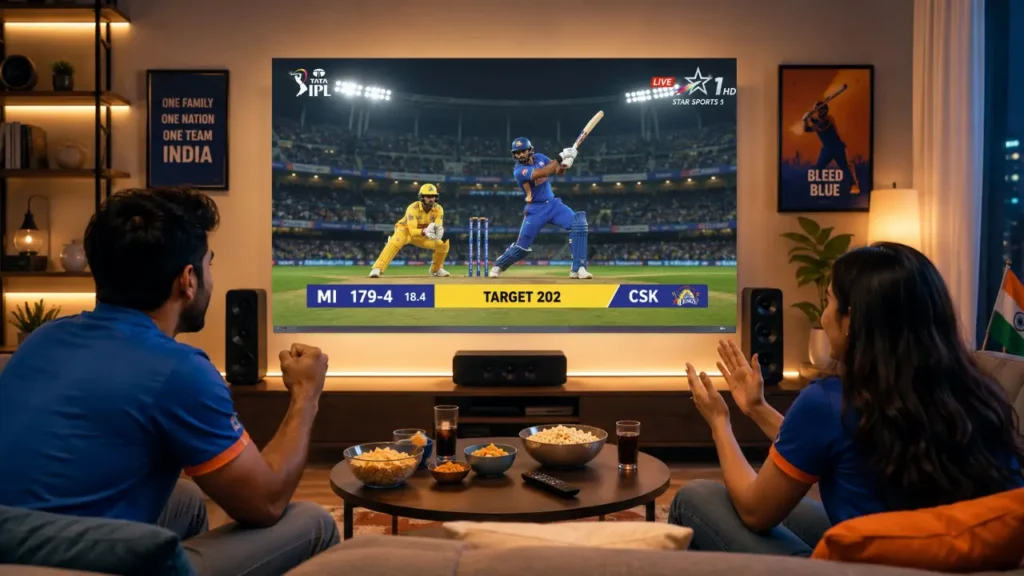
Cricket viewership during the TATA IPL 2026 season is becoming increasingly regional, with audiences showing growing preference for live coverage in languages such as Kannada, Telugu and Tamil, according to JioStar. On JioHotstar, the Kannada-language feed recorded a 30 per cent year-on-year increase in reach, while Telugu and Tamil feeds grew 23 per cent and 12 per cent, respectively. Telugu also registered a 30 per cent rise in its share of digital watch time, marking the strongest growth among the three regional-language feeds. Reflecting this shift, JioStar has introduced ‘Beyond Boundaries’, an initiative designed to enable advertisers to associate with regional-language live cricket coverage as well as pre- and post-match programming. Overall, the share of digital watch time for regional-language feeds increased 33 per cent during IPL 2026. Connected TV reach rose 22 per cent, while digital video views touched 25 billion, an 8 per cent increase from the previous year. JioStar attributed the growing popularity of regional feeds to localised commentary, market-specific programming and content tailored to individual teams and fan communities. More than 160 commentators across 12 languages contributed to the regional coverage during the tournament. The Telugu feed featured former India players Hanuma Vihari and MSK Prasad, while the Kannada coverage included Vinay Kumar and Veda Krishnamurthy. Tamil programming featured former India players Murali Vijay and L Balaji, former Sri Lankan cricketer Russel Arnold and RJ Balaji. The feeds also offered market-specific shows, including Cricket with Chai and Orange O Rangu in Telugu, Kempu Sainya and Inside RCB in Kannada, and the “Ini Singapathai” match-day narrative in Tamil. JioStar’s Head of Sales – Sports, Anup Govindan, said the growth demonstrates how cricket audiences are increasingly choosing viewing experiences rooted in their own languages and cultural contexts. He added that this trend is creating opportunities for brands to connect with audiences by understanding the distinct characteristics of individual markets. Source: Economic Times
JioStar Sees Strong Growth in Regional-Language IPL Viewing as Fans Move Beyond Hindi and English Read More »

JioStar Intensifies Anti-Piracy Action in Odisha, FIRs Filed Against Cable Operators

JioStar has stepped up its efforts to curb unauthorised distribution of its television channels in Odisha, with multiple First Information Reports (FIRs) registered against local cable operators for allegedly retransmitting its content without permission. Recent cases have been registered in Bhadrak and Kandhamal districts, following earlier enforcement action in Ganjam, Puri, Jajpur and Keonjhar. In Bhadrak, Bonth Police Station registered an FIR on September 2 against a cable operator in Tillo village under Section 303(2) of the Bharatiya Nyaya Sanhita and Section 63 of the Copyright Act. The complaint alleges that JioStar channels were received and retransmitted through a cable network serving Tillo, Jirina and nearby areas without the company’s authorisation. A separate FIR was registered by Daringbadi Police Station in Kandhamal on September 10 against Star Cable Network. According to the complaint, the operator allegedly retransmitted JioStar channels without authorisation and used consumer DTH set-top boxes to receive and redistribute the channels through its network. The latest cases form part of JioStar’s wider enforcement campaign to identify and take action against unauthorised cable networks across Odisha. The company’s AntiPiracy Legal and Enforcement Team has submitted electronic and video evidence in connection with the investigations. The enforcement drive has also brought attention to the continued presence of alleged unauthorised analogue transmissions despite the implementation of the Digital Addressable System (DAS) in the broadcasting sector. JioStar’s action underscores the ongoing challenges faced by broadcasters in protecting licensed content and preventing unauthorised retransmission through local distribution networks. Source: Economic Times

JioStar Intensifies Anti-Piracy Action in Odisha, FIRs Filed Against Cable Operators Read More »

Star Sports, FanCode Secure India Broadcast Rights for Historic India-Japan T20I

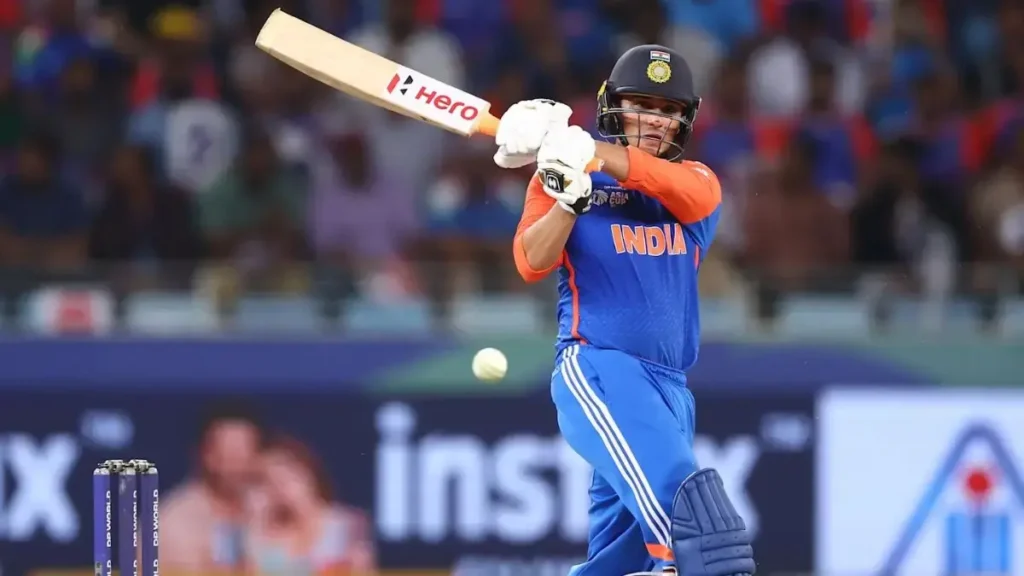
Star Sports Network and FanCode have acquired the exclusive India broadcast and streaming rights, respectively, for the one-off men’s T20I between India and Japan, rights holder ITW Universe announced. The historic fixture is scheduled for September 22 at the Sano International Cricket Ground in Tochigi, Japan. It will mark the first T20I encounter between the senior men’s teams of India and Japan and is set to begin at 9:30 am IST (1 pm local time). ITW Universe holds the global sports production, broadcast distribution and commercial marketing rights for the match and is managing its international distribution and commercialisation. ITW Universe co-founder Bhairav Shanth said the interest surrounding the fixture highlights its potential to attract audiences beyond cricket’s traditional markets. FanCode CEO and co-founder Yannick Colaco said the platform was looking forward to bringing the historic match to Indian viewers. Prashant Khanna, head of sports rights and innovation at JioStar, said JioStar was working with ITW Universe to make the fixture available to audiences through its linear platforms. The match has been organised by the Japan Cricket Association under its ‘Sport 75’ initiative, which commemorates 75 years of diplomatic relations between India and Japan. The fixture will also take place alongside the 2026 Asian Games in Aichi-Nagoya. Ahead of the match, the Japan Cricket Association is increasing the spectator capacity at the Sano International Cricket Ground as interest builds around the landmark encounter. Source: Economic Times

Star Sports, FanCode Secure India Broadcast Rights for Historic India-Japan T20I Read More »

India’s Television Industry Under Mounting Pressure as Audiences and Advertisers Shift Online

India’s television broadcasting sector is facing increasing challenges as more viewers and advertisers migrate toward digital and streaming platforms, intensifying pressure on traditional TV networks. According to industry reports, the decline in linear television viewership continued through FY26, with even major sporting events failing to significantly revive subscriber numbers. Data from the Broadcast Audience Research Council (BARC) showed that weekly TV reach dropped to 741 million in FY26, compared to 750 million in FY25 and 757 million in FY24.  Broadcasters such as Zee Entertainment Enterprises and Sun TV Network witnessed weaker advertising revenues as companies, especially from the FMCG sector, reduced spending on traditional television and redirected budgets toward digital platforms offering better audience targeting and measurable returns. Reliance Industries-backed JioStar also acknowledged softness in television advertising demand. However, the company remained profitable during FY26, supported by its combined presence in television broadcasting and streaming through JioHotstar.  Industry experts believe the rapid adoption of OTT platforms, connected TVs, and AI-driven digital advertising is reshaping India’s media landscape. Advertisers are increasingly favouring programmatic and performance-based advertising models over traditional TV campaigns.  The pay-TV sector is also witnessing a gradual decline in subscribers. According to the Telecom Regulatory Authority of India (TRAI), active DTH subscribers fell from 52.8 million in September 2025 to 51 million by December 2025, reflecting the continued consumer shift toward online streaming services.  Despite the slowdown, sports broadcasting remains relatively resilient, with broadcasters continuing to attract audiences during major cricket tournaments and premium live events.  Source: Economic Times

India’s Television Industry Under Mounting Pressure as Audiences and Advertisers Shift Online Read More »

Supreme Court clears way for CCI probe into JioStar over alleged abuse in Kerala cable TV market

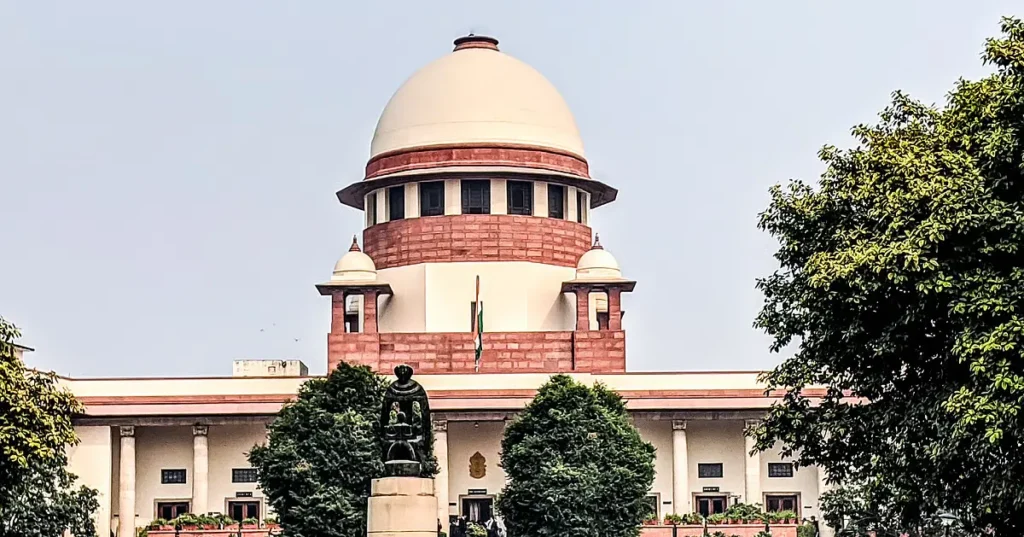
The Supreme Court on Tuesday declined to interfere with a Kerala High Court order that permitted the Competition Commission of India (CCI) to continue its investigation into allegations of unfair trade practices in Kerala’s cable television market, dealing a setback to broadcaster JioStar India. JioStar, which holds over 34% share of India’s TV network market, had challenged the high court’s ruling that upheld the CCI’s decision to probe allegations of abuse of dominant position raised by Asianet Digital Network (ADN). The Kerala High Court bench hearing the matter comprised Justices Sushrut Arvind Dharmadhikari and Syam Kumar VM. Before the Supreme Court, JioStar was represented by senior advocate Mukul Rohatgi, while the CCI was defended by additional solicitor general N. Venkataraman. Dismissing the plea, a bench of Justices JB Pardiwala and Sandeep Mehta said it found “no good ground” to interfere with the high court’s order after examining the submissions and the record. The case has wider corporate linkages, as Viren and Akshay Raheja—promoter shareholders in Reliance-controlled Hathway Cable—along with their family investment firm, Hathway Investments, also hold stakes in Asianet Satellite Communications, the parent company of ADN. The dispute traces back to February 2022, when the CCI ordered an investigation into Star India, then owned by Walt Disney, following a complaint by ADN. Since then, Star India has merged with Reliance Industries-owned Viacom18 to form JioStar, which is now under Reliance’s control. ADN has accused JioStar of abusing its dominant position and denying market access, allegedly in violation of Sections 4(2)(a)(ii) and 4(2)(c) of the Competition Act, 2002. The complaint centres on alleged “sham” marketing and advertising agreements between Star and Kerala Communicators Cable Limited (KCCL). Under the Telecom Regulatory Authority of India’s (TRAI) New Tariff Order, broadcasters are allowed to offer a maximum discount of 35% on the maximum retail price (MRP) to distributors and must adhere to transparent and non-discriminatory pricing. ADN alleged that Star circumvented these norms by offering KCCL discounts of up to 50% through separate marketing and advertising arrangements. According to ADN, these agreements were purportedly aimed at promoting Star’s flagship Malayalam channel—popularly known as Asianet—which commands more than 60% viewership share in Kerala. However, the advertisements were allegedly aired on a low-visibility ‘Test’ channel with negligible audience reach, raising questions over the genuineness of the promotional activity. ADN claimed that these practices resulted in discriminatory discounts, restricted market access for competitors, and gave KCCL an unfair competitive edge. While upholding a single-judge order dated May 28, 2025, the Kerala High Court had dismissed JioStar’s challenge and directed the CCI to hear all stakeholders before issuing a reasoned order. The court also instructed the regulator to first decide, as a preliminary issue, whether it has jurisdiction in light of the TRAI Regulations, 2017. If necessary, the CCI may pause its proceedings until TRAI examines the matter. The high court directed that the entire exercise be completed within eight weeks from December 3, 2025, while allowing the parties to seek an extension if required. Source: Economic Times

Supreme Court clears way for CCI probe into JioStar over alleged abuse in Kerala cable TV market Read More »

JioHotstar Surpasses 1 Billion Downloads, Redefines India’s Streaming Landscape

JioHotstar, the entertainment platform under JioStar, has officially crossed 1 billion downloads on Google Play, marking its entry into an exclusive group of global apps to reach this milestone. With over 300 million paid subscribers and more than 500 million monthly active users, it now stands as India’s largest streaming service by scale and reach. Formed through the merger of JioCinema and Disney+ Hotstar, the platform attributes its rapid ascent to a blend of localized storytelling, seamless technology, and strategic market integration. “By merging deep local relevance with innovation, JioHotstar is setting new benchmarks for how digital entertainment connects, inspires, and creates value,” the company said in a statement. The achievement follows a wave of technological breakthroughs unveiled by Akash Ambani, Chairman of Reliance Jio Infocomm and Director on the JioStar board, during the Reliance Industries AGM on August 29. Ambani introduced four cutting-edge features designed to elevate how users search, personalize, and enjoy content. Among them is RIYA, a voice-enabled AI assistant that helps users instantly locate moments, highlights, or specific clips without scrolling. “RIYA understands natural speech — from your favorite show’s key scenes to highlight reels and in-depth analyses,” Ambani explained. Another innovation, Voice Print, uses AI-powered voice cloning and lip-syncing to let viewers watch dubbed content while retaining the original actor’s voice. “Now, your favorite stars won’t just be dubbed — they’ll actually speak your language, in their own voice, synced perfectly to screen,” Ambani said. Also introduced was JioLenZ, allowing users to tailor their viewing experience in real-time, and MaxView 3.0, an upgraded, mobile-first cricket interface offering multi-camera angles, instant highlights, and live scorecards — all optimized for vertical viewing. Ambani emphasized that these developments reflect JioStar’s vision of merging content, software, and AI to deliver a uniquely immersive entertainment experience. Currently, JioHotstar hosts over 3.2 lakh hours of content — six times more than its closest competitors — and added 30,000 new hours in the past year. Within just three months of its launch, the platform attracted over 600 million users, including 75 million connected TV households. “With these innovations, we are steadily moving toward our goal of serving a billion screens — across mobile, TV, and connected devices,” Ambani affirmed. Source: Economic Times

JioHotstar Surpasses 1 Billion Downloads, Redefines India’s Streaming Landscape Read More »

$100 Million Hopes Fade: FIFA and IOC Struggle to Attract Indian Broadcasters Amid Market Slowdown

India’s once-booming sports broadcasting market is undergoing a sharp correction, weighed down by broadcaster consolidation, the ban on real-money gaming (RMG), and challenging time zones for upcoming global events. As a result, global sports bodies like FIFA and the International Olympic Committee (IOC) are finding it increasingly difficult to secure higher media rights deals from Indian broadcasters, industry insiders revealed. Both FIFA and the IOC are reportedly eyeing over $100 million each from the Indian market — nearly four times what local networks are prepared to offer. In comparison, India contributed around $61 million for the Qatar 2022 World Cup and $31 million for the Paris 2024 Olympics during the last rights cycle. FIFA floated its invitation to tender (ITT) in July for the 2026 and 2030 World Cups, while the IOC launched a similar tender for the 2026 Milano Cortina Winter Games and the 2028 Los Angeles Olympics. However, progress has been sluggish as Indian broadcasters balk at the steep asking prices. The market’s competitive edge has dulled significantly, with only two major contenders — JioStar and Sony — now dominating negotiations. JioStar, heavily invested in cricket, is reluctant to stretch further, while Sony remains conservative amid weak advertising prospects for non-cricket sports. The government’s ban on RMG platforms has also dealt a severe blow, wiping out an estimated ₹6,000–₹7,000 crore from the sports advertising ecosystem — a crucial source of funds for premium sports rights. Compounding the issue, both the 2026 FIFA World Cup in North America and the 2028 Olympics in Los Angeles will air during late-night hours in India, reducing live viewership potential and ad revenue. Industry veterans argue that global bodies are misreading the Indian market. The IOC, sources say, expects ICC-level valuations due to cricket’s inclusion in the LA28 Olympics, while FIFA is benchmarking against its record-breaking global contracts. “The era of irrational bidding is over,” said a senior media executive. “With broadcaster consolidation, the RMG ban, and inconvenient time zones, even top-tier events don’t offer viable returns. The mismatch between global expectations and Indian realities has never been greater.” Another executive added that while India’s growing Olympic ambitions — including its potential bid for the 2036 Games — could boost interest, time zone differences and the mandatory feed-sharing rule with Doordarshan under the Sports Broadcasting Signals Act continue to erode the commercial appeal of exclusive rights. Sources noted that JioStar had initially approached FIFA for a two-cycle rights deal, but the global football body opted for an open bidding process, anticipating higher offers. That strategy has backfired — JioStar has since pulled back, and Sony remains cautious. Viacom18, which merged with Star India to form JioStar, was the previous rights holder for both FIFA and IOC events. Despite structural challenges, both properties performed decently in their last outings. The Paris 2024 Olympics attracted over 170 million Indian viewers across JioCinema and Sports18, generating roughly ₹110 crore in ad revenues. Since then, JioCinema has merged with Disney+ Hotstar to form JioHotstar, while Sports18 has been absorbed under Star Sports. Source: Economic Times

$100 Million Hopes Fade: FIFA and IOC Struggle to Attract Indian Broadcasters Amid Market Slowdown Read More »

DD Free Dish Strengthens Lead in TV Distribution, Amid Dispute Over Reach

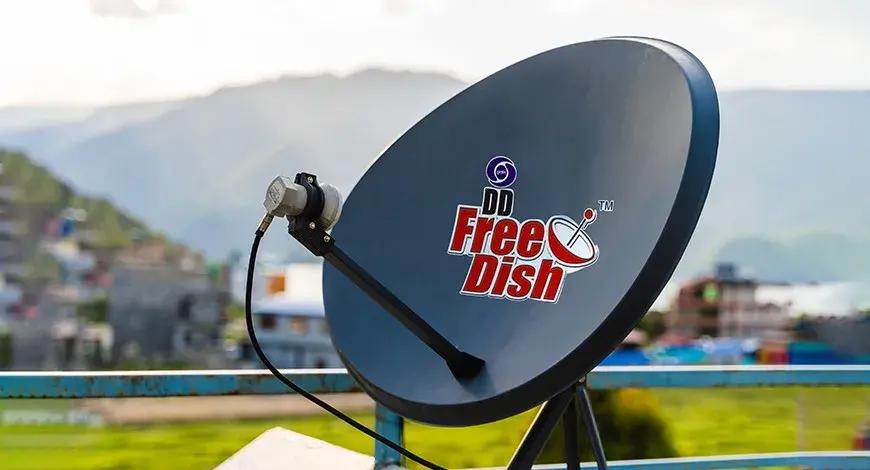
Prasar Bharati’s free direct-to-home (DTH) platform, DD Free Dish, has reinforced its position as India’s largest television distribution service. However, debates continue over the true extent of its reach. Official estimates put its user base at 49 million households in 2024, up from 33 million in 2018. Independent agencies, such as Chrome DM, believe the actual footprint is far bigger, suggesting it has already crossed 60 million homes, surpassing the combined customer base of all private pay DTH operators (around 57 million). The confusion stems from DD Free Dish’s unencrypted signal, which makes tracking households impossible. A plan to introduce encrypted MPEG-4 boxes for measurement never materialized, leaving most viewers with inexpensive MPEG-2 set-top boxes that cannot be monitored. Launched in 2004, DD Free Dish is unique as India’s only subscription-free DTH service. Viewers spend just a one-time amount of up to ₹2,000 for a dish and set-top box, making it the most affordable TV access option in the country. According to a FICCI-EY report, the platform is expected to expand from 49 million homes in 2024 to 57 million homes by 2030, although exact measurement remains elusive. Industry experts say its rapid rise has primarily been at the cost of pay-TV operators, with broadcasters fueling growth by placing free-to-air (FTA) versions of popular Hindi entertainment channels like Star Utsav, Colors Rishtey, Zee Anmol, and Sony Pal on the service. For millions who never had access to premium pay-TV channels, these reruns feel like fresh content. Broadcasters find DD Free Dish lucrative since reruns involve low additional costs, yet give access to the ₹2,000 crore free TV ad market. With carriage fees of ₹15–20 crore per channel, networks have often used the platform strategically, exiting under pay-TV pressure and rejoining later. For instance, Hindi GECs reappeared on the platform in April after a three-year hiatus. Independent channels like Dangal TV thrived in their absence, building businesses worth hundreds of crores. Executives like Kevin Vaz (CEO, Entertainment, JioStar) and Gaurav Banerjee (CEO, Sony Pictures Networks India) argue that free TV plays a vital role in attracting rural and small-town audiences, serving as a bridge to upgrade viewers to pay-TV as incomes grow. Meanwhile, pay DTH players are innovating. Dish TV India has introduced the Zing Super Device, bundling free entertainment channels with pay-TV options for affordability. Yet, competition is growing. With affordable data, YouTube has become the biggest rival, expected to surpass 800 million users in India by 2029. DD Free Dish continues to dominate in the Hindi heartland—Uttar Pradesh, Bihar, Jharkhand, Madhya Pradesh, Rajasthan, and Uttarakhand—but is now expanding into southern states with reserved slots for regional channels. For Prasar Bharati, it has become a major revenue generator, earning nearly ₹800 crore annually through slot auctions, while avoiding expenses like license fees and transponder rentals (as these are provided free by ISRO). Industry bodies argue that being outside TRAI’s pricing framework gives DD Free Dish an unfair advantage. TRAI has recommended encryption and regulatory oversight to ensure parity with private operators. For now, the platform remains India’s most powerful frequency in the TV landscape, balancing its public service role with growing commercial importance. Its future will hinge on whether households see it as a permanent solution or a stepping stone before transitioning to pay-TV or digital streaming. Source: Economic Times  

DD Free Dish Strengthens Lead in TV Distribution, Amid Dispute Over Reach Read More »

Over 170 Million Tune In to JioHotstar for Record-Breaking Anderson-Tendulkar Trophy 2025

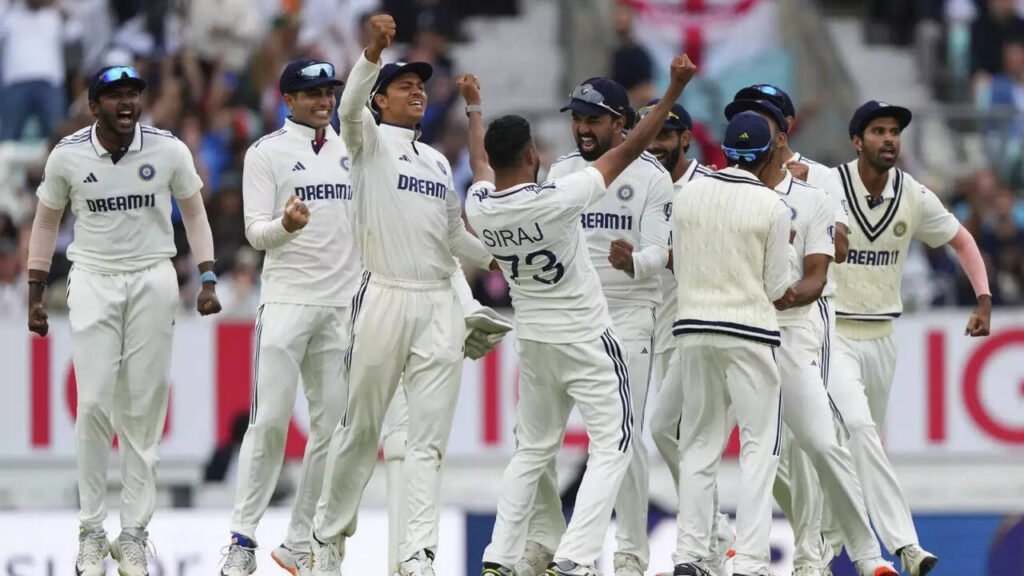
The recently concluded Anderson-Tendulkar Trophy 2025 between India and England drew unprecedented digital viewership, with JioHotstar attracting over 170 million users — the highest-ever reach for a Test series online. The dramatic finale at The Oval saw the fifth day of the fifth Test hit a record peak concurrency of 13 million, setting a new benchmark for live Test match streaming. Across the series, fans clocked an astounding 65 billion minutes of watch time on JioHotstar, captivated by nail-biting finishes and gripping sessions that kept the nation hooked. Marking the start of India’s ICC World Test Championship (WTC) 2025-27 journey, the series also signalled a fresh leadership era and renewed drive to dominate red-ball cricket. Coverage was streamed in five languages — English, Hindi, Tamil, Telugu, and Kannada — enhancing accessibility for fans nationwide. Siddharth Sharma, Head of Content – Sports at JioStar, hailed the achievement: “The response to India’s tour of England reaffirms Test cricket’s unmatched storytelling power. Crossing 170 million viewers and setting concurrency records is a testament to both the thrilling cricket and our commitment to immersive coverage.” Behind-the-scenes series Follow The Blues offered fans exclusive glimpses into training and team dynamics, while the live segment When India Challenged the Crown revisited India’s rich Test history in England. JioStar now turns its focus to the ICC Women’s Cricket World Cup 2025, kicking off in India on September 30. Source: Economic Times

Over 170 Million Tune In to JioHotstar for Record-Breaking Anderson-Tendulkar Trophy 2025 Read More »

Tata Play and Airtel Digital TV Set to Merge, Creating India’s Largest Pay-TV Entity

The Tata and Bharti groups are finalizing a merger between their direct-to-home (DTH) businesses, Tata Play and Airtel Digital TV, in a strategic move to consolidate their positions amid a shrinking pay-TV market. Merger Details and Ownership Structure The merger will be executed through a share swap, with Airtel expected to hold a majority stake of 52-55% in the combined entity, while Tata Play’s shareholders, including Walt Disney, will own 45-48%. This deal is set to enhance Airtel’s non-mobile revenues by reinforcing its ‘triple play’ strategy, which integrates telecom, broadband, and DTH services. Tata Play, formerly Tata Sky, was initially a joint venture with Rupert Murdoch’s News Corp, with Walt Disney acquiring News Corp’s stake in 2019 after purchasing 21st Century Fox. Airtel Digital TV, operated under Bharti Telemedia Ltd, is a wholly owned subsidiary of Bharti Airtel. Market Impact and Subscriber Base The merger will provide Airtel access to Tata Play’s 19 million subscriber homes, creating a combined entity with 35 million paid subscribers as of September 2024 and revenue exceeding ₹7,000 crore in FY24. Additionally, Tata Play’s broadband arm has 500,000 customers, offering cross-selling opportunities. Both companies are expected to sign a heads of terms agreement soon, after which due diligence will begin. The operations of both firms are valued at approximately ₹6,000-7,000 crore each. While Airtel’s senior management is likely to oversee the new entity, Tata is negotiating for two board seats. Industry Trends and Competitive Landscape This deal follows a decade after the Dish TV-Videocon d2h merger and aligns with broader industry shifts, such as Reliance Industries and Walt Disney merging Star India and Viacom18 to form JioStar. The pay-TV sector has contracted significantly, with subscriber numbers falling from 120 million to 84 million homes in recent years due to competition from OTT platforms and DD Free Dish’s free DTH service. A TRAI report from September 2024 indicates that pay DTH subscribers have declined to 60 million from 70 million in FY21. Analysts believe Airtel aims to convert Tata Play’s top 5 million DTH subscribers into broadband customers to boost average revenue per user (ARPU). Regulatory Challenges and Financial Liabilities The merger faces regulatory scrutiny, particularly due to pending licence fee disputes. Bharti Telemedia has a potential liability of ₹5,580 crore, with provisions of ₹3,426 crore made as of March 31, 2024. Tata Play also faces a consolidated licence fee demand of ₹3,628 crore, including ₹1,401.66 crore in interest. Future Outlook Despite the pay-TV sector’s decline, the merged entity is poised to become India’s largest pay-TV provider, leveraging bundled services and broadband integration to drive future growth. Source: Social Samosa

Tata Play and Airtel Digital TV Set to Merge, Creating India’s Largest Pay-TV Entity Read More »