ArdorComm Media Group

Thursday, April 16, 2026 2:43 AM

Machine Learning

Sundar Pichai Unveils Google AI Professional Certificate, Announces India-America Connect Initiative

At the Artificial Intelligence Summit in New Delhi, Sundar Pichai, CEO of Google, announced the launch of a new Google AI Professional Certificate programme aimed at strengthening AI skills and deepening technology collaboration between India and the United States. During his keynote address, Pichai also introduced the India-America Connect Initiative, a major digital infrastructure project that will establish new subsea cable routes linking India, the US, and several regions across the southern hemisphere. The initiative is designed to enhance AI connectivity, improve data transfer speeds, and support the growing demand for advanced AI capabilities. Emphasising the need to pair infrastructure growth with talent development, Pichai described the AI certificate programme as one of Google’s most ambitious skilling efforts in India. He noted that as AI creates new opportunities, investing in workforce training is essential to ensure professionals can effectively integrate AI into their work. Reflecting on Visakhapatnam—popularly known as Vizag—Pichai recalled remembering it as a quiet coastal city filled with promise. He said he never imagined it would one day emerge as a global AI hub. As part of its planned $15 billion infrastructure investment in India, Google will establish a full-stack AI hub in the region. The facility will feature gigawatt-scale compute capacity along with a new international subsea cable gateway, a move expected to create jobs and bring cutting-edge AI resources to businesses and communities across the country. The Google AI Professional Certificate is designed to equip learners with both foundational and advanced AI expertise. The curriculum covers key areas such as artificial intelligence fundamentals, machine learning, neural networks, and practical real-world applications. Participants will gain hands-on experience using Google’s AI tools and technologies, enabling them to implement AI-driven solutions in professional settings and explore new career opportunities in a rapidly evolving digital economy. Source: NDTV

Sundar Pichai Unveils Google AI Professional Certificate, Announces India-America Connect Initiative Read More »

AI Transforms Payroll and Attendance: Indian Platforms Redefine Workforce Automation

Artificial Intelligence is quietly revolutionizing one of the most traditional business functions — payroll and attendance management. What was once a routine administrative task is now becoming a strategic intelligence layer, driven by AI, analytics, and biometrics. The age of manual registers and spreadsheet payrolls is fading fast. Today’s systems leverage facial recognition, RFID scanners, and GPS tracking to automate attendance and salary processing. A 2025 EY report reveals that more than 60% of Indian employers are already using AI for payroll forecasting, compensation benchmarking, and workforce analytics — signaling a major shift from back-office operations to boardroom strategy. The latest workforce platforms blend automation with data-driven insight. AI algorithms now detect anomalies such as attendance gaps, duplicate records, or payroll mismatches — cutting processing errors by up to 70%, as per LiftHCM. Machine learning further enables predictive scheduling, overtime management, and compliance forecasting. Across India, this transformation spans every segment of the market: Petpooja Payroll, initially a restaurant-tech startup, now offers an integrated biometric-plus-cloud payroll suite for MSMEs taking their first digital leap. Pagarbook brings automation to small retailers and workshops through an easy mobile-first interface — echoing India’s growing trend of mobile-led HR adoption. Keka (Hyderabad) and GreytHR (Bengaluru) serve mid-tier businesses with full-fledged HRMS systems that unify attendance, leave, payroll, and analytics dashboards — merging enterprise-grade efficiency with startup-style innovation. At the enterprise level, Darwinbox and Workday lead the charge. While Workday continues to be the global HCM benchmark used by over 65% of Fortune 500 firms, Darwinbox exemplifies India’s homegrown AI innovation, incorporating conversational interfaces, predictive analytics, and seamless workflow integrations. For forward-looking organizations, payroll data is fast becoming a goldmine of workforce intelligence — revealing insights into productivity, engagement, and cost efficiency. CIOs are now positioning attendance and payroll automation alongside ERP, cybersecurity, and analytics as core pillars of digital transformation. As India enters 2025, payroll management is no longer just about salary disbursal. It’s about converting workforce data into actionable strategy — redefining how businesses measure, manage, and maximize human potential. Source: Economic Times

AI Transforms Payroll and Attendance: Indian Platforms Redefine Workforce Automation Read More »

Genefitletics Enhances Platform to Decode Cellular Health

Indian biotech startup Genefitletics has unveiled a major update to its health platform, enabling it to assess the condition of individual cells by detecting the expression of key biological signals. This advancement allows for early identification of chronic diseases—often in their asymptomatic stages—through a combination of next-generation sequencing and machine learning. According to the company, the upgraded platform now generates a “cellular health score” by analyzing markers linked to inflammation, mitochondrial function, immune activity, cellular stress, and senescence. This empowers users to monitor and improve their internal health at the cellular level. Additional capabilities include evaluations related to triglyceride regulation, risk indicators for irritable bowel disease, and a dynamic feedback system that shows how nutritional and lifestyle interventions influence biological pathways in real time. Sushant Kumar, Founder and CEO of Genefitletics, explained, “Our proprietary platform, PROTEBA, is trained on an extensive dataset—over 12 billion molecular data points, 45 million phenotype records, more than 35,000 peer-reviewed scientific publications, and continuously updated clinical insights. It now enables us to track the activity of biological pathways involved in cellular inflammation, energy inefficiency, aging, and various types of cellular stress—including oxidative, genotoxic, hypoxia-induced, and protein-misfolding stress.” This update marks a significant leap in personalized health monitoring, providing deeper insight into cellular functions and the impact of daily choices on long-term health. Source: ETHealthWorld

Genefitletics Enhances Platform to Decode Cellular Health Read More »

Andhra Pradesh Partners with Wadhwani Foundation for AI-Driven Governance

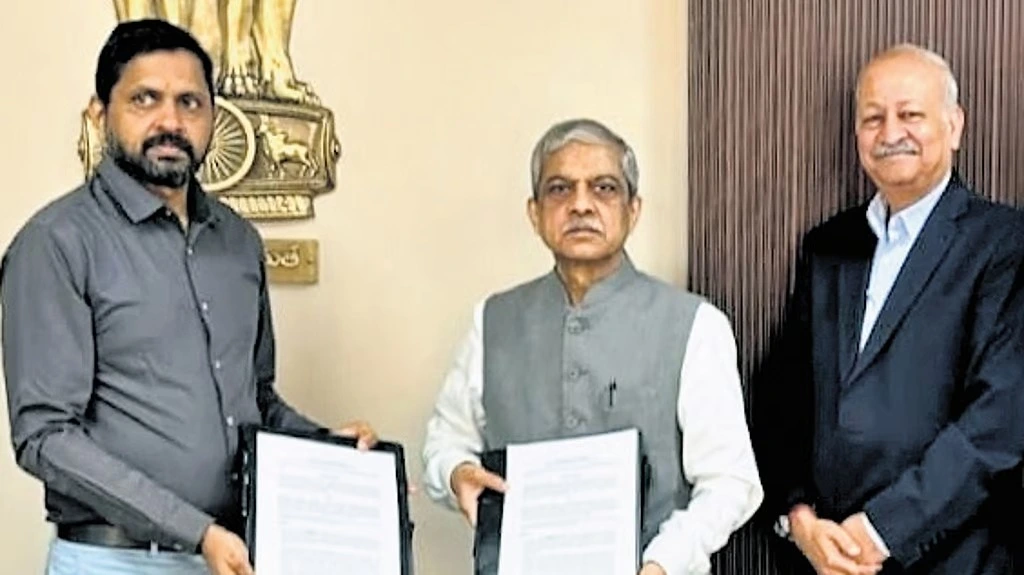
In a significant step toward AI-driven governance, the Andhra Pradesh government has signed an MoU with the Wadhwani Foundation (WF) to integrate Artificial Intelligence (AI), Machine Learning (ML), Generative AI, and Drones into governance. The agreement was signed between Katamneni Bhaskar, Secretary of Information Technology, Electronics & Communication (ITE&C) Department, and Prakash Kumar, CEO of Wadhwani Centre for Government Digital Transformation (WGDT). Key Objectives: Enhancing service delivery and optimizing government schemes Implementing AI-driven solutions for greater efficiency and transparency Leveraging AI-based data analysis to refine policies and streamline programs Boosting citizen engagement through technology-enabled governance A critical component of this initiative is capacity building among government officials. The state will introduce an AI Bootcamp under WGDT’s ‘AI Champions’ and ‘AI Enablers’ programmes to train government employees in AI applications. Additionally, AI-enabled online resources will be provided for continuous digital learning. This partnership is a pro-bono effort, with both GoAP and WF contributing resources and expertise to drive effective AI adoption. Katamneni Bhaskar, Secretary of ITE&C, stated: “Andhra Pradesh is committed to leveraging AI for better governance and public service efficiency.” With this collaboration, Andhra Pradesh is set to become a pioneer in AI-powered governance, ensuring smarter policies and improved citizen services. Source: Indian Express

Andhra Pradesh Partners with Wadhwani Foundation for AI-Driven Governance Read More »

Payhawk Looks to M&A After 86% Revenue Jump

Spend management platform Payhawk is reportedly entering acquisition mode. Co-founder and CEO Hristo Borisov stated in an interview with CNBC on Thursday (June 6) that the company aims to acquire early-stage startups that have already raised significant funds. He asserted that Payhawk has a better “product-market fit” than its competitors, who have achieved multibillion-dollar valuations by offering free corporate cards to other startups. Payhawk issues smart cards for employees to make payments and track expenses, and it has seen significant growth in the first quarter of the year, with revenues up 86% and a 57% increase in customers. To build on this growth, Borisov mentioned that the company hopes to merge with or acquire other firms. “Many businesses that got funded in the last two or three years are now in a position where they’re looking at strategic options,” Borisov said. “This is something we’re actively doing. We’re looking for companies to buy.” “Our vision is to be able to provide a single platform that provides a homogeneous environment for your corporate expense needs with a single provider,” he added. “There is going to be some market consolidation.” These efforts coincide with the shift from traditional expense management methods to digital solutions that speed reimbursement times and reduce the risk of human error. This trend was highlighted in a recent PYMNTS report, which discussed how businesses are embracing artificial intelligence (AI) and machine learning algorithms to optimize procurement and spend management strategies. Edwin Poot and Jonathan Vaux, global chief technology officer and head of propositions and partnerships at Thredd, discussed with PYMNTS how the largest corporations in America still use very old, monolithic systems to manage their treasury functions. Ernest Rolfson, CEO and founder of Payments-as-a-Service solution Finexio, pointed out the inefficiency of manually filing reporting and reconciliations, advocating for automated, digital solutions. Research by PYMNTS Intelligence has shown that virtual cards and digital spend management solutions can help finance departments close books faster while also guarding against fraud.  

Payhawk Looks to M&A After 86% Revenue Jump Read More »

Uma Kannan Founder Principal, Sri Venkateswara Group of Schools, Ambattur expressed how pedagogies and new strategies can upskill and reskill the students

“The New Normal refers to machine learning, artificial intelligence, and a technologically driven society” said Uma Kannan Could you please highlight some of the initiatives of your institution and give us more light on what your institution is doing? In each and every institution, we take up the growth of the student to bring out the awesome holistic children within the students and through the teachers. The pedagogies, introduction of new strategies to upskill and reskill the students’ energy as well as the faculty’s energy, are crucial. Only then can they produce very good social beings to develop the nation. We are doing a lot of service through seminars and conferences. Would you like to throw some light on the education policy and any initiatives your institution is doing in this regard? Recently, in 2020, the central government adopted a new educational policy and framework. One aspect of that is the 21st-century learning skills, another is the sustainable developmental goals, and the third is design thinking. We incorporate all these with the teachers through some orientation programs to upskill their energy, and then we transform that into the classroom. Any takeaways from today’s forum? Definitely. I learned how to parent the child. Parenting is very necessary with all biological modulations. We need to transparently open up the biological changes to the students. Kudos to Manjula and Chandan for bringing in this transparency. Teachers are the second parents, and we need to instruct the parents to be the first educators, giving all this transparently to the children to bring in a good social being. What does the phrase “New Normal” mean to you? The New Normal refers to machine learning, artificial intelligence, and a technologically driven society. We need to incorporate this into the educational curriculum. However, we should not forget the traditional way of teaching, as it provides an aesthetic approach and emotional well-being for the child and the adult. Any message for ArdorComm Media Group? ArdorComm, you are keeping the summits in very reputed cities like Delhi, which are educational hubs. I want this to extend to all corners of the country, even the villages. Your service should be extended to smaller cities and towns. Thank you. It was a pleasure having you at this forum. Thank you so much. Thank you, Chandan. All the best.

Uma Kannan Founder Principal, Sri Venkateswara Group of Schools, Ambattur expressed how pedagogies and new strategies can upskill and reskill the students Read More »

The Present and Future of AI in Healthcare

Blog on health

As technology advances at an unprecedented rate, its impact on various aspects of our lives becomes increasingly significant. In the realm of healthcare, artificial intelligence (AI) stands out as a transformative force with immense potential. However, to truly appreciate its importance and potential, it’s essential to delve into what AI has achieved and how it continues to shape the present and future of healthcare. The numbers paint a compelling picture of AI’s growing influence in healthcare. With over 500 AI algorithms approved by the U.S. FDA, and digital health startups receiving billions in investments, it’s evident that AI is not just a theoretical concept but a tangible reality in the healthcare landscape. Projections indicate that the global market for AI-based healthcare solutions will exceed $208 billion by 2030, underscoring the significant investments and expectations surrounding AI in healthcare. The promise of AI in healthcare is multifaceted, ranging from early disease detection to optimizing treatment plans and enhancing patient outcomes. For instance, AI algorithms have the potential to revolutionize cancer screening by analyzing vast amounts of data, including family history, imaging results, and genetic markers, to identify individuals at higher risk of developing the disease. Additionally, AI-powered interventions can monitor patients in real-time, enabling early detection of deteriorating health conditions such as sepsis, and facilitating timely medical interventions. Despite the immense potential, the full-scale implementation of AI in healthcare presents numerous challenges. From regulatory hurdles to the need for extensive clinical trials and the integration of AI into existing healthcare workflows, realizing the promise of AI requires concerted efforts from various stakeholders. Moreover, it’s crucial to recognize that AI is not a replacement for human expertise but rather a powerful tool that complements clinical decision-making. Human clinicians bring invaluable insights and intuition to the table, which AI augments by processing vast amounts of data and identifying patterns that might elude human observation alone. Currently, AI is being utilized in various medical applications, including screening tests for complex illnesses, monitoring patient vitals for signs of deterioration, and enhancing patient safety through early warning systems. Institutions are also leveraging AI to optimize resource allocation, improve operational efficiency, and streamline administrative tasks such as billing and coding. As AI continues to mature, its role in healthcare is expected to expand beyond individual applications to encompass organization-wide workflows, clinical decision support, patient engagement, and revenue cycle management. Looking ahead, the future of AI in healthcare holds even more transformative possibilities. Medical assistants powered by AI are undergoing trials in medical facilities, with the potential to streamline scheduling, access relevant patient information, and assist healthcare providers in delivering personalized care. Moreover, AI-driven algorithms are expected to play a crucial role in organizing and analyzing vast amounts of medical data, leading to more precise diagnoses, personalized treatment plans, and better patient outcomes. However, as AI becomes more integrated into healthcare systems, concerns about privacy, data security, and algorithmic bias must be addressed. Robust measures must be implemented to ensure that patient data is protected, and AI algorithms are trained on diverse and representative datasets to avoid perpetuating biases or disparities in healthcare delivery. AI holds immense promise as a transformative force in healthcare, revolutionizing patient care, clinical decision-making, and operational efficiency. While challenges remain, the collaborative efforts of researchers, clinicians, policymakers, and technology developers are paving the way for a future where AI augments human expertise to deliver better healthcare outcomes for all. As we embark on this journey, it’s essential to recognize that AI is not a replacement for human judgment but a powerful tool that, when wielded responsibly, has the potential to revolutionize the practice of medicine.  

The Present and Future of AI in Healthcare Read More »

From Panic to Precision: Revolutionizing Code Blue Responses in Healthcare

Blog on health

The frequent blare of a “Code Blue” alarm signals critical, life-threatening emergencies demanding swift and accurate responses. A meticulous 24-month analysis across tertiary care hospitals reveals a daunting reality – 720 Code Blue calls, with 620 genuine emergencies and a survival rate plummeting to 11.13% for cardiac arrests. This stark scenario necessitates a paradigm shift in the approach to emergency healthcare, inspiring a journey from panic to precision. India’s healthcare sector, once plagued by high mortality rates due to limited access to intensive care and delayed data delivery, is now at a crossroads of transformation. Innovative technologies, such as the Medical Internet of Things (IoT), Artificial Intelligence (AI), and Machine Learning (ML), are heralding a revolution in wireless patient monitoring, bridging the gap between conventional methods and cutting-edge solutions. To avert Code Blue events, a multifaceted approach is imperative, transcending reactive measures to embrace proactive strategies. Wireless patient monitoring, empowered by AI and ML, emerges as a cornerstone in this transformation. By continuously analyzing real-time vital signs, these devices act as alert sentinels, allowing healthcare providers to identify subtle changes and intervene before emergencies escalate. Predictive analytics and machine learning algorithms enhance the system’s ability to recognize patterns, contributing to a shift from crisis management to prevention. The traditional Code Blue model, while vital, comes with limitations, often triggering rushed and unorganized responses. Communication breakdowns, unfamiliarity with patients, and the high-stakes nature of the situation contribute to chaos, potentially compromising patient outcomes. To address these challenges, a shift from a reactive, panic-driven model to a proactive, precision-based approach is imperative, facilitated by continuous patient monitoring solutions. Wireless patient monitoring, akin to watchful conductors, plays a pivotal role in reducing Code Blue emergencies. These devices provide real-time vital sign data, enabling healthcare experts to respond swiftly in critical situations. In a study involving 3100 patients, real-time data transmission resulted in an 87% decrease in hospital stays, a 77% drop in deaths, and significant cost savings for patients, emphasizing the transformative impact of wireless patient monitoring on healthcare outcomes. The success of wireless patient monitoring marks not only a transformation from panic to precision but also heralds an overture of proactive care. Continuous monitoring of vital signs allows healthcare providers to anticipate and address potential issues before they escalate, reshaping emergency healthcare into a proactive, preventive paradigm. As India embraces the era of wireless patient monitoring, the ripple effects on the healthcare system are evident, transcending statistics to impact lives and improve the quality of care. The journey from panic to precision in Code Blue responses signifies a chain of transformation, rewriting the narrative of emergency healthcare and ensuring timely and effective interventions. The evolution from traditional patient monitoring to wireless solutions, complemented by cutting-edge technologies, is a beacon of hope for the healthcare industry. It represents a symphony of progress, reshaping and redefining healthcare to be more precise, proactive, and ultimately, more humane. The future has arrived, ushering in a new era where emergencies are met with the precision of a well-conducted symphony, thanks to the marriage of innovation and compassionate care.

From Panic to Precision: Revolutionizing Code Blue Responses in Healthcare Read More »

Dr. A. M. Surendra Kumar, Pro-Vice Chancellor, Presidency University, Shares Insights on Skill Development

“We incorporate skill development courses into the curriculum, including life skills and soft skills,” says Dr. A. M. Surendra Kumar, Pro-Vice Chancellor, Presidency University, in an interview with Pratik Ghosh, Content Writer, ArdorComm Media at the ‘New Normal – Education Leadership Summit & Awards 2023’ #ELSABengaluru #ELSAKarnataka How are you feeling to witness the New Normal Education Leadership Summit and Awards in Bengaluru? I frequently attend this type of education summit, especially in Bangalore, which is an education hub. There are a lot of opportunities, and these events help in understanding the concept of education. They provide a platform to discuss how we can move forward and address concerns with other educators. I’m coming from an emerging University especially in Bangalore where we have more than 16,000 students are there are lot of opportunities which we can discuss with. So, you are making a platform to take care about all our concerns, to discuss with the other educators, so you are doing a wonderful job. As you know, the theme of our event is “New Normal Karnataka.” What’s your take on this? Since Karnataka is an education hub, especially in Bangalore, there are many opportunities. The government has recently allowed five private universities, which adds to the opportunities. This platform provides a great idea about the education landscape, especially in the Karnataka region. How are you implementing new-age technologies in your university? We have incorporated technology-enabled platforms, especially in engineering and computer science. Emerging technology programs like AI, machine learning, and others are already part of our curriculum. We are continuously updating the curriculum to stay current with new age technologies. What’s your take on skill development, and how should students emphasize on skill development? We emphasize skill development from the beginning of our programs. We incorporate skill development courses into the curriculum, including life skills and soft skills. In today’s competitive environment, industry looks beyond just CGPA and values other qualities. So, we mould our students from the beginning to be well-prepared for placements. In forums like this, where we bring together education leaders, EdTech players, and government representatives, how do you think they benefit the education sector? Such forums are beneficial as they incorporate industry and technology trends. I’ve seen discussions on ERP systems, which can introduce us to new features that can be incorporated into our education systems for the benefit of both students and the education community. Any message for ArdorComm Media on its 2nd Anniversary? You are providing a great platform for educators to come together and conduct such events. Your efforts, along with the presenters, are helpful in advancing the field of education, especially in higher education and to meet several good educators also.

Dr. A. M. Surendra Kumar, Pro-Vice Chancellor, Presidency University, Shares Insights on Skill Development Read More »

IIT Kanpur Launches Four Innovative eMasters Programs, Eliminating GATE Score Requirement

IIT Kanpur has recently launched four new online postgraduate programs, and interestingly, applicants will not require GATE scores for admission. These programs cover various fields, including climate finance and sustainability, renewable energy, e-mobility, artificial intelligence, machine learning, and business leadership in the digital age. The application process for the first session, scheduled for January, is now open until October 31. Prospective students can apply through the official website at emasters.iitk.ac.in. Additionally, IIT Kanpur is introducing new sessions for its existing eMasters programs, covering areas such as data science, business analytics, financial technology, management, public policy, wireless technologies, cybersecurity, and more. The Climate Finance and Sustainability program aims to provide a comprehensive understanding of financial strategies and sustainable initiatives, while the Renewable Energy and e-Mobility program will cater to the growing alternative energy sector. The Artificial Intelligence and Machine Learning program will equip professionals with the skills needed in this rapidly evolving field, and the Business Leadership in the Digital Age program will enhance professionals’ knowledge of modern business dynamics. These new programs offer flexible completion times ranging from one to three years, accommodating various schedules. They include live interactive classes held exclusively on weekends, along with self-paced learning. Each program consists of a 60-credit, 12-module curriculum designed to meet industry demands. Faculty and researchers from IIT Kanpur will lead these programs, providing valuable real-world insights. Participants also have the opportunity to transfer up to 60 credits for future higher education pursuits (MTech/PhD) at IIT Kanpur. Moreover, these programs grant access to IIT Kanpur’s placement and incubation cells, as well as its extensive alumni network, enriching career growth and networking prospects. Participants may also visit IIT Kanpur’s campus, interact with esteemed faculty, and engage with experienced professionals, ultimately earning the prestigious IIT Kanpur alumni status. Notably, the eMasters program at IIT Kanpur will award senate-approved eMasters degrees during convocation, distinguishing it from diplomas or certificates.

IIT Kanpur Launches Four Innovative eMasters Programs, Eliminating GATE Score Requirement Read More »