ArdorComm Media Group

Saturday, February 7, 2026 6:12 AM

Make In India

Noida Film City to Host World’s Largest Integrated Content Creators’ Incubation Ecosystem

Noida Film City is poised to emerge as a global hub for the creator economy with plans to establish the world’s largest integrated Content Creators’ Incubation and Lab Ecosystem. Announced in line with the vision articulated in the Union Budget 2026, the initiative underscores India’s ambition to lead the next wave of global creative innovation. Filmmaker Boney Kapoor said the proposed ecosystem will be a first-of-its-kind platform designed not just for learning, but for enabling creators to build sustainable careers. The initiative aims to support creators in developing original intellectual properties (IPs), launching scalable creative ventures, and accessing global markets. Conceived as a comprehensive incubation-to-production framework, it will cater to the full creative spectrum—from feature films and OTT productions to new-age digital formats such as vertical storytelling and short-form episodic content. Located within the Bayview Bhutani Film City in Noida, the ecosystem will bring together a diverse community of creators, including filmmakers, digital influencers, gamers, musicians, podcasters, and storytellers. By housing multiple creative disciplines under one roof, the project is expected to drive collaboration, accelerate innovation, and enable creators to monetize content across international platforms. The Film City will be equipped with cutting-edge studios, advanced technology infrastructure, structured incubation labs, and mentorship programmes led by industry veterans and cinematic icons. With thoughtfully designed and visually distinctive production spaces, it is set to become a landmark destination for global content creation. The initiative aligns with the government’s Make in India and Viksit Bharat vision, while opening new avenues for employment, economic growth, and global visibility for India’s rapidly expanding creator community. Source: Economic Times

Noida Film City to Host World’s Largest Integrated Content Creators’ Incubation Ecosystem Read More »

Ashwini Vaishnaw Pushes for Indigenous Film Equipment, Model Cinema Rules

ardorcomm news

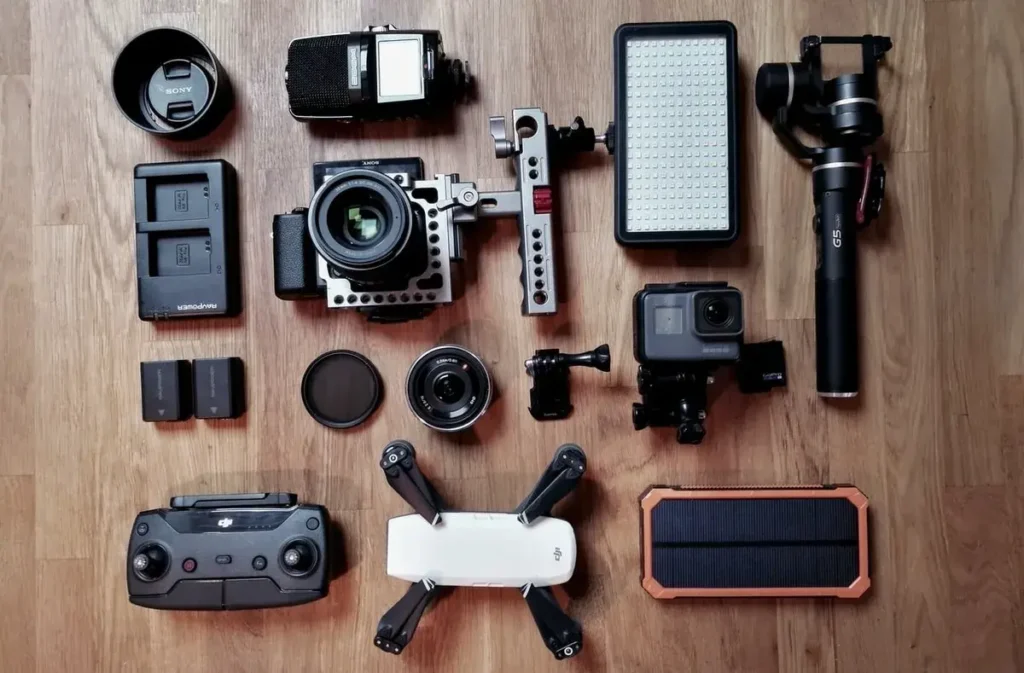
Union Information and Broadcasting Minister Ashwini Vaishnaw on Tuesday emphasized the importance of manufacturing advanced film equipment such as professional-grade cameras in India under the ‘Make in India’ programme. Speaking at the National Film Awards ceremony, he highlighted the government’s commitment to boosting local production capabilities in the entertainment sector. Vaishnaw also revealed that the Centre is preparing Model State Cinema Regulation Rules aimed at harmonising permissions and approvals across states to make film production processes more seamless. The minister stressed the need to build a live concert economy, supported by clear policies, simplified permissions, and uniform guidelines, noting that such steps could significantly expand India’s creative industries. He reiterated Prime Minister Narendra Modi’s vision of positioning India as a global content hub. To further this goal, Vaishnaw said the country’s first International Institute of Cinema and Technology (IICT) has already started operations at the NFDC campus in Mumbai. The institute is offering 17 specialised courses in partnership with global technology giants such as Meta, NVIDIA, Microsoft, and Google. Highlighting global outreach, he mentioned that Indian creators are finding new opportunities abroad through the government-backed Waves Bazaar, which has been showcased in countries including Australia, South Korea, and Canada. Source: PTI  

Ashwini Vaishnaw Pushes for Indigenous Film Equipment, Model Cinema Rules Read More »

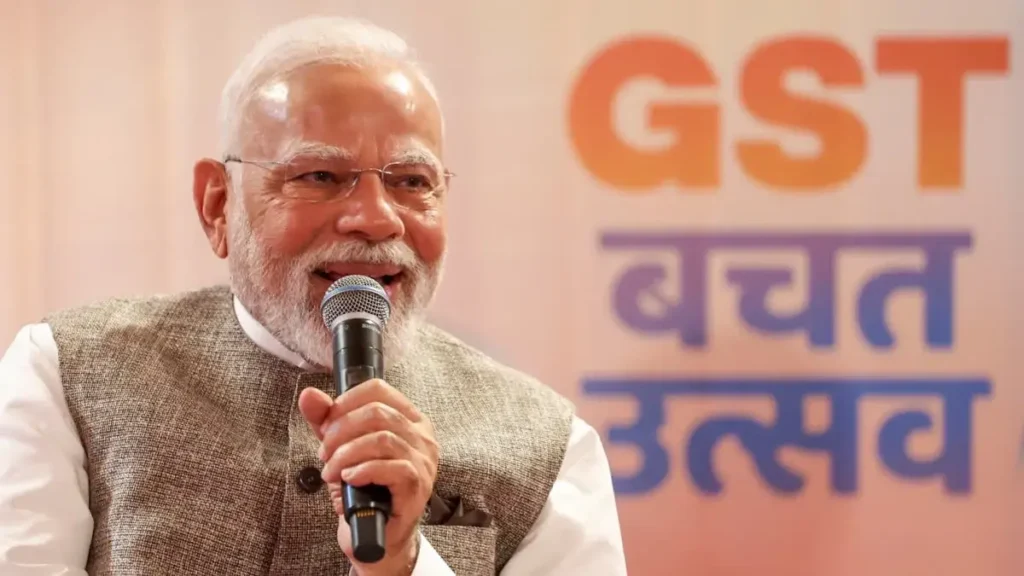
PM Modi on GST reforms: “Savings festival to bring smiles to every household”

ardorcomm news

Prime Minister Narendra Modi on Monday praised the rollout of the new Goods and Services Tax (GST) reforms, describing them as a step that will reduce expenses and spread happiness across homes. Speaking during his visit to an exhibition in Itanagar, Modi interacted with local traders and retailers, emphasizing how the changes would ease financial burdens. Sharing newspaper headlines on social media platform X, he wrote, “From markets to households, GST Bachat Utsav brings a festive buzz, ensuring lower costs and brighter smiles in every home!” The revised GST structure, which came into effect on September 22, coinciding with the start of Navratri, replaces the earlier four-tier system of 5%, 12%, 18%, and 28% with a simplified two-rate model of 5% and 18%. The government projects that these changes, along with earlier income tax reliefs, could result in national savings of ₹2.5 lakh crore. In his address on Sunday, Modi highlighted that the reforms would empower farmers, youth, women, shopkeepers, small traders, and entrepreneurs. He stressed that MSMEs stand to gain significantly, with higher sales and reduced tax liabilities creating a “double bonanza.” The Prime Minister also urged citizens to prioritize Indian-made products, stating that self-reliance and pride in local goods will accelerate the nation’s progress. Source: Hindustan Times

PM Modi on GST reforms: “Savings festival to bring smiles to every household” Read More »

India Posts 7.8% Growth in April–June, Services and Manufacturing Fuel Expansion

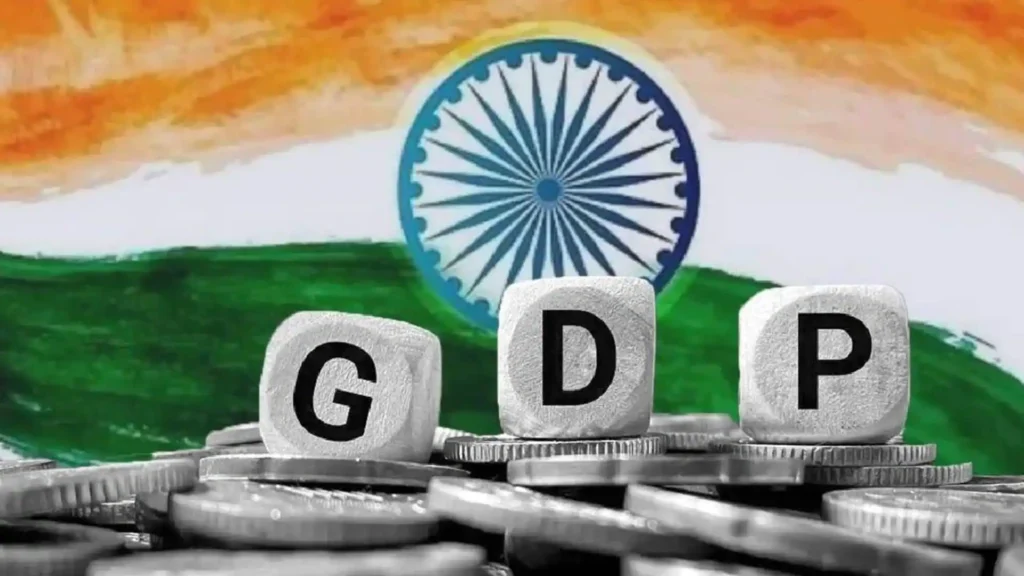
India’s economy surged 7.8% in the April–June quarter of FY 2025-26, outpacing expectations and reinforcing its status as the fastest-growing major economy worldwide. Robust demand, thriving services, and steady manufacturing are driving the momentum, placing the nation firmly on track to achieve a projected $7.3 trillion GDP by 2030 and secure its spot as the third-largest global economy. Broad-based growth across sectors India’s real GDP for Q1 FY26 stood at ₹47.89 lakh crore, up from ₹44.42 lakh crore last year, marking a significant improvement from the 6.5% growth recorded in the same period of 2024-25. On the supply side, agriculture grew 3.7% on the back of strong monsoons, manufacturing expanded 7.7%, construction advanced 7.6%, while services surged 9.3%. Gross Value Added (GVA) rose 7.6%, underscoring a widespread economic rebound. Economic Affairs Secretary Anuradha Thakur highlighted that growth is anchored in “strong fundamentals and resilient domestic demand,” citing steady gains across all key sectors. Services remain the star performer The services sector continued to shine with 9.3% growth, buoyed by trade, transport, hotels, communication, real estate, financial services, and public administration. Private consumption rose 7%, aided by higher employment, easing inflation, and healthier rural demand, while government spending grew nearly 10% in nominal terms. Industrial revival and GST milestone  Industrial activity strengthened, with the Index of Industrial Production rising 3.5% in July, compared to 1.5% in June. Manufacturing led the uptick, particularly in metals, electrical equipment, and mineral products. Meanwhile, GST marked its eighth anniversary in July 2025, with over 1.52 crore active registrations. States such as Uttar Pradesh, Maharashtra, Gujarat, Tamil Nadu, and Karnataka accounted for almost half of total registrations. Women entrepreneurs are becoming increasingly significant, making up 20% of taxpayers, with 14% of firms entirely women-owned. Upcoming GST reforms in October aim to lower essential taxes, simplify compliance for MSMEs, and boost transparency. Investment and foreign inflows Government-led infrastructure spending continues to support growth, with capital outlay reaching ₹10.52 trillion in FY25. Private investment has picked up pace, backed by improved business sentiment and capacity expansion. India attracted $81 billion in foreign inflows in FY25, pushing cumulative FDI since 2000 past $1 trillion. Equity inflows grew 27% year-on-year, while forex reserves remained robust at $695.5 billion in July, briefly crossing the $700 billion mark in June. Inflation relief and jobs boost  Inflation dropped sharply to 1.55% in July 2025, the lowest since 2017, with food inflation turning negative. RBI Governor Sanjay Malhotra credited healthy harvests and adequate supplies for the moderation, noting stable inflation should further spur demand. The labour market also showed resilience, with unemployment falling to 5.2% in July. Rural unemployment was 4.8%, compared with 6.8% in urban areas. Youth unemployment declined to 10.2%, below the global average. Female labour force participation has doubled over the past six years to 41.7%, signalling a structural shift. Reforms and outlook Government programs such as the Production Linked Incentive (PLI) scheme, Digital India, Bharat 6G Vision, PM Viksit Bharat Rozgar Yojana, and GatiShakti are fuelling manufacturing, digitalisation, and employment. Initiatives in financial inclusion, skilling, and logistics are also strengthening India’s growth base. Global agencies remain optimistic—IMF and UN project over 6% growth in the coming years, while S&P recently upgraded India’s sovereign rating for the first time in 18 years. Looking ahead, India’s economy is poised to cross the $5 trillion threshold by 2027, and $7.3 trillion by 2030. Policymakers will, however, need to balance growth with stability while ensuring inclusive benefits across regions and demographics. Source: DD News 

India Posts 7.8% Growth in April–June, Services and Manufacturing Fuel Expansion Read More »

Indian Telecom Companies and VoICE Group Push for Government Action Against Chinese Imports

Indian telecom companies, along with the Voice of Indian Communication Technology Enterprises (VoICE) group, are urging the government to take action against imports from China in the telecom equipment sector. This initiative aligns with the goal of promoting self-reliance in India and supporting domestic manufacturers like TCS, Tejas Networks, and STL. Key Points: Lobbying for Curbing Chinese Imports: Indian telecom equipment manufacturers argue that imports from China contradict the spirit of the “Atmanirbhar Bharat” initiative and hinder their growth. VoICE highlights that despite government guidelines, Chinese imports persist, raising concerns for domestic manufacturers. Import Volume and Concerns: Chinese imports account for nearly 40% of India’s total telecom sector imports, including crucial components like optical fiber cables. VoICE emphasizes that Indian companies have the capacity to fulfill India’s telecom equipment needs entirely. Companies Importing from China: VoICE identifies top companies importing equipment from China, including Cisco, D-Link, TP-Link, Hikvision, Netgear, Hewlett Packard, and Juniper. These imports cover access points, switches, and radio equipment. Call for Stricter Enforcement: VoICE advocates for stricter enforcement of border policies and action against officials overlooking violations. They propose a review of the Government e-Marketplace (GeM) procurement process to prevent Chinese products from entering government orders. Measures Against Shell Companies: VoICE suggests implementing stricter controls on traders who import or reroute equipment through shell companies to evade customs checks. They propose a centralized system to blacklist such companies across all government departments. By implementing these measures, the Indian government can support domestic manufacturers and promote self-reliance in the critical telecom sector.

Indian Telecom Companies and VoICE Group Push for Government Action Against Chinese Imports Read More »

Avinash Sharma, Chief Manager, SAMSUNG discussed the future projects of Samsung in India

“This model was launched in the last August, now we have the complete line up” said Avinash Sharma, Chief Manager, SAMSUNG at the ArdorComm Media Group hosted ‘New Normal – Education Leadership Summit & Awards 2024’ on 10th February 2024 at Crowne Plaza Ahmedabad City Centre, Ahmedabad, Gujarat. Samsung has launched its interactive display the smart learning and collaboration for the betterment of education system can you share a little more information on this gadget? So, we are a worldwide leader in display business solutions, So, it’s not commodity it’s a display with the solution. Interactive is just the extension of our product portfolio. So, it is now coming with the Android version and this has been launched in multiple schools and appreciated in terms of ease of use, how children can benefit in terms of communication, and Live interaction with the class with unique features we have in this panel. This is providing a complete transformation into a different school and fortunate and lucky to add value in the ecosystem. Technologies like the new gadget from Samsung how do you think that upcoming AI technology is enhancing the overall experience of education and learning in the Indian market? When you go back to the Corona Era it was very difficult to communicate with the students at the time this interactive panel adds value to education by educating the students in a particular way. It’s not about one way communication it’s a two-way communication. What students are learning, How they are benefiting, Are they learning in a particular way. In which exam they are not able to qualify, How much they are scoring. So, these all come in picture. We can enhance this and give value to the teacher so they can be focused in a particular area. Is Samsung planning any future product in India? Absolutely, this model was launched in the last August, now we have the complete line up. It will be a vertical lineup for enterprise as well as for education. So, this model now will have an inbuilt camera and definitely the specification will be coming. The best of the word is the most required “Make in India”, from the next month we will have the “Make in India” product so we have the complete line up required as per the specification. ArdorComm Media is now celebrating it’s second year of existence, any message to our team? I’m participating from the last 6 months in multiple educational events, I must appreciate and congratulate your team for doing a wonderful job. We had a wonderful discussion with the eminent personalities there. It’s a one-to-one discussion, we all were able to represent our product, So, that kind of interaction is much required. Let me congratulate your team for doing a wonderful job.  

Avinash Sharma, Chief Manager, SAMSUNG discussed the future projects of Samsung in India Read More »

PM Modi Declares August 23 as ‘National Space Day’ After Chandrayaan-3’s Lunar Success

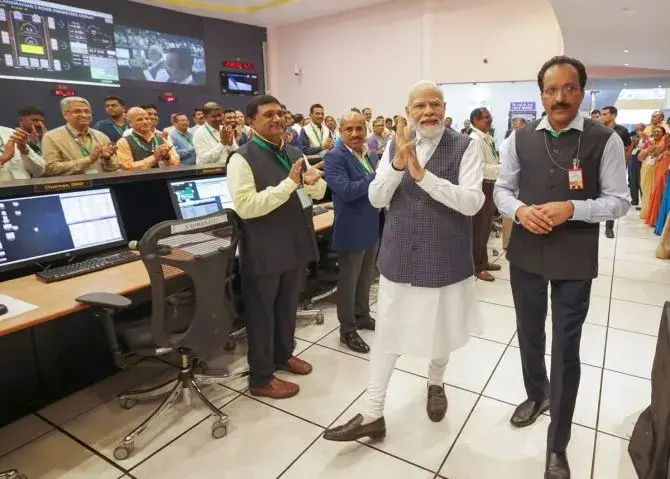
In a momentous announcement, Prime Minister Narendra Modi declared August 23rd as ‘National Space Day,’ during his address to the accomplished scientists at the Indian Space Research Organisation (ISRO) command centre in Bengaluru. The significance of this date stems from the successful soft landing of Chandrayaan-3 on the Moon’s south pole, a remarkable achievement celebrated as a milestone in India’s space exploration journey. Prime Minister Modi expressed his admiration for the Chandrayaan-3 team and particularly lauded the contributions of women scientists who played a pivotal role in the mission’s success. He revealed that the precise spot on the lunar surface where Chandrayaan-3 touched down would be named ‘Shivshakti,’ serving as an inspiration for future generations to utilize science for the betterment of humanity. He also designated the location where its predecessor, Chandrayaan-2, had landed as the ‘Tiranga’ point. Highlighting the importance of advancements in science, technology, and space exploration, PM Modi emphasized that nations leading in these fields are scripting history. To encourage the youth’s involvement in science, technology, and space endeavours, he proclaimed August 23rd, the day of Chandrayaan-3’s lunar landing, as National Space Day. Modi celebrated the fact that India’s national pride now resides on the Moon, marking an unprecedented achievement. He commended the scientists for taking the ‘Make In India’ initiative to the lunar surface, underscoring the boost to indigenous production resulting from Chandrayaan-3’s success. Despite not being physically present during the Chandrayaan-3 landing, PM Modi virtually attended the event, congratulating ISRO chairman S Somanath and the entire team for their historic achievement in the lunar south pole region. Chandrayaan-3, a follow-up mission to Chandrayaan-2, aims to accomplish three key objectives: a safe and soft landing on the lunar surface, rover mobility on the Moon, and in-situ scientific experiments. Following its successful landing on August 23rd, the lander (Vikram) and rover (Pragyan) will conduct a series of experiments on the lunar surface over the next two weeks. On a significant note, Pragyan rover has already made its debut on the Moon, covering a distance of 8 meters. While Chandrayaan-2’s soft-landing attempt didn’t succeed, ISRO’s orbiter from that mission continues to provide valuable data. ISRO’s historic achievement positions India among the world’s top four nations to achieve a soft landing on the Moon’s surface, and notably, it’s the first country to reach the unexplored southern polar region of the Moon.

PM Modi Declares August 23 as ‘National Space Day’ After Chandrayaan-3’s Lunar Success Read More »