ArdorComm Media Group

Thursday, September 10, 2026 1:19 AM

medical colleges India

NMC Proposes Easier Norms for New Medical Colleges, Stricter PG Standards in Draft Reforms

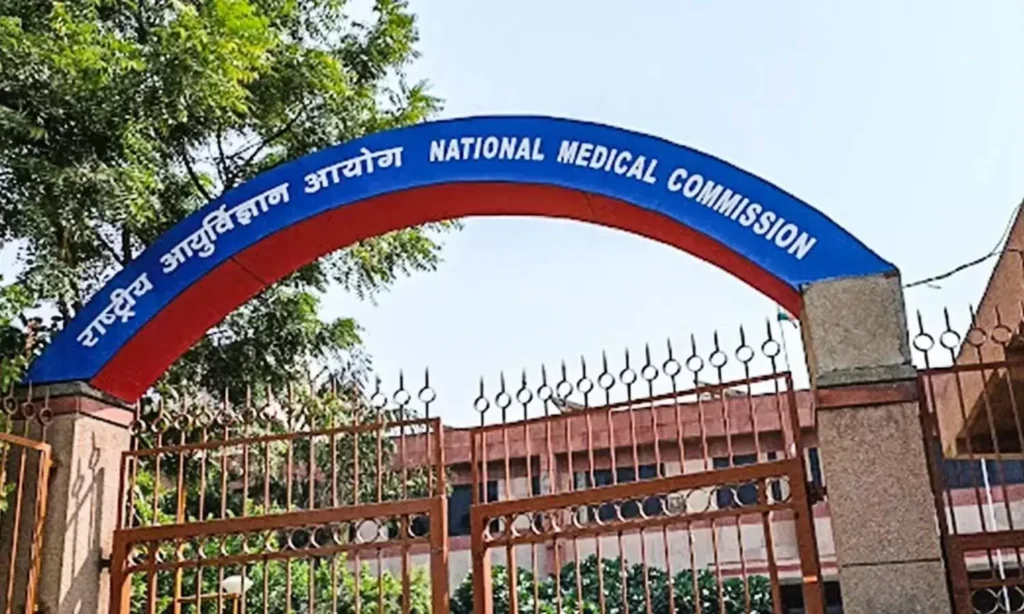
The National Medical Commission (NMC) has introduced draft amendments to its 2023 regulations, aiming to simplify the process of establishing medical colleges while simultaneously tightening the quality benchmarks for postgraduate (PG) medical education. Under the proposed changes, the Commission plans to relax eligibility norms, enabling more trusts and societies to set up medical institutions. At the same time, it is reinforcing stricter compliance requirements for PG programmes, focusing on infrastructure, faculty strength, and clinical exposure. Stakeholders have been invited to submit feedback on the draft regulations by May 7. A key reform targets doctors serving under the Armed Forces Medical Services (AFMS). The NMC has proposed a single-State registration system, allowing AFMS doctors to practice nationwide during active service without requiring multiple State licences. However, upon retirement, they will need to re-register in the State where they intend to practice. The amendments also aim to streamline administrative processes. Annual licence renewals would be centrally managed to prevent lapses, while cases of professional misconduct will be handled by the registration council, based on inputs from the State where the issue arises. Additionally, teaching experience gained in unrecognised departments will no longer be considered valid. To ensure higher standards in PG medical education, the NMC has proposed revised norms, including a minimum of 220 beds for standalone PG institutes, at least 80% bed occupancy, and a stricter faculty-to-student ratio of 1:2. Private medical colleges will be limited to a maximum of four seats when launching or expanding PG courses. Meanwhile, Minister of State for Health and Family Welfare Anupriya Patel informed the Rajya Sabha that 43 new medical colleges have been established for the 2025–26 academic year. The government has also approved 11,682 MBBS seats and 8,967 PG seats nationwide. The Union Health Ministry continues to support expansion through a centrally sponsored scheme focused on setting up medical colleges linked to district and referral hospitals, particularly in underserved and aspirational regions. So far, 157 colleges have been approved under this initiative, with substantial financial backing from both central and state governments. These proposed reforms reflect a dual approach—expanding access to medical education while ensuring tighter quality control across institutions. Source: The Hindu Photo Credit: Getty Images  
NMC Proposes Easier Norms for New Medical Colleges, Stricter PG Standards in Draft Reforms Read More »

NMC Clears Path for For-Profit Firms to Establish Medical Colleges

The National Medical Commission (NMC) has officially revised its regulations to allow for-profit companies to set up medical colleges in India, marking a significant shift from the earlier framework that restricted such institutions to non-profit Section 8 companies. Announcing the change, NMC Chairman Abhijat Chandrakant Sheth said the decision was taken at a recent board meeting and removes the clause that limited eligibility to non-profit entities. The revised policy now enables both non-profit and for-profit organisations to establish medical colleges, particularly under the Public-Private Partnership (PPP) model. Speaking at a press briefing at Dr NTR University of Health Sciences in Vijayawada, Sheth said the move is intended to improve the utilisation of resources in medical education by encouraging collaboration between public authorities and private players. He added that PPP-based medical institutions are already functioning effectively in states such as Gujarat. Sheth noted that while the PPP model will be implemented at the discretion of state governments, hospitals operating under such arrangements will remain under state oversight. As a result, patients will continue to receive treatment either free of cost or at subsidised rates. To maintain academic and institutional standards, the NMC has developed its own accreditation framework and Standard Operating Procedures (SOPs). The commission’s broader objective, Sheth said, is to expand access to quality medical education for the general population while aligning with global benchmarks. Highlighting ongoing reforms, he said the NMC is continuously updating its policies to reflect evolving needs in healthcare education. As part of these efforts, clinical research has been made mandatory, with increased emphasis on artificial intelligence, digital healthcare, and emerging medical technologies to future-proof medical training in India. Source: PTI

NMC Clears Path for For-Profit Firms to Establish Medical Colleges Read More »

Despite Rise in MBBS Seats, Nearly 2,850 Vacant in 2024: Government Data

Despite a 39% surge in MBBS seats over the last few years, 2,849 undergraduate medical seats remained vacant in the 2024–25 academic year, according to the latest figures from the National Medical Commission (NMC). The data was shared in the Lok Sabha on August 1 by Anupriya Patel, Minister of State for Health and Family Welfare, in response to an unstarred question posed by TDP MP Putta Mahesh Kumar. India’s MBBS seat count rose from 83,275 in 2020–21 to 1,15,900 in 2024–25, driven by the establishment of new medical colleges and enhanced infrastructure and faculty availability. However, vacancies in undergraduate medical admissions (excluding AIIMS and JIPMER) peaked at 4,146 in 2022–23 before decreasing to 2,849 this year. The NMC has introduced the Minimum Standard Requirement Regulations, 2023, to ensure that institutions maintain robust standards in infrastructure, clinical materials, faculty strength, and other essential facilities. Among the states, Uttar Pradesh, Tamil Nadu, Karnataka, Maharashtra, and Gujarat accounted for the highest number of medical seats in both 2020–21 and 2024–25. To further boost medical education, the government has implemented a centrally sponsored scheme to upgrade district and referral hospitals into medical colleges, especially in underserved regions. Of the 157 medical colleges approved under this initiative, 131 are currently operational. Additionally, another centrally sponsored scheme is focused on expanding the capacity of existing state and central government medical colleges by strengthening infrastructure and increasing both MBBS and postgraduate seats. As part of the Pradhan Mantri Swasthya Suraksha Yojana (PMSSY), 75 Super Speciality Block projects have been approved to upgrade government medical colleges, with 71 already completed. Under the central sector initiative to establish new AIIMS, 22 institutes have been approved, and undergraduate courses have started in 19 of them. Source: Indian Express

Despite Rise in MBBS Seats, Nearly 2,850 Vacant in 2024: Government Data Read More »