ArdorComm Media Group

Friday, August 7, 2026 12:47 AM

Ministry of Education

Over 1 Lakh Single-Teacher Schools Educate 33 Lakh Students Across India: Education Ministry

ardorcomm news

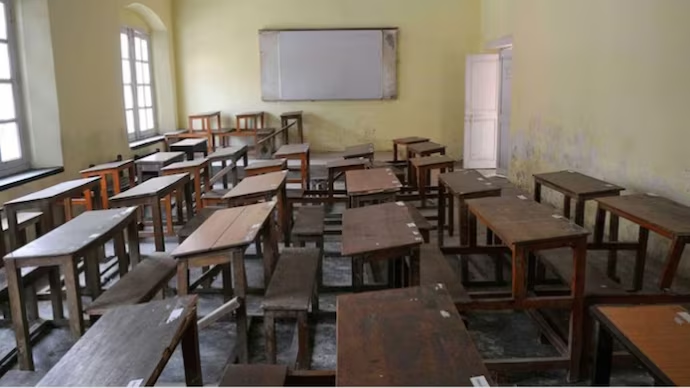
Over 33 lakh students in India are studying in more than one lakh schools run by a single teacher, according to the latest data from the Ministry of Education. Andhra Pradesh tops the list in terms of the number of such schools, while Uttar Pradesh records the highest student enrolment. As per statistics for the academic year 2024–25, India has 1,04,125 single-teacher schools catering to 33,76,769 students — averaging around 34 students per school. This figure highlights ongoing challenges in meeting the Right to Education (RTE) Act norms, which prescribe a pupil-teacher ratio (PTR) of 30:1 for primary grades (I–V) and 35:1 for upper primary levels (VI–VIII). Andhra Pradesh leads with 12,912 single-teacher schools, followed by Uttar Pradesh (9,508), Jharkhand (9,172), Maharashtra (8,152), Karnataka (7,349), and both Madhya Pradesh and Lakshadweep (7,217 each). States like West Bengal (6,482), Rajasthan (6,117), Chhattisgarh (5,973), and Telangana (5,001) also feature prominently on the list. In contrast, Delhi has only nine such schools, while Puducherry, Ladakh, Chandigarh, and Dadra & Nagar Haveli and Daman & Diu report none. The Andaman and Nicobar Islands have just four. In terms of student enrolment, Uttar Pradesh leads with 6,24,327 students studying in single-teacher schools, followed by Jharkhand (4,36,480), West Bengal (2,35,494), Madhya Pradesh (2,29,095), Karnataka (2,23,142), Andhra Pradesh (1,97,113), and Rajasthan (1,72,071). Interestingly, Delhi and Chandigarh, despite having very few such schools, record the highest average student strength per school — 808 and 1,222 respectively. On the other hand, regions like Ladakh (59), Mizoram (70), Meghalaya (73), and Himachal Pradesh (82) have some of the lowest averages. A senior official from the Ministry explained that the government is working to enhance learning outcomes and improve the efficiency of resource use by merging under-enrolled schools — a process known as “rationalisation.” “Single-teacher schools limit the scope of effective teaching and learning. The government is redeploying teachers from non-operational schools to ensure adequate staff availability in single-teacher schools,” the official said. The number of single-teacher schools has seen a steady decline, dropping from 1,18,190 in 2022–23 to 1,10,971 in 2023–24 — a reduction of nearly six percent. Source: PTI  

Over 1 Lakh Single-Teacher Schools Educate 33 Lakh Students Across India: Education Ministry Read More »

Higher Education Secretary Reviews Cleanliness Initiatives, Monitors Progress Under Special Campaign 5.0

ardorcomm news

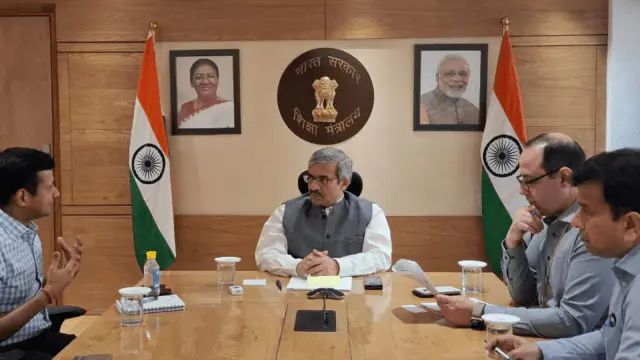
Higher Education Secretary Vineet Joshi on Wednesday carried out a detailed inspection of the Ministry of Education’s offices at Shastri Bhawan, reviewing cleanliness standards and assessing progress under the Special Campaign 5.0. According to officials, the inspection aimed to evaluate ongoing efforts to enhance workplace hygiene, streamline office operations, and promote efficient record and space management. The campaign’s implementation phase, running from October 2 to 31, focuses on resolving pending issues such as MP and PMO references, inter-ministerial communications, public grievances, and Parliamentary assurances. Participating departments are required to report their progress daily. The preparatory phase of the campaign was held between September 15 and 30, during which officials, heads of centrally funded institutions, and representatives from UGC and AICTE were urged to set measurable goals, identify pending cases, and earmark focus areas for cleanliness and digitalisation. Special emphasis has been placed on the disposal of outdated files, e-waste management, and office beautification. The ministry aims to surpass the achievements of Special Campaign 4.0 by enhancing digital processes, accelerating record disposal, and promoting eco-friendly practices across departments. Source: PTI

Higher Education Secretary Reviews Cleanliness Initiatives, Monitors Progress Under Special Campaign 5.0 Read More »

NCERT to Handle Equivalence of Class 10 & 12 Certificates Across All Boards

The National Council of Educational Research and Training (NCERT) will now be responsible for granting equivalence to Class 10 and Class 12 certificates issued by various school education boards across India. This equivalence will be applicable for admissions to higher education institutions as well as recruitment in government jobs, according to an official announcement on Friday. The Department of School Education and Literacy, under the Ministry of Education, has published the notification in the e-Gazette. This move replaces the earlier notification of November 15, 2021, which had entrusted the task to the Association of Indian Universities (AIU). The responsibility will now be carried out by NCERT through its National Assessment Centre—Performance Assessment, Review and Analysis of Knowledge for Holistic Development (PARAKH)—set up under the provisions of the National Education Policy (NEP) 2020. According to the ministry, this institutional mechanism will ensure that the process of granting equivalence is conducted with academic rigour while upholding the highest educational standards. The system will apply to all school boards established by the central and state governments, statutory bodies, or recognised institutions. Importantly, the equivalence granted by NCERT will be valid nationwide, ensuring inter-board parity and enabling seamless student mobility across school education boards. Source: PTI    

NCERT to Handle Equivalence of Class 10 & 12 Certificates Across All Boards Read More »

NIRF Rankings 2025: IIT Madras leads overall for 7th year, IISc retains top university spot for 10th year

The National Institutional Ranking Framework (NIRF) 2025, released by the Union Ministry of Education on Thursday, reaffirmed the dominance of India’s premier institutes. The Indian Institute of Technology (IIT) Madras once again clinched the top position in the overall category for the seventh consecutive year, while the Indian Institute of Science (IISc), Bengaluru, was named the best university for the tenth straight year. The top 10 list in the overall rankings was largely led by IITs, alongside All India Institute of Medical Sciences (AIIMS), New Delhi, Jawaharlal Nehru University (JNU), and IISc. Among universities, JNU retained its second rank, while Delhi University improved its standing to fifth. A major highlight was BITS Pilani breaking into the top 10 universities for the first time since 2016, after climbing from 19th place last year. In the colleges category, Delhi University institutions dominated. Hindu College and Miranda House maintained the first and second positions, while Hansraj College and Kirori Mal College achieved their best-ever rankings at third and fourth, overtaking St. Stephen’s College (fifth this year). Lady Shri Ram College slipped significantly from 10th to 17th. Notably, Hansraj had been ranked 21st and Kirori Mal 20th back in 2018, highlighting their steady rise. Institutions were assessed on parameters including Teaching, Learning & Resources (TLR), Research & Professional Practice (RP), Graduation Outcomes (GO), Outreach & Inclusivity (OI), and Perception (PR). IIT Madras excelled with a perfect 100 in perception—an achievement it has maintained since 2023—alongside strong scores in TLR (90.58). However, its weakest area remained inclusivity, with a score of 63.34. Among colleges, Hansraj College and Atma Ram Sanatan Dharma College recorded the strongest research and professional practice scores (above 96), whereas Hindu College led on perception. In the universities category, JNU stood out for graduation outcomes (99.93), while IISc topped in teaching, learning, and perception but lagged in inclusivity. The 2025 edition saw a record 7,692 institutions participate, compared to 2,426 in the inaugural 2016 rankings. This year introduced a new Sustainable Development Goals (SDG) category, recognizing institutions’ green and innovation practices. IIT Madras ranked first here as well, besides leading in engineering and innovation. In management, IIM Ahmedabad retained its crown. Anil D. Sahasrabudhe, Chairman of the National Board of Accreditation, highlighted a new rule—negative marking for retracted research papers—to address growing concerns over academic integrity. IIT Madras Director Prof. V. Kamakoti credited the institution’s consistent top performance to “focused team effort.” Source: Indian Express 

NIRF Rankings 2025: IIT Madras leads overall for 7th year, IISc retains top university spot for 10th year Read More »

Kendriya Vidyalayas See Sharpest Drop in Fresh Admissions in Five Years

Fresh admissions to Kendriya Vidyalayas (KVs) have dipped to a five-year low for the 2024–25 academic year, with only 1,39,660 new students enrolled, as per data presented by the Ministry of Education in the Lok Sabha. This marks a steady and concerning downward trend in both new enrolments and overall student numbers in India’s flagship network of centrally run schools. A Downward Spiral in Enrolments Responding to a question in Parliament, Union Education Minister Dharmendra Pradhan provided year-wise figures highlighting the consistent drop in KV enrolments. New admissions have declined from 1,95,081 in 2020–21 to 1,39,660 in 2024–25 — a fall of nearly 29%. Meanwhile, the total student strength across all KVs also saw a dip from 14,29,434 in 2021–22 to 13,50,518 in 2024–25. Academic Year Fresh Enrolments Total Student Strength 2020–21 1,95,081 13,87,763 2021–22 1,82,846 14,29,434 2022–23 1,57,914 14,24,147 2023–24 1,75,386 13,89,560 2024–25 1,39,660 13,50,518 Though there was a temporary recovery in enrolments during 2023–24, the overall trajectory has remained downward, with this year witnessing the most significant fall in both fresh admissions and total enrolment figures. Structural Strains in a National Network Established to cater primarily to children of Central Government employees — particularly those in transferable jobs within Defence, Paramilitary Forces, PSUs, and autonomous institutions — the KV system currently operates 1,280 schools across India. However, challenges such as inadequate infrastructure, teacher shortages, and admission bottlenecks, especially in urban and semi-urban areas, are beginning to strain the system. Expansion Despite Falling Numbers Despite the declining enrolment trend, the Central Government approved the setting up of 85 new Kendriya Vidyalayas in December 2024, aimed at boosting capacity in the Civil and Defence sectors. Additionally, a KV in Shivamogga, Karnataka, is being expanded by adding two new sections per class. The initiative carries a total budget of ₹5,872.08 crore — ₹2,862.71 crore allocated for capital projects (including construction) and ₹3,009.37 crore for recurring expenditures. However, actual implementation remains slow due to challenges such as: Delays in land transfer and legal ownership Approval processes for building designs and cost estimates Fund disbursal lags Administrative clearance delays at the local level These procedural hurdles often stall the timely launch of new schools or the expansion of existing ones. Decoding the Decline Experts attribute the drop in admissions to several key factors: Overcrowding: Many KVs have hit their capacity limits, especially in cities, making it harder for new students to secure seats. Construction delays: Several approved schools are yet to become operational due to incomplete infrastructure. Emerging competition: An increase in affordable, private CBSE schools in smaller towns may be attracting families away from KVs. Policy ambiguities: Unclear guidelines in certain regions are adding to confusion over eligibility and admissions. Rethinking the Road Ahead While the government continues to emphasize the ongoing expansion of the KV network, the sharp drop in enrolment calls for an urgent review of operational and policy priorities. Education experts suggest the need for swift action to improve school infrastructure, accelerate construction timelines, digitize admissions, and invest in teacher training. With public demand for affordable, quality education still high, the future of Kendriya Vidyalayas may well depend on how effectively these systemic issues are addressed. Source: TOI

Kendriya Vidyalayas See Sharpest Drop in Fresh Admissions in Five Years Read More »

India Bags 2 Gold and 2 Silver Medals at International Chemistry Olympiad 2025 in Dubai

India has once again showcased its scientific prowess on the global stage, securing two gold and two silver medals at the 57th International Chemistry Olympiad (IChO) 2025, held in Dubai, UAE, from July 5 to 14. The event brought together 354 students from 90 nations, along with representatives from five observer countries. This year marks India’s 26th consecutive participation in the IChO, and the team’s outstanding performance earned the country sixth place in the overall medal standings, alongside nations like Ukraine, Uzbekistan, Kazakhstan, and Israel. The gold medals were clinched by Devesh Pankaj Bhaiya from Jalgaon, Maharashtra, and Sandeep Kuchi from Hyderabad, Telangana. Debadatta Priyadarshi of Bhubaneshwar, Odisha, and Ujjwal Kesari of New Delhi were awarded silver medals. The Indian contingent was groomed and guided by the Homi Bhabha Centre for Science Education (HBCSE), Mumbai, under the aegis of the Tata Institute of Fundamental Research (TIFR). HBCSE is the nodal agency responsible for organizing and conducting Olympiads in India. Students are selected through a rigorous multi-stage process beginning with the National Olympiad Examinations. The mentorship team for IChO 2025 featured Prof Ankush Gupta (Head Mentor, HBCSE), Prof Seema Gupta (Acharya Narendra Dev College, Delhi), and Scientific Observers Dr Neeraja Dashaputre (IISER Pune) and Dr Amrit Mitra (Government General Degree College, Singur, West Bengal). Prior to departure, the students received in-depth training through specialized camps at HBCSE. India has a strong legacy at the IChO, consistently performing well since its debut. Statistically, Indian participants have bagged 30% gold, 53% silver, and 17% bronze medals across all editions. The past decade has seen a noticeable improvement, with 38% of the medals being gold and 58% silver, reflecting the country’s growing strength in competitive science. The Indian team’s participation is made possible through the collaborative efforts of the National Steering Committee on Science Olympiads and key government bodies, including the Department of Atomic Energy (DAE), Department of Science and Technology (DST), Department of Space (DOS), and the Ministry of Education (MoE), which continue to provide critical funding and policy support. India’s stellar performance at IChO 2025 underscores the effectiveness of its science education initiatives and the dedication of its young scientific minds. Source: Indian Express

India Bags 2 Gold and 2 Silver Medals at International Chemistry Olympiad 2025 in Dubai Read More »

Govt Forms Panel to Probe Coaching Dependency and Fairness of Entrance Exams

The Ministry of Education has constituted a nine-member committee to investigate the growing dependence of students on coaching centres, the phenomenon of ‘dummy schools,’ and the integrity and fairness of competitive entrance exams like JEE and NEET, officials confirmed. Chaired by Higher Education Secretary Vineet Joshi, the committee will delve into systemic shortcomings within the school education framework that push students towards coaching hubs. The panel will examine the limited emphasis on critical thinking, analytical reasoning, innovation, and conceptual understanding in traditional schooling — factors that fuel rote learning and, in turn, coaching culture. One major concern to be addressed is the rise of ‘dummy schools’ — institutions where students enroll merely for board exam eligibility while devoting their full attention to intensive coaching. These setups allow aspirants to bypass classroom learning altogether, focusing solely on entrance exam preparation. Many also exploit state domicile criteria through such enrollments to gain regional admission advantages, such as eligibility for the Delhi state quota in medical colleges. “The committee will study how dummy schools undermine formal education and promote exclusive dependence on coaching. It will recommend ways to address this growing issue,” a senior ministry official said. The panel will also scrutinize the current model of entrance exams to assess their fairness and relevance in the context of mainstream schooling. It will investigate whether the absence of formative assessments and a weak focus on concept clarity in school systems are inadvertently supporting the proliferation of coaching institutes. Another key focus area is the imbalance between the rising demand for quality higher education and the limited seats available in top institutions — a gap that often drives students toward costly and stressful coaching environments. The panel’s mandate also includes evaluating students’ and parents’ awareness of diverse career opportunities beyond elite engineering and medical colleges. It aims to assess the status of career counselling mechanisms in schools and recommend strategies to enhance career guidance systems nationwide. Alongside Vineet Joshi, the committee comprises the CBSE chairperson, joint secretaries from the school and higher education ministries, representatives from IIT Madras, IIT Kanpur, NIT Trichy, NCERT, and principals from Kendriya Vidyalaya, Navodaya Vidyalaya, and a private school. This initiative follows increasing concerns over the coaching industry’s practices, including rising student suicides, fire hazards, inadequate infrastructure, and questionable teaching methods. The government hopes the panel’s findings will lead to more balanced, student-centric reforms in education and examination systems. Source: PTI

Govt Forms Panel to Probe Coaching Dependency and Fairness of Entrance Exams Read More »

BHU Rolls Out 63 New SWAYAM Courses for 2025, Takes Lead in Digital Education

Ardorcomm news

Banaras Hindu University (BHU) has introduced 63 newly developed online courses on the SWAYAM platform for the upcoming 2025 academic session. Registration is currently open at swayam.gov.in/INI, with classes scheduled to commence on July 21 and August 18. These SWAYAM courses, designed to span four, eight, or twelve weeks, cater to a broad range of academic disciplines including commerce, management, humanities, arts, social sciences, psychology, life sciences, law, engineering, and Ayurveda. The curriculum includes both conventional subjects and modern, interdisciplinary topics. Final examinations for these programmes will be held in October 2025. SWAYAM (Study Webs of Active Learning for Young Aspiring Minds) is a flagship initiative by the Ministry of Education that offers free access to high-quality online courses for learners across the country. BHU has actively supported this initiative and, over the past two sessions, has already developed 37 such programmes. Recognizing BHU’s dedication to expanding digital education, the Ministry of Education has designated the university as the National Coordinator (NC) for Institutions of National Importance (INIs) on the SWAYAM platform. As part of this role, BHU will oversee the design, academic quality, and implementation of online courses created by more than 160 prestigious institutions, including IITs and Central Universities. Dr. Ashutosh Mohan from BHU’s Institute of Management Studies has been appointed as the official National Coordinator for this initiative. The university is now tasked with supporting the academic delivery, administration, and strategic growth of SWAYAM’s Massive Open Online Courses (MOOCs) developed by INIs nationwide. Additionally, BHU has launched a dedicated portal news.bhu.ac.in to highlight its digital learning initiatives, student welfare activities, faculty development programs, and broader institutional achievements. The website serves as a central hub for news, events, research projects, patents, and multimedia content, offering a detailed look into life at the university. Source: Indian Express

BHU Rolls Out 63 New SWAYAM Courses for 2025, Takes Lead in Digital Education Read More »

IIT Kanpur Introduces SATHEE ICAR for ICAR UG Exam Preparation

The Indian Institute of Technology Kanpur (IITK) has launched SATHEE ICAR, a new initiative to support students preparing for the Indian Council of Agricultural Research (ICAR) UG entrance exams. The initiative, in collaboration with the Ministry of Education, aims to provide free, accessible exam preparation resources for students across India. SATHEE ICAR offers a comprehensive learning platform, including recorded lectures by IIT professors, live interactive classes with experts, topic-based practice questions, and AI-powered analytics that help identify areas for improvement. Additionally, it provides personalized study plans and mock tests to allow students to assess their performance against peers nationwide. Students interested in SATHEE ICAR can register through the official website—icar.iitk.ac.in—or download the SATHEE app from the App Store or Google Play. The ICAR entrance exams are gateways for admission into undergraduate programs in agriculture and allied sciences at over 70 prestigious institutions, including the Indian Agricultural Research Institute (IARI), National Dairy Research Institute (NDRI), and Central Institute of Fisheries Education (CIFE). The programs open up career opportunities in agronomy, horticulture, veterinary sciences, agricultural engineering, and other fields within research, academia, agribusiness, and government sectors. Source: Indian express  

IIT Kanpur Introduces SATHEE ICAR for ICAR UG Exam Preparation Read More »

NEET UG Row: Retest for 1,563 Candidates an Option; Exam Sanctity Affected, Says Top Court

Article

A retest for all 1,563 candidates who were awarded “grace marks” for “loss of time” in this year’s National Eligibility-cum-Entrance Test (Undergraduate) is among the options being considered by the four-member committee formed last week by the National Testing Agency (NTA). This follows an uproar over the extraordinarily large number of candidates scoring well in the entrance test, with 67 securing the perfect score of 720/720. The Indian Express has learned that the committee, headed by a former UPSC chairman, in its first few meetings, has discussed offering all 1,563 candidates the option to either sit for a retest or accept the “non-normalised score,” which reflects the scores they actually achieved before the addition of grace marks. The exact composition of the committee hasn’t been disclosed by the government, but it is expected to submit its recommendation to the NTA in the next two days, sources said. On Tuesday, the Supreme Court, while hearing a petition seeking the cancellation of the exams amid allegations of leakage of the NEET-UG paper, said the exam “sanctity has been affected” and sought answers from the NTA and the Centre. However, the bench, presided over by Justice Vikram Nath, declined to stay the counselling and tagged the petition with another to be heard on July 8 by a bench led by Chief Justice of India D Y Chandrachud. “Let the counselling start. We are not stopping the counselling,” Justice Nath said when Senior Advocate Mathews J Nedumpara, appearing for the petitioners, urged the bench to stay the counselling. Announced on June 4, the NEET-UG results drew immediate attention after 67 candidates got the perfect score of 720/720, and some candidates got 718 or 719 — marks others claimed were not possible under the exam scheme. The NTA attributed this to a combination of factors, including a relatively easier paper, the decision to award additional marks to students who lost time during the exam because of errors and delays on the part of NTA staff and invigilators, and an incorrect question. Of these three reasons, as many as 1,563 candidates, across six test centres, witnessed an artificial bump in their results due to the additional marks awarded to them in proportion to the time they lost because of mistakes made by invigilation staff. Of the six centres, two were in Chhattisgarh (one each in Balod and Dantewada), one each in Meghalaya, Surat, Haryana’s Bahadurgarh, and Chandigarh. According to video footage reviewed by the NTA, it was determined that candidates across the six centres had lost up to 40 minutes and were compensated appropriately with grace marks based on a normalisation formula from a 2018 Supreme Court judgement regarding a similar incident in CLAT. The NEET-UG paper duration is 200 minutes. The announcement of NEET-UG results was followed by an uproar, forcing the NTA and the Ministry of Education to constitute a committee to at least review the results of the 1,563 candidates. “Although this is not the final decision, many members are leaning towards the option of asking these candidates to either accept their raw score (pre-normalisation) score or sit for a retest. The majority of the 1,500 candidates scored less than 300 out of 720 marks even after normalisation. It was felt they may not come forward for the retest even if offered as an option. For the remaining numbers, it will not be too difficult to conduct the exam again,” said a source who did not wish to be identified. The Directorate General of Health Services hasn’t announced the counselling schedule yet. If the NTA finally decides to conduct a retest, it will have to consult DGHS to ensure that the results are announced before the counselling process begins. Around 24 lakh candidates took the entrance examination held on May 5 in 571 cities, 14 of which were outside India. According to the latest available data, there are a total of 1,08,940 MBBS seats in more than 700 medical colleges across the country. In the Supreme Court, a fresh writ petition, filed by a batch of students, raised doubts about the sanctity of the examination in the light of allegations of the paper leak and urged the court to cancel it and direct the NTA to hold it again. In their plea, the students said, “After having stumbled upon news of the NEET exam paper leak, they have been shaken… the Petitioners are under tremendous stress and anxiety … their family members nurtured the dream of Petitioners becoming a medical practitioner one day.” Hearing a similar plea on May 17, a CJI-led bench had declined to stay the declaration of the NEET exam results and posted the matter for hearing on July 8.

NEET UG Row: Retest for 1,563 Candidates an Option; Exam Sanctity Affected, Says Top Court Read More »