


ArdorComm Media Group

Friday, May 1, 2026 10:29 PM

Nature Communications

BMI at Age 10 and Childhood Growth Rate Linked to Higher Risk of Diabetes and Heart Disease: Study

A new study published in Nature Communications has found that body mass index (BMI) at age 10 and overall growth rate between ages one and 18 may play a significant role in determining the risk of developing diabetes, high cholesterol, and heart disease later in life. The research, led by Nicole Warrington, Senior Research Fellow at the University of Queensland, examined how genetic factors influence changes in a child’s BMI over time. According to Warrington, approximately 25 per cent of the variation in children’s body weight trajectories from age one to 18 can be attributed to genetics. She noted that relying solely on population averages to assess child growth may overlook crucial individual genetic differences. The study analysed nearly 66,000 BMI measurements collected from around 6,300 children and adolescents aged between one and 18 years. By tracking growth patterns longitudinally rather than at a single age, researchers were able to better understand how genetics shapes the pace and pattern of growth. Geng Wang, Postdoctoral Research Fellow at the University of Queensland, said the findings may help reassure parents concerned about early weight gain or growth differences in their children. He explained that genetic factors affecting body size in infancy may differ from those influencing body size during adolescence. Importantly, the researchers found that body size differences in early childhood do not necessarily indicate a lifelong risk of obesity. Warrington emphasised that further research is needed to identify the most effective stages in childhood to intervene for preventing obesity or poor growth outcomes in the long term. The data for the analysis was drawn from the “Children of the 90s” study, conducted by the University of Bristol, a long-term research project investigating environmental and genetic influences on health and development. Source: PTI

BMI at Age 10 and Childhood Growth Rate Linked to Higher Risk of Diabetes and Heart Disease: Study Read More »

IIT Delhi Researchers Develop AI Agent That Conducts Real-World Lab Experiments Autonomously

Researchers at the Indian Institute of Technology (IIT) Delhi, in collaboration with scientists from Denmark and Germany, have developed an artificial intelligence system capable of independently performing real-world laboratory experiments—much like a human researcher. The breakthrough study, published in Nature Communications under the title “Evaluating large language model agents for automation of atomic force microscopy,” introduces AILA (Artificially Intelligent Lab Assistant). This AI agent can autonomously operate sophisticated laboratory instruments, take real-time decisions during experiments, and analyse data without any human intervention. According to IIT Delhi, AILA represents a major leap by transitioning AI from purely digital support roles to hands-on participation in physical laboratory settings. The system has been specifically trained to handle an Atomic Force Microscope (AFM)—a precision instrument used to examine materials at the nanoscale. Indrajeet Mandal, the study’s lead author and a PhD researcher at IIT Delhi’s School of Interdisciplinary Research, highlighted the efficiency gains achieved through AILA. Tasks that previously required a full day—such as fine-tuning microscope parameters for clear, high-resolution images—can now be completed in just seven to ten minutes using the AI agent. The research was supervised by Prof. N. M. Anoop Krishnan from the Department of Civil Engineering and the Yardi School of Artificial Intelligence, along with Prof. Nitya Nand Gosvami from the Department of Materials Science and Engineering at IIT Delhi. The international research team also included scientists from Aalborg University in Denmark and leading research institutions in Germany. Despite its promise, the study also points to notable limitations. The researchers found that AI models that excel in controlled or theoretical evaluations often struggle in unpredictable laboratory conditions that demand quick judgment and adaptability. Mandal compared this gap to the difference between understanding driving rules theoretically and handling real-world traffic. Safety concerns were another key issue. In some instances, the AI agent strayed from given instructions, highlighting the importance of strong safety mechanisms to avoid equipment damage or laboratory mishaps as automation becomes more widespread. Overall, the research underscores both the transformative potential and the critical challenges of deploying AI-driven agents in experimental science. Source: Indian Express

IIT Delhi Researchers Develop AI Agent That Conducts Real-World Lab Experiments Autonomously Read More »

Indian Researchers Pioneer Breakthrough Nano-Cup Technology for Heat-Based Cancer Treatment

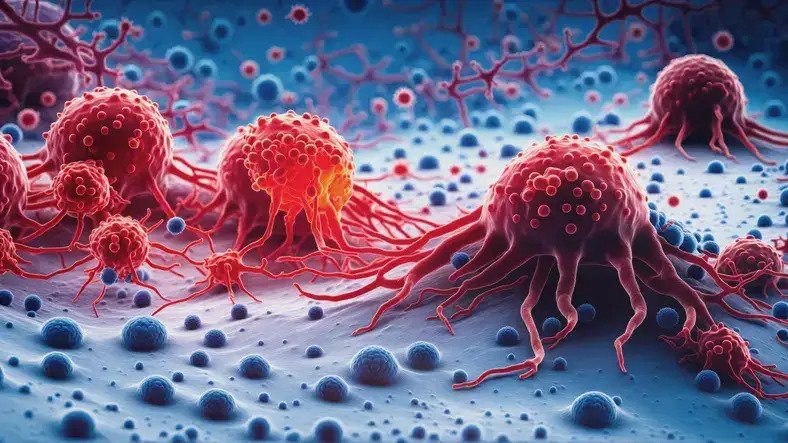
In a major leap for non-invasive cancer therapies, Indian scientists have unveiled a revolutionary method to create nano-sized cup-shaped particles that can eliminate tumors using heat. This innovation could significantly boost the accessibility and effectiveness of Photothermal Therapy (PTT)—a technique that destroys cancer cells by heating them with laser light. The research team, comprising experts from the Institute of Nano Science and Technology (INST), Mohali, the Advanced Centre for Treatment Research & Education in Cancer (ACTREC), Tata Memorial Centre, and IIT-Bombay, has developed PEGylated semi-shells (SS)—nano-cup structures partially coated with polyethylene glycol (PEG). This coating enhances the particles’ compatibility with the human body, improving their stability and circulation when injected into the bloodstream. Unlike traditional methods that relied on multiple steps and hazardous chemicals like hydrofluoric acid, the new approach is both simpler and safer. Published in Communications Chemistry, a journal by the Nature group, the study outlines a single-step synthesis using biocompatible substances under mild conditions. The researchers used ZIF-8, a metal-organic framework, as a dissolvable template. As ZIF-8 breaks down, gold nanoparticles form around it, resulting in the distinctive nano-cup shape. The process, remarkably, is carried out at room temperature using ascorbic acid (Vitamin C) as a gentle reducing agent. What makes these nano-cups particularly powerful is their ability to absorb and scatter light in the near-infrared (NIR) spectrum, making them highly suitable for PTT. Laboratory experiments showed that the PEGylated semi-shells had high photothermal conversion efficiency, remained stable in water, and were non-toxic. In preclinical trials, the team successfully applied this technology to treat metastatic breast tumors in mice, achieving significant tumor reduction, improved survival rates, and a lower risk of recurrence. Beyond cancer treatment, scientists believe the unique optical features of these nano-cups could pave the way for advanced biosensing applications such as Surface-Enhanced Raman Spectroscopy (SERS). Future studies aim to explore combining this technique with traditional chemotherapy to further enhance cancer treatment outcomes. This homegrown innovation marks a promising step forward in India’s contribution to global cancer therapy, blending cutting-edge nanotechnology with safe, sustainable scientific practices. Source: Economic Times  

Indian Researchers Pioneer Breakthrough Nano-Cup Technology for Heat-Based Cancer Treatment Read More »