ArdorComm Media Group

Sunday, February 8, 2026 3:14 AM

NCERT

Centre, NIOS, and NCERT Join Hands to Advance Inclusive Education for Children with Disabilities

In a significant move to promote inclusive education, the Department of Empowerment of Persons with Disabilities (DEPwD) has entered into a tripartite agreement with the National Institute of Open Schooling (NIOS) and the National Council of Educational Research and Training (NCERT). The agreement, signed in the presence of Union Ministers Virendra Kumar and Dharmendra Pradhan, aims to create an enabling educational environment for children with disabilities by aligning with the principles of the National Education Policy (NEP) 2020. This strategic collaboration will focus on revamping curriculum and learning materials to ensure they are accessible, inclusive, and tailored to the needs of learners with disabilities. NCERT will play a key role in modifying textbooks and curricular content to reflect these values. As part of the agreement, NIOS will grant recognition to special schools operated by NGOs under the Deendayal Disabled Rehabilitation Scheme (DDRS), designating them as Special Accredited Institutions for Education of the Disabled (SAIEDs). These institutions will offer a broad spectrum of academic and vocational education—from foundational levels to senior secondary—supported by NIOS in terms of admissions, exams, study materials, and necessary accommodations during assessments. Union Minister Virendra Kumar highlighted the initiative as a step toward realising Prime Minister Narendra Modi’s vision of inclusive growth, emphasizing that every child, regardless of ability, should have the opportunity to receive quality education. “This MoU affirms that inclusive education is not a luxury but a fundamental right,” he said. Education Minister Dharmendra Pradhan underscored the broader societal impact of inclusive education. “Creating a just and empathetic society begins with our schools. NEP 2020 is a progressive framework guiding us, and in the coming year, we are also prioritising infrastructure like accessible toilets to help reduce dropout rates,” he noted. DEPwD Secretary Rajesh Aggarwal reiterated the commitment to widen access for students with disabilities, including facilitating their entry into premier institutions such as IITs and IIMs. He also praised NIOS for its innovative step of introducing Indian Sign Language as a subject at the secondary level. Echoing the vision, Sanjay Kumar, Secretary of the Department of School Education and Literacy, stated that the ultimate mission is to ensure every child with a disability is able to complete their schooling and access equal opportunities in higher education and beyond. Source: PTI

Centre, NIOS, and NCERT Join Hands to Advance Inclusive Education for Children with Disabilities Read More »

NCERT Introduces ‘Criticism of Secularism’ in Textbook: Parties Disregard Equality, Prioritise Minority

The National Council of Educational Research and Training (NCERT) has revised the Class XI political science textbook, incorporating a critical perspective on secularism in India. This new content suggests that political parties prioritize minority interests for vote bank politics, leading to “minority appeasement.” Key Changes: Previous Content: The earlier edition emphasized that there is “little evidence” suggesting vote bank politics favors minorities and stated that such politics should only be considered wrong if it results in injustice. It claimed that all political parties utilize vote banks without inherently troubling implications unless injustice is created. Revised Content: The new version states that while vote bank politics might theoretically be harmless, it distorts electoral politics by mobilizing social groups to vote en masse for specific parties, thus prioritizing short-term gains over long-term development. It highlights that competitive vote bank politics can exacerbate social divisions and portrays different groups as rivals. The revision asserts that this form of politics is associated with minority appeasement, leading to the marginalization of minority groups and preventing social reforms. Justification for Changes: The NCERT explained that the previous version failed to adequately define vote bank politics and appeared to justify it. The revised content aims to provide a relevant criticism of Indian secularism, addressing perceived anomalies in the earlier text. These revisions are part of NCERT’s ongoing efforts to update the curriculum but are separate from the broader overhaul set to be completed by the 2025-26 academic session. This ongoing process, initiated in September 2021, involves comprehensive inputs from states, constitutional bodies, and expert groups.

NCERT Introduces ‘Criticism of Secularism’ in Textbook: Parties Disregard Equality, Prioritise Minority Read More »

NCERT Announces Revision of CBSE Syllabus for Classes 3 and 6 from 2024-25 Academic Session

The National Council of Education Research (NCERT) is set to introduce revised syllabi for Classes 3 and 6 of the Central Board of Secondary Education (CBSE) in line with the National Curriculum Framework for School Education (NCF-SE) 2023. These changes are scheduled to take effect from the academic year 2024-25. A notice issued by NCERT outlines the plan for implementing the revised curriculum, emphasizing the need for adjustments to school timetables to accommodate the changes. Collaboration among CBSE, Kendriya Vidyalaya Sangathan (KVS), and Navodaya Vidyalaya Samiti (NVS) is deemed essential for the successful implementation of these modifications. The notice highlights the importance of proactive communication from CBSE to school heads, teachers, and parents regarding the updated syllabi and recommended time allocations for Grades 3 and 6. It underscores the significance of engaging students in playful and activity-based learning, aligning with the holistic approach advocated by the National Education Policy (NEP) 2020. To facilitate a smooth transition for students, NCERT will provide a syllabus bridge program for Grade 6 and clear guidelines for Grade 3. These initiatives aim to acquaint students with new pedagogical perspectives and areas of study, including Arts, Physical Education, Vocational Education, and The World Around Us. The revised Grade 3 syllabi encompass a diverse range of topics, reflecting contemporary educational perspectives. NCERT is developing activity books and textbooks tailored to the updated curriculum to support students’ learning experiences. Schools are urged to disseminate this information to all stakeholders and adopt a proactive strategy to ensure students’ seamless adaptation to the revised syllabi. By fostering awareness and collaboration among educators, parents, and the wider community, NCERT aims to enhance the quality and effectiveness of education delivery in line with evolving educational standards and objectives.

NCERT Announces Revision of CBSE Syllabus for Classes 3 and 6 from 2024-25 Academic Session Read More »

NCERT Granted Deemed University Status

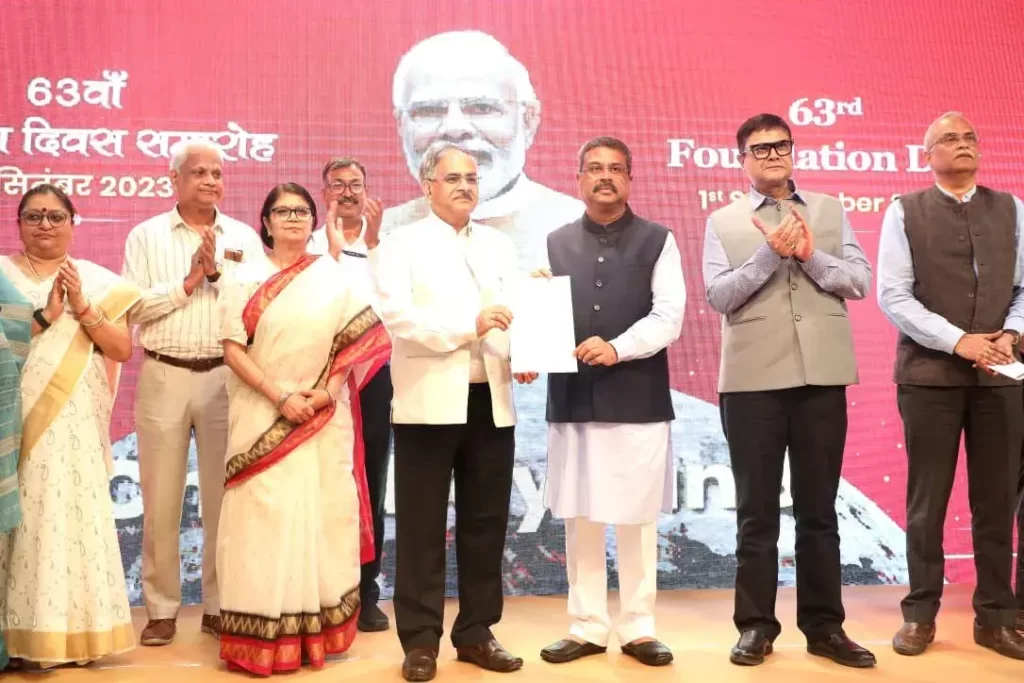
In a significant development, the National Council of Educational Research and Training (NCERT) has been granted the prestigious status of a deemed university, as announced by the Union Minister for Education and Skill Development and Entrepreneurship, Dharmendra Pradhan. This announcement was made during the commemoration of NCERT’s 63rd foundation day in the national capital. Over the years, NCERT has played a pivotal role in educational research and has actively influenced various aspects of school education, teacher training, and adult literacy. With this new status as a research university, NCERT will have the opportunity to engage in global collaborations and contribute to the international educational landscape. Minister Pradhan also highlighted the significance of “Jadui Pitara,” an innovative play-based learning-teaching material designed for children aged 3 to 8 years, which has the potential to positively impact 10 crore children across the country. During his address, Minister Pradhan stressed the importance of creating educational content in native languages. He proposed the establishment of Augmented Reality, Virtual Reality, and Artificial Intelligence labs in all seven regional NCERT centres to foster research and innovation in India. These centres should be equipped with state-of-the-art technologies from around the world and have infrastructure ready for the future. He also urged NCERT to standardize teacher training curricula in Early Childhood Care and Education (ECCE). Recognizing the significance of the fourth industrial revolution, Minister Pradhan suggested the creation of concise booklets covering various subjects, including recent developments like India’s Covid-19 management and Chandrayaan 3. He emphasized the importance of imparting knowledge about the latest advancements alongside Indian values and traditions to the new generation. During the event, students from the Regional Institute of Education in Bhopal performed a skit and song in 22 languages, showcasing the educational impact of “Jadui Pitara.” Additionally, a short film highlighted several noteworthy initiatives and achievements of NCERT. Minister Pradhan also inaugurated a new Information and Communication Technology (ICT) laboratory at the Central Institute of Educational Technology (CIET) as part of the celebrations. NCERT, established in 1961 under the Society Act, has been instrumental in advising and assisting the government in matters related to school education. This recent recognition as a deemed university marks a significant milestone in its educational journey.

NCERT Granted Deemed University Status Read More »

Prof. Pratyusha Kumar Mandal, Secretary, NCERT, MoE, Govt. of India, Shares Insights on Transformative steps taken by NCERT

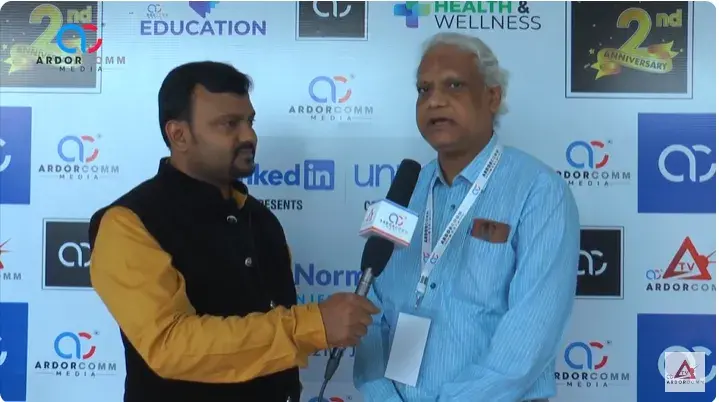
“Textbooks developed by NCERT are available online, and the digital versions are enriched with additional information as learning aids,” says Prof. Pratyusha Kumar Mandal, Secretary, NCERT, MoE, Govt. of India, in an interview with Chandan Anand, CEO & Group Editor, ArdorComm Media Group at the ‘New Normal – Education Leadership Summit & Awards 2023’ #ELSANewDelhi #ELSAGurugram What has been your takeaway, and experience at today’s event? I must say that this is a wonderful effort by you to bring so many people who are holding leadership positions in their respective schools and other organizations on one common platform to share their experiences. It’s only after sharing such experiences that we can find the way to implement the National Education Policy 2020. In today’s e-learning and digital era, there are a lot of changes happening in the publication sector. In what ways is NCERT working to make reading habits more interesting and engaging for kids? This is inevitable because the two worlds are now merging with each other—the traditional way of learning from textbooks and the new way of learning from digital platforms. NCERT is actively engaged in the work of bringing the two together. Textbooks developed by NCERT are available online, and the digital versions are enriched with additional information as learning aids. You can find a scan code in every textbook that provides access to additional material on the NROER platform. The two worlds are joining together seamlessly. When it comes to selecting educational publications, schools often have choices. What criteria should schools keep in mind when selecting publications? It’s essential to see whether the textbook you’ve chosen fulfils the expectations laid down in the learning outcomes of the curriculum. If the textbook meets those standards, you are free to choose it. NCERT makes every endeavour to develop curricular material that meets the expectations of the curriculum in terms of learning outcomes. If another publication meets these demands, you can choose it without any problem. Parents often consider the thickness or weight of a book when selecting textbooks for their children. How has NCERT addressed this concern? The thickness of a book depends on the number of case studies or examples needed to understand a particular concept thoroughly. India is a vast country, and textbooks need to reach every child. Therefore, case studies must come from areas where children reside, so they can connect with the textbook. The focus should not be on the number of pages but on whether the core concepts are well explained. The intention is not to overwhelm students with a proliferation of concepts but to focus on core concepts to ensure their learning progression. We are celebrating the third year of the National Education Policy’s announcement under the leadership of Prime Minister Narendra Modi. How are you looking forward to this event? Many such events are required because the message of the National Education Policy needs to reach the last person in the country and beyond, considering India’s large diaspora. The policy has been designed to address the needs and aspirations of people living in India and abroad. NCERT has been relentlessly pioneering this effort. The National Curriculum Framework for the Foundational Stage has already been released, along with the required curricular materials. Foundational stage education has been institutionally recognized and empowered with the necessary curricular material for teachers and young learners. Any message you’d like to give to ArdorComm Media on its 2nd anniversary? It was quite a surprise for me. It was such a beautiful convention, and I wish all the best to you and your team. I look forward to many more such conventions in the future.

Prof. Pratyusha Kumar Mandal, Secretary, NCERT, MoE, Govt. of India, Shares Insights on Transformative steps taken by NCERT Read More »

Dr. Anup Kumar Rajput, Head of Publication Division at NCERT, Ministry of Education, Government of India, Emphasizes the Crucial Role of Digital Technology in Enhancing Learning

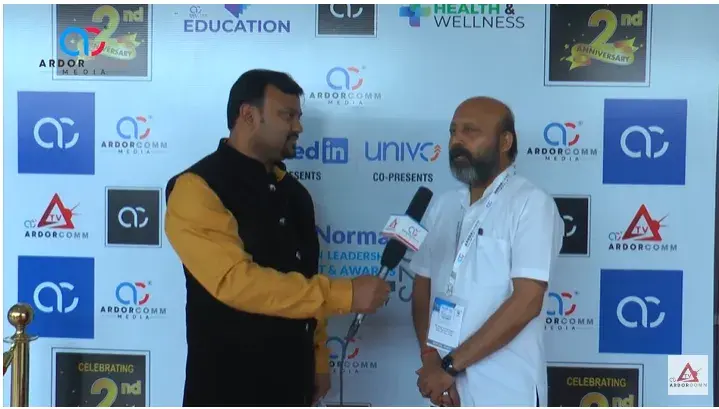
 “Nowadays, children have access to a plethora of learning resources, particularly digital ones. This highlights the necessity of incorporating digital technology into our school education system,” says Dr. Anup Kumar Rajput, Head of Publication Division at NCERT, Ministry of Education, Government of India, in an interview with Chandan Anand, CEO & Group Editor, ArdorComm Media Group at the ‘New Normal – Education Leadership Summit & Awards 2023’ #ELSANewDelhi #ELSAGurugram What are the takeaways of today’s session for you? Very nice. You are doing a good job by getting all these people collected together, and they are discussing the real issues which they are either facing with the policy or with the curriculum. So, the discussion is not only for the sake of discussion, but certainly, we will find out solutions to many of our problems, which we want the system to improve itself. Obviously, such kind of gatherings are very, very important, and you are doing a good job. I am finding many people are very good in having their own experiences shared here. So, that certainly is going to give a good way to implement the National Education Policy and the National Curriculum Framework for the foundational stage. We have seen that NEP has included Early Childhood Education as a part of the main framework of school education. What are your views on that? It’s essential. The Government of India has realized that foundational education, particularly preschool education, is very, very important and this should be included in the mainstream of education. Earlier, it was not, internationally it has been done long back when they recognized that preschool education is having the same importance as school education. So, that’s why this time, it has been realized and now it is going to come into the school education system, particularly the government education system, and will improve the learning levels of children. Even learning difficulties will somewhere be reduced with this inclusion of preschool in the mainstream education system. Normally we find children who have learning problems or maybe learning deficiencies after class three or four. So, now those most probably will be reduced because it has been envisaged in the policy that there should be a strong foundation. Once the foundation of literacy and numeracy is built up then obviously learning of all other subjects will not be a bigger problem for all the children. How does e-learning and digitalization play a role in these sectors? E-Learning has to play a major role because, during my childhood, we only had two primary learning resources: books and teachers. The books back then were not very advanced, often printed with just a single color. Similarly, our teachers were not very well-equipped with teaching materials. However, now, things have changed drastically. Nowadays, children have access to a plethora of learning resources, particularly digital ones. This highlights the necessity of incorporating digital technology into our school education system. But the approach should be a blended one. There are several ways to integrate digital technology. First, teachers can teach on their own, utilizing the resources available to them. Second, collaborative teaching can take place, where multiple teachers contribute their expertise. The third approach involves teachers using technology to aid their teaching. These methods can be blended together, both inside and outside the classroom. We can even explore innovative models like the flipped classroom, which has been experimented with not only in India but also in other countries. The key is to seamlessly integrate digital technology and e-learning into the teaching and learning process. However, the role of teachers remains crucial. They need to adapt and learn how to effectively use digital tools and resources. By doing so, they can harness the benefits of digital technology to enhance the learning experience for students and improve their learning outcomes. What changes have you brought in the NCERT books to make them more interesting for students and kids? NCERT follows the National Curriculum Framework. So, CBSE has to play a major role in board classes like class 10, 11, and 12. So, before that, the National Curriculum Framework is there, on the basis of which the curriculum is framed in different subjects for different classes. And this time, the major objective behind all other things is Competency-Based Education. Now, competencies have been placed at the center, and competency means simply the combination of knowledge, skills, attitudes, and values. When all these four things join together, then we say children are becoming competent. Our whole system was now earlier working only on knowledge, we were giving knowledge through books. Now, the skill part has been added into it, and attitude and values are required to be there. So, obviously, we need different learning material which is to be given to the children and to the teachers. So, this time, the material which is embedded with technology, that is required. For example, in the print books, you will find QR codes have been given at different places, almost at the beginning of every chapter. QR codes are obviously giving you an idea about the audios available there, videos available, they can play a video, they can play an audio, they can see an animation, and so on. So, number one is that, number two, keeping in view all sorts of learners because we have learners with different abilities. Some are visually impaired, some are physically impaired, some are hearing impaired, and so on. So, for all sorts of children, now we want that these books should be conducive to the requirements of all the children. So, that’s why the embossed books are being prepared, books with augmented reality material along with them, that’s also being prepared. Audiobooks have been prepared. NCERT has prepared audiobooks. But one issue is very important that this all is going to increase the volume of a book, the weight of a book and then children have to certainly carry these books. So, obviously one thing which this National Curriculum Framework has mentioned, NEP


Dr. Anup Kumar Rajput, Head of Publication Division at NCERT, Ministry of Education, Government of India, Emphasizes the Crucial Role of Digital Technology in Enhancing Learning Read More »