India’s Growing Metabolic Health Crisis: Obesity, Diabetes and Hypertension
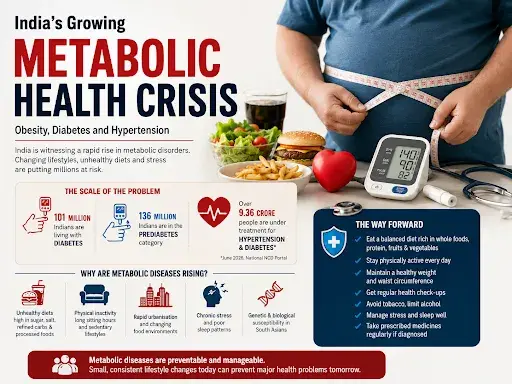
For years, India’s biggest health challenges were closely associated with infectious diseases, malnutrition and limited access to healthcare. But the country is now facing another major public-health challenge: a rapidly growing burden of metabolic and non-communicable diseases. Obesity, diabetes, hypertension and abnormal cholesterol levels are increasingly affecting Indians across age groups and income categories. What makes the situation particularly concerning is that these conditions are closely connected. A person with excess weight may develop insulin resistance, which can increase the risk of type 2 diabetes. High blood pressure and abnormal cholesterol can further increase the risk of heart disease and stroke. The problem is no longer confined to older adults. Younger Indians are increasingly exposed to sedentary lifestyles, calorie-dense diets, poor sleep and chronic stress, creating the conditions for metabolic problems much earlier in life. The World Health Organization identifies unhealthy diets, physical inactivity, tobacco use and harmful alcohol consumption as major behavioural risk factors for non-communicable diseases. These behaviours contribute to metabolic changes such as raised blood pressure, high blood glucose, overweight and obesity. The scale of India’s metabolic health problem One of the clearest pictures of India’s metabolic health comes from the ICMR-INDIAB study, a large population-based study covering adults across 31 states and Union Territories. Published in The Lancet Diabetes & Endocrinology in 2023, the study assessed more than 113,000 participants and examined the prevalence of diabetes, prediabetes, hypertension, obesity and other metabolic conditions. The findings estimated that India had around 101 million people living with diabetes, while another 136 million were in the prediabetes category. The study also highlighted substantial levels of hypertension and obesity, with considerable variation between states and between urban and rural populations. This variation is important. India does not have a single metabolic-health profile. Dietary habits, economic conditions, urbanisation, physical activity, genetics and access to healthcare differ significantly from one region to another. Yet the broader direction is clear: metabolic disorders have become a major component of India’s disease burden. Obesity is becoming a public-health issue Obesity is often discussed as an issue of appearance or weight management. Medically, however, excess body fat can have much broader consequences. India’s Ministry of Health and Family Welfare notes that overweight and obesity are important risk factors for conditions including coronary heart disease, hypertension, stroke, type 2 diabetes, fatty liver disease, certain cancers and osteoarthritis. The concern is also spreading to younger generations. In July 2026, reporting based on the World Obesity Atlas 2026 estimated that approximately 41 million children in India were overweight or obese. Around the same time, ICMR-NIN unveiled policy recommendations focused on improving children’s food environments, including measures involving food advertising, labelling, school canteens and the pricing of unhealthy foods. Childhood obesity is particularly concerning because metabolic risk can accumulate over decades. A child who develops unhealthy eating patterns and low physical activity early in life may carry those behaviours into adolescence and adulthood. That does not mean every overweight child will develop diabetes or hypertension. But it does mean that prevention has to begin much earlier than the traditional idea of starting health checks only in middle age. Diabetes: India’s expanding metabolic challenge Diabetes is perhaps the most visible part of India’s metabolic-health crisis. Type 2 diabetes develops when the body becomes resistant to insulin or does not produce enough insulin to maintain healthy blood glucose levels. Genetics can play a role, but lifestyle and environmental factors also influence risk. India’s dietary transition has become an important part of the discussion. A 2025 study based on ICMR-INDIAB data and published in Nature Medicine examined dietary patterns among more than 18,000 adults. It reported associations between higher consumption of low-quality carbohydrates, including refined grains and added sugars, and increased odds of type 2 diabetes, prediabetes and obesity. The study also found that replacing a portion of dietary carbohydrates with protein, particularly from sources such as pulses, legumes and dairy, was associated with lower diabetes risk. This does not mean that carbohydrates are inherently unhealthy or that Indians should eliminate rice or wheat from their diets. Rather, it highlights the importance of diet quality, portion sizes and dietary balance. For many Indians, the issue is not simply the presence of carbohydrates but a dietary pattern dominated by refined grains and added sugars, combined with insufficient protein, fibre, vegetables and other nutrient-dense foods. Hypertension: The silent component of the crisis If diabetes is often associated with blood-sugar testing, hypertension presents a different challenge. High blood pressure can remain undetected for years because many people experience no obvious symptoms. Persistently elevated blood pressure places additional strain on blood vessels and the heart and increases the risk of cardiovascular disease, stroke and kidney problems. India’s National Programme for Prevention and Control of Non-Communicable Diseases includes population-based screening for hypertension and diabetes among people aged 30 years and above. The screening process includes assessment of risk factors, BMI and blood pressure, among other measures. Government data also indicate the scale of the response required. The National NCD portal reported more than 9.36 crore people under treatment for hypertension and diabetes as of June 2026. Importantly, the number of people receiving treatment should not be interpreted as the total number of Indians living with these diseases. It represents people captured within the government’s treatment system. Why are metabolic diseases increasing? There is no single cause. 1. Changing food habits India’s food environment has changed rapidly. Traditional diets have increasingly been supplemented or replaced by packaged foods, sugary drinks, refined carbohydrates, fried foods and highly processed snacks. Convenience has become an important factor, particularly in urban areas where long working hours and commuting leave less time for preparing meals. 2. Physical inactivity Modern work increasingly involves sitting for prolonged periods. Office jobs, commuting, screen-based entertainment and reduced everyday physical activity can result in people expending far fewer calories than previous generations. Regular exercise cannot completely compensate for an unhealthy diet, but physical activity remains an important component of metabolic health. 3. Urbanisation Urbanisation has brought economic opportunity
India’s Growing Metabolic Health Crisis: Obesity, Diabetes and Hypertension Read More »