

ArdorComm Media Group

Monday, November 23, 2026 4:39 AM

research and development

PM Narendra Modi Inaugurates ESTIC 2026, Calls for Scalable Scientific Innovation
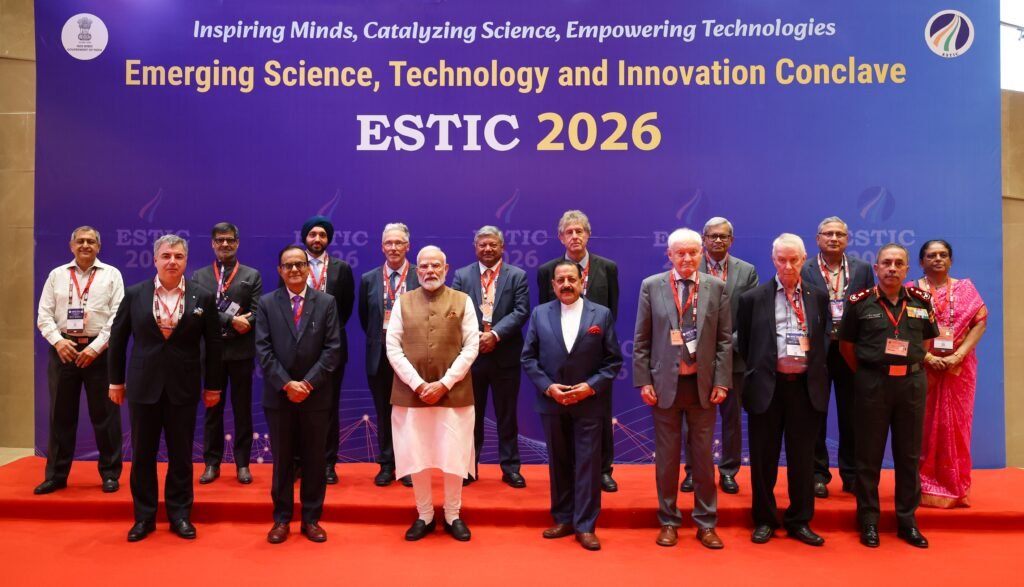
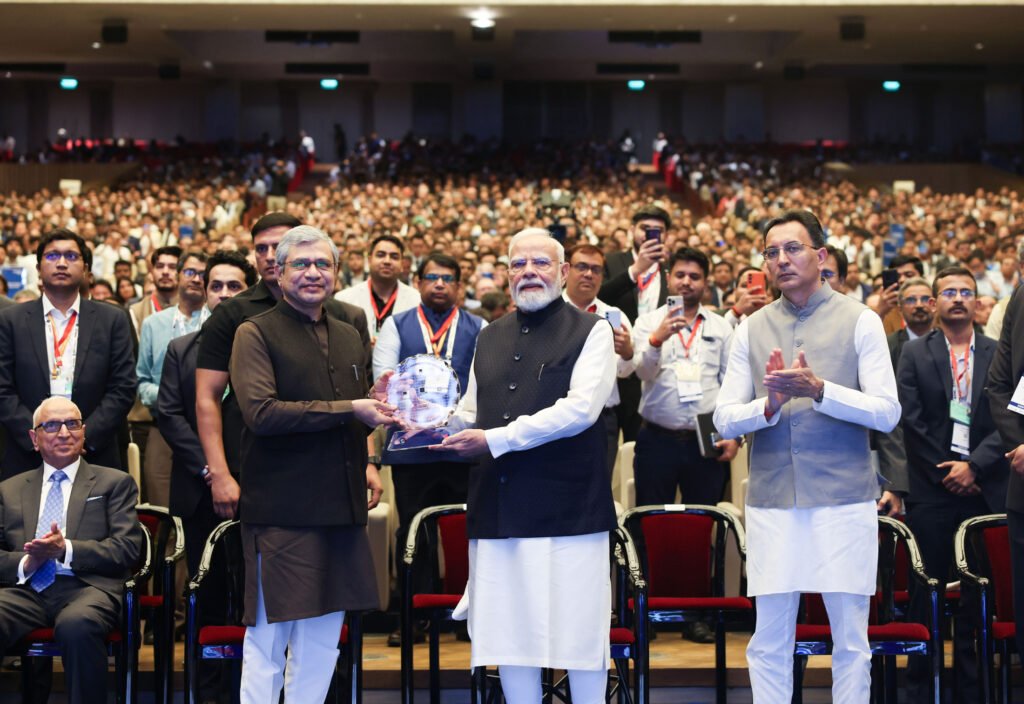
Prime Minister Narendra Modi inaugurated the Emerging Science, Technology and Innovation Conclave (ESTIC) 2026 at Bharat Mandapam in New Delhi on October 27, bringing together more than 5,000 delegates, including scientists, policymakers, industry representatives and deep-tech startups from India and abroad. The opening day featured addresses by leading science and technology officials, plenary lectures by two Nobel laureates, parallel technical sessions, a startup exhibition, research poster presentations and a panel discussion. The discussions centred on translating scientific research into practical applications, strengthening domestic technological capabilities and using innovation to address national and global challenges. Addressing the inaugural session, Modi urged scientists, researchers and young innovators to deliver measurable and scalable technological outcomes within a three-year timeframe. He stressed that scientific discoveries must move beyond laboratories to solve real-world problems, promote self-reliance under the Atmanirbhar Bharat vision and improve human welfare. He also highlighted India’s ambitions in emerging fields such as artificial intelligence (AI), quantum technology, advanced materials and biotechnology. Union Minister of State for Science and Technology and Earth Sciences, Dr. Jitendra Singh, said India was moving from being a technology consumer towards becoming a global contributor to frontier scientific innovation. He highlighted the expansion of the country’s startup ecosystem from around 400 startups in 2014 to more than 2.3 lakh currently. According to the minister, approximately 50–60 per cent of these ventures are located in Tier-2 and Tier-3 cities, reflecting the geographical expansion of entrepreneurship and innovation. Singh also emphasised the potential of India’s genetic and phenotypic diversity in advancing biotechnology. He called for stronger domestic capabilities in gene synthesis, systems biology and nuclear medicine, referring to legislative reforms, including the SHANTI Act, as part of the broader effort to accelerate scientific development. Principal Scientific Adviser to the Government of India, Prof. Ajay K. Sood, highlighted the importance of integrating fundamental research with industrial expansion and supportive regulatory policies. He outlined ESTIC’s 12 priority thematic areas, which include quantum communication, generative and autonomous AI, semiconductor fabrication, advanced manufacturing and the Deep Ocean Mission. He said building national capabilities would require closer collaboration among research institutions, industry and policymakers. Two Nobel laureates delivered keynote plenary lectures on developments in biological research and medical science. Prof. Joachim Frank of Columbia University, who received the 2017 Nobel Prize in Chemistry, discussed the role of cryo-electron microscopy (Cryo-EM) in identifying biological targets and supporting drug development. His presentation explored computational methods for producing high-resolution, three-dimensional images of molecular complexes and explained how these insights can contribute to rational drug design. Sir Richard J. Roberts, the 1993 Nobel laureate in Physiology or Medicine, spoke about split genes and emerging frontiers in life sciences. His lecture examined gene splicing, microbial genomics and restriction-modification enzymes, alongside biotechnology applications in sustainable agriculture, public health and diagnostics. The conclave also provided a platform for emerging companies and researchers to showcase innovations. Dr. Jitendra Singh inaugurated the startup exhibition and poster track, featuring deep-tech research, prototype demonstrations and interactive presentations. The initiative enabled exchanges among entrepreneurs, investors, academics, industry representatives and government stakeholders. Three technical sessions explored applications of advanced manufacturing, artificial intelligence and synthetic biology. The Advanced Manufacturing session, chaired by CSIR Director General Dr. (Mrs.) N. Kalaiselvi, featured a keynote address by former Defence Research and Development Organisation chairman Dr. G. Satheesh Reddy. Discussions covered digital twins, collaborative robotics, additive manufacturing and metrology, with particular attention to strengthening supply chains and expanding manufacturing capabilities among micro, small and medium enterprises (MSMEs). The Generative and Autonomous AI session, chaired by IndiaAI CEO Shri Saurabh Vijay, featured a keynote address by Prof. Mitesh M. Khapra of IIT Madras. Participants discussed the development of indigenous large language models, access to high-performance computing through IndiaAI, agentic AI and frameworks for safe deployment. The session focused on building domestic AI capabilities while ensuring that emerging technologies are developed and deployed responsibly. The System and Synthetic Biology session examined engineered biological systems and India’s BioE3 strategy. Using the “Understand, Design, Build, Test, Learn” framework, participants explored potential applications in precision biotherapeutics, metabolic pathway engineering, biofortified crops and waste-to-value biomanufacturing. The discussions highlighted the potential of synthetic biology to support innovation across healthcare, agriculture and industrial production. The day concluded with a panel discussion titled “Science and Disruptive Technologies for Atmanirbhar Bharat”, chaired by Prof. Ajay K. Sood. Panellists included Dr. Tessy Thomas, Gen. N. S. Raja Subramani, Prof. Bhanu P. Jena, Dr. Samir Saran and Prof. V. K. Singh. The discussion addressed defence technology self-reliance, commercialisation of intellectual property, financing for deep-tech ventures and mechanisms for transferring technologies from research institutions to industry. ESTIC 2026 brings together government, academia, industry and startups around 12 thematic priority areas. Discussions on the opening day also highlighted the ₹1 lakh crore Research, Development and Innovation Fund and mechanisms under the Anusandhan National Research Foundation (ANRF) as potential avenues for supporting deep-tech development across technology-readiness stages and facilitating commercialisation. The conclave aims to strengthen the connection between scientific discovery, industrial application and public welfare, with an emphasis on developing homegrown technologies that contribute to India’s long-term development and address wider global challenges. Source: PIB

PM Narendra Modi Inaugurates ESTIC 2026, Calls for Scalable Scientific Innovation Read More »
IIT Kanpur Launches $1 Billion Fundraising Drive, Announces ₹180-Crore Innovation School in Noida

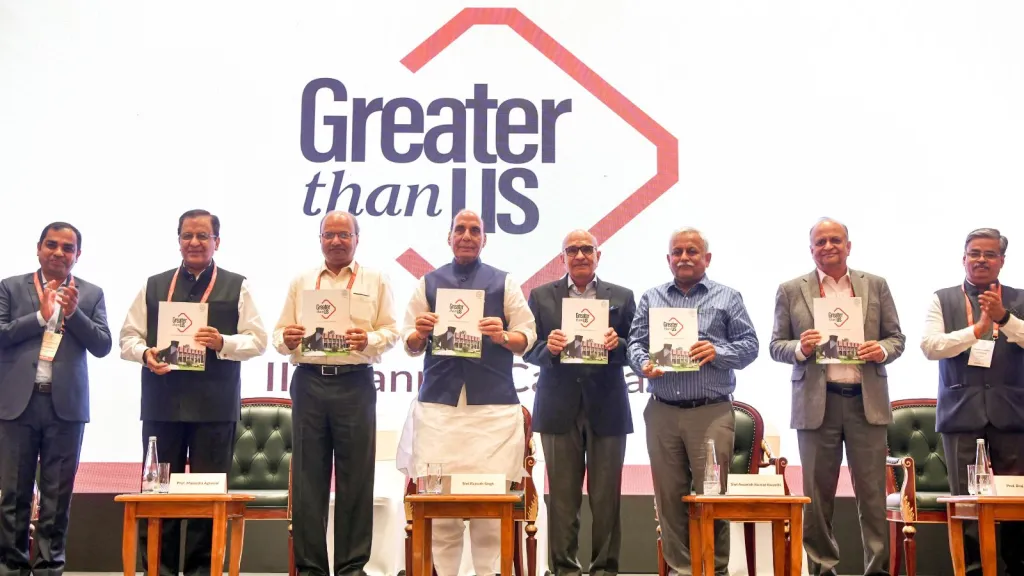
The Indian Institute of Technology (IIT) Kanpur has announced plans to establish a ₹180-crore school dedicated to innovation and entrepreneurship at its Noida campus, alongside a major fundraising campaign targeting $1 billion (approximately ₹9,000 crore) by March 2029. Named the Gautam School of Innovation & Entrepreneurship (G-SINE), the new institution aims to help students transform research and emerging technologies into commercially viable products and technology-driven startups. Its flagship MBA programme in Technology and Entrepreneurship is scheduled to commence in July 2027. The school forms part of IIT Kanpur’s ‘Greater Than Us’ campaign, which will support research and development across seven strategic technology domains: artificial intelligence, cybersecurity, drones, medical technology, sustainability, semiconductors and quantum technologies. Defence Minister Rajnath Singh launched the campaign in New Delhi on October 14. According to IIT Kanpur Director Manindra Agrawal, the institute has already secured commitments worth ₹4,155 crore from alumni, corporate donors, government bodies and other partners, representing nearly half of the overall fundraising target. G-SINE is being established with a ₹180-crore commitment from IIT Kanpur alumnus Rahul Gautam, with a memorandum of understanding signed during the campaign launch. Agrawal emphasised the importance of bridging the gap between laboratory research and commercial deployment. The school will focus on helping faculty members and students advance technologies towards market readiness, with entrepreneurship and startup development forming central elements of its approach. The institution will have dedicated full-time faculty members and degree programmes, covering areas such as AI, cybersecurity, digital health, biotechnology, drones and advanced manufacturing. It will also work alongside a proposed Deep Tech Hub at the Noida campus, providing students with access to product development and testing facilities. The institute’s Startup Incubation and Innovation Centre (SIIC), which has incubated 571 startups, will further support the initiative. The ₹9,000-crore fundraising campaign is structured around three pillars: Foundation, Talent and Frontier. Of the total target, ₹5,000 crore is earmarked for infrastructure, including research facilities, computing resources and student housing. Another ₹3,000 crore will support scholarships, doctoral fellowships and faculty recruitment, while ₹1,000 crore will be allocated to strategic technology initiatives. Agrawal said the campaign reflects IIT Kanpur’s commitment to strengthening India’s capabilities in strategically important technologies and reducing dependence on external technology ecosystems. The initiative builds on the institute’s existing specialised schools in medical sciences and technology, artificial intelligence and sustainability. IIT Kanpur also plans to establish dedicated funds to attract leading faculty members without financial constraints becoming a barrier to recruitment. Source: Indian Express  

IIT Kanpur Launches $1 Billion Fundraising Drive, Announces ₹180-Crore Innovation School in Noida Read More »

India Reliable and Prepared to Meet New Global Manufacturing Challenges: PM Modi at SEMICON India 2026

Prime Minister Narendra Modi has described India as a reliable and increasingly trusted destination for global manufacturing, saying the country is strengthening its capabilities to respond to emerging challenges in the global supply chain. Inaugurating SEMICON India 2026 at Yashobhoomi in New Delhi, Modi highlighted the rapidly expanding semiconductor ecosystem and the opportunities it is creating for investment, innovation and economic growth. He noted that the surge in artificial intelligence is changing semiconductor requirements, with greater emphasis now being placed not only on transistor size but also on system-level integration, memory placement and thermal management. The Prime Minister said India recorded economic growth of 7.8 per cent despite a challenging global environment, while Japan’s credit rating agency also upgraded the country’s sovereign rating. He said growing economic performance alongside increasing international confidence reflected India’s progress towards becoming a developed nation. Modi said the outlay under India Semiconductor Mission 2.0 has been increased to $13.5 billion from $8 billion under the first phase. He also highlighted the approval of 12 semiconductor manufacturing projects, adding that the next phase would further expand the country’s chip-making capabilities. Referring to the recently concluded BRICS Summit in New Delhi, Modi said the consensus adoption of the New Delhi Declaration demonstrated the growing global confidence in India’s leadership and its ability to bring countries together. The Prime Minister also called on Indian researchers and young technology professionals to contribute to the country’s advanced technology ecosystem. He urged industry leaders to strengthen research and development in India, saying closer collaboration between industry and young researchers could support both industrial growth and technological development. Union Electronics and IT Minister Ashwini Vaishnaw said India’s long-standing ambition to establish a semiconductor industry had gained momentum under the current government. He said Semicon 2.0 would focus on six key areas — semiconductor design, equipment and materials, memory, silicon fabrication, compound and logic fabrication, and research and development. Vaishnaw added that the government aims to support at least 200 startups and companies in designing chips in India for diverse semiconductor applications. SEMICON India 2026, being held under the theme “Silicon to Systems: Building the Ecosystem”, features more than 600 exhibitors, 300 international companies and delegations from over 50 countries. The event includes country pavilions from Japan, South Korea, Malaysia, the Netherlands, Singapore and Sweden, along with 12 state government pavilions and a dedicated Startup Pavilion. The conference and exhibition brings together companies, policymakers, investors, researchers, startups, academic institutions and students from across the global semiconductor and electronics value chain. Source: News on AIR  

India Reliable and Prepared to Meet New Global Manufacturing Challenges: PM Modi at SEMICON India 2026 Read More »

India Emerging as Global Innovation Powerhouse, Says Dharmendra Pradhan at Bharat Innovates Pre-Summit

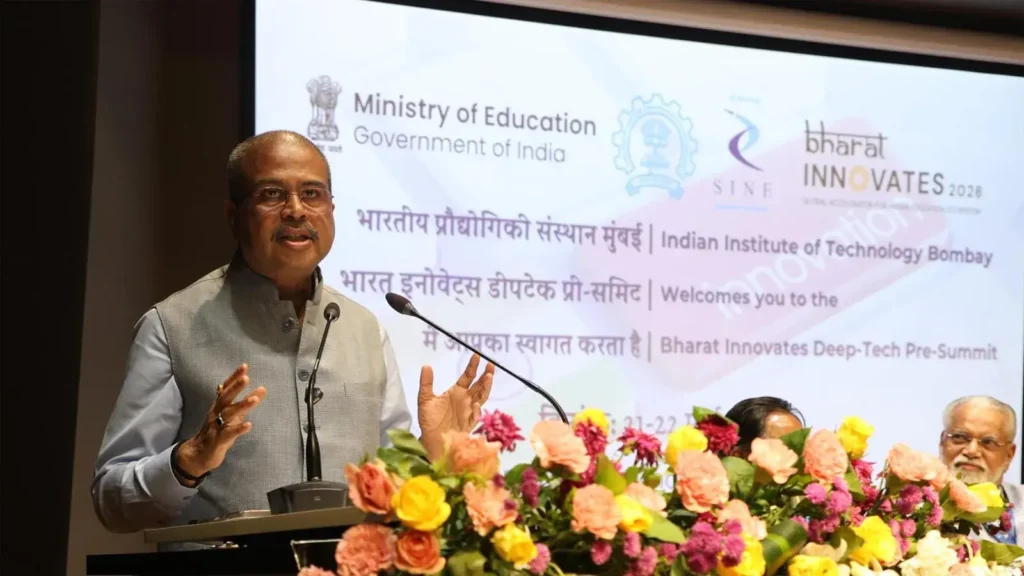
Union Education Minister Dharmendra Pradhan highlighted India’s growing stature as a global innovation hub while addressing the concluding session of the Bharat Innovates Deep-Tech Pre-Summit held at Indian Institute of Technology Bombay. During the event, the minister engaged in roundtable discussions with investors, industry leaders, and academic experts. He noted that the pre-summit serves as a precursor to Bharat Innovates 2026, scheduled to take place in Nice. The discussions focused on advancing deep-tech innovation, strengthening collaboration between academia and industry, and enhancing India’s startup ecosystem. Pradhan emphasised the importance of sustained funding for emerging ventures to help them scale, foster innovation, and promote research-driven entrepreneurship. He reiterated that Bharat Innovates aims to showcase India’s research and development capabilities on the global stage while facilitating international collaborations and unlocking investment opportunities. Underscoring India’s potential, he stated that the country is well-positioned to develop scalable and cost-effective solutions not only for domestic needs but also for the Global South. He described the initiative as a dynamic platform that brings together ideas, talent, and resources to accelerate innovation and deepen industry-academia partnerships. On the sidelines of the summit, Pradhan chaired a roundtable attended by around 175 investors and industry stakeholders. He also interacted with innovators working across key sectors such as energy, climate and sustainability, semiconductors, space and defence, healthcare, biotechnology, advanced computing, mobility, and smart cities. The pre-summit saw participation from 137 deep-tech startups selected from over 1,186 applications across the country. These startups showcased innovations in areas including artificial intelligence, advanced materials, clean technology, and next-generation manufacturing, drawing strong interest from investors. The event also enabled meaningful engagement between startups, venture capital firms, and industry representatives, paving the way for collaboration, commercialisation, and global expansion. Prominent dignitaries present included K. Radhakrishnan, Vineet Joshi, Abhay Karandikar, and Shireesh Kedare. Reaffirming the government’s commitment to innovation, Pradhan stressed the need to translate research ideas into market-ready solutions that create real-world impact. He expressed confidence that the innovations showcased at the pre-summit would significantly contribute to strengthening India’s position as a global leader in technology and entrepreneurship. The Bharat Innovates Deep-Tech Pre-Summit marks an important milestone in India’s innovation journey, with selected startups set to represent the country’s deep-tech ecosystem at the international event in France in 2026. Source: DD News 

India Emerging as Global Innovation Powerhouse, Says Dharmendra Pradhan at Bharat Innovates Pre-Summit Read More »

Govt eases norms for deep-tech startups, drops three-year eligibility rule for DSIR recognition

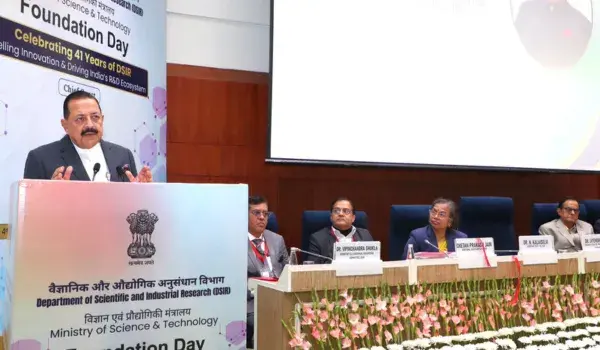
The central government has announced a major policy relief for deep-tech startups by removing the mandatory three-year existence requirement to obtain recognition under the Department of Scientific and Industrial Research (DSIR)’s Industrial Research and Development Promotion (IRDP) Programme. Speaking at the 41st Foundation Day of DSIR in New Delhi, Union Minister of Science and Technology Dr Jitendra Singh said the decision is aimed at enabling deep-tech startups to scale faster at early stages, even before they achieve operational maturity. He noted that the move signals the government’s growing trust in India’s innovation ecosystem and its confidence in the long-term sustainability and intent of homegrown innovators. The Minister emphasised that the reform aligns with several transformational steps taken under Prime Minister Narendra Modi’s leadership, including opening up the nuclear and space sectors to private participation. To support innovation in these emerging domains, he said the government will further accelerate policy and institutional initiatives. Dr Singh also highlighted that India is steadily advancing the vision of Aatmanirbhar Bharat, while simultaneously positioning itself as a reliable global innovation and technology partner for other nations. During the event, the Minister unveiled a series of initiatives to strengthen India’s research, development, and innovation ecosystem. These included the release of Guidelines for Recognition of In-House R&D Units, the recognition framework for Centres of Deep-Tech Startups, the launch of the PRISM Network Platform – TOCIC Innovator Pulse, and Creative India 2025 under the PRISM scheme. Source: newsonair

Govt eases norms for deep-tech startups, drops three-year eligibility rule for DSIR recognition Read More »

PM Modi Unveils ₹1 Lakh Crore R&D Fund, Calls for Ethical and Inclusive Innovation at ESTIC 2025

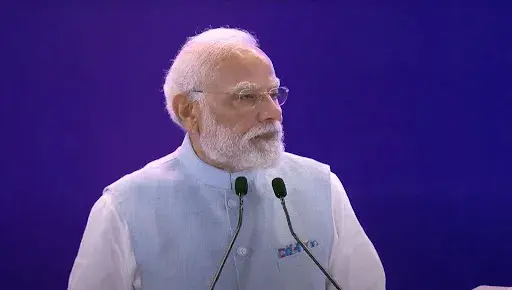
Prime Minister Narendra Modi addressed the Emerging Science, Technology and Innovation Conclave (ESTIC) 2025 at Bharat Mandapam on Nov 3, highlighting India’s growing leadership in science, technology, and innovation. Welcoming participants from India and abroad — including scientists, innovators, academics, and policymakers — the Prime Minister celebrated India’s landmark achievements in both sports and science. Opening his remarks, PM Modi congratulated the Indian women’s cricket team for their historic ICC Women’s World Cup victory, saying the nation was “immensely proud” of their achievement, which will inspire millions of young Indians. The Prime Minister also hailed India’s scientists for successfully launching the heaviest communication satellite, commending ISRO for its continued contribution to India’s space advancements. He noted that both achievements reflected India’s growing spirit of excellence and innovation. R&D Boost: ₹1 Lakh Crore RDI Scheme Announced Underscoring the government’s commitment to strengthening India’s research ecosystem, PM Modi formally launched the ₹1 lakh crore Research, Development and Innovation (RDI) Scheme Fund, designed to boost private sector–led R&D. He emphasized that, for the first time, capital will be made available for high-risk, high-impact research projects, and reaffirmed that the government is “building a modern innovation ecosystem” by easing financial rules, procurement norms, and regulatory frameworks to accelerate the journey from lab to market. He also referred to the establishment of the Anusandhan National Research Foundation (ANRF) to expand research and innovation across Indian universities. India’s Innovation Momentum PM Modi highlighted India’s transformation into a global innovation hub — noting that R&D spending has doubled in the past decade, patent registrations have risen 17-fold, and India now ranks as the world’s third-largest startup ecosystem. Over 6,000 deep-tech startups are driving progress in areas such as clean energy, materials science, and semiconductors, while India’s bio-economy has grown from $10 billion in 2014 to $140 billion today. He said, “India is no longer a consumer of technology — it is a driver of technological transformation,” citing the nation’s indigenous vaccine success during the COVID-19 pandemic and the reach of its Digital Public Infrastructure, which connects over two lakh gram panchayats with optical fibre. Empowering Women in Science Highlighting inclusive innovation, the Prime Minister celebrated the rising participation of women in STEM. He noted that women now make up 43% of STEM students in India — above the global average — and that annual patent filings by women have increased from fewer than 100 to over 5,000. He added that Indian women scientists are now at the forefront of space research and innovation. Encouraging the Next Generation PM Modi underscored the importance of nurturing scientific curiosity among youth. Recalling the public excitement around Chandrayaan and the recent Indian space station mission, he said these moments have inspired young minds to explore science. He announced plans to expand Atal Tinkering Labs from 10,000 to 25,000 labs, giving over one crore students a platform for hands-on innovation. The Prime Minister also shared that 10,000 new research fellowships will be awarded over the next five years under the Prime Minister’s Research Fellowship to further empower young scientists. India’s Vision for Ethical AI and Future Technologies Speaking about the future of emerging technologies, PM Modi stressed that science and technology must remain ethical, inclusive, and human-centric. He cited the India AI Mission, with an investment of ₹10,000 crore, aimed at making AI accessible and beneficial for all. He also announced that India will host the Global AI Summit in February 2026, focusing on inclusive and safe AI governance. Calling for innovation in critical areas such as nutrition security, biofortified crops, clean energy storage, bio-fertilisers, and genomic medicine, the Prime Minister urged scientists to work towards achieving self-reliance in key inputs and technologies. Concluding his address, PM Modi invoked the spirit of “Jai Vigyan, Jai Anusandhan”, reaffirming the government’s full support for researchers and innovators. He expressed confidence that the outcomes of ESTIC 2025 will chart a new roadmap for India’s scientific and technological future. Source: PIB

PM Modi Unveils ₹1 Lakh Crore R&D Fund, Calls for Ethical and Inclusive Innovation at ESTIC 2025 Read More »

Pharma Industry’s Wishlist for Budget 2024: R&D Incentives and Policy Boost

In anticipation of Budget 2024, the Indian pharmaceutical industry is making a strong plea for fiscal incentives to foster research and development (R&D). With aspirations to reach a market size of USD 400-450 billion by 2047, the sector emphasizes the need for continuous investments in R&D, citing high risk, a long gestation period, and low success rates. Sudarshan Jain, the Secretary General of the Indian Pharmaceutical Alliance, urged for the upcoming budget to outline conducive policies, offering benefits in terms of both direct and indirect taxes while facilitating ease of doing business for pharmaceutical companies. The industry, set to achieve USD 120-130 billion by 2030, seeks accelerated innovation and R&D to realize its ambitious growth targets. The Promotion of Research & Innovation Program (PRIP) Scheme, introduced in 2023, was acknowledged as a positive step towards spurring innovation in the sector. Healthcare industry body NATHEALTH is advocating for increased healthcare spending to 2.5% of GDP and the rationalization of the GST framework. They aim to enhance the medical value travel segment, address MAT credit issues, and strengthen the healthcare value chain. Budget 2024 should prioritize building local capabilities for healthcare services, even in remote regions, and localize the healthcare value chain. Expectations include a roadmap for long-term infrastructure financing, an increase in medical and nursing colleges, and fiscal reforms in the health insurance sector, according to Narayana Health Executive Vice Chairman Viren Shetty. Metropolis Healthcare MD Ameera Shah seeks a zero per cent GST on diagnostic services and refunds for GST paid on inputs. With 60% of India’s diagnostics reliant on imports, Roche Diagnostics India MD Rishabh Gupta emphasizes the need for rationalizing import tariffs on healthcare products. The overarching goal is to prioritize affordable and accurate diagnostics, transforming India’s healthcare system for the better. Reference is taken from Economic times

Pharma Industry’s Wishlist for Budget 2024: R&D Incentives and Policy Boost Read More »

India Strives for Global Academic Excellence as President Murmu Addresses Education Disparities

In a poignant address during the 69th convocation of the prestigious Indian Institute of Technology (IIT) Kharagpur, President Droupadi Murmu emphasized the noticeable absence of any Indian educational institution within the coveted top 50 globally. Despite India’s rich knowledge tradition, President Murmu urged a critical examination of the nation’s standing in international education rankings. Highlighting the importance of quality education over mere rankings, President Murmu acknowledged that a higher position on global lists not only attracts international students and faculty but also enhances the country’s overall academic reputation. The President urged the academic community to strive for excellence and foster an environment conducive to cutting-edge research and innovation. “India’s ancient knowledge heritage is unparalleled, and it is disheartening to see the absence of our educational institutions in the top global rankings. While quality should be our primary focus, we cannot ignore the fact that rankings play a role in attracting global talent and building a positive perception of our academic prowess,” remarked President Murmu. The President’s address prompted introspection within the academic community, leading to discussions on potential strategies to elevate the global standing of Indian educational institutions. Experts argue that a multi-faceted approach, including increased investment in research and development, international collaborations, and enhancements in infrastructure, is essential to bridge the existing gaps. President Murmu concluded her address by urging educational leaders, policymakers, and stakeholders to collectively work towards elevating India’s academic profile on the global stage. As the nation grapples with the challenges posed by the evolving landscape of higher education, there is a renewed commitment to ensuring that India’s institutions not only reflect its rich heritage but also stand tall among the world’s best.

India Strives for Global Academic Excellence as President Murmu Addresses Education Disparities Read More »