



Will the Office Become Optional? The Future of Work After Hybrid Work
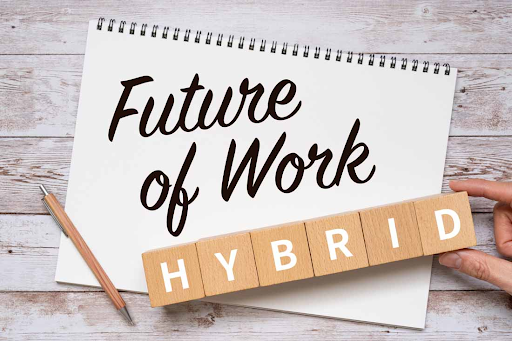
For a while, it looked as though the traditional office was heading towards extinction. The pandemic proved that millions of people could work from kitchen tables, spare bedrooms and home offices without bringing businesses to a halt. Video calls replaced meeting rooms, collaboration platforms replaced physical desks, and “work from home” went from an occasional benefit to a defining feature of working life. But the office did not disappear. Instead, the workplace is going through something more complicated: a negotiation between what organisations need and what employees have come to expect. In 2026, the question is no longer simply whether people should work from home or from the office. The more important question is what the office is actually for. The office is back—but the old office may not be Across India and globally, companies have increasingly established structured office-attendance policies. JLL’s 2025 research found that 66% of global office workers said their organisations had clear expectations around the number of days they should work on-site. In Asia-Pacific, about seven in 10 employees were subject to some form of return-to-office requirement. India has been particularly notable in this shift. JLL reported in 2025 that 90% of organisations in India required employees to spend at least three days a week in the office, while more than half expected in-office days to increase by 2030. Yet this does not necessarily mean employees have rejected flexibility. A 2025 Pew Research Center study in the US found that 72% of hybrid workers would choose to remain hybrid if given the choice, rather than work entirely from home or entirely from the office. That distinction matters. Employees are not necessarily asking for the office to disappear. They are asking for a reason to be there. From attendance to purpose For years, office attendance was largely treated as a measure of commitment. Being physically present meant being available, visible and involved. Hybrid work has challenged that assumption. An employee can now spend eight hours in an office and accomplish less than someone working from home with fewer interruptions. Conversely, there are conversations, creative exchanges and informal interactions that are difficult to reproduce completely through a screen. The challenge for HR is therefore not to determine which environment is universally more productive. It is to understand which type of work benefits from which environment. An individual preparing a report may need uninterrupted concentration. A newly joined employee may need face-to-face guidance. A creative team brainstorming a campaign may benefit from being together. A manager conducting a sensitive conversation may prefer a private physical setting. A global team may have no choice but to collaborate virtually. The future workplace will increasingly be organised around these differences. The office needs to earn the commute Perhaps the biggest change in employee expectations is that the office can no longer assume that people will come simply because they are told to. If an employee spends two hours commuting to sit through virtual meetings all day, the question naturally arises: Why did I come to the office? This is where the physical workplace has to become more intentional. Research published in the Journal of Environmental Psychology in 2025 found that employees’ office preferences are influenced by whether they have autonomy over where they work. Social and event-oriented spaces become particularly important on flexible workdays, while functional spaces matter more when office attendance is required. Another 2025 study found that commuting time and the type of people employees expect to encounter in the workplace are among the most influential factors in choosing between home and office. Social spaces, technology and functional facilities can make the office more attractive. In other words, companies need to stop thinking of the office simply as a collection of desks. The future office could be a place for collaboration, mentoring, learning, relationship-building, problem-solving and culture. The desk may become one of its least important features. The Gen Z question Younger employees are likely to make this debate even more interesting. For someone beginning a career, an office can offer experiences that are difficult to obtain remotely: observing senior colleagues, building informal networks, learning how meetings work, developing confidence and forming professional relationships. But younger workers have also entered the workforce after seeing that flexibility is possible. They may not accept the argument that “this is how work has always been done” as sufficient justification for returning to the office. For HR leaders, this creates an important balancing act. Too little physical interaction could weaken mentoring and belonging. Too much mandatory attendance could make organisations less attractive to talent that values autonomy. The answer may lie somewhere between the two. Hybrid work is becoming more sophisticated The first version of hybrid work was relatively simple: three days in the office, two days at home. That model may not be enough for the next stage. A better approach is likely to be purpose-led hybrid work. Instead of saying: “Everyone must be in the office on Monday, Tuesday and Thursday,” organisations could ask: “What work needs to happen together this week?” That might mean bringing teams together for strategy meetings, innovation sessions, training, client discussions or team-building, while allowing employees to work remotely when deep individual work is the priority. This requires better planning—and considerably better managers. The manager becomes more important than the policy One of the biggest lessons from hybrid work is that workplace flexibility cannot compensate for poor management. A flexible workplace with a controlling manager can still feel restrictive. A physical workplace with an empowering manager can feel collaborative and energising. Recent research has also highlighted the importance of alignment between company workplace strategies and employee preferences. A 2026 study found that employees had become clearer about whether they preferred office-based, remote or hybrid arrangements, while successful alignment increasingly depended on shared values such as flexibility, community and balance. This means HR cannot simply create a policy and expect the policy to solve the problem. Managers need to learn how to measure outcomes rather than visibility,
Will the Office Become Optional? The Future of Work After Hybrid Work Read More »