


ArdorComm Media Group

Wednesday, March 4, 2026 1:36 AM

TCS

Infosys limits WFH exemptions to five days per quarter, aligning with stricter policies at TCS and Wipro

Infosys has further tightened its work-from-home (WFH) framework, placing a cap on exemptions from working at the office (WFO) at five days per quarter, except in cases involving serious medical conditions of employees or their dependents. Any request beyond this limit will require valid medical documentation, including a doctor’s verification. Currently, employees at job level 5 and below are mandated to work from the office for at least 10 days every month. The new restriction specifically applies to requests seeking additional WFH days beyond this requirement. Managers have informed teams that there has been a sharp rise in last-minute WFH requests, prompting the company to enforce stricter planning and system-based pre-approvals rather than informal email requests. Managers have also clarified that requests not aligned with policy leave them with little flexibility. While Infosys has not officially commented, people familiar with the matter said that the company continues to allow up to 30 additional remote working days in cases of critical medical emergencies. The move is notable as Infosys leadership had recently stated that no changes were planned to its hybrid working approach. CEO Salil Parekh, during a post-earnings interaction earlier this month, had emphasised flexibility in how employees engage with the company and its clients. Infosys, which employs over 300,000 people, introduced its return-to-office policy in November 2023, requiring a minimum of 10 in-office days per month, though strict enforcement began in March last year. Employees must also spend at least three hours per day in the office. The tightening of norms mirrors similar steps by peers. Wipro has revised its policy effective January 1, requiring employees to work from the office three days a week for at least six hours daily, while cutting allowable remote days to 12 from 15 earlier. Meanwhile, TCS implemented a five-day office workweek last year and linked variable pay to office attendance, allowing limited WFH only for health-related reasons. Industry observers say these measures reflect the IT sector’s push for greater in-person collaboration amid shorter project cycles and slowing revenue growth, especially as AI-driven automation reduces dependence on large, people-intensive delivery models. Staffing experts suggest that 2026 could see more firms moving towards full-time office attendance, at least on designated workdays, to maintain agility and team coordination. Source: Economic Times

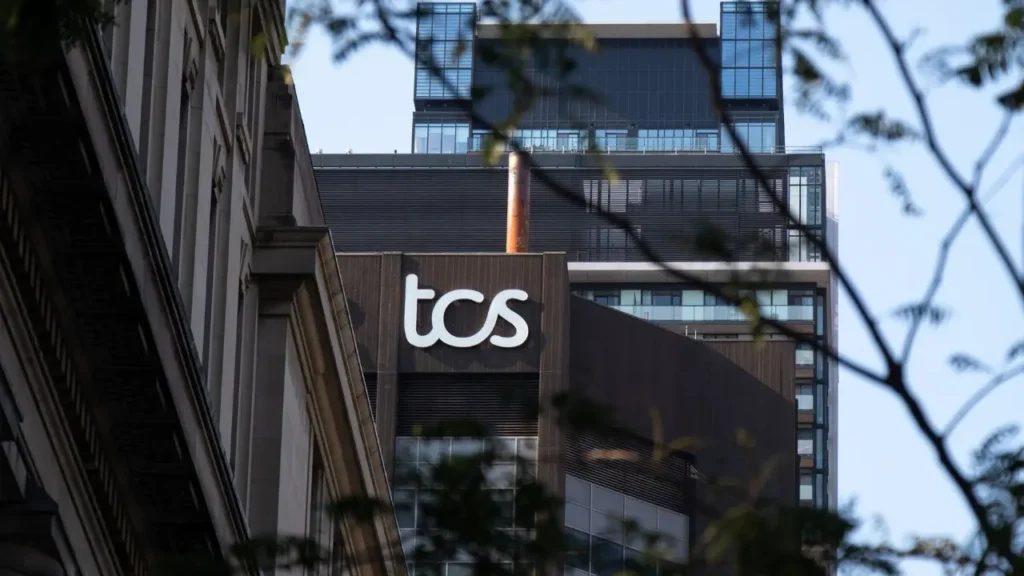
Infosys limits WFH exemptions to five days per quarter, aligning with stricter policies at TCS and Wipro Read More »

Q3 Results: New Labour Codes Dent IT Majors’ Profits by ₹5,400 Crore

India’s leading IT services firms reported a sharp one-time earnings impact in the December quarter as the implementation of the new labour codes forced changes in employee benefit provisioning. Collectively, the country’s top six IT companies—TCS, Infosys, HCLTech, Wipro, Tech Mahindra and LTIMindtree—absorbed a cumulative hit of around ₹5,400 crore, significantly weighing on their Q3 FY26 profit numbers. The new labour framework, which consolidates 29 existing laws, has altered the way companies account for benefits such as gratuity and leave encashment, resulting in substantial upfront provisions. Tata Consultancy Services (TCS), India’s largest IT exporter, faced the biggest impact. The company reported a statutory charge of ₹2,128 crore, leading to a 13.9% fall in net profit to ₹10,657 crore. CFO Samir Seksaria explained that the provision included roughly ₹1,800 crore towards gratuity and ₹300 crore for leave encashment. He also cautioned that the new codes are expected to reduce margins by 10–15 basis points on an ongoing basis. Infosys reported an exceptional one-time charge of ₹1,289 crore, which pushed its net profit down 2.2% year-on-year to ₹6,654 crore. CEO Salil Parekh said the labour codes would have a continuing annual margin impact of about 15 basis points. HCLTech recorded a one-off provision of ₹956 crore, dragging net profit down 11.2% to ₹4,076 crore. The company noted that, excluding this impact, profits would have registered growth. Wipro’s net profit declined 7% to ₹3,119 crore, affected by a ₹302.8 crore labour code-related charge along with restructuring costs. Tech Mahindra was the only major IT player to post profit growth during the quarter, with net profit rising 14% to ₹1,122 crore on improved margins. However, it too set aside around $30 million (approximately ₹272 crore) for compliance with the new wage codes. CFO Rohit Anand warned of a quarterly margin impact of about 20 basis points. LTIMindtree accounted for a one-time cost of ₹590 crore in Q3 due to the labour code implementation, adding to the sector-wide earnings pressure. Despite the near-term impact on profitability, IT leaders struck an optimistic note on business fundamentals, citing strong deal pipelines and accelerating demand driven by artificial intelligence (AI). Infosys posted an 8.9% rise in revenue to ₹45,479 crore in Q3 FY26 and raised its full-year revenue growth guidance to 3–3.5% in constant currency terms. The company reported large deal wins worth $4.8 billion during the quarter, with over half coming from new clients. Parekh highlighted strong momentum in AI adoption across customers, particularly in financial services, energy and utilities. Wipro’s revenue grew 5.5% year-on-year to ₹23,555.8 crore, supported by vendor consolidation and AI-led modernisation deals. CEO and MD Srini Pallia said enterprises globally are increasingly treating AI as a board-level priority, positioning the company well for future growth. Tech Mahindra secured new deals worth $1.096 billion in Q3, with CEO Mohit Joshi describing the demand environment as strong across regions and industry verticals. TCS reported a 4.86% increase in revenue to ₹67,087 crore. CEO K Krithivasan said AI and data-led services were key growth drivers, while COO Aarthi Subramanian noted that AI revenues rose 17% quarter-on-quarter to an annualised run rate of $1.8 billion. HCLTech posted a 13.3% rise in revenue to ₹33,872 crore, driven by a sharp sequential increase in advanced AI revenues and solid growth in engineering and R&D services. The company recorded $3 billion in net new bookings, up 43.5% year-on-year. CEO C Vijayakumar emphasised the firm’s focus on AI-powered offerings such as robotics, AI factories, custom silicon and large-scale digital transformation programmes. Hiring trends during the quarter were mixed. TCS reported a net reduction of over 11,000 employees, while Infosys and Wipro added 5,043 and 6,529 staff respectively. HCLTech indicated a strategic shift towards hiring “elite engineers,” offering significantly higher compensation to attract top AI talent. Source: PTI

Q3 Results: New Labour Codes Dent IT Majors’ Profits by ₹5,400 Crore Read More »

TCS Announces 100% Variable Pay for Junior Employees Amid Steady Growth in Q2FY26

ardorcomm news

Tata Consultancy Services (TCS), India’s largest IT services company, has announced the rollout of its quarterly variable allowance (QVA), with junior employees set to receive 100% of their entitlement. The company’s Chief Human Resources Officer, Sudeep Kunnumal, confirmed the development in an internal communication, highlighting that mid- and senior-level employees will also see a higher payout compared to last year. Kunnumal noted that annual salary revisions for employees up to grade C3A have been implemented effective September 25, with top performers securing double-digit increments. Typically, employees in grades C, C1, and C2—considered the junior band—receive both annual hikes and full variable pay, while those in senior roles have performance-linked payouts. “All associates up to grade C2 under the QVA plan will receive 100% of their quarterly variable allowance,” Kunnumal said in his message. “For grades C3A and above, the payouts will vary based on business performance, though the overall payout for this group will exceed last year’s levels.” In its second-quarter financial results for FY26, TCS reported a 3.8% sequential dip in net profit to ₹12,075 crore, down from ₹12,760 crore in the previous quarter. However, revenue rose 3.7% quarter-on-quarter to ₹65,799 crore, with constant currency growth of 0.8%. The IT giant also saw a reduction of nearly 20,000 employees during the September quarter, even as it doubled its talent base in advanced AI and machine learning skills to 1,59,000 professionals compared to the same period last year. Source: Economic Times

TCS Announces 100% Variable Pay for Junior Employees Amid Steady Growth in Q2FY26 Read More »

TCS to Lay Off Over 12,000 Employees Amid AI Disruption and Economic Pressures

Ardorcomm news

In a landmark decision, Tata Consultancy Services (TCS), India’s largest IT services provider and the crown jewel of the Tata Group, is set to let go of 12,261 employees — nearly 2% of its global workforce — making it the biggest layoff in the company’s history. The move comes as TCS navigates a rapidly evolving technology landscape marked by AI-driven disruption, weakening demand, and global economic headwinds. The company, which had a workforce of over 610,000 as of June, is restructuring to align with new business realities. Historically, workforce reduction at TCS has been modest — for instance, in FY15, the firm cut about 3,000 jobs, roughly 1% of its employee base. This latest wave of layoffs will largely impact mid- to senior-level professionals, particularly those who cannot be transitioned into new roles within the organization. The restructuring signals a major pivot for TCS, as it intensifies its focus on automation and AI to remain competitive in an increasingly margin-sensitive market. “This transformation is about preparing TCS for the future,” CEO K Krithivasan noted in an internal communication. “While such changes are essential for our continued growth, we recognize the challenges it brings to our colleagues. We deeply appreciate their contributions and will support them through this transition.” Analysts say the decision reflects a broader industry trend. Phil Fersht, CEO of HfS Research, highlighted that AI is significantly disrupting the traditional, manpower-heavy IT services model. Clients are also pushing for steep cost reductions — sometimes as much as 20-30% — compelling firms like TCS to reevaluate their cost structures. The trend isn’t isolated to TCS. Other Tata Group companies such as Tata Motors and Tata Steel have also undertaken job cuts in recent years to streamline operations and boost profitability. In 2019, Tata Steel cut 3,000 positions in its European business. This move by TCS underscores the shifting priorities within the IT industry, where future-readiness increasingly hinges on agility, automation, and leaner operations. Source: Economic Times

TCS to Lay Off Over 12,000 Employees Amid AI Disruption and Economic Pressures Read More »

TCS Offers Full Q1 Variable Pay to Majority of Employees, Keeps Hike Plans on Hold

Tata Consultancy Services (TCS), India’s largest IT services provider, has disbursed 100% of the quarterly variable allowance (QVA) to over 70% of its workforce for the April–June quarter, according to an internal communication from the company’s HR head, Milind Lakkad. The remaining employees—primarily those in senior roles—will see variable pay linked to the performance of their specific business units. In an email shared with employees last week, Lakkad stated that all staff up to the C2 grade (or equivalent levels) will receive the full variable component for the first quarter. Employees in the higher C3 grade and above, which includes senior and leadership positions, will have their payouts adjusted based on business unit performance. TCS’s employee hierarchy begins with trainees at the ‘Y’ level, moving up through C1 (systems engineer), then C2, C3 (split into A & B bands), followed by C4, C5, and CXO levels. Responding to media queries, a TCS spokesperson confirmed the variable payouts, emphasizing that the process aligns with the company’s standard quarterly compensation framework. However, the company has not yet announced its annual salary increments, citing a challenging global business climate. TCS has seen revenue decline in dollar terms for three consecutive quarters, a trend driven by sluggish discretionary tech spending and broader economic uncertainties. During Q1 FY25, the company added 5,060 employees, bringing its total workforce to approximately 613,000. Reflecting on the quarterly performance, CEO K Krithivasan noted a continued delay in client decision-making and project commencements. “Discretionary investments remain muted and even worsened slightly this quarter due to ongoing global conflicts, macroeconomic concerns, and supply chain disruptions,” he said. Krithivasan added that a rebound in client spending is expected once there’s greater economic clarity. Source: Economic Times  

TCS Offers Full Q1 Variable Pay to Majority of Employees, Keeps Hike Plans on Hold Read More »

TCS Q1 FY26: Attrition Rises Slightly to 13.8%, Net Profit Grows 6.7% YoY

Tata Consultancy Services (TCS), India’s largest IT services company, reported a modest uptick in employee attrition during the first quarter of the financial year 2025–26. According to a regulatory filing on Thursday, the attrition rate for Q1 stood at 13.8%, up from 13.3% in the March quarter and 13% in the preceding December quarter. As of June 30, 2025, the company’s total workforce had grown to 613,069 employees, reflecting a year-on-year increase of 6,071 from the 607,979 reported at the end of March. Highlighting the company’s focus on skill enhancement, Milind Lakkad, Chief Human Resources Officer at TCS, stated, “Talent development remains central to our strategy. This quarter, our associates dedicated 15 million hours to upskilling, particularly in emerging technologies. We now have over 114,000 employees proficient in advanced AI capabilities.” The IT major also opened the earnings season for the June quarter by posting a 6.7% year-on-year rise in consolidated net profit, reaching ₹12,819 crore, compared to ₹12,105 crore in the same quarter last year. Revenue from operations witnessed a 1.3% increase, totaling ₹63,437 crore, up from ₹62,613 crore in Q1 FY25. Employee benefit expenses climbed 3.6% year-on-year to ₹37,715 crore, while the company’s overall expenses rose 1.6% to ₹48,118 crore. TCS also announced an interim dividend of ₹11 per share. The record date for eligibility is set for July 16, 2025, with dividend payouts scheduled by August 4, 2025. Source: Economic Times

TCS Q1 FY26: Attrition Rises Slightly to 13.8%, Net Profit Grows 6.7% YoY Read More »

TCS revamps Marks and Spencer’s HR function

In order to provide a modern, digital employee experience, Tata Consultancy Services worked with Marks and Spencer (M&S) to digitally change its HR function and connect its future business goals with HR initiatives. TCS has been a prominent player in several business-critical technology and transformation programmes and has been a strategic partner to M&S for more than a decade.  The retail giant selected TCS to lead its HR transformation as well. The extensive contextual and functional expertise of TCS consultants was used to create business processes and experiences that were in line with the demands and standards of the modern workforce. The team utilised the Oracle HCM suite to construct a contemporary, flexible, and scalable cloud-based solution using those blueprints. The M&S deal, according to Abhijit Niyogi, vice president and business unit head-retail UK & Europe at TCS, has created a significant opportunity in the HR sector in the UK and Europe. “We are in active discussion with multiple different retailers at this point of time for such implementation.” “During the [coronavirus] pandemic companies hired several thousands of employees across regions, but these recruits never got to experience the joining process, which is the first step experience of connecting with the company. Hence what we have crafted for M&S resonates well with several other players in the regions,” said Niyogi. TCS migrated 27 million records of M&S employees working across 1,450 locations in the UK as part of the effort, enabling secure, seamless data connects across the landscape.

TCS revamps Marks and Spencer’s HR function Read More »