


ArdorComm Media Group

Sunday, January 25, 2026 9:12 PM

Vaccine Development

Breakthrough in Understanding Childhood Immunity to Strep A Could Accelerate Vaccine Development
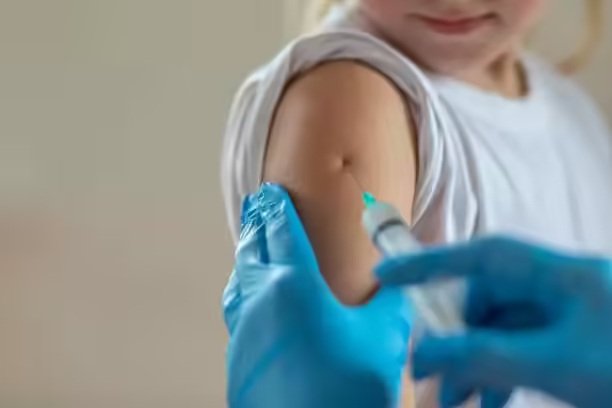
A team of scientists has uncovered how young children naturally build immunity against Group A Streptococcus (Strep A), a bacterial infection responsible for up to half a million deaths worldwide each year. The finding could significantly speed up the creation of a life-saving vaccine. Strep A is a common bacterium that can cause mild illnesses like sore throat and skin infections, but in severe cases, it can trigger life-threatening diseases. While deaths from Strep A are rare in wealthier nations, outbreaks can be devastating. In late 2022, a surge in cases across the UK and Europe claimed hundreds of lives, including those of many children. The burden is far greater in low- and middle-income countries, where thousands die annually from the infection. Researchers from the University of Sheffield, working with the Medical Research Council (MRC) Unit The Gambia at the London School of Hygiene and Tropical Medicine, tracked how Gambian children acquire natural immunity. Published in Nature Medicine, the study identified specific antibodies linked to protection from Strep A, marking a crucial step toward vaccine design. The team observed that babies are born with some immunity passed down from their mothers, but this protection fades quickly. Young children, however, develop robust antibody responses to different components of the bacteria after repeated exposure. This discovery pinpoints a key window for immune development, which could guide more effective vaccination strategies. Lead researcher Dr. Alex Keeley said this is the first time scientists have seen in humans how antibodies generated through vaccination might prevent Strep A infections. Gambian scientist Fatouamta Camara described the infection’s “devastating burden” on communities and expressed hope that a vaccine could break the cycle of illness and socio-economic hardship. The research was a collaboration between Sheffield’s Florey Institute of Infection and the GSK Vaccine Institute for Global Health. Professor Thushan de Silva, who co-directed the study, emphasised the importance of cross-institutional efforts in delivering impactful global health research. Source: PTI
Breakthrough in Understanding Childhood Immunity to Strep A Could Accelerate Vaccine Development Read More »

Chikungunya Risk Grows: WHO Warns of Possible Global Outbreak

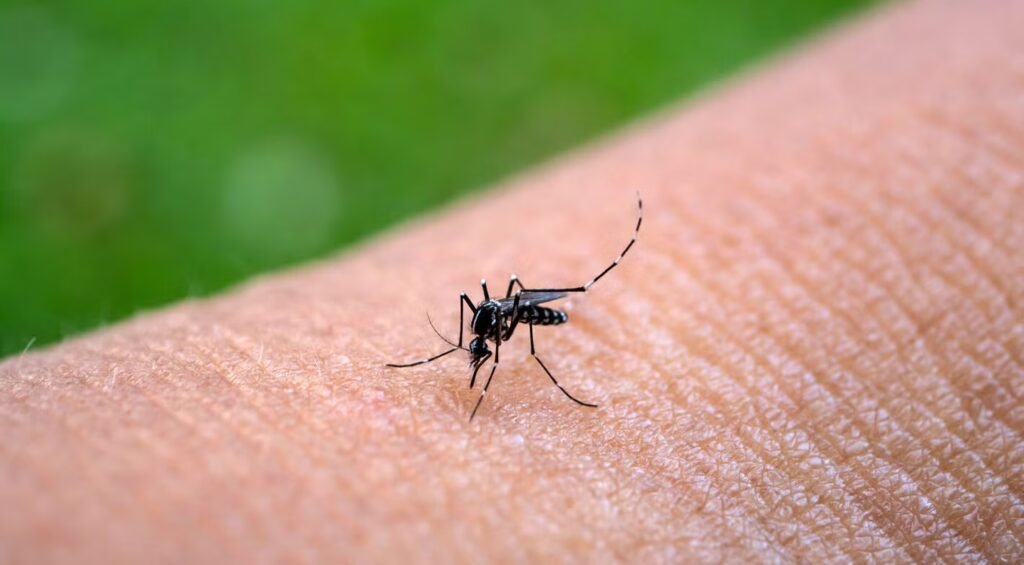
The World Health Organization (WHO) has issued a global health alert about the rising threat of a chikungunya epidemic, warning that the virus could soon spread across continents if swift preventive measures are not taken. The warning, issued on Tuesday, highlights signs similar to those observed before the large-scale outbreak of 2004–05. Dr. Diana Rojas Alvarez, a medical officer at the WHO, revealed that approximately 5.6 billion people across 119 countries are potentially vulnerable. Speaking at a press conference in Geneva, she emphasized the virus’s ability to trigger severe fever, debilitating joint pain, and long-lasting health issues, particularly among older adults. Outbreak Timeline and Spread The ongoing surge began in early 2025, primarily affecting regions in the Indian Ocean, including La Réunion, Mayotte, and Mauritius—where nearly one-third of La Réunion’s population has been infected. The virus has since made inroads into Madagascar, Somalia, Kenya, India, and other parts of Southeast Asia. Alarmingly, southern Europe is now reporting isolated locally transmitted cases in France and Italy. Understanding Chikungunya Chikungunya, first identified in Tanzania in 1952, is a mosquito-borne viral illness transmitted mainly by Aedes aegypti and Aedes albopictus mosquitoes. These vectors also spread other diseases like dengue and Zika. Common symptoms include: Sudden onset of high fever Severe joint and muscle pain Headache Fatigue Rash Although the infection is rarely fatal, many patients suffer prolonged joint discomfort that can persist for months. There is currently no specific antiviral treatment. Supportive care—hydration, rest, and pain relief—remains the primary approach. While two vaccines have been approved or recommended in select countries, widespread access and deployment remain limited. The WHO is assessing safety data and global needs to determine the potential for broader rollout. Global Numbers and Trends The European Centre for Disease Prevention and Control (ECDC) reports that, as of June 2025, Brazil leads with over 141,000 cases, followed by Argentina (2,521), Peru (46), and Bolivia (605). The French territory of La Réunion has documented over 51,000 cases by May-end. In South Asia, more than 33,000 infections have been reported in India, Pakistan, and Sri Lanka since June. Notably, regions that were once free from local chikungunya transmission are now witnessing occasional local outbreaks—a shift attributed to global warming and the changing habitats of mosquito species. WHO’s Call to Action To prevent chikungunya from escalating into a full-scale global epidemic, the WHO has urged governments and health agencies to: Enhance mosquito surveillance and vector control Strengthen healthcare infrastructure for better outbreak detection and response Increase public awareness on mosquito bite prevention Accelerate vaccine research and availability The WHO stressed that delaying action now could result in a wider, more difficult-to-control health emergency in the near future. Source: Business Standard

Chikungunya Risk Grows: WHO Warns of Possible Global Outbreak Read More »

ICMR Opens Door for Commercial Production of Next-Gen Malaria Vaccine

Ardorcomm news

The Indian Council of Medical Research (ICMR) has announced a major step forward in the fight against malaria by inviting expressions of interest (EoI) from eligible companies and manufacturers for the commercial production of a breakthrough malaria vaccine, AdFalciVax. Developed by the ICMR’s Regional Medical Research Centre in Bhubaneswar, this recombinant chimeric multi-stage vaccine targets Plasmodium falciparum, the deadliest malaria parasite, offering both individual protection and reduced community transmission. Pre-clinical validation of the vaccine technology was carried out in collaboration with ICMR-NIMR (National Institute of Malaria Research), other ICMR institutes, and the National Institute of Immunology in Delhi, which operates under the Department of Biotechnology. ICMR-RMRCBB will provide technical know-how and hands-on support throughout the vaccine production process to ensure a smooth and efficient pathway to commercialisation. Furthermore, ICMR’s team of seasoned scientists will assist in product development, study design, protocol development, data and results analysis, efficacy and safety assessments, and necessary improvements, based on mutual agreement with the collaborating partner. This initiative marks a significant stride in India’s effort to eliminate malaria through indigenous innovation and collaborative biotech development. Source: PTI

ICMR Opens Door for Commercial Production of Next-Gen Malaria Vaccine Read More »

India Nears Completion of Phase-3 Trials for Indigenous Dengue Vaccine: ICMR

India is on the cusp of a major public health milestone, with nearly 8,000 out of a targeted 10,000 participants already enrolled in Phase-3 clinical trials of the country’s first homegrown dengue vaccine, as per the Indian Council of Medical Research (ICMR). Dr. Manoj Murhekar, Director of ICMR’s National Institute of Epidemiology in Chennai, confirmed the progress in an interaction with The Hindu. The large-scale trials, which are being conducted at 20 different centres across the country, are testing the efficacy of DengiAll, a tetravalent vaccine developed by Panacea Biotec. This formulation aims to provide protection against all four known dengue virus serotypes that co-circulate in various parts of India. “An effective vaccine must be able to offer strong immunity against all four strains,” Dr. Murhekar emphasized. The ICMR is the primary funder of the project, with Panacea Biotec offering partial financial and technical support. Once vaccinated, participants will be monitored for a period of two years at locations including Delhi, Hyderabad, Pune, and Chennai. Currently, there is no approved vaccine or antiviral treatment for dengue in India, despite the disease being a recurring and widespread health issue. India remains among the top 30 countries most affected by dengue, according to the World Health Organization (WHO). By the end of 2023, over 129 countries had reported cases of dengue globally. The candidate vaccine, DengiAll, is derived from the TV003/TV005 tetravalent strain originally created by the U.S.-based National Institutes of Health. Panacea Biotec is one of three Indian firms granted access to the strain and has advanced furthest in the development process. The company completed early-stage (Phase-1 and 2) trials in 2018–19, which delivered encouraging results. It also holds a process patent for its unique formulation. The Union Health Ministry highlighted that the first participant in the Phase-3 trial received a dose at Pandit Bhagwat Dayal Sharma Post Graduate Institute of Medical Sciences in Rohtak last year. Dengue poses a significant health threat in India. Although 75–80% of infections are asymptomatic, individuals can still spread the virus via Aedes mosquito bites. Among symptomatic cases—comprising about 20–25%—children face an elevated risk of severe outcomes, including hospitalization and death. In adults, the disease can escalate into life-threatening conditions such as dengue hemorrhagic fever and dengue shock syndrome. The challenge of controlling the virus is compounded by the presence of four distinct serotypes, each offering limited cross-immunity, making repeated infections common. With the success of this trial, India could soon have its first domestically developed and licensed dengue vaccine, marking a crucial step forward in the country’s fight against vector-borne diseases. Source: The Hindu  

India Nears Completion of Phase-3 Trials for Indigenous Dengue Vaccine: ICMR Read More »

Gennova Biopharma Partners with CEPI to Develop mRNA Nipah Vaccine

Gennova Biopharmaceuticals, a subsidiary of Emcure Pharmaceuticals, has announced a partnership with the Coalition for Epidemic Preparedness Innovations (CEPI) to develop a self-amplifying mRNA (saRNA) vaccine for the Nipah virus. The collaboration has secured up to $13.38 million in funding from CEPI to accelerate research and development. Innovative Approach to Vaccine Development As part of this initiative, Gennova will work with the Houston Methodist Research Institute (HMRI), a CEPI partner based in the United States, to integrate artificial intelligence (AI) into vaccine design. AI-driven analysis will be used to identify optimal vaccine targets, enhancing immune response efficiency. Clinical trials are set to begin in India, where Nipah outbreaks have previously occurred. The Nipah Virus Threat Nipah virus, a highly lethal pathogen from the Paramyxovirus family, has caused multiple outbreaks in South and Southeast Asia, with a fatality rate of up to 75%. Though outbreaks have been geographically limited, the virus’s natural reservoir—fruit bats—inhabits regions home to over two billion people, making it a serious global health concern. CEPI’s Commitment to Global Health Kent Kester, Executive Director of Vaccine R&D at CEPI, emphasized the urgency of the project, stating: “With no approved vaccines or specific treatments for Nipah, CEPI is leading the global effort to develop countermeasures. Gennova’s saRNA technology could not only help fight Nipah but also enhance pandemic preparedness, enabling rapid responses within 100 days of identifying a new viral threat.” The Advantage of saRNA Vaccines Unlike traditional mRNA vaccines, which introduce pre-made antigenic proteins, saRNA vaccines provide genetic instructions that enable the body’s own cells to produce these proteins. This approach enhances the immune response while requiring lower doses, making it a promising platform for future vaccine development. A Long-Term Collaboration Gennova’s partnership with CEPI is not new. In August 2023, CEPI granted the company $3.6 million to optimize its saRNA technology for developing vaccines against unknown pathogenic threats, often referred to as Disease X. Sanjay Singh, CEO of Gennova Biopharmaceuticals, commented on the collaboration: “By harnessing our saRNA platform, we aim to develop a next-generation Nipah vaccine. This partnership sets a new benchmark for rapid vaccine development while ensuring equitable access and strengthening global health security.” Ensuring Equitable Access CEPI has invested over $100 million in Nipah vaccine research. Through this collaboration, Gennova has pledged to uphold CEPI’s Equitable Access Policy, ensuring that the vaccine, if successfully developed, will be made available first to at-risk populations at an affordable price. The agreement also includes provisions for technology transfer, which could support future vaccine development efforts against emerging infectious diseases.

Gennova Biopharma Partners with CEPI to Develop mRNA Nipah Vaccine Read More »