ArdorComm Media Group

Saturday, March 21, 2026 1:37 PM

Author name: admin

India vs Afghanistan Highlights T20 World Cup 2024: Bumrah, Arshdeep Help India Beat Afghanistan by 47 Runs

India secured a convincing 47-run victory over Afghanistan in their Super 8 match of the T20 World Cup 2024 at the Kensington Oval in Barbados. The Indian bowling unit, led by Jasprit Bumrah and Arshdeep Singh, played a crucial role in restricting Afghanistan’s batting efforts. India’s batting performance was led by Rohit Sharma, who scored 43 runs off 30 balls. The Indian captain’s innings was supported by Virat Kohli, who contributed 34 runs off 24 balls. The duo’s partnership helped India post a respectable total of 185 runs. In response, Afghanistan’s batting struggled to gain momentum. Their top-order batsmen, including Hazratullah Zazai and Usman Ghani, failed to make significant contributions. The Afghan team managed to score only 138 runs in their allotted 20 overs, ultimately falling short of the target by 47 runs. Bumrah and Arshdeep were the standout bowlers for India, taking three and two wickets respectively. The Indian duo’s impressive bowling display helped to restrict Afghanistan’s scoring and secure the win. India’s victory over Afghanistan has boosted their chances of advancing to the semifinals of the T20 World Cup 2024. The team will look to continue their winning momentum in their upcoming matches.  

India vs Afghanistan Highlights T20 World Cup 2024: Bumrah, Arshdeep Help India Beat Afghanistan by 47 Runs Read More »

NCERT Introduces ‘Criticism of Secularism’ in Textbook: Parties Disregard Equality, Prioritise Minority

The National Council of Educational Research and Training (NCERT) has revised the Class XI political science textbook, incorporating a critical perspective on secularism in India. This new content suggests that political parties prioritize minority interests for vote bank politics, leading to “minority appeasement.” Key Changes: Previous Content: The earlier edition emphasized that there is “little evidence” suggesting vote bank politics favors minorities and stated that such politics should only be considered wrong if it results in injustice. It claimed that all political parties utilize vote banks without inherently troubling implications unless injustice is created. Revised Content: The new version states that while vote bank politics might theoretically be harmless, it distorts electoral politics by mobilizing social groups to vote en masse for specific parties, thus prioritizing short-term gains over long-term development. It highlights that competitive vote bank politics can exacerbate social divisions and portrays different groups as rivals. The revision asserts that this form of politics is associated with minority appeasement, leading to the marginalization of minority groups and preventing social reforms. Justification for Changes: The NCERT explained that the previous version failed to adequately define vote bank politics and appeared to justify it. The revised content aims to provide a relevant criticism of Indian secularism, addressing perceived anomalies in the earlier text. These revisions are part of NCERT’s ongoing efforts to update the curriculum but are separate from the broader overhaul set to be completed by the 2025-26 academic session. This ongoing process, initiated in September 2021, involves comprehensive inputs from states, constitutional bodies, and expert groups.

NCERT Introduces ‘Criticism of Secularism’ in Textbook: Parties Disregard Equality, Prioritise Minority Read More »

ADB Approves $170 Million Loan to Strengthen Health Sector in India

Article

The Asian Development Bank (ADB) has approved a $170 million policy-based loan to enhance India’s readiness and capability in the health sector to address future pandemics. This funding, under the Strengthened and Measurable Actions for Resilient and Transformative Health Systems (Subprogramme 1), will support the implementation of the government’s National Health Policy 2017. The policy aims to ensure universal access to high-quality healthcare services across the country. Sonalini Khetrapal, a senior health specialist at ADB, stated, “The Covid-19 pandemic has taught us valuable lessons and the adoption of several innovative practices that would significantly strengthen pandemic preparedness and response capacities if consolidated, sustained, and institutionalised. ADB has been working with the Government of India to strengthen its health system and adopt transformative solutions.” This loan will address deficiencies in governance, legislation, and institutional structures, advancing India’s objective of achieving universal access to quality and affordable healthcare services, Khetrapal added. Work Towards Disease Surveillance Systems The programme aims to enhance disease surveillance systems to promptly address public health threats. It will establish laboratory networks for monitoring infectious diseases across states, union territories, and metropolitan areas. Additionally, it will assist in developing reliable data systems to oversee and align national health initiatives targeting disadvantaged populations such as the poor and women. “The programme will improve the governance and coordination of India’s One Health approach, its multisector response to emerging infectious diseases,” the press release stated. Efforts to Implement Policy Reforms ADB will assist in implementing policy reforms aimed at ensuring sufficient and skilled healthcare professionals. This effort includes legislation to oversee and uphold educational standards, service quality, and professional ethics among nurses, midwives, allied healthcare workers, and doctors. “The programme will help public health and health management teams deployed in some states to support public health functions and improve service delivery,” the release said. The programme aims to oversee integrated public health laboratories in five states and district critical care hospital units to enhance services for infectious diseases and critical illnesses. It will aid the intersectoral governing body and multisector task force in establishing environmentally sustainable and climate-resilient healthcare facilities. Furthermore, it will promote innovative approaches to service delivery.

ADB Approves $170 Million Loan to Strengthen Health Sector in India Read More »

Finance Says No to Health Request for $10-Million Fund to Meet G20 Pledge

The Global Initiative on Digital Health (GIDH), launched during India’s G20 Presidency, remains unfunded by India despite a $10-million pledge. This initiative, a key deliverable from the Health Ministers’ meeting in Gujarat on August 19 last year, was part of the New Delhi declaration. The GIDH, formally initiated on February 20, 2024, by then Health Minister Mansukh Mandaviya, is still awaiting India’s promised contribution. The delay stems from the Department of Economic Affairs (DEA) under the Ministry of Finance, which has not approved the contribution despite India’s commitment. The GIDH, managed by the World Health Organization (WHO), aims to support national digital health transformations within a framework that respects data protection regulations. A source from the Health Ministry indicated the proposal is “under consideration,” but the DEA had previously rejected the request in July 2023 without specifying reasons. The DEA suggested that India should offer technical support instead of financial contributions to avoid creating “committed liabilities.” Despite this setback, the Permanent Mission of India (PMI) to the UN recommended making a “substantial financial commitment” to the GIDH in November 2023. Highlighting India’s role as a leader in digital health, the Health Ministry, with approval from the Health Minister, reconsidered the contribution. In comparison, Indonesia contributed $50 million to establish the Presidency Prevention, Preparedness Response (PPR) Financial Intermediary Fund (FIF) during its G20 Presidency. As Brazil currently heads the G20 Presidency, the GIDH remains a priority within the health sector.

Finance Says No to Health Request for $10-Million Fund to Meet G20 Pledge Read More »

Karnataka Government Hints at Hiking Water Tariff in Bengaluru

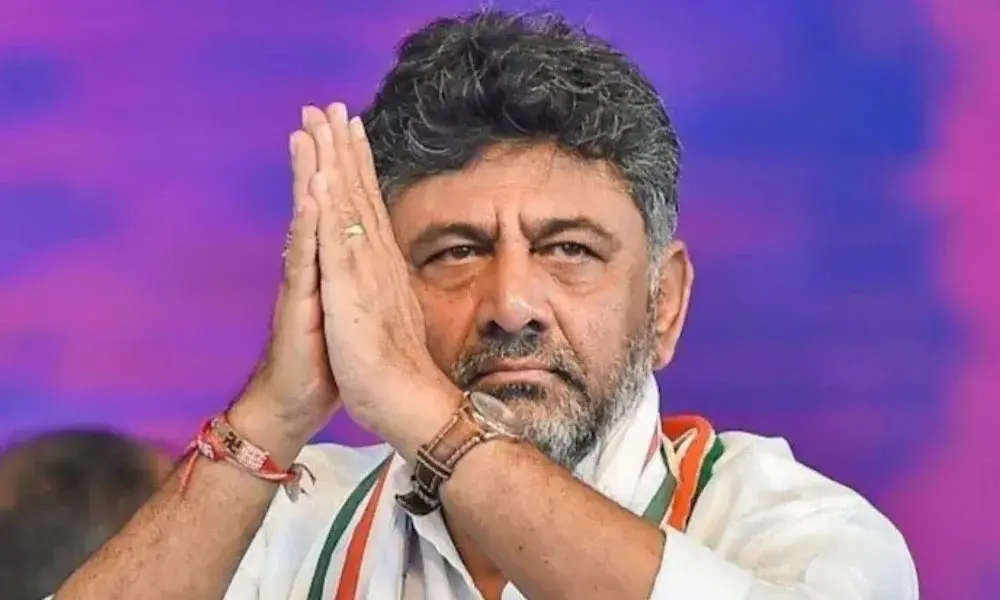
Deputy Chief Minister DK Shivakumar announced a potential increase in water tariffs in Bengaluru, following a recent hike in petrol and diesel prices in Karnataka. The Bangalore Water Supply and Sewerage Board (BWSSB) faces significant financial challenges, and Shivakumar emphasized the need for a review after 10 years. The completion of the fifth phase of the Cauvery project is expected to impact the decision on the water tariff hike. After the recent increase in petrol and diesel prices in Karnataka, residents of Bengaluru may also face a water tariff hike. Deputy Chief Minister DK Shivakumar mentioned on Wednesday that the water tariff had not been revised for the past decade, necessitating a review. “We are suffering huge losses. We’ve taken up new projects, and no bank is coming forward to finance the Bangalore Water Supply and Sewerage Board (BWSSB),” said Shivakumar, who is also the Bengaluru development minister. Last week, the state government increased sales tax on fuel, making petrol and diesel costlier by Rs 3 and Rs 3.5 per litre, respectively. Shivakumar added that he has instructed officials to review the BWSSB’s financial position and provide a report. “Let them give a report first. We will place it before the public before taking a call. The fifth phase of the Cauvery project is going to be completed. In 10-15 days, I’ll ensure completion of BWSSB work in this regard. At least 70% of the water bill is incurred through power bills and labor charges. Every year, we suffer a big loss. Hence, there is no option. I am working out possibilities and discussing how to stabilize the company (BWSSB),” he said. Justifying the necessity of the hike, Shivakumar stated: “Even the financing committee, World Bank, and others are telling us we are politicizing the issue and not even trying to bring it to a breakeven level. This is what various officials and international banking staffers are conveying. We must expand the water distribution system. I have now allotted 6 TMC ft of more water to Bengaluru. We must undertake the work of one more phase. There is no option unless we show them that BWSSB is an independent company and works as an independent entity.”

Karnataka Government Hints at Hiking Water Tariff in Bengaluru Read More »

PM Modi to Inaugurate 1600-Year-Old Nalanda University’s New Campus, Calls It ‘Very Special Day for Education Sector’

Prime Minister Narendra Modi is set to inaugurate the new campus of Nalanda University in Bihar’s Rajgir. In a post on X (formerly Twitter), he expressed his happiness on the occasion, calling it a “very special day for our education sector.” He highlighted Nalanda’s “strong connection with our glorious past” and its role in catering to the educational needs of the youth. PM Modi wrote, “It’s a very special day for our education sector. At around 10:30 AM today, the new campus of Nalanda University will be inaugurated at Rajgir. Nalanda has a strong connection with our glorious past. This university will surely go a long way in catering to the educational needs of the youth.” The university is a collaboration between India and East Asia Summit (EAS) countries, with deep historical roots. The original Nalanda University, established around 1600 years ago, is considered one of the first residential universities in the world. According to a PMO release, the Prime Minister will visit the Ruins of Nalanda at around 9:45 AM. The ruins were declared a UN Heritage Site in 2016. At around 10:30 AM, he will inaugurate the new campus and address the gathering on the occasion. The ceremony will be attended by several eminent people, including heads of missions from 17 countries. The new campus features two academic blocks with 40 classrooms, accommodating around 1900 students. It has two auditoriums with a capacity of 300 seats each, a student hostel for around 550 students, and various other facilities, including an international centre, an amphitheatre for up to 2000 individuals, a faculty club, and a sports complex. The campus is designed as a ‘Net Zero’ Green Campus, self-sustaining with solar plants, domestic and drinking water treatment plants, a water recycling plant, 100 acres of water bodies, and other environment-friendly facilities.

PM Modi to Inaugurate 1600-Year-Old Nalanda University’s New Campus, Calls It ‘Very Special Day for Education Sector’ Read More »

Vapotherm Enters Into Definitive Merger Agreement; Transaction Would Result in Company Going Private

Vapotherm, Inc. (OTCQX: VAPO) announced today that it has signed a definitive merger agreement with a newly-formed entity funded by an affiliate of Perceptive Advisors, LLC, a leading healthcare investment firm. This transaction will result in Vapotherm becoming a private company. Details of the Merger Agreement: Debt Conversion and New Investment: SLR Capital Partners will convert approximately $81 million of term debt into preferred equity in the new entity. Perceptive will invest $50 million of new preferred equity, a portion of which will fund the merger and related payments. SLR will retain $40 million of term debt. Merger Consideration: Vapotherm’s stockholders will receive $2.18 in cash per share, representing a 166% premium over the stock’s closing price on June 14, 2024. Board Approval: A special committee of Vapotherm’s Board, composed solely of independent directors, recommended the approval of the merger, which the Board accepted. Statements from Key Stakeholders: Anthony Storino, SLR Capital Partners: “This transaction allows the Company to strengthen their balance sheet as they focus on accelerating their revenue momentum.” Konstantin Poukalov, Perceptive Advisors: “We believe the Company has a clear vision to expand the use of high-velocity therapy in patients in need and look forward to supporting them in their next stages of growth.” Expected Closing and Future Operations: The transaction is anticipated to close in the second half of 2024, pending customary conditions, including stockholder approval. Upon completion, Vapotherm will be privately held and will no longer be publicly listed or traded on OTCQX. Advisors and Legal Counsel: Cooley LLP is representing Perceptive, Latham & Watkins LLP is representing SLR, Scalar, LLC is acting as the financial advisor to the Special Committee, and Ropes & Gray LLP is representing Vapotherm. About Vapotherm: Vapotherm, Inc. is a publicly traded developer and manufacturer of advanced respiratory technology, based in Exeter, New Hampshire. Their high velocity therapy systems provide non-invasive respiratory support, having treated over 4.4 million patients. The company focuses on delivering technology to patients in respiratory distress, offering a mask-free interface that allows patients to talk, eat, and drink while receiving treatment. Additional Information: This announcement is deemed solicitation material related to the proposed transaction. Vapotherm plans to file a proxy statement with the SEC and urges stockholders to read it in its entirety for important information about the transaction. Documents will be available on the SEC’s website and Vapotherm’s investor relations page. Forward-Looking Statements: The announcement includes forward-looking statements regarding the proposed transaction, stockholder approval, and the anticipated closing timeline. These statements are subject to risks and uncertainties that could cause actual results to differ. Vapotherm does not assume any obligation to update these statements, except as required by law.


Vapotherm Enters Into Definitive Merger Agreement; Transaction Would Result in Company Going Private Read More »

Maharashtra Govt Allocates ₹9.4 Crore for Healthcare Facilities During Ashadhi Ekadashi Wari

The Maharashtra government has allocated over ₹9.4 crore to provide healthcare facilities for pilgrims during the Ashadhi Ekadashi Wari. Of this, ₹2.40 crore is earmarked for medicines and ₹3 crore for food and snacks for the healthcare staff and pilgrims. The State Public Health Department issued a general resolution regarding this on June 13. Dr. Abhijit More, a health activist, raised concerns about the higher budget for food compared to medicines and medical equipment. He questioned the logic behind such allocation and called for an investigation into the matter. A senior Health Ministry official, speaking anonymously, explained that the costs shown for medicines and food are just allocations. Funds can be redirected as necessary. The official noted that the food budget appears higher due to the large number of doctors and healthcare staff deployed from various parts of the state and beyond. These staff members are provided with meals and water during and after the Wari, considering the increased cost of food due to inflation. The health department will set up four health camps for pilgrims and provide OPD, IPD, and ICU facilities at 258 medical units. Additionally, 707 ambulances will be available for the Palkhi procession. This year, approximately 3,362 healthcare staff, including doctors, 1,500 volunteers, and 500 department staff, will be deployed to ensure the health and safety of the pilgrims.

Maharashtra Govt Allocates ₹9.4 Crore for Healthcare Facilities During Ashadhi Ekadashi Wari Read More »

India Considering Lowering Personal Tax Rates to Boost Consumption

The Indian government is contemplating lowering personal tax rates for certain categories of individuals in the upcoming Budget 2024, potentially boosting consumption in Asia’s third-largest economy. This plan might be announced in July when Prime Minister Narendra Modi’s government presents its first federal budget after the Bharatiya Janata Party (BJP) failed to secure a majority on its own. A post-poll survey revealed voter concerns about inflation, unemployment, and declining incomes. Despite the Indian economy growing at an impressive 8.2% in 2023-24, consumption only grew at half that rate. Prime Minister Modi, while claiming to form the National Democratic Alliance government, emphasized focusing on raising middle-class savings and improving their quality of life. A reduction in personal tax could enhance consumption and increase middle-class savings, according to sources, who spoke anonymously due to the confidentiality of budget discussions. The finance ministry did not immediately respond to requests for comment. The tax relief may target individuals earning over Rs 15 lakh annually, with specifics yet to be determined. The changes might affect a tax scheme introduced in 2020, where income up to Rs 15 lakh is taxed at 5%-20%, and earnings over Rs 15 lakh are taxed at 30%. The government may also consider lowering rates for annual incomes of Rs 10 lakh and discussing a new threshold for the highest tax rate of 30%. Any loss of tax revenue from these cuts could be partially offset by increased consumption among higher income earners. The federal government aims for a fiscal deficit of 5.1% of GDP by March 2025. Strong tax collections and a substantial dividend from the central bank will provide the government flexibility in planning the new budget.

India Considering Lowering Personal Tax Rates to Boost Consumption Read More »

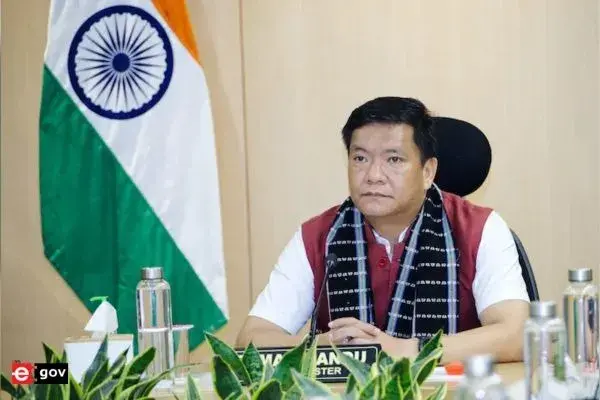
Arunachal CM Pema Khandu Brings Reforms 3.0 with Focus on Governance, Data Digitisation

Arunachal Pradesh Chief Minister Pema Khandu has introduced Reforms 3.0, aimed at enhancing governance and accelerating the digitisation of administrative processes. The initiative includes 24 citizen-centric measures as part of a transformative journey impacting citizens’ lives and aspirations. Pema Khandu was sworn in for his third consecutive term as Chief Minister on Thursday. During a cabinet meeting chaired by CM Khandu, it was resolved that governance reforms would be a top priority. The cabinet decided to achieve 100 percent digitisation of the Finance and Planning Departments to ensure all government payments are made digitally. Among the approved decisions, a policy think tank named the Institute for Transforming Arunachal (ITA) will be established to foster innovation in governance and facilitate socio-economic transformation. Additionally, a Digital Asset Inventory will be created for all public infrastructure, including schools, hospitals (SHCs, PHCs, District Hospitals), and Anganwadi Kendras, to ensure efficient planning and utilisation of public assets. The cabinet also resolved to establish an Administrative Reforms Commission (ARC) to provide recommendations for improving organizational structure, recruitment, and staffing policies. The goal is to build a lean, efficient, and agile administrative structure with maximum technology adoption. According to a release from the Chief Minister’s Office (CMO), the Cabinet resolved to ensure 100 percent physical and digital connectivity to all unconnected villages and administrative headquarters. A detailed action plan will be prepared to enhance citizens’ quality of life through improved connectivity.  

Arunachal CM Pema Khandu Brings Reforms 3.0 with Focus on Governance, Data Digitisation Read More »