ArdorComm Media Group

Monday, February 16, 2026 12:46 PM

Author name: admin

Delhi Government Rolls Out Free Coaching for 2,200 Top Government School Students

The Delhi government has launched a free professional coaching initiative for 2,200 high-achieving government school students to prepare for competitive exams such as JEE, NEET, CLAT, CA, and CUET, under the Mahamana Pandit Madan Mohan Malaviya Vidya Shakti Mission, announced Education Minister Ashish Sood. The mission seeks to nurture students’ ambitions, promote emotional well-being, and transform schools in the capital into future-ready learning spaces, according to an official statement issued on Monday. Allocated Rs 21 crore in the budget, the scheme reserves 50 seats per course for female students in JEE, NEET, CLAT, and CA Foundation. For CUET-UG, 1,000 seats are available, including 150 specifically for girls. Coaching will be delivered through accredited institutes such as Aakash Institute, Narayana Academy, KD Campus, and Ravindra Institute. Students will benefit from classroom teaching, live online sessions, study materials, and test preparation support scheduled after school hours and during weekends. Minister Sood hailed the program as a milestone in Delhi’s public education landscape. He noted that over 62,000 students appeared for CET-2025 on October 30, with counselling completed and in-person classes starting from November 26, 2025. Stressing the significance of emotionally safe learning environments, Sood added that education extends beyond academic scores to include mental well-being, dignity, and human values. The government is also advancing AI-enabled classrooms and human-centred education systems to provide genuinely equal opportunities for all students. Highlighting the merit-based essence of the initiative, the minister described the Vidya Shakti Mission as a movement dedicated to empowering talent, safeguarding mental wellness, and unlocking academic potential at the grassroots level. Source: PTI 

Delhi Government Rolls Out Free Coaching for 2,200 Top Government School Students Read More »

LIC Appoints Ramakrishnan Chander as Managing Director

State-owned Life Insurance Corporation of India (LIC) has appointed Ramakrishnan Chander as its new Managing Director, effective December 1, 2025. Before this appointment, Chander served as Executive Director (Investment – Front Office) and Chief Investment Officer at LIC. Chander, who joined LIC in 1990 as an Assistant Administrative Officer, brings over 35 years of experience in marketing and administration. His career has spanned roles including Senior Divisional Manager, Regional Manager (Marketing), Regional Manager (P&GS), and he also led LIC’s Strategic Business Unit – International Operations as Executive Director. He is a graduate and a Fellow of the Insurance Institute of India. The appointment comes as LIC continues to report strong financial performance. In Q2FY26, the company recorded a 31% YoY growth in consolidated net profit, reaching Rs 10,098 crore, up from Rs 7,728 crore in the same period last year. Net premium income rose 5.5% to Rs 1,26,930 crore compared with Rs 1,20,326 crore in Q2FY25. During the quarter, LIC’s first-year premium stood at Rs 10,884 crore, while renewal premium grew to Rs 65,320 crore. Single premiums were at Rs 50,882 crore, slightly down from the previous quarter but higher than the year-ago period. For H1FY26, LIC reported a 16% YoY rise in PAT to Rs 21,040 crore, with total premium income reaching Rs 2,45,680 crore. Notably, Individual Business Non-Par APE surged 30.47% YoY to Rs 6,234 crore, with its share in individual business increasing to 36.31% from 26.31% in H1FY25. Source: Economic Times

LIC Appoints Ramakrishnan Chander as Managing Director Read More »

ArdorComm – Education Leadership Summit & Awards 2025 Concludes Successfully in Jammu

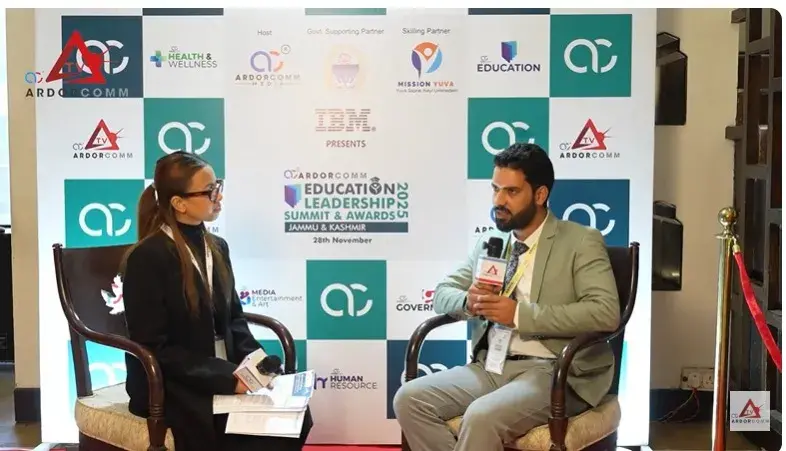
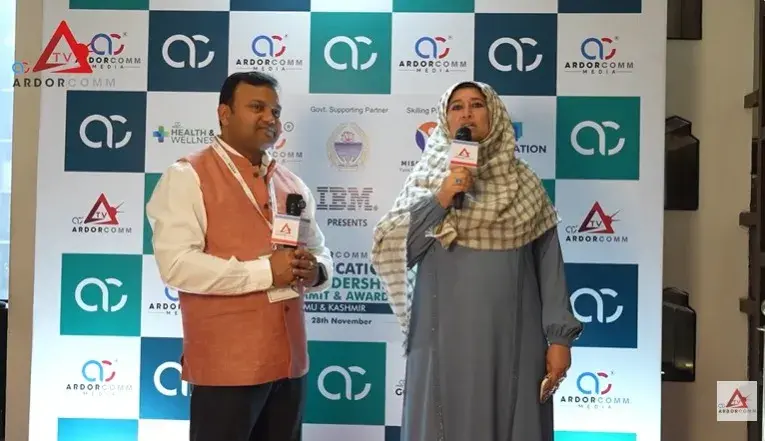
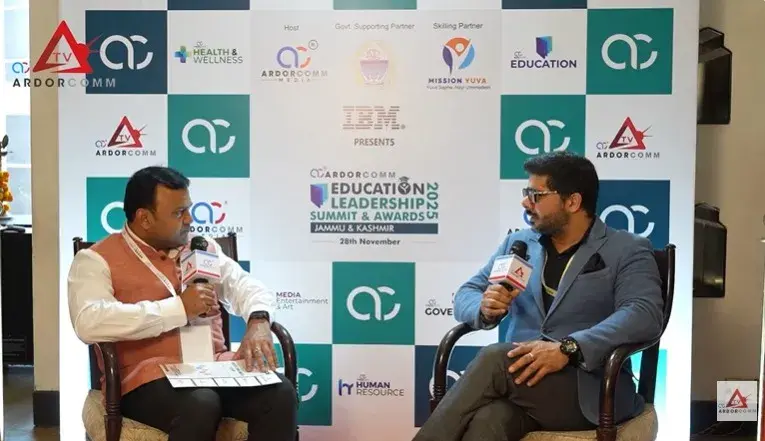
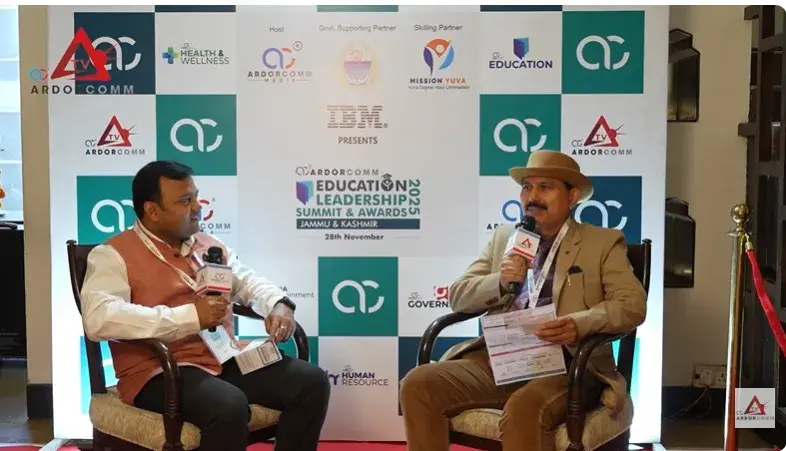
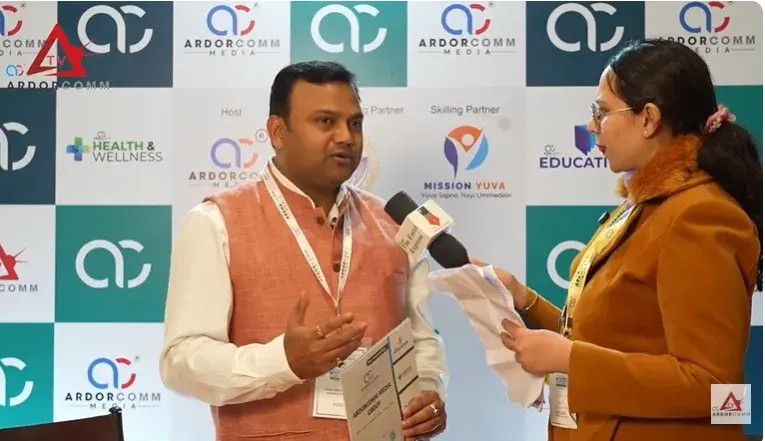
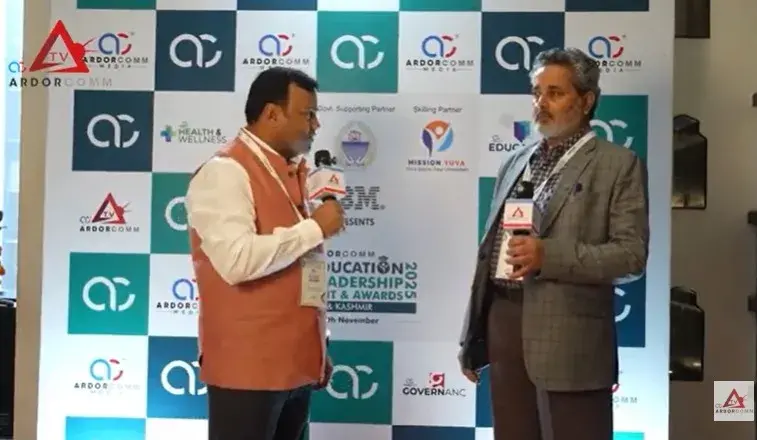
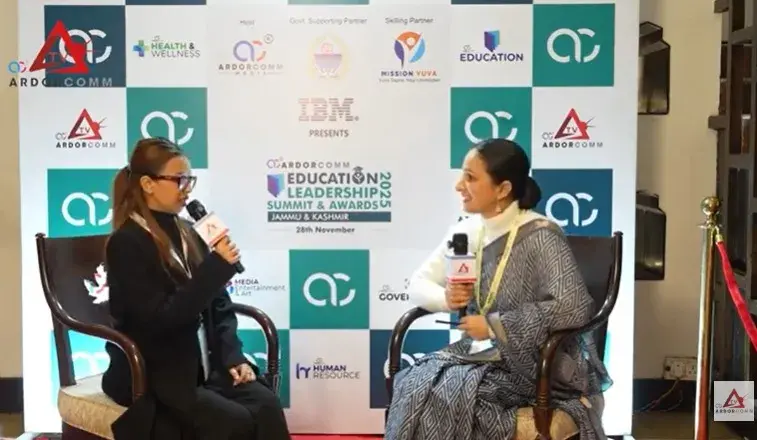
Theme: “Redefining Skilling & Learning in Digital Era: Empowering Future Leaders in J&K” Jammu, 28th November 2025: ArdorComm Media Group successfully hosted the ArdorComm – Education Leadership Summit & Awards 2025 in Jammu, bringing together distinguished educators, policymakers, corporate leaders, and innovators for a transformative dialogue on the future of education. The summit centered around the theme “Redefining Skilling & Learning in the Digital Era: Empowering Future Leaders in J&K”, highlighting the region’s growing momentum in adopting innovative, technology-driven learning models. Government Support and Encouragement The summit received enthusiastic support from esteemed government leaders of Jammu & Kashmir. Shri Surinder Kumar Choudhary, Hon’ble Deputy Chief Minister (Public Works (R&B), Industries & Commerce, Mining, Labour & Employment, and Skill Development Departments), and Ms. Sakeena Itoo, Hon’ble Minister for School Education, Higher Education, Health & Medical Education, and Social Welfare Department, conveyed their best wishes for the event, applauding ArdorComm’s efforts to foster meaningful discussions on skilling, employability, and digital empowerment. Inaugural Session and Keynote Addresses The inaugural session set the tone for a day of knowledge sharing and collaboration. Kumar Chandan Anand, Founder, CEO & Group Editor of ArdorComm Media Group, delivered the welcome address, emphasising the importance of innovation and collaboration in shaping a digitally empowered education ecosystem in J&K. The session was graced by Guest of Honour Shahzad Alam, IAS, Director – Employment & Skill Development and MD – Mission YUVA, Govt. of J&K, who highlighted government initiatives to strengthen youth employability. Keynote speakers Dr. S. K. Rathor, Founder, Chairman & MD, SANFORT Group of Schools, and Gagan Agrawal, Head – Academic Partnerships (North & Central India), IBM Career Education, shared valuable insights on redefining skilling and learning frameworks for the digital era. Panel Discussions The summit featured five in-depth panel discussions: Digital India in the Himalayas: Bridging the Tech Divide for Learning Equity – Moderated by Dr. Meenakshi Sharma, Director, Institute of Management Sciences, Jammu, with panelists Dr. Balbinder Singh Pathania, Prof. (Dr.) Hanan Khalid Khan, Prof. (Dr.) C.V. Gopinath, Dr. Atul Hans, Anu Kaushal, Ikkz Ikbal, and Rajeev Sharma. Fostering Future Leaders: How Values-Based Education Can Inspire Peace & Progress – Moderated by Arvind Mahajan, Chairman & MD, Spring Dales English School, Kathua, with panelists Ritesh Kapoor, Tarvinder Kaur, Irtiqa Kaushfi, Ishfaq Sayeed, and Riyaz Kathjoo. Last-Mile Learning: Leveraging Innovation to Make Education Inclusive and Equitable – Moderated by Er. Dinesh Gupta, Dean Academics, Yogananda College of Engineering & Technology, Jammu, with panelists Gagan Agrawal, Prof. (Dr.) Manish Kumar Srivastava, Prof. (Dr.) Sandhya Tiwari, Prof. Vandana Sharma, and Prof. Savita Nayyar. Skills to Success: Reimagining Curriculum with Insights that Drive Enrollment to Employment – Moderated by Siddhartth Singh, Director, Meritto, with panelists Prof. Saket Kushwaha, Rehman Malik, Dr. Anup Shukla, Dr. Kapil Kapoor, and Dr. Shamim Ahmed Bandey. Educators as Changemakers: Empowering Teachers with Tools, Tech & Training – Moderated by Dr. Adit Gupta, Group Director, MIER Group of Institutions, with panelists Prof. Naseer Iqbal, Dr. Subrat Sharma, and Prof. Sanjay Guleria. Industry Speeches The summit featured six prominent industry addresses, delivered by Susheel Kumar Bhat (Samsung India), Urvashi Rana (PowerSchool), Siddhartth Singh (Meritto), CA Mayur Zanwar (TruScholar), Gagan Agrawal (IBM Career Education), and Mustak Rogatya (MasterSoft ERP), focusing on technology integration, AI adoption, digital infrastructure, blockchain, and skilling in the education ecosystem. Roundtable Discussion A dedicated roundtable on “Technology for Teachers: Empowering Educators with Tools, Training & Tech” brought together 24 senior education leaders and industry experts, including Susheel Kumar Bha, Pradeep Nayar, Hitesh Mahajan, KCS Mehta, Shatambary Sharma, Rohini Aima, Isher Singh, Mohammad Altaf Bhat, Indu Kapoor, Prashant Salaria, Dr. Vikesh Kaur, Arvind Mahajan, Dr. Atul Hans, Er Ashraf, Baba Nazrul Islam, Adv. Gambhir Dev Singh Charak, Adv. Kunal Saini, Pragati Sharma, Ritesh Kapoor, Ishfaq Sayeed, Lokesh Kumar, Ikkz Ikbal, Malik Shabir Ahmad, and Rajeev Sharma. Discussions revolved around empowering educators with tools, training, and technology to enhance teaching and learning outcomes. ArdorComm Education Leadership Awards 2025 The highlight of the summit was the ArdorComm Education Leadership Awards 2025, recognising excellence across six categories: Preschools, School Education, Higher Education, Skills & Training, EdTech Startups, and EdTech Corporates. The awards honoured educators, institutions, and organizations for their innovation, leadership, and transformative impact on learning and employability outcomes. Looking Ahead The summit concluded with renewed commitment among all stakeholders to continue driving innovative, technology-enabled, and value-based learning initiatives in Jammu & Kashmir. ArdorComm Media Group reaffirmed its mission to foster collaboration, recognition, and knowledge sharing, shaping a brighter future for education in the region and across India. Event Glimpses: https://ardorcomm-media.com/aelsa/aelsajammu-glimpses/ Event Website: https://ardorcomm-media.com/aelsa/aelsajammu/

ArdorComm – Education Leadership Summit & Awards 2025 Concludes Successfully in Jammu Read More »

ArdorComm – Education Leadership Summit & Awards 2025 held on 28th November in Jammu

A Transformative Gathering in the Heart of Jammu The ArdorComm – Education Leadership Summit & Awards 2025, held on 28th November in Jammu, successfully convened distinguished educators, policymakers, corporate leaders, and innovators for a transformative dialogue on the future of learning. Centred on the theme “Redefining Skilling & Learning in the Digital Era: Empowering Future Leaders in J&K,” the summit highlighted the region’s growing momentum in adopting forward-thinking educational models. The event underscored how Jammu & Kashmir is poised to shape a new generation of skilled, tech-enabled, and future-ready learners by integrating digital tools, industry-driven curricula, and inclusive pedagogies that meet the demands of a rapidly evolving workforce landscape. Strengthening Education in Jammu & Kashmir Jammu & Kashmir has made significant progress in enhancing access to quality education through greater digital equity, improved literacy, and NEP 2020-led reforms. Government initiatives such as Samagra Shiksha, Mid-Day Meal, and Diksha continue to support inclusive learning. The summit created a collaborative platform for all stakeholders to exchange insights and chart a unified path toward future-ready education ecosystems. Support from Esteemed Government Leaders The summit received heartfelt encouragement and goodwill messages from distinguished leaders of the Government of Jammu & Kashmir, whose support added immense value to the event’s vision. Shri Surinder Kumar Choudhary, Hon’ble Deputy Chief Minister (Public Works (R&B), Industries & Commerce, Mining, Labour & Employment and Skill Development Departments), conveyed his warm greetings and applauded ArdorComm’s efforts in fostering meaningful discussions around skilling, employability, and digital empowerment in the region. Ms. Sakeena Itoo, Hon’ble Minister for School Education, Higher Education, Health & Medical Education and Social Welfare Department, also extended her best wishes, appreciating the summit’s role in bringing together leaders committed to redefining learning pathways for the youth of J&K. Their support reinforced the importance of collaborative action in building a strong, future-ready educational ecosystem across the Union Territory. Industry Leaders and Keynote Speakers  The inaugural session of the ArdorComm – Education Leadership Summit & Awards 2025 set an inspiring tone with insightful perspectives from distinguished industry leaders and keynote speakers. Delivering the Welcome Address, Kumar Chandan Anand, Founder, CEO & Group Editor of ArdorComm Media Group, emphasised the importance of collaborative innovation in shaping a digitally empowered education ecosystem for Jammu & Kashmir. The session was graced by the Guest of Honour, Shahzad Alam, IAS, Director – Employment & Skill Development and MD – Mission YUVA, Govt. of J&K, who highlighted the government’s progressive initiatives aimed at strengthening youth employability and future-readiness. Adding depth to the discussion were the esteemed Keynote Speakers, Dr. S. K. Rathor, Founder, Chairman & MD, SANFORT Group of Schools, and Gagan Agrawal, Head – Academic Partnerships (North & Central India), IBM Career Education, both of whom shared compelling insights on redefining learning and skilling frameworks to align with the demands of the digital era. Their combined wisdom laid a strong foundation for the day’s conversations around empowering future leaders in the region. The first panel discussion, “Digital India in the Himalayas: Bridging the Tech Divide for Learning Equity,” brought together an esteemed lineup of academic leaders and innovators from across the region. The session was moderated by Dr. Meenakshi Sharma, Director, Institute of Management Sciences, Jammu, and featured distinguished panelists including Dr. Balbinder Singh Pathania, Executive Director, Dronacharya PG College, Kangra; Prof. (Dr.) Hanan Khalid Khan, Director, ASE Group of Institutions, Kashmir; Prof. (Dr.) C.V. Gopinath, Director, Majhighariani Institute of Technology and Science, Rayagada; Dr. Atul Hans, Director Academics, International Daily Rising School, Jammu; Anu Kaushal, Director – Training & Communications, Lamrin Tech Skills University, Ropar; Ikkz Ikbal, Principal, Maryam Memorial Institute Pandithpara Qaziabad, Srinagar; and Rajeev Sharma, Principal, J&K Police Public School, Jammu. Together, they contributed their diverse perspectives to this important conversation on ensuring equitable access to technology-driven learning in the Himalayan region. The second panel discussion, “Fostering Future Leaders: How Values-Based Education Can Inspire Peace & Progress,” featured a distinguished group of education leaders who shared their perspectives on nurturing character, compassion, and responsible citizenship in learners. The session was moderated by Arvind Mahajan, Chairman & MD, Spring Dales English School, Kathua, and brought together eminent speakers including Ritesh Kapoor, Director–Principal, A.S.N. Hr. Secondary School, Channi Himmat, Jammu; Tarvinder Kaur, Regional Director, Sanfort Group of Schools, Jammu; Irtiqa Kaushfi, Principal, Hissam Institute of Learning & Leadership, Srinagar; Ishfaq Sayeed, Chairman, New Light Public Model School, Chitterkote Karnah, Kashmir; and Riyaz Kathjoo, Principal, Green Valley Educational Institute, Srinagar. Their collective insights highlighted the transformative power of values-driven education in shaping peaceful, progressive, and future-ready communities. The third panel discussion, “Last-Mile Learning: Leveraging Innovation to Make Education Inclusive and Equitable,” brought together renowned academic leaders and experts committed to expanding access and ensuring quality learning opportunities for all. The session was moderated by Er. Dinesh Gupta, Dean Academics, Yogananda College of Engineering & Technology, Jammu, and featured an esteemed panel including Gagan Agrawal, Head – Academic Partnerships (North & Central India), IBM Career Education; Prof. (Dr.) Manish Kumar Srivastava, Pro Vice Chancellor, Arni University, Indora; Prof. (Dr.) Sandhya Tiwari, Dean, School of Languages & Member Executive Council, Central University of Kashmir; Prof. Vandana Sharma, Dean, School of Languages, Central University of Jammu; and Prof. Savita Nayyar, Director – Centre for Women Studies, University of Jammu, Jammu Tawi. Together, they contributed valuable perspectives on harnessing innovation to strengthen last-mile delivery and build an inclusive, equitable education ecosystem. The fourth panel, “Skills to Success: Reimagining Curriculum with Insights that Drive Enrollment to Employment,” featured distinguished academic and industry leaders who shared forward-looking perspectives on bridging the gap between education and employability. The session was moderated by Siddhartth Singh, Director at Meritto, and included esteemed speakers such as Saket Kushwaha, Vice Chancellor, University of Ladakh; Rehman Malik, Chairman, UEG College of Paramedical Science; Anup Shukla, Dean (Student Affairs), IIT Jammu; Kapil Kapoor, Registrar, Abhilashi University; and Shamim Ahmed Bandey, Principal, SKC Government Degree College. Together, they brought valuable insights on curriculum redesign, skill-based learning pathways, and data-driven strategies that can effectively transform students’ journeys from

ArdorComm – Education Leadership Summit & Awards 2025 held on 28th November in Jammu Read More »

“LTSU: Skills for the World. Values for Life.” A Conversation with EPL Anu Kaushal, Training Director & Communications

“LTSU isn’t just producing skilled youth — we are raising ethically passionate leaders for India’s future,” says Anu Kaushal, Training Director & Communications at Lamrin Tech Skills University. What makes Lamrin Tech Skills University stand out in today’s education landscape? Lamrin Tech Skills University stands apart because of its founding principle — “A Class for Masses.” We exist to empower youth at scale, providing quality, skill-based education that actually leads to employability. The biggest differentiator is that LTSU is shaped by industry minds and aligned with industry demands — a university where relevance is the curriculum. This is not symbolic; it is concrete. Our global partners — IBM, L&T, ICA Edu Skills — are on campus, training students directly, building curriculum, mentoring, and shaping learning outcomes to meet international skill standards. Collaborations with NSDC and IIT Ropar strengthen this ecosystem, linking national skilling frameworks with research, innovation, and industry-ready training. “LTSU doesn’t prepare students for the industry. The industry prepares students at LTSU.” LTSU calls itself a skills-first university. How do you implement that philosophy on the ground? We believe skills are not learned—they are practiced. At LTSU, students train in environments that mirror real industry floors: IBM Innovation Lab L&T-driven engineering and construction technologies ICA Edu Skills-led business and finance training NSDC-aligned certification pathways Live projects under industry mentors Collaboration-driven learning with IIT Ropar Students don’t wait for internships to experience industry culture — they live it every semester. We ensure students develop not just technical skills, but also soft skills, communication abilities, and workplace behavior expected in high-demand global roles.   Leadership and character-building seem embedded in LTSU’s culture. How intentional is that? Extremely intentional. Technical excellence alone cannot build strong professionals. We want our graduates to lead teams, manage people, and create workplaces rooted in dignity and respect. I often say: “At LTSU, we are raising not just leaders — we are raising ethically passionate leaders.” Skill gives you competence. Ethics give you character. The combination gives you long-term success. Our mission reflects this beautifully: to skill young leaders through the transformative power of scientific education, liberal arts, and our rich heritage. This balance — skill + values — is what makes our students unique in the global workforce. “Ethical strength is a skill too. And at LTSU, it’s a non-negotiable one.” LTSU is often called one of India’s fastest-emerging, industry-led universities. How do these collaborations benefit students? Collaborations are our backbone. Partnerships with IBM, L&T, ICA Edu Skills, NSDC, and academic engagements with IIT Ropar give students: Real-world exposure Curriculum built by industry experts Practical training from global mentors Placement opportunities in emerging tech and engineering sectors Certifications that hold international value Instead of students running after employers, employers come looking for LTSU-trained youth. That’s the power of being an industry-rooted university — something very few institutions can claim honestly. What personally drives you in your role as Training Director & Communications? I’ve always believed that education can rewrite the story of a life. Every time I see a young student from a small town walk into a global-tech conversation with confidence, competence, and clarity — I feel the impact we’re creating. What keeps me going is the fact that LTSU is not just building careers. We are building character, courage, and ethical leadership in our youth. When a student grows into a skilled, ethical, emotionally balanced professional, you realize this is not just education — this is transformation. “When skills meet ethics, students don’t just succeed — they shine because skill makes you capable. Ethics make you credible.” If you had to describe LTSU in one powerful line for our readers, what would it be? “LTSU is shaping a future where India’s youth are skilled like the world’s best — and grounded like the nation’s finest.” Your closing message for students, parents, and industry? To students: Skill yourself so well that opportunity has no choice but to follow you. To parents: Choose an environment that prepares your child for life, not just a degree. To industry: Partner with us. The workforce you dream of is being trained here. To young India: lead with skill, stand with ethics, rise with courage.  Lamrin Tech Skills University stands beyond the idea of a university — it is architecting India’s skilled and ethical future.  

“LTSU: Skills for the World. Values for Life.” A Conversation with EPL Anu Kaushal, Training Director & Communications Read More »

India Needs Unified Policy Push to Build USD 100 Billion Creative Economy by 2030: CII

India must adopt a cohesive, well-coordinated policy framework to transform its creative sector into a USD 100 billion economic powerhouse by 2030, according to the CII’s India’s M&E Sector Report, unveiled at the 12th CII Big Picture Summit 2025 in Mumbai. The report projects that such a unified policy push could significantly boost the Media & Entertainment (M&E) industry’s GDP contribution while creating over five million new jobs. While the global M&E industry is expected to touch USD 3.5 trillion by 2029 with a 3.7% CAGR, India’s sector is poised for much stronger expansion at 9.8% CAGR, nearly 2.6 times the global rate. However, India still accounts for only 2% of the global media market, and its creative economy contributes merely 1% to the country’s GDP. To unlock full growth potential, the report calls for structural reforms, beginning with unified, modern regulation to replace the current fragmented, medium-specific laws that lead to inconsistent standards and compliance complexity. Such harmonisation, CII says, would support innovation, strengthen IP protection, and help India lead in fast-rising segments like gaming, streaming, and digital media. The report identifies infrastructure gaps as a major barrier to growth. Limited film studios, production facilities, and advanced tech infrastructure have led to capital flight and lost employment opportunities. CII recommends greater investment in top-tier production hubs, widespread 5G rollout, and technology integration to improve content creation and accessibility across India. Entrepreneurship challenges also need attention. The report advocates for a single-window digital clearance system, stronger anti-piracy enforcement, and simplified processes to improve business ease and attract global investments. Despite India’s rising global visibility in storytelling, the country’s media exports remain relatively low. CII suggests establishing dedicated export funds and streamlined export mechanisms to help Indian creators scale internationally and boost cultural impact. Talent shortages—particularly in animation, VFX, and digital media—pose another significant obstacle. The report recommends internationally aligned training standards and deeper collaboration between industry and academia to build a future-ready workforce. It concludes that a comprehensive National Media & Entertainment Policy, modeled on the National AVGC-XR Policy, could offer much-needed clarity and direction to navigate the industry’s rapid technological transformation. Source: ANI

India Needs Unified Policy Push to Build USD 100 Billion Creative Economy by 2030: CII Read More »

NMC–ICMR to Roll Out PhD Programmes to Strengthen India’s Clinical Research and Medical Innovation

The National Medical Commission (NMC), in collaboration with the Indian Council of Medical Research (ICMR), is set to introduce new PhD programmes and intensify clinical research efforts to boost indigenous innovation in medical devices and pharmaceuticals. Announcing the initiative at the 3rd convocation of Bhaikaka University in Karamsad, Anand, NMC chairman Dr. Abhijat Sheth said the move aims to fortify India’s medical research landscape and encourage innovation-led healthcare advancements. He also shared that 18,000 additional medical seats have been approved nationwide, with parallel initiatives to expand faculty capacity and ensure equitable, high-quality medical education. Highlighting the growing burden of non-communicable diseases (NCDs), Dr. Sheth emphasised the urgent need for preventive healthcare, self-care practices and the ATCOM module on professionalism as part of the commission’s updated training framework. Citing lessons from the Covid-19 pandemic, he stressed the importance of preparing future medical professionals for public health emergencies. At the convocation, 496 students from undergraduate, postgraduate and PhD programmes received their degrees, while 10 students were honoured with gold medals for academic excellence. The ceremony was attended by BU president Dr. Gauri Trivedi, provost Dr. Abhay Dharamsi, and other officials. It also featured the 20th H M Patel Memorial Lecture, delivered by paediatrician and public health specialist Dr. Pravitra Mohan, who spoke on “Equitable Healthcare in India: Leading the Change.” Source: TNN

NMC–ICMR to Roll Out PhD Programmes to Strengthen India’s Clinical Research and Medical Innovation Read More »

Uranium detected in Delhi’s groundwater: New report sparks major public-health alarm

A new assessment of Delhi’s groundwater has revealed a worrying rise in uranium contamination, placing the national capital among the top three affected regions in India after Punjab and Haryana. The Annual Ground Water Quality Report 2025 released by the Central Ground Water Board (CGWB) shows that 13–15% of the city’s water samples now contain uranium levels exceeding the permissible limit of 30 ppb, raising red flags over drinking-water safety and long-term health implications, according to a Times of India report. Rising uranium levels: What the latest findings reveal The new report highlights a steady and concerning upward trend in uranium presence across Delhi: In 2020, uranium levels above the safe threshold were detected in 11.7% of samples, including a particularly alarming reading of 89.4 ppb from a tubewell in the North West district. By 2024, six districts — North, North West, South, South East, South West, and West — had consistently reported samples with unsafe uranium levels, contributing to a citywide contamination share of 10.7%. The 2025 assessment now indicates an even higher percentage of unsafe samples, signalling worsening groundwater conditions. Two localities — Auchandi in Narela (42 ppb) and Nizampur in Kanjhawala (46.5 ppb) — have been identified as emerging hotspots. Environmental groups demand data transparency and action The findings have prompted several environmental organisations to push for public disclosure of water-quality records and enforcement of treatment protocols. The group Earth Warrior, in a letter to the Lieutenant Governor and Chief Minister, warned that uranium contamination is occurring alongside high nitrate, fluoride, and salinity levels, creating a hazardous mix of pollutants. The group also highlighted systemic dependence on groundwater: The Delhi Jal Board operates around 5,500 tubewells that collectively supply nearly 450 million litres per day (mld) of semi-treated or untreated water to the public—making the situation even more urgent. National context: Uranium contamination rising post-monsoon Across India, CGWB analysed 3,754 groundwater samples during pre- and post-monsoon periods in 2024. Uranium above the safe limit was found in: 6.71% of pre-monsoon samples 7.91% of post-monsoon samples This slight increase after monsoon rains indicates that hydrogeochemical changes and leaching processes may be intensifying contamination. Punjab remains the most affected state, followed by Haryana and Delhi. Health hazards linked to uranium in drinking water The report underscores the severe health impacts of consuming water contaminated with uranium — a substance that is both a heavy metal and a radioactive element. Its major harm stems from chemical toxicity rather than radiation. Long-term exposure can lead to: 1. Kidney damage (most common) Uranium is known to accumulate in the kidneys, impairing their ability to filter waste and potentially causing chronic kidney disease. 2. Bone and skeletal disorders The metal can settle in bones, contributing to weakness, deformities, and long-term skeletal changes. 3. Neurological complications Research indicates possible effects on memory, behavioral functions, cognitive clarity, and the nervous system after prolonged exposure. 4. Increased cancer risk While natural uranium emits low radiation, extended consumption may slightly elevate the risk of certain cancers. 5. Higher vulnerability in children Infants and young children are at greater risk. Exposure can harm bone development, growth patterns, and cognitive functions. 6. Digestive and general health issues High concentrations may cause nausea, vomiting, stomach irritation, and may interfere with liver function and blood chemistry. Additional groundwater concerns: Salinity and agricultural impact Beyond uranium, Delhi faces a significant problem with salinity. The report notes that the city recorded a sodium adsorption ratio (SAR) of 179.8, placing it among the highest in India. This means: 1.11% of areas now have groundwater unfit for irrigation 7.23% show excess salinity or high electrical conductivity Such conditions degrade soil quality, reduce farm productivity, and enable toxic elements to build up in crops—posing further risks to public health. CGWB response and the way forward The CGWB has stated that it issues bi-weekly alerts to state agencies about groundwater quality variations to support timely mitigation and raise public awareness. Experts now emphasize the need for: Comprehensive mapping of uranium-prone zones Transparent disclosure of real-time water-quality data Expansion of water-treatment infrastructure Reduction of groundwater dependency through surface-water alternatives Stronger policy interventions to prevent further aquifer degradation With Delhi’s reliance on groundwater continuing to grow, the rising uranium presence signals a looming water-safety crisis that demands urgent scientific, administrative, and public-health action. Source: TOI & Economic Times

Uranium detected in Delhi’s groundwater: New report sparks major public-health alarm Read More »

IIM Indore releases PGP 2026–28 admission criteria; increases weightage for Class 12 scores and PI

The Indian Institute of Management Indore has announced the admission policy for its flagship two-year PGP programme for the 2026–28 cohort, introducing notable shifts in evaluation weightages. The institute will continue with its three-tier selection system, factoring in CAT 2025 performance, academic records from Classes 10 and 12, work experience, and scores in the personal interview (PI). To be considered, applicants must appear for CAT 2025 and clear both the sectional and overall percentile benchmarks. For General and EWS candidates, the minimum overall requirement is 90 percentile, with 80 percentile in each section. The cut-off is 80 percentile for NC-OBC, and 60, 45 and 45 percentile for SC, ST and PwD applicants, respectively. At the shortlisting stage, Class 12 marks remain a major determinant, carrying 25% weightage, while Class 10 marks contribute 10%. CAT sectional scores make up 55% of the composite score, with 3% allotted for work experience and 7 marks for diversity. Shortlisted candidates will receive interview calls in January 2026, with offline interviews planned across Bengaluru, Chennai, Delhi, Hyderabad, Indore, Kolkata, and Mumbai. The institute has kept the option open for conducting interviews online if required. For the final admissions list, the PI holds the highest influence with 45% weightage. CAT sectional scores carry 40%, while Class 10 and 12 scores add 5% each. A 5-mark diversity factor is also included. Importantly, meeting cut-offs alone does not ensure selection—candidates must achieve minimum performance standards in every PI parameter to qualify. The institute will adhere to the Government of India’s reservation norms: 27% NC-OBC, 15% SC, 7.5% ST, up to 10% EWS, and 5% PwD. All candidates, regardless of category, must still achieve the minimum performance thresholds set by IIM Indore. For students whose Class 10 or 12 results were altered due to COVID-era board evaluation policies, score weightages will be proportionally reassigned to other components such as CAT sectional scores and available board marks. The institute has also clarified that the admission process may be updated in line with any new government or institutional guidelines. Source: Indian Express

IIM Indore releases PGP 2026–28 admission criteria; increases weightage for Class 12 scores and PI Read More »

McKinsey Cuts 200 Tech Jobs as AI Takes Over More Roles

McKinsey & Co. has laid off around 200 technology employees over the past week as it accelerates the use of AI to automate internal functions. According to sources, the firm may implement additional job reductions across various teams over the next two years as it evaluates which tasks can be fully handled by AI systems. A spokesperson said the company is focused on improving efficiency through AI-enabled workflows, calling the technology a major driver of “unprecedented opportunity and impact” for both the firm and its clients. Global Managing Partner Bob Sternfels previously stated that McKinsey will continue investing in client-facing roles, while tightening headcount in other areas. The firm currently employs about 40,000 people, including roughly 3,000 partners. The broader consulting industry is facing economic pressures, from tighter corporate budgets to policy shifts. Rival Accenture Plc has also warned that US federal spending cuts may slow growth next year. CEO Julie Sweet noted that the company is reducing roles that cannot be retrained as it expands AI-driven services. AI’s rapid advancement is reshaping the global workforce. Analysts at Bloomberg Intelligence estimate that banks worldwide could cut up to 200,000 jobs within five years due to automation. At the same time, major lenders like Citigroup Inc. forecast AI could add $170 billion to industry earnings by 2028, with more than half of banking roles carrying high automation potential. Source: Bloomberg

McKinsey Cuts 200 Tech Jobs as AI Takes Over More Roles Read More »