ArdorComm Media Group

Sunday, May 10, 2026 4:44 PM

Author name: admin

Revival of Assam State Transport Corporation (ASTC)

A Transformational Turnaround under Sri R.C. Jain, IAS (Retd.) Introduction Urban transport discussions often focus on intra-city mobility. However, it is inter-city transport that drives regional growth. In Assam, inter-urban transport was once almost entirely managed by the Assam State Transport Corporation (ASTC), while private operators handled city services. Until 1988, ASTC enjoyed near monopoly in inter-city operations. But policy changes under the Central Motor Vehicles Act, 1988, combined with severe internal mismanagement, pushed ASTC to the brink of collapse. What followed, however, became one of India’s earliest and most successful experiments in Public-Private Partnership (PPP) in passenger transport. Before 1988: A Stable Giant Established in 1948; corporatized in 1970 Fleet strength: 500+ buses Strong infrastructure across districts Protected from private competition Operationally profitable (though declining) Post-1988: Rapid Decline With private operators entering inter-city routes, ASTC faced stiff competition. Internal weaknesses worsened the crisis: Overstaffing: 6,123 employees Staff–bus ratio: 70:1 (ideal: 6:1) Salaries unpaid for 14 months CPF dues pending for 13 years Retirement benefits unpaid for 14 years Total liabilities: ₹150 crore Only 70 buses operational (300 off-road) Dilapidated bus stations Demoralized workforce ASTC stood on the verge of closure. The Turning Point: Leadership of Sri R.C. Jain (2000) In August 2000, Sri R.C. Jain took charge as Managing Director and launched a bold revival plan based on structural reform + private participation. Despite strong protests, reforms began immediately. The Revival Strategy Voluntary Retirement Scheme (VRS) 1,807 employees opted for VRS Monthly savings: ₹81 lakh First State PSU in India to receive Planning Commission grant for VRS Staff strength rationalized toward optimal levels Self-Employment Scheme (PPP Model) – 2001 The masterstroke of revival. Private bus owners were brought under ASTC’s operational umbrella. Why Private Operators Joined ASTC: Access to ASTC terminals statewide Freedom from private syndicate entry fees Cheaper repair facilities at ASTC workshops Centralized ticketing and scheduling Protection from arbitrary vehicle interception Marketing support (scratch card incentives) Route tracking services Revenue Model: ₹5,000 registration fee ₹10,000–20,000 refundable security deposit 10% of fare revenue or fixed per-km charge (whichever higher) Operating and repair costs borne by owner Gains for ASTC: Revenue without capital investment Productive use of idle infrastructure Regulated scheduling Employment opportunities for youth Protection for small operators This became one of the first PPP transport models in India. Station-Based Zero Inventory Management For ASTC’s own buses: Station Superintendents made vehicle-wise responsible No central spare inventory Incentive: 20% bonus on additional earnings Best Driver & Best Mechanic awards introduced One-time government grant revived grounded buses 34 new buses purchased Fleet strength increased from 70 to 280 buses. ASTC also introduced: Air-conditioned buses Low-floor buses Cargo & courier services Advertisement monetization Bus Station Renovation – Zero Investment Model Public participation encouraged Commercial shop spaces developed Rental income used for station renovation Surplus funds helped clear liabilities Support from Transport Minister Sri Anjan Dutta New Revenue Streams Diesel agreement with Indian Oil Corporation at concessional rates Sale of diesel to private operators Bulk procurement of tyres & batteries for resale Tyre rethreading services Bus advertisement rights monetized The Outcome All employee dues cleared CPF and retirement benefits paid Liabilities settled ASTC turned profitable Surplus fund generated When Sri R.C. Jain was transferred in October 2005, ASTC was financially stable and operationally revitalized. Conclusion The revival of ASTC stands as a landmark case of visionary leadership, bold reform, and innovative Public-Private Partnership. What seemed an inevitable collapse transformed into a sustainable, profitable model — protecting employees, empowering private operators, and serving millions of commuters across Assam. It remains a powerful example of how administrative courage and structural reform can revive even the most distressed public institutions.  

Revival of Assam State Transport Corporation (ASTC) Read More »

UGC Flags 32 Fake Universities Across India; Delhi Tops List With 12

The University Grants Commission (UGC) has identified 32 institutions across India as fake universities, warning students that degrees issued by these entities are invalid for employment and higher education. In a public notice released in February 2026, the UGC — a statutory body under the Department of Higher Education, Ministry of Education — clarified that these institutions are not recognised under Sections 2(f) and 3 of the UGC Act. The Commission emphasised that only universities established by a Central or State Act, or those declared as deemed universities under the Act, are authorised to award valid degrees. Delhi Records The Highest Number Delhi has the highest number of such institutions, with 12 entities operating without recognition. Uttar Pradesh follows with four, while several other states and Union Territories have reported one or two such cases. State-Wise Count Of Fake Universities (As of February 2026) Delhi – 12 Uttar Pradesh – 4 Andhra Pradesh – 2 Karnataka – 2 Kerala – 2 Maharashtra – 2 Puducherry – 2 West Bengal – 2 Arunachal Pradesh – 1 Haryana – 1 Jharkhand – 1 Rajasthan – 1 The UGC has advised students and parents to verify the recognition status of institutions through its official website before taking admission. It reiterated that degrees awarded by unrecognised institutions hold no legal validity and will not be accepted for jobs or further studies. The Commission’s move aims to protect students from fraudulent institutions and maintain the integrity of India’s higher education system. Source: NDTV

UGC Flags 32 Fake Universities Across India; Delhi Tops List With 12 Read More »

A. R. Rahman Agrees in Supreme Court to Credit Junior Dagar Brothers for ‘Veera Raja Veera’

Oscar-winning composer A. R. Rahman on Friday informed the Supreme Court of India that he would formally acknowledge the contribution of the Junior Dagar Brothers in the song Veera Raja Veera from the film Ponniyin Selvan: II. A Bench comprising Chief Justice Surya Kant and Justices Joymalya Bagchi and Vipul M Pancholi recorded Rahman’s submission and disposed of the plea, describing the individuals involved as “reputed names of the music industry”. Senior advocate Abhishek Manu Singhvi, appearing for Rahman, told the court that the composer would update the song credits to read: “Composition inspired by Dagarwani tradition Dhrupad, first recorded as ‘Shiv Stuti’ by late Ustad Nasir Faiyazuddin Dagar and Ustad Nasir Zahiruddin Dagar, popularly known as Junior Dagar Brothers.” The matter arose from a plea filed by Dhrupad vocalist Ustad Faiyaz Wasifuddin Dagar challenging a September 2025 order of the Delhi High Court. The High Court had observed that there was no prima facie material to establish that the Junior Dagar Brothers — Ustad Nasir Zahiruddin Dagar and Ustad Nasir Faiyazuddin Dagar — were the authors of the classical rendition Shiv Stuti. The Supreme Court noted that the revised credit would be reflected across social media and OTT platforms within five weeks. It also directed Rahman to deposit ₹2 crore, as fixed by the High Court, with the Registrar General on an interim basis. Clarifying its position, the Bench stated that it had not expressed any opinion on the merits of the dispute and that the pending civil suit between the parties would proceed independently, uninfluenced by its observations. Earlier, on February 13, the apex court had suggested that Rahman and the makers of Ponniyin Selvan: II consider acknowledging the Dagarwani Dhrupad tradition’s contribution to the composition. Faiyaz Wasifuddin Dagar, son of Faiyazuddin Dagar and nephew of Zahiruddin Dagar, has claimed copyright over the original works of the Junior Dagar Brothers, including Shiv Stuti, alleging unauthorised use in the film’s song. Source: PTI

A. R. Rahman Agrees in Supreme Court to Credit Junior Dagar Brothers for ‘Veera Raja Veera’ Read More »

Sundar Pichai Unveils Google AI Professional Certificate, Announces India-America Connect Initiative

At the Artificial Intelligence Summit in New Delhi, Sundar Pichai, CEO of Google, announced the launch of a new Google AI Professional Certificate programme aimed at strengthening AI skills and deepening technology collaboration between India and the United States. During his keynote address, Pichai also introduced the India-America Connect Initiative, a major digital infrastructure project that will establish new subsea cable routes linking India, the US, and several regions across the southern hemisphere. The initiative is designed to enhance AI connectivity, improve data transfer speeds, and support the growing demand for advanced AI capabilities. Emphasising the need to pair infrastructure growth with talent development, Pichai described the AI certificate programme as one of Google’s most ambitious skilling efforts in India. He noted that as AI creates new opportunities, investing in workforce training is essential to ensure professionals can effectively integrate AI into their work. Reflecting on Visakhapatnam—popularly known as Vizag—Pichai recalled remembering it as a quiet coastal city filled with promise. He said he never imagined it would one day emerge as a global AI hub. As part of its planned $15 billion infrastructure investment in India, Google will establish a full-stack AI hub in the region. The facility will feature gigawatt-scale compute capacity along with a new international subsea cable gateway, a move expected to create jobs and bring cutting-edge AI resources to businesses and communities across the country. The Google AI Professional Certificate is designed to equip learners with both foundational and advanced AI expertise. The curriculum covers key areas such as artificial intelligence fundamentals, machine learning, neural networks, and practical real-world applications. Participants will gain hands-on experience using Google’s AI tools and technologies, enabling them to implement AI-driven solutions in professional settings and explore new career opportunities in a rapidly evolving digital economy. Source: NDTV

Sundar Pichai Unveils Google AI Professional Certificate, Announces India-America Connect Initiative Read More »

India, France Inaugurate Indo-French Centre for AI in Health at AIIMS Delhi

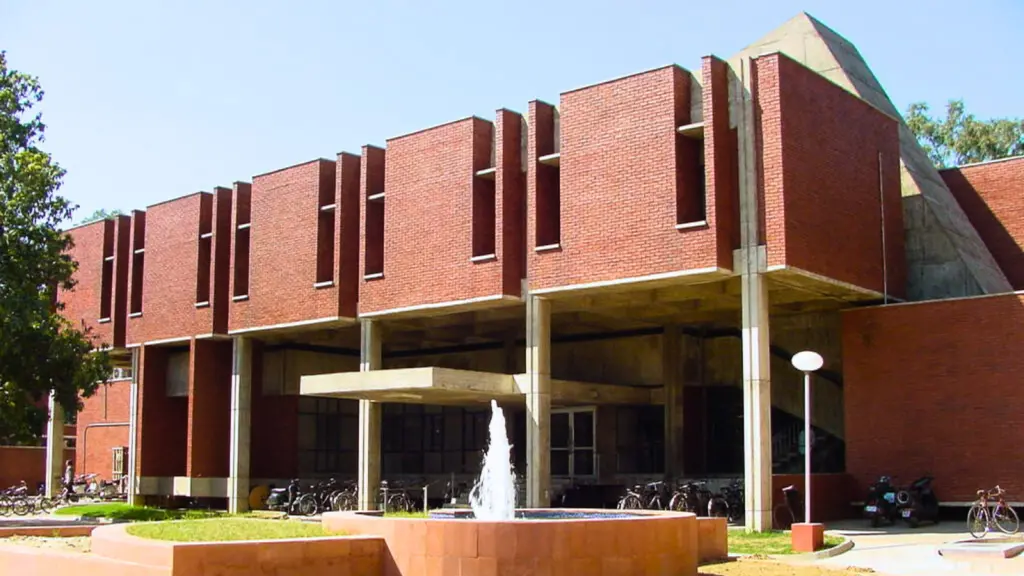
In a major step to deepen bilateral cooperation in healthcare and emerging technologies, Union Health Minister JP Nadda and French President Emmanuel Macron jointly inaugurated the Indo-French Centre for AI in Health (IFCAIH) at All India Institute of Medical Sciences (AIIMS), New Delhi. The newly launched centre is envisioned as a pioneering platform to accelerate AI-driven research, strengthen medical education, and promote clinical innovation. According to official sources, the IFCAIH aims to tackle complex healthcare challenges while fostering interdisciplinary collaboration between Indian and French institutions. Addressing the gathering, President Macron underlined the importance of developing sovereign AI capabilities. He stressed that India and France must build their own computing capacity and skilled talent to create trusted AI systems, rather than relying entirely on technologies developed elsewhere. He added that artificial intelligence must serve humanity, with strong safeguards for children, algorithmic transparency to reduce bias, and a commitment to preserving linguistic and cultural diversity. The launch of the centre coincided with the Rencontres Universitaires et Scientifiques de Haut Niveau (RUSH) 2026, a high-level academic and scientific forum organised at AIIMS on February 18 and 19 by the French Embassy. A key session titled “Indo-French Forum: AI in Brain Health and Global Healthcare” brought together scientists, clinicians, policymakers, and academic leaders from both nations to explore collaborative solutions in global health. The IFCAIH has been established under a joint Memorandum of Understanding between AIIMS, Sorbonne University, and Paris Brain Institute, with additional collaboration from Indian Institute of Technology Delhi and other leading French institutions. The initiative builds upon ongoing India-France cooperation in priority areas such as digital health, antimicrobial resistance, human resources for health, and the responsible use of health data. As part of the RUSH 2026 programme, President Macron engaged with young Indian innovators, including Priyanka Das Rajkakati and Manan Suri, during an interactive session moderated by Clara Chappaz, spotlighting youth-led innovation and cross-border AI collaboration. The event also featured a special segment at the Jawaharlal Auditorium highlighting major scientific and academic cooperation milestones between France and India. Moderated by Prof. Vijay Raghavan and Dr. Thierry Coulhon, Chairmen of RUSH, the session showcased expanding partnerships in higher education, research, and innovation. Union Minister JP Nadda reaffirmed India’s commitment to strengthening AI-enabled healthcare collaboration with France, noting that the new centre will serve as a catalyst for innovation, capacity building, and global knowledge exchange. President Macron later posted on X that France and India are mobilising AI for research, training, and innovation for the common good, reinforcing the shared vision of ethical, inclusive, and globally beneficial AI in healthcare. Source: ANI

India, France Inaugurate Indo-French Centre for AI in Health at AIIMS Delhi Read More »

Warner Reopens Talks with Paramount After Netflix Waiver Amid Ongoing $80B+ Merger Battle

Warner Bros. Discovery has reopened takeover discussions with Paramount Skydance after receiving a temporary waiver from Netflix, even as it continues to recommend its previously agreed merger with the streaming giant. In a regulatory filing on Tuesday, Warner said Netflix had granted it a seven-day window to re-engage with Paramount and address outstanding concerns in its latest proposal. The waiver, valid through Monday, enables the companies to clarify terms and resolve what Warner described as “deficiencies” in Paramount’s bid. Despite reopening talks, Warner’s board reiterated its support for the Netflix transaction. Shareholders are set to vote on the proposed deal at a special meeting scheduled for March 20. Netflix, in a statement, expressed confidence that its offer delivers “superior value and certainty,” while acknowledging the broader industry uncertainty sparked by Paramount’s competing bid. The company characterized the waiver as an opportunity to “finally resolve” the ongoing situation. Paramount, however, described Warner’s decision to impose a time-bound engagement as unusual. It argued that the board could have independently evaluated whether its offer was more attractive. Nevertheless, Paramount confirmed its willingness to participate in constructive discussions and continue pursuing its all-cash tender offer of $30 per share — which it maintains is more favorable than Netflix’s proposal. The company also indicated it could raise its bid to $31 per share, pending further engagement, and is pressing ahead with plans for a proxy battle. The competing offers differ significantly in scope. In December, Netflix agreed to acquire Warner’s studio and streaming operations in a deal valued at $72 billion. Including debt, the enterprise value stands at approximately $83 billion, or $27.75 per share. The transaction would follow Warner’s planned separation of its cable networks business. Paramount, by contrast, is seeking to acquire Warner in its entirety — including assets such as CNN and Discovery — through a $77.9 billion hostile bid. Including debt, that offer values the company at roughly $108 billion, or $30 per share. Analysts at Raymond James noted that if Paramount were to raise its bid to the $32–$33 range, it would become increasingly challenging to argue that the Netflix agreement offers better value. However, they added that Netflix still holds a strategic advantage and could counter with a higher offer if needed. In an effort to win over shareholders, Paramount has sweetened its proposal by introducing a “ticking fee” — 25 cents per share per quarter if the deal does not close by year-end — and has pledged to cover Warner’s $2.8 billion breakup fee owed to Netflix under the existing agreement. Support for Paramount’s tender offer remains limited. As of last week, approximately 42.3 million Warner shares had been tendered and not withdrawn — a fraction of the company’s 2.48 billion outstanding shares — and significantly lower than the 168.5 million shares reported in January. Meanwhile, activist investor Ancora Holdings has voiced opposition to the Netflix deal, adding another layer of complexity to the takeover battle. Regulatory scrutiny looms large over both proposals. Lawmakers have raised antitrust concerns given the scale of the potential consolidation in the media and entertainment sector. The U.S. Department of Justice has begun reviewing the transactions, and other global regulators are expected to examine the deals closely. Both Paramount and Netflix have confirmed they secured securities clearance from German authorities last month. Investor reaction has been measured but positive. Shares of Warner Bros. Discovery climbed more than 3% in Tuesday trading, while Paramount Skydance rose over 5%. Netflix shares edged slightly higher. Source: AP

Warner Reopens Talks with Paramount After Netflix Waiver Amid Ongoing $80B+ Merger Battle Read More »

Ambani, Adani Turn India AI Summit into High-Stakes Talent Hunt Amid $50B Investment Push

India’s two biggest business houses — Mukesh Ambani and Gautam Adani — are turning the ongoing India AI Summit into a high-stakes talent hunt, as competition to build cutting-edge artificial intelligence tools intensifies across the country. Senior executives from Reliance Industries Ltd. and Adani Group have been actively scouting young engineers at the summit, with candidates queuing up to showcase resumes, AI prototypes, and GitHub portfolios. With AI expertise still a niche skill set in India’s vast technology workforce, companies are moving quickly to secure top talent. Priyanshi Bavishi, a marketing executive at AdaniConnex Pvt. Ltd., said the summit offers an ideal platform to connect with qualified professionals. “The industry is still niche, so the qualified people have great prospects,” she noted. The week-long event has drawn global tech heavyweights, including Sundar Pichai of Alphabet Inc. and Sam Altman of OpenAI, alongside French President Emmanuel Macron, who is scheduled to deliver the keynote address. For Prime Minister Narendra Modi, the summit serves as a global showcase for India’s software prowess and tech-savvy workforce. The country has already attracted $50 billion in AI-related investments, positioning itself as an emerging force in the global AI race. Corporate announcements during the summit underscored that momentum. Anthropic revealed a partnership with Infosys Ltd. to build advanced AI solutions tailored for specific industries. Meanwhile, the Adani Group unveiled plans to invest $100 billion in data centers by 2035. Google has also committed $15 billion toward developing what it calls its first AI hub in India. Consulting firms are equally aggressive in recruitment. Siddharth Sood, a consulting partner at Ernst & Young LLP, said the focus is shifting beyond traditional service roles. “We are a service-oriented nation. But we are looking for ideapreneurs,” he said, highlighting demand in areas such as AI-driven cybersecurity. At the summit venue, AI engineers, data scientists, and cloud developers are among the most sought-after profiles. Recruiters from Dell Technologies and Salesforce are leveraging the event to access candidates they might not reach through conventional online hiring channels, where automated screening systems often filter out applicants. Viral Tank, senior manager in analytics at Deloitte Haskins & Sells LLP, described the atmosphere as mutually beneficial. “It works both ways. I am looking for people. They are looking for jobs,” he said, noting the strong turnout of students since early morning sessions. While global corporations deepen their AI footprints and Indian conglomerates ramp up infrastructure spending, the government is aiming to expand domestic AI model development and boost funding further. Even as India accelerates its efforts, it continues to trail China in overall AI scale and deployment — making talent acquisition a critical battleground in the country’s next phase of digital growth. Source: Bloomberg  

Ambani, Adani Turn India AI Summit into High-Stakes Talent Hunt Amid $50B Investment Push Read More »

CBSE Makes First Board Exam Mandatory for Class 10 Under New Two-Exam System

The Central Board of Secondary Education (CBSE) has announced that appearing in the first board examination will be compulsory for all Class 10 students under the new two-exam format set to be implemented from 2026. The clarification comes after the board received requests from some students seeking permission to skip the first phase due to various reasons and instead appear only in the second examination. However, CBSE has firmly stated that all students must take the first board exam. CBSE Examination Controller Sanyam Bhardwaj said that students who do not appear in at least three subjects during the first examination will not be permitted to sit for the second phase. Such candidates will be placed in the “Essential Repeat” category and will be required to reappear for the board examinations in the following year’s main session, usually held in February. Students who clear the first examination will be allowed to improve their performance in up to three subjects in the second phase. These subjects include Science, Mathematics, Social Science, and languages. The introduction of the two-board-exam system from 2026 marks a significant step in CBSE’s ongoing examination reforms aimed at offering students flexibility while maintaining academic standards. Source: PTI

CBSE Makes First Board Exam Mandatory for Class 10 Under New Two-Exam System Read More »

India Hosts AI Impact Summit in New Delhi, Welcomes Global Leaders and Tech Titans

India has kicked off the five-day AI Impact Summit in New Delhi, bringing together world leaders, policymakers and top technology executives to deliberate on pressing issues such as job displacement, child safety, regulation and the future of artificial intelligence. Prime Minister Narendra Modi inaugurated the summit, describing it as a milestone in India’s rapid progress in science and technology. In a post on X, he said the event highlights both the nation’s technological advancement and the potential of its youth. The summit aims to chart a “shared roadmap for global AI governance and collaboration.” Organisers have billed this as the largest edition of the summit so far, with an expected 250,000 participants, including 20 heads of state and 45 ministerial delegations. Among the prominent leaders expected to attend are French President Emmanuel Macron and Brazilian President Luiz Inácio Lula da Silva. The event has also drawn major figures from the global technology industry, including Sundar Pichai of Google, Sam Altman of OpenAI, Cristiano Amon of Qualcomm, Brad Smith of Microsoft, and Yann LeCun, Executive Chairman of AMI Labs. However, the opening day was marred by criticism as attendees reported overcrowding, long queues and organisational confusion. According to delegates quoted by Reuters, unclear instructions and sudden security clearances ahead of high-level arrivals left many scrambling to retrieve belongings. Poor signage and limited seating further compounded the disarray, while some speakers reportedly awaited confirmation of their sessions. Despite early logistical challenges, the summit arrives at a pivotal moment for AI governance. As generative AI tools and advanced systems reshape industries from healthcare to defence and climate modelling, governments worldwide are grappling with how to balance innovation with safety and regulation. Previously hosted in France, the United Kingdom and South Korea, the summit has expanded from a narrowly focused safety forum into a broad-based platform addressing economic growth, ethics, sustainability and international cooperation. India, the world’s most populous country and one of the fastest-growing digital markets, sees the summit as an opportunity to position itself as a bridge between advanced economies and the Global South. Officials point to India’s experience in building large-scale digital public infrastructure—such as digital identity and payment systems—as a model for scaling AI solutions affordably and inclusively. Union Minister for Electronics and Information Technology Ashwini Vaishnaw said the vision is to ensure AI serves “inclusive growth and a sustainable future.” The summit revolves around three broad themes — “people, progress, planet” — and is expected to conclude with a nonbinding declaration outlining shared goals for AI development rather than a formal political agreement. Source: Aljazeera

India Hosts AI Impact Summit in New Delhi, Welcomes Global Leaders and Tech Titans Read More »

Dentsu Appoints Takeshi Sano as Global CEO Amid Record Loss and Strategic Overhaul

Japanese advertising major Dentsu Group has named Takeshi Sano as its next Global Chief Executive Officer, ushering in a major leadership transition as the company confronts significant financial headwinds. Sano will replace long-serving chief Hiroshi Igarashi, whose departure concludes a career spanning nearly four decades with the group. The change will become effective after the company’s 177th Ordinary General Meeting of Shareholders on March 27, 2026. From that date, Sano will assume the roles of Executive Officer, President and Global Chief Executive Officer. Igarashi, who joined the company in 1984, exits at a time when dentsu is seeking to strengthen its competitive edge and accelerate structural reforms. The leadership shake-up is part of a broader effort to streamline operations and reposition the organisation for long-term global growth. The management reshuffle also includes several senior-level appointments. Yoshimasa Watahiki will take on the roles of Executive Officer, Executive Vice President and Global Chief Corporate Affairs Officer of dentsu, alongside serving as Chief Operating Officer of dentsu Japan. Arinobu Soga will step down from his position as Executive Officer, Executive Vice President and Global Chief Governance Officer. Shigeki Endo, currently dentsu’s Global Chief Financial Officer, will be appointed Director, Executive Officer and Global Chief Financial Officer effective March 27. Endo joined the company as Global CFO Designate in July 2024 and formally assumed the CFO role in February 2025. His previous experience includes senior finance positions at ITOCHU, GE, BAT and Accenture Japan. The leadership overhaul follows a challenging financial year. For the year ended December 2025, dentsu posted a record consolidated net loss of 327.6 billion yen, primarily driven by a 310.1 billion yen impairment charge related to weak overseas operations. The net loss widened from 192.1 billion yen in the previous year, while operating losses increased to 289.2 billion yen from 124.9 billion yen. Sales, however, rose 1.7 per cent to 1,435.2 billion yen. In response to the results, the company announced it would not declare an annual dividend. Born in March 1970, Sano joined Dentsu Inc. in April 1992 and has held several senior leadership roles. He previously served as Managing Director of the Business Transformation Division in 2021 and became Chief Executive Officer of Business Transformation in 2023. Since January 2024, he has been Chief Executive Officer of dentsu Japan and Director, President and Chief Executive Officer of Dentsu Inc. Sano’s elevation places a transformation-focused executive at the helm during a critical period for the global advertising and marketing industry, which continues to face pressure from digital disruption, cost restructuring and underperforming international businesses. Investors and stakeholders will be closely watching whether the new leadership team can stabilise overseas operations and restore profitability. Source: peoplematters  

Dentsu Appoints Takeshi Sano as Global CEO Amid Record Loss and Strategic Overhaul Read More »