ArdorComm Media Group

Wednesday, February 25, 2026 8:54 PM

Author name: admin

HP Launches ‘My School-My Pride’ Campaign to Transform Govt Education System
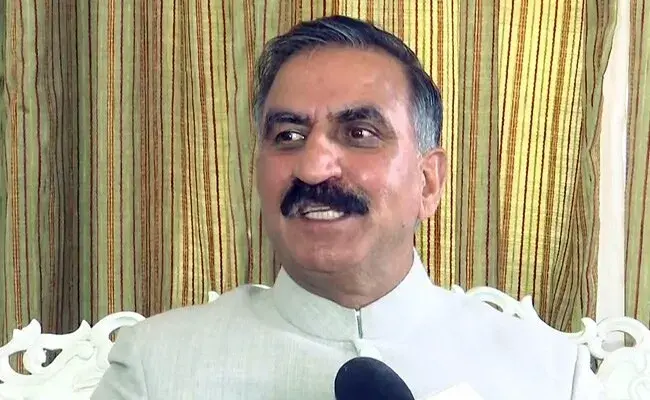
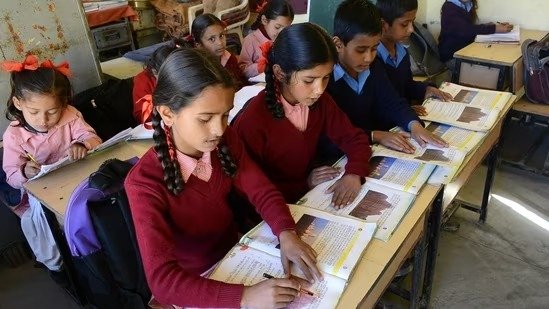
Himachal Pradesh has launched the ‘My School-My Pride’ campaign under the ‘Apna Vidyalay’ programme, aligning with the National Education Policy (NEP)-2020. The initiative aims to actively involve individuals and organizations in adopting schools and contributing to various aspects of students’ growth. Stakeholders are encouraged to provide career counseling, offer remedial teaching, coach students for examinations, and engage in community support services. Monetary contributions are also sought for infrastructure development, event sponsorship, scholarships, and support for the Mid-Day Meal (MDM) programme. Under the ‘Giving back to society’ initiative, retired teachers, professionals, housewives, or any member of the society are urged to join the academic support team, providing teaching services without payment. This ensures continuous academic support during teacher shortages or leaves. Non-academic teams will contribute to sports, co-curricular activities, skill training, arts, and more. Dignitaries, Members of Parliament, MLAs, and government officers are encouraged to adopt government schools as patrons, suggesting improvements and staying informed about students’ progress. The Samagra Shiksha Abhiyan (SSA) will launch an online portal dedicated to the Apna Vidyalaya programme, ensuring transparency, accountability, and real-time monitoring of activities. The holistic approach includes the ‘systematic adolescent management and value addition dialogue’ (SAMVAD) component, educating school-going adolescents on moral values, drug awareness, nutrition, legal knowledge, and empowerment schemes. Chief Minister Sukhvinder Singh Sukhu expressed, “Our government is working with the motto of Vyavastha Parivartan, and the Apna Vidyalaya programme aims to foster civic duty, strengthen school vision, and create a sustainable model for educational improvement.” This initiative offers hope for the public education system, serving over 55% of students in government schools in Himachal Pradesh. The ‘My School-My Pride’ campaign is expected to bring about a positive transformation, emphasizing community engagement and mentoring for educational enhancement.

HP Launches ‘My School-My Pride’ Campaign to Transform Govt Education System Read More »
Haryana’s Visionary Leap: ‘Mission 60,000’ Unleashes Employment Opportunities for Underprivileged Youth

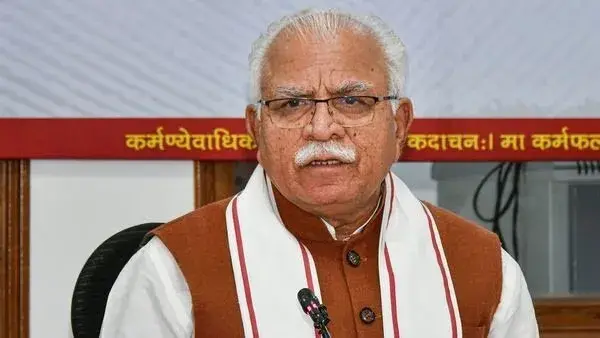
Haryana Chief Minister Manohar Lal Khattar has launched ‘Mission 60,000,’ aiming to provide employment opportunities for 60,000 youngsters from families earning less than Rs 1.80 lakh annually. The announcement was made during the state-level ‘Vivekananda Youth Mahasammelan’ on Swami Vivekananda’s birth anniversary. Under the comprehensive initiative, Khattar outlined key components of ‘Mission 60,000.’ The government plans to engage 7,500 ‘Van Mitra’ individuals, recruit 15,000 contractual employees through the Haryana Kaushal Rozgar Nigam, and involve 7,500 ‘e-Sewa Mitra’ for Common Services Centre, among other roles. Notably, 15,000 youths with diplomas or degrees in civil engineering will undergo specialized training to become contractors. Chief Minister Khattar highlighted a crucial financial support aspect, stating, “The government will extend a loan of Rs 3 lakhs to these individuals for one year without requiring any collateral. Trained youths under this program will be exempt from providing a guarantee for work up to Rs 25 lakh.” The overarching goal is to elevate their annual income, enabling them to surpass the Below Poverty Line (BPL) threshold. Paying homage to Swami Vivekananda, Khattar considered his life an inspiration and emphasized his significant role in representing India’s perspective at the World’s Parliament of Religions in Chicago in 1893. Khattar laid the foundation stone for the Saraswati Vatika development project of the irrigation and water resources department, allocating Rs 3.68 crore for the three-phase initiative. Karnal MP Sanjay Bhatia and Printing and Stationery Minister Sandeep Singh graced the occasion with their presence.

Haryana’s Visionary Leap: ‘Mission 60,000’ Unleashes Employment Opportunities for Underprivileged Youth Read More »

Budget 2024: Pharma Industry Urges More Tax Breaks for R&D, Innovation, and Increased Healthcare Spending

Amidst the anticipation surrounding the upcoming Union Budget on February 1, the healthcare and pharmaceutical industry has outlined a comprehensive wishlist for Budget 2024, aiming for policies that foster innovation, research and development (R&D), and increased healthcare spending. Sudarshan Jain, Secretary General of the Indian Pharmaceutical Alliance, emphasized the need for conducive policies that offer direct and indirect tax benefits to pharmaceutical companies. The focus should be on critical areas such as innovation, R&D, and upgrading healthcare infrastructure. Jain highlighted the significance of continuous investments, especially in a sector with high risks and long gestation periods. Dr. Ashutosh Raghuvanshi, MD and CEO of Fortis Healthcare & President of NATHEALTH, called for a significant hike in healthcare spending to 2.5% of GDP. The proposals presented by NATHEALTH emphasize transformative changes to bridge regional healthcare disparities and strengthen the healthcare value chain. The aim is to enhance medical value travel, address MAT credit issues, and build local capabilities for healthcare services. Ameera Shah, Promoter and Managing Director of Metropolis Healthcare, underscored the importance of the upcoming budget in strengthening India’s healthcare ecosystem. Shah advocated for investments in critical areas like innovation, research, development, technology, and upgrading healthcare infrastructure. Additionally, she called for a 0% GST on diagnostic services, GST refunds on inputs, and rationalizing import tariffs on healthcare products to enhance accessibility and affordability. These recommendations collectively aim to position India as a reliable supplier of medicines and a custodian of global healthcare. The healthcare sector looks forward to policy stability, continuity, and transformative measures in the upcoming budget, recognizing the role it plays in combating present and future healthcare challenges. Source: CNBC-TV18

Budget 2024: Pharma Industry Urges More Tax Breaks for R&D, Innovation, and Increased Healthcare Spending Read More »

G-Eazy Set to Ignite Indian Stages with Maiden Tour

American rapper G-Eazy is bringing a wave of excitement to music enthusiasts in India with the announcement of his maiden tour in the country. The tour, exclusively produced by Spacebound, the producers of Asia’s largest dance music festival, Sunburn, promises an electrifying experience for fans across three cities. Known for chart-topping hits like “Me, Myself & I,” “Tumblr Girls,” “Good Life,” “I Mean It,” “Him & I,” and “No Limit,” G-Eazy, an internationally acclaimed rapper and record producer, is set to perform in Bengaluru on 10 February, New Delhi-NCR on 11 February, and Mumbai on 15 February. This musical extravaganza won’t be a solo affair, as G-Eazy will be sharing the stage with a lineup of homegrown hip-hop support acts, adding a vibrant local flavor to the international performance. Fans can anticipate an unforgettable night filled with the pulsating beats and lyrical prowess that have made G-Eazy a global sensation. The tour marks a significant moment for Indian music enthusiasts, offering them a chance to witness G-Eazy’s dynamic stage presence and iconic tracks live for the first time. The tour dates are already generating buzz, and fans are gearing up for an unmissable experience that blends international hip-hop with the energy of the Indian music scene.

G-Eazy Set to Ignite Indian Stages with Maiden Tour Read More »

Indian Premier League (IPL) 2024 to Grace Indian Shores Amidst Elections

The Board of Control for Cricket in India (BCCI) has decided to host the upcoming Indian Premier League (IPL) 2024 in India, despite the coinciding general elections. The cricket extravaganza is slated to kick off on March 22, synchronizing with the announcement of election dates, presenting a unique challenge for organizers. A BCCI source has quashed speculations of moving the tournament abroad, asserting, “There are no plans to shift the tournament outside the country, considering the general elections will also take place during that time. However, if any state provides valid reasons for not hosting matches, contingency plans include relocating matches to alternative venues.” The IPL 2024 auction, held in Dubai last month, witnessed unprecedented fervor as Australian speedster Mitchell Starc smashed records to become the highest-paid player in IPL history, securing a jaw-dropping Rs 24.75 crore deal with the Kolkata Knight Riders. The auction, boasting a 57% surge in viewership compared to the previous edition, garnered a total of 22.8 million viewers, according to BCCI Secretary Jay Shah. Defending champions, the Chennai Super Kings, led by the iconic MS Dhoni, are gearing up to retain their title. Kasi Viswanathan, CEO of the franchise, expressed confidence in Dhoni’s return, stating, “He has recovered well from his knee injury, undergoing rehabilitation programs and has commenced training. I am confident he will be fit to play by the start of the next IPL”.

Indian Premier League (IPL) 2024 to Grace Indian Shores Amidst Elections Read More »

Tamil Nadu School Education Department Joins Forces with Microsoft to Propel AI-based Education Across the State

The School Education Department of Tamil Nadu has teamed up with Microsoft to scale up the Technology Education and Learning Support (TEALS) initiative throughout the state. Initially introduced as a pilot project in 14 schools across three districts, the program is now set to expand its reach to a commendable 100 schools. Teachers, specially trained under this initiative, are geared to impart knowledge in HTML, C++, Python, game development, and Artificial Intelligence (AI). This pioneering move marks the first introduction of TEALS in India, offering a significant leap in technological education for students from Class 8 to 12. Teachers in Tamil Nadu, who have undergone comprehensive training since the commencement of the academic year, are now actively engaging students with the TEALS module. Microsoft, a key player in this collaboration, is not only providing training to the educators but is also closely monitoring the implementation and progress of the initiative. Cecil M. Sundar, Director of Data and AI at Microsoft, emphasized the importance of AI-based skills in the job market, stating that there would be a substantial demand for such expertise in the next 5-10 years. Students equipped with these skills, he added, will be well-positioned to access a plethora of job opportunities. The TEALS expansion in Tamil Nadu signifies a significant stride towards integrating advanced technological education into mainstream schooling. As the state gears up to nurture the next generation of tech-savvy individuals, this collaboration stands as a testament to the commitment to providing students with cutting-edge skills and preparing them for the evolving demands of the job market.

Tamil Nadu School Education Department Joins Forces with Microsoft to Propel AI-based Education Across the State Read More »

Interim Budget 2024: The Lingering Debate on Education’s 6% GDP Share

Blog on Education

As the nation eagerly anticipates the presentation of the Interim Budget 2024 on February 1, the age-old debate on allocating 6% of Gross Domestic Product (GDP) to the public education system has once again taken center stage. This longstanding discussion traces its roots back to the Kothari Commission’s recommendation in 1964-66, underscoring the need to prioritize education and allocate a significant portion of the Gross National Product (GNP) towards it. The Kothari Commission set the ambitious 6% target after studying other nations, including the United States, Japan, and the then Soviet Union (now Russia), all of which invested more than 6% of their GNP in education. Despite being a recurring theme in every budget announcement and election manifesto for the past 60 years, India has struggled to achieve this target. The National Education Policy 2020 echoes this sentiment, emphasizing the collaborative effort of the central and state governments to reach the 6% GDP mark at the earliest. However, recent years have witnessed a decline in the allocation to the public education system. Protiva Kundu, from the Centre for Budget and Governance Accountability, highlighted the consistent decrease or stagnation in the union government’s spending on education, currently standing at 4.41% of the GDP, with only one-fourth coming from the central government and the remaining three-fourths from state governments. Anjela Taneja of Oxfam International pointed out that education is not a top priority for the government, evident in their budget allocations. With the 2024 general elections approaching, the question arises: will the 6% allocation debate remain relevant amidst the political posturing? The historical context of the 6% GDP target reveals its genesis in the Kothari Commission’s recommendation. Subsequent committees, including the Tapas Majumdar committee in 1998-99, reiterated the importance of additional resources to achieve universal school education. However, the fixation on 6% as a benchmark for investment in education has persisted globally, emphasizing its significance. Subir Shukla, from Ignus ERG Education Resource Pvt Ltd, cautioned against the challenges of policy implementation, citing the gap between theoretical discussions and practical contingencies. Avani Kapoor, of the Centre for Policy Research, stressed the need to reevaluate the basis for education budget calculations, focusing on the teaching-learning process rather than infrastructure. Funding challenges persist, with Shukla highlighting ineffective utilization of released funds and delays in disbursement. Anil Swarup, former secretary of the department of school education and literacy, suggested innovative funding methods, such as taxing private schools to support public education. However, Kundu emphasized the need for a level playing field before exploring innovative solutions. Looking ahead to the Interim Budget 2024, expectations are mixed. Kundu predicts an implementation budget with a potential redistribution of resources across different education sectors. Kapoor believes the government’s focus will likely center on flagship schemes such as housing and Jal Jeevan Mission, as past data indicates a prioritization of these areas over education. Taneja remains cautiously optimistic, hoping for increased investment and progress towards the envisioned allocation in the National Education Policy. Despite international obligations, the government’s commitment to the NEP could pave the way for necessary financial allocations to realize its vision. The above data is taken from the recent report published by career 360.

Interim Budget 2024: The Lingering Debate on Education’s 6% GDP Share Read More »

Union Health Minister Unveils Ambitious ‘One District One Medical College’ Initiative for Comprehensive Healthcare in India

Union Health Minister Mansukh Mandaviya announced on Sunday that the government has initiated a new education policy inspired by Mahatma Gandhi’s principles. As part of this policy, the government aims to establish one medical college in each district across India, converting them into “Ayushman” districts. The minister made this announcement while speaking at the diamond jubilee celebration of Mahatma Gandhi Memorial Medical College in Indore. The event also saw the inauguration of a Central Drugs Standard Control Organisation (CDSCO) sub-zonal office and Central Drug Testing Laboratory (CDTL) in Indore. The minister also laid the foundation stone for various facilities at AIIMS, Bhopal and inaugurated several other health facilities in Madhya Pradesh. In his address, Mandaviya emphasized the government’s commitment to ensuring access to high-quality medicines for citizens and promoting ease of doing business for stakeholders in the pharmaceutical industry. He also highlighted the importance of the newly inaugurated facilities in AIIMS, Bhopal and the government’s goal of establishing AIIMS in all states of the country. The minister also stressed the significant role that medical colleges play in monitoring public health in their respective districts. He reminded the audience that the government’s goal of eradicating diseases like TB, kala-azar, and leprosy by 2025 relies heavily on the efforts of these medical colleges. The occasion also witnessed the inauguration of the Mahatma Gandhi Memorial Medical College alumni network and the release of a postal stamp and diamond jubilee souvenir of the institute. This initiative aims to strengthen the bond between the institute and its alumni and celebrate the legacy of Mahatma Gandhi. The news of the government’s plan to establish one medical college in each district in India has been met with enthusiasm and support from various sectors. This move will not only increase access to quality healthcare but also create a robust system for monitoring public health in the country. With this step, the government reaffirms its commitment to making India a healthier nation.

Union Health Minister Unveils Ambitious ‘One District One Medical College’ Initiative for Comprehensive Healthcare in India Read More »

Government proposes ‘one nation, one student ID’ and online school admissions to revolutionize education system

In a major step towards making education more accessible and efficient, the Union government has proposed the integration of education records of all school students into its ‘one nation, one student ID’ initiative. This move, along with the switch to online school admissions, aims to streamline the education system and bring it in line with the National Education Policy (NEP) 2020. According to an official government document, the ‘one nation, one student ID’ initiative will be implemented by 2026-27, with the goal of providing students with an Aadhaar-verified ID called Automated Permanent Academic Account Registry (APAAR). This ID will serve as a universal student identifier from pre-primary to PhD, and will also act as a gateway to students’ academic bank of credit (ABC). The document, presented by the Union Ministry of Education at the third national conference of chief secretaries, also proposes that all government and government-aided schools switch to an online admission system in the next three years. This will not only make the admission process easier and more efficient, but also reduce barriers and minimize dropouts. The integration of education records into the ‘one nation, one student ID’ initiative will not only help monitor the lifelong learning journey of students, but also build a digital repository of education records. This will make it easier for students to store and access their records, and also enable the integration of interstate student records. The document also highlights the role of Aadhaar linkage in building trust in digital records and empowering stakeholders to access diverse educational services. The ministry has already launched the ‘one nation, one student ID’ initiative in higher education institutions, covering nearly 22 million students. The proposal to extend it to schools is a step towards ensuring seamless integration between the two levels of education. To facilitate the creation of APAAR IDs, the document suggests that Anganwadi or schools can assist students during the time of admissions. The ministry can also organize workshops and training sessions for states and union territories to help them create the IDs and integrate admission portals and applications into a unified platform. The document also sets a deadline of 2026-27 for 100% integration of education records through the ID. While it is not mandatory for states to adopt this initiative, it is a step towards promoting good governance and making education more accessible.

Government proposes ‘one nation, one student ID’ and online school admissions to revolutionize education system Read More »

Education Minister Dharmendra Pradhan Inaugurates Kala Utsav 2023, Emphasizes NEP 2020 Integration

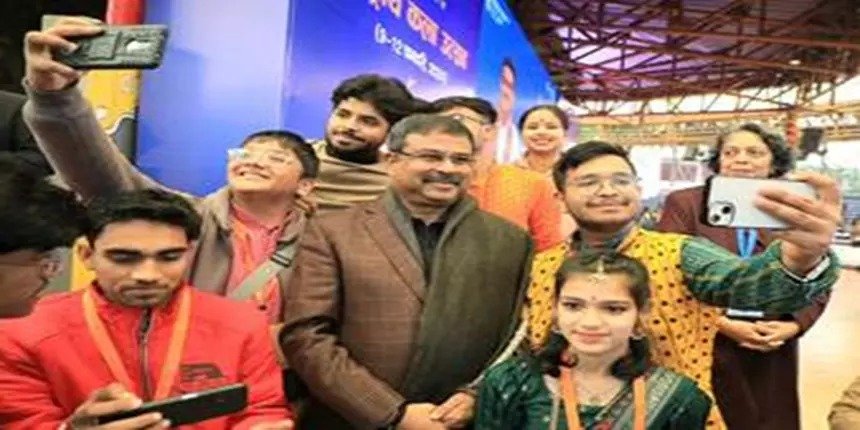
Education Minister Dharmendra Pradhan inaugurated the much-anticipated Kala Utsav 2023, a cultural extravaganza organized by the School Education and Literacy Department in collaboration with the National Council of Educational Research and Training (NCERT). The event, hosted at the National Bal Bhavan and the Gandhi Smriti and Darshan Samiti in New Delhi, spans four days from January 9 to 12. At the inaugural ceremony, Minister Pradhan served as the chief guest and encouraged the ministry to expand the Kala Utsav’s reach to every school in the country, advocating for the inclusion of children’s participation in the credit framework. He expressed his vision of a developed India, stating, “A developed India can be built only by giving a broad platform to every child of India according to his interest and talent.” Approximately 700 students from 36 states and union territories, along with participants from Kendriya Vidyalaya Sangathan and Navodaya Vidyalaya Samiti, are engaging in 10 diverse events. These events include vocal music (classical and traditional folk), instrumental music (percussive and melodic), dance (classical and folk), visual arts (two-dimensional and three-dimensional), indigenous toys and games, and drama (solo acting). In addition to inaugurating the event, Minister Pradhan administered the ‘Panch Pran’ pledge to the audience. The valedictory function, scheduled for January 12, will honor prize-winning students with trophies. During his address, Minister Pradhan underscored the significance of the Kala Utsav in connecting the cultural diversity of the nation, fostering the creative and artistic talents of students. Linking the event to the National Education Policy (NEP) of 2020, Pradhan emphasized the policy’s role in mainstreaming play-based learning, sports, arts, crafts, and other creative endeavors. “This initiative will hone the talents, skills, and overall development of the children, preparing them to become leaders of the 21st century,” he remarked, reminding students of their responsibilities in the upcoming 25 years during the Amrit Kaal, where their contributions will shape the development of Viksit Bharat (Developed India).

Education Minister Dharmendra Pradhan Inaugurates Kala Utsav 2023, Emphasizes NEP 2020 Integration Read More »