ArdorComm Media Group

Wednesday, May 20, 2026 6:24 PM

Author name: admin

India Issues Ultimatum to Canada to Withdraw 41 Diplomats by October 10

India has issued an ultimatum to Canada, demanding the removal of 41 diplomats by October 10, warning that failure to do so will result in the loss of diplomatic immunity for these officials. This move comes amid escalating diplomatic tensions between the two nations, with India insisting that Canada needs to significantly reduce its diplomatic presence to achieve parity with Indian diplomats stationed in Ottawa. Currently, there are over 60 Canadian diplomats in India, while India has just over 20 diplomats in Canada. The strained relations between the two countries were exacerbated by Canadian Prime Minister Justin Trudeau’s recent statement in Parliament, where he accused “Indian government agents” of being involved in the assassination of a designated Indian terrorist. This accusation has further strained diplomatic ties and pushed them to an all-time low. Following Trudeau’s allegations, both India and Canada expelled one diplomat each from the other’s embassies, further escalating tensions. India has vehemently denied Canada’s claims, labelling them as politically motivated and lacking credible evidence. The call for a reduction in Canadian diplomatic staff became public in September when India’s Ministry of External Affairs spokesperson, Arindam Bagchi, stated, “Yes, we’ve informed the government of Canada that there should be parity in the strength of our mutual diplomatic presence. Their number is much higher than ours in Canada… I assume there will be a reduction from the Canadian side.”

India Issues Ultimatum to Canada to Withdraw 41 Diplomats by October 10 Read More »

UGC Releases List of Fake Universities in India; Delhi Tops the Chart

The University Grants Commission (UGC) has recently published a list of counterfeit universities operating in India, with Delhi having the highest number of such institutions. The UGC has formally communicated with state government departments responsible for higher education, urging them to take appropriate actions against these fraudulent entities. In an official letter addressed to the Vice-Chancellors of these institutions, UGC Secretary Manish Joshi stated that these entities are falsely claiming to be “Universities” under the UGC Act of 1956, despite not meeting the necessary criteria. They are using this deceptive practice to deceive and defraud unsuspecting students by granting counterfeit degrees, which has raised significant concerns as numerous students have fallen victim to these scams. Here is the list of fake universities identified by the UGC, categorized by their respective states: Andhra Pradesh: Christ New Testament Deemed University Bible Open University of India Delhi: All India Institute of Public & Physical Health Sciences (AIIPHS) State Government University Commercial University Ltd. United Nations University Vocational University ADR-Centric Juridical University Indian Institute of Science and Engineering Viswakarma Open University for Self-Employment Adhyatmik Vishwavidyalaya (Spiritual University) Karnataka: Badaganvi Sarkar World Open University Education Society Kerala: St. John’s University Maharashtra: Raja Arabic University Puducherry: Sree Bodhi Academy of Higher Education Uttar Pradesh: Gandhi Hindi Vidyapith National University of Electro Complex Homeopathy Netaji Subhash Chandra Bose University (Open University) Bhartiya Shiksha Parishad West Bengal: Indian Institute of Alternative Medicine Institute of Alternative Medicine and Research The UGC’s list serves as a warning to students and authorities alike to remain vigilant and take necessary actions against these deceptive institutions.

UGC Releases List of Fake Universities in India; Delhi Tops the Chart Read More »

Nobel Prize in Medicine Awarded to Pioneers of mRNA Technology in COVID-19 Vaccines Development

Article

Katalin Kariko and Drew Weissman have been awarded the Nobel Prize in Medicine for their groundbreaking work in messenger RNA (mRNA) technology, which laid the foundation for the development of revolutionary Covid-19 vaccines. The Nobel committee in Stockholm chose to honour the pair this year, deviating from its tradition of recognizing research conducted decades ago. While the scientific breakthrough dates back to 2005, it was the Pfizer/BioNTech and Moderna vaccines that marked the first practical use of mRNA technology against Covid-19. Kariko, hailing from Hungary, and Weissman from the United States, who have long been collaborators at the University of Pennsylvania, have received numerous accolades for their research, including the prestigious Lasker Award in 2021, often seen as a precursor to the Nobel Prize. Unlike conventional vaccines that employ weakened viruses or key viral protein fragments, mRNA vaccines provide genetic instructions to cells, instructing them to produce specific proteins, thereby simulating an infection and training the immune system to respond effectively. Although the concept of mRNA vaccines was initially demonstrated in 1990, it was only in the mid-2000s that Weissman and Kariko developed a technique to mitigate the dangerous inflammatory responses observed in animals exposed to these genetic molecules. This breakthrough paved the way for the development of safe human vaccines. Today, their mRNA technology is also being applied to create treatments for various diseases, including cancer, influenza, and heart failure. Kariko and Weissman will be awarded the Nobel Prize, which includes a diploma, a gold medal, and a $1 million prize, during a formal ceremony in Stockholm on December 10th, coinciding with the anniversary of scientist Alfred Nobel’s death in 1896. Alfred Nobel established these prestigious awards in his last will and testament to honour those who have made significant contributions to humanity. The Nobel season continues with the announcement of the Physics Prize on Tuesday and the Chemistry Prize on Wednesday. Subsequently, the Literature Prize will be revealed on Thursday, followed by the Peace Prize on Friday, and the Economics Prize on Monday, October 9th. The Nobel Prizes, first introduced in 1901, were established by Swedish inventor and philanthropist Alfred Nobel to recognize individuals who have made outstanding contributions for the betterment of humanity. Over the years, the Nobel committees have faced criticism for a lack of diversity in gender and geographical representation among laureates. Efforts are being made to address these concerns, with a focus on achieving greater gender and geographic diversity. As for the Peace Prize, potential winners are being considered against the backdrop of ongoing global conflicts. Some suggest Iranian women who have been protesting against strict dress codes following the death of Mahsa Amini in custody could be considered. Others propose organizations documenting war crimes in Ukraine or the International Criminal Court, which may play a crucial role in future conflict resolution. For the Physics Prize, contenders include discoveries related to twisted graphene or the IceCube Neutrino Observatory in Antarctica, as well as innovations in high-density data storage within the field of spintronics.

Nobel Prize in Medicine Awarded to Pioneers of mRNA Technology in COVID-19 Vaccines Development Read More »

Netflix Mulls Tax Evasion Case Appeal to Tribunal

Netflix is reportedly considering taking its case to the Income Tax Appellate Tribunal concerning the alleged tax evasion of Rs 196 crore, as stated in a media report. The international tax division of the Income Tax department has accused the streaming giant of evading income tax in this substantial amount. Netflix’s decision to approach the tribunal follows a ruling earlier this year by the Dispute Resolution Panel that favoured the tax department. According to the Income Tax department, Netflix earned Rs 503 crore from its Indian operations between April 2020 and December 2020. Although Netflix has offered to pay Rs 13.36 crore, the department has calculated the tax liability to be Rs 490 crore, contending that the operations conducted in India through a Permanent Establishment (PE) arrangement are subject to taxation, resulting in a tax liability of Rs 196 crore. A spokesperson for Netflix is quoted as stating, “We are committed to fully complying with tax laws and their global requirements.”

Netflix Mulls Tax Evasion Case Appeal to Tribunal Read More »

TRAI Launches Consultation Paper on 5G Ecosystem’s Role in India’s Digital Transformation

The Telecom Regulatory Authority of India (TRAI) has released a consultation paper titled “Digital Transformation through 5G Ecosystem.” The primary aim of this paper is to address policy challenges and propose an appropriate policy framework to expedite the adoption and effective use of new technologies within the 5G ecosystem, contributing to the comprehensive and sustainable development of India’s economy. The Ministry of Communications has emphasized that India is currently undergoing a rapid digital transformation, significantly impacting its economy and society. Reliable mobile communication technologies play a pivotal role in achieving the objectives set forth by the Digital India program. These technologies are bolstering the economy and empowering citizens by enabling services like the unified payment interface (UPI) and various innovative government-to-business (G2B) and government-to-citizen (G2C) applications. With the emergence of technologies like 5G, Internet of Things (IoT), Artificial Intelligence (AI), Augmented/Virtual Reality (AR/VR), and the Metaverse, India stands on the cusp of unlocking new opportunities for growth and innovation. India initiated its 5G services on October 1, 2022, with telecom service providers actively expanding the 5G network across the entire nation. The government has launched multiple initiatives to develop 5G infrastructure and promote research and development in this domain. TRAI has also issued recommendations to accelerate the deployment of 5G networks and services in the country. Collaborative efforts spanning various sectors have been undertaken to expedite the rollout of 5G. Beyond just infrastructure deployment, it is crucial to develop and deploy new use cases for both consumers and enterprises to realize the full potential of 5G technology. When 5G is combined with AI, extended reality (XR), and IoT, it will enable businesses and society to fully harness the benefits of these technological advancements. However, achieving this vision necessitates effective collaboration across the ecosystem, involving Telecom Service Providers (TSPs), Original Equipment Manufacturers (OEMs), infrastructure providers, and the government. Adequate infrastructure upgrades, fiberization for 5G deployment, and network densification are essential elements to fully reap the benefits of this technology across various industries. The adoption of 5G will depend on factors like dedicated research and development investments to create India-specific use cases, increased enterprise involvement, affordable devices, and consumer adoption. To accomplish these goals, TRAI has proactively released this consultation paper to identify policy challenges and propose a suitable policy framework. The objective is to expedite the adoption and effective utilization of new technologies, ultimately contributing to the holistic and sustainable development of India’s economy through the 5G ecosystem. The consultation paper is available on TRAI’s website, www.trai.gov.in, for input from stakeholders. Interested parties are invited to submit written comments on the issues under consideration by October 30, 2023, and counter-comments, if any, by November 13, 2023. Comments and counter-comments should preferably be submitted electronically via email to advadmn@trai.gov.in, with a copy to vibhatomar@trai.gov.in. For further clarification or information, stakeholders may reach out to Vandana Sethi, Advisor (Admin & IR), at 11-23221509.

TRAI Launches Consultation Paper on 5G Ecosystem’s Role in India’s Digital Transformation Read More »

Sintex BAPL’s Investment in Telangana to Create 1000 Jobs and Strengthen Building Materials Industry

Sintex BAPL, a wholly-owned subsidiary of Welspun Corp, has inked a formal agreement with the Telangana government to establish a manufacturing facility in the state. This partnership is based on a memorandum of understanding (MoU) recently signed. Under Telangana’s incentive program, this manufacturing unit will necessitate an investment of Rs 350 crore over the next three years and is poised to generate employment for 1,000 individuals within the state. The primary focus of this facility will be the production of water tanks and PVC pipes within Telangana. Sintex BAPL, which is experiencing significant growth in the water tank segment, also has plans to commence the manufacturing of pipes, including PV pipes and fittings. This strategic move is aimed at solidifying Welspun’s presence in the building materials sector. The groundbreaking ceremony for this manufacturing unit took place in the presence of Telangana’s IT and Industries Minister, KT Rama Rao, and BK Goenka, Chairman of Welspun World, along with other notable figures. It’s worth noting that Telangana has been actively prioritizing job creation initiatives. Earlier this year, the Central government designated several locations for the establishment of PM Mega Integrated Textile Regions and Apparel (PM MITRA) Parks, particularly aimed at bolstering the textile industry. Telangana was identified as one of the seven states for this endeavour, alongside Tamil Nadu, Gujarat, Karnataka, Maharashtra, Madhya Pradesh, and Uttar Pradesh. These parks are anticipated to yield significant employment opportunities. The PM MITRA Parks model involves collaborative efforts between the central and state governments to attract substantial investments (up to Rs 70,000 crore), foster innovation, and contribute to making India a global hub for textile manufacturing and exports.

Sintex BAPL’s Investment in Telangana to Create 1000 Jobs and Strengthen Building Materials Industry Read More »

Creatine Supplements Show Potential in Easing Long-Covid Symptoms

Creatine supplements have gained popularity in the fitness community for their perceived ability to enhance strength, power, and post-workout recovery. However, recent research has delved into the possibility of these supplements offering relief from certain long-Covid symptoms, particularly fatigue, shedding light on a potentially new application. So, what exactly are creatine supplements? Creatine is a natural compound found in muscle cells that aids in energy production during intense exercise, making it a favored supplement among gym-goers. In a study published in the journal Food Science & Nutrition, a team of researchers conducted a randomized controlled trial involving 12 individuals recently diagnosed with long Covid. This robust study design aimed to assess the effectiveness of creatine supplementation. Participants were divided into two groups, with one receiving a daily creatine supplement and the other a placebo cleverly disguised as inulin, a dietary fiber. Both substances were identical white powders mixed into water, ensuring a double-blind trial where neither participants nor researchers knew who received creatine until the study’s conclusion. The six-month trial allowed ample time for creatine to potentially exert its effects. Multiple measures were assessed, including self-reported fatigue levels, improvements in various long Covid symptoms, endurance during physical activity (an objective measure of fatigue), and creatine levels in muscle and brain tissues. While the creatine group did exhibit higher creatine concentrations in tissues after six months, there were no significant differences in fatigue levels between the two groups. However, creatine showed promise in alleviating other long Covid symptoms, such as improvements in loss of smell and taste, breathing difficulties, body aches, headaches, and concentration issues. It’s important to note that this study represents the first exploration of creatine’s potential in treating long Covid symptoms. Nonetheless, creatine’s known safety profile, minimal side effects, affordability, and ease of use make it an intriguing avenue for further research in the limited treatment landscape for long Covid.

Creatine Supplements Show Potential in Easing Long-Covid Symptoms Read More »

Ministries of Education and Skill Development Sign 8 MoUs with IBM for Digital Skilling and Emerging Technologies

The Ministries of Education, Skill Development, and Entrepreneurship have entered into 8 Memorandums of Understanding (MoUs) with IBM, focusing on digital skill development and emerging technologies. This collaboration aims to create educational curricula for students across different levels, including school education, higher education, and vocational skills. These curricula will cover topics like AI, cybersecurity, cloud computing, and professional development skills. At the school education level, IBM will grant high school students, teachers, and trainers access to digital content from IBM SkillsBuild. This initiative will involve cooperation with educational institutions like Navodaya Vidyalaya Samiti (NVS), National Council for Teacher Education (NCTE), Kendriya Vidyalaya Sangathan (KVS), and National Institute of Open Schooling (NIOS). The program will be available online and will include webinars and in-person workshops conducted by IBM’s CSR partners. IBM will also modify the AI curriculum for classes 11 and 12 offered by CBSE and develop a curriculum on cyber skills and blockchain for high school students, which will be hosted on IBM SkillsBuild. At the higher education level, IBM will collaborate with various institutions, including the Department of Higher Education, All India Council for Technical Education (AICTE), National Institute of Electronics and Information Technology (NIELIT), National Institute of Technical Teachers’ Training and Research (NITTTR), Chandigarh, and state skilling missions. This collaboration will provide affiliated students and faculty with access to IBM SkillsBuild, offering digital content and experiential learning opportunities to prepare them for technical careers. For vocational skills, IBM will extend its partnership with MSDE and cooperate with the Directorate General of Training (DGT) and state vocational education and skilling departments. The goal is to provide job seekers, including long-term unemployed individuals and school dropouts, with access to IBM SkillsBuild to help them acquire the skills needed to re-enter the workforce.

Ministries of Education and Skill Development Sign 8 MoUs with IBM for Digital Skilling and Emerging Technologies Read More »

India Offers 42 Cancer Medicines at Affordable Rates Out of 90: Health Minister Mandaviya

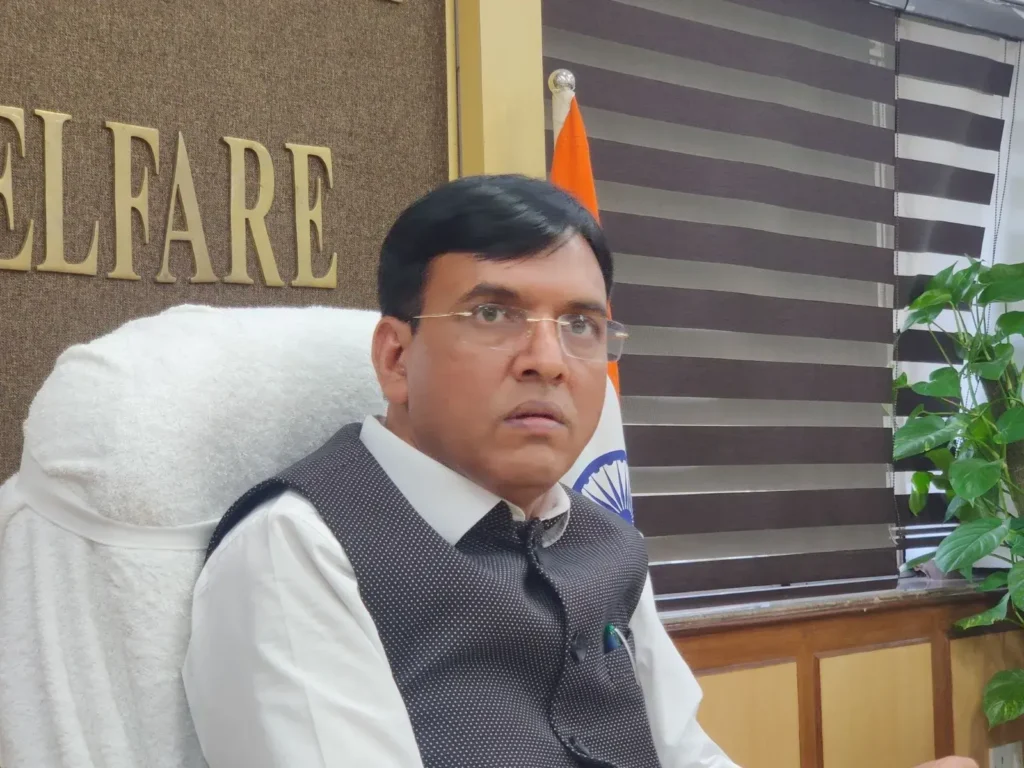
India’s Health Minister, Mansukh Mandaviya, announced that out of the 90 available cancer medicines, India offers 42 at the most affordable rates. He made this statement during the launch of “Sanjeevani: United Against Cancer,” a collaborative effort involving the Federal Bank Hormis Memorial Foundation, News18 Network, and Tata Trusts. Mandaviya highlighted the government’s commitment to improving cancer care by expanding cancer hospitals and tertiary care facilities. He stressed the holistic approach to healthcare, noting the increase in medical seats, colleges, and educational resources for healthcare professionals. The minister also mentioned the Ayushman Bharat health infrastructure mission and the recent launch of the pharmaceutical policy, reinforcing India’s role as a global provider of generic medicines. Mandaviya emphasized that healthcare should not be politicized or commercialized but viewed as a service to the nation. He discussed how health and development were integrated in 2014 to make healthcare accessible to all citizens. He credited collective efforts and shared responsibility for India’s successful response to the COVID-19 pandemic. Regarding the “Sanjeevani” initiative, Mandaviya explained its purpose in raising awareness, facilitating discussions about the cancer epidemic, and addressing common fears associated with the disease. He encouraged public participation, emphasizing the importance of stakeholder consultation in India’s healthcare model. The minister also acknowledged the vital role played by the country’s one million “Asha behen” (community health workers), who collect crucial healthcare data during family visits. Mandaviya highlighted the government’s approach to cancer care, including health and wellness screenings at district-level hospitals and fee waivers for economically disadvantaged patients. He attributed the affordability of cancer medicines in India to the fixed trade margin, which aims to make healthcare more accessible and affordable.

India Offers 42 Cancer Medicines at Affordable Rates Out of 90: Health Minister Mandaviya Read More »

Tata Play Expands Globally with Innovative Solution for International OTT Providers

In a groundbreaking move, Tata Play has extended its presence beyond India by offering a white-label solution tailored for global OTT aggregators. This initiative commences with a collaborative project involving the leading Pay-TV provider in the Philippines, Cignal TV. Tata Play, a prominent content distribution platform in India, has introduced the Tata Play Binge PaaS (Platform as a Service) for OTT aggregators worldwide, providing comprehensive development and deployment opportunities. Harit Nagpal, Managing Director & CEO of Tata Play, highlighted the advantages for partner companies, including access to Tata Play’s extensive experience in areas such as commercial partnerships, recommendation engines, subscription management, analytics, and more. This enterprise solution marks the creation of a distinctive OTT content aggregation and distribution ecosystem. Tata Play Binge, a service under the Tata Group conglomerate, consolidates content from over 26 apps into a single platform. The company’s primary focus is to collaborate with various OTT partners and acquire subscribers in global markets. Tata Play will oversee the complete technology platform, which operates in the cloud. While the initial partnership began with Philippines’ Cignal TV, Nagpal confirmed ongoing discussions with numerous international players interested in utilizing Tata Play’s technology solution to evolve into OTT aggregators. Nagpal emphasized the global scalability of the cloud-based solution, making it applicable to regions worldwide, including Africa, South America, South Asia, and Europe. Tata Play Binge presently boasts nearly a million subscribers, resulting in significant insights into technology, user interfaces, and overall user experience. Many global players have been grappling with the challenge of finding such a solution, which Tata Play is now offering. Nagpal explained the rationale behind this initiative, stating that since Tata Play has already invested resources in developing the solution, they can become the backend support for entities looking to aggregate content worldwide. While it may take some time for this approach to gain widespread acceptance, it offers economies of scale to all participating OTT players and is mutually beneficial, with Tata Play charging a fee for its tech solution. This strategic move by Tata Play aligns with the evolving OTT market, which is experiencing substantial growth in user numbers. Entering the global market with a Platform as a Service (PaaS) solution is well-timed, potentially yielding incremental revenues and a first-mover advantage. Moreover, if content aggregation becomes a global trend, Tata Play stands to benefit by capturing a larger market share.

Tata Play Expands Globally with Innovative Solution for International OTT Providers Read More »