ArdorComm Media Group

Saturday, March 21, 2026 7:52 AM

Author name: admin

Coal India introduces the ‘CoalMitra’ WhatsApp Chatbot

ardorcomm-news

A WhatsApp chatbot called CoalMitra has been introduced by Maharatna PSU Coal India Limited (CIL). The chairman of Coal India, Pramod Agarwal, introduced the chatbot. The chatbot will be used to handle complaints, manage vendor bills using the “Vendor Bill Status” feature, and allow retired employees to download paperwork to handle benefits using the “Retiree’s Benefit” feature. The occasion was attended by Dr. B Veera Reddy, Director of Technical for CIL, Vinay Ranjan, Director of P&IR for CIL, and Mukesh Choudhary, Director of Marketing for CIL. Speaking on the app’s features, the PSU noted that CoalMitra operates around-the-clock and will help with faster complaint handling. Stakeholders can utilise it to file complaints and follow up on them. Additionally, merchants can use it to track the status of their invoices, and retired employees and their family members can use it to download the numerous paperwork necessary for their benefit. The PSU advised consumers to send a WhatsApp message with the phrase “Hello” to the mobile number 9477011383 in order to communicate with CoalMitra.

Coal India introduces the ‘CoalMitra’ WhatsApp Chatbot Read More »

JioCinema and NBCUniversal have signed a multi-year partnership agreement

ardorcomm-news

JioCinema, a streaming platform owned by Viacom18, and NBCUniversal (NBCU) on Monday jointly announced a multi-year agreement to distribute a number of NBCU TV series and films in India. A month ago, JioCinema announced that starting in May, it would be the new home for HBO and Warner Bros. content in the nation. According to the agreement, users will be able to watch shows from NBCU’s renowned content library, which is supported by companies and production bodies like Universal Television, Universal International Studios, Sky Studios, DreamWorks Animation, Universal Pictures, and Focus Features. Starting in June, JioCinema’s newly announced “JioCinema Premium” SVOD (subscription video on demand) tier will feature NBCU programmes through a Peacock-branded hub. Through this service, Indian subscribers will have access to Peacock Originals like “The Calling,” an investigative drama series from Emmy winner David E. Kelley, directed and executive produced by Oscar winner Barry Levinson, and “Bel-Air,” a dramatic remake of the Will Smith-starring comedy series from the 1990s. Future releases of “The Super Mario Bros. Movie,” which features Chris Pratt as Mario, “The Despicable Me/Minions” and “Fast” franchise films, including the recently released “Fast X,” as well as the eagerly anticipated epic thriller “Oppenheimer,” which Christopher Nolan will shoot in IMAX, will also be available on the service. NBCU offers unscripted series like “The Real Housewives of Beverly Hills” and “Vanderpump Rules” for viewers of reality television to stream. The DreamWorks Animation slate will include the Oscar-nominated “Puss in Boots: The Last Wish” and the sci-fi horror movie “M3GAN” from James Wan and Blumhouse. NBCU’s extensive library of critically acclaimed and popular series, including “Downton Abbey,” “Suits,” “The Office,” “Parks and Recreation,” and “The Mindy Project,” are also included in this agreement.

JioCinema and NBCUniversal have signed a multi-year partnership agreement Read More »

Sadhvidya Pratishtanam Institute aims to teach Sanskrit to 5,000 individuals by 2027

ardorcomm-news

The 54-year-old institution Sadhvidya Pratishtanam (SVP), which promotes the classical language, has launched Samskrita Sambhashanashala, its fifth online program on teaching spoken Sanskrit. According to a press release from the institute, SVP, founded by prominent Sanskrit scholar, the late Prof Padamnabha Sharma, aspires to teach Sanskrit to as many as 5,000 individuals by 2027. A former senior bureaucrat who is also SVP’s patron emeritus, CV Gopinath, inaugurated the session. Even though it is the language of the ancient scriptures, there are only a few thousand people who can speak it. However, a few villages, such Sasana (Odisha), Jhiri (Rajasthan), and (Karnataka), have embraced it as a spoken language. The SVP has a faculty that includes, among others, former senior Sanskrit professors of the University Prof. Smt. Dharma, Dr. Pitambar Poudel, and Dr. Shankar Dutt Pandey for the classes that are held in two batches every Saturday evening. After completing the Sambhashanashala, students are urged to join the SVP’s Samskrita Swadhyaya Mandala to continue practising spoken Sanskrit.

Sadhvidya Pratishtanam Institute aims to teach Sanskrit to 5,000 individuals by 2027 Read More »

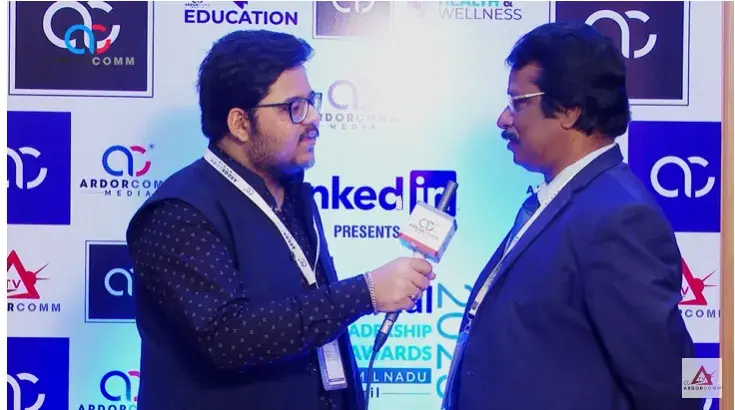
Prof. Dr. R. Haritha Devi, Director, Research Publications & Academic, The Tamil Nadu Dr. Ambedkar Law University, Highlights on Implementing Technology in Education

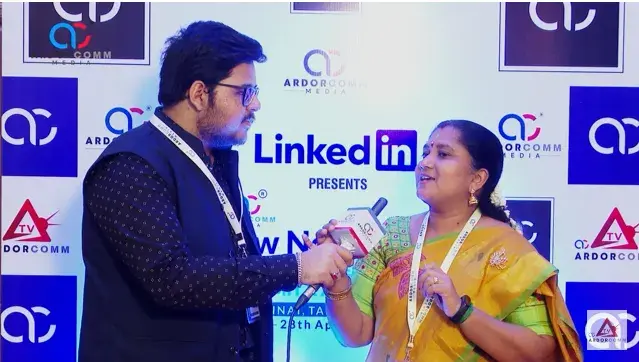
“We utilized platforms like Google Classroom to share study materials and assignments,” said Prof. Dr. R. Haritha Devi, Director, Research Publications & Academic, The Tamil Nadu Dr. Ambedkar Law University in an interview with Pratik Ghosh, Content Writer, ArdorComm Media Group at the ‘New Normal – Education Leadership Summit & Awards 2023’ #ELSAChennai #ELSATamilNadu How are you feeling to witness The New Normal Education Leadership Summit and Awards in Chennai? I think I’m very happy and delighted to be part of this event. A huge thanks to the organizers for conducting it. I believe it’s a great encouragement for people who want to learn through new technologies. There’s always a controversy about whether new technology will advance education or not, and there are difficulties that some people face. For example, some students feel that traditional classroom teaching is better. However, events like this can change that perspective and show that new technologies can be implemented effectively. Can you tell us how you are implementing technology in your university? Definitely. During the COVID-19 pandemic, we had to adapt to online modes of teaching. We utilized platforms like Google Classroom to share study materials and assignments. In our classrooms, we have digital boards and frequently use PowerPoint presentations. So, we have embraced digitalization in our teaching methods. What does “New Normal” mean to you? How do you define it? “New Normal” means keeping up with technology. As technology evolves, we also need to grow and adapt. We can’t cling only to traditional methods. So, for me, the “New Normal” in education involves embracing and integrating technology. In events like this, where the education fraternity, corporates, and government come together, how do you think it benefits the education sector? Technology undoubtedly benefits the education sector. However, my concern is whether we are compromising the privacy of both teachers and students in the name of technology. We need to find a balance and ensure that technology doesn’t overpower us. Forums like this can address these concerns and help maintain a balance while spreading knowledge. Any message you would like to share for ArdorComm Media Group? I think this is a very commendable initiative. Congratulations to the institution for organizing this event. It should be taken forward. The key is to maintain a balance in education and ensure that knowledge is spread effectively while conquering technology rather than letting it conquer us. Top of Form  

Prof. Dr. R. Haritha Devi, Director, Research Publications & Academic, The Tamil Nadu Dr. Ambedkar Law University, Highlights on Implementing Technology in Education Read More »

Gujarat e-Vidhan Sabha, which will be operational soon, will digitise all assembly operations

The e-Vidhan Sabha project, where MLAs will be able to ask questions online and perform other activities using tablets, would be operational within the next two months, according to Gujarat assembly speaker Shankar Chaudhary on Friday. To oversee project execution, a 15-member committee with the speaker as its head and members who are MLAs and officers from the relevant departments has been constituted. Through the e-Vidhan Sabha project, MLAs will be able to use tablets to submit questions, present issues from their various areas, and even upload data. The state government’s e-file system would be linked to the MLAs’ uploaded data, according to Chaudhary. The system would be operational by the next session of the Gujarat assembly, the speaker continued, adding that the process of updating the data is virtually complete and all other project modalities will be finished in the next two months. “We will be in a position to implement the project before the next session. It will ensure faster solution of peoples’ problems,” Chaudhary said. A team has been established to instruct MLAs on how to utilise the e-Vidhan Sabha module, he continued. These individuals, according to him, “will visit all constituencies, meet with MLAs, and train them in using all the features that will be made available under the project.” One meeting with representatives of the state government’s department of science and technology has already taken place, according to Chaudhary, and a second one is set for next week.

Gujarat e-Vidhan Sabha, which will be operational soon, will digitise all assembly operations Read More »

IIT Jodhpur welcomes applicants for a part-time MTech programme in AR and VR

ardorcomm-news

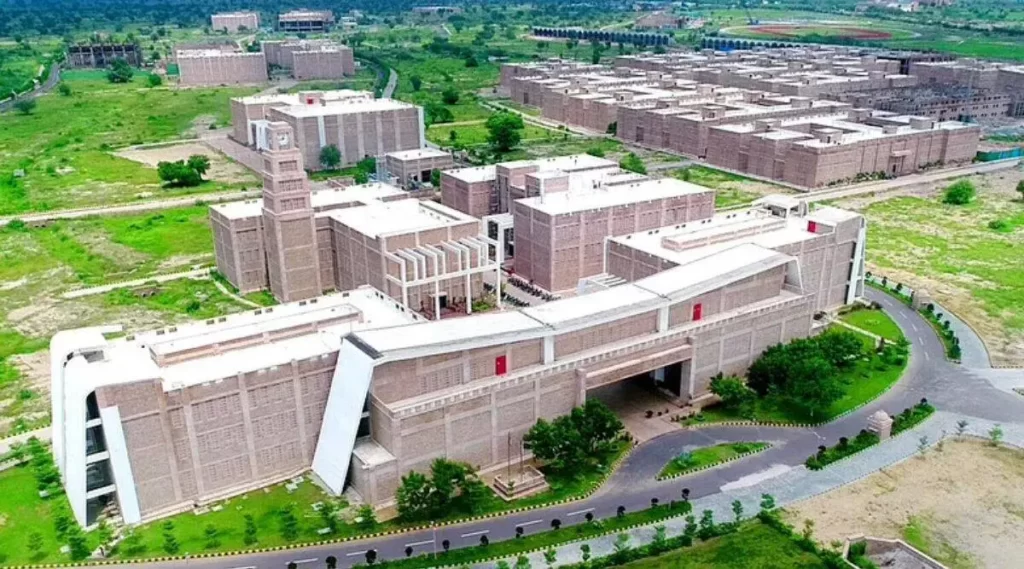
The Indian Institute of Technology Jodhpur has partnered with the TIH iHub Drishti Foundation. For the academic year 2023–2024, the institute is accepting applications for a part-time MTech programme in augmented reality and virtual reality (AR and VR). To meet the immediate needs of working professionals in new AR and VR technologies, IIT Jodhpur is offering a part-time MTech. Candidates with a BE, BTech, MSc, or MCA degree in any field are eligible to apply. The course application deadline is June 10. Candidates who are interested and qualified should apply at the official website, ihub-drishti.ai/mtecharvr. The School of Artificial Intelligence and Data Science will offer the second batch of the curriculum. For the two-year programme, students must earn 60 credits. Students will complete the course offline and spend 15 days immersed on-campus. The candidates will be chosen based on programming, a written exam, an interview, and any other factors the admissions committee deems appropriate. Candidates with prior research exposure or professional experience will have an advantage. The programme seeks to offer a thorough comprehension, excellent analytical skills, and useful research skills. Students who complete the programme will be knowledgeable about the various design and modelling tools used in AR and VR applications. This programme will help students develop the ability to design technological solutions to meet the growing demands of AR and VR systems.

IIT Jodhpur welcomes applicants for a part-time MTech programme in AR and VR Read More »

Tech-Driven Education: The Rise of E-Learning in the Digital Age

ardorcomm-news

In today’s digital age, technology has revolutionized nearly every aspect of our lives, including education. Traditional classrooms are no longer the sole avenue for learning, as e-learning has emerged as a prominent alternative. Enabled by technology, e-learning provides a flexible, accessible, and personalized approach to education. This blog explores the rise of e-learning and its transformational impact on the educational landscape in the digital era. The Advent of E-Learning: E-learning, or electronic learning, refers to the delivery of educational content through digital platforms and technologies. It encompasses a wide range of formats, including online courses, virtual classrooms, interactive modules, and educational apps. The proliferation of internet access and digital devices has fuelled the growth of e-learning, enabling learners to access educational resources anytime, anywhere. Accessibility and Inclusivity: One of the significant advantages of e-learning is its accessibility and inclusivity. With e-learning platforms, individuals can pursue education irrespective of their physical location or personal circumstances. It breaks down barriers to education, allowing learners to study at their own pace, accommodating work schedules, family responsibilities, and other commitments. E-learning also caters to diverse learning styles and needs, providing a personalized learning experience for each student. Also Read: Importance of Early Childhood Education: Setting the Foundation for Future Success Technological Enablers: The rise of e-learning is closely intertwined with the advancements in technology. Various technological enablers have played a pivotal role in the growth of e-learning. High-speed internet connectivity has made it possible to deliver multimedia-rich educational content seamlessly. Mobile devices, such as smartphones and tablets, have made learning on the go a reality. Additionally, cloud computing has provided a scalable and cost-effective infrastructure for e-learning platforms. Interactive and Engaging Learning: E-learning offers interactive and engaging learning experiences through multimedia elements, simulations, gamification, and virtual reality. These technologies create immersive environments, fostering active participation and enhancing knowledge retention. Gamification techniques, such as badges, leaderboards, and rewards, motivate learners and transform the learning process into an enjoyable experience. Personalization and Adaptive Learning: Technology-driven education enables personalized and adaptive learning experiences. E-learning platforms leverage data analytics, artificial intelligence, and machine learning algorithms to assess learners’ abilities and adapt the content and pace accordingly. This personalized approach ensures that students receive targeted instruction, support, and challenges, leading to improved learning outcomes. Flexibility and Lifelong Learning: E-learning has unlocked opportunities for lifelong learning and continuous skill development. With the flexibility offered by e-learning platforms, individuals can update their knowledge, acquire new skills, and stay relevant in a rapidly evolving job market. Professionals can pursue online certifications and courses to enhance their career prospects, and learners of all ages can engage in self-paced learning journeys. Also Read: Empowering Learners: The Role of New-Age Teaching Mechanisms in Upskilling Global Collaborative Learning: The digital age has connected learners from around the world, fostering global collaborative learning. E-learning platforms facilitate communication and collaboration among students and educators across geographical boundaries. Learners can engage in virtual discussions, peer reviews, and group projects, expanding their perspectives and promoting cross-cultural understanding. Overcoming Challenges: While e-learning offers numerous benefits, it also presents challenges. The digital divide, lack of reliable internet access, and technological literacy gaps pose barriers to equal access and participation. Addressing these challenges requires concerted efforts from governments, educational institutions, and technology providers to bridge the digital divide and ensure equitable access to quality education. Conclusion E-learning has experienced an unprecedented rise in the digital age, transforming the way we learn and acquire knowledge. With its accessibility, personalization, interactivity, and global connectivity, e-learning has become a driving force in education. As technology continues to advance, e-learning is poised to further revolutionize the educational landscape, empowering learners of all ages to unlock their potential and pursue lifelong learning in the digital era.Top of Form The author, Pratik Ghosh is associated with ArdorComm Media

Tech-Driven Education: The Rise of E-Learning in the Digital Age Read More »

Prof. Padmanabhan Krishnan, Director, Academic Staff College, Vellore Institute of Technology, Highlights the importance of Industry Academia collaborations

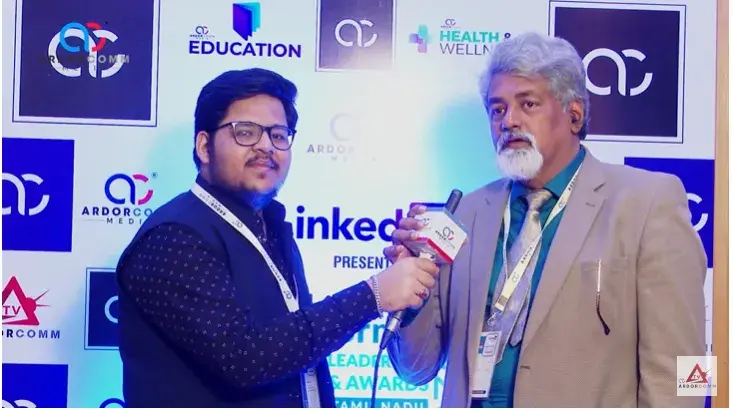
“This environment will not only benefit the corporate and educational sectors but also bridge the gap between secondary education and higher education,” says Prof. Padmanabhan Krishnan, Director, Academic Staff College, Vellore Institute of Technology in an interview with Pratik Ghosh, Content Writer, ArdorComm Media Group at the ‘New Normal – Education Leadership Summit & Awards 2023’ #ELSAChennai #ELSATamilNadu How are you feeling witnessing this New Normal Education Leadership Summit in Chennai? It’s a great initiative by ArdorComm Media Group, and I’m enjoying the ambiance and the sessions. We’ve learned a lot, and learning is both transactional and transformative. As you know the event name is New Normal Education Leadership Summit so what does New Normal stand for you? Well like one of the experts said you had live before Corona, you had life during Corona and you have life after Corona hopefully when I think Corona is still there so like I would say that it is not yet after Corona and we are still in a Corona season so new normal refers to the digital learning and its impact and its mandatory necessitated existence or coming into existence or coming into the being itself that would be the new normal situation. Like they didn’t want to call it abnormal though I think that would have been an appropriate term but rather crude so I would say that we don’t have to say normal season before 2019 December or 2020 or we don’t need to say anything after that was abnormal we try to be normal so we would call it new normal and then we’ll take it and destroy it and then if digital learning has more to offer obviously why not I mean Corona though is about 140 nanometres in diameter has taught us a lot of things. Many things teach positive or negative thank you the best way is to keep going forward. How are you implementing technology in your institution? At Vellore Institute of Technology University, we focus on training the trainers. We explore various technological methods to train our staff members in emotional, adaptive, intuitional, and psychomotor capabilities. We aim for holistic development through enabling technologies, including digital and online learning. In forums like this, where education leaders, industry experts, and the government come together, how does this benefit the education sector at large? As a metallurgist, I would like to highlight the significance of alloys in the field. Commercially pure copper, while not particularly useful, can be transformed into brass by adding zinc. However, brass is prone to marine corrosion as the zinc tends to seep out of the copper lattice. To stabilize zinc, tin and other elements like aluminum are added. In comparison to soft metals like copper, well-alloyed brass, bronze, or corrosion-resistant alloys like silicon bronze and naval bronze offer better properties. I believe this metallurgical experience and philosophy can be applied to the relationships between the private and public sectors, NGOs, academia, and the corporate sector. This amalgamation of different entities can lead to synergistic effects, where the positive hybrid outcome surpasses the sum of its parts. The new education policy, government initiatives, and funding for research and higher education, including training for trainers, are empowering prospects. The support from NGO startups and various governmental initiatives, as well as the recognition of private universities, alongside prestigious institutions like IITs and IACs, create a mutually beneficial environment. This environment will not only benefit the corporate and educational sectors but also bridge the gap between secondary education and higher education. It will facilitate the transition from the first year to the final year and ultimately to internships, providing numerous programs, skills, and avenues for career development. As emphasized by one of the experts, jobs are not the only important aspect, but building a successful career holds greater significance. Overall, this amalgamation between different sectors and entities is highly advantageous. It holds the potential to foster growth, enhance educational environments, and create a supportive ecosystem that benefits individuals and society as a whole. We should extend our best wishes to everyone involved in these endeavours. Any message for ArdorComm Media Group? I believe it is crucial for ArdorComm Media to continue its initiatives like Nama Chennai and expand them further. However, it is important to recognize that it’s not just about the teachers or students individually. The bond between teachers and students holds great significance. Moreover, what truly matters is the transformation that occurs from being a student to a project student, then to an intern, and eventually a full-fledged company executive. The process of bridging these different phases is more important than the isolated actions performed during each stage, whether it’s in high school (plus two student), undergraduate studies, or master’s programs. In the realm of education and career advancement, the concept of interface is highly valuable. Interface refers to the interaction and connection between different stages, roles, and skills. It is essential to be equipped with the ability to interface, bridge gaps, and smoothly transition from one phase to another in life and career development. Without the necessary skills to navigate these transitions, challenges may arise. I strongly urge ArdorComm Media to not only focus on the educational journey but also on bridging the gaps between schools and colleges. Many students face difficulties in coping with the significant changes that occur during the first year of college. Some students who excelled in their secondary education, scoring high percentages like 92, 96, or even 98, may struggle to adapt to the demands of engineering colleges, leading to frustration and even depression. Bridging programs and initiatives are vital in creating compatibility and facilitating a smoother transition into higher education, whether it be from school to college or even pursuing advanced degrees like a Ph.D. or studying abroad. For instance, when students go to the United States, they often experience culture shock. It would be beneficial to address this culture shock in advance by providing resources and insights from individuals who have returned from


Prof. Padmanabhan Krishnan, Director, Academic Staff College, Vellore Institute of Technology, Highlights the importance of Industry Academia collaborations Read More »

Dr. S. Sriman Narayanan, Vice Chancellor, VELS Institute of Science Technology, shares how they are implementing Technology in the Institution

“After this pandemic, in fact, we were forced to go for the new technologies like online classes and various types of even the assignments, conducting examinations, the proctored examinations in online,” says Dr. S. Sriman Narayanan, Vice Chancellor, VELS Institute of Science Technology in an interview with Pratik Ghosh, Content Writer, ArdorComm Media Group at the ‘New Normal – Education Leadership Summit & Awards 2023’ #ELSAChennai #ELSATamilNadu How are you feeling to witness The New Normal Education Leadership Summit and Awards in Chennai? Yeah, I think it looks very attractive and with a lot of people participating in it. And a lot of different themes are being discussed in different sessions. I think it will be useful to the people who are attending this, and it will be also useful to the administrators as well as the Vice Chancellors like me, even the directors and all the teachers who are attending here. How are you implementing technology in your institution? Yeah, ours is the VELS University, which is the VELS Institute of Science, Technology, and Advanced Studies. It is a deemed-to-be university. We house roughly around 15,000 people with 750 faculty members, and roughly we run around 120 different programs comprising of engineering, pharmacy, law, basic sciences, life sciences, education, so everything. After this pandemic, in fact, we were forced to go for the new technologies like online classes and various types of even the assignments conducting examinations, the proctored examinations in online. So we are implementing wherever it is required because now the minds of the people have changed, you know, from the classrooms to the online classes and other things. So accordingly, we are making more changes that are needed for the betterment of the students. As you can see in this kind of forms, we bring in the education leaders, the EdTech players, as well as the government. So how does this kind of forum benefit the education sector according to you? Actually, whenever there are gaps, we cannot say that all know everything. So, by attending such meetings, we could see that there is some information we are getting which can fill the gaps between what is existing and what is expected. So that way, it is very useful. ArdorComm Media started in 2021, and we are close to completing two years of our existence. So what message do you want to share for ArdorComm Media Group? Okay, right. You talk to the institutions, educational administrators, and you tell them that if this is the type of people that the other side is expecting, the product that is what they are expecting, and this is the gap. And we will be able to help you to fill this gap by providing all these arrangements. Then maybe that would be a better idea.

Dr. S. Sriman Narayanan, Vice Chancellor, VELS Institute of Science Technology, shares how they are implementing Technology in the Institution Read More »

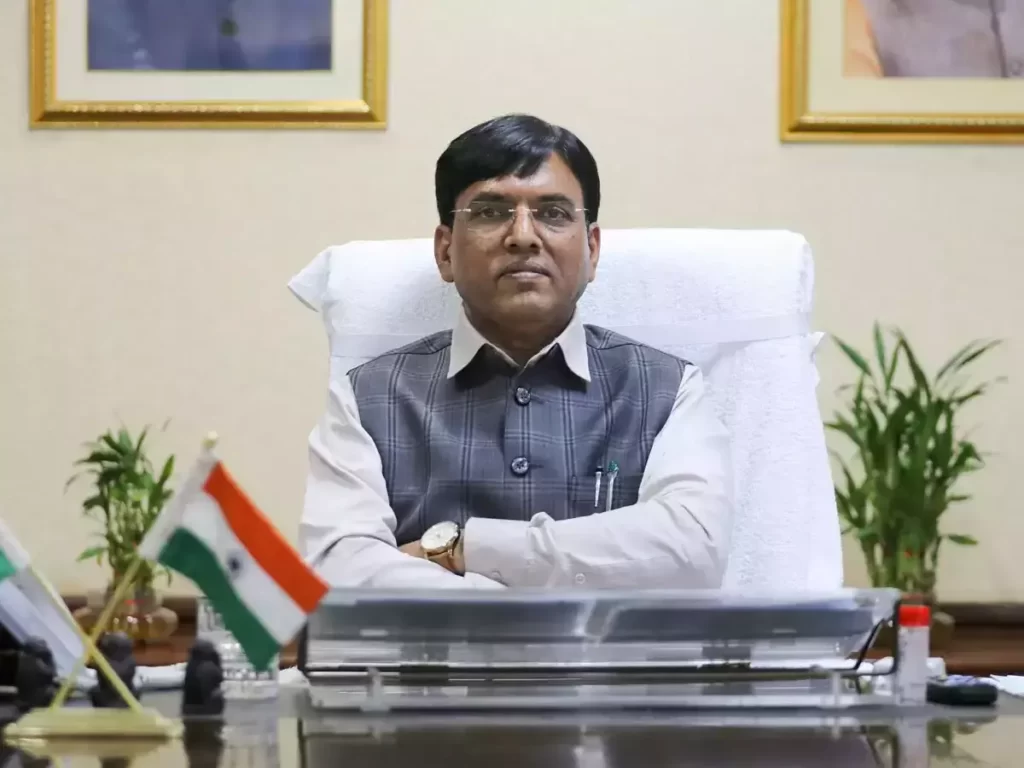
Government to implement PLI schemes for basic chemicals used in pharma and other industries: Mandaviya Mansukh

ardorcomm-news

Chemicals and Fertilisers Minister Mansukh Mandaviya announced plans to introduce the Product Linked Incentive (PLI) scheme for fundamental chemicals on Friday and urged the pharmaceutical and medical device sector to concentrate on producing high-quality goods at competitive prices to compete globally. The minister stated that Modi government is “pro-poor, pro-farmers but also industry-friendly” when speaking at an international conference on the pharmaceutical and medical device industries. He also stated that all policies are being developed following extensive talks with the industry and other stakeholders. Mandaviya emphasised that India is the “pharmacy of the world” and that the sector needs to concentrate on research and developments as well as be aware of global development in order to maintain its position as a leader. He stated that the sector should be prepared for international competition. Mandaviya stated that in order to succeed in the global marketplace, companies must “bring affordability, and do quality manufacturing.” “We have to advance our reputation with affordability and quality. Bargaining with quality damages our world-class reputation. I do not want to tolerate that,” he said. He urged industry support for the government’s initiatives to ensure the quality of the pharmaceutical and medical device industries. “Any negligence in the quality will prove to be detrimental in the global competition,” the minister stated, adding that he does not wish to take harsh measures on the industry. The government has introduced PLI-I and PLI-II initiatives for this industry, according to Mandaviya, to increase domestic production and exports while also making it more self-sufficient. According to Mandaviya, “in the coming days, we are coming up with PLI scheme for basic chemicals also,” based on the industry’s feedback. Mandaviya emphasised the need for research and development in this industry and urged MSMEs working in it to make advantage of government facilities that have been made available to everyone. The minister published the National Medical Devices Policy 2023 and its strategy document prior to his speech. Additionally, he established the Medical Devices Export Promotion Council. The “Assistance to Medical Device Clusters For Common Facilities (AMD-CF)” scheme was also launched by Mandaviya.

Government to implement PLI schemes for basic chemicals used in pharma and other industries: Mandaviya Mansukh Read More »