

ArdorComm Media Group

Tuesday, February 17, 2026 12:50 AM

Author name: admin

India Post to Resume All Postal Services to the U.S. from October 15

ardorcomm news

The Department of Posts has announced that all categories of international postal services to the United States will resume from October 15, marking the end of a nearly two-month suspension. Postal operations to the U.S. were halted on August 22 due to new regulatory changes introduced by the U.S. Customs and Border Protection (CBP) under Executive Order 14324, which removed de minimis exemptions and required new duty collection procedures. Following extensive technical upgrades, trial runs, and coordination with CBP-approved Qualified Parties, India Post has now implemented a Delivery Duty Paid (DDP) system. This mechanism ensures that customs duties are collected upfront in India during booking, streamlining the process and allowing packages to reach recipients in the U.S. without any additional charges or delays at customs. As per CBP’s updated guidelines, all postal consignments from India to the U.S. will now be subject to a flat customs duty of 50% on the declared FOB (Free on Board) value. However, postal exports will remain exempt from base or product-specific tariffs typically applicable to courier or commercial shipments. This simplified structure aims to benefit MSMEs, artisans, small traders, and e-commerce exporters, making postal exports a more affordable and efficient option for cross-border trade. Notably, India Post will not charge any extra service fees for the DDP process or Qualified Party facilitation. Existing postal rates remain unchanged, preserving the cost advantage for exporters. Customers can now send EMS, Air Parcels, Registered Letters/Packets, and Tracked Packets to the U.S. through any Post Office, International Business Centre (IBC), Dak Ghar Niryat Kendra (DNK), or via the official website www.indiapost.gov.in. Source: DD News

India Post to Resume All Postal Services to the U.S. from October 15 Read More »

SBI Targets 30% Female Workforce by 2030 to Strengthen Gender Diversity

ardorcomm news

The State Bank of India (SBI), the nation’s largest public sector lender, has unveiled a comprehensive plan to enhance gender diversity across its workforce, with a goal of increasing women’s representation to 30% by 2030. Currently, women comprise about 27% of SBI’s total staff, although they account for roughly one-third (33%) of frontline roles. The bank aims to close this gap over the next five years through targeted initiatives, said Kishore Kumar Poludasu, Deputy Managing Director (HR) and Chief Development Officer (CDO), in an interview with PTI. With over 2.4 lakh employees — the highest in India’s banking sector — SBI’s focus on inclusivity reflects its broader vision of empowering women across all professional levels. “We are committed to fostering a workplace where women thrive, with equal opportunities for leadership and growth,” Poludasu said. To achieve this, the bank has implemented several women-centric policies and programmes. These include a creche allowance for working mothers, family connect initiatives, and training modules designed to help women transition smoothly after maternity, sabbatical, or long medical leaves. A key component of SBI’s diversity strategy is its flagship initiative, ‘Empower Her’, which identifies, mentors, and prepares women for leadership roles through structured coaching and leadership labs. This programme aims to build a strong talent pipeline of women leaders for future executive positions. Addressing health and wellness, the bank has introduced specific programmes such as breast and cervical cancer screenings, nutrition allowances for expectant mothers, and a Cervical Cancer Vaccination Drive. These efforts are part of SBI’s larger goal to promote the physical and emotional well-being of its female workforce. Highlighting inclusivity in action, SBI operates over 340 all-women branches nationwide — a number expected to grow as part of its empowerment drive. Women are now well represented across geographies and hierarchies, reinforcing the bank’s commitment to equality and workplace safety. SBI’s gender-focused policies are complemented by its broader digital and operational transformation. The bank continues to leverage technology to enhance customer experience and efficiency, backed by a robust pool of IT specialists. Recognised among the top 50 global banks by asset size, SBI has also been consistently acknowledged as one of the country’s best employers. Source: PTI

SBI Targets 30% Female Workforce by 2030 to Strengthen Gender Diversity Read More »

Over 1 Lakh Single-Teacher Schools Educate 33 Lakh Students Across India: Education Ministry

ardorcomm news

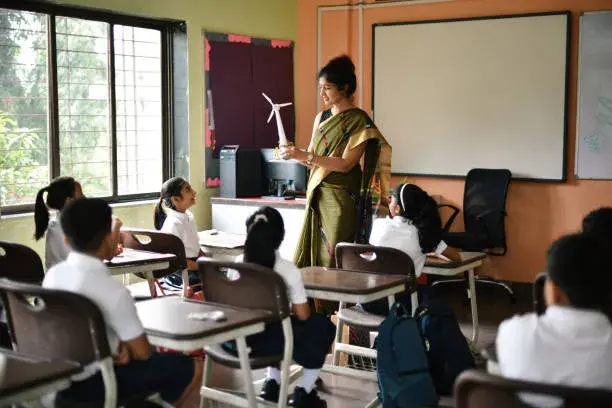
Over 33 lakh students in India are studying in more than one lakh schools run by a single teacher, according to the latest data from the Ministry of Education. Andhra Pradesh tops the list in terms of the number of such schools, while Uttar Pradesh records the highest student enrolment. As per statistics for the academic year 2024–25, India has 1,04,125 single-teacher schools catering to 33,76,769 students — averaging around 34 students per school. This figure highlights ongoing challenges in meeting the Right to Education (RTE) Act norms, which prescribe a pupil-teacher ratio (PTR) of 30:1 for primary grades (I–V) and 35:1 for upper primary levels (VI–VIII). Andhra Pradesh leads with 12,912 single-teacher schools, followed by Uttar Pradesh (9,508), Jharkhand (9,172), Maharashtra (8,152), Karnataka (7,349), and both Madhya Pradesh and Lakshadweep (7,217 each). States like West Bengal (6,482), Rajasthan (6,117), Chhattisgarh (5,973), and Telangana (5,001) also feature prominently on the list. In contrast, Delhi has only nine such schools, while Puducherry, Ladakh, Chandigarh, and Dadra & Nagar Haveli and Daman & Diu report none. The Andaman and Nicobar Islands have just four. In terms of student enrolment, Uttar Pradesh leads with 6,24,327 students studying in single-teacher schools, followed by Jharkhand (4,36,480), West Bengal (2,35,494), Madhya Pradesh (2,29,095), Karnataka (2,23,142), Andhra Pradesh (1,97,113), and Rajasthan (1,72,071). Interestingly, Delhi and Chandigarh, despite having very few such schools, record the highest average student strength per school — 808 and 1,222 respectively. On the other hand, regions like Ladakh (59), Mizoram (70), Meghalaya (73), and Himachal Pradesh (82) have some of the lowest averages. A senior official from the Ministry explained that the government is working to enhance learning outcomes and improve the efficiency of resource use by merging under-enrolled schools — a process known as “rationalisation.” “Single-teacher schools limit the scope of effective teaching and learning. The government is redeploying teachers from non-operational schools to ensure adequate staff availability in single-teacher schools,” the official said. The number of single-teacher schools has seen a steady decline, dropping from 1,18,190 in 2022–23 to 1,10,971 in 2023–24 — a reduction of nearly six percent. Source: PTI  

Over 1 Lakh Single-Teacher Schools Educate 33 Lakh Students Across India: Education Ministry Read More »

SEBI Collaborates with UIDAI and RBI to Enable Remote KYC for NRIs

ardorcomm news

The Securities and Exchange Board of India (SEBI) is in advanced discussions with the Unique Identification Authority of India (UIDAI) and the Reserve Bank of India (RBI) to introduce a secure remote KYC (Know Your Customer) process for non-resident Indians (NRIs). The initiative, which is currently in the testing stage, aims to allow NRIs to complete KYC verification without the need to physically visit India. SEBI Chairman Tuhin Kanta Pandey described the move as a key priority for the regulator, stating, “This will be a major development once implemented, as it will simplify market access for NRIs.” He made these remarks while addressing an event organised by the BSE Brokers Forum (BBF). Pandey also outlined SEBI’s efforts to strengthen market surveillance, noting that the regulator is transitioning from “reactive supervision to predictive oversight.” He revealed that SEBI has revamped its data warehouse systems to incorporate advanced rule-based alerts designed to detect pump-and-dump schemes, bulk trade manipulations, and other fraudulent activities. Highlighting the regulator’s data-driven approach, Pandey said that such manipulative trading patterns are often traceable through analytics, and the upgraded surveillance infrastructure will enable SEBI to act more proactively. In addition, SEBI is working on a safety net mechanism for depository participants (DPs) to handle outages more effectively—similar to safeguards currently in place for stock brokers. “We are examining a system where, in case of a DP outage, issues can be managed at the depository level,” Pandey explained. On the foreign portfolio investor (FPI) front, SEBI plans to streamline registration further. “The FPI registration process is our window to the world. If that window is clogged with operational hurdles, it loses its clarity. The goal is not to increase risk but to simplify and modernize,” Pandey remarked. He reaffirmed SEBI’s continued focus on investor protection, particularly against cyber fraud and misleading financial advice from unregistered influencers. At the Global Fintech Fest (GFF) 2025 last week, Pandey also highlighted SEBI’s technology-driven reforms, including the Investor Risk Reduction Access Platform and a Unified Investor App, which have enhanced transparency and ease of access. These tools consolidate investor holdings, transaction histories, e-voting, and proxy advisory information under one interface. Pandey added that grievance redressal has also become more efficient through the integration of the Digital Locker system and an upgraded SEBI Complaints Redressal System (SCORES), further reinforcing the regulator’s commitment to a safer, more transparent market ecosystem. Source: IANS

SEBI Collaborates with UIDAI and RBI to Enable Remote KYC for NRIs Read More »

Foreign Investment in India’s I&B Sector Slows Sharply in June Quarter Despite Strong Overall FDI Momentum

ardorcomm news

Foreign direct investment (FDI) inflows into India’s Information and Broadcasting (I&B) sector recorded a significant slowdown during the April–June 2025 quarter, even as the country’s broader FDI landscape remained steady. According to the latest data from the Department for Promotion of Industry and Internal Trade (DPIIT), cumulative FDI in the I&B sector stood at ₹76,143.29 crore by the end of June 2025 — up marginally from ₹75,590.84 crore in March 2025 and ₹74,369.17 crore in December 2024. This translates to just ₹552.45 crore in fresh FDI inflows during the first quarter of FY26, marking a steep 54.8% drop compared to ₹1,221.67 crore in the previous quarter. The figures, compiled from April 2000 onwards, indicate that investor sentiment in the I&B industry has cooled off after a relatively strong start to the year. While cyclical adjustments may partly explain the decline, analysts point out that the sector’s overall contribution to India’s total FDI remains small. High-growth areas such as Telecommunications, Automobiles, and Computer Software & Hardware continue to dominate, collectively accounting for over 25% of cumulative inflows. In contrast, the entire I&B segment—including print, broadcasting, and online media—makes up less than 1% of total FDI received since 2000. Despite the slowdown in the media sector, India’s overall FDI performance continues to demonstrate resilience. Cumulative inflows between April 2000 and June 2025 have surpassed ₹92 lakh crore. During the April–June 2025 quarter alone, total FDI (including equity, reinvested earnings, and other capital) amounted to ₹2,22,120 crore, with equity inflows contributing ₹1,59,428 crore. Experts suggest the current dip in I&B investments reflects a mix of regulatory uncertainties, industry consolidation, and fewer big-ticket deals. However, growing interest in digital media, OTT platforms, and sports broadcasting could spur renewed investor confidence later in the year—particularly as policymakers revisit FDI rules to align with the rapidly evolving digital ecosystem. With India’s media and entertainment sector undergoing rapid digital transformation, stakeholders are optimistic that upcoming reforms could help unlock new opportunities and make the I&B landscape more attractive to global investors. Source: Economic Times

Foreign Investment in India’s I&B Sector Slows Sharply in June Quarter Despite Strong Overall FDI Momentum Read More »

TCS Announces 100% Variable Pay for Junior Employees Amid Steady Growth in Q2FY26

ardorcomm news

Tata Consultancy Services (TCS), India’s largest IT services company, has announced the rollout of its quarterly variable allowance (QVA), with junior employees set to receive 100% of their entitlement. The company’s Chief Human Resources Officer, Sudeep Kunnumal, confirmed the development in an internal communication, highlighting that mid- and senior-level employees will also see a higher payout compared to last year. Kunnumal noted that annual salary revisions for employees up to grade C3A have been implemented effective September 25, with top performers securing double-digit increments. Typically, employees in grades C, C1, and C2—considered the junior band—receive both annual hikes and full variable pay, while those in senior roles have performance-linked payouts. “All associates up to grade C2 under the QVA plan will receive 100% of their quarterly variable allowance,” Kunnumal said in his message. “For grades C3A and above, the payouts will vary based on business performance, though the overall payout for this group will exceed last year’s levels.” In its second-quarter financial results for FY26, TCS reported a 3.8% sequential dip in net profit to ₹12,075 crore, down from ₹12,760 crore in the previous quarter. However, revenue rose 3.7% quarter-on-quarter to ₹65,799 crore, with constant currency growth of 0.8%. The IT giant also saw a reduction of nearly 20,000 employees during the September quarter, even as it doubled its talent base in advanced AI and machine learning skills to 1,59,000 professionals compared to the same period last year. Source: Economic Times

TCS Announces 100% Variable Pay for Junior Employees Amid Steady Growth in Q2FY26 Read More »

Education Ministry Urges Schools to Adopt UPI for Fee Payments Under Digital Transformation Drive

ardorcomm news

In a major push toward digital governance, the Union Ministry of Education has urged states and educational bodies to integrate the Unified Payments Interface (UPI) system for school fee collection. The initiative aims to enhance transparency, improve efficiency, and simplify the payment process for parents. In an official communication, the Department of School Education and Literacy advised states and affiliated institutions to adopt secure digital payment systems such as UPI, mobile wallets, and internet banking. This reform is part of the government’s broader digital transformation agenda in the education sector, ensuring smoother administrative operations and reducing dependency on cash transactions. The directive also extends to national education bodies, including the CBSE, NCERT, Kendriya Vidyalaya Sangathan (KVS), and Navodaya Vidyalaya Samiti (NVS), encouraging them to implement digital platforms for admission and examination fee submissions. According to the ministry, transitioning to digital payments brings multiple benefits—parents can pay from the comfort of their homes, ensuring greater convenience and transparency in transactions. The move is also expected to foster financial literacy among stakeholders and strengthen the culture of digital payments in educational institutions. The Education Ministry emphasized that this step marks a key milestone in aligning school-level administration with India’s vision of a digitally empowered society. Source: PTI

Education Ministry Urges Schools to Adopt UPI for Fee Payments Under Digital Transformation Drive Read More »

How to Build a Continuous Learning Culture in Your Organization

ardorcomm news

In today’s rapidly changing world, the most valuable asset any organization can cultivate isn’t just technology or capital — it’s the capacity to learn faster and adapt better than the competition. The shelf life of skills is shrinking, industries are being reshaped by innovation, and traditional job roles are continuously evolving. In this landscape, organizations that foster a continuous learning culture don’t just survive — they lead. So how can you move beyond occasional training programs and truly embed learning into the DNA of your organization? Let’s explore the mindset, strategies, and structures that make a continuous learning culture thrive. Redefine Learning: From an Event to a Mindset Most companies treat learning as a one-time event — a workshop, a certification, a webinar. But real learning cultures see it as an ongoing mindset. A true learning culture starts when employees — from interns to CEOs — see learning not as something they have to do, but something they want to do. It means rewarding curiosity, celebrating experimentation, and normalizing the idea that not knowing something today is just an invitation to grow tomorrow. Leaders can set the tone by modeling learning behavior: sharing what they’re reading, attending sessions themselves, and openly discussing their own growth areas. When curiosity flows top-down, it soon spreads sideways. Build the Infrastructure for Learning A culture cannot thrive without structure. Learning must be easy, accessible, and woven into daily workflows. Here’s how successful organizations make learning seamless: Digital Learning Platforms: Offer bite-sized, personalized content employees can access anytime. Think microlearning modules, internal MOOCs, or AI-driven learning journeys. Learning Experience Platforms (LXPs): Go beyond traditional LMS systems to provide tailored recommendations based on individual skills, goals, and performance data. Learning in the Flow of Work: Integrate learning into tools employees already use — Slack, Teams, or project management software — so that upskilling becomes a natural extension of their workday. By creating these learning touchpoints, you shift from training events to a continuous learning ecosystem. Connect Learning with Purpose Learning without purpose feels like homework; learning with purpose feels like growth. Employees are more likely to engage when they understand why learning matters — both for their career progression and the company’s mission. HR leaders and managers should tie learning opportunities directly to: Career pathways and promotions Skill-based projects and stretch assignments Organizational goals or innovation challenges When employees can see the connection between new skills and tangible outcomes, learning becomes meaningful — not mandatory. Empower Peer-to-Peer Learning Some of the most powerful learning doesn’t come from external trainers or e-learning platforms — it comes from peers. Encourage knowledge-sharing communities, mentorship programs, and internal “lunch and learn” sessions where employees teach each other. This not only builds skills but also creates a sense of belonging and cross-functional collaboration. For example, a data analyst could host a short session on Excel automation, while a communications specialist could share tips on persuasive writing. Over time, this peer-driven learning becomes self-sustaining — a hallmark of mature learning cultures. Measure, Recognize, and Reward Learning What gets measured gets valued. Organizations often track KPIs like revenue or customer satisfaction, but rarely measure learning progress. To make learning integral, establish metrics such as: Skill acquisition and certification rates Learning engagement scores Internal mobility linked to upskilling Moreover, reward learning behaviors, not just performance outcomes. Recognize employees who proactively learn new tools, mentor others, or contribute to knowledge bases. A small acknowledgment — a feature in the company newsletter or “learning champion” badge — can go a long way in reinforcing the right habits. Make Failure Part of Learning A continuous learning culture cannot exist without psychological safety. Employees must feel safe to experiment, fail, and learn from mistakes without fear of punishment. Leaders should create environments where failure is seen as data, not defeat. Sharing “lessons learned” stories or holding reflection sessions after projects helps normalize the learning loop. When teams know that innovation and imperfection can coexist, creativity blossoms — and learning accelerates. Align Learning with Organizational Strategy Finally, continuous learning must be tied to business priorities. The most successful organizations treat learning as a strategic lever — aligning it with goals like digital transformation, innovation, and customer experience. This ensures learning isn’t an HR initiative, but a business imperative. When learning drives measurable business outcomes — faster innovation cycles, reduced attrition, improved leadership pipelines — it becomes non-negotiable. Conclusion: Make Learning a Way of Life Building a continuous learning culture isn’t a quick project; it’s a long-term transformation. It requires leadership buy-in, thoughtful systems, and a deep respect for human potential. But once embedded, it transforms the organization into a living, breathing learning organism — adaptive, resilient, and always ready for what’s next. Because in the future of work, the best organizations won’t be the biggest or the fastest. They’ll be the ones that never stop learning.

How to Build a Continuous Learning Culture in Your Organization Read More »

Study Identifies 750 Genes Influencing Human Metabolism Through Blood Molecules

ardorcomm news

A large-scale genetic study has identified around 750 genes that may play a key role in human metabolism by regulating levels of approximately 250 different blood molecules, including lipids and amino acids. The research suggests these genetic influences are consistent across ancestries and genders, offering broad implications for understanding metabolic health. The study, led by scientists from the Berlin Institute of Health at Charité–Universitätsmedizin Berlin and Queen Mary University of London, analysed genetic data from nearly 4.5 lakh individuals of European, African, and Asian ancestry in the UK Biobank. Published in Nature Genetics, the findings revealed 29,824 genetic locus–metabolite associations mapped to 753 genomic regions, many of which had not previously been linked to metabolic processes. This discovery expands current knowledge of metabolic pathways and their connection to disease risks. The researchers found that the genetic regulation of blood metabolites showed strong consistency across populations, suggesting the potential for universal metabolic insights. Some of the identified genes, such as VEGFA, were newly linked to cholesterol regulation and may open pathways for novel drug development aimed at preventing heart disease. Lead author Martijn Zoodsma, a postdoctoral researcher at BIH, said the study offers a “systematic map of the genetic control of hundreds of blood molecules,” providing a valuable foundation for understanding disease susceptibility and metabolic diversity. Senior author Prof. Maik Pietzner added that despite advances like statins, heart disease remains a leading cause of death, and these findings could guide the creation of next-generation therapies targeting lipid build-up in arteries. Source: PTI  

Study Identifies 750 Genes Influencing Human Metabolism Through Blood Molecules Read More »

Higher Education Secretary Reviews Cleanliness Initiatives, Monitors Progress Under Special Campaign 5.0

ardorcomm news

Higher Education Secretary Vineet Joshi on Wednesday carried out a detailed inspection of the Ministry of Education’s offices at Shastri Bhawan, reviewing cleanliness standards and assessing progress under the Special Campaign 5.0. According to officials, the inspection aimed to evaluate ongoing efforts to enhance workplace hygiene, streamline office operations, and promote efficient record and space management. The campaign’s implementation phase, running from October 2 to 31, focuses on resolving pending issues such as MP and PMO references, inter-ministerial communications, public grievances, and Parliamentary assurances. Participating departments are required to report their progress daily. The preparatory phase of the campaign was held between September 15 and 30, during which officials, heads of centrally funded institutions, and representatives from UGC and AICTE were urged to set measurable goals, identify pending cases, and earmark focus areas for cleanliness and digitalisation. Special emphasis has been placed on the disposal of outdated files, e-waste management, and office beautification. The ministry aims to surpass the achievements of Special Campaign 4.0 by enhancing digital processes, accelerating record disposal, and promoting eco-friendly practices across departments. Source: PTI

Higher Education Secretary Reviews Cleanliness Initiatives, Monitors Progress Under Special Campaign 5.0 Read More »