ArdorComm Media Group

Tuesday, May 19, 2026 12:01 PM

Author name: admin

Apple’s workforce in India might increase to 200,000: Report

Apple formally launched two of its India stores this week in Delhi and Mumbai after a long wait, but that’s not all. There are indications that the company may double the number of people working at its contract manufacturing facilities in the nation, to over 200,000. Apple’s CEO, Tim Cook, has asked the government for assistance so that Apple can increase the number of Indian component suppliers it works with. Cook has also urged the Indian government for help in preparing the workforce there to meet Apple’s needs. Apple’s primary focus in India is on contract manufacturers’ iPhone assembly lines. The company, though, wants to expand its offerings to include iPads and AirPods as well. Currently, Apple’s three Indian suppliers—Foxconn, Pegatron, and Wistron—are in charge of assembling its iPhones. According to a report cited by PTI, Apple has created 100,000 employment in India. It’s interesting to note that women in blue-collar jobs account for the majority of roles, roughly 72%. The report also emphasizes that many of the women workers are first-time job seekers and that the majority of these employment have only been available for 20 months. According to reports, there is a lot of room for expansion, investments, job creation, and export opportunities in the relationship between Apple and India. As part of its efforts to lessen its dependence on China, Apple has been seeking to increase the size of its production facilities in India. Currently, Foxconn and Wistron Corp., two Taiwanese electronics manufacturers, are in charge of assembling Apple products like iPhones in India.

Apple’s workforce in India might increase to 200,000: Report Read More »

Active COVID cases in the country have risen to 66,170

According to data published on Friday by the Union Health Ministry, India has recorded 11,692 new coronavirus infections, with 66,170 active cases. The death toll has risen to 5,31,258 with 28 deaths, including nine confirmed by Kerala, according to data updated at 8 a.m. The number of COVID cases is 4.48 crore (4,48,69,684). According to the ministry, the national COVID-19 recovery rate has been recorded at 98.67%, and the active cases currently make up 0.15 percent of all infections. A record 4,42,72,256 people have been cured of the disease, while the case fatality rate is 1.18 percent.According to the ministry’s website, 220.66 crore doses of the COVID vaccine have been administered throughout the country so far as part of the nationwide vaccination drive.  

Active COVID cases in the country have risen to 66,170 Read More »

IITs to adopt the National Credit Framework 

The National Credit Framework (NCrF) will be adopted by all 23 Indian Institute of Technology (IITs). This decision was made at an IIT Council meeting held on April 18 at IIT Bhubaneswar. The National Education Policy 2020 envisions making education more comprehensive and effective and emphasises the convergence of general (academic) education and vocational education, the UGC chairman said during his presentation on NCrF to the council. To realise this objective, a national credit accumulation and transfer system is required. A High-Level Committee was established by the Indian government, with representatives from the UGC, AICTE, NCVET, NIOS, CBSE, NCERT, DGT, Ministry of Education, and Ministry of Skill Development. The directors of all 23 IITs as well as Chairman UGC Mamidala Jagadesh Kumar attended this meeting, which was presided over by Education Minister Shri Dharmendra Pradhan. Following the UGC Chairman’s presentation, the IIT Council unanimously resolved to adopt and implement the National Credit Framework for all IITs. Additionally, Kumar asserted that the IITs had held awareness workshops for each region. The North Zone workshop was held on November 21, 2022 at IIT Delhi, the East Zone workshop was held on November 24, 2022 at IIT Bhubaneswar, the North East Zone workshop was held on November 26, 2022 at IIT Guwahati, the West Zone workshop was held on November 28, 2022 at IIT Bombay, and the South Zone workshop was held on November 29, 2022 at IIT Madras.

IITs to adopt the National Credit Framework  Read More »

In less than 200 days, the Centre deployed 5G services across 600 districts: Union MoS Chauhan

Devusinh Chauhan, the Union minister of state for communications, pledged the commitment of the Centre to deploying the newest 5G services across India in record speed, noting that India has already covered 600 districts with 5G services in less than 200 days. The minister stated that the “Antyodaya” vision, which is important in promoting inclusive welfare and development, served as the inspiration for the new public policies of the central government when addressing at the G20 Digital Economy Working Group (DEWG) meeting in Hyderabad. According to the Union MoS, “India has covered 600 districts with 5G in less than 200 days, that is one of the fastest in the world,” and “India has the second largest telecom network with the lowest data rate in the world. The development of indigenous 4G, 5G technologies in a short span of time has surprised the world.” Addressing at the gathering, Union Minister of State for Social Justice and Empowerment A. Narayanaswamy stated that the ‘Digital Antyodaya’ approach and the Accessible India campaign for bridging the digital divide by making technology accessible to all demonstrate how sympathetic the current government is to differently abled people.

In less than 200 days, the Centre deployed 5G services across 600 districts: Union MoS Chauhan Read More »

Netflix to exit the DVD delivery business after 25 years

After 25 years of revolutionising at-home TV viewing, Netflix Inc. is ending its original business of delivering DVDs. According to a statement released on Tuesday, the company will ship its last discs on September 29. Co-Chief Executive Officer Ted Sarandos said, “Our goal has always been to provide the best service for our members, but as the business continues to shrink that’s going to become increasingly difficult.” Reed Hastings and Marc Randolph, the company’s co-founders, came up with the idea, and for the tens of millions of users who received the red envelopes with the Discs in the mail, it became a ritual. The DVD era saw the creation of some of the company’s early original productions. In 2007, the company debuted its streaming operation, resulting in the downfall of Blockbuster Entertainment, the largest DVD rental chain. The iconic horror-comedy Beetlejuice was the first DVD that Netflix ever distributed. More than 5.2 billion Disks have been sent out since then. The Sandra Bullock sports drama The Blind Side was its most well-known title.

Netflix to exit the DVD delivery business after 25 years Read More »

Air India’s cabin crew and pilots now have a new salary structure

A new pay structure for its pilots and cabin crew, effective from April 1st, was recently announced by Air India, a Tata group-owned airline. Depending on the category of pilot and the number of flying hours, the new salary structure gives a minimum salary of Rs. 50,000 per month for a pilot and a maximum salary of Rs. 8.5 lakh per month. Meanwhile, the minimum wage for cabin crew is Rs. 25,000 per month, with a maximum salary of Rs. 78,000 per month based on the employee’s level. In terms of pilot levels, a junior first officer in training who is a trainee pilot will be paid Rs. 50,000 per month. After line release and up to one year of experience, junior first officers will receive a monthly salary of Rs. 2.35 lakh. A first officer of Air India earns Rs. 3.45 lakh per month, whereas an ATPL captain (SFO) earns Rs. 4.75 lakh per month. A commander with a P1 rating on the company’s aircraft type who has been internally promoted from a captain or SFO will be paid Rs. 7.50 lakh per month. Senior commanders would make Rs. 8.50 lakh per month if they have more than four years of P1 rating on a company aircraft type. Depending on their level of expertise and the number of hours they have flown, pilots are also eligible for a variety of allowances, including flying allowances, wide body allowances, domestic layover allowances, and international layover allowances.  The level of the employee and the amount of flying hours also affect the salary structure for cabin crews. A senior cabin crew member can make up to Rs. 64,000 per month, while an executive cabin crew member can make up to Rs. 78,000 per month. A trainee cabin crew member would receive Rs. 25,000 per month. Flight allowances, airport standby allowances, check crew allowances, and international and domestic layover allowances are also available to cabin crews. It’s vital to remember that the pay structure assumes that both pilots and cabin crews fly 70 hours per month. Movements between levels will also be subject to the company’s safety and disciplinary policies. According to Air India, the goal of this new pay structure is to attract and retain talent in the aviation industry.

Air India’s cabin crew and pilots now have a new salary structure Read More »

UGC asks universities to allow students to write exams in regional languages even if course is in English medium

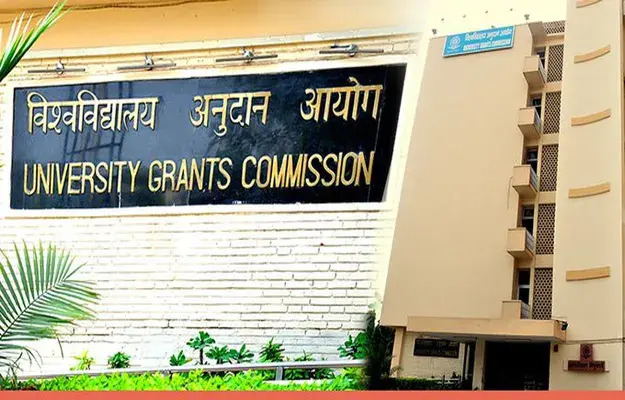
The University Grants Commission (UGC) Chairperson, M Jagadesh Kumar has written a letter to all central universities urging them to promote the use of regional and local languages in teaching and learning in order to encourage the use of regional languages in higher education. The letter also urged that students be allowed to write exams in regional languages even if the subject is taught in English. It also encouraged the varieties to develop original writing translation into local languages. Student engagement will gradually rise, increasing the success rate, once teaching, learning, and assessment are conducted in the local languages. The target of raising the GER in higher education from 27% to 50% by 2035 will be greatly strengthened as a result, the letter says. The UGC has also asked the universities for information on the list of books recommended for teaching in regional languages, the availability of faculty who can understand and teach in regional languages, whether or not students are able to write answers in regional languages, as well as an action plan to encourage the use of regional languages, among other things.

UGC asks universities to allow students to write exams in regional languages even if course is in English medium Read More »

TRAI is seeking input from stakeholders on low-power, small range FM radio broadcasting

On Monday in New Delhi, the Telecom Regulatory Authority of India (TRAI) published a consultation paper (CP) on concerns pertaining to Low Power Small Range FM Radio Broadcasting. In accordance with section 11(1)(a)(i) of the TRAI Act, 1997, the Ministry of Information and Broadcasting (MIB) invited recommendations from the Authority on the necessity and timing of the introduction of a new service provider for drive-in theatre applications in its reference dated March 7, 2022. For sound broadcasting services that are designed for specific locations and reception regions, low-power short-range FM radio broadcasting is an efficient method. Drive-in theatres, hospital radio services, amusement parks, working places, closed communities like residential complexes, small habitations, local events like air shows and sporting events, etc. are a few examples of these services. In light of this, a consultation paper has been created to solicit feedback and opinions from stakeholders on a range of low-power FM radio broadcasting-related issues. Stakeholders are encouraged to submit written comments on the consultation paper by May 15, 2023. By May 29, 2023, counter comments, if any, may be submitted. According to a press release from TRAI, comments and counter-comments may be sent, ideally in electronic form, to the email addresses advbcs-2@trai.gov.in and jtadvbcs-1@trai.gov.in. The consultation paper’s complete text is accessible on the TRAI website at www.trai.gov.in.

TRAI is seeking input from stakeholders on low-power, small range FM radio broadcasting Read More »

AIIMS intends to have zero vacancies by September

The AIIMS administration has made the decision to start a recruiting drive in order to meet the goal of having almost “zero vacancies” by September 2023. According to a recent TOI report, the institute has 1,055 paramedical staff positions open against 8,225 sanctioned posts and 363 doctor and faculty positions open against 1,207 sanctioned positions in several departments. A recruitment drive will be started at the institute, according to an office memorandum released by director M Srinivas on Wednesday, in order to improve cooperation between the examination section, recruitment cell, and faculty cell and to ensure that open positions are filled promptly. In order to make this process easier, Prof. Rajiv Narang has been appointed the “chief coordinating officer” and is in charge of closely monitoring the number of vacancies and the actions being done to fill them with the faculty cell, recruitment cell, and examination section. Every week, a report on actions taken will be sent to the director’s office. The major departments with vacancies, according to the information, are cardiology, general surgery, liver transplant, obstetrics and gynaecology, as well as the institutions Rajendra Prasad Centre for Ophthalmic Sciences, Dr BRA Institute Rotary Cancer Hospital, Jai Prakash Narayan Apex Trauma Centre, and National Cancer Institute on the campus of AIIMS Jhajjar. In order to solve the workforce shortage at these institutions, the Union Health Ministry is also considering the introduction of centralised recruiting for faculty and non-faculty at various AIIMS throughout India. In this regard, a committee has also been established. Only 2,259 of the 4,026 sanctioned positions have been filled in the 18 new AIIMS, according to ministry data.

AIIMS intends to have zero vacancies by September Read More »

PwC India to invest more than Rs 600 crores to the welfare of its employees

PwC India announced on Monday that, through the use of its new “People Experience Framework,” it is committed to investing more than Rs 600 crore over the following three years in the overall growth, development, and welfare of its workforce. The framework gives workers access to individualised opportunities that let them live their lives as they see fit, including taking care of their families’ needs and finding work that aligns with their values and purpose. This fosters an environment in which they can develop the skills they’ll need in the future. According to Sanjeev Krishan, Chairperson of PwC in India, “Our new People Experience Framework will bring in increased emphasis on growth and development, customised rewards, benefits and well-being that are stitched into our daily experiences, and where we have the flexibility to support our people as their lives and needs shift over time.” For regular full-time employees up to the Director level, PwC India has announced a non-residential executive MBA programme. The company would cover 75% of the employees’ course fees (up to Rs 10 lakh per person). Also, the sponsorship of self-initiated learning certifications has increased from the previous Rs 30,000 to up to Rs 1 lakh. The company has increased medical coverage for each employee, their spouse, and their two children to (Rs. 20 lakh) (up from an average of Rs 5 lakh). In addition, a “Recharge and Rejuvenate” policy has been implemented, giving each employee a minimum of 10 days of annual downtime. The company added that paternity leaves had been increased to 30 days. “Just as we are relentlessly client focused, we will continue to invest in our people. The most meaningful workplace experiences are those that are created with people’s interests top of mind,” said Padmaja Alaganandan, Chief People Officer, PwC India.

PwC India to invest more than Rs 600 crores to the welfare of its employees Read More »