ArdorComm Media Group

Sunday, June 7, 2026 8:24 AM

Author name: admin

Employees at Tata Steel Jamshedpur to receive a 20% annual bonus plus a Rs. 20K goodwill bonus

The Tata Steel Jamshedpur employees will get a 20% annual bonus credited to their accounts by September 15, 2022. The management and the workers’ union have agreed to this in a Memorandum of Settlement. This bonus calculation formula will remain in effect until 2024. The 20 per cent yearly bonus this year is larger than the 16 per cent that was granted the prior financial year. About Rs 47 crore more has been added to the bonus. Additionally, it is the first time that a bonus payment of more than Rs 300 crore (Rs 317.51 crore) has been made. A goodwill bonus of Rs 20,000 per employee will also be given, as requested by the union, in recognition of the hard work put in by all employees, even during the pandemic, and the outstanding results of the company in FY 2021–2022. Each employee will therefore receive a minimum of Rs 61,448 (including the goodwill bonus) and a maximum of Rs 4,78,411 (including the goodwill bonus)! A total of 23,710 people across the Company’s facilities will benefit, including around 12,213 employees in Jamshedpur. V. Narendran, CEO and managing director of Tata Steel, and Sanjeev Choudhary, president of the Tata Workers’ Union, both signed the memorandum. Other attendees included Atrayee Sanyal, vice president (HRM), Shailesh Kumar Singh, deputy president, Satish Kumar Singh, general secretary, Tata Workers’ Union, Rajesh Prasad, deputy labour commissioner, Jamshedpur, and conciliation officer, Govt. of Jharkhand.

Employees at Tata Steel Jamshedpur to receive a 20% annual bonus plus a Rs. 20K goodwill bonus Read More »

BITS Pilani and Coursera collaborate to launch BSc in Computer Science

In partnership with Coursera, the Birla Institute of Technology and Science (BITS), Pilani has introduced an online Bachelor of Science (B.Sc) in Computer Science programme. Beginning today, interested candidates can visit the Coursera website at coursera.org. Starting now, interested applicants can submit an application for the first cohort, which starts in November 2022. The deadline for applications is November 15. Steps to apply for the programme: Step 1: Go to coursera.org, the Coursera website. Step 2: Candidates can find the option for “online degrees” in the top scroll of the homepage. Step 3: Following that, scroll down and select the link for “Computer Science and Engineering Degrees.” Step 4: Candidates can select the link for the BSc Computer Science from BITS on the new page after clicking “show more” on the previous one. Step 5: Select the “apply now” button at the top. Step 6: Complete the form with all the necessary personal information and submit the registration fee, if required. The early application deadline is October 17, and the final application deadline is November 15. The start of classes is set for November 30. It’s interesting that the degree has no entrance exams and is available to students with a variety of backgrounds, including those without a strong foundation in science or considerable mathematics. Anyone who has completed class 12 or its equivalent is eligible to apply. The three-year degree can also be finished in six years by registered candidates. This will give students the freedom to study the programme concurrently with employment or another degree programme. Students can earn the program’s intermediate exit option, a diploma, in about two years.  

BITS Pilani and Coursera collaborate to launch BSc in Computer Science Read More »

Brahmastra turns out to be Bollywood’s highest-grossing non-holiday release

The movie Brahmastra, which reunites Ranbir Kapoor and Alia Bhatt for the first time, was finally released in theatres on Friday. Despite being released on a non-holiday, the Ayan Mukerji movie had a roaring start, with sales in the range of 35–36 crore. This appears to surpass Ranbir’s greatest opening to date, Sanju, which brought in 34.75 crore on day one in 2018. On the first day of its release in Hindi, Malayalam, Kannada, Tamil, and Telugu, the movie was expected to do well owing to strong advance booking numbers. Although Ranbir had previously stated that he couldn’t take the advance booking figures seriously because “till the audience doesn’t see the film, the game doesn’t begin.” Brahmastra was the highest opening day ever for original Hindi content on a non-holiday, generating between 35 and 36 crore net, according to a report on Boxofficeindia.com. According to the estimate, the Hindi version will bring in between 32 and 33 crore net. Additionally, it suggested that during the weekend, there might be $8–10 million in overseas collections. The greatest opening on a non-holiday was achieved by SS Rajamouli’s Bahubali: The Conclusion, which brought in 41 crores. With Hindi dubbing, it was simultaneously shot in Tamil and Telugu. Since the start of advance booking, 11 crore rupees worth of Brahmastra tickets have been sold as of Wednesday night. These were recognised as the finest advance booking figures for any Bollywood film during the post-pandemic period. Critics, however, had conflicting opinions and mixed reviews about Brahmastra. Most of them termed it as a visual treat while appreciating the VFX but pointed out the poor storyline, dialogues and screenplay. Now, how the audience perceives the cinematic experience of the ‘Astraverse’ and what reflects on the box-office in this weekend will determine the fate of this 410-crore film.

Brahmastra turns out to be Bollywood’s highest-grossing non-holiday release Read More »

Education minister invites US Educational institutes to partner with India for skilling and transformation

Dharmendra Pradhan, the union minister of education, invited US educational institutions to collaborate with India in the fast-changing fields of education and skilling. In order to offer twinning programmes, joint degrees, and dual degree programmes, higher education institutions in both nations should work more closely together academically. “The new National Education Policy (NEP) has lays emphasis on internationalisation of education. I called upon American institutions and companies to partner with India in rapidly-transforming education and skilling landscape. A growing digital economy, aspirational population, a knowledge-based society and policy reforms are creating unprecedented opportunities in India,” Pradhan said. The education minister was present at the India Ideas Summit when the comments were made. The US-India Business Council and the US Chamber of Commerce, International Affairs, South Asia jointly organised the event. Maximizing the Next 75 Years of US-India Prosperity was the event’s theme. “India and the US have similar societies and shared values. Education and Skill development are important pillars of Indo-US relations,” Pradhan said. The minister also urged improved cooperation between the two countries in the fields of research and skill development. India is making significant attempts to reskill, upskill, and skill its youth. If focused training and capacity building are offered in accordance with industry requirements, India’s vast, young, and educated population will be a benefit to any sector worldwide, he continued. India is in a good position, mostly because of its demographic advantage and other skilling initiatives, according to Pradhan. Source: PTI  

Education minister invites US Educational institutes to partner with India for skilling and transformation Read More »

Superconducting magnet system used in MRIs to enable indigenous production of MRI machines

Scientists at the Inter-University Accelerator Centre (IUAC) in New Delhi, under the leadership of Prof. Avinash Chandra Pandey, the center’s director and an adjunct professor at Allahabad University, have made a significant advancement by creating the nation’s first superconducting magnet system for use in whole-body clinical MRI machines. At the moment, India is entirely dependent on expensive imports of MRI machines. The IUAC has developed a 1. 5 Tesla (T) superconducting MRI magnet system, which is like the heart of the MRI machine.  India will be able to develop cheaper homegrown MRI machines as a result, and it will enter a selective group of nations that manufacture these devices. The majority of MRI machines are currently exported from China to India. By providing precise contrast resolution in each imaging direction, the MRI machine is used to take images of any body part for disease detection. “This is nothing less than India making its own cryogenic engine, or state-of-the art weaponry. Having our own indigenous MRI machine would not only cut the cost of the equipment but will also provide access to this vital diagnostic technique to those who today cannot afford the same because of its high cost,” according to eminent radiologist Dr. Harsh Mahajan, recipient of the Padma Shri award. Source: TNN

Superconducting magnet system used in MRIs to enable indigenous production of MRI machines Read More »

TRAI opposes market share restrictions in the cable TV sector

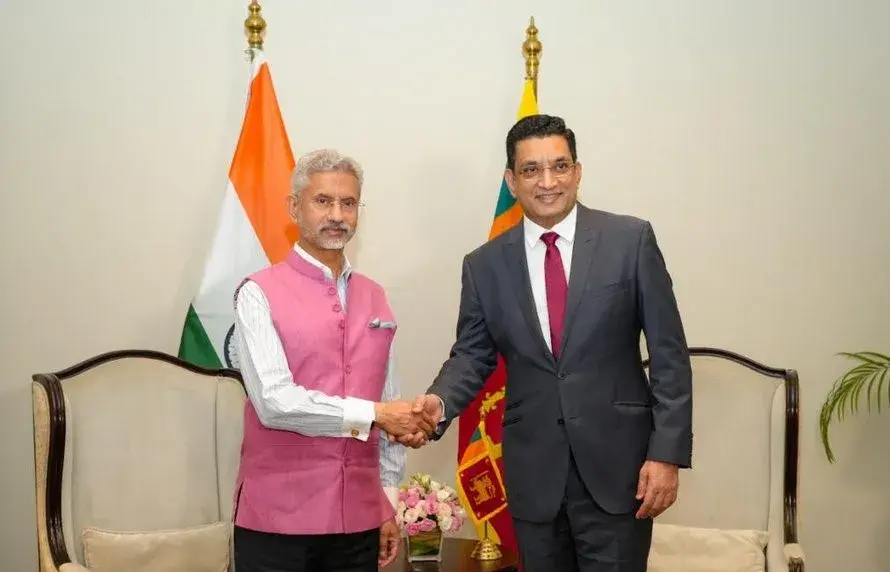
Article on MEA

The Telecom Regulatory Authority of India (TRAI) has recommended the Ministry of Information and Broadcasting that there is no need to impose any market share-related restrictions on multi-system operators (MSOs), given the intense competition in the TV distribution market among the various players vying for the consumer’s share of the wallet. This is a significant relief for the cable TV industry. The regulator, however, advised the ministry to keep an eye on developments in the cable TV industry and take appropriate action if necessary. Local cable operators (LCOs) should share their cable infrastructure with telecom service providers, according to TRAI, in order to facilitate the last-mile delivery of broadband services (TSPs). It is important to remember that Bharti Airtel and Reliance Jio are already collaborating with LCO partners to increase the penetration of wireline broadband in the nation. In order to encourage LCOs to give service providers last-mile access for the delivery of broadband services, the regulator has also proposed that the government amend the Cable Television Networks (Regulation) Act 1995. For the proliferation of broadband services, TRAI has proposed adding the following provision to the CTN Act: “Cable operators may strive to provide last mile access to Access service providers/Internet Service Providers in a fair, transparent, and non-discriminatory manner.” Regarding the topic of implementing cross-holding restrictions among different kinds of DPOs/service providers, TRAI emphasised that problems pertaining to vertical integration, horizontal integration, and M&A are being dealt with through a separate consultation process. The authority also noted that it has previously made suggestions regarding cross-media restrictions. The existence of diverse service providers like MSOs & LCOs, direct-to-home (DTH) operators, including DD Free Dish, Head in the Sky (HITS) operators, Internet Protocol Television (IPTV) operators, and over-the-top (OTT) platforms means that the TV universe has enough competition. This is why TRAI has a liberal regulatory policy for the cable TV sector. TRAI said that, in addition to 4 pay DTH operators, 1 HITS operator, and a few IPTV operators, there were 1,75,511 registered MSOs as of June (as of August). The regulator noted that there were between 81,706 and 1,72,063 LCOs. 43 million people are expected to use DD Free Dish. There are also more than 40 OTT platforms. The TV distribution business, according to TRAI, is likewise dealing with issues like a declining subscriber base and low average income per user (ARPU). In addition, pay-TV users in India pay roughly 20 to 25 percent less than the average TV consumer in the US, Thailand, Malaysia, the UK, or the UK. According to the regulator, the development of the OTT market further demonstrates the intensity of the sector’s competitiveness, which is projected to continue to increase. Therefore, TRAI stated, “the authority is of the view that at this stage there is no need to intervene in the current structure of Cable TV distribution sector at the MSO or LCO level considering the number of options available to the consumers.” Regarding TRAI’s “Recommendations on Monopoly/Market Dominance in Cable TV Services” dated 26.11.2013, MIB had sent a backreference dated 19th February, 2021. The ministry had asked TRAI to provide a new set of recommendations in the case taking into account the advancements and expansion that had since occurred in the M&E sector. A 50% market cap on MSOs with the state as a significant market was recommended by TRAI in its 2013 recommendations. The dominance of a single MSO is a characteristic of states like Tamil Nadu, Punjab, Orissa, Kerala, Uttar Pradesh, and Andhra Pradesh, according to TRAI’s observation at the time. The market dynamics have undergone a significant change, with DTH devouring a sizable portion of the cable TV market and being followed by players in telecom, broadband, and OTT.

TRAI opposes market share restrictions in the cable TV sector Read More »

AI-powered humanoid robot named CEO of company in China

Ms. Tang Yu, an AI-powered virtual humanoid robot, has been named the rotating CEO of Fujian NetDragon Websoft, a flagship subsidiary of NetDragon Websoft, a technology company in China that develops mobile applications and also runs a multiplayer online gaming platform in China. In this role, Tang Yu, an AI-powered virtual humanoid robot, will improve task quality, process efficiency, and execution speed. Tang Yu will also serve as a real-time data hub, analytical tool support, and platform for making more sensible decisions about everyday operations and risk management. What’s more intriguing is that the company anticipates Tang Yu will play a significant role in identifying talent and maintaining a fair and effective environment for workers, both of which require for a human touch. This action by NetDragon Websoft demonstrates the company’s desire and conviction that AI can revolutionise business management and raise operational effectiveness to a new level. “We believe AI is the future of corporate management, and our appointment of Ms. Tang Yu represents our commitment to truly embrace the use of AI to transform the way we operate our business, and ultimately drive our future strategic growth. Looking forward, we will continue to expand on our algorithms behind Tang Yu to build an open, interactive and highly transparent management model as we gradually transform to a metaverse-based working community, which will enable us to attract a much broader base of talents worldwide and put us in a position to achieve bigger goals,” says Dejian Liu, Chairman, NetDragon. The hiring of Tang Yu marks a crucial step in the company’s transformation into a “Metaverse organisation” and emphasises its “AI + management” strategy.

AI-powered humanoid robot named CEO of company in China Read More »

Dr. Reddy’s unveils cancer drug in U.S.

Lenalidomide capsules, a generic version of the popular multiple myeloma drug Revlimid, have been introduced to the US market, according to pharma giant Dr Reddy’s Laboratories, which on Wednesday informed the stock markets. According to Dr. Reddy’s, with this volume-restricted launch, two (2.5 mg and 20 mg) out of the six strengths it has introduced for the medicine in the US market are qualified for first to market, 180 days of generic drug exclusivity. The company launched the cancer medication in the US in the following strengths: 2.5 mg, 5 mg, and 10 mg, each in a bottle count size of 28 capsules; 15 mg, 20 mg, and 25 mg, each in a bottle count size of 21. In September 2020, Dr. Reddy’s and Celgene, a fully owned subsidiary of BMS, reached a patent settlement for Revlimid, a drug with annual sales of around $12.80 billion USD. In settlement of all unresolved claims in its litigation, “Celgene agreed to provide Dr Reddy’s a licence to sell volume limited amounts of generic lenalidomide capsules in the US,” Dr Reddy’s stated.

Dr. Reddy’s unveils cancer drug in U.S. Read More »

AI might lessen common drug side effects

Article on Health

According to the study, a research team has created a tool that measures the negative effects of medications using natural language processing, an artificial intelligence methodology, and chemical structure analysis. The new tool is made to determine which medications are more likely to cause anticholinergic side effects, which affect the brain by inhibiting acetylcholine, a key neurotransmitter. Professor Chris Fox from the University of Exeter in the UK stated, “Use of medicines with anticholinergic effects can have significant harmful effects for example falls and confusion, which are avoidable, we urgently need to reduce the harmful side effects as this can lead to hospitalisation and death.” “This new tool provides a promising avenue towards a more tailored personalised medicine approach, of ensuring the right person gets a safe and effective treatment while avoiding unwanted anticholinergic effects”, he added. Antidepressants, stomach medications, bladder medications, and Parkinson’s disease treatments for elderly individuals are a few examples of over-the-counter drugs that can have anti-cholinergic side effects. Confusion, blurred vision, light-headedness, falls, and a decline in brain function are some of the side effects. Long-term usage of it may potentially increase the risk of dementia. According to research reported in the journal Age and Ageing, the tool evaluates anticholinergic burden by allocating a score based on reported adverse events and closely matching the chemical make-up of the drug being considered for prescription. This scoring system is more precise and up to date than any prior system. In addition, the researchers surveyed 110 medical specialists, including pharmacists and nurses who write prescriptions. When asked if they would utilise a tool to evaluate the risk of anticholinergic side effects, 85% of this group responded in the affirmative. To further enhance the tool, the team also gathered usability feedback. According to Dr. Saber Sami of the University of East Anglia, “Our tool is the first to use innovative artificial intelligence technology in measures of anticholinergic burden, ultimately, once further research has been conducted the tool should support pharmacists and prescribing health professionals in finding the best treatment for patients.” Source: IANS

AI might lessen common drug side effects Read More »

Govt to eliminate price certification for purchases up to Rs. 1 lakh and introduce push button procurement system on GeM

The Center has decided to test push button procurement (PBP) for purchases up to Rs. 1 lakh through the Government eMarketplace (GeM) for government entities, offices, and PSUs. PBP will rely on technology to determine valuation and eliminate the need for certification, relieving pressure on government departments, particularly infrequent customers who frequently make small value purchases. Government buyers must certify that the selected offer’s pricing is appropriate. “It has come to the notice that sometimes especially infrequent government buyers find it difficult to certify reasonability of rates. They normally do not possess requisite skills in making procurement decisions. It delays the procurement process,” according to the Department of Expenditure. Government purchases made through GeM up to Rs 1 lakh are exempt from price certification. The Center has agreed to test push button procurement (PBP) for purchases up to Rs. 1 lakh through the Government e-Marketplace for governmental bodies, offices, and PSUs.

Govt to eliminate price certification for purchases up to Rs. 1 lakh and introduce push button procurement system on GeM Read More »