ArdorComm Media Group

Saturday, April 25, 2026 6:32 AM

Author name: admin

Affordable, Quality Healthcare Remains Key Focus of Central Government: JP Nadda

Union Health Minister J.P. Nadda reaffirmed the central government’s unwavering commitment to ensuring affordable and quality healthcare for every underprivileged citizen in India. Speaking during a session titled “Promoting Swasth Bharat through Ayushman Bharat PM Jan Arogya Yojana and Ayushman Arogya Mandir” at the Civil Services Day celebrations, Mr. Nadda emphasized that accessible healthcare is not just a goal but a national priority. Highlighting the strides made over the last decade, Mr. Nadda revealed that the government’s expenditure on healthcare has increased significantly—from 29 percent in 2014 to 48 percent today. This boost has resulted in a notable reduction in the financial burden on citizens seeking medical care, particularly in out-of-pocket expenses. He also noted the role of Ayushman Arogya Mandirs in early screening and preventive care, particularly for communicable and non-communicable diseases. These centers have expanded their service packages, further supporting a health-first approach and enhancing public health outcomes across the country. Health facilities, he said, are being encouraged to undertake self-assessment through the Indian Public Health Standards (IPHS) 2022 and the National Quality Assurance Standards (NQAS) frameworks, ensuring continual improvement in service delivery. Adding to the discussion, Dr. V.K. Paul, Member (Health), NITI Aayog, pointed out that the implementation of Ayushman Bharat PM-JAY has resulted in a drop in out-of-pocket healthcare expenditure from 64 percent in 2013-14 to 39.4 percent in 2021-22—a milestone in making healthcare more financially accessible. The session underscored the government’s vision for a Swasth Bharat, driven by preventive care, financial protection, and quality assurance. Source: News on Air

Affordable, Quality Healthcare Remains Key Focus of Central Government: JP Nadda Read More »

PM Modi Champions Tech-First Governance, Empowers Startups and MSMEs on Civil Services Day

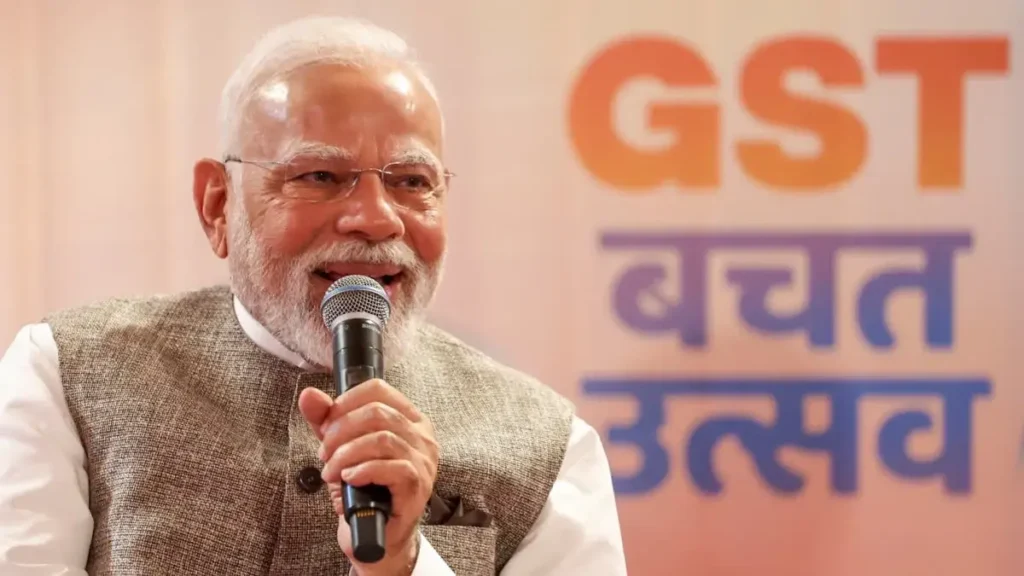
At the 17th Civil Services Day in New Delhi, Prime Minister Narendra Modi delivered a visionary address urging India’s bureaucrats to champion a “technology-first” approach in governance while retaining the critical value of human judgement. “No matter how tech-driven the world becomes, we should never forget the importance of human judgement,” he stressed, highlighting the need for a balanced approach in public administration. Calling civil servants “enablers of growth,” the Prime Minister emphasized the rising significance of startups and MSMEs as key drivers of innovation, supply chain efficiency, and global competitiveness. He urged officers to adopt governance models that support and scale such enterprises, reinforcing India’s ambition to become the world’s third-largest economy. Mr. Modi underlined that the “quality of governance” is measured by the real impact of schemes on the ground. He stressed that India must maintain focus on food, water, and energy security—especially in light of global challenges that disproportionately affect the Global South. In his address, the Prime Minister pointed to transformative government programmes such as the Aspirational Districts initiative, which has led to marked improvements in health, education, and infrastructure across underserved regions. He described the past decade as a period of “impactful transformation,” not just incremental change. Highlighting India’s leap in digital innovation, Modi noted that the country is now 10–11 years ahead of many others in governance technology. He also presented the Prime Minister’s Awards for Excellence in Public Administration, recognizing achievements in holistic district development, aspirational blocks, and innovation. Two eBooks were released during the event. The Prime Minister concluded by urging civil servants to work tirelessly toward a shared vision of a developed India, stating, “Every day, every moment counts in building the nation we dream of.”

PM Modi Champions Tech-First Governance, Empowers Startups and MSMEs on Civil Services Day Read More »

Andhra Pradesh Sanctions 2,260 Special Education Teacher Posts to Boost Inclusive Learning

In a landmark step towards strengthening inclusive education, the Government of Andhra Pradesh has sanctioned 2,260 new posts exclusively for special education teachers. This move is aimed at providing enhanced academic support to students with disabilities, particularly those with autism and mental challenges. According to the latest government order, 1,136 Special Grade Teacher (SGT) posts will be allocated at the primary level, while 1,124 School Assistant positions are sanctioned for secondary schools. These teachers will receive specialized training to address the unique learning requirements of children with special needs, fostering a more adaptive and inclusive educational environment. The District Selection Committee (DSC) is expected to release a recruitment notification soon. The selection process will assess candidates based on their qualifications, experience, and knowledge in special education, ensuring only well-equipped and empathetic educators take on these vital roles. Special education teachers are critical in tailoring instruction, modifying teaching methods, and supporting both the academic and social growth of students with disabilities. Their presence in classrooms is fundamental to nurturing an inclusive and empowering educational ecosystem. Welcoming the decision, the Andhra Pradesh Unemployed Special Teachers Federation (APUSTF) noted that this was a long-pending demand. The state had not recruited special educators in nearly seven years, and the federation had been advocating for their appointment for the past two years. APUSTF President M Venkata Naidu highlighted that the state has around 1.12 lakh children with special needs, and nearly 15,000 trained special educators have been awaiting the DSC notification. The new recruitment drive marks a hopeful turning point for inclusive education in Andhra Pradesh. Source: TOI

Andhra Pradesh Sanctions 2,260 Special Education Teacher Posts to Boost Inclusive Learning Read More »

Maharashtra Announces ₹1 Lakh Cashless Treatment for All Accident Victims

In a major public healthcare reform, Maharashtra’s Public Health Minister Prakash Abitkar announced on Friday that all accident victims across the state will now be eligible for cashless medical treatment of up to ₹1 lakh—regardless of their enrolment in any government health schemes. The announcement came during a review meeting held at the State Health Guarantee Society’s headquarters in Worli. Present at the meeting were CEO of the Society Annasaheb Chavan, Ayushman Bharat Mission Maharashtra Committee Chairman Dr Omprakash Shete, and other senior health department officials. Abitkar emphasized the urgency of immediate medical intervention following accidents, stating that financial constraints should never hinder critical care. “Victims often don’t carry money during emergencies. This move ensures timely treatment without financial delays,” he said, directing officials to swiftly implement the initiative. To ensure better accessibility, the state will increase the number of empanelled private hospitals from 1,792 to 4,180, with selection supervised by district collectors. A mobile app is also under development to provide real-time hospital data, including bed availability and grievance redressal. Further, a dedicated study committee will explore expanding treatment coverage under government schemes, including high-cost procedures like organ transplants. The panel will review treatment costs and assess the inclusion of primary healthcare services, with a report due in a month. In a community-focused approach, empanelled hospitals must host one free health camp monthly and offer cashless treatment to at least five patients. Public representatives will support these initiatives. To boost Ayushman Bharat card distribution, the government will involve ASHA workers, Anganwadi staff, ration shopkeepers, and civic centres—along with a proposed increase in their honorariums for supporting the campaign. Source: Hindustan Times

Maharashtra Announces ₹1 Lakh Cashless Treatment for All Accident Victims Read More »

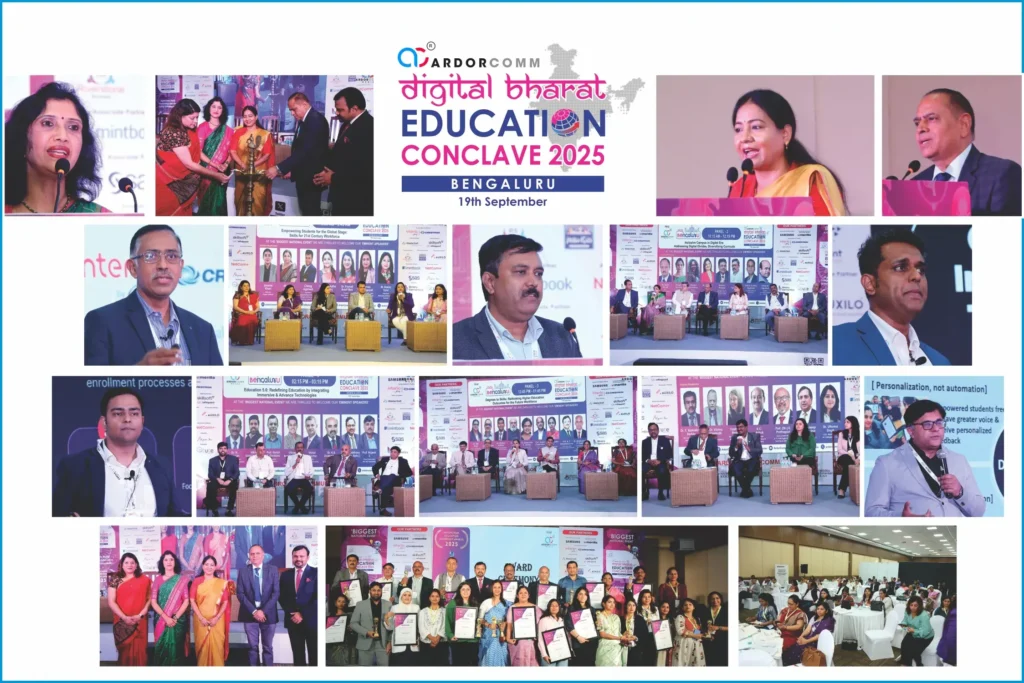
ArdorComm – Education Leadership Summit & Awards 2025 held at The Crown, Bhubaneswar – IHCL SeleQtions on 11th April 2025 in Bhubaneswar, Odisha

The ArdorComm – Education Leadership Summit & Awards 2025 held in the culturally rich city of Bhubaneswar, Odisha, was a powerful confluence of voices, visions, and values that are shaping the future of education in India. Organized by ArdorComm Media Group, the summit was an inspiring testament to the education sector’s evolving dynamics, as it brought together distinguished academicians, educationists, policy makers, government officials, and edtech leaders under one roof to address the most pressing needs of modern education. With the overarching theme of “Tech, Talent & Transformation: Rethinking Education with 21st Century Skills,” the summit unfolded into a vibrant dialogue on how the New Education Policy (NEP) 2020, digital transformation, and future skills are influencing institutional priorities and learner outcomes across India. A Day of Vision, Dialogue, and Transformation The ArdorComm – Education Leadership Summit & Awards 2025 unfolded as a dynamic and forward-thinking gathering that brought together over 150+ higher education leaders, 100+ school education professionals, and influential EdTech organizations from across India. With more than 50 thought leaders and experts sharing their insights, the day featured an immersive agenda filled with panel discussions, keynote addresses, industry presentations, and collaborative roundtables. The summit served as a vibrant platform for exchanging innovative ideas, fostering partnerships, and addressing the evolving needs of India’s education ecosystem. Key discussions delved into pivotal themes such as the implementation of NEP 2020 through experiential and industry-integrated learning, fostering a culture of continuous upskilling, navigating the ethics of AI in education and recruitment, exploring the possibilities of EdTech 5.0, and the indispensable role of soft skills in a technology-driven era. Support from Esteemed Government Leaders of Odisha The ArdorComm – Education Leadership Summit & Awards 2025 received immense encouragement and support from esteemed dignitaries of the Government of Odisha. Shri Nityananda Gond, Hon’ble Cabinet Minister for School and Mass Education, Social Security & Empowerment of Persons with Disabilities, ST & SC, Minorities & Backward Classes Welfare; Shri Suryabanshi Suraj, Hon’ble Minister for Higher Education, Sports & Youth Services, Odia Language, Literature & Culture; and Shri Kali Prasanna Mohapatra, IAS, Director of the Higher Education Department, Govt. of Odisha, extended their best wishes for the successful conduct of the summit. Their gracious support underscored the importance of collaborative efforts in transforming the education landscape of the state and the nation at large. Industry Leaders and Keynote Speakers The ArdorComm – Education Leadership Summit & Awards 2025 featured an exceptional lineup of industry leaders and experts who shared their insights on the future of education. The event was inaugurated with a warm welcome address by Kumar Chandan Anand, Founder, CEO, and Group Editor of ArdorComm Media Group, who set the tone for the day’s discussions. The Guest of Honour, Smt. Subhashree Nanda, IAS, Chairperson of the Council of Higher Secondary Education and Addl. Secretary of the School & Mass Education Department, Government of Odisha, highlighted the importance of integrating modern skills into the educational landscape. Dr. Mamata Panda, Deputy Director of the Higher Education Department, Government of Odisha, and Shri Ajit Sarangi, CTO of the Odisha Skill Development Authority (OSDA), also graced the event as special guests, bringing forward the government’s vision for skilling and digital transformation in education. The keynote address was delivered by Manik Kathuria, Regional Account Director at Coursera, who shed light on the evolving role of digital platforms in reshaping education and skill development, emphasizing the need for a global perspective on 21st-century skills in education. The presence of these distinguished leaders set the stage for a truly inspiring and insightful day, as they shared their expertise and best practices for building a future-ready education system. The first panel discussion of the summit, titled “NEP 2020 – Beyond Textbooks: The Rise of Experiential & Industry-Integrated Learning,” set the tone for a day of visionary dialogue. The session was moderated by Dr. Ashwini Kumar Tiwari, Vice Chairman, Buxi Jagabandhu English Medium School, Bhubaneswar, and brought together a distinguished panel of education leaders. Prof. Supriya Pattanayak, Vice Chancellor, Centurion University of Technology and Management, Bhubaneswar; Prof. (Dr.) B. Majhi, Vice Chancellor, C. V. Raman Global University, Bhubaneswar; Prof. Chandrashekhar N. Bhende, Dean – Postgraduate & Research Program, IIT Bhubaneswar; Dr. Meghna Mishra, Founder & Director, Ashelles Public School, Cuttack; and Anjali R. Pandey, Principal/ Head of the School, B.S.M. Dnyananand School, Thane, offered profound insights into how the New Education Policy encourages hands-on, real-world learning experiences. The discussion emphasized the critical need for bridging theoretical knowledge with industry practices, thus redefining classroom learning in today’s dynamic educational ecosystem. The second panel discussion, titled “Lifelong Learning in the Digital Era: Building a Continuous Upskilling Culture,” brought to the fore the pressing need for adaptability and ongoing professional development in the 21st century. The session was moderated by Kumud Mohapatra, Trustee, Sikshadaan International School, Bhubaneswar, who guided the conversation around fostering a mindset of continuous learning. The panel featured prominent educational leaders including Er. Monoj Kumar Dash, Chairman, Dadhichi Group of Institutions, Bhubaneswar; Ganesh Prasad Biswal, Managing Director, Empower Group of Institutions, Kendrapara; and Prof. (Dr.) Amiyakanta Mishra, Vice Chairman, Sai Smart School, Puri. Each speaker emphasized the importance of embedding a culture of reskilling and upskilling in institutions to prepare learners for the evolving demands of the digital age. The third panel discussion, “Ethical AI in Education and Hiring: Ensuring Fairness, Transparency, and Data Security,” delved into one of the most crucial conversations in today’s tech-integrated educational landscape. The session was moderated by Venkatesh Vijayapandi, Associate Director, META-i Technologies Pvt. Ltd., Bangalore, who steered the discourse on responsible AI implementation. Esteemed panelists included Prof. (Dr.) Amarendra Narayan Misra, Vice Chancellor, Jagadguru Kripalu University, Cuttack; Er. Uttam Kumar Panigrahi, Chairman, Gayatri Group Of Institutions, Bhubaneswar; and Prof. (Dr.) Kapileswar Mishra, Director, Indian Institute for Production Management (IIPM), Kansbahal. Together, they explored how artificial intelligence can be harnessed ethically in educational and recruitment ecosystems while upholding the principles of fairness, accountability, and data protection. The fourth panel discussion, “EdTech 5.0: How Emerging Technologies Are Redefining Education &

ArdorComm – Education Leadership Summit & Awards 2025 held at The Crown, Bhubaneswar – IHCL SeleQtions on 11th April 2025 in Bhubaneswar, Odisha Read More »

Maharashtra Cabinet Approves Sweeping Reforms in Urban Governance and Property Leasing Norms

In a landmark move aimed at streamlining urban governance and enhancing property management, the Maharashtra Cabinet has approved a series of major reforms affecting municipal corporations, municipal councils, and industrial cities across the state. One of the most significant reforms is a change in the procedure for removing the presidents of these civic bodies. Until now, elected members could initiate the removal of a president only with signatures from at least 50% of the body. Under the new rules, the required voting strength has been increased to two-thirds of the elected members. Moreover, the district collector is now responsible for organizing a special session within 10 days of receiving a proposal to vote on the matter, thereby expediting the process and ensuring greater accountability. In addition, the Cabinet has revised the rules regarding the leasing of properties owned by these urban bodies. The new regulations stipulate that the lease rates for residential, educational, charitable, and public-purpose properties must be no less than 0.5% of the current market value (as defined by the Ready Reckoner). For commercial and industrial properties, the minimum lease rate is now set at 0.7%. To implement these changes, a five-member committee chaired by the respective district collector will evaluate and set the lease value, rates, and security deposits for such properties. Further relief comes in the form of the Abhay Yojana, a new initiative that offers amnesty on penalties for overdue property taxes. Currently, overdue payments attract a 2% monthly penalty. With this move, the state hopes to incentivize defaulters to clear outstanding dues and improve the financial health of municipal bodies. These reforms collectively aim to boost transparency, improve revenue collection, and bring efficiency to local governance in Maharashtra. Source: Free press journal

Maharashtra Cabinet Approves Sweeping Reforms in Urban Governance and Property Leasing Norms Read More »

Toyota Tsusho Acquires Radius Recycling for $1.34 Billion with White & Case LLP as Legal Advisor

Global law firm White & Case LLP has successfully advised Toyota Tsusho Corporation, a prominent Japanese trading firm, on its acquisition of North America-based Radius Recycling, Inc. The deal, valued at US$1.34 billion, marks a significant move toward enhancing circular economy practices and accelerating global decarbonization efforts. The acquisition strengthens Toyota Tsusho’s focus on sustainable business strategies by leveraging Radius Recycling’s operational strengths and infrastructure. The integration is aimed at establishing a closed-loop supply chain centered around recycled materials, which is expected to bolster the supply of high-quality recycling resources in North America. This strategic alignment supports Toyota Tsusho’s broader mission of promoting carbon neutrality in manufacturing processes worldwide. White & Case partner Nels Hansen, who co-led the cross-border legal team, emphasized the importance of the transaction. “White & Case advised on a transaction which demonstrates Toyota Tsusho’s commitment to expanding circular economy initiatives and supporting the accelerated global efforts toward achieving carbon neutrality,” Hansen noted. The legal team for this complex transaction was led by Hansen along with Jun Usami and Shino Asayama from the Tokyo office. The international team included experts across key global offices, including New York, Chicago, Washington, DC, Los Angeles, Silicon Valley, and Düsseldorf—demonstrating White & Case’s strength in handling intricate multinational deals. This acquisition further underlines Toyota Tsusho’s global sustainability goals and solidifies White & Case’s reputation as a leading law firm for outbound Japanese M&A transactions. Source: White case

Toyota Tsusho Acquires Radius Recycling for $1.34 Billion with White & Case LLP as Legal Advisor Read More »

Harvard Defies Trump Administration, Faces $2 Billion Federal Funding Freeze

In a high-stakes standoff, the Trump administration has frozen over $2 billion in federal education funds directed at Harvard University after the institution refused to comply with controversial federal demands. These included dismantling diversity, equity, and inclusion (DEI) programs, increasing cooperation with immigration enforcement, and addressing antisemitism on campus through specific federal guidelines. The funding block affects $2.2 billion in grants and $60 million in contracts, impacting key research, academic, and student support programs. Harvard President Alan M. Garber firmly rejected the administration’s conditions, calling them an unprecedented violation of academic freedom and institutional autonomy. “The values and direction of Harvard must be determined by our community, not imposed by external political pressure,” Garber stated, according to The Harvard Crimson. Despite the funding loss, Harvard remains resolute. In a campus-wide message, Garber reaffirmed the university’s commitment to inclusive values, academic self-governance, and the protection of intellectual freedom, vowing not to yield to political coercion. The move has ignited a national debate about the federal government’s role in shaping university policy. Unlike Harvard, Columbia University reportedly complied with the federal directives, regaining its funding—but not without campus backlash. The decision has drawn mixed political responses. Republican lawmakers largely support the freeze, citing accountability in publicly funded institutions. Meanwhile, Democrats—including Massachusetts Governor Maura Healey—have condemned the decision, praising Harvard for defending its principles. Healthcare institutions are also bracing for fallout. Mass General Brigham CEO Anne Klibanski warned of potential impacts on research collaborations and medical innovation. Observers say the unprecedented standoff could signal a shift in federal-university relations, with broader implications for institutional autonomy and higher education policy in the US. For now, Harvard stands firm—ready to bear the cost of defending its values. Source: TOI

Harvard Defies Trump Administration, Faces $2 Billion Federal Funding Freeze Read More »

Three Million Child Deaths Linked to Drug Resistance: A Global Health Crisis

A recent global study has sounded alarm bells over the escalating threat of antimicrobial resistance (AMR), revealing that 3 million child deaths in 2022 were linked to infections no longer responding to standard antibiotics. The report, compiled by the Murdoch Children’s Research Institute (Australia) and the Clinton Health Access Initiative, highlights how AMR is fast becoming a global health crisis—particularly affecting children in Africa and Southeast Asia. AMR occurs when bacteria, viruses, or fungi evolve to resist the effects of medicines that once worked against them. As a result, common infections become harder—and sometimes impossible—to treat. This “silent pandemic” has been aggravated by the overuse and misuse of antibiotics, especially in countries like India, which has been flagged as a hotspot due to regulatory gaps and easy access to drugs. Key findings include: 3 million global child deaths in 2022 were AMR-related. 752,000 child deaths occurred in Southeast Asia, and 659,000 in Africa. Use of ‘watch antibiotics’ (for serious infections) rose by 126% in Africa and 160% in Southeast Asia from 2019 to 2021. Use of ‘reserve antibiotics’ (last-resort drugs) increased by 125% and 45%, respectively. The study attributes the rise to overcrowded hospitals, poor sanitation, lack of diagnostic access, and weak antimicrobial stewardship. It also underscores the slow pace of new antibiotic development, which further reduces treatment options for resistant infections. Experts recommend a “One Health” approach, integrating data on how infections spread among humans, animals, and the environment. They also urge stronger national policies, hospital-level antibiotic regulation, and the use of real-time health data to guide responsible treatment decisions. With the World Health Organization already warning about AMR’s impact on mortality and health systems, the report stresses that immediate action is critical to prevent a catastrophic rise in untreatable infections among the most vulnerable—our children. Source: Indiatoday

Three Million Child Deaths Linked to Drug Resistance: A Global Health Crisis Read More »

Odisha University (Amendment) Act, 2024 Enters Into Force, Promising Major Higher Education Reforms

The Odisha University (Amendment) Act, 2024 officially came into effect across the state on April 12, following the assent of Governor Dr. Haribabu Kambhampati. The Act, passed in the Odisha Assembly on April 2 after thorough deliberations, marks a turning point in the state’s higher education landscape. Odisha’s Minister of Higher Education, Suryabanshi Suraj, hailed the Act as a “new dawn” for universities in the state. He highlighted its potential to address long-standing issues, ensure academic autonomy, and uplift educational standards across institutions. One of the most significant changes introduced is the decentralization of faculty recruitment. Universities will now form their own expert committees to handle hiring, moving away from reliance on the Odisha Public Service Commission (OPSC). This is expected to expedite the process and ensure subject-specific teacher appointments. The process of appointing Vice-Chancellors has also been revised. A three-member committee of renowned educationists will now oversee selections, with the eligible age extended to 70 years—enabling experienced leaders to helm academic institutions. Additionally, the Act revives the university Senate, a crucial advisory body comprising 68 members representing faculty, students, staff, and experts. Each university must hold at least two Senate meetings annually, fostering inclusive governance. To further strengthen the system, the government plans to improve the teacher-student ratio, introduce distance learning across all universities, and boost the Gross Enrollment Ratio (GER). For financial oversight, each university will establish Finance and Construction Committees. All financial activities will be audited by the Comptroller and Auditor General of India, with reports presented to the Odisha Legislative Assembly. The Odisha University (Amendment) Act, 2024 is expected to transform the educational ecosystem, making it more autonomous, efficient, and inclusive. Source: TOI

Odisha University (Amendment) Act, 2024 Enters Into Force, Promising Major Higher Education Reforms Read More »