ArdorComm Media Group

Wednesday, March 18, 2026 1:46 PM

Author name: admin

NAAC Scraps Physical Inspections to Curb Corruption, Moves to Virtual Accreditation

In a landmark decision aimed at eliminating corruption and improving transparency, the National Assessment and Accreditation Council (NAAC) has announced an immediate suspension of physical inspections for colleges. Moving forward, all accreditation evaluations will be conducted online, replacing on-campus visits with virtual assessments. For universities, however, the transition will be hybrid—most inspections will occur remotely, but select reviewers will still visit campuses to ensure a level of direct oversight. The decision comes in the wake of the recent Central Bureau of Investigation (CBI) probe into the Andhra Pradesh-based Koneru Lakshmaiah Education Foundation (KLEF), where officials allegedly bribed NAAC inspectors to secure favorable ratings. In response, NAAC executive committee chairman Prof. Anil Sahasrabudhe stated, “We are committed to rooting out corruption. Cancelling physical visits will address this issue significantly, as every evaluation will now be recorded.” NAAC director Ganesan Kannabiran described the move as a “surgical strike against graft.” He emphasized that as a quality assurance agency, NAAC is determined to uphold the integrity of the higher education system by preventing manipulative practices. Meanwhile, the much-anticipated basic (binary) accreditation model—originally scheduled for launch in July 2024—has been postponed to April-May 2025. The updated timeline will also introduce maturity-based graded levels (MBGL), a framework designed to encourage institutions to elevate their academic and research capabilities. With around 650 institutions currently in the accreditation queue, nearly 50% of them undergoing a second cycle will have the option to retain their existing grades until the new system is in place. First-time applicants, however, may choose the upcoming basic accreditation model. “Integrating these new frameworks with advanced IT-based assessments will enhance objectivity while eradicating unfair practices,” Sahasrabudhe affirmed. Source: TOI

NAAC Scraps Physical Inspections to Curb Corruption, Moves to Virtual Accreditation Read More »

BJP Secures Victory in 2025 Delhi Assembly Elections, AAP Falls to Second Place

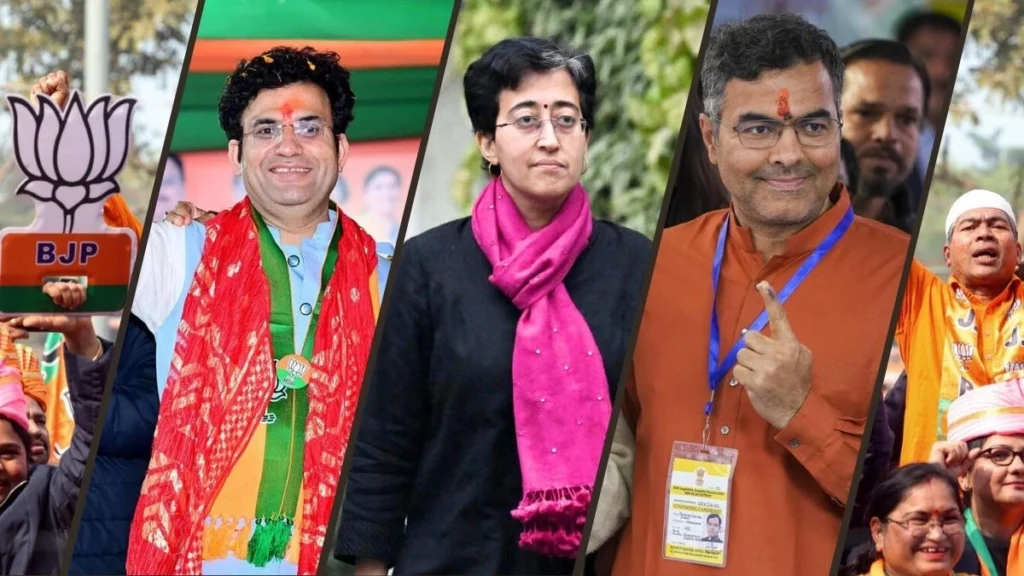
The Bharatiya Janata Party (BJP) has emerged victorious in the 2025 Delhi Assembly elections, securing 48 out of 70 seats, while the Aam Aadmi Party (AAP) managed to win 22 constituencies. The Indian National Congress (INC), once a dominant force, failed to win a single seat, signaling a significant shift in the capital’s political landscape. Voting took place in a single phase on February 5, with a high voter turnout reflecting intense political engagement. The elections saw a fierce battle between BJP, AAP, and Congress, with BJP staging a strong comeback after years in opposition. AAP suffered a major setback, particularly with Chief Minister Arvind Kejriwal losing his seat in the New Delhi constituency to BJP’s Parvesh Verma. The BJP’s victory is expected to bring substantial changes in governance, with potential policy shifts in infrastructure, education, and public welfare. Meanwhile, AAP is set to play a crucial role as the opposition, holding the new government accountable. With the Congress completely absent from the assembly, the party faces an urgent need for introspection and strategy realignment. The newly elected government now faces the challenge of delivering on its promises while maintaining public trust. Source: Business Standard

BJP Secures Victory in 2025 Delhi Assembly Elections, AAP Falls to Second Place Read More »

Pentagon Revamps Press Corps Workspace, Favoring Pro-Trump Outlets

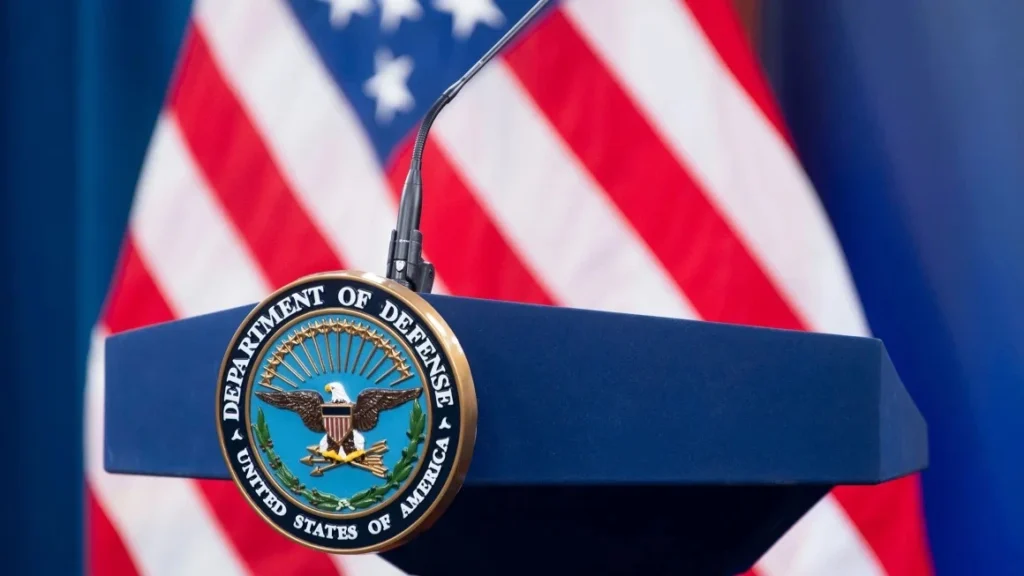
The Pentagon has announced a controversial “annual media rotation program”, set to take effect on February 14, that will replace major mainstream outlets with smaller, pro-Trump media organizations in the Pentagon press corps workspace. Key Changes: NBC News → One America News Network (OANN) (TV) National Public Radio (NPR) → Breitbart (Radio) The New York Times → New York Post (Print) Politico → HuffPost (Online) While the move aligns with the Trump administration’s push to disrupt media norms, it has sparked backlash from journalists and press freedom advocates. NBC News expressed “disappointment”, while the National Press Club raised concerns over “press restrictions and transparency.” Critics argue that Breitbart lacks a significant radio presence, and One America News, which has faced lawsuits over false election claims, does not even subscribe to Nielsen ratings. Despite losing their office space, the displaced outlets will retain full press access to Pentagon briefings and travel opportunities. However, press members fear that removing workspaces could limit in-depth coverage of Defense Secretary Pete Hegseth’s tenure. Reaction & Impact: Kevin Baron, a former Pentagon Press Association VP, called it “the erasure of journalism at the Pentagon.” The National Press Club is demanding greater transparency on the selection process. Some view this as an attempt to sideline critical journalism while promoting pro-Trump media voices. The decision is already facing pushback, and further challenges from media organizations are expected. Source: CNN

Pentagon Revamps Press Corps Workspace, Favoring Pro-Trump Outlets Read More »

Donald Trump Alleges USAID Corruption, Claims Billions Stolen for Media Payoffs

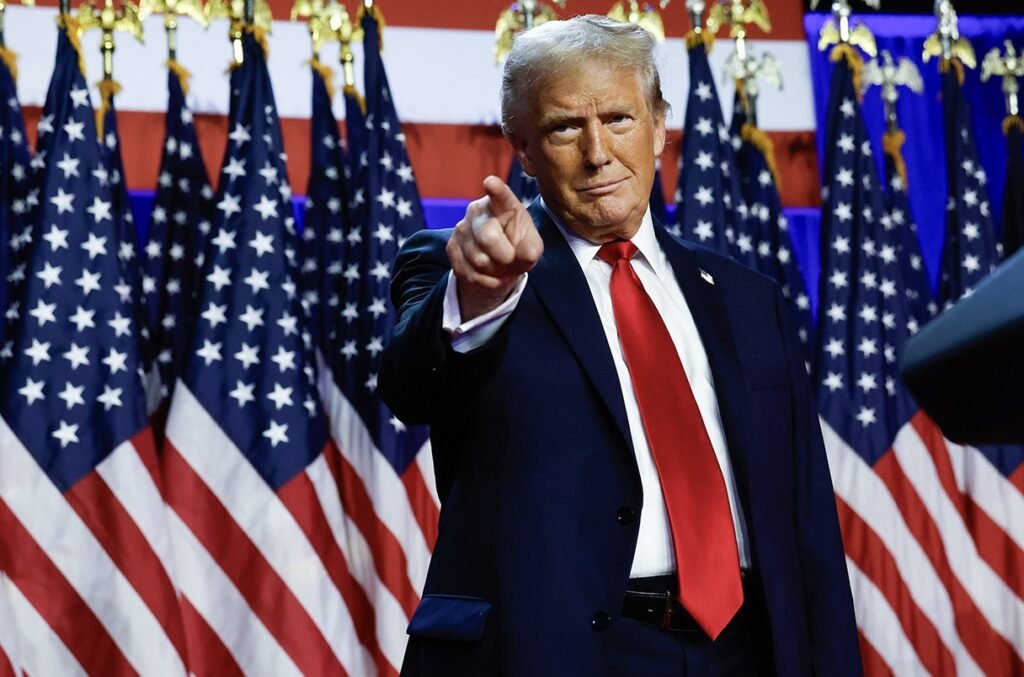
Former U.S. President Donald Trump has made an explosive claim that billions of dollars have been stolen from USAID and funneled to news media outlets as a “payoff” for favorable coverage of Democrats. Posting on Truth Social, Trump singled out Politico, alleging it received $8 million and questioning whether other major outlets, including The New York Times, were also beneficiaries. Politico’s leadership swiftly denied the accusation in a memo to staff, stating that the publication has “never been a beneficiary of government programs or subsidies—not one cent, ever, in 18 years.” The controversy arises amid Trump’s sweeping government overhaul, which has included a 90-day freeze on foreign aid, mass furloughs at USAID, and a shutdown of thousands of global programs. Federal worker unions have raised concerns over widespread layoffs, with at least 20,000 employees reportedly accepting a buyout offer from the administration. Adding to the upheaval, Trump has appointed Elon Musk to spearhead the restructuring of federal agencies, triggering protests and uncertainty in Washington.

Donald Trump Alleges USAID Corruption, Claims Billions Stolen for Media Payoffs Read More »

Gaza’s Governance Uncertain as Four Competing Models Take Shape

As a fragile cease-fire holds in Gaza, four competing models for the territory’s governance are emerging, with no clear direction yet established: Hamas Control – Despite suffering significant losses, Hamas still holds power over much of Gaza and seeks to maintain its authority. Israeli Military Presence – Right-wing Israeli leaders advocate for continued military control, possibly expanding their occupation if necessary. International Oversight – Foreign security contractors, invited by Israel, are already managing a key checkpoint in northern Gaza. Some officials suggest this could evolve into broader international stewardship, potentially involving Arab states. Palestinian Authority Administration – The Palestinian Authority (PA), which lost Gaza to Hamas in 2007, has begun staffing the Egypt-Gaza border alongside European security officials, hoping to extend its role across the entire territory. The future of Gaza’s governance will likely hinge on U.S. policy, with Donald Trump set to discuss the issue with Israeli Prime Minister Benjamin Netanyahu in Washington. Saudi Arabia could also play a decisive role if it agrees to normalize relations with Israel in exchange for a specific governance structure in Gaza. Source: Business Standard

Gaza’s Governance Uncertain as Four Competing Models Take Shape Read More »

Budget 2025-26 Tightens M&A Loss Carry-Forward, Promises Faster Mergers

The Union Budget 2025-26 has introduced a significant change in the treatment of carry-forward losses in mergers and acquisitions (M&As), restricting them to the residual period from the date of loss rather than the merger date. Effective from April 1, 2025, this move aims to prevent the evergreen extension of losses and aligns M&A taxation with demerger regulations. Experts believe this will make mergers less attractive, particularly for insolvency and bankruptcy cases where loss utilization is a key factor in valuation. “This restriction limits the benefit acquirers can derive from losses, potentially impacting the auction value of distressed assets,” said Amrish Shah, Partner, Deloitte India. Abhishek Mundada, Partner at Dhruva Advisors, explained that the losses will be restricted to the eight-year period from when they were first computed for the original entity, preventing perpetual rollovers. Despite this curtailment, Finance Minister Nirmala Sitharaman has promised reforms to streamline merger procedures, reducing bureaucratic delays that currently stretch timelines to over a year for listed companies. The National Company Law Tribunal (NCLT) process has been identified as a major bottleneck, and the Budget hints at easing these restrictions, though specific details are awaited. Industry leaders welcome the proposed changes to fast-track mergers, particularly for small companies and intra-group restructuring. “Relaxations in fast-track provisions will significantly reduce compliance burdens and processing time,” said Anish Shah, Partner, BDO India. While tax experts are closely watching the impact of these reforms, reducing merger timelines is expected to facilitate corporate restructuring and encourage foreign investment. Source: Business Standard

Budget 2025-26 Tightens M&A Loss Carry-Forward, Promises Faster Mergers Read More »

Tobacco: The Leading Preventable Cause of Cancer in India, Say Experts

Tobacco consumption remains the single largest preventable cause of cancer in India, accounting for nearly 40% of all cases, according to leading oncologists and health experts. With cancer continuing to claim millions of lives, doctors emphasize that preventive measures, lifestyle changes, and policy interventions are crucial to curb the disease’s growing burden. Alarming Cancer Risk in India Dr. Anil D’Cruz, a renowned oncologist, highlighted that one in five men and one in eight women in India are at risk of developing cancer due to changing lifestyles, environmental degradation, and a lack of awareness. However, he stressed that cancer is largely preventable if individuals take proactive steps, such as quitting tobacco and alcohol, maintaining a balanced diet, and undergoing regular health check-ups. Tobacco use—whether in the form of smoking or chewing—has been identified as the primary contributor to cancer cases in India. Dr. D’Cruz urged the government to introduce immediate policy measures to curb tobacco consumption and encouraged individuals to quit smoking and chewing tobacco to reduce their risk. The Role of Diet in Cancer Prevention Beyond tobacco, alcohol consumption is another significant carcinogen. Dr. D’Cruz warned against the misconception that moderate drinking is safe, stating that any amount of alcohol increases cancer risk. He also emphasized the importance of a diet rich in vitamins A, C, and E, as well as fiber from fruits and vegetables, which can help strengthen immunity and reduce cancer susceptibility. Dr. Subhash Palekar, an advocate of zero-budget natural farming, pointed out that the rise in processed and chemically treated foods has led to an increase in acidic food consumption, which fuels cancer and other chronic diseases. He called for a return to traditional Indian diets rich in millets, pulses, and fresh vegetables to improve public health. Environmental Factors and Cancer Risk Experts also linked rising cancer cases to environmental pollution and urbanization. Dr. Rajendra Singh, a Ramon Magsaysay Award-winning water conservationist, stated that industrial waste and pollution have contaminated natural water sources, leading to a surge in cancer cases, particularly in cities like Mumbai. He warned that deteriorating environmental conditions and poor air and water quality are directly impacting public health, contributing to the increasing incidence of cancer and other serious illnesses. A Call for Proactive Prevention Psychiatrist Dr. Harish Shetty proposed renaming February 4 as ‘World Cancer-Free Day’ instead of World Cancer Day, advocating for a shift from treatment-focused efforts to prevention-based initiatives. He emphasized that every Indian must take responsibility for their health by making informed choices regarding lifestyle, diet, and environmental conservation. Prevention, he argued, is the most effective way to reduce the burden of cancer and ensure a healthier future for coming generations. With India witnessing a steady rise in cancer cases, experts urge greater public awareness, stronger policy interventions, and collective action to combat the disease’s growing impact.

Tobacco: The Leading Preventable Cause of Cancer in India, Say Experts Read More »

Onsurity Partners with Snowflake to Revolutionize Data Infrastructure

Bangalore-based Onsurity, a leading employee healthcare platform, has partnered with AI-driven data cloud platform Snowflake to enhance its data infrastructure. The collaboration aims to improve scalability, real-time data availability, and AI-driven innovation across Onsurity’s business verticals. By leveraging Snowflake’s advanced features, Onsurity can now process large data volumes efficiently, optimize costs, and refine its healthcare insurance services for SMEs and startups. The company, which serves over 8,000 businesses, plans to integrate AI and machine learning within Snowflake’s environment to personalize healthcare offerings and predict user trends. “Our teams now have faster access to insights, allowing us to tailor services based on real-time user behavior,” said Sarvendu Singh, CTO of Onsurity. He emphasized that Snowflake’s rapid deployment, security, and compliance features make it the ideal choice for scaling operations while maintaining cost efficiency. Onsurity utilizes Snowflake’s Change Data Capture (CDC) to extract incremental data changes, ensuring real-time insights without duplication. The partnership also addresses key challenges like data governance and role-based access control, enhancing security and operational efficiency. As India’s insurance sector continues to grow, Onsurity’s AI-driven transformation positions it at the forefront of the industry, setting a new benchmark for data-driven healthcare solutions. Source: Economic Times

Onsurity Partners with Snowflake to Revolutionize Data Infrastructure Read More »

Trump Advisers Consider Plan to Dismantle the Education Department

The Trump administration is reportedly weighing executive actions to dismantle the U.S. Department of Education, a move aligned with broader efforts by billionaire Elon Musk and other allies to reduce the federal government’s size and influence. According to sources familiar with the matter, administration officials are exploring the possibility of shutting down functions of the agency that are not explicitly mandated by law or redistributing key responsibilities to other federal departments. Potential Executive Order and Legislative Proposal Officials have discussed an executive order that would eliminate certain operations within the department while simultaneously directing the administration to develop a legislative proposal to fully abolish the agency. While no final decision has been made, the debate within Trump’s inner circle revolves around the extent of the department’s dismantling and the ideal timing for such a move. This consideration aligns with long-standing Republican efforts to reduce federal oversight in education and return greater control to state and local governments. Conservatives have often criticized the Department of Education, arguing that it adds bureaucratic inefficiencies and interferes with decisions that should be handled at the state level. Impact on Education Policy and Federal Oversight If the executive order moves forward, it could fundamentally alter the federal government’s role in education, shifting responsibilities such as student loan management, federal education funding, and enforcement of civil rights protections to other agencies or state governments. Some experts warn that such a move could create disruptions in school funding, particularly for disadvantaged students who rely on federal programs. Critics argue that abolishing or significantly reducing the department’s role could weaken protections for marginalized student groups and diminish federal oversight in areas such as special education, Title IX compliance, and school safety regulations. However, supporters believe it would cut bureaucratic red tape and empower local communities to make education decisions tailored to their needs. A Political and Strategic Decision The debate over dismantling the Education Department is not new. Trump and other conservatives, including former President Ronald Reagan, have previously expressed support for eliminating the agency. However, such a drastic move would likely face significant legal and political challenges, particularly in Congress. The discussions are part of a larger strategy by some in Trump’s orbit to reduce the federal workforce and shift more responsibilities to the states. Musk, a vocal advocate for government downsizing, has publicly criticized the Education Department and similar federal agencies, arguing that they stifle innovation and economic growth. Source: wsj

Trump Advisers Consider Plan to Dismantle the Education Department Read More »

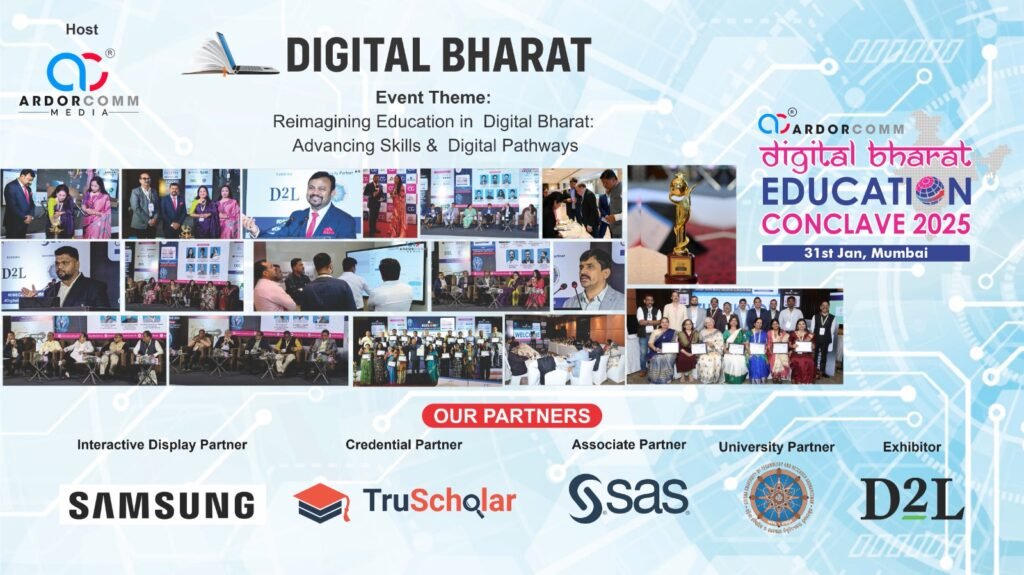
ArdorComm – Digital Bharat Education Conclave 2025 held at Holiday Inn Mumbai International Airport, an IHG Hotel, Mumbai on 31st January 2025

The Digital Bharat Education Conclave 2025, hosted by ArdorComm Media Group, successfully concluded on 31st January 2025 at the Holiday Inn Mumbai International Airport. This grand event brought together a dynamic mix of academicians, educators, industry leaders, policymakers, edtech startups, and corporate visionaries from across India. Focused on the theme “Reimagining Education in Digital Bharat: Advancing Skills & Digital Pathways,” the conclave explored the transformative power of digital education, AI-driven learning, immersive technologies, and skill development for the 21st-century workforce. A Day of Insightful Discussions and Collaborations The conclave featured a power-packed agenda, including panel discussions, industry presentations, roundtable discussions, and over 50 expert speakers sharing their perspectives on the future of education in India. The participation of over 150+ higher education leaders, 100+ school education representatives, and various EdTech corporates highlighted the event’s significance in shaping the future of digital learning. Some of the key discussion topics included: The NEP and Digitalization: Driving India’s Education Revolution The Future of Lifelong Learning: Upskilling and Reskilling in the Digital Age Empowering Students for the Global Stage: Skills for the 21st-Century Workforce The Rise of AI, Metaverse & Immersive Technologies in Education Digital Infrastructure & Smart Campus: Building a Future-Ready EdTech Ecosystem Maharashtra Leadership Extends Best Wishes to ArdorComm Media The ArdorComm – Digital Bharat Education Conclave 2025 received esteemed best wishes and appreciation from Shri Devendra Fadnavis, Hon’ble Chief Minister of Maharashtra, Shri Ajit Pawar, Hon’ble Deputy Chief Minister of Maharashtra, and Shri Chandrakant Patil, Hon’ble Minister of Higher & Technical Education & Parliamentary Affairs of Maharashtra. Their support underscored the significance of digital transformation in education and the state’s commitment to fostering innovation, skilling, and technology-driven learning. Their encouragement further reinforced the event’s mission to advance digital pathways in education and empower future generations. Industry Leaders and Keynote Speakers The Digital Bharat Education Conclave 2025 began with a Welcome Address by Kumar Chandan Anand, Founder, CEO & Group Editor, ArdorComm Media Group. The event featured esteemed guest speakers, including Prof. (Mrs.) Rajita Kulkarni, President, Sri Sri University, Cuttack; Dr. Seema Negi, Director Principal, Sanjeevani World School, Mumbai; and Avijit Nair, CEO, Akemi Group of Institutes, Pune. Their thought-provoking addresses set the stage for a day of impactful discussions, fostering collaborative growth and knowledge-sharing in the education ecosystem. The first panel discussion of the Digital Bharat Education Conclave 2025 focused on the impact of the National Education Policy (NEP) and digitalization in transforming India’s education landscape. The session was moderated by Deepa Bhushan, Director, C P Goenka International Schools, Mumbai and featured an esteemed panel of speakers, including Sudhir Kukreja, Co-Founder, Kidzonia International School & Credence International Schools, Navi Mumbai; Prof. (Dr.) Ambuj Jagdish Gupta, Dean – School of Management, Ajeenkya DY Patil University, Pune; Dr. Parag Amin, Registrar, ATLAS SkillTech University, Mumbai; Niti Desai, Director, S E International School, Mumbai; and Shim Mathew, Director – Academic Operations, VIBGYOR Group of Schools, Mumbai. The second panel discussion at the Digital Bharat Education Conclave 2025 explored the evolving landscape of lifelong learning, upskilling, and reskilling in the digital era. The session was moderated by Dr. Seema Negi, Director Principal, Sanjeevani World School, Mumbai, and featured an esteemed panel of speakers, including Dr. Kavita Aggarwal, Director/Head of School- D.G., Khetan International School & Chairperson of MISA, Mumbai; Sharonee Mullick, Director, Singapore International School, Mumbai; Dr. Yasmin Pirzada, Founder & Trustee, Belvedere Spring School International, Mumbai; Debika Chatterji, Director – Principal, JBCN International School, Mumbai; and Dr. Gretta Sequeira, Founder – Principal, Aquinas International School Mumbai, Mumbai. The third panel discussion at the Digital Bharat Education Conclave 2025 focused on the essential skills needed for students to succeed in the 21st-century workforce. The session was moderated by Avijit Nair, CEO, Akemi Group of Institutes, Pune, and featured a distinguished panel of speakers, including Prof. (Mrs.) Rajita Kulkarni, President, Sri Sri University, Cuttack; Dr. Jaywant V. Shelar, Vice Chancellor, ITM Skills University, Navi Mumbai; Dr. Mohammed Aslam Khan, Executive Chairman, AI’s Board of Vocational and Technical Education, Mumbai; and Prof. Swati More, Director – Central Corporate Relations & Placements Cell, MIT-ADT University, Pune. The fourth panel discussion at the Digital Bharat Education Conclave 2025 delved into the impact of AI, the Metaverse, and immersive technologies on education. The session was moderated by Prof. (Dr.) Sanjeev Sharma, Founding Director, R.D. Engineering College, Ghaziabad, and featured an esteemed panel of speakers, including Dr. Pravin H. Shingare, Pro Chancellor, Krishna Vishwa Vidyapeeth (Deemed to be University), Karad; Prof. Prabhat Ranjan, Vice Chancellor, D Y Patil International University, Akurdi; Prof. (Dr.) Milind Pande, Pro Vice Chancellor, Dr. Vishwanath Karad MIT World Peace University, Pune; and Prof. (Dr.) Satish Kumar Modh, Pro Vice Chancellor, Somaiya Vidyavihar University, Mumbai. The fifth panel discussion at the Digital Bharat Education Conclave 2025 focused on the role of digital infrastructure and smart campuses in shaping a future-ready EdTech ecosystem. The session was moderated by Dr. C. M. Sedani, Principal & Director, P K Technical Campus, Pune, and featured a distinguished panel of speakers, including Prof. Prasad Joshi, Vice Chancellor (A.), Deccan College Post Graduate & Research Institute (Deemed to be University), Pune; Ashok Kumar Reka, Chairman, Rishi Gurukul International Engineering School, Telangana; Dr. Devendra Puntambekar, Director, Skill Development & E-learning, School of Online Education, BVP Deemed-to-be-University; and Dr. Pranav Charkha, Dean, SOET, D.Y. Patil University, Pune, Ambi. The Digital Bharat Education Conclave 2025 featured an insightful Roundtable Discussion on the topic “From Chalkboards to Digital Boards – The Evolution of Classroom Interaction”. The session brought together key leaders and experts from the education and technology sectors to discuss the impact of digital tools on teaching methodologies, student engagement, and the overall learning experience. The discussion was enriched by the participation of distinguished professionals, including: Avinash Sharma, BDM WEST, Samsung Electronics India Pvt Ltd Saurabh Karemore, Deputy General Manager, Samsung Electronics India Pvt Ltd Anne Dias, Director, VIBGYOR Group of Schools Seema Sheikh, Principal Director, Pragyna Bodhini High School Swarupa Chakraborti, Principal, MIT Vishwajyoti International School Dr. Vidyaa Patiil, Principal, Dr. Shivajirao S Jondhle


ArdorComm – Digital Bharat Education Conclave 2025 held at Holiday Inn Mumbai International Airport, an IHG Hotel, Mumbai on 31st January 2025 Read More »