

ArdorComm Media Group

Sunday, February 22, 2026 12:40 PM

Author name: admin

Makers of Kangana Ranaut’s ‘Emergency’ Approach Bombay High Court Seeking Film Release

The makers of Kangana Ranaut’s film Emergency have approached the Bombay High Court, seeking its release and a censor certificate. Co-produced by Zee Entertainment Enterprises, the petition was filed on Wednesday, accusing the Central Board of Film Certification (CBFC) of arbitrarily withholding the censor certificate. According to the plea, the CBFC is allegedly ready with the certificate but has refrained from issuing it. The plea was mentioned before a division bench of Justices B.P. Colabawalla and Firdosh Pooniwalla, who agreed to hear the case later in the day. Originally slated for release on September 6, the film’s launch was postponed indefinitely following objections from Sikh organizations, including the Shiromani Akali Dal. The groups accused the movie of misrepresenting the community and distorting historical facts, sparking controversy around its content. Directed and co-produced by Kangana Ranaut, who also plays the lead role of former Prime Minister Indira Gandhi, the biographical drama has faced significant backlash. Ranaut, a BJP MP from Mandi, Himachal Pradesh, expressed disappointment over the delay, accusing authorities of imposing an “Emergency” on her movie. Reacting to the postponement, Ranaut stated, “It’s a very hopeless state. I’m quite disappointed by our country and the circumstances.” She argued that the events depicted in her film are not new, referencing other films like Madhur Bhandarkar’s Indu Sarkar and Meghna Gulzar’s Sam Bahadur, which portrayed similar historical episodes. Determined to release her film uncut, Ranaut vowed to fight the legal battle, stating, “I’ve made this film with a lot of self-respect, which is why the CBFC can’t point out any contention… I’ll fight in court and release an uncut version.” Source: Hindustan Times

Makers of Kangana Ranaut’s ‘Emergency’ Approach Bombay High Court Seeking Film Release Read More »

Assam’s ‘Shiksha Setu Axom’ App Wins Gold for Excellence in e-Governance

The Assam government’s ‘Shiksha Setu Axom’ mobile application has been awarded the prestigious gold category award for excellence in e-governance by the Centre’s Department of Administrative Reforms and Public Grievances. The award was received by Assam Samagra Siksha Mission Director Om Prakash and Executive Director Sanjoy Dutta at the National Conference on e-Governance 2024, held in Mumbai on Tuesday. The conference was organized by the Department of Administrative Reforms and Public Grievance, as stated in an official release on Wednesday. The ‘Shiksha Setu Axom’ app was recognized for its innovative use of technology to enhance real-time monitoring and attendance management, setting new benchmarks in educational governance. With a user base of 4.9 million, the app captures real-time, geo-fenced attendance of teachers, students, and non-teaching staff. Its AI-based system eliminates proxy attendance and ghost students, ensures timely teacher attendance, monitors prolonged student absence, predicts potential dropouts, and helps re-engage students. The department presented a total of nine gold, six silver, and one jury awards in the e-governance sector. By integrating AI-based solutions, the app provides an efficient and transparent platform that addresses critical issues like absenteeism, dropout rates, and the challenge of maintaining accurate attendance records. Its geo-fencing capabilities ensure that attendance data is captured only when users are physically present within designated school premises, thereby maintaining the integrity of the system. This forward-thinking approach not only supports the state’s mission to enhance educational governance but also serves as a model for other states looking to implement digital reforms in the education sector. Source: Times of India

Assam’s ‘Shiksha Setu Axom’ App Wins Gold for Excellence in e-Governance Read More »

Govt to Launch Central Database for Allied Healthcare Professionals Amid SC Directive

The Union government is set to launch a central register for allied and healthcare professionals, creating a comprehensive database of qualified personnel across the country. This move is in response to the Supreme Court’s recent directive to both central and state governments to implement the National Commission of Allied and Healthcare Professionals (NCAHP) Act, 2021, by October 2024. The NCAHP Act, passed by Parliament in 2021, was designed to regulate and maintain standards of education and services provided by allied and healthcare professionals, along with the institutions that assess these professionals. The Act aims to standardize the training, qualifications, and practices of allied healthcare workers, ensuring high-quality care and services in the healthcare sector. The planned central register will serve as a vital repository of information, facilitating streamlined regulation and oversight. This initiative will enhance transparency and accountability while ensuring that only qualified individuals are allowed to practice. It will also address the pressing need for accurate data on the availability and distribution of allied healthcare professionals, a critical component in healthcare planning and policy formulation. The Supreme Court’s directive comes amid ongoing efforts to strengthen the healthcare sector in India, which relies significantly on allied healthcare professionals, including technicians, therapists, and other support staff. Implementing the NCAHP Act will not only elevate the professional standards but also contribute to the broader goals of improving healthcare delivery and patient outcomes. Officials believe that the creation of a central database will lead to better workforce management, aid in policy decisions, and help address shortages in various healthcare roles. The initiative is seen as a significant step towards recognizing the essential contributions of allied healthcare professionals in India’s medical ecosystem. Source: Business Standard

Govt to Launch Central Database for Allied Healthcare Professionals Amid SC Directive Read More »

Health Union Launches ILLUMINÉ: A Revolutionary People-based Data Engine

Health Union, a leader in condition-specific online health communities and patient engagement, has launched the ILLUMINÉ data engine, a groundbreaking innovation in direct-to-consumer (DTC) marketing and media solutions. Combining deep patient and caregiver insights with advanced data technology, ILLUMINÉ offers cutting-edge advertising solutions that prioritize privacy while delivering optimal results. For over a decade, Health Union’s online communities have served as trusted platforms where patients and caregivers find support, information, and connection during key moments of their health journeys. With ILLUMINÉ, Health Union uses knowledge engineering and machine learning to transform patient-reported data, collected transparently and with consent, into sophisticated business solutions across programmatic media, content sponsorships, and influencer marketing. ILLUMINÉ’s data engine leverages over 44 billion data points refreshed daily and more than 50 million unique patient IDs to connect brands with the right audiences at critical health moments based on contextual and behavioral triggers. With capabilities for persona-based segmentation and analysis across 100+ variables, ILLUMINÉ sets a new standard for precision and relevance in health marketing, offering brands a unique advantage over traditional health data providers. Built with a privacy-first approach, ILLUMINÉ ensures that community users’ data is protected while enabling Health Union’s audience-building methodology. Health Union recently achieved SOC 2 Type II compliance for its technology platforms, reinforcing its commitment to data security and responsible data management. Will Rompala, Chief Technology Officer at Health Union, emphasized the company’s dedication to privacy and security, stating that adherence to SOC 2 Type II standards is a testament to their efforts to protect patient and caregiver data, instilling confidence in future partnerships. Health Union is the leading provider of condition-specific, online health communities, reaching millions of people through platforms like Migraine.com and MultipleSclerosis.net. For over a decade, Health Union has transformed pharmaceutical and healthcare brand engagement, offering innovative solutions in advertising, market research, and clinical trials. Source: prnewswire  

Health Union Launches ILLUMINÉ: A Revolutionary People-based Data Engine Read More »

Odisha Launches PM-USHA Programme to Boost Higher Education

The Odisha government has launched the Pradhan Mantri Uchchatar Shiksha Abhiyan (PM-USHA), a significant initiative aimed at enhancing the state’s higher education sector. The programme was introduced through a Memorandum of Understanding (MoU) signed between the state and the Union Education Ministry, with Union Education Minister Dharmendra Pradhan, Odisha Chief Minister Mohan Charan, and State Higher Education Minister Suryabanshi Suraj in attendance. Under PM-USHA, the central government will contribute Rs 500 crore towards the development and infrastructure of higher education institutions across Odisha. Union Minister Pradhan described the launch as a landmark moment for Odisha’s educational landscape, aligning with Prime Minister Narendra Modi’s vision under the National Education Policy, 2020. Key Aspects of PM-USHA PM-USHA aims to ensure access, equity, and excellence in higher education across Odisha. The funding model includes 60 percent from the central government and 40 percent from the state, focusing on transforming state universities into world-class institutions equipped with 21st-century skills. Chief Minister Charan highlighted the initiative’s goal of upskilling one crore students and making Odisha a knowledge hub. Plans also include granting autonomy to state universities, revamping curricula, improving teacher training, and enhancing infrastructure and employability. The initiative promises to foster regional equity and sustainable development, aligning with the BJP’s election manifesto. Source: India today  

Odisha Launches PM-USHA Programme to Boost Higher Education Read More »

White & Case Advises Air France-KLM on Strategic Stake Acquisition in Scandinavian Airlines

Global law firm White & Case LLP has advised Air France-KLM on acquiring a 19.9% non-controlling stake in Scandinavian Airlines (SAS AB), Scandinavia’s leading airline. The transaction, which follows regulatory approvals in Europe and the US, enables SAS AB to exit its Chapter 11 reorganization and Swedish restructuring proceedings. Air France-KLM’s investment was part of a broader consortium, including Castlelake L.P., Lind Invest ApS, and the Danish State, which now collectively holds an 86.4% stake in the reorganized airline. The consortium invested $1.2 billion in total, subscribing to $475 million of common shares and purchasing $725 million of senior secured convertible notes. Air France-KLM’s contribution amounted to $144.5 million, consisting of $109.5 million in common shares and $35 million in senior secured convertible notes. Agreements within the consortium allow Air France-KLM to potentially increase its stake to a controlling position after a minimum of two years, subject to regulatory approvals and the airline’s financial performance. The White & Case team advising on this transaction included partners from Miami, New York, Chicago, Stockholm, Düsseldorf, Brussels, and Paris, along with counsel and associates providing cross-jurisdictional expertise to facilitate the deal. Source: White case  

White & Case Advises Air France-KLM on Strategic Stake Acquisition in Scandinavian Airlines Read More »

Himachal Pradesh Government Rationalises Subsidies for Financial Prudence

The Himachal Pradesh government, led by Chief Minister Sukhvinder Singh Sukhu, is taking steps to rationalise subsidies and freebies to address the State’s financial challenges. With the total debt soaring from ₹47,906 crore in 2018 to ₹76,651 crore in 2023, Sukhu has criticized the previous BJP regime for its wasteful expenditures and financial mismanagement. Sukhu’s government aims to improve revenue by curbing subsidies given to affluent sections of society. “We are working towards fiscal prudence, and rationalising various subsidies is one among them,” said the Chief Minister. Subsidy cuts include stopping the electricity subsidy for hotels and large commercial establishments, and imposing charges for water on rural households earning above ₹50,000 annually, while weaker sections continue to receive it for free. The government has also introduced water cess on power projects, though its implementation faces legal hurdles. Other austerity measures include deferring the salaries of top government officials for two months to symbolize the State’s commitment to financial discipline. The opposition BJP has targeted the Congress government, blaming it for the rising debt, now approaching ₹90,000 crore. Sukhu argues that his government inherited this financial burden and is taking steps to correct it, such as adopting an open tender policy for auctioning retail liquor vends, generating significant revenue compared to the previous government’s approach. Sukhu also criticized the BJP for not adequately presenting the State’s case before the 15th Finance Commission, resulting in a reduction of the revenue deficit grant and restrictions on borrowing for external projects. Sukhu’s government continues to push for reforms to stabilize the State’s finances and curb further debt accumulation. Source: The Hindu  

Himachal Pradesh Government Rationalises Subsidies for Financial Prudence Read More »

Health Ministry Initiates Recruitment for Technical Resource Centres

The Union Health Ministry, in collaboration with the Indian Council of Medical Research (ICMR), is advancing efforts to establish Technical Resource Centres (TRCs) aimed at synthesizing and evaluating evidence to develop and promote evidence-based healthcare policies. These centres will play a pivotal role in formulating clinical guidelines and enhancing the adoption of best practices within the healthcare sector. ICMR has issued a call for Expressions of Interest (EoI) from researchers, faculty, and scientists to join these centres. Each TRC will receive financial support of up to ₹20 lakh per year, with funding initially set for three years and subject to annual performance reviews. The TRCs will conduct systematic reviews and meta-analyses to generate high-quality evidence, utilizing the GRADE (Grading of Recommendations, Assessment, Development, and Evaluation) approach. The centres will also organize training programs and workshops to disseminate best practices and support effective guideline development. Regular monitoring visits, professional development plans, and biannual training programs are integral components of the TRCs’ operations. Manuscripts based on completed evidence tables are expected to be submitted within three months. The ICMR has outlined eligibility criteria for applicants, including regular employment at medical institutes, research centres, universities, or colleges, along with the necessary experience, resources, and preferably access to relevant databases. Applications will be reviewed by an expert committee, with selected participants to be notified via email and the DHR website in September 2024. The evaluation of applications will be based on expertise in evidence synthesis, available infrastructure and resources, publication history, and the extent of collaboration and networking capabilities. Source: The Hindu

Health Ministry Initiates Recruitment for Technical Resource Centres Read More »

Rajasthan Education Minister: Akbar Will No Longer Be Taught as ‘Great’ in Schools

Rajasthan Education Minister Madan Dilawar announced that Mughal emperor Akbar would no longer be taught as a great figure in the state’s school curriculum. Speaking at the 28th state-level “Bhama Shah Samman Samaroh” at Udaipur’s Sukhadia University, Dilawar criticized Akbar, accusing him of plundering the country for years, and declared that praising him as a ‘great personality’ would not be allowed in the future. The minister expressed disappointment that historical figures like Maharana Pratap, who fought valiantly for Mewar’s honour, were not given due recognition. He emphasized the importance of education and assured that funds contributed by Bhama Shahs for educational purposes would be used appropriately. Earlier, in January, Dilawar referred to Akbar as “a rapist” and called for the removal of any references to him as a “great personality” in school textbooks. He criticized the existing curriculum for containing misleading information about Indian historical figures, including Veer Savarkar and Shivaji. Dilawar also condemned the portrayal of Shivaji as ‘Pahadi Chuha’ (Mountain Rat) and highlighted the need to properly honour Maharana Pratap’s legacy. Dilawar praised Rajasthan’s tradition of Bhama Shahs, crediting former Chief Minister Bhairon Singh Shekhawat for initiating cooperation from Bhama Shahs in 1997. He highlighted Rajasthan’s legacy of sacrifice, valour, and heroism, recalling how Bhama Shah donated his entire wealth to Maharana Pratap during his exile in the forests. The minister concluded by celebrating Rajasthan as a land of great men, acknowledging the inspirational legacies of Maharana Pratap, Bhama Shah, and tribal leader Govind Guru. Source: News 18  

Rajasthan Education Minister: Akbar Will No Longer Be Taught as ‘Great’ in Schools Read More »

Indoor Air Pollution: A Bigger Health Threat than Outdoor Pollution in India

Blog

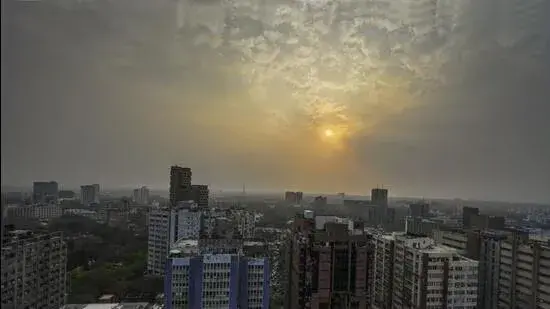
Indoor air pollution is an often overlooked but significant health risk in India, surpassing even outdoor air pollution. While outdoor air quality in major cities like Delhi garners much attention, the air inside homes, especially in rural areas, remains dangerously polluted. Experts at the India Clean Air Summit (ICAS) 2024 highlighted this pressing issue, calling for expanded efforts to address indoor air quality, which impacts millions of people daily. The Invisible Threat Indoors According to Soumya Swaminathan, Principal Advisor at the Ministry of Health and Family Welfare, studies conducted in Delhi reveal that women who spend most of their time indoors are exposed to high levels of black carbon comparable to those faced by auto-rickshaw passengers in the city. Black carbon, a harmful particulate matter, is released from various sources, including traditional cooking stoves, open fires, and poorly ventilated spaces. This indoor exposure contributes significantly to health problems such as high blood pressure, chronic respiratory diseases, and heart ailments. Swaminathan noted that cities contribute less than 20% to overall state emissions, whereas household emissions range between 20% and 40%. Surprisingly, rural areas and villages often experience worse air quality than nearby cities due to the prevalence of biomass burning for cooking and heating. This challenges the common perception that urban areas are the primary hotspots of air pollution. Expanding the National Clean Air Programme (NCAP) The current focus of India’s National Clean Air Programme (NCAP) is on non-attainment cities—those that fail to meet air quality standards. However, Swaminathan’s observations underscore the need to broaden the scope of the NCAP to include rural areas and household emissions, which are often overlooked. By expanding the programme, policymakers can address the root causes of indoor air pollution that affect a vast portion of the population. Health and Economic Costs of Indoor Air Pollution Indoor air pollution not only poses severe health risks but also exacts a heavy economic toll. The World Bank recently reported that air pollution cost the global economy approximately USD 8.1 trillion in 2019, equivalent to 6.1% of the global GDP. In India, the health impacts of pollutants like PM2.5 contribute significantly to reduced life expectancy and increased healthcare costs. Swaminathan pointed out that PM2.5 pollution is almost as detrimental as tobacco use, yet it receives far less regulatory attention. Moreover, air pollution affects agriculture by reducing sunlight penetration, which impacts crop yields and, in turn, the economy. The cascading effects of poor air quality on public health, agriculture, and overall economic well-being make a compelling case for immediate action. Barriers to Clean Cooking Solutions Kalpana Balakrishnan, Director of the WHO Collaborating Center for Occupational and Environmental Health, highlighted the financial barriers preventing widespread adoption of clean cooking fuels. Initiatives like the Pradhan Mantri Ujjwala Yojana (PMUY), launched in 2016, aimed to provide free LPG connections to millions of households. However, many beneficiaries did not refill their cylinders due to cost concerns, reverting to traditional biomass fuels. Data shows that despite the government’s claims of 99.8% LPG coverage, 41% of India’s population still relies on biomass for cooking. This reliance on traditional cooking methods significantly contributes to household air pollution, leading to respiratory illnesses, cardiovascular diseases, and other severe health conditions. The Way Forward The findings discussed at the India Clean Air Summit underscore the urgent need to address indoor air pollution through a multi-faceted approach. Expanding the NCAP to cover household emissions, increasing financial incentives for clean cooking fuels, and improving public awareness about the health impacts of indoor pollutants are critical steps. Promoting clean air goes beyond safeguarding public health; it is also an economic imperative. Cleaner air will not only reduce healthcare costs but also improve agricultural productivity and attract investments by making cities and rural areas more livable. As experts advocate for stronger policies and financial support, it’s clear that tackling indoor air pollution requires collective action from governments, communities, and individuals. Investing in cleaner indoor air is an investment in the nation’s health, economy, and future.  

Indoor Air Pollution: A Bigger Health Threat than Outdoor Pollution in India Read More »