ArdorComm Media Group

Friday, March 20, 2026 12:16 PM

Author name: admin

Supreme Court Seeks Centre’s Response on Plea for Rape Law Awareness in School Curriculum
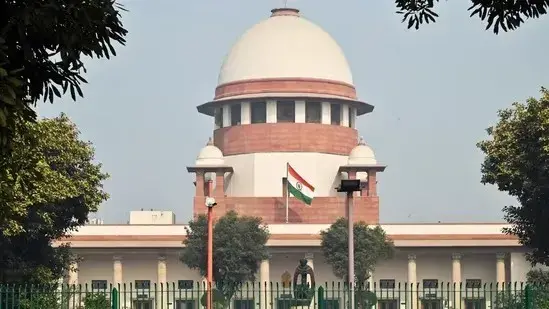
The Supreme Court on Friday issued a notice to the Centre, seeking its response to a petition calling for increased awareness of rape laws and women’s rights through school curriculums. The petition aims to address the growing incidents of rape in the country by integrating education about sexual equality, women’s rights, and the freedom of girls to live with dignity into school syllabi. A bench led by Chief Justice of India (CJI) Dhananjaya Y Chandrachud heard the petition filed by senior advocate Aabad Harshad Ponda. The petition was motivated by the recent rape and murder of a junior doctor at RG Kar Medical College in Kolkata. Ponda, a criminal lawyer practicing in the Bombay High Court, argued that while states have introduced stricter punishments for rape, including the death penalty and life imprisonment, these measures alone would not solve the problem unless tackled at the grassroots level. Ponda emphasized the need to raise awareness about rape laws, particularly among the uneducated and economically disadvantaged populations. He argued that repeated cases of rape in the country reflect gaps in governance and the effective implementation of existing laws. According to Ponda, there is a pressing need to bridge the communication gap between the creation of laws by the legislature and their proper dissemination to all sections of society. The petition calls for including topics like moral training, sexual equality, and women’s rights as part of the school syllabus to ensure that the youth are aware of rape laws and the consequences of such crimes.Top of Form Source: Hindustan Times  
Supreme Court Seeks Centre’s Response on Plea for Rape Law Awareness in School Curriculum Read More »

Zee Entertainment Shareholders Approve Plan to Raise ₹2,000 Crore

Zee Entertainment Enterprises Ltd. (ZEEL) shareholders have approved a plan to raise ₹2,000 crore through various financial routes, including equity shares and qualified institutions placements (QIPs). The special resolution, which allows the company to issue securities for an amount not exceeding ₹2,000 crore, was passed with 78.83% of the total votes, according to a scrutinizer’s report filed by Zee. The remote e-voting process for the special resolution began on Sunday and concluded on Monday, July 15, 2024, at 5 pm. ZEEL plans to raise the funds in one or more tranches through methods such as private placements, qualified institutional placements, preferential issues, or a combination of these options. While the company has not yet disclosed specific plans for the raised amount, industry experts expect it will be partially allocated toward business expansion. This fundraising comes after the termination of a merger agreement between Sony Corporation and ZEEL to combine their entertainment businesses in India. Following the deal’s termination, ZEEL announced a strategic realignment of its revenue verticals under the direct guidance of its MD and CEO. Karan Taurani, SVP at Elara Capital, commented on the development, stating, “This move could improve investor confidence, depending on the quality of the investors involved.” He added, however, that further clarity is needed on the fund’s potential utilization and the exact method through which it will be raised. Source: Business Standard

Zee Entertainment Shareholders Approve Plan to Raise ₹2,000 Crore Read More »

Developed India Needs Civil Governance Reforms for Inclusive Growth by 2047

Article

Achieving a developed India by 2047 requires significant reforms in civil governance to foster inclusivity, ensuring that every citizen can realize their full potential. A focus on double-digit growth to boost per capita income and enhancing human capital is essential, especially as half of the population is projected to live in urban areas over the next decade. Institutional flexibility and autonomy must be introduced in areas such as education, health, and nutrition. Civil governance reforms need to prioritize the bottom quintile of income earners, skilling, green growth, and urban living standards. To ensure effectiveness, decentralizing community action under the leadership of gram panchayats and urban local bodies is vital, with a strong role for women’s collectives in monitoring progress. The need for institutional flexibility, transparency in standard setting, city-wide planning, and capacity development is critical. A right to public services with guaranteed compliance, along with community-led action, will complement these changes. Furthermore, convergence across sectors such as education, health, nutrition, and employment is vital, as improvements in one sector often lead to benefits in others. To ensure accountability, data on public service performance, validated by local governments, should be made publicly available. The Sustainable Development Goals (SDGs) framework can serve as a measure for governance success, with processes like the Mission Antyodaya Survey providing data on progress at the local level. Innovations in human resource engagement, performance-based assessments, and longer tenures for development functionaries are essential for sustained improvements in human development. Ultimately, evidence-based governance driven by community-led planning, transparent beneficiary selection, and conviction-based leadership is the key to realizing an inclusive and developed India by 2047.

Developed India Needs Civil Governance Reforms for Inclusive Growth by 2047 Read More »

CCI to Review M&A Deals Over ₹2,000 Crore with Substantial India Operations

Blog

The Competition Commission of India (CCI) has introduced a new deal value threshold (DVT) criterion for mergers and acquisitions (M&A) exceeding ₹2,000 crore, provided the target company has substantial business operations in India. This move is aimed at bringing more deals, especially in the digital and start-up sectors, under regulatory scrutiny. Previously, regulatory approval was based on asset or turnover values, such as ₹2,500 crore in assets or ₹7,500 crore in turnover. Under the new rules, deals involving target companies with substantial business operations in India, based on metrics like the number of users, gross merchandise value, or turnover, will now require CCI review if these exceed 10% of global figures in the preceding 12 months. Experts believe the DVT will significantly impact the M&A landscape, with more transactions now subject to CCI scrutiny. “The new threshold broadens the range of transactions subject to CCI oversight, potentially increasing compliance costs and extending deal timelines,” said Prithiviraj Senthil Nathan, partner at King Stubb & Kasiva. Legal professionals view the DVT as a necessary step to address high-value deals in technology sectors that often escape traditional thresholds. “The DVT is a valuable tool for capturing deals that might otherwise have gone unnoticed,” noted Avaantika Kakkar, Partner at Cyril Amarchand Mangaldas. However, the introduction of DVT may also increase the CCI’s workload, with experts calling for a capacity enhancement at the commission to handle the expected rise in notified transactions.    

CCI to Review M&A Deals Over ₹2,000 Crore with Substantial India Operations Read More »

Business Blasters’ Programme Kicks Off in Delhi Schools for 2024-25

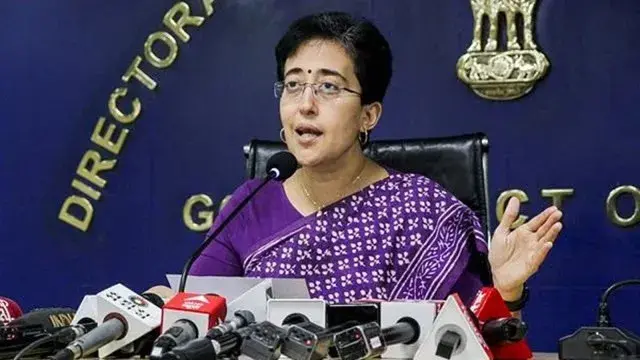
Delhi Education Minister Atishi announced the launch of the Business Blasters programme for the 2024-25 academic session, aimed at fostering entrepreneurial skills among students of classes 11 and 12 in government schools across the capital. The initiative will see the Arvind Kejriwal-led government providing Rs 40 crore in seed money to support students’ business ideas, with 2.45 lakh students participating this year and over 40,000 business ideas already submitted. Private schools have also been invited to join the programme voluntarily, with students proposing startup ideas involving perfumes, soaps, chocolates, eco-friendly products, and tech-based innovations. Originally launched in 2021, the Business Blasters programme is a key part of the government’s ‘entrepreneurship mindset curriculum,’ which started as a pilot in 2019. It provides seed funding to the top 150 student-formed startups, encouraging students to turn their ideas into viable businesses. Minister Atishi took the opportunity to criticize the BJP-led central government for failing to address unemployment, contrasting this with the Delhi government’s efforts to turn students into job providers rather than job seekers. She highlighted successful startups from last year’s programme, including A K Logistics, a registered private limited company formed by students that now employs 50 people. Other student-led startups include ‘Dark Chocobitz,’ which makes customized chocolates and employs 40 women, and ‘Disposal Walaa,’ an eco-friendly startup employing 20 people. The minister emphasized that the programme holds the potential to generate thousands of jobs, turning students into entrepreneurs and significantly impacting Delhi’s economy. Source: Times of India

Business Blasters’ Programme Kicks Off in Delhi Schools for 2024-25 Read More »

 SEBI Levels Playing Field for FVCIs with New Governance Norms

The Securities and Exchange Board of India (SEBI) has issued new norms that bring foreign venture capital investors (FVCIs) under the same regulatory framework as foreign portfolio investors (FPIs). This move marks a significant overhaul of the registration and governance framework for FVCIs, aiming to establish greater parity between the two investor categories. Under the updated norms, effective from January 1, 2025, FVCIs will be required to delegate their registration and governance processes to designated depository participants (DDPs), aligning with the current requirements for FPIs. The amendments also mandate FVCIs to disclose details of beneficial ownership under the Prevention of Money Laundering Act, enhancing transparency and compliance. Key changes include revisions to registration and eligibility criteria, application requirements, the rationalization of registration costs, and the introduction of a renewal fee. Previously, SEBI managed the registration and due diligence processes directly, but these responsibilities will now be handed over to DDPs. This change reflects SEBI’s broader strategy to reduce its direct involvement in the day-to-day operations of intermediaries, allowing the regulator to concentrate more on policy-making and regulatory oversight. Gazal Rawal, Partner at Cyril Amarchand Mangaldas, noted that while the changes may increase compliance burdens for DDPs amid ongoing regulatory adjustments, they will ultimately enhance governance and transparency. She added that the application process for FVCIs is expected to be streamlined in the future, similar to FPIs, with registration, PAN allotment, and KYC for bank and dematerialized accounts to be managed through a common form. Legal experts see these reforms as an effort to replicate SEBI’s success in delegating responsibilities to DDPs for FPIs. “New concepts like notifying the DDP of material changes, renewal of registration, and the imposition of late fees for renewal have been introduced for FVCIs. This move aligns SEBI’s approach to reduce its direct operational involvement with intermediaries,” said Ritul Sarraf of Nishith Desai Associates. Interestingly, restrictions under Press Note 3 on foreign direct investment from land-bordering countries and additional disclosure requirements for FPIs do not appear to apply to FVCIs, signaling nuanced regulatory considerations. The updated norms come after a year-long consultative process, providing stakeholders ample time to adapt. In 2023-24, 28 new FVCIs were registered, bringing the total to 279 as of March 2024, with investments increasing by 12% year-on-year to Rs 53,922 crore, predominantly in the information technology sector. SEBI’s revamped framework is expected to streamline processes, enhance transparency, and bring FVCIs and FPIs onto an equal regulatory footing, reinforcing India’s commitment to a robust and transparent investment ecosystem. Source: Business Standard  

 SEBI Levels Playing Field for FVCIs with New Governance Norms Read More »

Vir Das becomes first Indian to host International Emmy Awards

Indian stand-up comedian and actor Vir Das has made history by being announced as the host for the 2024 International Emmy Awards, becoming the first Indian to take on this prestigious role. The announcement was made by the International Academy of Television Arts & Sciences on September 11, 2024. The ceremony is set to take place on November 25 in New York City, where Das will showcase his unique humor and perspective to a global audience. Vir Das expressed his excitement on social media, stating, “Thanks to your support, an Indian Emmy Host! I can’t wait to host the @iemmys this year! Crazy. Thank you for having me. Tremendously honoured and excited!” His fans and fellow celebrities have congratulated him, including notable figures like Hrithik Roshan and Dia Mirza, who praised his achievement. Das is no stranger to the Emmy stage; he was nominated in 2021 for his special “Vir Das: For India” and won the International Emmy Award for Comedy in 2023 for his Netflix special “Landing.” His career spans various platforms, including television and film, where he has created and starred in series like “Whiskey Cavalier,” “Hasmukh,” and “Jestination Unknown.” Currently, he is on his international “Mind Fool” tour and has recently appeared in Prime Video’s “Call Me Bae. “Bruce L. Paisner, president and CEO of the International Academy, stated, “We’re delighted to welcome back Vir Das to our stage and to add International Emmy Host to his impressive list of talents.” This historic hosting role highlights Das’s rising prominence in the global entertainment industry and his contributions to comedy and storytelling. Source: Hindustan Times

Vir Das becomes first Indian to host International Emmy Awards Read More »

Higher Education Minister MC Sudhakar Criticizes NEP at Bangalore University Convocation

At the 59th convocation of Bangalore University held at the Jnana Jyothi Auditorium on Tuesday, Higher Education Minister MC Sudhakar openly criticized the National Education Policy (NEP) in the presence of University Grants Commission (UGC) Vice-Chairman Deepak Kumar Srivastava. Sudhakar’s remarks came after Srivastava, the chief guest, praised the NEP for bringing “spectacular change” to India’s education landscape. In his address, Srivastava highlighted NEP’s “path-breaking initiatives,” including the multiple entry-multiple exit system, automated permanent academic account registry, and national credit framework, which he believes are game-changers for higher education in India. However, Sudhakar, speaking next, raised concerns about the NEP’s practicality, pointing out that it overlooks on-ground challenges such as faculty shortages. “After the emergence of private universities, RGUHS, VTU, and similar institutions, many of our universities and colleges have become solitary, single-discipline institutions. For instance, when a student wants to study an open elective like AI, where is the faculty for it? If IITs have a 20% vacancy rate, imagine the condition of ordinary colleges,” he argued. Sudhakar emphasized that except for some private universities offering multidisciplinary programs under one umbrella, public universities struggle to implement such initiatives. The minister further questioned the multi-entry, multi-exit system, describing it as debatable and highlighting Karnataka’s decision to reintroduce its state education policy with a three-major system and empowered boards of studies. “We have a reason for opposing NEP. It is crucial that the interests of public universities are safeguarded,” he said. Sudhakar’s critical stance isn’t new; he had previously questioned the credibility of the National Institutional Ranking Framework (NIRF) during a convocation event at Bengaluru City University, directly addressing UGC Chairman M Jagadeesh Kumar. Despite the controversy, the convocation marked a significant milestone with 26,210 students receiving their degrees. Renowned music director Gurukiran and KS Rajanna, former commissioner under Karnataka’s Persons with Disabilities Act, were awarded honorary doctorates. Governor and Chancellor Thaawar Chand Gehlot were notably absent from the event. Sudhakar’s comments reflect ongoing tensions between state and national education policies, particularly regarding the viability of NEP’s ambitious reforms in the context of existing institutional challenges. Source: Times of India

Higher Education Minister MC Sudhakar Criticizes NEP at Bangalore University Convocation Read More »

Karnataka Health Department Partners with NIMHANS for Suicide Prevention Program

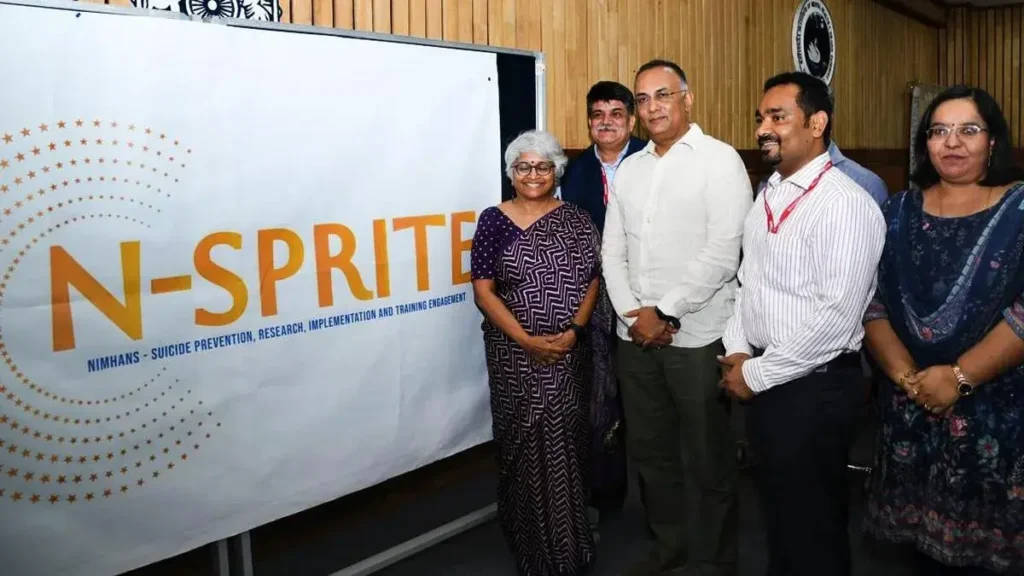
The Karnataka Health Department announced its collaboration with the National Institute of Mental Health and Neurosciences (NIMHANS) to develop a comprehensive suicide prevention program. The initiative, which aims to tackle the rising suicide rates in the state, was unveiled by Health Minister Dinesh Gundu Rao during the launch of the N-SPRITE Centre (NIMHANS Suicide Prevention, Research, Implementation, and Training Engagement) at NIMHANS in Bengaluru on Tuesday. Emphasizing the importance of a coordinated approach, Minister Rao highlighted that while the state already runs several mental health initiatives like the Karnataka Brain Health Initiative (KaBHI) and the District Mental Health Programme, a targeted suicide prevention strategy is needed. The collaboration with NIMHANS will focus on studying vulnerabilities to self-harm across various groups, including students, and implementing evidence-based interventions. “NIMHANS has a wealth of expertise in mental health research and intervention strategies, making them an ideal partner in this mission. By involving multiple government departments, we aim to create a holistic and effective program that addresses the root causes of suicide and offers support to those in need,” said Rao. The N-SPRITE Centre at NIMHANS will serve as the hub for this collaborative effort, integrating research, training, and implementation to create sustainable and impactful prevention strategies. The program will also include awareness campaigns, community engagement, and the training of healthcare professionals to better identify and manage individuals at risk. The initiative comes ahead of World Suicide Prevention Day on September 10, a global observance dedicated to raising awareness about suicide and promoting preventive measures. Minister Rao’s announcement underscores the state’s commitment to enhancing mental health support and reducing suicide rates through a multi-faceted approach. With rising concerns about mental health and the increasing incidence of suicides among vulnerable groups, Karnataka’s partnership with NIMHANS is a significant step towards fostering a supportive environment for mental well-being. Source: Indian Express

Karnataka Health Department Partners with NIMHANS for Suicide Prevention Program Read More »

Union Health Ministry Issues Mpox Guidelines to States, Focuses on Screening and Testing Suspected Cases

Amid rising concerns about the spread of mpox, Union Health Secretary Apurva Chandra has issued new guidelines to all states, emphasizing the need for rigorous screening and testing of suspected cases. The health ministry’s directive comes after a suspected case was reported in Delhi, marking India’s first alert since the disease was classified as a Public Health Emergency of International Concern (PHEIC) by the World Health Organization (WHO). The guidelines focus on four key steps for states to follow: Surveillance Training: States are instructed to train state and district-level surveillance teams on identifying suspected, probable, and confirmed mpox cases. Contact tracing and enhanced surveillance activities are crucial for early detection and containment. Healthcare Worker Training: Healthcare workers in clinics treating skin and sexually transmitted infections, along with those involved in the government’s HIV control program, must be trained on the signs, symptoms, and clinical management of mpox, while strictly adhering to isolation protocols. Screening and Testing: States are urged to carry out screening and testing of suspected cases, particularly among vulnerable groups such as men who have sex with men and sex workers. Testing facilities should be integrated into hospitals and identified HIV control program sites. Clear Communication: Effective communication about the risks of mpox is critical. The guidelines stress informing healthcare workers, hospital areas, and communities about the modes of transmission, symptoms, and the importance of timely reporting without inciting panic. The ministry has also asked states to identify isolation facilities for treating suspected and confirmed mpox cases. With a significant proportion of global cases being reported among people with HIV, state AIDS control societies have been asked to remain vigilant and monitor any emerging cases. The health ministry’s letter highlights the atypical spread of the deadlier Clade Ib of mpox through sexual contact, a shift from traditional transmission methods. The virus is predominantly affecting young men aged 18-44 years and is primarily spread through sexual and non-sexual close contact. Common symptoms include rashes, particularly on the body or genital region, and fever. Although India has reported 30 cases of the older mpox strain since 2022, the risk of sustained transmission within the country remains low, according to experts. The government continues to stress that while the situation requires vigilance, public panic should be avoided, and the focus should remain on prevention, awareness, and timely medical intervention. Source: Indian Express

Union Health Ministry Issues Mpox Guidelines to States, Focuses on Screening and Testing Suspected Cases Read More »