ArdorComm Media Group

Friday, September 11, 2026 2:44 AM

Interviews

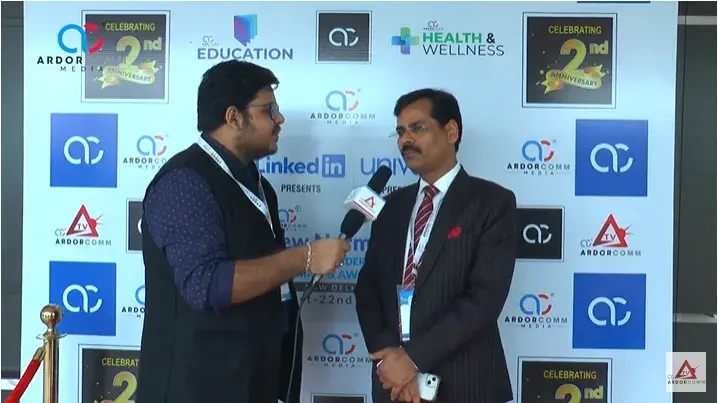
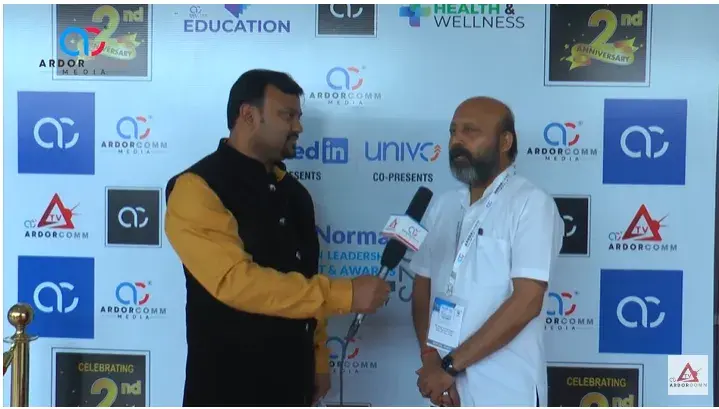
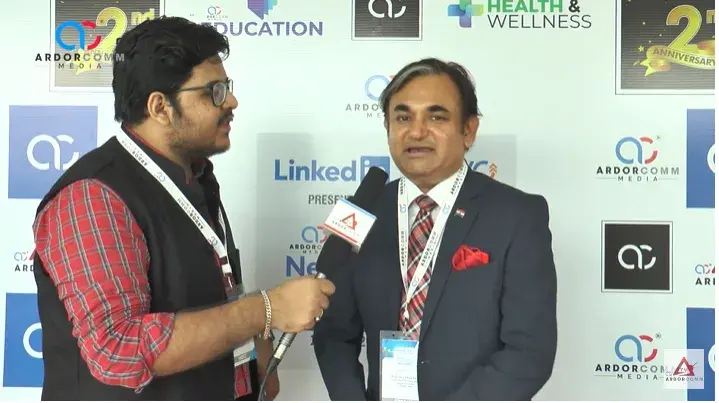
Dr. S. K. Rathor, Founder, Chairman & MD, Sanfort Group of Schools, Shares his views on Vision 2030 for Education Sector

“My request is that every progressive private school should handhold one budget school, one government school, or one school in a rural area to help uplift them and bring their education level up to par with children in more privileged schools,” says Dr. S. K. Rathor, Founder, Chairman & MD, Sanfort Group of Schools, in an Interview with Pratik Ghosh, Content Writer, ArdorComm Media Group at the ‘New Normal – Education Leadership Summit & Awards 2023’ #ELSANewDelhi #ELSAGurugram How are you feeling to witness the New Normal Education Leadership Summit and Awards in Delhi? Thank you so much for inviting me. I’d like to share that when Chandan and Ashish were planning their first event two years ago, they met me. I’ve known them for many years, and they explained their plan to start their own venture. I’m delighted to see the remarkable growth that your company have achieved in just two short years. Today’s event is much better than the first one, which was the first physical event post-COVID in the industry. I must say it’s a significant achievement, and I look forward to an even bigger event with a larger audience next year. The theme of our event is India Vision 2030. What do you think should be the vision for the school education sector? The vision for the school education sector shouldn’t be limited to any particular group or individual; it should be a vision for the entire country. Our Prime Minister has introduced the National Education Policy, which prioritizes Early Childhood Education for the first time in our education system. When it comes to private schools, many have good infrastructure and budgets for investment. However, it’s crucial to remember that a significant portion of our population attends government schools, budget schools, or schools in rural areas, and these children come from less privileged backgrounds. My request is that every progressive private school should handhold one budget school, one government school, or one school in a rural area to help uplift them and bring their education level up to par with children in more privileged schools. Only then can the National Education Policy truly become a reality on the ground. The government cannot do it all; it’s the duty of every educator and private institution to support government schools and underprivileged children. Any message for ArdorComm Media Group? ArdorComm Media is doing a fantastic job, and I believe you will experience multi-fold growth in the next couple of years. I wish you to become the premier organization for education conferences and seminars in the country.

Dr. S. K. Rathor, Founder, Chairman & MD, Sanfort Group of Schools, Shares his views on Vision 2030 for Education Sector Read More »

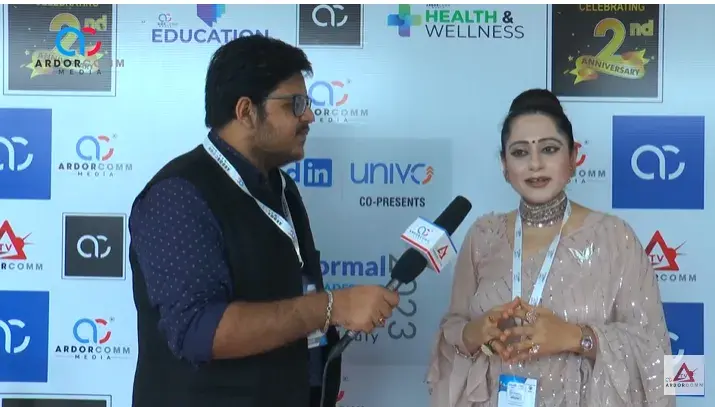
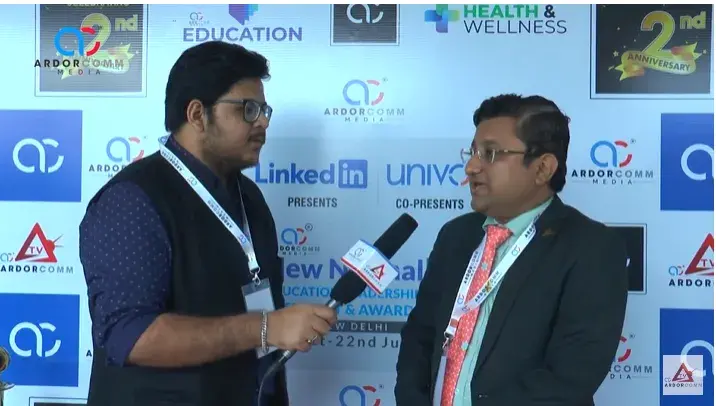
Dr. Niyati Chitkara, Director, Chitkara International School, Highlights on the Vision for School Education Sector

“The vision for 2030, as outlined in the National Education Policy and the Sustainable Development Goals, can be achieved by investing in teacher and counsellor education,” says Dr. Niyati Chitkara, Director, Chitkara International School, in an Interview with Pratik Ghosh, Content Writer, ArdorComm Media Group at the ‘New Normal – Education Leadership Summit & Awards 2023’ #ELSANewDelhi #ELSAGurugram How are you feeling to witness the New Normal Education Leadership Summit and Awards in Delhi? I’m very excited, and I had a wonderful learning experience with great keynote speakers and an amazing fraternity. It’s a fantastic opportunity for networking, sharing best practices, and appreciating each other’s work. This conference brings the entire education community together, and it’s going to be very helpful for everyone. When people come together, meaningful things happen, and that’s what this conference aims to achieve. I’m really enjoying it. Thank you. What are your views on the theme of our event, India Vision 2030? The vision for 2030, which is just seven years away, revolves around two crucial aspects, in my opinion. First is teacher education, and second is counsellor education. If we focus on training our teachers and counsellors effectively, especially pre-service teachers who are pursuing B.Ed, we can shape a highly skilled future generation. This will not only contribute to employability but also help us harness the potential of our resources. The vision for 2030, as outlined in the National Education Policy and the Sustainable Development Goals, can be achieved by investing in teacher and counsellor education. We need well-trained and happy teachers and counsellors to ensure the well-being and happiness of all stakeholders in our schools. How are you implementing NEP in Chitkara International School? The National Education Policy (NEP) offers keywords that are futuristic and important. We’ve identified these keywords that align with our school’s vision. The NEP emphasizes the synergy between school education, higher education, and industry. When schools, universities, and industries work cohesively, we can achieve significant results. It’s essential for school leaders to thoroughly understand the NEP for school education and higher education and connect it to their schools. This alignment will drive meaningful change. In forums like this, where education leaders, EdTech players, and the government come together, how do you think they benefit the education sector? Forums like this offer open discussions and bring together stakeholders from various facets of education, including NCERT, CBSE, skilled organizations, and regulatory bodies. It’s a platform for discussions, brainstorming, and sharing meaningful ideas. Industry partners also showcase products that can enhance the education system, making life easier for teachers and school principals. This ecosystem benefits everyone involved, and I highly recommend attending such events. Any message for ArdorComm Media Group on its 2nd anniversary? Congratulations to ArdorComm Media Group! We are very proud of it and another thing is that it’s my presence here also for the second time and last year also I was here as a keynote speaker and I’ve had a wonderful time, this year too. Last year just things were becoming normal post-covid but this time you guys have nailed it. So, it’s a wonderful session and congratulations, best wishes for future.

Dr. Niyati Chitkara, Director, Chitkara International School, Highlights on the Vision for School Education Sector Read More »

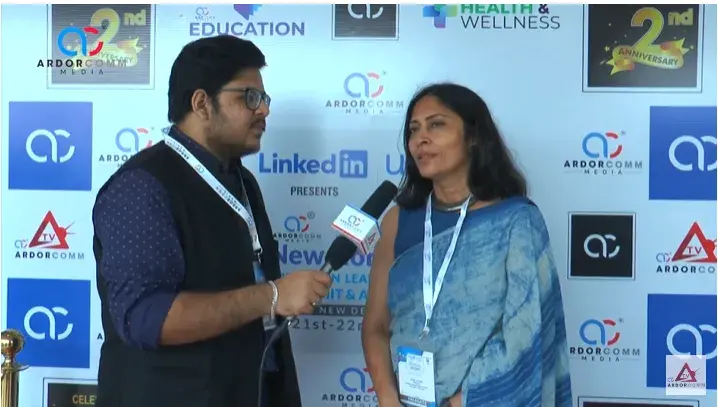
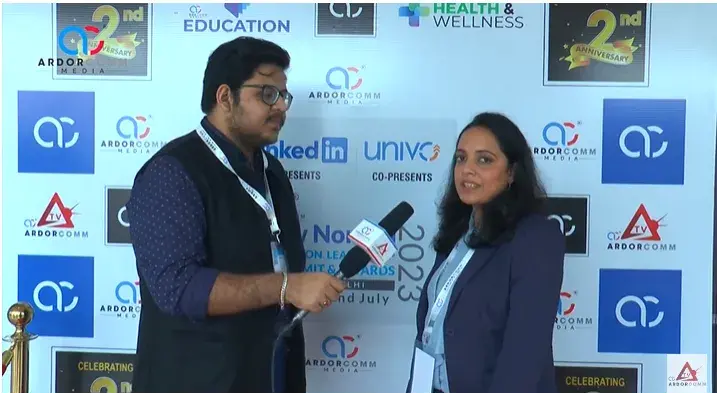
Dr. Bhavna Chibber, Principal, Laburnum Public School, Gurugram, Emphasizes on Skill Based Learning

 “Skills are unique, indigenous, and the educators, who are the curators in the classroom, must know what kind of skill to develop in each learner,” says Dr. Bhavna Chibber, Principal, Laburnum Public School, Gurugram, in an Interview with Pratik Ghosh, Content Writer, ArdorComm Media Group at the ‘New Normal – Education Leadership Summit & Awards 2023’ #ELSANewDelhi #ELSAGurugram How are you feeling to witness the New Normal Education Leadership Summit and Award? It was an awesome experience to listen to all the dignified personalities. We have learned so many things here, and the discussions were so interesting that we thought this kind of conference should be held for our leaders. These kinds of forums are essential. I’m thankful to ArdorComm Media for providing the opportunity to educators to spread their wings, learn, and take the lead. In this new normal, adaptability and flexibility are crucial skills, and now is the time when we’re preparing our learners to thrive in this world. So, thanks to ArdorComm Media for providing this platform for leaders to share, learn, collaborate, and grow. What’s your take on skill-based learning and the multi-disciplinary approach in education? There are two different things: skill-based learning and the multi-disciplinary approach. When we talk about Saksham, we follow a 5S philosophy: Saksha, Saksham, Samarth, Shodak, and Sanskar. There’s a thin line difference between Saksham and Samarth. For example, consider car driving. I drive a car, so it’s easy for me to understand how the clutch works, how to change gears, etc. But how competent am I? That’s called Saksham. Skill development is about preparing learners for the future, not just for the near future, but for the years ahead. Skills are unique, indigenous, and the educators, who are the curators in the classroom, must know what kind of skill to develop in each learner. Regarding the interdisciplinary approach, terms like interdisciplinary, multidisciplinary, and transdisciplinary have been integrated. Collaborative projects are a key strategy to enhance the interdisciplinary approach on the school campus. Any message for the ArdorComm Median on its 2nd anniversary? Keep soaring high, the sky is the limit.

Dr. Bhavna Chibber, Principal, Laburnum Public School, Gurugram, Emphasizes on Skill Based Learning Read More »

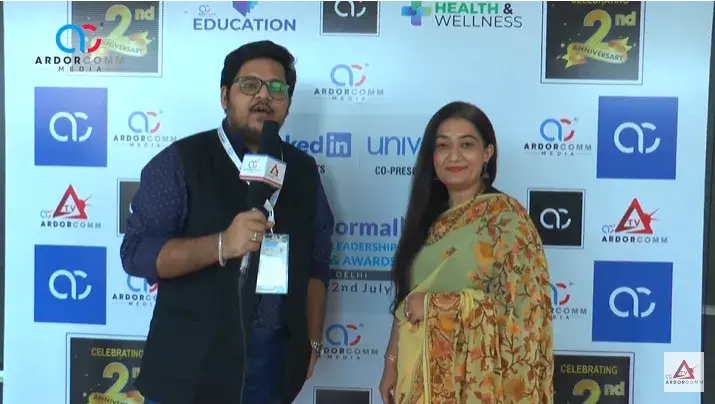
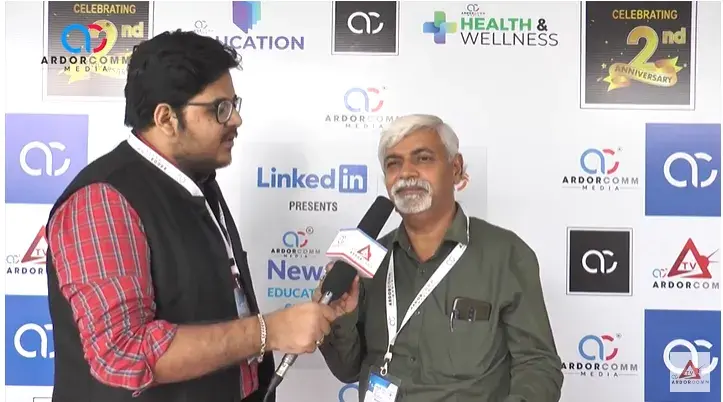
Anita Gupta, Principal, Raman Munjal Vidya Mandir, Gurugram, shares her views on Implementing Technology in Education

 “Technology is going to stay forever, we all know that. So, no school or no education sector or nobody can be away from it,” says Anita Gupta, Principal, Raman Munjal Vidya Mandir, Gurugram, in an Interview with Pratik Ghosh, Content Writer, ArdorComm Media Group at the ‘New Normal – Education Leadership Summit & Awards 2023’ #ELSANewDelhi #ELSAGurugram How are you feeling to witness the New Normal Education Leadership Summit and Award? First of all, I would like to thank ArdorComm for organizing such a wonderful, enriching conference, and which is actually experiential learning. Because it’s just not we are talking about general things or theoretical things, we are having in-depth enriching sessions, talking about the practicality of whatever the concepts have been introduced through NEP or NCF and the use of technology. So, it’s the amalgamation of innovation, technology, skill, and whatever can be adapted in the school curriculum. How are you implementing technology in your school? Technology is going to stay forever, we all know that. So, no school or no education sector or nobody can be away from it. So, when it comes to my school, we are lucky enough because computer education and all, it was started almost two decades before, so we were already aware of it. But when suddenly, this pandemic had struck, so we were easy to make our teachers understand and our students also how to go about with the online classes. So, then we made it a part and parcel in the daily teaching also. Because before the pandemic, we even introduced the Smart Board concept in our classes and every classroom has got. So, they were already aware that technology is there to stay. We were already aware, students knew, parents also knew, we were teaching teachers to have the curriculum. So, in that way, we didn’t face the problems. And now also, we are able to. So, we have the technological problems, of course, because when it comes to, like, net issues are there or how to make it stop at what level, so these things are there. But otherwise, technology definitely is a great tool, not just in terms of its, physical presence, but also the soft content it has got. The only thing is we have to make our students and the whole environment understand that this is how you are going to make use of it. So, when we know how to use it, when we are enabled, then we can make use of it. And that’s what we are going, we are doing it. Not only in the subject enrichment activities, but also otherwise also. Like if I say, it’s too easy to take these students to the virtual tour of any place and to connect them off with the experiences, feeling it, so lively seeing the things like what we talk about VR, AI, and all these kinds of things, they can experience it themselves. So that’s how we are making use of it. We have embedded it in our curriculum. Any message for ArdorComm Media Group on its 2nd anniversary? Yes, first of all, hearty congratulations on your completion of two successful years, and that too bringing so many educators together under the same roof, sharing such valuable inputs. So, I wish them good luck and looking forward to many new ideas like this concept of what we are talking about, improvement from here to there. So, I want this to be continued.

Anita Gupta, Principal, Raman Munjal Vidya Mandir, Gurugram, shares her views on Implementing Technology in Education Read More »

Dr. Anup Kumar Rajput, Head of Publication Division at NCERT, Ministry of Education, Government of India, Emphasizes the Crucial Role of Digital Technology in Enhancing Learning

 “Nowadays, children have access to a plethora of learning resources, particularly digital ones. This highlights the necessity of incorporating digital technology into our school education system,” says Dr. Anup Kumar Rajput, Head of Publication Division at NCERT, Ministry of Education, Government of India, in an interview with Chandan Anand, CEO & Group Editor, ArdorComm Media Group at the ‘New Normal – Education Leadership Summit & Awards 2023’ #ELSANewDelhi #ELSAGurugram What are the takeaways of today’s session for you? Very nice. You are doing a good job by getting all these people collected together, and they are discussing the real issues which they are either facing with the policy or with the curriculum. So, the discussion is not only for the sake of discussion, but certainly, we will find out solutions to many of our problems, which we want the system to improve itself. Obviously, such kind of gatherings are very, very important, and you are doing a good job. I am finding many people are very good in having their own experiences shared here. So, that certainly is going to give a good way to implement the National Education Policy and the National Curriculum Framework for the foundational stage. We have seen that NEP has included Early Childhood Education as a part of the main framework of school education. What are your views on that? It’s essential. The Government of India has realized that foundational education, particularly preschool education, is very, very important and this should be included in the mainstream of education. Earlier, it was not, internationally it has been done long back when they recognized that preschool education is having the same importance as school education. So, that’s why this time, it has been realized and now it is going to come into the school education system, particularly the government education system, and will improve the learning levels of children. Even learning difficulties will somewhere be reduced with this inclusion of preschool in the mainstream education system. Normally we find children who have learning problems or maybe learning deficiencies after class three or four. So, now those most probably will be reduced because it has been envisaged in the policy that there should be a strong foundation. Once the foundation of literacy and numeracy is built up then obviously learning of all other subjects will not be a bigger problem for all the children. How does e-learning and digitalization play a role in these sectors? E-Learning has to play a major role because, during my childhood, we only had two primary learning resources: books and teachers. The books back then were not very advanced, often printed with just a single color. Similarly, our teachers were not very well-equipped with teaching materials. However, now, things have changed drastically. Nowadays, children have access to a plethora of learning resources, particularly digital ones. This highlights the necessity of incorporating digital technology into our school education system. But the approach should be a blended one. There are several ways to integrate digital technology. First, teachers can teach on their own, utilizing the resources available to them. Second, collaborative teaching can take place, where multiple teachers contribute their expertise. The third approach involves teachers using technology to aid their teaching. These methods can be blended together, both inside and outside the classroom. We can even explore innovative models like the flipped classroom, which has been experimented with not only in India but also in other countries. The key is to seamlessly integrate digital technology and e-learning into the teaching and learning process. However, the role of teachers remains crucial. They need to adapt and learn how to effectively use digital tools and resources. By doing so, they can harness the benefits of digital technology to enhance the learning experience for students and improve their learning outcomes. What changes have you brought in the NCERT books to make them more interesting for students and kids? NCERT follows the National Curriculum Framework. So, CBSE has to play a major role in board classes like class 10, 11, and 12. So, before that, the National Curriculum Framework is there, on the basis of which the curriculum is framed in different subjects for different classes. And this time, the major objective behind all other things is Competency-Based Education. Now, competencies have been placed at the center, and competency means simply the combination of knowledge, skills, attitudes, and values. When all these four things join together, then we say children are becoming competent. Our whole system was now earlier working only on knowledge, we were giving knowledge through books. Now, the skill part has been added into it, and attitude and values are required to be there. So, obviously, we need different learning material which is to be given to the children and to the teachers. So, this time, the material which is embedded with technology, that is required. For example, in the print books, you will find QR codes have been given at different places, almost at the beginning of every chapter. QR codes are obviously giving you an idea about the audios available there, videos available, they can play a video, they can play an audio, they can see an animation, and so on. So, number one is that, number two, keeping in view all sorts of learners because we have learners with different abilities. Some are visually impaired, some are physically impaired, some are hearing impaired, and so on. So, for all sorts of children, now we want that these books should be conducive to the requirements of all the children. So, that’s why the embossed books are being prepared, books with augmented reality material along with them, that’s also being prepared. Audiobooks have been prepared. NCERT has prepared audiobooks. But one issue is very important that this all is going to increase the volume of a book, the weight of a book and then children have to certainly carry these books. So, obviously one thing which this National Curriculum Framework has mentioned, NEP


Dr. Anup Kumar Rajput, Head of Publication Division at NCERT, Ministry of Education, Government of India, Emphasizes the Crucial Role of Digital Technology in Enhancing Learning Read More »

Arijit Ghosh, AVP- Academics, Seth M.R. Jaipuria Schools, Emphasizes on the Vision for the Education Sector

 “I think the first prerogative for the schools is to comply with the national policies which have come out after a long time,” says Arijit Ghosh, AVP- Academics, Seth M.R. Jaipuria Schools, in an Interview with Pratik Ghosh, Content Writer, ArdorComm Media Group at the ‘New Normal – Education Leadership Summit & Awards 2023’ #ELSANewDelhi #ELSAGurugram How are you feeling to witness the New Normal Education Leadership Summit and Award in Delhi? Oh, it’s fantastic. First of all, thank you for having me here today. I think the topics which have been discussed today are very, very relevant in the present times. So, about sustainable development goals and especially its impact from early childhood, from the foundational years. We all know that the NCF is out for foundational stages of school education, so it’s very, very important. Also, the topics like the STEM education, the relevance of STEM education, the skills. So, these are very, very valid discussion points and we see the buzz happening in the room and a lot of learning being shared. The theme of our event is India Vision 2030. According to you, what should be the vision for the school education sector going ahead? So, first and foremost is the kind of compliance with the NEP and what the vision is with the NEP and the NCF documents which are now coming out. So, I think the first prerogative for the schools is to comply with the national policies which have come out after a long time. That’s one. Number two, I think it’s a very aspirational document, the National Education Policy, with all the global perspectives also into taking into account. So, I think if we focus more on bringing impact, and I would say having data into our schools is very, very important. The impact measurement. It’s not about just checking the boxes of what we are doing, but there has to be a real value add to every single action that we take. So, if we are able to monitor that, what is bringing about these changes in the lives of the students and the other stakeholders, I think that would be a great start. How are you implementing technology in your schools? In our schools, a little background, we are a 50-school chain, present in five different states primarily in UP, but we have our presence in MP, Bihar, Rajasthan, and Uttarakhand as well. We have close to 42,000 students, presence in 36 cities, tier 2 and tier 3 cities primarily. With regards to technology, yes, all our lesson plans have the TLMS which have a resemblance with the technological factors. Be it animations, be it quizzes in that format. So, that’s one. We are also very progressive in our data collection. So, a lot of focus is on collecting or capturing the right data and then processing it into valuable information. So, that helps us feed back into our own implementation and use it as a reflection as to how do we better our intervention or support system to our schools. Also, just to share that we are very much in tune with the National Education Policy. Like you know, the benchmark assessments are kind of a mandate as per NEP. So, from last year, we started doing benchmark assessments for students of grades three, five, and eight, taking competencies from PISA. So, that’s going well. That’s on a technological platform that is being conducted, and we have the analytics, student wise analytics, school-wise analytics to go with it. In this kind of forums where we bring in education leaders, EdTech players, as well as the government, how does this kind of forum benefit the education sector? I think it’s very, very good. First of all, it allows us to kind of hit the pause button from our day-to-day work. It kind of allows us to reflect also onto what we are doing. The discussions which are so valuable and so enriching, that helps us to reflect on the work which we are doing in our own context. Not every solution can be just picked up from a certain place and implemented in place B. There has to be contextualization. There has to be an understanding of the student background and other stakeholder backgrounds which are there. Obviously, a little bit of contextualization is required in every single solution. But these kinds of convocations, this kind of seminars, help us to go back to the drawing board and make those little tweaks if required. Any message for ArdorComm Media Group on its 2nd anniversary? I think keep on doing the great work which you’re doing. I think this is a fantastic platform to bring educators together and have this kind of a conference. My only one suggestion would be to keep in mind in the future sessions if we can have more closer roundtable discussions, more enriching, more deepening. I think that would add more value to what we are doing.

Arijit Ghosh, AVP- Academics, Seth M.R. Jaipuria Schools, Emphasizes on the Vision for the Education Sector Read More »

Aditi Goradia, Managing Director, Billimoria High School, Highlights the Benefits of Residential Schools

“They live with each other, so they’re making lifelong friends as well,” says Aditi Goradia, Managing Director, Billimoria High School, in an Interview with Pratik Ghosh, Content Writer, ArdorComm Media Group at the ‘New Normal – Education Leadership Summit & Awards 2023’ #ELSANewDelhi #ELSAGurugram How are you feeling to witness the New Normal Education Leadership Summit & Awards in Delhi? It’s always a pleasure to come to these things and meet all of these educators from across the country, and there’s so much learning and collaborating happening. It’s great. The theme of our event is India Vision 2030. According to you, what should be the vision for the school education sector? I think a lot more training for teachers, a lot more growth infrastructure. The framework is already in place, now its time to execute it. How are you implementing technology in your school? We don’t use textbooks, we use the learning outcomes document established by CBSE. Our teachers formulate their own curriculum. We have taught the teachers how to use AI tools for their research and to put their resources together. There’s a lot of project-based learning for the kids that requires technology. Billimoria High School is a residential school, so what importance does it play for a student to stay there and get educated? So, in today’s day and age, it’s very difficult to balance life for kids because in the cities, it’s very hectic and there’s a lot of device exposure, a lot of device addiction in a very unproductive manner. In a residential school, all of that is a little more controlled. It’s a good balance of co-curriculars and social skills. They live with each other, so they’re making lifelong friends as well. It’s a more learning conducive environment. What’s your take on skill development in this 21st century? I think that we are preparing for a world where the jobs we know will not exist, and the jobs that will exist don’t exist now. So, more than content, it’s really important to focus on concept learning. It’s important to prepare kids for a variety of skills and even the NEP says 21st-century skills like collaboration, problem-solving, financial literacy. These are the things we need to focus on with the kids. In these kinds of forums where we bring in the education leaders, the EdTech players, as well as the government. How does this kind of forum benefit the education sector? A lot of schools are doing a lot of different things because there’s so much freedom now under the NCF for each of us to figure out what we need to do for our kids. It’s really important for us to meet each other because then we learn from each other. There might be something one school is doing that we haven’t thought of, but it’s something we can adapt to, something we can borrow. And collaborations, it’s very important for our kids to see how our other kids are doing. So, there’s a lot of exchange programs and stuff that come out of these conferences. Any message for ArdorComm Media Group on its 2nd anniversary? Yes, you guys are doing an amazing job. It’s a great energetic team. We love Chandan, we love working with him. So, congratulations, may there be many, many, many more years of doing this.

Aditi Goradia, Managing Director, Billimoria High School, Highlights the Benefits of Residential Schools Read More »

Prof. (Dr.) Vikas Madhukar, Pro Vice Chancellor, Amity University, Gurgaon, Highlights on Technology Implementation in Education

“Our University is on the concept of a smart campus where technology is integrated deeply into all processes,” says Prof. (Dr.) Vikas Madhukar, Pro Vice Chancellor, Amity University, Gurgaon, in an Interview with Pratik Ghosh, Content Writer, ArdorComm Media Group at the ‘New Normal – Education Leadership Summit & Awards 2023’ #ELSANewDelhi #ELSAGurugram How are you feeling to witness the New Normal Education Leadership Summit and Awards in Delhi? I think it was a wonderful idea to host this event, especially at this point of time when we have crossed the COVID restrictions. From last more than one year, we are operating as we were operating before COVID. It’s very important now to deliberate what we have learned during COVID and how those learnings can be integrated into the new education policy. We need to work out on the theme and decide on some good practices that can benefit all. How are you implementing technology in Amity University? Amity is a technology-driven University. In fact, our University is on the concept of a smart campus where technology is integrated deeply into all processes. We have our in-house built ERP software, which takes care of all operations from admission to graduation. We’ve integrated the Learning Management System (LMS) with Amazon. Our classrooms are well-equipped with multimedia projectors, smart boards, and other technology-enabled resources. I would say that Amity is quite proactive in implementing technology and perhaps this is a reason when in 2020 the government announced lockdown we took only two days to shift from offline to online learning. In forums like this, where education leaders, EdTech players, and government representatives come together, how does it benefit the education sector? It is very important that different stakeholders should come forward on a one single platform because otherwise hardly there is any opportunity where you are having academicians, industry and people from government coming out at one place. So, I think this is a great platform for sharing the learning and the challenges which each one of us are facing and of course a platform to express our expectations from industry and governments so that the suitable action can be taken. Any message for ArdorComm Media on its 2nd Anniversary? I’ve was going through the previous events organized by ArdorComm Media, and the quality of the events, initiatives, and speakers you’ve brought to this platform is impressive. ArdorComm Media is doing a great job, and I wish you all the best.

Prof. (Dr.) Vikas Madhukar, Pro Vice Chancellor, Amity University, Gurgaon, Highlights on Technology Implementation in Education Read More »

Prof. Ambarish S. Vidyarthi, Vice Chancellor, Bikaner Technical University, Rajasthan, Emphasises on the Importance of Skill Development

 “You should go for the ethnic literacy because the workforce is very diverse,” says Prof. Ambarish S. Vidyarthi, Vice Chancellor, Bikaner Technical University, Rajasthan, in an Interview with Pratik Ghosh, Content Writer, ArdorComm Media Group at the ‘New Normal – Education Leadership Summit & Awards 2023’ #ELSANewDelhi #ELSAGurugram How are you feeling to witness the New Normal Education Leadership Summit and Awards in Delhi? It’s great, last time I was also the panellist and that was after the covid but this time the people are in a good mood and really working and the dynamism has been a little bit changed. So, in these new normal activities, we are discussing on improvising the Indian teaching learning and entire education how it could be a meaningful impact on society and societal development. So, I think this is a great effort and I am really grateful to ArdorComm Media and especially to Chandan Anand for taking this initiative. As you know, the theme of our event is India Vision 2030. According to you, what should be the vision for the education sector? I have a different approach. I am saying that the Indian education system, though it is Indian, it is made up of foreign culture. For example, we are doing agriculture, we are an agriculture-dominated state, but starting from ploughing to harvesting, we are not at all using our Indian traditional agriculture. So, there is a difference that whether we want to Indianize our own activities which we have been doing in earlier days where the people were not so much educated like the rishis and munis. They were doing it, for example, we were ploughing with the ‘hull’, especially, you know, that was basically not damaging the vermic cultures. Now what we are doing, we are using the tractors and other things which are devastating the field, and that’s why most of the land is going to be barren. So definitely, we have to think of this. People are saying that this is an education industry. What is about the industry? Whether our traditional system was saying like this? No, the teacher was testing a lot before accepting people. But now you can clear one exam and then come and you have not designed and that’s why the output is not coming. So, this is my view. What according to you is the importance of skill development in this 21st-century workspace? If you look at from the traditional or even the World Economic Forum, the half-life of technology has been reduced. Initially, it was 10 years, then it became six years, now it is two and a half years. So, it means that the advancement of technology would come into the place, then you require specific skills. So, there is a lot of pressure in the skill development and people have to acquire, irrespective of specialized ones, they should have basic, the foundation, like they should have literacy, financial literacy, numerical methods or statistics, then you have to have cultural literacy and then you should go for the ethnic literacy because the workforce is very diverse. And what happens, we are very good technocrats, but we fail to implement because we are working with different cultural and ethnic groups. And without understanding their viewpoint, their working style, you cannot take up the work very efficiently. So, that’s why these skills are essential. Then definitely, AI, blockchain, data security, data science, AR, VR, so those kinds of technologies are coming up and we have to judiciously use those ones. So, that’s the point. Any message for ArdorComm Media on its 2nd Anniversary? Definitely, all the best to this Media Group, and we hope that more vibrant and frequent activities have to be conducted by your group. And you are really making an impact on the education system. So, thank you very much and all the best.

Prof. Ambarish S. Vidyarthi, Vice Chancellor, Bikaner Technical University, Rajasthan, Emphasises on the Importance of Skill Development Read More »

Prof. (Dr.) Vikas Singh, Founder Vice Chancellor, Geeta University, Panipat, Delhi, Highlights on Implementation of NEP

 “We’ve introduced the concept of “design your own degree,” giving students autonomy in choosing their mix of courses,” says Prof. (Dr.) Vikas Singh, Founder Vice Chancellor, Geeta University, Panipat, Delhi, in an Interview with Pratik Ghosh, Content Writer, ArdorComm Media Group at the ‘New Normal – Education Leadership Summit & Awards 2023’ #ELSANewDelhi #ELSAGurugram How are you feeling to witness the New Normal Education Leadership Summit and Awards in Delhi? It is really a pleasure to be attending this Summit here, and thanks to Chandan and his team for inviting me to participate in this event. I can see a lot of senior academicians and industry people are here, providing a great opportunity to interact, network, and reconnect with old friends and colleagues. It’s truly a wonderful experience. The theme of our event is “India Vision 2030.” According to you, what should be the vision for the education sector moving forward? The upcoming years are crucial as the Indian economy is set to grow significantly. For this growth to happen, skilled manpower is essential. As the economy expands, new job opportunities will emerge, and we need to ensure that young students are adequately trained and skilled to take up these roles. This presents both an opportunity and a challenge for the education sector. We need to prepare our students to be the driving force behind the economic growth, which requires a concerted effort from the education community. How are you implementing NEP in your University? At our University, we have taken several steps aligned with the new education policy. We’ve introduced the concept of “design your own degree,” giving students autonomy in choosing their mix of courses. This policy encourages students to follow their passions and interests. We’ve also incorporated vocational baskets, offering courses in data visualization, digital marketing, and entrepreneurship. Moreover, we’re encouraging students to create profiles on platforms like LinkedIn, Upwork, and Freelancer, enabling them to work on external projects and build their skills and profiles. Forums like this bring together education leaders, government officials, and industry representatives. How does such a platform benefit the education sector? These forums are essential because they bring together key stakeholders in the education sector. Academicians, policy makers, government bodies, regulatory bodies, and industry representatives can collectively brainstorm and find solutions to various challenges. It’s a unique opportunity to share ideas, insights, and experiences, leading to better strategies and collaborations. Any message for ArdorComm Media on its 2nd Anniversary? I’m very happy to share that I was there in the first event also and I have seen the efforts that Chandan is putting in this venture and I wish him all the very best and I’m very confident that with the kind of efforts he is putting and the kind of team that he has created I’m sure ArdorComm is going to become a big name in this media sector. All the best to the team of ArdorComm Media.

Prof. (Dr.) Vikas Singh, Founder Vice Chancellor, Geeta University, Panipat, Delhi, Highlights on Implementation of NEP Read More »