ArdorComm Media Group

Friday, September 11, 2026 1:45 AM

Interviews

Prof. (Dr.) B.S. Satyanarayana, Vice Chancellor of G.D. Goenka University, Sohna, Shares Insights on Future of Education in the New Normal
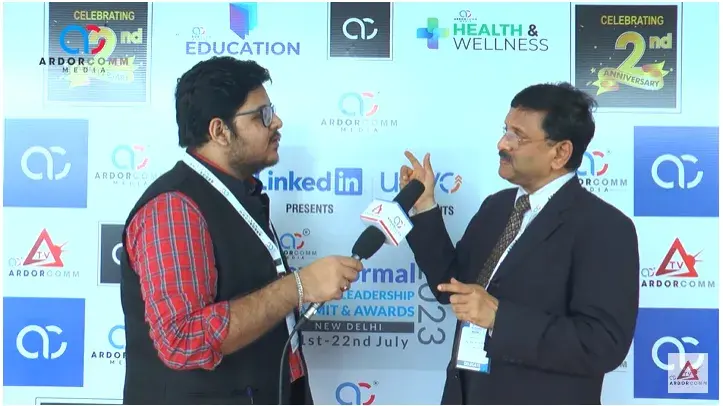
“The academic institutions can, for once, become financially viable if they can adapt and deliver quality education, link experiential learning to not just employability, but research innovation, product process, to enable local MSMEs to startups,” says Prof. (Dr.) B.S. Satyanarayana, Vice Chancellor of G.D. Goenka University, Sohna in an Interview with Pratik Ghosh, Content Writer, ArdorComm Media Group at the ‘New Normal – Education Leadership Summit & Awards 2023’ #ELSANewDelhi #ELSAGurugram How are you feeling to witness the New Normal Education Leadership Summit and Awards in Delhi? I think it’s been a wonderful experience so far. First of all, I’d like to congratulate ArdorComm for their second anniversary and also that we could be here. I am also moderating a panel and will also be speaking in one more. I think the whole country is transforming and India took 75 years to reach about 3.5 trillion. In the next seven years, we are going to be 7 trillion or 7.5, and that’s where this new normal of adapting technology, adapting dynamically changing with experiential learning, leveraging NEP becomes very critical. So, it’s wonderful to see that we have industry leaders coming and showcasing their products here, we have academics discussing what they are doing, their case studies, best case studies. I think we all need to seriously work together to be sure that we will be able to achieve, because the last 75 years of our education was literally rote education. It was by learning and repeating. But we don’t have any more time, nor do we have the learning time to generically grow. We not only need to maybe leapfrog but truly pole vault to deliver, as I said, a 3.5 trillion economy in spite of the education because education was irrelevant. But in the next seven years, if we have to become that 7.5 in this knowledge-driven era, skill-required era, the knowledge and the skill have to be seamlessly linked with experiential learning, leveraging technology. Both the teacher and the taught have to learn very fast, adapt. Without technology, it will not happen, but at the same time, it’s a huge lever. So, I think it’s an excellent platform for all of us to come together, discuss here about this new normal and truly say that education has always been about technology and learning. Linking the two, but then now we have to do it at a very great dynamic pace, adapt and change. Because I think the latest studies clearly show even the learning cycle or the knowledge life cycle is getting as short as three years or 36 months. Products are becoming three months. So, if we are seriously not adapting to this thought process, getting on board, working collaboratively, because nowhere can we do it on our own, I think we will be literally doomed. But it’s a unique opportunity for all of us to move forward and enable the students. The academic institutions can, for once, become financially viable if they can adapt and deliver quality education, link experiential learning to not just employability, but research innovation, product process, to enable local MSMEs to startups. And therefore, the whole ecosystem then grows with pilot production to scale the production and going global. And when the whole world is looking at India and the global value chain as a key player, I think it’s an exceptional opportunity. So, very happy that we have this opportunity to come and discuss, also learn from experts. Is your university taking some initiatives to help the students who are planning to be startup founders or entrepreneurs? Absolutely. See, to first of all bring in that mindset of multi-disciplinary experiential learning, we offer the first course we offer as a value-added course to any program, whether it’s BBA, English, Engineering, Management, Economics, Agriculture, Law, Allied Health Science, Physiotherapy, Nursing, whatever. We offer a course in design thinking in the very first semester, and in the next semester, we have a course on innovation, entrepreneurship, and sustainability. Because we think entrepreneurship, sustainability, innovation, all have to go together. Because I have to choose sustainable material. I have to look at the sustainability of ROI. Look at the sustainability of human resource, skill-based training. All of them have to come in. So, we keep it as an integrated process and they do a project-based activity in the very first year of their education. And they even get a skill certification as per NEP on digital multimedia communication as a part. So that if you even leave, you would have actually carried out an entrepreneurial pursuit. That tomorrow when you go to a company, you can be a manager from day one and be entrepreneurial in your job. So, I think what you said is very true, because that is where the opportunity is. We cannot depend on multinationals. Even if they put up a company and scale it up, they can. We want the student to set up a local startup, build the ecosystem, and a local startup can grow up with more ecosystem and pilot production to scale up global product process solution with quality. That is where employment will happen, the whole value chain, the growth of the ecosystem will happen. So, all the best-developed countries, whether you look at Scandinavian countries, Israel, Ireland, South Korea, Taiwan, the local universities work with startups, they scale up, and then the multinationals acquire, and the whole ecosystem grows. Everybody’s win-win growth. So, if we are as far as we simply blindly import multinational and they set it up, it will only be lesser jobs. So, I think the NEP gives this platform. That’s going to be the new normal, and we are quite excited about being a part of this and trying to see how do we proactively create solutions which could be a role model for even others in an economical way. They don’t have to go overboard with investment. They can move forward is how we are looking at
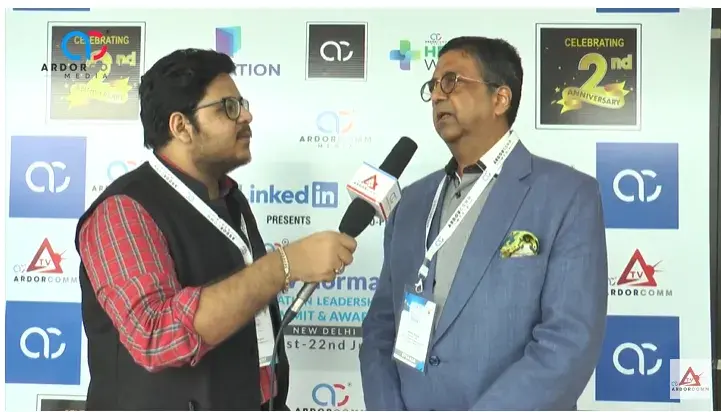
Prof. (Dr.) B.S. Satyanarayana, Vice Chancellor of G.D. Goenka University, Sohna, Shares Insights on Future of Education in the New Normal Read More »

Abhay Gupta, Founder & CEO of Luxury Connect Business School, Gurugram, Shares Insights on Education and Skilling

“I would say that skilling has now come into the forefront, and no educational body can survive or do justice without that,” says Abhay Gupta, Founder & CEO of Luxury Connect Business School, Gurugram in an Interview with Pratik Ghosh, Content Writer, ArdorComm Media Group at the ‘New Normal – Education Leadership Summit & Awards 2023’ #ELSANewDelhi #ELSAGurugram How are you feeling to witness the New Normal Education Leadership Summit and Awards in Delhi? In a very short span of time, you guys have grown and it’s getting organized better and better. You have probably the entire education industry being represented, and you have a lot of good sponsors on board as well. So, I think it’s shaping up very well. The theme of our event is “India Vision 2030.” So, what according to you should be the vision of the education sector? I think the vision of the education sector has already been defined by the NEP, and now it’s a phase of when somebody on the panel said that before COVID, during COVID, and post-COVID. So, when we are in the post-COVID era, it’s a question of implementing the policy. And while initially, there was a lot of confusion or inhibition about the policy, but now as time has passed, more and more education institutions have realized the importance and the fulcrum of the NEP. So, I would say going forward, traditional universities are moving towards skilling, and the government has also created new skill universities. So, I would say that skilling has now come into the forefront, and no educational body can survive or do justice without that. So, I think that is where the focus needs to be. What is the vision of Luxury Connect Business School? The vision behind Luxury Connect Business School was that most people focus only on very generic education, in the sense that you do a normal MBA, which is marketing or HR or B Tech, etc. But I have been a part of the luxury industry’s evolution in India, and I firmly believe that the shortage for servicing the luxury industry is a huge opportunity area which is being overlooked by the normal academicians because they have not witnessed the growth of that particular space. I also firmly believe that the luxury industry services the rich and the famous or the HNI (High Net Worth Individual) population of India. Unless the rich are made to spend within India, the money will not flow down to the economy. So, till now, more and more rich have been going overseas and spending the money. The endeavour is to make them spend within India by giving them services and products at par with the global platform. So, that is where we are creating a unique talent pool which is working across brands. Like our Rolls-Royce downwards into fashion or watches or hospitality or travel, but servicing the HNI community. That’s where our core focus is. As you can see in this kind of forums where we bring in the education leaders, the industry experts, as well as the government, how does this kind of forum benefit the education sector at large? I think it really benefits with respect to networking and understanding what is really going on in the education space at large. And then you get the opportunity to network and also collaborate. Academic-industry collaboration is also equally important because every university has its own core strength area. By collaborating with other strength areas, I think we are creating a more diversified talent pool. And when programs can be co-branded, can be co-delivered, and specialty can be passed on from one sector to another, because once you are back into your university, you are too busy with your own operations. You don’t really have the time to understand what’s going outside. So, these kinds of events, I think, are very encourageable. Any message for ArdorComm Media on its 2nd anniversary? I would say, continue the good work, you’ve done a good job in a short span of time. You started post-COVID, and this is the second physical event that I’ve attended here. It was in the same hotel last time also. I was a speaker. So, I think it’s a very good and very encouraging journey for a young group like yours. So, all the best and God bless.

Abhay Gupta, Founder & CEO of Luxury Connect Business School, Gurugram, Shares Insights on Education and Skilling Read More »

Dr. Indranil Bose, Vice President-Academics & Head of the Department, Adamas University, Emphasises on Skill-based Education

“As part of NEP, we are focusing on skill-based education, we are focusing on the core components of education, we are focusing on minor subjects,” says Dr. Indranil Bose, Vice President-Academics & Head of the Department, Adamas University in an Interview with Pratik Ghosh, Content Writer, ArdorComm Media Group at the ‘New Normal – Education Leadership Summit & Awards 2023’ #ELSANewDelhi #ELSAGurugram How did you experience witnessing the New Normal Education Leadership Summit and Award in Delhi? It’s fine, so many people from different backgrounds, they came and they spoke about their different experiences. I shared my experience here; it had my current workplace and my previous workplaces also. So, it was nice, I mean, I met a lot of old friends also here, so they are working in different universities and institutions. So overall, it’s fine. As the theme of our event is “India Vision 2030”. So, according to you, what should be the vision for the education sector going down the line? It’s something which is a little bit of a point of debate and discussion always. Yes, the new education policy has been declared, and many of the states have planned to implement this, including my state where I’m currently staying in West Bengal. So definitely, we are focusing on a few things like skill enhancement to improve the employability of the students, not only from my discipline, Management, but from all other disciplines as well, like liberal arts and other places, also basic applied sciences and other things. So definitely, there is an important component. Somebody was speaking from Amity here; I heard that human values and all things are there. Yes, even values, ethics, Indian culture, Indian value systems, all these things are very important. Many of those components are now made compulsory as per the new education policy. So many universities are doing it. India has many traditional universities and education institutions. Like, I’m telling the name of a few, like Ramakrishna Mission and other places. They’ve always made it mandatory for students to study all these things as part of the curriculum. Now, many new universities have come up, like Sri Sri University and other universities, who are offering these kinds of programs along with the regular programs. So, we are doing it. Definitely, combining skill-based education plus value-based education, most of these things are very important. So, definitely, more and more things will be going in the right direction. What’s your take on skill development, and how is Adamas University emphasizing on this? In Adamas University, we are redesigning our curriculum as per the NEP, because I am part of that particular team, I know it very well. So, as part of NEP, we are focusing on skill-based education, we are focusing on the core components of education, we are focusing on minor subjects. Based on that, they’re definitely focusing on that. And apart from that, we have a Career Development Center. They actually work for placement and other supports, and our students are working in different companies. And definitely, future places of employment will require new kinds of skills because technology is changing, workplace environment is changing, workplace requirements are changing. So, definitely, new things will be added to our curriculum. Already, in the Management department where I am working, we are changing our curriculum to a great extent. So, definitely, something positive will be happening. Any message for ArdorComm Media Group on its 2nd anniversary? This kind of program will be brought into the horizon. I have attended this kind of workshops, or this kind of forums, or panel discussions earlier in India and outside India as well. Technology in education is the future. We may like it or not, whatever, I like it very much because it enhances individual, student-specific education is possible. We can expand the reach of education. I worked with foreign universities earlier. So, we had students from different countries, and it was possible only because of technology. So, I taught students from almost 40 countries. They were from different continents. So, without technology, we could not do it but this is actually possible now. So, definitely, in this particular domain, many companies are coming. Your company is also coming. When you are doing this kind of events and activities, surely something good will be waiting for us.

Dr. Indranil Bose, Vice President-Academics & Head of the Department, Adamas University, Emphasises on Skill-based Education Read More »

Pooja Priyamvada, Academic Director of International Institute of Mass Media, New Delhi, Highlights the Role of Practical Exposure in Media Education

“Ultimately media is a practical thing and one has to learn. They are taught all the other aspects like graphic design, like programming software, like being anchors, reporters on the field,” says Pooja Priyamvada, Academic Director of International Institute of Mass Media, in an Interview with Pratik Ghosh, Content Writer, ArdorComm Media Group at the ‘New Normal – Education Leadership Summit & Awards 2023’ #ELSANewDelhi #ELSAGurugram How are you feeling to witness The New Normal Education Leadership Summit and Awards in Delhi? I must congratulate ArdorComm Media; this is a very well-organized summit. It’s only in summits like these that a lot of brainstorming happens, and all the education leaders get together, and we can actually discuss policies, what are the challenges in implementing them, which parts are effective for us, for our streams. And also, a lot of diversity is here, so people from all streams all over the country are here. So, it’s a lot of learning for all of us. As you know, the theme of our event is “India Vision 2030”. According to you, what should be the vision for the education sector? I think for higher education, we should think global and go local. We should try; for instance, we teach media. So, I think the smaller channels, regional channels, regional media, that is where the training should be aimed at. However, the modules that we teach, the text that we teach, has to be of international standards, and also the ethics have to be of global standards. Indian press index keeps falling, so for media, those are the kind of things that we need to take care of. Technology is rapidly increasing; how can we adapt with this in the media system to go into a smoother delivery process? You all must have seen recently AI anchors. The first fear that a lot of students had was that there is no scope for human anchors now, but that’s not true. AI anchors can do only that much, and ultimately to get a program going using an AI anchor, you need an entire team of humans to do it. Right from the writing to research to everything, right? Same is with ChatGPT; it can give you a basic draft of things, but it cannot go like a breaking story on a national channel. A human has to bring their experience and context to it. So, yes, we can use technology as tools, but the human skill, especially communication skill, has to come from media because media sets the narrative for all sectors, including education. I think in NEP also media had a huge role to play because we kept pushing for so long that we need a new education policy, we need to change the standards, we need to make boundaries between streams and all of that. So, I think media has a huge role to play and Tech can only be a tool to enhance those goals. What’s your take on skill development in the 21st-century workspace? Skill development is essentially important. I think now all companies look for individuals where one person can do 10 jobs. And then that is raising a generation of people who are Jack of all trades and masters of none, which is not again good. But yes, there are new kinds of skills that are coming up. We had never heard of social media managers. We had never heard of people doing influencer management, but now those are skills and those are counted as skills. Similarly, as I said, when new things come up, for instance, AI anchors, so you’ll need a new team with skills to manage that AI anchor, manage that Robot anchor. So, skilling is constantly needed, but I think it needs to be now cantered away from the metros, in smaller cities, smaller towns. Like in our institution IIMM we get a lot of students from tier two, tier three cities and they train here and then they go back they become entrepreneurs, media entrepreneurs or they launch a channel they launch a small paper and they take the skill back and then they employ other people so that is the way I think to take it forward. What is the role of Practical Exposure in Media Education, how does IIMM emphasize on it? Of course, we are bound by the syllabus, which is defined by the university and UGC, so that is one part. But yes, because ultimately media is a practical thing and one has to learn. They are taught all the other aspects like graphic design, like programming software, like being anchors, reporters on the field. Then for digital media, for TV media, for print, filmmaking is taught. Various aspects of filmmaking are taught which are both technical and creative. In advertising, PR, marketing, they are taught the theoretical basics and also how to implement in the industry. And then we have been 24 years in this media education. We are one of the oldest. So, we have a lot of good connects in the industry, and we send our students out for internships, for workshops, and they gain that hands-on experience from there. How does this kind of forum benefit the education sector? It’s a huge benefit because, as I said, I’ve been into media and, mental health education. Now, it’s only when I come here or I interact with people teaching management, I interact with people teaching other areas, pharmaceuticals, other things, so I learn a lot. Sometimes a lot of methodologies can be used. Similarly, from media, especially now that everybody has to make videos, has to launch a YouTube channel, every institution needs to have an ad and PR policy. So that is where we become useful, and we teach them that. It’s a lot of exchange of ideas, exchange of skills, as you say. And of course, experience that we all bring from various industries comes together on one platform, and that’s hugely useful. Any

Pooja Priyamvada, Academic Director of International Institute of Mass Media, New Delhi, Highlights the Role of Practical Exposure in Media Education Read More »

Prof. Dr. Chattar Singh, Vice Chancellor, Rai Technology University, Bengaluru, shares his views on Bridging the Digital Divide

“To bridge the digital divide, we need collaboration among academia, industry, businesses, government, social organizations, and NGOs,” says Prof. Dr. Chattar Singh, Vice Chancellor, Rai Technology University, Bengaluru, in an Interview with Pratik Ghosh, Content Writer, ArdorComm Media Group at the ‘New Normal – Education Leadership Summit & Awards 2023’ #ELSANewDelhi #ELSAGurugram How are you feeling to witness the New Normal Education Leadership Summit and Awards in Delhi? I’m coming here for the second time, first time it was held here itself and that was new normal because we’re coming out of covid at that time and this was the first summit where more than 50 Vice chancellors and head of the institutions participated in deliberations so it has been a big leap from that period to this period and more people are coming and joining in these summits and I must congratulate Chandan Anand and his team for this and this is time to celebrate because this has been a very successful conference today. The theme of this event is ‘India Vision 2030’. What do you think should be the vision for the education sector in India? The National Education Policy (NEP) 2020 was envisaged to not only create a knowledge bank in India but also generate job opportunities for youth by developing new skills and fostering entrepreneurship. The policy aimed at various initiatives like Skill India to achieve self-reliance. While NEP 2020 outlines these goals, the implementation needs to be done in phases, focusing on education, research, innovation, entrepreneurship, jobs, and finance. We need to discuss and analyze these aspects to meet the goal of making India a “Vishwaguru” by 2030. With the rise of technology, there’s also a concern about the digital divide. How can we bridge this gap? To bridge the digital divide, we need collaboration among academia, industry, businesses, government, social organizations, and NGOs. It’s not just about urban and rural areas but also about affordability and access to advanced electronic devices. We need to innovate and research devices that are accessible to everyone, including students and those seeking knowledge and employment. The digital divide can hinder the goals of NEP 2020, so it’s crucial to ensure equal access. Any message for ArdorComm Media Group on its 2nd anniversary? ArdorComm Media has been doing a wonderful job from taking all the messages from government to people and from people to government. So, it is helping a lot in a positive manner not only to achieve the targets of NEP 2020 but also to aware the people particularly the youth, the teachers and the institutions about what is going on in the environment, in the society, in the country, in the government and vice versa. So, I congratulate ArdorComm Media for doing this job selflessly for promotion of education, research and workforce in India by its own means.

Prof. Dr. Chattar Singh, Vice Chancellor, Rai Technology University, Bengaluru, shares his views on Bridging the Digital Divide Read More »

Prof. (Dr.) Raghuvir Singh, Vice Chancellor, Teerthanker Mahaveer University, Moradabad, Highlights on NEP implementation

“We have implemented NEP in totality whether it’s the Academic Bank of Credits, multi-entry and multi-exit, four-year undergraduate programs, or the Indian knowledge system, every aspect of the NEP has been implemented in our university,” says Prof. (Dr.) Raghuvir Singh, Vice Chancellor, Teerthanker Mahaveer University, Moradabad, in an Interview with Pratik Ghosh, Content Writer, ArdorComm Media Group at the ‘New Normal – Education Leadership Summit & Awards 2023’ #ELSANewDelhi #ELSAGurugram How are you feeling to witness the New Normal Education Leadership Summit and Awards in Delhi? I find this event to be wonderfully organized, with excellent speakers and relevant topics. The chosen topics are quite wide and pertinent to the current context. Everyone can learn from these discussions and take these insights back to their universities for the improvement of education. How are you implementing NEP in your university? We have implemented NEP in totality whether it’s the Academic Bank of Credits, multi-entry and multi-exit, four-year undergraduate programs, or the Indian knowledge system, every aspect of the NEP has been implemented in our university. We’ve been following these guidelines since the NEP was introduced by the Indian government. Our state government is also actively monitoring our progress, and we provide updates to them on our implementation. The theme of our event is “India Vision 2030.” What, according to you, should be the vision for the education sector going forward? In my opinion, universities should emphasize thinking skills over psychomotor skills. Teaching tools and techniques change rapidly, and universities can’t always keep up with these changes. Therefore, it’s crucial to focus on transferable skills, which are the fundamentals. Transferable skills enable students to learn job-specific skills on their own. Competency-building should be the primary focus to enable students to excel in their careers and social lives. How does this kind of forum benefit the education sector, where education leaders, industry experts, and government officials come together? This type of forum is an excellent way to bring together different stakeholders in the education ecosystem – regulators, education leaders, and industry experts. For years, these three entities have operated in isolation, and there have been limited platforms for them to interact and share their perspectives. Forums like this create a space for meaningful dialogue, allowing each group to understand the expectations and needs of the others, ultimately benefiting the education sector as a whole. Any message for the ArdorComm Media Group on its 2nd anniversary? Congratulations on completing two years! ArdorComm Media has done a wonderful job during this time. I hope you continue to flourish and contribute to the nation’s educational growth. Your efforts will undoubtedly help the nation progress towards becoming a developed nation.

Prof. (Dr.) Raghuvir Singh, Vice Chancellor, Teerthanker Mahaveer University, Moradabad, Highlights on NEP implementation Read More »

Kunwar Shekhar Vijendra, Chancellor, Shobhit University, Shares Insights on Education and Vision for India’s Future

“We had been Vishwa Guru, we have to be Vishwa Guru, and we will be Vishwa Guru,” says Kunwar Shekhar Vijendra, Chancellor, Shobhit University in an Interview with Pratik Ghosh, Content Writer, ArdorComm Media Group at the ‘New Normal – Education Leadership Summit & Awards 2023’ #ELSANewDelhi #ELSAGurugram How are you feeling to witness the New Normal Education Leadership Summit and Awards in Delhi? It’s wonderful. I must congratulate the organization for the second anniversary as well. Very successful indeed. And this New Normal, actually, this term started during COVID. But today’s New Normal is that people should come together and collaboratively we should start doing a lot of things. And I am happy that Chandan and his team are doing a wonderful job. I was really impressed to see a very diversified audience of speakers, and especially meeting the Honourable Education Minister from Nagaland who is a celebrity on social media. Otherwise also, he’s trying to put Nagaland on the main map of education in the country. So, I congratulate everybody who is associated, and I wish this organization a lot of success. It’s good to see them in Delhi, looking forward to many more such opportunities. Kindly highlight some important initiatives which you are taking in Shobhit University. The main thing today, if we look at, is what is happening in the educational ecosystem in the country. As I was mentioning during my address also, the new education policy has come, and in the last three years, we are trying to reach to the last man. ‘Antyodaya’ the word I used and I’m using it again that up to the last man, education has to be there, holistic development of the youth has to be there, integration with the industry has to be there, and the skill sets have to be changed so that the industry and academy alliance is there. And this is all that in our university is happening, entrepreneurship, skill development, a lot of startups, research, innovation, what not. And I’m really happy that throughout the country, the same thing is happening again and again, and these platforms they gave us a reason to disseminate what is happening and to learn from our peers. According to you, what should be the vision of India for the education sector? The vision has already been set. We had been Vishwa Guru, we have to be Vishwa Guru, and we will be Vishwa Guru. Any message for ArdorComm Media? Keep up the same spirit. Do what you are doing. You are doing really good.

Kunwar Shekhar Vijendra, Chancellor, Shobhit University, Shares Insights on Education and Vision for India’s Future Read More »

Prof. (Dr.) Arun Garg, Vice Chancellor, MVN University, Palwal, Highlights the Importance of Industry-Academia Outreach

“There are a lot of industry-university interactions which are taking place in the learning process,” says Prof. (Dr.) Arun Garg, Vice Chancellor, MVN University, Palwal in an Interview with Pratik Ghosh, Content Writer, ArdorComm Media Group at the ‘New Normal – Education Leadership Summit & Awards 2023’ #ELSANewDelhi #ELSAGurugram How are you feeling to witness the New Normal Education Leadership Summit and Awards in Delhi? It’s a very wonderful program which you have conducted and it’s all wonderful learning from different panellists and different speakers on how we can improve upon higher education, how we can adopt new technology, how we can interact or collaborate. These are the things which the new normal is about, and which are the different new skills. How we can upskill our teachers as well as upskill our students, and how we can make our students industry-oriented or globally placed professionals. What’s your take on the industry and academia outreaches which are taking place in your university? Any such initiative which is being taken in your university? Yeah, there are a lot of industry-university interactions which are taking place in the learning process. We have Bansal Classes who are themselves coming up and teaching the students with the updated skills which are required by IBM and Samsung. Then we have a few other industries, pharmaceutical industries. Recently, today only, we had an initial talk with Amrita Hospital for our physiotherapy and pharmacy classes. So, the thing which is very new to this area of pharmaceutical science is how to reduce the cost of medication to the patient and how to be more effective. There are a lot of medication errors and a lot of other things. So, we are going to work together with Amrita Hospital, which is going to be one of the biggest hospitals coming up in Faridabad. How important is skill development for students in this present situation? It is very important to have the skills in your respective domain, which is very important. Especially in case of computer science, the skills are being updated every five years or maybe three years. But in all other health sciences and other professions, you need to be updated with computer science, communication, and also the various platforms which are available for upskilling yourself. LinkedIn has several courses, Coursera has several courses. These courses are to be taken up by the students or maybe by working professionals for getting upskilled. As you can see in these kinds of forums where we bring in the education leaders, the ed-tech leaders, as well as the government, how does this kind of forum benefit the education sector? When we interact with all these learning platforms and other education players, we learn from each other. That’s what we discussed in this platform, Interactive learning. So, it’s a great platform for us to interact with the big players as well as with the small and come to know what is happening in this particular feature in the education industry here. So, it’s a great learning from this education summit.

Prof. (Dr.) Arun Garg, Vice Chancellor, MVN University, Palwal, Highlights the Importance of Industry-Academia Outreach Read More »

Dr. R D Patidar, Vice Chancellor, OP Jindal University, Raigarh, Highlights the Importance of Skill Development

“Today we are shifting from rote-based learning to actually experiential learning, which is more about deeper understanding, clearing the concepts, and processes of the students or the learners,” says Dr. R D Patidar, Vice Chancellor, OP Jindal University, Raigarh in an Interview with Pratik Ghosh, Content Writer, ArdorComm Media Group at the ‘New Normal – Education Leadership Summit & Awards 2023’ #ELSANewDelhi #ELSAGurugram How are you feeling to witness the New Normal Education Leadership Summit and Awards in Delhi? It’s good, really a good platform where all the academicians and industry leaders are here to share their knowledge and thoughts on the New Normal, especially the new National Education Policy. So, this is really a very good platform. How are you implementing technology in your University? We are implementing technology in many ways. OP Jindal University, Raigarh, is a university of Steel technology, and we are using technology for the teaching-learning process. We are using technology for all other activities of the university, and the ultimate purpose is to make the students industry-ready by designing industry curriculum and involving industry experts with the support of technology. What’s your take on skill development? Skill development is the most important part of today’s education, especially the new National Education Policy. They provide more flexibility and freedom, and also holistic development in education to develop the skills of the students, to make them talented, or we can say, to make them employable. So, today we are shifting from rote-based learning to actually experiential learning, which is more about deeper understanding, clearing the concepts, and processes of the students or the learners. So, that’s really very important. In these kinds of forums where we bring in education leaders, the EdTech players, as well as the government, how does this kind of forum benefit the education sector at large? Such kind of events are really very important for all the educational institutions in general, and the technical institutions or higher education institutions in particular, where we can interact with each other, share the issues, challenges, and it is the right platform to discuss the issues faced by various institutions and come to resolve them and provide quality education to the youth of the nation. Any message for ArdorComm Media Group on its 2nd anniversary? I congratulate ArdorComm Media and the entire team for such an excellent program organized in a very short span of time. I also congratulate ArdorComm Media for all their achievements despite being a young organization. So, I congratulate you and the entire team.

Dr. R D Patidar, Vice Chancellor, OP Jindal University, Raigarh, Highlights the Importance of Skill Development Read More »

Dr. Sunil Rai, Chancellor of UPES, Dehradun, Shares Insights on Education and Skill Development

“I think this century is going to be the century of skills. Degrees, certificates, and all will have no meaning, it will be basically skills,” says Dr. Sunil Rai, Chancellor of UPES, Dehradun in an Interview with Pratik Ghosh, Content Writer, ArdorComm Media Group at the ‘New Normal – Education Leadership Summit & Awards 2023’ #ELSANewDelhi #ELSAGurugram How are you feeling to witness the New Normal Education Leadership Summit and Awards in Delhi? It’s a wonderfully organized event. Many congratulations to Chandan and all of you, the entire team. And many congratulations for completing two years since inception. It’s a wonderful event, very high quality, and good exchange of thoughts. What according to you, does the word “New Normal” mean? To look at life itself in a new manner, because everything is changing. Everybody is talking about these fast changes. So, this New Normal is not a static situation. This New Normal will keep changing. At today’s rate, it may change every five years, and after five years, it will change every two years, and then maybe every month. So, New Normal is a new way of life, which is a normal way of life. What’s your take on skill development for the 21st-century workforce? I think this century is going to be the century of skills. Degrees, certificates, and all will have no meaning, it will be basically skills. People will not be hired for time, but they will be hired for skills. When I say not be hired for time, today we are hired for time, nine to five one has to come to office and work, so I go and work with my skills in my own office. Tomorrow, it will be that there will be 30 people who will be talking to me, and I will be hired for my skills. So, doing this kind of analysis, it is one Sunil Rai who knows it. So, company A will call me two to three, company B will call me four to five. So, it will be skills. Skills are the way to go. How are you implementing technology or integrating technology in your University? Yeah, so basically, we always keep having the right portfolio mix of technology, which is what I mentioned in my panel also. There will always be a change that is required to your existing portfolio. So, we have our own LMS’s, our own means. We’ve got Blackboard and then there are other tools that we use for attendance, for monitoring, for student life cycle. What we do is either we change the components every about 20 to 30 percent every year, or we change even the software or the complete paradigm every three years. So, I think this is the kind of things working now, but going forward, we will have to see. So, we have to keep looking at what is working, what is not working, keep changing, keep changing in a way that you can digest it. As you can see in these kinds of forums where we bring in education leaders, industry experts, as well as the government, how does this kind of forum benefit the education sector? It definitely benefits all. My suggestion, in particular is that, because you are a media company, I think with this, there has been a phenomenal learning which has come out in today’s and will come out tomorrow as you are doing schools. There should be a complete kind of declaration or a kind of statement which should come out after this effort, and it should remain there next year. So, there could be some 20, 30, or 15 points that we should all as educators and as a society look at. These 15 things to be done next third iteration. You must check those 15, how many of them have worked and how many have not worked. I think then it will have a phenomenal impact. But it’s a very good learning when you listen to different, different thoughts. Any message for ArdorComm Media Group on its 2nd anniversary? You’re doing very well. I mean, in two years, you have made a mark and you are doing extremely well. But I think where you can stand out is basically come up with focused suggestions and monitor them. You have your portals for each of these kinds of things, teaching-learning, administration, accreditations, rankings, benefit to society. So, all these verticals and then there could be some suggestions that are being made and they should remain there on the portal so that you’re reminded of it again and again and so you make your own contributions. You are already doing it very well. I wish you all the best going into your third year.

Dr. Sunil Rai, Chancellor of UPES, Dehradun, Shares Insights on Education and Skill Development Read More »