ArdorComm Media Group

Thursday, January 1, 2026 5:02 PM

Governance Community

Karnataka election results update: Congress leads in initial rounds, BJP catching up

Karnataka election

The day of the results has arrived following intense election campaigning and record voter turnout in Karnataka. As counting begins today, all eyes are on the JDS, BJP, and Congress. Congress has jumped out to an early lead in the polls, but BJP is not far behind. The election was peacefully concluded on May 10 with a record voter turnout of 73.19%, higher than the previous record of 72.36%. The incumbent Bharatiya Janata Party (BJP), the Indian National Congress (INC), and the Janata Dal (Secular) (JDS) fought it out in the election on three different sides. The counting will take place in 36 different centres throughout the state. By noon, it should become evident what the outcome will be. The ruling Bharatiya Janata Party won 104 seats in the 2018 assembly elections, making it the single-largest party. The Congress came in second with 78 seats, and the Janata Dal (Secular) came in third with 37 seats. This time around, 2,615 candidates ran for election in the 224 Assembly constituencies. Notably, four exit polls gave the Congress party a full majority in Karnataka, and some predicted a hung assembly that would favour the party. A few exit polls also indicated that the BJP is leading in the race to form the government. According to ECI, the Congress leads in 85 seats, the BJP in 62 seats, and the JDS in 18. Leading in two seats are independents.

Karnataka election results update: Congress leads in initial rounds, BJP catching up Read More »

Centre issues ‘advisory’ to mobile phone manufacturers to include an FM radio receiver in all handsets

The Union Ministry of Electronics and Information Technology (MeitY) has issued an advisory to all mobile phone manufacturers in India, requesting that they make sure that the FM radio receiver function is not disabled in phones sold in the country. This is done in order to clear up any confusion regarding compliance standards regarding the government-backed digital information network, the FM radio. The advisory comes only weeks after Prime Minister Narendra Modi launched 91, 100-watt FM transmitters to improve radio connectivity throughout the country. The new phone manufacturers who do not already offer the FM radio feature have also been instructed by the Union government to add it to the mobile handsets that will be sold in India. All mobile phone manufacturers and brands are to get an advisory, according to a directive from the Union government to the Indian Cellular and Electronics Association (ICEA) and Manufacturers’ Association for Information Technology (MAID). The advisory was issued in response to concerns that certain cell phone makers were omitting the FM radio from their newest models. All phones in the past, including smartphones, have an FM radio built in. The Union governance has insisted that the FM broadcast is a dependable communication system, especially during natural disasters when it acts as an essential link between local government and the general people. Using FM broadcast is also thought to be the most efficient way to spread early warnings and encourage people to take precautions for their own safety. The Centre has also stressed the significance of the huge FM transmitter network and FM radio that are accessible in India, which were crucial in that nation’s attempts to fight the COVID-19 pandemic. The network of transmitters with All India Radio has expanded from 524 to 615, covering 73.5 percent of the country’s population. The recently launched FM Transmitters are located in 91 places throughout 84 districts in 20 states. A proposal to place 63 additional FM transmitters across the nation has also been approved by the Centre in addition to the aforementioned. The Centre asserts that the expansion of FM services in rural areas is due to the extensive reach of FM radio service and the accessibility of mobile phones with FM receivers.  

Centre issues ‘advisory’ to mobile phone manufacturers to include an FM radio receiver in all handsets Read More »

India opens its digital infrastructure for testing on global standards

India is prepared to upend the current technological order by showcasing its cutting-edge digital infrastructure, which has just become a major economic driver. The Union government reportedly requested international technology experts to evaluate India’s telecom stack in accordance with global standards at the recently concluded G7 Digital and Tech Ministers’ Meeting held in Japan. India highlighted the accomplishments of its major digital programs, including Aadhaar, UPI, and Cowin, at the G7 summit under the direction of Union IT Minister Ashwini Vaishnaw. Vaishnaw asserted during the conference that the surge of digitization sparked by the Digital India programme has not only assisted in building a robust digital infrastructure throughout the nation but has also aided in its widespread acceptance. The Union minister said on Thursday that India is emerging as a technology powerhouse and is garnering global attention for its growth journey in technological development. He expressed his satisfaction over the increased interest the world has in the Indian technology industry. According to Vaishnaw, India’s success may be due to initiatives like Digital India and Make in India, as well as to its advancements in creating domestic 4G and 5G telecom stack and digital public infrastructure. According to Vaishnaw, there is a lot of interest in finding out more about India’s telecom infrastructure and 5G rollout, which is thought to be the quickest in the world. In a statement made on Thursday, the Union Minister further attributed India’s technological progress to Prime Minister Narendra Modi’s innovative initiatives. Vaishnaw, who was representing India at the meeting, presented a presentation on the country’s digital public infrastructure and highlighted how it is being built to offer large-scale solutions. “India is clearly emerging as a technology powerhouse and a trusted partner because of PM Modi ji’s visionary programs like Digital India and Make in India. Today globally, there is a strong interest in learning from India’s growth journey as technology developers,” Vaishnaw said in a statement.  

India opens its digital infrastructure for testing on global standards Read More »

ESG task force for sustainability to be established shortly for textiles sector, according to Goyal

In order to support India’s commitment to sustainability, an ESG (environmental, social, and governance) task force will be established in the textiles sector, Piyush Goyal, Union Minister of Textiles, Consumer Affairs, Food and Public Distribution, and Commerce and Industry, announced on Saturday during the soft launch of the Ministry of Textiles’ e-commerce website for handloom and handicrafts in Rajkot, Gujarat. Gujarat Chief Minister Bhupendrabhai Patel also attended the event, which was a part of the “Saurashtra Tamil Sangamam.” The Union Minister attended the Chintan Shivir, which took place during the two-day event in Somnath and Rajkot, where discussions on many facets of the industry were held alongside officials from the Ministry of Textiles. Speaking at the event, Goyal stated that productive discussions about boosting the vibrancy of the textile industry had taken place. He continued by saying that some exporters and manufacturers receive certification for environmental, social, and governance (ESG) compliance, which assures them two times the value. To ensure this certification for more exporters and producers, efforts are being made. The minister also discussed the textile industry’s 2030 export target of attaining $100 billion and its 2030 overall target of $250 billion. Goyal stated that one of PM Narendra Modi’s five commitments were that in order to move forward with assurance, we must return to our roots. According to him, Gujarat and Tamil Nadu have a common history and culture in addition to having a robust traditional and modern textile sector.  

ESG task force for sustainability to be established shortly for textiles sector, according to Goyal Read More »

India will have 146 carbon-neutral airports by 2025, according to Jyotiraditya Scindia

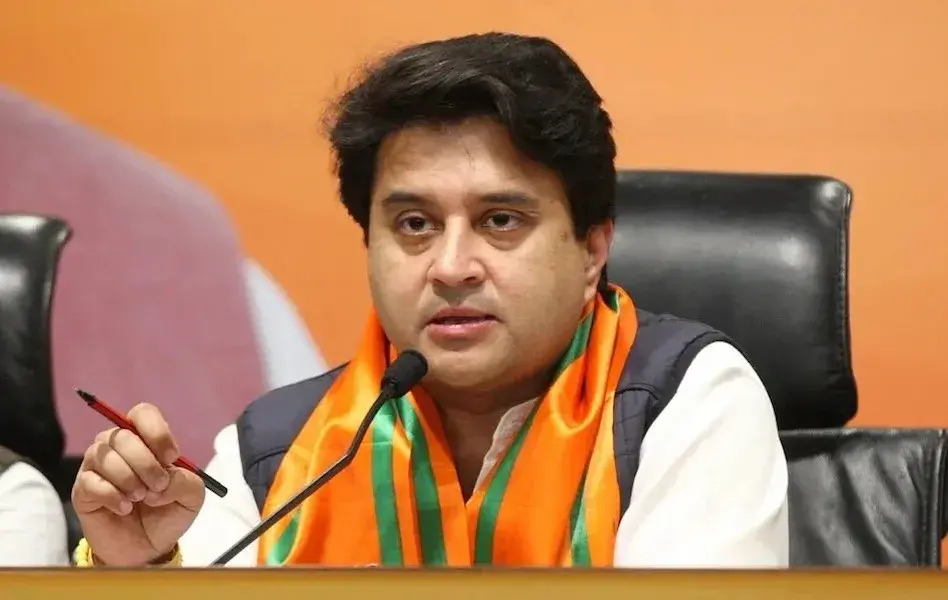
As part of his push for sustainable transport, Union Aviation Minister Jyotiraditya Scindia stated on Thursday that by 2025, 121 new airports would be completely carbon neutral. There are already roughly 25 airports in India that only use green energy, according to Scindia. Scindia emphasised that India and the European Union share a common purpose in addressing climate change when speaking remotely at the two-day EU-India aviation meeting after testing positive for Covid19. The aviation sector has adopted a number of actions to reduce its carbon footprint and mitigate emissions in response to mounting demand to do so. In order to encourage airports to use 100% green energy by 2024 and attain net-zero emissions by 2030, according to Scindia, the Indian government has pushed through a number of policies in the sector. 25 AAI airports have already reached this goal, and 121 more are anticipated to do the same by 2025, according to Scindia. As part of the bid documents for future airports, the government has enforced the usage of renewable energy, the Union Aviation Minister also stated. Additionally, we are attempting to promote the usage of sustainable aviation fuel. Indian airline operators have already used biofuel that has been blended with ATF in demonstration flights, according to Scindia. While urging EU members to collaborate with India in the development of adaptable technologies to assist the goal of reducing emissions from the aviation industry, Scindia said that India has changed its legislative framework to boost aircraft production in the nation. The government has lowered the GST rate on maintenance, repair, and overhaul (MRO) services from 18% to 5% and permitted 100 percent foreign direct investment in the industry to improve the regulatory environment for MRO service providers. To make it easier for MRO service providers to conduct business, additional new maintenance, repair, and overhaul (MRO) criteria have been introduced. Scindia urged participants in the EU aviation industry to seize these chances and join the world’s aviation market which is expanding rapidly. The EU-India aviation summit, which began on Thursday, will concentrate on the two regions’ air transport relations, the post-Covid recovery of air traffic, enhancing sustainability, ensuring safety, and developing unmanned aircraft systems.  

India will have 146 carbon-neutral airports by 2025, according to Jyotiraditya Scindia Read More »

In less than 200 days, the Centre deployed 5G services across 600 districts: Union MoS Chauhan

Devusinh Chauhan, the Union minister of state for communications, pledged the commitment of the Centre to deploying the newest 5G services across India in record speed, noting that India has already covered 600 districts with 5G services in less than 200 days. The minister stated that the “Antyodaya” vision, which is important in promoting inclusive welfare and development, served as the inspiration for the new public policies of the central government when addressing at the G20 Digital Economy Working Group (DEWG) meeting in Hyderabad. According to the Union MoS, “India has covered 600 districts with 5G in less than 200 days, that is one of the fastest in the world,” and “India has the second largest telecom network with the lowest data rate in the world. The development of indigenous 4G, 5G technologies in a short span of time has surprised the world.” Addressing at the gathering, Union Minister of State for Social Justice and Empowerment A. Narayanaswamy stated that the ‘Digital Antyodaya’ approach and the Accessible India campaign for bridging the digital divide by making technology accessible to all demonstrate how sympathetic the current government is to differently abled people.

In less than 200 days, the Centre deployed 5G services across 600 districts: Union MoS Chauhan Read More »

National Career Service portal lists 35.7 lakh vacancies for 2022–2023

Employers reported over 35.7 lakh vacancies on the National Career Service (NCS) portal during 2022–23, which is a significant increase from the 13 lakh vacancies reported during 2021–22. The reporting of vacancies on NCS in 2022–2023 showed a 175% rise from 2021–2022 in comparison. Also, as of October 30, 2022, the number of active openings in 2022–23 was at its highest, at more than 5.3 lakh. Throughout all industries, there has been an upsurge in job postings on NCS. With 20.8 lakh vacancies in 2022–23 compared to 2.2 lakh vacancies in 2021–22, the finance and insurance sector has experienced extraordinary growth of more than 800%. With 3.75 lakh open positions reported in 2022–23, up from 76,000 in 2021–22, the sector of operations and support has also seen a 400% increase in job openings. The number of openings in industries like manufacturing, health, education, and hospitality increased significantly between 2022 and 2023 compared with the previous year. The NCS portal registered more than one million employers since its introduction in 2022–2023, which was another milestone. Around eight lakh employers out of the total number of registered employers were registered in 2022–2023. Employers from the service industry registered the most (6.5 lakh), followed by those from the manufacturing sector.

National Career Service portal lists 35.7 lakh vacancies for 2022–2023 Read More »

Government launches Blockchain project to explore Web3 potential

Government launches

The Union government has started a blockchain technology system research project with the goal of improving the blockchain technology stack for the development of end-to-end blockchain applications. According to official sources, the project titled “Design and Development of a Unified Blockchain Framework for Offering National Blockchain Service and Creation of Blockchain Ecosystem” will also enable Open Application Programming Interfaces (Open APIs) for Seamless Integration and Offering Blockchain-as-a-Service (BaaS) across Distributed Infrastructure. The National Strategy on Blockchain was formulated in 2021, according to official sources, despite the fact that the Ministry of Electronics and Information Technology (MeitY) hasn’t undertaken any formal research on the technological and economic opportunities that Web3 provides. The government’s endeavour includes the research project. According to sources, Web3 is made possible by blockchain, and the National Strategy on Blockchain includes key technological elements needed for Web3. In Web3, blockchain technology plays a significant role.

Government launches Blockchain project to explore Web3 potential Read More »

Government is working to implement a transparent, digital, and technologically enabled system of good governance

According to Union Commerce Minister Piyush Goyal, the central government and state governments are collaborating to create a “good transparent digital tech-enabled system of good governance so that Karnataka also gets benefited.” At an address to the Federation of Karnataka Chambers of Commerce and Industry (FKCCI) in Bengaluru, Goyal said, “We commit ourselves to provide a double-engine government in Karnataka that will work hand-in-hand with Central government, converting all those MoUs in global investor meets into action on the ground and bringing a good transparent digital tech-enabled system of good governance so that Karnataka also gets benefitted.” “Today, India is the most sought-after country under PM @NarendraModi ji’s leadership. At the Federation of Karnataka Chambers of Commerce & Industry, reiterated how the double-engine Govt will ensure growth & development in the state,” Piyush Goyal tweeted. Today, India is the most sought after country under PM @NarendraModi ji’s leadership. At the Federation of Karnataka Chambers of Commerce & Industry, reiterated how the double-engine Govt will ensure growth & development in the state. pic.twitter.com/KSlX4ZXUqG — Piyush Goyal (@PiyushGoyal) April 7, 2023 The minister said, “A good and strong single-party government under the leadership of Prime Minister Narendra Modi will help transform and speed up the developmental process in Karnataka. Let us work together to make making India a global power.” Goyal also lauded Prime Minister Modi and stated that the Union government had strengthened India’s economy. According to Goyal, “the government had seen record foreign direct investment (FDI), low inflation, and export growth in the last nine years.” He said, “Investors are coming to India for R&D (research and development), and manufacturing and to enjoy the benefits of India’s talent pool.” Under PM Narendra Modi’s leadership, India, according to Goyal, was the most sought-after country for investments.

Government is working to implement a transparent, digital, and technologically enabled system of good governance Read More »

Under the Jal Jeevan Mission, the government approves Rs 2,000 crore for Tripura

To provide homes with piped drinking water through the Jal Jeevan Project, the Center has granted the state for Rs 2,000 crore. For approving Rs 2,000 crore to implement the piped water scheme, Tripura Chief Minister Manik Saha thanked Prime Minister Narendra Modi and Union Minister for Jal Shakti Gajendra Singh Shekhawat. In the northeastern state, 56% of homes already have access to piped water, and the state has a plan in place to provide water to every home. “I am glad to share that the Union ministry of Jal Shakti has approved Rs 2,000 crore for Tripura under Jal Jeevan Mission 2023-24 and the fund is more than the total of Rs 1,930 crore Tripura received in the last 3 years,” the CM said.

Under the Jal Jeevan Mission, the government approves Rs 2,000 crore for Tripura Read More »