

ArdorComm Media Group

Wednesday, February 11, 2026 5:28 PM

AI in healthcare

IIT Delhi Introduces Executive Programme in Healthcare Entrepreneurship and Management

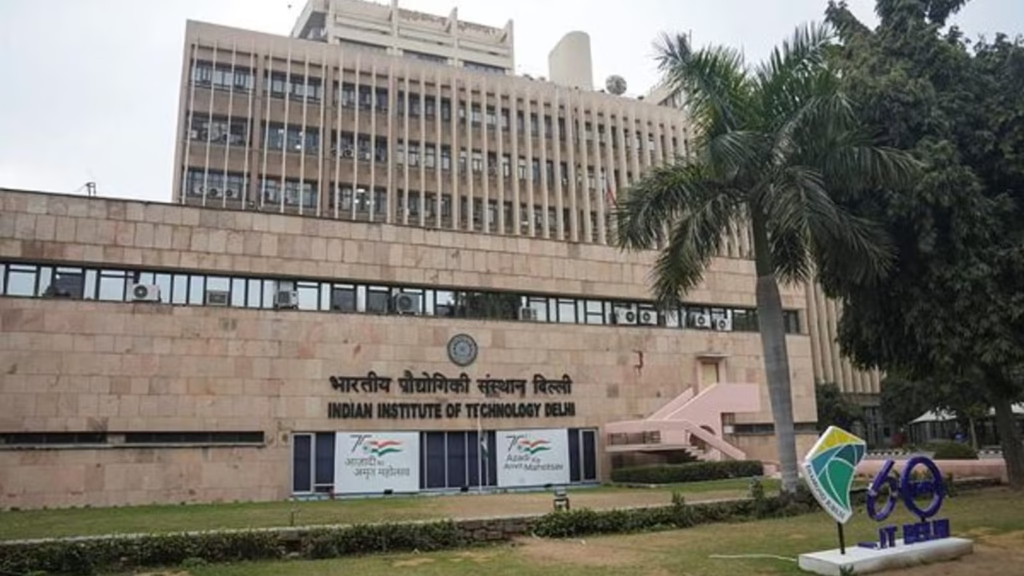
The Indian Institute of Technology (IIT) Delhi has rolled out a new executive programme focused on healthcare entrepreneurship and management, aimed at nurturing professionals who can drive innovation in India’s rapidly evolving healthcare sector. The programme will be conducted under IIT Delhi’s Continuing Education Programme (CEP), a statutory body authorised to run certificate courses and award credentials. According to IIT Delhi, the initiative is designed to equip participants with the skills and mindset required to navigate and shape the future of healthcare innovation. Applicants must possess a bachelor’s degree, while prior professional experience or exposure to projects in related domains will be considered an added advantage. The five-month programme will be delivered through live online classes held on weekends, complemented by dedicated hours for project work. The institute noted that India’s healthcare ecosystem is witnessing transformative changes, driven by the rise of digital health solutions, medical devices, artificial intelligence–enabled diagnostics, wearable technologies and a stronger focus on patient-centric care. However, persistent challenges such as fragmented service delivery, regulatory hurdles, limited commercialisation avenues and the demand for cross-disciplinary leadership continue to affect the sector. Against this backdrop, the executive programme aims to provide a comprehensive understanding of the entire healthcare innovation lifecycle. Through interactive online sessions and guided projects, participants will learn how to identify healthcare challenges and translate them into viable, market-ready solutions using design thinking, prototyping, testing and sound commercial strategies. The programme will be anchored by IIT Delhi’s Centre for Biomedical Engineering and supported by clinical expertise from specialists at AIIMS Delhi. Faculty members including Dr Arnab Chanda and Dr Biswarup Mukherjee will lead the sessions, integrating engineering, clinical practice, management and entrepreneurship to foster practical and scalable healthcare innovations. A major feature of the course is its strong emphasis on project-based learning. Participants will work on real-world healthcare problems, developing deployable prototypes with the help of structured mentoring, peer collaboration and continuous expert feedback. On successful completion, learners will receive an e-certificate from CEP, IIT Delhi, and gain access to a network of IIT Delhi faculty, AIIMS clinicians and industry professionals, enhancing both learning outcomes and professional opportunities. Source: Indian Express

IIT Delhi Introduces Executive Programme in Healthcare Entrepreneurship and Management Read More »

NMC Clears Path for For-Profit Firms to Establish Medical Colleges

The National Medical Commission (NMC) has officially revised its regulations to allow for-profit companies to set up medical colleges in India, marking a significant shift from the earlier framework that restricted such institutions to non-profit Section 8 companies. Announcing the change, NMC Chairman Abhijat Chandrakant Sheth said the decision was taken at a recent board meeting and removes the clause that limited eligibility to non-profit entities. The revised policy now enables both non-profit and for-profit organisations to establish medical colleges, particularly under the Public-Private Partnership (PPP) model. Speaking at a press briefing at Dr NTR University of Health Sciences in Vijayawada, Sheth said the move is intended to improve the utilisation of resources in medical education by encouraging collaboration between public authorities and private players. He added that PPP-based medical institutions are already functioning effectively in states such as Gujarat. Sheth noted that while the PPP model will be implemented at the discretion of state governments, hospitals operating under such arrangements will remain under state oversight. As a result, patients will continue to receive treatment either free of cost or at subsidised rates. To maintain academic and institutional standards, the NMC has developed its own accreditation framework and Standard Operating Procedures (SOPs). The commission’s broader objective, Sheth said, is to expand access to quality medical education for the general population while aligning with global benchmarks. Highlighting ongoing reforms, he said the NMC is continuously updating its policies to reflect evolving needs in healthcare education. As part of these efforts, clinical research has been made mandatory, with increased emphasis on artificial intelligence, digital healthcare, and emerging medical technologies to future-proof medical training in India. Source: PTI

NMC Clears Path for For-Profit Firms to Establish Medical Colleges Read More »

AI Tool Boosts India’s Disease Surveillance, Generates Over 5,000 Alerts: Study

An artificial intelligence–powered surveillance system deployed by the National Centre for Disease Control (NCDC) has significantly strengthened India’s ability to track infectious disease outbreaks, generating more than 5,000 real-time alerts for health authorities since 2022, according to a new pre-print study. Developed by WadhwaniAI, the Health Sentinel platform has automated the labor-intensive task of scanning news reports for unusual health events. The system reportedly reduced manual workload by 98%, enabling faster outbreak detection and quicker public health action. The findings are currently under review and not yet peer-reviewed. Under India’s Integrated Disease Surveillance Programme (IDSP), media scanning and verification has long relied on manual review of print, television and online news. Health Sentinel upgrades this process by screening articles daily across 13 languages, applying AI models to highlight potential threats that are later reviewed by epidemiologists. According to the study, the platform has processed over 300 million news articles since April 2022, identifying 95,000+ unique health-related events, of which around 3,500 were shortlisted by NCDC experts as possible outbreaks. Researchers also estimate that the AI-enabled system triggered more than 5,000 actionable alerts between April 2022 and April 2025. Parag Govil, National Program Lead for Global Health Security at WadhwaniAI, said the tool preserves human oversight while eliminating the time-consuming manual scanning traditionally required. Epidemiologists validate flagged events before disseminating them to state and district authorities. The research team noted a 150% surge in published health events captured since adopting AI-assisted surveillance, compared to earlier years of fully manual analysis. In 2024 alone, 96% of reported events were identified through the AI system, with only 4% coming from manual review. Globally, event-based surveillance techniques that incorporate online media or social media sources are increasingly used to complement traditional “passive reporting” from healthcare providers. The volume of daily online content, however, has made manual screening impractical, making automated systems essential. The article also references other Indian studies highlighting the value of enhanced surveillance. A pilot conducted in six private hospitals in Kasaragod, Kerala, used an algorithm to analyse cases of acute febrile illness (AFI). The system detected 88 clusters, with several verified as outbreaks—including dengue and COVID-19—demonstrating the benefits of early, data-driven detection. International research supports similar conclusions. A 2020 review in the Journal of Biomedical Informatics found that machine learning–based analysis of social media posts, especially on Twitter, improved disease trend prediction. Another study, published in 2017 in the American Journal of Tropical Medicine and Hygiene, showed that mining news articles can help fill gaps when official national case data is delayed. Overall, the findings underscore the growing importance of AI-driven surveillance systems in strengthening public health response capabilities and improving global health security. Source: PTI

AI Tool Boosts India’s Disease Surveillance, Generates Over 5,000 Alerts: Study Read More »

WHO Urges Boost in TB Research and Innovation to Tackle High Burden in South-East Asia

The World Health Organization (WHO) has issued an urgent call to enhance research, innovation, and regional cooperation to eliminate tuberculosis (TB) in the South-East Asia region — a region that continues to carry nearly half of the global TB burden. Speaking at the launch of a three-day virtual workshop focused on advancing TB research and innovation, Dr. Catharina Boehme, Officer-in-Charge for WHO South-East Asia, emphasized that in 2023 alone, the region saw nearly 5 million new TB cases and around 600,000 related deaths. The workshop brings together national TB programme leaders, scientists, civil society members, and global partners to push forward efforts aligned with the WHO’s End TB Strategy. The Need for Urgency and Collaboration Dr. Boehme highlighted that ending TB demands the rapid adoption of new tools, diagnostics, and treatments — and, more importantly, equitable and timely access to these innovations. “Collaboration is key to scaling up impact and ensuring that no one is left behind,” she stated. Despite a post-COVID-19 rebound in TB case detection in 2023, current progress is falling short of the End TB Strategy’s 2030 goals: a 90% drop in TB-related deaths and an 80% decline in incidence compared to 2015. Alarmingly, TB has returned as the world’s leading cause of death from a single infectious disease, with its effects disproportionately hitting the poorest and most vulnerable communities. In South-East Asia, between 30% and 80% of TB-affected households experience catastrophic healthcare expenses, pointing to the urgent need for inclusive, people-first approaches and stronger social protection systems. Signs of Progress Amidst Challenges Still, there are signs of advancement. In 2023, the region recorded 3.8 million new or relapsed TB cases, with an 89% treatment success rate among those who began treatment in 2022. The number of undiagnosed cases was significantly reduced — down to 22% from 44% in 2020. Countries are increasingly adopting technology-driven solutions such as artificial intelligence for detecting TB, digital adherence tools to monitor treatment, and direct benefit transfers to ease patients’ financial burdens. These innovations are being powered by strong political will and national commitment. Several countries have also expanded research efforts. Bangladesh has concluded a national patient cost survey, while India’s RATIONS study provided valuable insights on the role of nutrition in TB prevention and recovery. Nepal’s “TB-Free Pallika” initiative and Myanmar’s multisectoral coordination model are examples of community-led innovations that prioritize vulnerable populations. According to WHO, over 3,000 TB-related research papers were published by South-East Asian countries in the past six years, with 60% being original research. However, the challenge lies in transforming these findings into action, as knowledge gaps and lack of collaborative platforms hinder broader impact. Strengthening Regional and Global Coordination The workshop will also focus on building stronger South-South collaboration, vaccine readiness, use of digital tools for patient care, and tackling vaccine hesitancy. Discussions will revolve around aligning regulatory frameworks, improving knowledge-sharing platforms, and setting research priorities that address underlying drivers of TB — such as malnutrition and climate-related risks. Dr. Boehme noted the growing threat posed by drug-resistant TB and emphasized the importance of ensuring that scientific progress benefits everyone equally. “Access to new vaccines, medicines, and diagnostics must be equitable. Reaching underserved communities through proactive case-finding and offering socio-economic support is essential in mitigating the financial toll of TB,” she concluded. Source: PTI Photo Credit: Getty Images

WHO Urges Boost in TB Research and Innovation to Tackle High Burden in South-East Asia Read More »

JSS AHER Collaborates with Google Research to Advance AI-Powered Healthcare

In a significant leap for India’s medical research landscape, JSS Academy of Higher Education and Research (JSS AHER), Mysuru, has joined forces with Google Research on a pioneering artificial intelligence (AI) healthcare initiative. The outcomes of this collaboration were recently published in two prestigious papers in the journal Nature, underscoring the project’s global relevance and impact. At the heart of the research lies the development of the Articulate Medical Intelligence Explorer (AMIE) — an innovative AI system designed by Google Research to improve diagnostic precision and enhance communication between doctors and patients. The studies assessed AMIE’s capabilities in comparison with trained primary care physicians, using standardized, text-based medical consultations across healthcare systems in India, the UK, and Canada. Dr. B. Suresh, Pro-Chancellor of JSS AHER, expressed pride in the institution’s role in shaping the future of healthcare, stating, “We are at the cutting edge of digital health and AI innovation. In line with these advances, we have also revised our pharmacy curriculum to include AI, ensuring our graduates are equipped for the evolving landscape of medicine.” Echoing this vision, Vice-Chancellor Dr. H. Basavanagowdappa highlighted the institution’s commitment to fostering an innovation-centric academic environment. “This international collaboration enhances our academic standing and gives our students and faculty the opportunity to tackle real-world healthcare issues. Our mission is to develop forward-looking solutions for global health,” he said. With this partnership, JSS AHER cements its position as a leading hub for digital health research, merging academic excellence with cutting-edge technological collaboration. Source: Economic Times  

JSS AHER Collaborates with Google Research to Advance AI-Powered Healthcare Read More »

UAE Healthcare Sets Global Benchmark in Preventive Medicine: M42 CEO

Abu Dhabi, UAE: The UAE healthcare system has established itself as a global leader in preventive medicine, driven by cutting-edge technology, genomic research, and AI-powered healthcare solutions. Speaking to the Emirates News Agency (WAM), Hasan Jasem Al Nowais, Managing Director and Group CEO of M42, highlighted the nation’s advancements underpinned by visionary leadership and collaborative innovation. Driving Healthcare Innovation Al Nowais credited the UAE’s leadership for fostering an ecosystem that integrates advanced hospitals, robotic technologies, genomic science, and artificial intelligence, enabling a shift from reactive treatment to proactive health management. He underscored M42’s collaboration with government entities to revolutionize healthcare by focusing on: Early detection of health risks through data-driven insights Delivering targeted treatments more efficiently Reducing healthcare costs while improving outcomes M42’s Vision for Preventive Care M42 is committed to shifting healthcare paradigms by prioritizing precision, preventive, and predictive medicine. The group also aims to enhance healthy ageing, promote general well-being, and transition to a more sustainable healthcare model. “For meaningful, lasting, and positive change that enhances human longevity worldwide, we must collectively focus on three pillars: precision, preventive, and predictive medicine,” Al Nowais stated, emphasizing the role of AI and genomic science in detecting diseases before symptoms arise. Innovative AI Solutions M42 has introduced several groundbreaking healthcare innovations: Med42: An open-source, large clinical language model AIRIS-TB: An AI-powered system capable of conducting 2,000 chest X-rays daily to combat tuberculosis—ten times the capacity of traditional methods AI in Endoscopy: Enhances the detection of abnormalities and early signs of cancer These technologies signify a leap in diagnostic efficiency and precision, paving the way for personalized care. Genomics and the UAE Genome Programme M42’s Omics Centre of Excellence is spearheading genomic research, including the UAE Genome Programme, which aims to advance precision medicine and proactive health management. These initiatives are crucial for identifying genetic predispositions to diseases, further strengthening the UAE’s position as a leader in genomics-driven preventive healthcare. Global Inspiration Al Nowais concluded by highlighting the UAE’s commitment to setting new global standards in healthcare. Through innovations in AI, genomic science, and cross-sector collaboration, the UAE is shaping a future where preventive medicine and sustainable healthcare become the norm, inspiring countries worldwide. Source: Business Standard Photo Credit: Business Standard

UAE Healthcare Sets Global Benchmark in Preventive Medicine: M42 CEO Read More »

MediBuddy Launches BuddyCare to Revolutionize Cashless Healthcare

MediBuddy has unveiled BuddyCare, a networking platform under the India Health Care Collaborators (IHCC) initiative, to strengthen India’s cashless primary healthcare infrastructure. This innovative platform connects insurance companies, healthcare providers, and intermediaries, fostering a robust ecosystem in alignment with India’s ‘Insurance for All by 2047’ vision. BuddyCare offers comprehensive services for insurers, including pre-policy issuance, real-time risk quantification, and seamless post-policy health and wellness service delivery. By integrating advanced fraud-resilient systems like the ‘Sherlock’ Fraud Detection System, BuddyCare enhances transparency and efficiency in outpatient department (OPD) processes. Satish Kannan, Co-founder and CEO of MediBuddy, emphasized the platform’s significance, stating, “IHCC marks a transformative step in redefining healthcare delivery in India. By integrating innovation, collaboration, and quality, we aim to create a universally accessible, cashless, and insurance-integrated healthcare model.” With a network of over 100,000 doctors, IHCC bridges gaps between life, health, and wellness insurance. Leveraging AI-driven tools, the platform improves risk management and service delivery while offering medical consultations, diagnostics, medicine delivery, and concierge support. MediBuddy also extends its reach to Non-Resident Indians (NRIs), ensuring inclusive healthcare solutions. As part of its Corporate Social Responsibility (CSR) initiatives, the company runs paramedical training programs to bolster healthcare infrastructure nationwide. This initiative not only supports MediBuddy’s mission but also aligns with national policy objectives. By integrating technology and strategic partnerships, BuddyCare is set to redefine healthcare delivery across urban and rural India, ensuring greater accessibility, affordability, and efficiency. Source: expresshealthcare Photo Credit: expresshealthcare

MediBuddy Launches BuddyCare to Revolutionize Cashless Healthcare Read More »

Singapore’s Ministry of Health Commits SG$200 Million to AI-Driven Healthcare Innovations

Health news

The Singaporean Ministry of Health (MOH) has announced a significant investment of SG$200 million (approximately $150 million) over the next five years to enhance the implementation of AI technologies across the country’s healthcare system. This financial boost is part of the MOH Health Innovation Fund, aimed at advancing technological innovations and expanding AI integration into system-wide, national projects. Key Initiatives Supported by the Investment: Generative AI for Record Automation: A major focus of the funding will be a generative AI project designed to automate the updating of medical records. The MOH plans to roll out this project across the public healthcare system by the end of 2025, with the goal of streamlining administrative tasks such as documentation and the summarisation of medical records. AI in Medical Imaging: The MOH will also invest in medical imaging AI for early detection of breast cancer. This technology, currently undergoing validation, is expected to be adopted as part of a national subsidised screening programme by the end of 2025. The initiative will enhance early detection and diagnosis through advanced AI-assisted imaging tools. Broader Trends in Singapore’s AI-Driven Healthcare: Singapore’s healthcare system has been making strides in integrating AI and generative AI (genAI) technologies, backed by the government. The national health tech agency Synapxe has expanded its partnership with Microsoft, working on projects like Secure GPT for Healthcare Professionals, which develops large language models (LLMs) for healthcare applications. The National University Health System (NUHS) has also developed RUSSELL-GPT, an AI chatbot that summarises patient case notes and generates referral letters. Additionally, Singapore General Hospital is exploring genAI use in pre-surgery assessments, and hospitals under SingHealth have adopted chest X-ray analysis AI through AimSG, a national radiology AI platform. The platform, launched last year, allows hospitals to integrate validated AI tools into their workflows. Genetic Testing Programme: The MOH also announced plans to launch a national genetic testing programme by mid-2025, with a focus on Familial Hypercholesterolemia, a genetic condition affecting cholesterol levels. This marks another step towards incorporating advanced technology into personalised healthcare. Strengthening AI Governance: As AI becomes more central to Singapore’s healthcare system, the MOH is committed to improving national governance for AI use in healthcare. The ministry emphasized the need to balance innovation with safety, ensuring that new AI solutions are implemented securely and deliver safe care to patients. Conclusion: Singapore’s investment in AI-driven healthcare innovations demonstrates its forward-thinking approach to enhancing healthcare delivery. With a focus on automation, early detection, and improving overall patient care Source: Business Standard

Singapore’s Ministry of Health Commits SG$200 Million to AI-Driven Healthcare Innovations Read More »

South Korea Advances Medical Data Exchange and AI-Driven Healthcare Research

South Korea’s Ministry of Health and Welfare (MOHW) is making significant strides in improving medical data exchange as part of its broader mission to enhance the use of health data across hospitals. These efforts include the ongoing development of the Korea Core Data for Interoperability and Transmission standards, alongside the implementation of the digital health record platform MyHealthway, now in its second phase. In addition to these initiatives, South Korea is set to launch a national project this year aimed at integrating the biological data of nearly 800,000 individuals. This ambitious project seeks to enhance health research and innovation by providing a vast pool of biological and medical data for analysis. The MOHW, in collaboration with the Korea Health Information Service, is also working on data-sharing agreements with major hospitals to promote the use of medical data for research purposes. This project aims to foster better utilization of medical information to drive forward medical innovations and improve patient outcomes. In a further push for innovation, an MOHW-led committee recently unveiled a four-year roadmap for establishing a robust medical AI research and development ecosystem. The roadmap emphasizes the need to invest in AI for essential medical care, including emergency services, major diseases, cancer treatment, and the development of AI-powered digital therapeutics, surgical robots, and AI-driven drug discovery. A key component of this roadmap is the creation of a unified healthcare data platform to support ongoing medical AI research. The platform is expected to streamline collaboration among researchers, hospitals, and tech developers, positioning South Korea as a leader in medical AI and healthcare innovation. Source: healthcareitnews

South Korea Advances Medical Data Exchange and AI-Driven Healthcare Research Read More »