ArdorComm Media Group

Thursday, April 16, 2026 1:02 PM

Education Policy

Over 13,700 Teaching Vacancies in KVs and Navodaya Schools, Govt Assures Ongoing Recruitment Efforts
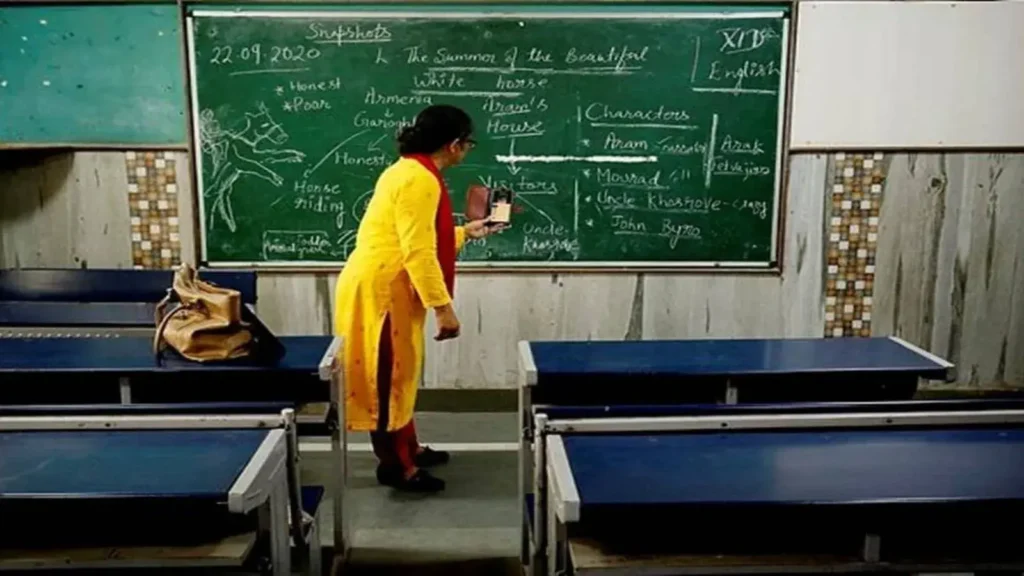
India’s central school systems — Kendriya Vidyalayas (KVs) and Jawahar Navodaya Vidyalayas (JNVs) — are currently facing a significant shortage of teaching staff, with over 13,700 positions lying vacant, the Ministry of Education informed Parliament. Responding to a written query in the Lok Sabha, Minister of State for Education Jayant Chaudhary revealed that 8,618 vacancies exist in KVs, while JNVs account for an additional 5,083 unfilled posts, taking the total deficit to 13,701. The minister attributed the shortfall to a range of factors, including the expansion of new schools, retirements, resignations, promotions, transfers, and institutional upgrades, all of which continuously generate new vacancies. He emphasized that recruitment is an ongoing process carried out in accordance with established rules, with efforts underway to fill positions as quickly as possible. In the meantime, both KVs and JNVs are relying on contractual teachers to ensure that academic activities continue without disruption. Chaudhary also reassured that despite the staffing gaps, student performance and academic standards remain stable, as reflected in consistent examination outcomes. Source: Indian Express  

Over 13,700 Teaching Vacancies in KVs and Navodaya Schools, Govt Assures Ongoing Recruitment Efforts Read More »

Labour Ministry Eases Scholarship Rules; EPFO to Refund ₹30.52 Crore from Dormant Accounts

In a significant policy shift, the Union Labour Ministry on Monday (February 23, 2026) updated its scholarship guidelines to allow students receiving welfare-based financial assistance from the Ministry to simultaneously avail merit-based scholarships offered by any Central or State government body. The revision is expected to widen access to financial aid, benefiting more than the current one lakh students annually. According to an official statement, the amendment will particularly support the children of beedi workers, cine workers, and non-coal mine workers. By removing restrictions on overlapping scholarships, eligible students will now have greater financial flexibility to pursue higher education and compete for merit-based awards without losing need-based support. The Ministry clarified that its scholarship scheme remains need-driven and does not impose academic merit criteria. The change has been introduced to promote equity, eliminate unintended exclusions, and ensure clearer policy implementation. Previously, several deserving students from unorganised worker families were unable to access additional scholarships due to conflicting eligibility rules. The decision aligns with the broader objectives of the Code on Social Security, which seeks to strengthen welfare measures for unorganised workers and their families, particularly in the area of education. In a separate reform initiative, the Ministry also announced the settlement of 7.11 lakh inactive accounts under the Employees’ Provident Fund Organisation (EPFO). Each of these inoperative accounts holds a balance of up to ₹1,000, amounting to a total of ₹30.52 crore. The funds will soon be refunded to the respective account holders or their legal heirs. Source: The Hindu

Labour Ministry Eases Scholarship Rules; EPFO to Refund ₹30.52 Crore from Dormant Accounts Read More »

CBSE Makes First Board Exam Mandatory for Class 10 Under New Two-Exam System

The Central Board of Secondary Education (CBSE) has announced that appearing in the first board examination will be compulsory for all Class 10 students under the new two-exam format set to be implemented from 2026. The clarification comes after the board received requests from some students seeking permission to skip the first phase due to various reasons and instead appear only in the second examination. However, CBSE has firmly stated that all students must take the first board exam. CBSE Examination Controller Sanyam Bhardwaj said that students who do not appear in at least three subjects during the first examination will not be permitted to sit for the second phase. Such candidates will be placed in the “Essential Repeat” category and will be required to reappear for the board examinations in the following year’s main session, usually held in February. Students who clear the first examination will be allowed to improve their performance in up to three subjects in the second phase. These subjects include Science, Mathematics, Social Science, and languages. The introduction of the two-board-exam system from 2026 marks a significant step in CBSE’s ongoing examination reforms aimed at offering students flexibility while maintaining academic standards. Source: PTI

CBSE Makes First Board Exam Mandatory for Class 10 Under New Two-Exam System Read More »

India Emerges as Cornerstone of UK’s £40-Billion Global Education Push

India has been identified as a priority market in the United Kingdom’s newly unveiled International Education Strategy, which sets out an ambition to grow Britain’s education exports to £40 billion a year by 2030. The strategy signals a clear shift in focus—from chasing international student numbers within the UK to expanding the global footprint of British education overseas. Under the plan, the UK government has constituted a new Education Sector Action Group that will work alongside the International Education Champion, higher education institutions, colleges and schools. The group’s mandate is to ease regulatory and trade barriers and help UK education providers scale up their presence in fast-growing international markets. At the same time, the Department for Education (DfE) has announced stricter compliance norms for institutions recruiting overseas students. These include tighter checks to ensure that those arriving in the UK are genuine students, along with the possibility of recruitment caps or even licence withdrawals for universities that fail to meet the new standards. Officials stressed that the revised approach removes numerical targets for international students in the UK and instead prioritises exporting UK education through overseas campuses, partnerships and transnational programmes. India features prominently among the UK’s focus countries, alongside Indonesia, Nigeria, Saudi Arabia and Vietnam. Emerging economies such as Brazil, Mexico and Pakistan have also been added to the strategy to widen the reach of British education globally. The International Education Champion, Professor Sir Steve Smith, will continue efforts to deepen academic and skills partnerships across these regions. UK Education Secretary Bridget Phillipson said the overseas expansion of British universities and colleges would help institutions diversify income streams, build long-term global partnerships and extend access to UK-quality education without students needing to travel abroad, while still supporting economic growth at home. The policy document highlights the University of Southampton’s Gurugram campus—the first foreign university campus established in India under the country’s revised UGC regulations—as a landmark development. It also references the joint announcement by Prime Ministers Narendra Modi and Keir Starmer in October 2025 regarding plans for nine additional UK university campuses in India. UK Trade Minister Chris Bryant described education exports as one of Britain’s strongest global success stories, driven by digital delivery, artificial intelligence and a growing focus on future-ready skills. Beyond commercial objectives, the strategy also underscores education’s role in enhancing the UK’s global influence, noting that British universities count more than 50 serving world leaders among their alumni. Government estimates suggest international students already contribute economic benefits worth around £560 per UK citizen. The strategy aims to build on this by working closely with the UK’s diplomatic network and the British Council to strengthen education systems worldwide. Officials reiterated that international student recruitment would continue to operate within the UK’s migration and visa framework, with firm enforcement to safeguard the integrity of the Graduate Route post-study work visa. Source: PTI

India Emerges as Cornerstone of UK’s £40-Billion Global Education Push Read More »

All Higher Education Institutions Mandated to Set Up Equity Committees Under New UGC Rules

The Union government has notified fresh regulations making it compulsory for all colleges and universities across the country to establish equity committees aimed at addressing discrimination and promoting inclusivity on campus, officials said. Under the University Grants Commission (Promotion of Equity in Higher Education Institutions) Regulations, 2026, every higher education institution (HEI) must constitute an Equal Opportunity Centre (EOC) along with an Equity Committee. These bodies will handle complaints related to discrimination and ensure fair treatment of students, faculty, and staff from disadvantaged groups. The regulations require that equity committees include representatives from Other Backward Classes (OBCs), Scheduled Castes (SCs), Scheduled Tribes (STs), persons with disabilities (PwDs), and women. Members will serve a two-year term, while special invitees will hold office for one year. The draft version of these regulations was released for public consultation in February last year. The final notification follows directions from the Supreme Court, which had asked the UGC to frame new rules while hearing petitions filed by the mothers of Rohith Vemula and Payal Tadvi. The petitions questioned the implementation of the earlier 2012 UGC regulations on equity. As per the notification, every HEI must set up an Equal Opportunity Centre to ensure the effective implementation of policies for disadvantaged groups, offer academic, financial, social, and personal guidance, and encourage diversity on campus. In cases where a college does not have at least five faculty members, the responsibilities of the centre will be handled by the Equal Opportunity Centre of the affiliated university. The EOC is also expected to coordinate with civil society organisations, local media, law enforcement agencies, district administrations, non-governmental organisations, parents, and institutional staff to fulfil the objectives of the regulations. Additionally, it will work with District and State Legal Services Authorities to provide legal assistance in deserving cases. The head of the institution will appoint a senior faculty member or professor with a demonstrated commitment to the welfare of disadvantaged communities as the coordinator of the centre. The Equity Committee, formed under the EOC, will oversee its functioning and investigate complaints of discrimination. The regulations also call for the creation of ‘Equity Squads’, smaller groups tasked with maintaining vigilance on campus and preventing discriminatory practices. The move comes in the backdrop of high-profile cases such as that of Rohith Vemula, a PhD scholar at the University of Hyderabad who died by suicide in 2016, and Payal Tadvi, a resident doctor who died in 2019, both allegedly after facing caste-based harassment. Source: PTI

All Higher Education Institutions Mandated to Set Up Equity Committees Under New UGC Rules Read More »

CBSE reminds affiliated schools to strictly follow public disclosure rules

The Central Board of Secondary Education (CBSE) has issued a fresh advisory asking all its affiliated schools to strictly adhere to the Mandatory Public Disclosure norms, with a special focus on keeping their official websites updated with accurate information. The Board has warned that failure to comply may result in action under the CBSE Affiliation Bye-laws. In its communication, CBSE reiterated that maintaining a functional and informative website is a basic condition for both new and existing affiliations. Schools are required to upload comprehensive institutional details online, as specified under various clauses of the Affiliation Bye-laws, making digital transparency a non-negotiable requirement. The Board has directed schools to follow the revised format of Appendix IX and ensure that all prescribed information and documents are correctly uploaded on their websites by February 15, 2026. Under Clause 14.1 of the Bye-laws, schools are obligated to comply with all instructions issued by CBSE. As per Clauses 2.3.8 and 2.4.9, affiliated schools must display key details such as affiliation status, infrastructure facilities, fee structure, student strength, contact details, and complete information about teaching staff along with their qualifications. Schools must also upload valid, self-attested documents in the “Mandatory Public Disclosure” section in line with Appendix IX. CBSE has further reminded schools about Clause 14.5, which requires them to prepare and publish a detailed annual report on their websites by September 15 every year. The report should include the academic calendar, teacher qualifications and professional development, academic performance, sports achievements, environmental initiatives, PTA activities, decisions of the School Management Committee, and total student enrolment. The Board observed that despite multiple reminders, many schools continue to neglect website updates or upload incomplete, incorrect, or invalid information. In several cases, details related to teachers and their qualifications are missing from the Mandatory Public Disclosure section. CBSE stressed that such information is crucial for parents to evaluate a school’s academic standards and teaching resources, and plays a vital role in promoting transparency and accountability. The Board has cautioned that non-compliance will be considered a violation of Clause 12.2.3 of the Affiliation Bye-laws and may attract penalties as outlined in Chapter 12, according to the official statement. Source: Indian Express

CBSE reminds affiliated schools to strictly follow public disclosure rules Read More »

Meghalaya Makes Khasi and Garo Mandatory in Foundational Education to Strengthen Cultural Roots

The Meghalaya government has rolled out a new foundational-stage curriculum that makes Khasi and Garo compulsory for children up to Class 1, aiming to simplify early learning while strengthening students’ connection with local culture and heritage. Chief Minister Conrad K. Sangma said the initiative is designed to instil confidence and a strong sense of identity among children from their formative years. Emphasising the importance of mother-tongue education, he noted that early exposure to indigenous languages helps children develop a deeper sense of belonging. The decision was taken during a cabinet meeting chaired by him on Friday. According to officials, the newly developed textbooks will be introduced on an optional basis in the upcoming academic year, as many schools have already finalised their syllabi. The curriculum will become mandatory from the following academic session. The revised foundational curriculum, spanning preschool to Class 1, places emphasis on ease of learning, value-based education, and an early introduction to Meghalaya’s history, culture, and traditions. In addition to education reforms, the cabinet approved a revised pay structure for Sarva Shiksha Abhiyan and ad hoc teachers, addressing a long-standing demand. The chief minister termed the move a recognition of their vital role and a step towards ensuring greater stability within the education system. The cabinet also cleared a five-year Mission Mode HIV/AIDS project with a budget allocation of ₹25 crore, focusing on awareness generation, infrastructure strengthening, and targeted interventions across the state. Other key decisions included amendments to the Meghalaya Building Bye Laws, 2021, making green building certification mandatory for large-scale constructions. Former Meghalaya High Court Chief Justice S. Vaidyanathan was appointed as the chairperson of the Meghalaya Human Rights Commission. Further, the cabinet approved the formation of the Meghalaya Livelihoods and Investment Financing Cooperative Society Ltd to support cooperative societies, agriculture, and food processing sectors through working capital and investment assistance. Approval was also granted for the creation of a National Games Secretariat Society to oversee preparations for the 39th National Games. Source: PTI

Meghalaya Makes Khasi and Garo Mandatory in Foundational Education to Strengthen Cultural Roots Read More »

India Adds Over 77,000 Medical Seats in Six Years to Strengthen Healthcare Workforce

India has significantly expanded its medical education capacity over the past six years, adding 48,563 undergraduate (MBBS) seats and 29,080 postgraduate (MD/MS) seats between the 2020–21 and 2025–26 academic years, the Ministry of Health and Family Welfare informed the Rajya Sabha. In a written response to an unstarred question, Minister of State for Health and Family Welfare Anupriya Patel said the expansion was carried out based on recommendations from the National Medical Commission (NMC), with a focus on addressing doctor shortages, particularly in underserved and remote regions. Data presented in Parliament shows a consistent year-on-year rise in MBBS seats, beginning with 2,963 additions in 2020–21. This was followed by 8,790 seats in 2021–22, 7,398 in 2022–23, 9,652 in 2023–24, and 8,641 in 2024–25. The largest annual increase came in 2025–26, with 11,119 new MBBS seats, taking the six-year total to 48,563. Postgraduate medical education also witnessed steady growth. PG seats increased by 4,983 in 2020–21 and 4,705 in 2021–22, before adding 2,874 seats in 2022–23. The momentum picked up again with 4,713 seats in 2023–24 and 4,186 in 2024–25. The highest single-year rise of 7,619 PG seats was recorded in 2025–26, bringing the cumulative increase to 29,080 seats. In addition, the Centre has approved the creation of 10,023 more medical seats under centrally sponsored schemes in government medical colleges between 2025–26 and 2028–29, further boosting capacity. The ministry said the expanded intake has contributed to improving the doctor-to-population ratio across several states, including Rajasthan, while also making medical education more accessible to Indian students and reducing the need to study abroad.   To address concerns over quality, the government noted that the NMC has implemented robust regulatory measures, such as the Minimum Standards Requirements, Graduate Medical Education Regulations 2023, Maintenance of Standards of Medical Education Regulations 2023, and the Competency-Based Medical Education Curriculum Guidelines 2024, to ensure academic and clinical standards are maintained despite rapid expansion. Source: Indian Express  

India Adds Over 77,000 Medical Seats in Six Years to Strengthen Healthcare Workforce Read More »

Karnataka to Set Up House Panel to Ease Rules for Private School Recognition

The Karnataka government has decided to establish a House committee to review and recommend relaxations to the rules governing the initial recognition and renewal of private aided and unaided schools. School Education and Literacy Minister S. Madhu Bangarappa announced the move in the Legislative Council after members highlighted the challenges faced by institutions due to stringent regulations. He said the committee would study the issue in depth and submit a report, based on which the government will take a final call. Bangarappa assured that no private school would face difficulties during the interim period before the committee is formed and its recommendations implemented. Responding to allegations that some officials were demanding bribes for renewing school recognition, the minister acknowledged that efforts to shift the process online had not been fully successful. He warned that strict disciplinary action would be taken against any officials found engaging in corruption. Council members urged the government to act swiftly, citing widespread malpractice and stressing the need to immediately relax the rules and set up the House committee. Source: PTI  

Karnataka to Set Up House Panel to Ease Rules for Private School Recognition Read More »

Chile Moves to Ban Smartphone Use in Classrooms to Reduce Distractions and Improve Learning

Chile has approved a new law that will prohibit the use of smartphones and other smart devices during class hours in elementary and middle schools, joining a growing list of countries taking action to curb digital distractions among young students. The ban, set to take effect next year, is aimed at reducing the negative effects of screen use and refocusing attention on in-person learning. The measure aligns Chile with nations such as France, Brazil, Hungary, the Netherlands and China, all of which have implemented varying levels of restrictions on phone use in schools. Education Minister Nicolás Cataldo celebrated the decision, saying the country is moving toward “a cultural change” that encourages children to reconnect face-to-face, socialise during breaks, and rebuild their attention spans for better academic outcomes. While the Senate had already supported the phone ban earlier in principle, the legislation underwent further adjustments before being put to a final vote in the lower house on Tuesday. Lawmakers overwhelmingly backed the updated version, which bans smartphone use during lessons except in emergencies or for approved educational purposes. The bill will now be sent to President Gabriel Boric for his signature before becoming national policy in time for the 2026 school year. Growing concerns around youth mental health have fuelled calls for such restrictions. Parents and teachers across Chile have long argued that excessive smartphone use hinders both academic performance and emotional development. A school in Santiago successfully piloted a program earlier this year that blocked mobile signals, adding momentum to the nationwide push. Recent data from an OECD international study supports these concerns, revealing that more than half of Chilean students reported that digital devices disrupted their learning. Source: AP

Chile Moves to Ban Smartphone Use in Classrooms to Reduce Distractions and Improve Learning Read More »