ArdorComm Media Group

Thursday, April 16, 2026 1:07 PM

Education Policy

Parliament to Introduce Bill Creating a Single Higher Education Regulator to Replace UGC, AICTE, NCTE

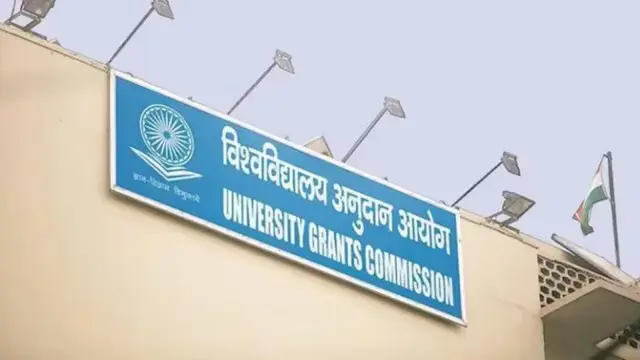
Parliament is set to take up a landmark reform bill aimed at overhauling India’s higher education regulatory framework. The Higher Education Commission of India (HECI) Bill, scheduled for introduction in the winter session beginning December 1, proposes replacing key regulatory bodies—the University Grants Commission (UGC), the All India Council for Technical Education (AICTE), and the National Council for Teacher Education (NCTE)—with one unified authority. According to the Lok Sabha bulletin, HECI will act as the central regulator for higher education across the country, except for medical and legal education. The new body will focus on regulation, accreditation, and setting professional standards. Funding responsibilities, however, will continue to remain with the administrative ministry and not under HECI’s purview. The concept has been in discussion for years, with a draft bill first released in 2018 for public feedback, proposing the repeal of the UGC Act. Efforts to revive the plan gained momentum after Dharmendra Pradhan became the Union Education Minister in 2021. The National Education Policy (NEP) 2020 strongly advocates for such a unified regulator, noting that India’s higher education system requires a complete structural overhaul. The policy stresses that regulation, accreditation, funding, and academic standard-setting should function independently yet cohesively under empowered bodies to strengthen the sector. Source: Indian Express

Parliament to Introduce Bill Creating a Single Higher Education Regulator to Replace UGC, AICTE, NCTE Read More »

CBSE Unveils School Performance Report Card to Boost Data-Driven Academic Planning

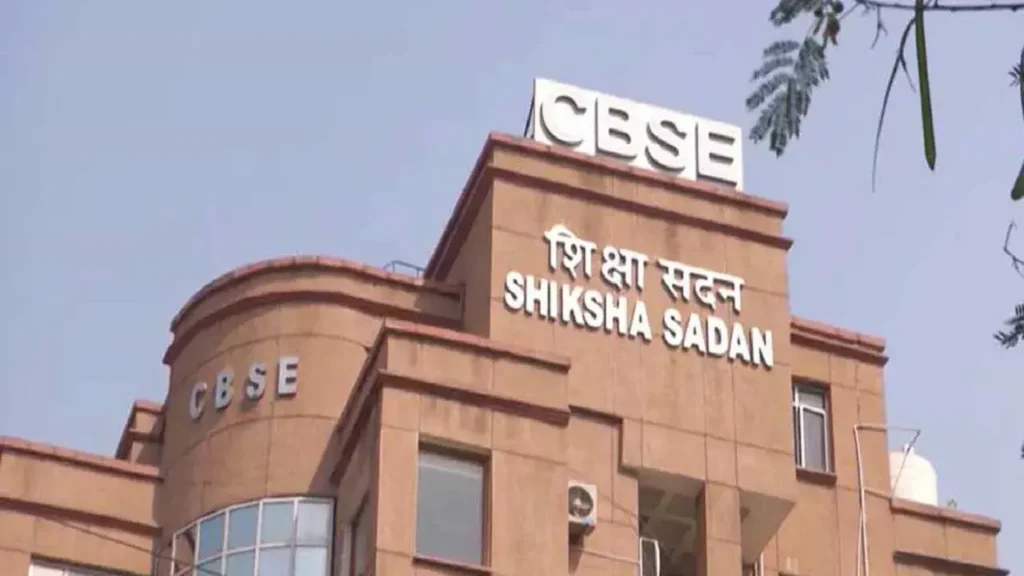
The Central Board of Secondary Education (CBSE) has introduced the School Academic Performance Report Card for all affiliated schools for the 2024–25 academic year, reinforcing its push towards data-driven decision-making and evidence-based teaching practices. The comprehensive report card provides a detailed overview of each school’s performance in the Class 10 and 12 board examinations. It includes comparative data, enabling institutions to evaluate their results against state and national CBSE averages across subjects. The analysis helps schools pinpoint academic strengths, identify gaps, and track trends in gender-wise performance to promote equity in learning outcomes. Beyond academics, the report card also incorporates holistic indicators such as school-level participation and achievements in sports and extracurricular activities, benchmarked at cluster and zonal levels. CBSE has urged schools to thoroughly analyse their performance reports and align the insights with their School Annual Pedagogical Plans (SAPP) to foster continuous improvement and enhance learning effectiveness. The Board emphasized that this initiative aims to empower institutions with actionable data for strategic academic planning and student success. Heads of institutions can download their respective performance reports from the CBSE School Login Portal using their official credentials. Reaffirming its commitment to transparency, accountability, and comprehensive educational excellence, CBSE stated that the initiative is in harmony with the objectives of the National Education Policy (NEP) 2020. Source: Indian Express

CBSE Unveils School Performance Report Card to Boost Data-Driven Academic Planning Read More »

Delhi to Appoint Over 5,000 New Teachers to Strengthen Classroom Learning

In a major step to address the shortage of teachers and improve learning outcomes, the Delhi government has announced the recruitment of 5,346 trained graduate teachers (TGTs) for government and municipal schools. The move aims to enhance classroom instruction and ensure every student from Classes 6 to 10 receives more focused academic attention. Chief Minister Rekha Gupta shared on X that the initiative is part of the government’s broader vision to provide quality education, personalised mentorship, and equal opportunities for all learners. “We are committed to building an education system where every child receives the guidance they need to reach their full potential,” she said. Currently, nearly 10,000 teaching positions remain vacant in Delhi’s government schools, which has affected the student–teacher ratio, according to education experts. As per a circular issued by the Directorate of Education (DoE) on October 3, the application process for the vacancies began on October 9 and will close on November 7. The latest DoE data indicates that over 70,000 teachers are currently serving more than 18 lakh students across the capital. Source: PTI

Delhi to Appoint Over 5,000 New Teachers to Strengthen Classroom Learning Read More »

Delhi Govt to Conduct Social Audit of Schools Under Samagra Shiksha for 2025-26

ardorcomm news

The Delhi government has announced a comprehensive social audit of its government schools for the 2025–26 academic year under the Samagra Shiksha scheme. The initiative aims to ensure that all provisions and student entitlements guaranteed by the Right to Education (RTE) Act are delivered promptly and fairly. According to a circular issued by the Directorate of Education, around 60% of government schools across Delhi will be covered under this audit, which will be carried out in line with the revised guidelines of the Ministry of Education, Government of India. A total budget allocation of ₹3.73 crore has been approved for the exercise. The selected institution—preferably a university, college, or technical institute with a NAAC rating of B+ or higher—will be tasked with training social auditors, conducting on-site inspections, compiling reports, and uploading findings to the designated online platform. Preference will be given to Delhi’s State Administrative University for leading the process. The audit will examine whether schools are fulfilling the mandates of the RTE Act and Samagra Shiksha, focusing on areas such as classroom infrastructure, sanitation facilities, drinking water availability, electricity, and student safety—particularly that of girls. It will also assess enrolment, attendance, and retention rates, along with the inclusion of children with special needs. Parents, teachers, and community representatives will be actively involved in evaluating school performance to provide a grassroots-level perspective. Officials stated that the social audit will help uncover challenges not visible through routine monitoring and guide the government in taking corrective measures where needed. Launched in 2018, Samagra Shiksha is a centrally sponsored scheme that integrates three earlier programmes—Sarva Shiksha Abhiyan, Rashtriya Madhyamik Shiksha Abhiyan, and Teacher Education—and aligns them with the goals of the National Education Policy (NEP) 2020. The initiative also supports the Delhi government’s “zero-tolerance” approach toward lapses in student safety and aims to strengthen accountability in school administration. Source: PTI

Delhi Govt to Conduct Social Audit of Schools Under Samagra Shiksha for 2025-26 Read More »

NCERT to Handle Equivalence of Class 10 & 12 Certificates Across All Boards

The National Council of Educational Research and Training (NCERT) will now be responsible for granting equivalence to Class 10 and Class 12 certificates issued by various school education boards across India. This equivalence will be applicable for admissions to higher education institutions as well as recruitment in government jobs, according to an official announcement on Friday. The Department of School Education and Literacy, under the Ministry of Education, has published the notification in the e-Gazette. This move replaces the earlier notification of November 15, 2021, which had entrusted the task to the Association of Indian Universities (AIU). The responsibility will now be carried out by NCERT through its National Assessment Centre—Performance Assessment, Review and Analysis of Knowledge for Holistic Development (PARAKH)—set up under the provisions of the National Education Policy (NEP) 2020. According to the ministry, this institutional mechanism will ensure that the process of granting equivalence is conducted with academic rigour while upholding the highest educational standards. The system will apply to all school boards established by the central and state governments, statutory bodies, or recognised institutions. Importantly, the equivalence granted by NCERT will be valid nationwide, ensuring inter-board parity and enabling seamless student mobility across school education boards. Source: PTI    

NCERT to Handle Equivalence of Class 10 & 12 Certificates Across All Boards Read More »

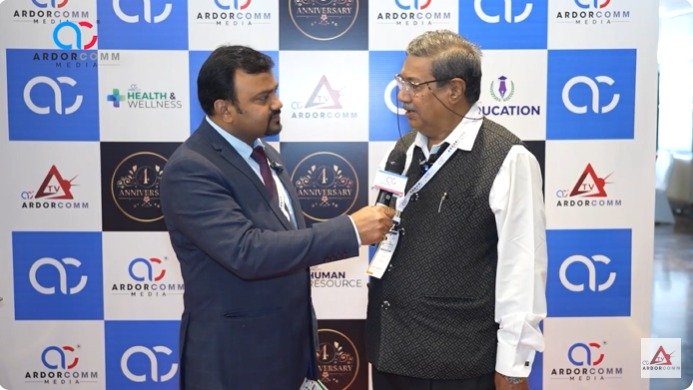
Dr. D. B. Singh, Vice Chancellor, Haridwar University, Roorkee emphasizes on true collaboration, at ArdorComm Education Leadership Summit & Awards 2025 in Dehradun

Dr. D. B. Singh

Welcome, Professor Dr. Dharam Bir Singh. We’re honoured to have you with us. Could you tell us a bit about Haridwar University? Thank you so much. Haridwar University started in 2023, so we’re still quite a young institution. Being a new university comes with both opportunities and challenges. But we see great potential—sky is the limit. We currently offer programmes under five faculties: Engineering, Business Studies, Pharmacy, Nursing, and Agriculture. That’s a wide range—from medical sciences to management. How important do you think skilling is, and do you see a gap between skilling and employability? Yes, definitely. There is a gap. Students often have strong theoretical knowledge but lack hands-on skills and practical exposure. Bridging this gap is essential. We are already working with partners who specialise in providing enough skill training to our students. How has Haridwar University been implementing the National Education Policy (NEP) 2020?   We’ve taken major steps this year. Earlier, we were affiliated with Uttarakhand Technical University, but now we have the autonomy to revise our curriculum. We’ve redesigned our syllabi in line with NEP 2020 and have included all the required components to meet the policy guidelines. Today’s event features stakeholders from schools to higher education, EdTech, skill development, and even government officials—truly a KG to PG representation. How do you think such forums benefit the academic community and society? This is a fine example of true collaboration. All stakeholders—schools, universities, corporates, and the government—must come together to work toward the common goal of student development. After all, today’s students are tomorrow’s citizens and leaders. Collective action is the only way forward. What has been your takeaway from the event so far? It’s been a wonderful experience. I attended a session with school principals and directors discussing real challenges in the education space. The conversations were insightful and solution-driven. I also visited several exhibition stalls, where I learned about various services being offered. Overall, a truly enriching day so far. We recently celebrated our fourth anniversary as a media startup. Would you like to share a message for ArdorComm Media Group? As they say, a journey of a thousand miles begins with a single step—and you have already taken four big ones. You’re calling yourself a small startup, but I see it from a different lens. I believe you are on a path to achieving much more than you’ve imagined. My best wishes to the entire team.

Dr. D. B. Singh, Vice Chancellor, Haridwar University, Roorkee emphasizes on true collaboration, at ArdorComm Education Leadership Summit & Awards 2025 in Dehradun Read More »

Dr. Sunil Rai, President, University of Petroleum and Energy Studies (UPES), Dehradun, Shares Insights on Collaboration, Flexibility & Purpose at ArdorComm Education Leadership Summit & Awards 2025 in Dehradun

Dr. Sunil Rai

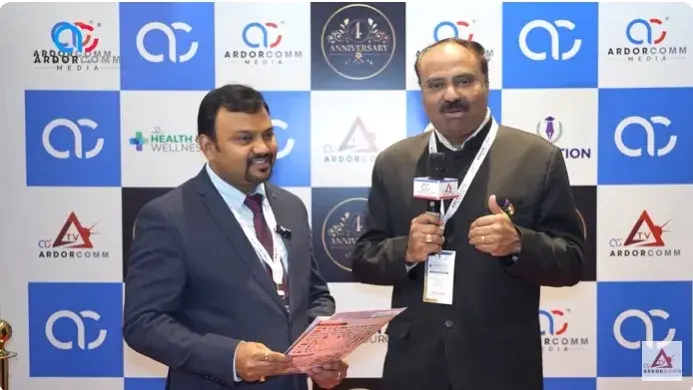
Welcome to the event, Dr. Sunil Rai. What are your key takeaways from today’s Education Leadership Summit? Firstly, I would like to congratulate you and your entire team for putting together this event with a very timely theme—expanding education, skills, and employability. The major takeaway for me is the need for total collaboration between governance, industry, and educators. Only then can we build strong bridges and capitalize on each other’s resources effectively. In today’s era, sports seem to be vanishing from academic curricula. What’s your perspective on the role of sports in education? Sports are a crucial component of character and personality building. At UPES, sports are not considered extracurricular—they are incurricular. All students are required to follow a health routine, be it yoga, zumba, running, or trekking. Additionally, students must pick up a sport—field or individual. If they perform well at the district level, they even receive CGPA credits up to point 1 to point 5 which is quite substantial. So yes, sports should be embedded in the curriculum, not sidelined. The National Education Policy 2020 (NEP 2020) emphasizes flexibility and inclusivity. What initiatives has UPES taken to align with this vision? We’ve implemented multiple NEP-aligned measures: Flexibility: Students can take up to 18 credits (6 exploratory courses) from any stream. For example, a law student can take a biotech course, or a biosciences student can explore design. Mobility: If a student realizes they’re in the wrong program (e.g., BTech X), they can switch as late as the end of the second year. Inclusivity: We ensure no student is denied education due to financial constraints. Financial support is arranged as needed. ArdorComm Media is celebrating its 4th anniversary. Any message or wishes for the team? Many congratulations on completing four impactful years. It doesn’t feel like just four years—you’ve already covered a remarkable distance. What stands out about ArdorComm is your sense of purpose. My advice is: don’t lose that. You’re not just another media company—you are making a difference. Stay true to your mission, and I wish you and your team continued success and impact.  

Dr. Sunil Rai, President, University of Petroleum and Energy Studies (UPES), Dehradun, Shares Insights on Collaboration, Flexibility & Purpose at ArdorComm Education Leadership Summit & Awards 2025 in Dehradun Read More »

Prof. (Dr.) Shankar Ramamoorthy, Vice Chancellor, Jigyasa University, Dehradun Highlights Future-Ready Education at ArdorComm Education Leadership Summit & Awards 2025 in Dehradun

Prof. (Dr.) Shankar Ramamoorthy

We have a very senior academician with us, Prof. Dr. Shankar Ramamoorthy. He’s the Vice Chancellor of one of the finest universities of Uttarakhand, Jigyasa University, Dehradun. We welcome you to today’s event. Welcome and thank you very much. I think this has been a very wonderful journey, Mr. Anand, and I am pretty much honored to be part of the initiative that Mr. Anand has started—the ArdorComm Media. I think Ardor’s ensemble of putting all the people together in terms of industry and academia has been a very wonderful thing. We are enjoying this whole experience since morning. We’ve been hearing from all the educational leaders, we’ve been hearing from academicians, we’ve been hearing from industry experts—I think this has been a very wonderful journey. Personally, I must say that I feel that I’m a learner today. And after spending 35 years in the industry and academia, when I come back here, I say that what Mr. Anand is doing is very important because what we are teaching is something that is happening here. And we are going to factor the learnings from today and see that the curriculum is getting more and more enriched. I’ve been a very strong supporter of the job description model. In a job description model, I go to Naukri.com, I go to Shine, I go to Indeed, I see what are the job profiles. I tell my people to look at the job profiles, make curriculum, and make sure that you backfill all the knowledge that you have—from the industry to academia. Personally, spending in industry for 28 odd years in different cities like Bangalore, Mumbai, Pune—when I came back to academics, I really found that a lot has to be done here. And forums like this are a very, very enjoying experience. Thank you very much, Mr. Anand, for this.   Where do smart skills and a smarter workforce play a role? Do you really feel there is a gap here, and how should we overcome it? Absolutely. There is a lot of—a very big hiatus, a very big gap persists between the rubber and the ground. And the rubber has to hit the ground at the end of the day. So whatever rubber—or the students—we generate, they are working hard, but they’re not smart. They’re not industry-ready. They’re half-baked. And I think the moment has arrived that we have to make sure that we have industry-ready professionals. So it’s going to be a very different way of teaching them. It’s not going to be pedagogy—it has to be andragogy. It has to be more about micro-teaching, it has to be peer learning, it has to be activity-based learning. I think the formats—even of our benches in the classroom—have to undergo a sea change and a big overhaul. We need to have, you know, places where a conference-like setup is there, people think, people share, and people are able to give back to the class. Things like flipped learning, things like new forms of pedagogy have to come—and that’s the new normal future.   You very well said that the infrastructure of the school and university campuses also has to be changed. Do you feel there should be budget allocation or investment in infrastructure to be future-ready and digitalized? Exactly, I think when we start a school or a university or an education system, the most important thing they say is—like the six M’s of management—Men, Money, Material, Methods, Market, and Motivation. I think apart from having the right faculty (Men) and the Money, the most important thing is the Material. When I say material, I’m talking about infrastructure. I’m talking about digital infrastructure—right from smart classrooms, right from smart learning, right from everything. We need a good ERP, a good LMS, a good recruitment management system, faculty management system. I think we have to make sure that educational institutions’ workflow dynamics are becoming more optimized, more agile, and faster.   How is Jigyasa University growing, and what’s the vision of Jigyasa University? I am almost seven months old in Jigyasa University. I’m from Galgotias and Sharda before. So when I came to this university, I found that there’s a lot of things to be done. This university is trying to go up slowly in terms of its presence, visibility, and recognition. But the most important thing Jigyasa University has to do is—it has to make sure, apart from building a brand, it has to do the fundamental thing well: what happens in those 50 minutes of the class. I think that’s exactly where the lights, action, and the camera is. If you’re able to do that job well—the teaching and learning—I’ve told everyone, all will fall in place. That’s why I’m hiring the best faculty, I’m making sure that I have the best people, I pay the best possible remuneration to my faculty. And more important is—I’m developing a passion in the real teacher who has come to be an educator and not just for a job. So I’m telling them—I’m going to hire people who don’t want to do a job with us. And we really handpick students and faculty both for the same. I’m very pleased to share with you that we recently completed our fourth year of existence—this is our fourth anniversary as a media group. Any message or good wishes you’d like to give to ArdorComm Media Group? I think ArdorComm Media, in its last four years, has done a very wonderful job. I was going through your website before coming here and before I was selected to be a speaker here. I think in the last four years, you have been evolving continuously. And I have seen that the type of people you bring—right from the government, right from the policymakers, right from the academicians—I think the cast, ensemble, and the galaxy of people you bring is very perfect. And I wish all the best and good luck for the ArdorComm Media Group. Lots of


Prof. (Dr.) Shankar Ramamoorthy, Vice Chancellor, Jigyasa University, Dehradun Highlights Future-Ready Education at ArdorComm Education Leadership Summit & Awards 2025 in Dehradun Read More »

Over 4.7 Lakh Pirated NCERT Books Seized Since 2024, Says Education Ministry

In a significant crackdown on textbook piracy, the Ministry of Education revealed that over 4.7 lakh pirated NCERT textbooks have been confiscated across India since 2024. This update was shared in a written response by Union Minister of State for Education, Jayant Chaudhary, during a Rajya Sabha session on Wednesday. “Reports of NCERT textbook piracy have emerged from various parts of the country. From 2024 to 2025, enforcement teams seized around 4.71 lakh counterfeit books in multiple operations carried out in different states,” said Chaudhary. He emphasized that piracy is largely driven by the profit motives of unauthorized operators. NCERT’s mission, Chaudhary reiterated, is to provide high-quality educational resources at minimal cost to students across India, functioning on a no-profit, no-loss model. Highlighting recent efforts to combat the menace, he informed that in the past year alone, NCERT conducted raids on 29 locations linked to the production and distribution of pirated books. These included premises using unauthorized NCERT watermarked paper and illegal printing setups. Assets and equipment worth over ₹20 crore were seized during these raids. To address the root causes of piracy, several measures have been implemented, including a 20% price cut on textbooks, improved paper and print quality with advanced machinery, faster and timely textbook production, and expanded online availability through e-commerce channels. In a tech-driven approach, NCERT also tested an innovative anti-piracy mechanism—developed and patented by IIT Kanpur—on one million copies of a Class 6 textbook, aiming to deter counterfeit reproduction through secure tracking technology. Source: PTI Image Credit: iStock  

Over 4.7 Lakh Pirated NCERT Books Seized Since 2024, Says Education Ministry Read More »

CBSE Mandates Audio-Visual CCTV Installation in Schools to Enhance Student Safety

Ardorcomm news

In a significant move to reinforce student safety on school campuses, the Central Board of Secondary Education (CBSE) has issued a directive requiring all affiliated schools to install high-resolution CCTV systems with audio-visual recording capabilities in strategic areas of their premises. As per the latest amendment to the CBSE Affiliation Bye Laws-2018, schools must ensure that classrooms, corridors, staircases, libraries, and other common zones — excluding toilets and washrooms — are under continuous surveillance. These systems must also maintain a minimum 15-day backup of recorded footage, accessible to authorities when needed. This initiative, aimed at safeguarding students from bullying and other potential threats, is in line with the National Commission for Protection of Child Rights (NCPCR)’s 2021 safety manual, which highlights the need for both physical and emotional security in educational settings. CBSE Secretary Himanshu Gupta emphasized that children have a constitutional right to a safe, respectful learning environment. He stated, “The safety has two aspects- a)unscrupulous un-societal elements, b) safety for the overall well being of the children with reference to bullying and implicit threats. All of such probabilities can be prevented with the usage of the latest technology.” Source: New Indian Express

CBSE Mandates Audio-Visual CCTV Installation in Schools to Enhance Student Safety Read More »