ArdorComm Media Group

Thursday, April 16, 2026 1:04 PM

Education Policy

CBSE Mandates First Board Exam for Class 10; Introduces Optional Second Attempt in Select Subjects
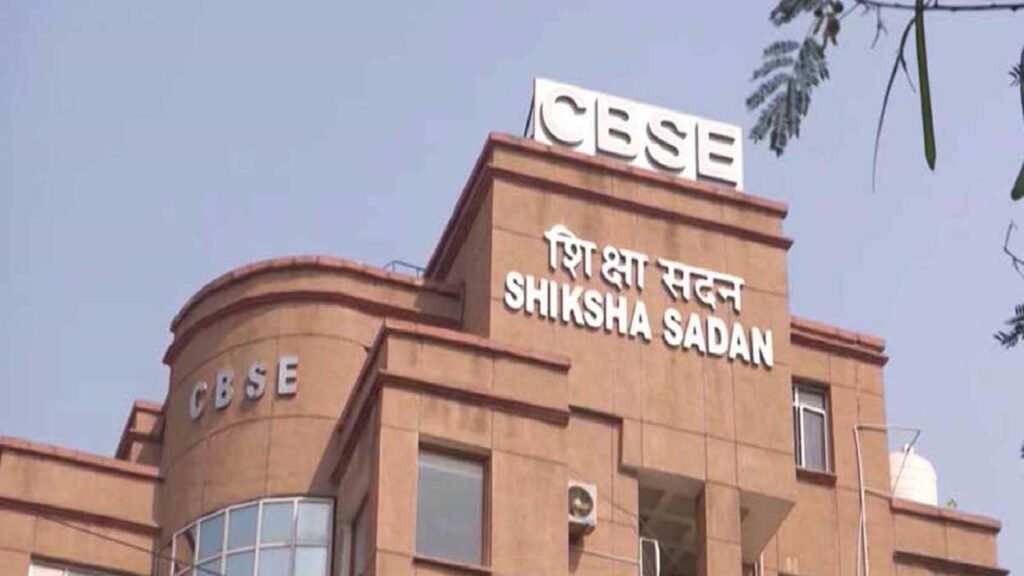
Starting from the academic year 2026, the Central Board of Secondary Education (CBSE) will implement a dual-board exam system for Class 10 students, with the first exam being mandatory for all. The second exam will serve as an optional chance for students to improve their scores, but only in up to three subjects from science, mathematics, social science, and the two language papers. Previously, CBSE allowed students to reappear for improvement in just two subjects. Under the new framework, that number increases to three, offering more flexibility while still maintaining academic discipline. CBSE Chairman Rahul Singh explained that making the first exam compulsory and restricting the second exam to three subjects is meant to encourage students to treat the initial attempt seriously. He emphasized that the second exam is not an alternative, but an “additional opportunity” for enhancement. If a student skips three or more subjects in the first round, they will not be eligible for the second attempt and will have to reappear the following year under the ‘essential repeat’ category. However, exceptions will be made for students in winter-affected regions like Ladakh, parts of Arunachal Pradesh, Sikkim, and Himachal Pradesh. These students can opt to appear only for the second set of exams, as heavy snowfall may hinder participation in the February session. The timeline for the two exams is as follows: the first board exam will be conducted from mid-February, with results declared in April. Based on their performance, students can choose to take the second exam in May, and the best scores from either attempt will be considered final. The second round results are expected by June 30, a shift from the earlier system where improvement results were released in August. Students who fail to clear the first exam will be able to appear in the second round as ‘compartment’ candidates. This two-exam system may eventually be extended to Class 12 as well, with similar timelines to ensure college admission deadlines are met. Earlier this year, CBSE had released a draft proposal for this policy and sought public opinion. According to Singh, 64% of students expressed support for the new format. Notably, the initial draft had not made the first exam compulsory or set a cap on the number of subjects for the second attempt — both key changes in the final version. Source: Indian Express
CBSE Mandates First Board Exam for Class 10; Introduces Optional Second Attempt in Select Subjects Read More »

Centre, NIOS, and NCERT Join Hands to Advance Inclusive Education for Children with Disabilities

In a significant move to promote inclusive education, the Department of Empowerment of Persons with Disabilities (DEPwD) has entered into a tripartite agreement with the National Institute of Open Schooling (NIOS) and the National Council of Educational Research and Training (NCERT). The agreement, signed in the presence of Union Ministers Virendra Kumar and Dharmendra Pradhan, aims to create an enabling educational environment for children with disabilities by aligning with the principles of the National Education Policy (NEP) 2020. This strategic collaboration will focus on revamping curriculum and learning materials to ensure they are accessible, inclusive, and tailored to the needs of learners with disabilities. NCERT will play a key role in modifying textbooks and curricular content to reflect these values. As part of the agreement, NIOS will grant recognition to special schools operated by NGOs under the Deendayal Disabled Rehabilitation Scheme (DDRS), designating them as Special Accredited Institutions for Education of the Disabled (SAIEDs). These institutions will offer a broad spectrum of academic and vocational education—from foundational levels to senior secondary—supported by NIOS in terms of admissions, exams, study materials, and necessary accommodations during assessments. Union Minister Virendra Kumar highlighted the initiative as a step toward realising Prime Minister Narendra Modi’s vision of inclusive growth, emphasizing that every child, regardless of ability, should have the opportunity to receive quality education. “This MoU affirms that inclusive education is not a luxury but a fundamental right,” he said. Education Minister Dharmendra Pradhan underscored the broader societal impact of inclusive education. “Creating a just and empathetic society begins with our schools. NEP 2020 is a progressive framework guiding us, and in the coming year, we are also prioritising infrastructure like accessible toilets to help reduce dropout rates,” he noted. DEPwD Secretary Rajesh Aggarwal reiterated the commitment to widen access for students with disabilities, including facilitating their entry into premier institutions such as IITs and IIMs. He also praised NIOS for its innovative step of introducing Indian Sign Language as a subject at the secondary level. Echoing the vision, Sanjay Kumar, Secretary of the Department of School Education and Literacy, stated that the ultimate mission is to ensure every child with a disability is able to complete their schooling and access equal opportunities in higher education and beyond. Source: PTI

Centre, NIOS, and NCERT Join Hands to Advance Inclusive Education for Children with Disabilities Read More »

IIM Sambalpur Unveils New Undergraduate Programmes in Public Policy and AI to Shape Future Leaders

In a strategic move aligned with the National Education Policy (NEP) 2020, the Indian Institute of Management (IIM) Sambalpur has launched two groundbreaking undergraduate programmes: Bachelor of Science in Management and Public Policy and Bachelor of Science in Data Science and Artificial Intelligence. These four-year, fully residential programmes are designed to nurture future-ready professionals with a blend of analytical, ethical, and leadership skills. The BSc in Management and Public Policy targets students interested in driving grassroots change, with a curriculum that emphasizes sustainability, ESG (Environmental, Social, and Governance) principles, and community-led development. The programme aspires to bridge the gap between policy formulation and real-world impact. Admissions to this course will be facilitated through the Common University Entrance Test (CUET). Meanwhile, the BSc in Data Science and Artificial Intelligence, developed in collaboration with industry stakeholders, aims to boost India’s digital transformation journey and enhance global competitiveness. It focuses on cultivating ethical AI use, advanced data analytics, and innovation-driven problem-solving. Entry into this programme will be via JEE Main scores. Highlighting the institution’s progressive approach, the courses are structured with multiple entry and exit options—students can earn a certificate after one year, a diploma after two, a degree after three, and an honors degree upon completing the fourth year. This flexibility is intended to support diverse learner pathways in line with NEP 2020 goals. IIM Sambalpur Director, Prof. Mahadeo Jaiswal, expressed pride in the launch, calling it a “pioneering step” in cultivating responsible, entrepreneurial leaders. “These programmes are not only about acquiring academic knowledge; they’re about building leaders equipped with a global outlook and the compassion to address societal challenges,” he noted. The launch event also featured a roundtable discussion on the theme: ‘Global Capability Centres (GCCs) as Engines of Innovation for Global Enterprises’. The dialogue spotlighted the emerging role of GCCs as strategic, innovation-led units rather than cost-effective back-offices. Bramhanand Jha, Vice President at the National eGovernance Division (MeitY), served as the chief guest. He emphasized the transformative role of GCCs in shaping future-ready, tech-enabled enterprises that drive global business strategies. Keynote speakers included Lt. Col. Piyush Shukla, Director of JEE at the National Testing Agency (NTA), and Rajesh Kumar, Director of CUET at NTA. Both underlined the significance of evolving India’s education assessment systems to support innovation, inclusivity, and talent discovery aligned with the country’s Atmanirbhar Bharat vision. “The education landscape in India is being reshaped to identify talent capable of thriving in dynamic, innovation-driven environments like GCCs,” said Shukla. Kumar added that initiatives like CUET are vital to democratizing access to quality higher education and preparing students for leadership in a global digital economy. The launch concluded with insightful panel discussions featuring academic and industry experts on “Transforming Operations through GCCs: The Digital Shift from Cost Efficiency to Strategic Value” and “Aligning Talent Upskilling with Policy Innovation for Sustainable GCC Growth.” With this initiative, IIM Sambalpur reaffirms its commitment to fostering responsible, innovation-driven leadership that is attuned to the evolving demands of both national and global landscapes. Admissions for both UG programmes will begin in June 2025, with classes set to commence in September 2025. Source: Indian Express Photo Credit: IIM Sambalpur    

IIM Sambalpur Unveils New Undergraduate Programmes in Public Policy and AI to Shape Future Leaders Read More »

CBSE Urges Schools to Launch ‘Sugar Boards’ to Curb Rising Sugar Consumption Among Students

In a proactive step toward safeguarding students’ health, the Central Board of Secondary Education (CBSE) has issued a directive to all affiliated schools, calling for the establishment of “sugar boards” to help monitor and reduce sugar intake among children. Highlighting a concerning surge in Type 2 diabetes cases among school-aged children—a condition historically associated with adults—the board has emphasized the link between the trend and high levels of sugar consumption. The prevalence of sugary drinks, snacks, and processed foods within and around school premises has been identified as a key contributor to this growing health issue. According to the CBSE, excessive sugar consumption is not only associated with diabetes but also increases the risk of obesity, tooth decay, and metabolic disorders. These health challenges can further impact a child’s academic performance and overall development. Studies show that children between the ages of 4 and 10 consume around 13% of their daily calories from sugar, while those aged 11 to 18 average around 15%—both far above the World Health Organization’s recommended limit of 5%. Acting on recommendations from the National Commission for Protection of Child Rights (NCPCR), CBSE has advised schools to create informative displays titled “sugar boards.” These boards should clearly outline healthy sugar limits, the sugar content in popular processed and junk foods, the health risks linked to high sugar intake, and suggestions for healthier dietary alternatives. The goal is to empower students to make more informed food choices and foster healthier long-term eating habits. In addition, schools are encouraged to host awareness programs, seminars, and workshops focused on sugar education. Institutions have been asked to document these initiatives and upload brief reports with supporting photographs by July 15. This initiative is part of a broader effort to create healthier school environments and raise awareness about nutrition among students, educators, and parents alike. Source: PTI    

CBSE Urges Schools to Launch ‘Sugar Boards’ to Curb Rising Sugar Consumption Among Students Read More »

61.6% of India’s Schools Follow Three-Language Policy; Gujarat & Punjab Lead, TN & Arunachal Lag

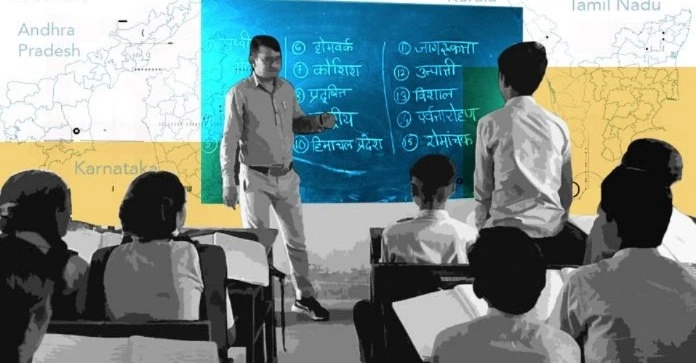
The Union Education Ministry has revealed that 61.6% of schools in India follow the three-language formula, covering 74.7% of students nationwide. Gujarat and Punjab lead in implementation, while Arunachal Pradesh, Nagaland, and Tamil Nadu rank among the lowest. The data, presented in Parliament on Monday in response to DMK MP Kanimozhi Karunanidhi’s query, highlights the ongoing conflict between Tamil Nadu and the Centre over the National Education Policy (NEP) 2020. Tamil Nadu’s DMK-led government opposes the three-language policy, calling it a move toward “Hindi imposition.” Key Insights from the Report: Schools Offering Three Languages: 906,225 (61.6%) Schools Offering Two Languages: 416,601 (28.3%) Schools Offering One Language: 149,065 (10.1%) Students Studying Three Languages: 185.3M (74.7%) Students Studying Two Languages: 41.6M Students Studying One Language: 21M Union Minister of State Jayant Chaudhary emphasized that no language would be imposed on any state, and flexibility would be provided to choose languages. However, analysis shows that Hindi-speaking states predominantly offer Sanskrit as the third language, while non-Hindi states often include Hindi. Meanwhile, private schools are increasingly offering foreign languages due to rising demand. The debate over language education remains heated, particularly in states like Tamil Nadu, where linguistic identity plays a central role in politics. The data highlights the diverse linguistic landscape of India’s education system and the ongoing policy challenges in balancing national and regional priorities.

61.6% of India’s Schools Follow Three-Language Policy; Gujarat & Punjab Lead, TN & Arunachal Lag Read More »

Only 6.26% of Schools Complete SQAAF Evaluation Amidst SSC-HSC Exam Rush

Amidst the ongoing SSC and HSC board exams, only 6.26% of schools in the state have completed the School Quality Assessment and Assurance Framework (SQAAF) evaluation. The low completion rate is attributed to the heavy workload of teachers, who are engaged in exams, paper inspections, and capacity-building training. The evaluation, conducted by the State School Standards Authority Cell (SSSAC) under the State Council of Educational Research and Training (SCERT), requires schools to self-assess their performance based on 128 standards. Schools must upload comprehensive information, add photos of activities, and create individual Google links for each standard. Initially, SCERT had set a deadline of February 28 in a circular issued on February 3. However, due to teacher complaints regarding the complexity and time-consuming nature of the process, an extension was granted. As of March 17, out of 1,08,530 schools, 99,457 have begun the process, but only 6,796 have completed it. Former State Principals’ Association vice-president Mahendra Ganpule noted that teachers have been preoccupied with planning and training, which has delayed the evaluation. He suggested that scheduling SQAAF assessments at the start of the academic year would have improved completion rates. A principal, speaking anonymously, highlighted the logistical challenges, stating that schools must retrieve photos from past activities without state-provided devices or data packs. Additionally, creating 128 separate Google links has added to the workload. Attempts to reach SCERT Director Rahul Rekhawar for comments were unsuccessful. Source: punemirror

Only 6.26% of Schools Complete SQAAF Evaluation Amidst SSC-HSC Exam Rush Read More »

Delhi High Court Stays Suspension of Jamia Students, Forms Committee to Ease Tensions

The Delhi High Court has directed the formation of a committee to de-escalate tensions at Jamia Millia Islamia (JMI) following student protests over the university’s ban on demonstrations without prior permission. The committee, to be supervised by the Vice Chancellor, will include university officials and student representatives. Justice Dinesh Kumar Sharma also stayed the suspension of 17 students, who were penalized for allegedly protesting without approval and defacing public property, until the next hearing. The students had challenged the suspension, arguing that the university’s actions were disproportionate. Senior Advocate Colin Gonsalves, representing the petitioners, contended that the students had a clean record and were peacefully protesting outside the canteen. He criticized the university for siding with the Delhi Police, leading to the students’ detention. Advocate Abhik Chimni further noted that, per university regulations, suspensions cannot exceed two weeks. Jamia’s counsel, Advocate Amit Sahni, defended the university’s decision, stating that the students had been given opportunities to comply and that their protest was unrelated to academics. He added that no arrests occurred on campus, and the detained students were later released. The Court, while refraining from commenting on the reasons behind the protest, observed that the demonstration appeared peaceful. It emphasized that student participation in such movements is part of their civic training. Urging the university administration to take remedial steps, the Court ordered the committee’s formation and requested a report from the university. Until the next hearing, the Court has suspended the operation of Jamia’s February 12 suspension order. However, it clarified that this ruling does not impact any criminal cases filed against the students.

Delhi High Court Stays Suspension of Jamia Students, Forms Committee to Ease Tensions Read More »

Tamil Nadu-Centre Tussle Over NEP and Education Funds Escalates

The debate over the National Education Policy (NEP) 2020 has intensified, with Tamil Nadu strongly opposing the Centre’s insistence on implementing the policy in its entirety. Union Education Minister Dharmendra Pradhan recently stated that unless Tamil Nadu fully accepts the NEP, funds under the Samagra Shiksha scheme—amounting to over ₹2,158 crore—will not be released. This remark, made at the Kashi Tamil Sangamam in Varanasi, has triggered sharp reactions from Tamil Nadu’s political leadership. Tamil Nadu School Education Minister Anbil Poyyamozhi responded by accusing the BJP-led central government of “paving the way for another language war.” He questioned why Tamil Nadu, which has successfully followed a two-language policy for decades, should be forced to adopt the three-language formula. Citing former Chief Minister CN Annadurai, he asserted that the demand for Tamil Nadu’s rightful share of funds was not a request for alms but a constitutional entitlement. The state government highlighted that over 4 million students and 32,000 teachers rely on these funds, with Tamil Nadu itself spending ₹76 crore per month on teacher salaries and ₹400 crore annually on the Right to Education (RTE) scheme. Several schemes for girl child education have also been affected due to funding delays. The Tamil Nadu government has argued that withholding funds to push NEP implementation suppresses dissent and reignites the decades-old language debate in India. Chief Minister MK Stalin strongly criticized the Centre, calling Pradhan’s stance “rash blackmail” and warning that Delhi must be prepared to face Tamil Nadu’s resistance. Finance Minister Thangam Thennarasu also questioned the conditional nature of central funds, pointing out that Tamil Nadu contributes 9% to India’s GDP without any such stipulations. Anbumani Ramadoss, president of the Pattali Makkal Katchi (PMK), took a more balanced approach, stating that the Centre is duty-bound to disburse these funds irrespective of NEP compliance. He emphasized that NEP implementation and financial allocations should remain separate matters. The Centre’s rigid stance on enforcing NEP, particularly through financial coercion, has been widely criticized as an overreach that disregards federal principles. The debate is now at the heart of a larger battle over education policy, language rights, and state autonomy in India. Source: Hindustan

Tamil Nadu-Centre Tussle Over NEP and Education Funds Escalates Read More »

Kerala Cabinet Approves Draft Bill for Establishment of Private Universities

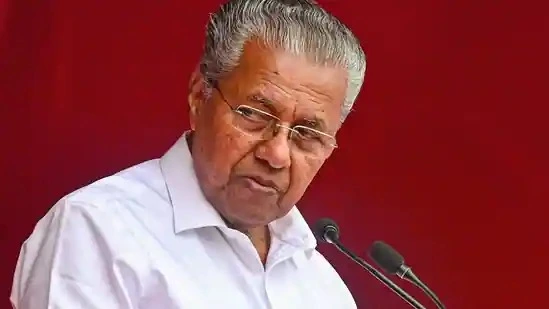
The Kerala Cabinet, led by Chief Minister Pinarayi Vijayan, has approved the Kerala State Private Universities (Establishment and Regulation) Draft Bill, 2025, setting the stage for private universities in the state. The bill outlines strict guidelines for eligibility, infrastructure, and governance to ensure high academic standards. According to the draft bill, only credible sponsoring agencies with prior experience in the education sector can apply to establish private universities. Institutions must own land as per regulatory guidelines and deposit a ₹25 crore corpus fund in the state treasury. For multi-campus universities, the main campus must span at least 10 acres. The bill also mandates adherence to UGC and state government norms regarding faculty appointments, the selection of the Vice-Chancellor, and overall university administration. To ensure local representation, 40% of seats in each course must be reserved for students from Kerala, aligning with the state’s reservation policy. Additionally, scholarships and fee waivers will continue for Scheduled Caste (SC) and Scheduled Tribe (ST) students. Applicants must submit a detailed project report along with the application fee, ensuring transparency and credibility in the process. The move signals Kerala’s commitment to expanding higher education opportunities while maintaining regulatory oversight.

Kerala Cabinet Approves Draft Bill for Establishment of Private Universities Read More »

Govt Panel Recommends NTA Focus on Entrance Exams, Restructuring Begins for 2025

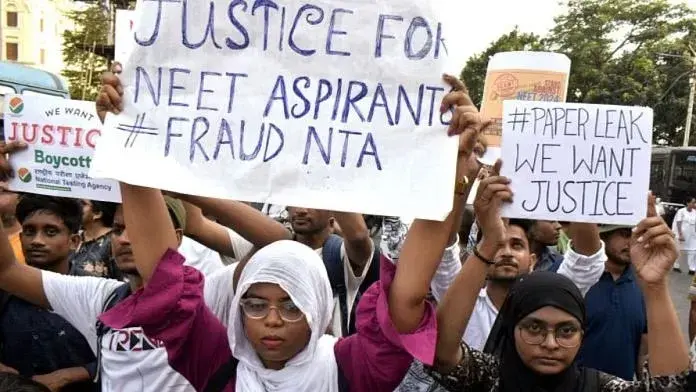
The government panel on exam reforms has recommended that the National Testing Agency (NTA) focus exclusively on conducting entrance examinations, starting from 2025, while discontinuing recruitment exams. Union Education Minister Dharmendra Pradhan announced the decision following the release of the panel’s report on Tuesday. The seven-member panel, chaired by former ISRO Chairman K. Radhakrishnan, was formed in June 2024 after allegations of irregularities, including paper leaks, marred the NEET-UG exam. The delayed counselling process highlighted the need for comprehensive reforms in exam governance. Key recommendations include a major restructuring of the NTA to improve governance, efficiency, and transparency. The panel proposed forming an empowered governing body supported by three sub-committees focused on ethics, test audits, and stakeholder relationships. The report emphasizes transitioning to online exams, introducing multi-level testing for candidate pools exceeding two lakh, and launching a ‘Digi Exam’ system to prevent impersonation. The panel also advocates closer coordination with district-level authorities, akin to the election process, to secure test administration. Union Minister Dharmendra Pradhan confirmed the government’s intent to implement the recommendations. “From 2025, the NTA will only focus on entrance exams for higher education and step back from recruitment tests,” he stated. The report further calls for bolstering NTA’s leadership, recommending that the Director-General position be held by a senior official of additional secretary rank, free from external pressures. Other proposed reforms include establishing divisions for technology infrastructure, security, research, and international collaboration. The reforms aim to address persistent issues of exam integrity while enhancing transparency and operational efficiency in India’s testing ecosystem. The implementation is already underway, signaling a renewed focus on improving high-stakes entrance examinations across the country. Source: ThePrint Photo Credit: ThePrint

Govt Panel Recommends NTA Focus on Entrance Exams, Restructuring Begins for 2025 Read More »