

ArdorComm Media Group

Wednesday, November 18, 2026 2:30 PM

Health Data

Healthcare’s Next Revolution: From Artificial Intelligence to Personalised Care
Healthcare is entering an era where the most important medical breakthrough may not be a new drug or device, but the ability to understand each patient in greater depth. Artificial intelligence can analyse vast amounts of medical data, precision medicine can help match treatments to individual biological profiles, and digital health can bring care closer to where people live and work.  Together, these technologies are beginning to shift healthcare from a largely reactive system to one that can anticipate risks, personalise interventions and support patients beyond the hospital. As these capabilities mature, the healthcare landscape of 2030 could look fundamentally different from the one we know today. From Reactive Healthcare to Predictive Care For decades, much of healthcare has been reactive. A patient develops symptoms, seeks medical attention, undergoes tests and then receives treatment. Advances in data science are gradually changing this sequence. AI systems can analyse large and complex datasets, identify patterns and support disease detection, diagnosis and treatment decisions. Regulatory agencies such as the US Food and Drug Administration already recognise the growing role of AI-enabled medical devices in clinical care.  Imagine a healthcare system where a combination of medical history, laboratory results, imaging, lifestyle information and continuously collected health data can help identify a patient’s changing risk before a serious condition becomes apparent. This does not mean AI will independently diagnose every patient. Rather, its most valuable role may be as an additional layer of intelligence supporting healthcare professionals. The doctor will still need to understand the patient. AI can help process the enormous amount of information surrounding that patient. AI Becomes a Clinical Assistant, Not a Replacement for Doctors The most realistic future of AI in healthcare is not a world without doctors. It is a world in which doctors have better tools. AI can assist with analysing medical images, identifying patterns in clinical data, summarising patient records, supporting clinical decision-making and reducing some administrative workloads. In research and pharmaceutical development, AI can also help researchers work through large datasets and identify potential avenues for investigation. But healthcare is fundamentally different from many other industries. A medical decision can have consequences that cannot simply be reversed. That makes accuracy, validation and human oversight essential. The FDA notes that AI-enabled medical technologies require careful consideration throughout their lifecycle, while international guidance on good machine-learning practice emphasises safe, effective and high-quality development.  The future doctor may therefore work alongside an increasingly sophisticated digital assistant—one that can process information at a scale that humans cannot, while the physician remains responsible for clinical judgement, communication and the human side of care. The Rise of Precision Medicine Perhaps the most important change will be the gradual move away from the idea that one treatment should work equally well for everyone. Two patients can have the same diagnosis but respond very differently to the same medicine. Their genetics, environment, lifestyle, medical history and other biological characteristics can influence both disease risk and treatment response. Precision medicine attempts to account for these differences. Large research programmes are already demonstrating what becomes possible when different forms of health information are brought together. The US National Institutes of Health’s All of Us Research Program, for example, combines information including electronic health records, genomic data, physical measurements, surveys and wearable-device data to support research into more individualised approaches to prevention and treatment.  By 2030, the expansion of such datasets could help medicine become increasingly targeted. Instead of asking simply, “What treatment is normally used for this disease?”, clinicians may increasingly ask, “What treatment is most appropriate for this particular patient?” That is a profound change in the philosophy of healthcare. Digital Health Will Make Care More Continuous Healthcare is also moving beyond the hospital and clinic. Smartwatches, connected medical devices, remote monitoring systems and digital health platforms are creating new ways to collect information outside traditional healthcare settings. For patients with chronic conditions, this could mean that important health indicators are monitored between appointments rather than assessed only during occasional clinical visits. The result could be a more continuous relationship between patients and healthcare providers. A patient may no longer need to wait until the next appointment to discover that something has changed. A healthcare professional could potentially receive relevant information earlier and decide whether intervention is necessary. But digital health should not become an endless stream of notifications. The real objective is not to collect more data; it is to turn useful data into meaningful action. The Patient Will Become More Connected to the Healthcare System Another major shift could be the changing role of patients themselves. Digital platforms are already making it easier for people to access health records, communicate with healthcare providers, monitor certain health indicators and participate in their own care. Over time, patients may have a more complete picture of their health rather than receiving fragmented information from different doctors, hospitals and diagnostic centres. This could also encourage a shift from treatment-oriented healthcare towards prevention. Instead of focusing exclusively on managing disease after it appears, healthcare systems could increasingly use data to identify risk earlier and encourage interventions before a condition becomes more serious. The Data Challenge There is, however, a major obstacle behind almost every digital healthcare ambition: data. Healthcare data is highly sensitive. Medical records, genomic information, biometric measurements and information generated by wearable devices can reveal deeply personal details about an individual. The more healthcare becomes data-driven, the more important privacy, cybersecurity, consent and responsible data governance become. WHO has repeatedly stressed that AI in healthcare needs to be developed and deployed with safety, ethics, equity and appropriate governance at its core. It has also warned that poorly governed AI could deepen existing inequalities rather than reduce them.  This is particularly important for countries with significant differences in healthcare access. A sophisticated AI system is of limited value if the people who need healthcare most cannot access the digital infrastructure required to use it. The Risk of a Digital Divide The healthcare revolution must therefore address a

Healthcare’s Next Revolution: From Artificial Intelligence to Personalised Care Read More »
Healthcare 2030: How AI, Precision Medicine and Digital Health Will Transform Patient Care

Healthcare has always evolved alongside science. But the transformation taking place today is different in scale and speed. Artificial intelligence, precision medicine and digital health are no longer ideas confined to research laboratories or futuristic films. They are increasingly becoming part of how diseases are detected, treatments are planned and patients interact with healthcare systems. By 2030, the biggest change may not be that hospitals have become more technologically advanced. It may be that healthcare has become more personalised, predictive and connected. The question is no longer whether technology will enter healthcare. It is how responsibly it will be used—and whether patients, doctors and healthcare institutions will be ready for that change. From Treating Illness to Predicting Risk For generations, healthcare has largely operated on a reactive model: a person develops symptoms, visits a doctor, undergoes tests and receives treatment. Digital health could gradually shift this model towards prevention. Wearable devices can continuously collect information such as heart rate, sleep patterns, physical activity and, increasingly, other health indicators. Combined with electronic health records and AI systems, such data could help identify unusual patterns before they become obvious symptoms. Imagine a patient whose digital health profile gradually shows changes in sleep, heart rate and activity. Instead of waiting until that person arrives at a hospital with a serious complaint, an intelligent system could flag the pattern for medical review. The technology would not replace the doctor. It could give the doctor an earlier signal. That distinction is important. The future of healthcare is unlikely to be “AI versus doctors”. It is more likely to be doctors supported by better information. AI: The New Layer of Healthcare Artificial intelligence could become one of the most influential technologies in healthcare by 2030. AI systems are already being explored for medical imaging, clinical decision support, drug discovery, administrative work and patient engagement. Their potential lies partly in their ability to process enormous volumes of information much faster than humans can. For a radiologist, for example, AI could help identify patterns in medical images that deserve closer examination. For researchers, AI could help analyse biological data and accelerate the search for potential drug candidates. For hospitals, intelligent systems could help manage appointments, records and workflows. But healthcare is not simply another data-processing industry. A wrong recommendation can have consequences for a person’s life. That makes accuracy, transparency, privacy and accountability essential. By 2030, one of the most important questions may therefore not be “How powerful is the AI?” but “How safely is the AI being used?” Human oversight will remain critical, particularly in diagnosis and treatment decisions. The Rise of Precision Medicine Two patients can have the same disease and still respond very differently to the same treatment. This is where precision medicine could change the traditional approach to healthcare. Instead of relying primarily on broad categories such as age, symptoms or disease type, precision medicine seeks to understand a patient’s individual characteristics—including genetics, lifestyle, environment and other biological factors. Consider cancer treatment. A tumour that appears similar under conventional examination may have different molecular characteristics in different patients. Understanding those differences can help clinicians identify treatments that are more appropriate for a particular patient. By 2030, advances in genomics and data analytics could make this approach increasingly relevant across several areas of medicine. The long-term ambition is simple: move from a “one treatment fits many” approach towards treatment decisions that are increasingly tailored to the individual. However, access will be a major question. Precision medicine can be expensive and data-intensive. If advanced personalised healthcare remains concentrated in major cities and high-income settings, technological progress could widen existing healthcare inequalities rather than reduce them. Your Smartphone Could Become Part of Your Healthcare Journey The hospital of 2030 may not begin at the hospital. It could begin with a smartphone. Digital health is creating new ways for patients to communicate with healthcare providers, access medical records, monitor health conditions and receive reminders or follow-up care. Telemedicine has already demonstrated how geographical barriers can be reduced. Remote consultations, digital prescriptions and connected medical devices can potentially bring elements of healthcare closer to people’s homes. For countries such as India, this could be particularly significant. A patient living far from a specialist centre may not need to travel hundreds of kilometres for every follow-up consultation. A local healthcare worker could potentially collect relevant information digitally and connect with specialists elsewhere. Technology cannot eliminate the shortage of doctors or infrastructure overnight. But it can help healthcare systems use limited resources more efficiently. The Data Dilemma There is, however, another side to this digital transformation. Healthcare’s future will depend heavily on data—and health data is among the most sensitive information a person can share. Who owns the data generated by a wearable device? Who can access an electronic health record? How long should medical data be stored? Can an individual’s health information be used to train an AI system? What happens if sensitive information is leaked? These are not merely technology questions. They are questions of trust. A healthcare system cannot become truly digital if patients are afraid to use it. By 2030, strong data governance, cybersecurity, informed consent and transparent policies will need to develop alongside technological innovation. The more connected healthcare becomes, the more important trust will become. Doctors Will Still Matter—Perhaps More Than Ever One common fear surrounding healthcare AI is that machines could replace doctors. The more realistic scenario is different. AI may automate some repetitive tasks, identify patterns and assist with decision-making. But medicine involves more than analysing information. Doctors listen to patients, understand context, explain difficult choices and make decisions when evidence is incomplete. A machine may recognise a pattern in a scan. A doctor must still explain what that finding means for a particular person. Technology can process data. Healthcare professionals provide context, judgement and human connection. The healthcare professional of 2030 may therefore need a different skill set: not simply knowing medicine, but knowing how to work effectively with AI and

Healthcare 2030: How AI, Precision Medicine and Digital Health Will Transform Patient Care Read More »

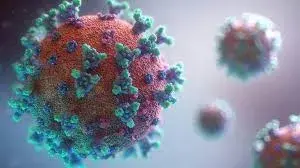
WHO Estimates COVID-19 Linked to 22.1 Million Excess Deaths Worldwide Between 2020 and 2023

A new report released by the World Health Organization has revealed that the COVID-19 pandemic was associated with an estimated 22.1 million excess deaths globally between 2020 and 2023, underscoring the devastating impact the crisis had on health systems and societies worldwide. Published in the WHO’s latest World Health Statistics report, the figure is more than three times higher than the officially reported COVID-19 death toll, as it includes both direct fatalities caused by the virus and indirect deaths resulting from disrupted healthcare services, delayed treatments, and strained medical systems. According to the report, the pandemic erased nearly a decade of progress in global life expectancy, with recovery remaining slow and uneven across different regions of the world. Despite the setbacks, the report highlighted encouraging progress in several public health areas. New HIV infections declined by 40% between 2010 and 2024, while tobacco and alcohol consumption also registered reductions during the same period. The number of people requiring treatment for neglected tropical diseases dropped by 36%. The WHO further noted improvements in access to essential services between 2015 and 2024. Nearly 961 million people gained access to safe drinking water, 1.2 billion received improved sanitation facilities, 1.6 billion gained access to basic hygiene services, and 1.4 billion people benefited from cleaner cooking solutions. Regional progress was also evident in some areas. The WHO African Region recorded a 70% reduction in HIV infections and a 28% decline in tuberculosis cases, outperforming global averages. Meanwhile, the South-East Asia Region was reported to be on course to meet its 2025 malaria reduction milestone. However, the report warned that several health challenges continue to threaten global progress. Malaria incidence has risen by 8.5% since 2015, moving the world further away from international targets. Anaemia continues to affect 30.7% of women of reproductive age globally, with little improvement over the last decade. The prevalence of overweight children under five reached 5.5% in 2024, while violence against women remains a serious concern, with one in four women worldwide experiencing intimate partner violence. WHO Director-General Tedros Adhanom Ghebreyesus stated that the findings reflect “both progress and persistent inequality,” adding that millions of people, especially women, children, and underserved populations, still lack access to the fundamental conditions required for healthy living. The report also expressed concern over slowing progress toward Universal Health Coverage (UHC). Between 2015 and 2023, the global UHC service coverage index improved only slightly from 68 to 71. Additionally, one in four people globally experienced financial hardship due to healthcare expenses, while nearly 1.6 billion people were either living in or pushed into poverty because of out-of-pocket medical costs in 2022. Childhood vaccination coverage also remains below global targets, contributing to renewed outbreaks of preventable diseases. Although maternal mortality has declined by 40% since 2000 and under-five mortality by 51%, many nations are still unlikely to meet the 2030 health goals. Progress in reducing deaths from non-communicable diseases has slowed considerably since 2015. The WHO further highlighted environmental and lifestyle risks contributing to poor health outcomes. Air pollution was linked to an estimated 6.6 million deaths globally in 2021, while unsafe water, sanitation, and hygiene conditions contributed to 1.4 million deaths in 2019. Yukiko Nakatani stressed the urgent need for stronger investment in primary healthcare, prevention strategies, and sustainable health financing to build more resilient healthcare systems. The report also exposed major shortcomings in global health data collection. By the end of 2025, only 18% of countries were reporting mortality data to the WHO within a year, and nearly one-third had never submitted cause-of-death information. Out of an estimated 61 million deaths worldwide in 2023, only about one-third included cause-of-death reporting, while just one-fifth contained properly coded International Classification of Diseases (ICD) data. The WHO warned that these data gaps severely weaken the ability of governments and health agencies to monitor disease trends, compare health outcomes internationally, and respond effectively to future public health emergencies. Source: The Hindu

WHO Estimates COVID-19 Linked to 22.1 Million Excess Deaths Worldwide Between 2020 and 2023 Read More »