ArdorComm Media Group

Wednesday, February 11, 2026 6:08 PM

India

COVID-19 Update: Rising Cases, Advisory in Himachal, JN.1 Variant Spreads

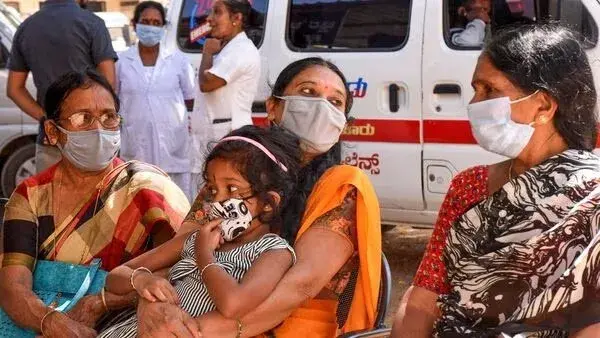
Amid a surge in COVID-19 cases, several Indian states are urging citizens to adhere to coronavirus protocols. As of December 25, Kerala leads with 3,096 active cases, followed by Karnataka (436), Maharashtra (168), Gujarat (56), and Tamil Nadu (139). The Union Health Ministry reported 69 cases of the JN.1 COVID subvariant in the country. In response to the variant’s presence, Himachal Pradesh health officials issued an advisory. Chief medical officers are instructed to test individuals with COVID-19 symptoms, emphasizing vigilance. Dr. Sanjeev Kumar from Una recommended immediate testing for those with symptoms like cold, fever, or cough, while stressing the importance of mask-wearing. Karnataka Health Minister Dinesh Gundu Rao confirmed 34 cases of the JN.1 variant in the state, reassuring the public that the situation is under control. Deputy Chief Minister DK Shivakumar urged citizens not to panic, emphasizing that the health minister would provide updates. In a surprising turn, BJP MLA Basanagouda Patil Yatnal threatened to reveal a purported ₹40,000-crore “Covid scam” if expelled from the party. Yatnal alleges that the Karnataka BJP government, led by B S Yediyurappa, engaged in massive corruption during the peak of the COVID-19 pandemic. Delhi’s Health Minister Saurabh Bharadwaj stated that the city’s COVID positivity rate is around 1%. While advising caution during winter festivals, he assured the public that additional genome sequencing is being conducted. Meanwhile, a new COVID-19 case surfaced in Khurda district, Odisha, bringing the state’s total to three. All three individuals exhibit mild symptoms and are undergoing home treatment. Responding to the escalating cases, the Karnataka government’s coronavirus sub-committee implemented measures, including mandatory mask-wearing, home isolation, and caution against sending symptomatic children to schools. Dr. Shekhar C Mande, former Director-General of CSIR, emphasized the significance of disease surveillance in India, not only for COVID-19 but also for tracking the spread of various infections, including antimicrobial resistance. He highlighted the usefulness of surveillance methods such as wastewater analysis in detecting variants like JN.1. The World Health Organization (WHO) has labeled JN.1 as a ‘variant of interest,’ distinct from its counterpart BA.2.86. Despite this, WHO maintains that the risk from JN.1 remains low for now

COVID-19 Update: Rising Cases, Advisory in Himachal, JN.1 Variant Spreads Read More »

Taiwan Pursues Employment Agreement with India Amidst Controversy

Taiwan’s efforts to establish an employment mobility agreement with India have sparked debate and increased regional geopolitical tensions. The draft memorandum of understanding, which was initiated in September, aims to facilitate the employment of thousands of Indian workers in Taiwan’s various sectors. Although Taiwanese authorities have deemed the official figure of 100,000 workers to be inaccurate, the deal is nearing completion. This agreement is significant not only for economic cooperation, but also for its potential to improve bilateral relations between Taiwan and India. Although the two countries do not have formal diplomatic relations, they have established representative offices in each other’s capitals since 1995. The volume of trade between them has increased significantly, reaching USD 8.9 billion in 2021 from USD 2 billion in 2006 However, the impending agreement has sparked a backlash on multiple fronts. China, which fiercely opposes Taiwan’s sovereignty, sees India’s growing ties with the island nation as a threat. Concerns in Taiwan about potential job losses for Indian workers have added fuel to the fire, despite hopes for improved bilateral relations. The aging population and the need for diverse labor in sectors such as agriculture and industry are driving Taiwan’s pursuit of foreign workers, including those from India. The drop in the local labor force caused by the pandemic has exacerbated this need. For India, the agreement provides an opportunity to provide lucrative employment opportunities abroad to its sizable workforce. The announcement of the pact, however, has sparked online racist campaigns against Indians, which the Taiwanese government attributes to China’s concerted efforts to tarnish Taiwan’s image and strain relations with India. The geopolitical implications of the agreement are significant, particularly in light of China’s claims over Taiwan. Beijing regards Taiwan as part of its territory and opposes any diplomatic moves that would strengthen Taiwan’s sovereignty. India’s participation in a significant economic agreement with Taiwan is likely to aggravate China’s discontent in the region.

Taiwan Pursues Employment Agreement with India Amidst Controversy Read More »

Hotstar Breaks Records with 59 Million Concurrent Viewers for World Cup Final, Surpassing Previous Milestone

Disney’s Hotstar achieves a groundbreaking milestone with 59 million concurrent viewers during a highly anticipated World Cup final cricket match in India. This surpasses the previous record of 53 million viewers set just a week earlier. With no significant cricket events in the near future, Hotstar is poised to maintain this record for at least six months. The platform now holds a substantial lead in concurrent viewership over its competitor, JioCinema, which peaked at 32 million earlier this year. This achievement occurs against the backdrop of Disney facing challenges in the Indian market, including a decline in digital subscribers. Disney CEO Bob Iger expressed a commitment to the Indian market but acknowledged the need to evaluate options. Preliminary talks with potential partners, including Reliance and private equity firms, have taken place. However, the dynamics of Star India have evolved, with market conditions prompting a shift in focus to core businesses. Hotstar’s subscriber base has experienced a decline of more than 23 million in the past year, according to Disney. The platform faces competition, notably from Viacom18’s JioCinema, led by Mukesh Ambani, who has attracted top executives from Star India and invested $3 billion to stream the IPL cricket tournament for five years. Despite these challenges, Disney had high expectations for the ICC Cricket World Cup, projecting over 50 million concurrent viewers and aiming to reach 82% of India’s total annual video users during the 50-day series.

Hotstar Breaks Records with 59 Million Concurrent Viewers for World Cup Final, Surpassing Previous Milestone Read More »

Reliance JioCinema Secures Exclusive Deal with Pokemon for Extensive Children’s Content Offering in India

Reliance JioCinema, the entertainment division of India’s Reliance, has entered into an agreement with The Pokemon Company to feature children’s shows and movies on its platform, sources familiar with the deal revealed. This move is part of Reliance’s strategy to enhance its content library in the face of increasing competition from streaming rivals like Walt Disney Co in the domestic market. The recently signed deal designates JioCinema’s streaming app as the “exclusive” India platform partner for over 1,000 episodes and approximately 20 movies from the popular Japanese anime series Pokemon. Financial details of the agreement were not disclosed. To broaden the appeal of the content, the shows and movies will be dubbed into three Indian languages. Pokemon, a global multimedia franchise with a substantial market presence in trading cards, games, TV shows, and movies, is partnering with Viacom18, the entertainment joint-venture of Indian billionaire Mukesh Ambani that operates JioCinema. Despite requests for comments, Viacom18 and The Pokemon Company, owned by Nintendo and its affiliates, did not respond. This collaboration is part of Ambani’s broader effort to expand Reliance’s presence in the Indian streaming market, which is projected to reach a value of $7 billion by 2027 according to research firm Media Partners Asia. While JioCinema competes with streaming giants like Netflix and Amazon, its recent focus has been on challenging Disney’s Hotstar app, particularly by offering free streaming of cricket matches. As part of this content expansion, JioCinema is set to introduce approximately 3,000 hours of children’s content, including productions from Entertainment One, Animaccord, Cartoon Network Studios, and DreamWorks. These additions will be facilitated through Viacom18’s existing content agreements or integration with its other streaming platform, Voot Kids, which has been discontinued. Notably, although some Pokemon content was previously available on Voot, the new partnership with JioCinema represents a more extensive collaboration. In May, JioCinema announced a multi-year partnership with NBCUniversal, which confirmed that “kids and family programming,” including content from DreamWorks, was part of the agreement. Entertainment One, Animaccord, and Cartoon Network Studios did not respond to requests for comments. Additionally, in April, Viacom18 secured a deal with Warner Bros Discovery Inc. to bring more Hollywood and international content, such as popular series “Succession” and “Game of Thrones,” to JioCinema.

Reliance JioCinema Secures Exclusive Deal with Pokemon for Extensive Children’s Content Offering in India Read More »

Capgemini Witnesses a Sharp Decline in Offshore Headcount, India Heavily Impacted

French IT company Capgemini has seen a significant reduction in its offshore workforce, with a decline of 14,600 employees in the September quarter. This reduction has notably affected its operations in India, where it had 185,000 employees, accounting for less than half of its total workforce of 342,700. It is estimated that Capgemini’s headcount in India may have decreased by nearly 7,000 employees during this period, following the addition of 35,000 people in the previous fiscal year. The offshore headcount of Capgemini has decreased by 7% to 196,000 employees in the September quarter, while its onshore workforce decreased by 1,100 employees. Capgemini’s CFO, Carole Ferrand, emphasized the company’s focus on efficiency and optimizing its talent base, especially in offshore locations, after a period of intensive hiring and high attrition. She mentioned that attrition rates have now cooled down to 18.6% over the last 12 months, aligning with the company’s nominal operating ranges. When contacted for a statement, Capgemini’s spokesperson explained that the company had adopted a stable hiring approach due to the challenging economic environment. They highlighted a focus on investing in new skills, fostering innovation, and expanding the portfolio. Capgemini, however, did not disclose its current headcount in India following the reduction in offshore employees. Capgemini’s CEO, Aiman Ezzat, mentioned the company’s plans to expand its workforce in data and AI, business, and technology talent, aiming to double the team to 50,000 people in the next three years. The company also intends to train over 100,000 employees in genAI-specific tools within the next 12 months. In terms of financial performance, Capgemini reported a 2.3% year-on-year revenue increase in constant currency for the September quarter. However, revenue in the North America region declined by 4%, attributed to the challenging economic environment and a gradual deceleration scenario for 2023. Ezzat emphasized the importance of the transition to a digital and sustainable economy for Capgemini’s clients and highlighted the increasing demand for generative AI. The company’s genAI campus has been launched to provide training for employees, aligning with its 2 billion euros investment plan to strengthen its presence in this field.

Capgemini Witnesses a Sharp Decline in Offshore Headcount, India Heavily Impacted Read More »

Unmasking the Air Pollution Crisis in India: Health Implications and Urgent Solutions

Blog on Health

India is grappling with a multifaceted challenge that poses a severe threat to public health – air pollution. As the air quality crisis in the National Capital Region, Delhi, continues to worsen, it prompts a closer look at the health implications of this persistent issue. This blog provides a comprehensive analysis of the ongoing air pollution crisis in India and delves into the critical health implications of air pollution, shedding light on the gravity of the issue and the urgent need for action. The Silent Killer Air pollution is often referred to as a “silent killer” because its health effects are not immediately apparent but accumulate over time, leading to chronic illnesses and reduced life expectancy. This problem is particularly severe in India, where rapid industrialization and urbanization have resulted in soaring levels of air pollutants. Health Implications of Air Pollution Respiratory Ailments: High levels of fine particulate matter (PM2.5), nitrogen dioxide (NO2), sulfur dioxide (SO2), and ozone (O3) can lead to a surge in respiratory ailments such as asthma, bronchitis, and chronic obstructive pulmonary disease (COPD). Children and the elderly are especially vulnerable. Cardiovascular Diseases: Air pollution plays a significant role in the development of cardiovascular diseases, increasing the risk of heart attacks, strokes, and other circulatory issues. Cancer Risk: Long-term exposure to air pollution, particularly air containing carcinogens like benzene and formaldehyde, can increase the risk of lung cancer. Pregnancy Complications: Pregnant women exposed to high levels of air pollution are at a higher risk of complications such as preterm birth, low birth weight, and developmental issues in their offspring. Mental Health: Recent research has linked air pollution to mental health problems, including depression, anxiety, and cognitive decline. Also Read: Prioritizing Mental Health: The Cornerstone of Student Success in Education Delhi’s Air Quality Crisis Recent developments in Delhi highlight the severity of the air pollution crisis. Despite minor improvements, the overall air quality in Delhi remains ‘very poor.’ The Air Quality Index (AQI) recently shifted from ‘severe’ to ‘very poor,’ but this change does not indicate a significant improvement. The Supreme Court has criticized central and state governments for engaging in a blame game rather than implementing effective solutions. In response, authorities have taken measures, such as suspending physical classes (except for Classes 10 and 12) until November 10 and reintroducing the odd-even car rationing system from November 13 to 20. While there’s a marginal dip in pollution levels as reflected in the AQI, the concentration of PM2.5 particles continues to be a significant concern. Delhi’s PM2.5 levels consistently exceed the government-prescribed safe limit by a substantial margin, posing severe health risks to residents. Also Read: Top 12 Daily Habits for a Healthier Lifestyle What Can Be Done? Addressing India’s air pollution problem requires a multi-faceted approach. Some of the essential measures include: Strict Emission Standards: Enforcing and regularly updating emission standards for industries, vehicles, and power plants is crucial. Promoting Renewable Energy: Transitioning to cleaner energy sources like solar and wind power can reduce emissions. Improving Public Transportation: Expanding and improving public transportation systems can reduce the number of vehicles on the road and, consequently, pollution levels. Urban Planning: Better urban planning and reducing traffic congestion can help mitigate pollution in metropolitan areas. Public Awareness: Raising awareness about the health implications of air pollution can empower citizens to take steps to protect themselves and advocate for change. Also Read: Mobilizing Global Education and Cultural Exchange through Technology Conclusion The air pollution crisis in India, exemplified by Delhi’s ongoing struggle, is a pressing concern with far-reaching health implications. It’s essential to recognize that this is not just a seasonal issue; it’s a year-round problem that demands immediate and sustainable solutions. The blame game among political entities must give way to effective measures to curb air pollution and protect public health. As PM2.5 levels significantly surpass safe limits, there is an urgent need for comprehensive, long-term actions. The situation serves as a stark reminder of the grave consequences of air pollution and the urgency of taking decisive action. It is high time for all stakeholders, including the government, industries, and citizens, to unite in the fight against air pollution and prioritize the well-being of the nation. The battle against air pollution continues, and it’s a fight for the health and future of generations to come. The author, Pratik Ghosh is associated with ArdorComm Media


Unmasking the Air Pollution Crisis in India: Health Implications and Urgent Solutions Read More »

Study in India Reveals Link Between Air Pollution and Type 2 Diabetes Risk

News on Health

Air pollution in India has been linked to an increased risk of type 2 diabetes, as revealed in a groundbreaking study published in the BMJ Open Diabetes Research and Care journal. The study, the first of its kind in India, was conducted in Delhi and Chennai, and it found that exposure to elevated levels of fine pollution particles (PM2.5) in the air, which are 30 times thinner than a strand of hair, is associated with higher blood sugar levels and an elevated incidence of type 2 diabetes. While the health impacts of fine particulate matter are known for cardiovascular and cardiometabolic diseases, this study sought to provide evidence from regions with high air pollution levels like India, where noncommunicable diseases are a significant burden. The research team, which included scientists from the Centre for Chronic Disease Control in New Delhi, followed a group of over 12,000 men and women from 2010 to 2017, regularly measuring their blood sugar levels. They also utilized satellite data and air pollution exposure models to assess air quality in the participants’ localities during that period. The results demonstrated that exposure to PM2.5 for just one month led to increased blood sugar levels, and prolonged exposure for a year or more elevated the risk of diabetes. Additionally, for every 10 micrograms per cubic meter (μg/m3) increase in the annual average PM2.5 levels in Delhi and Chennai, the risk of diabetes rose by 22 percent. The study addressed a significant research gap in South Asia, where diabetes is a major health concern, by providing robust exposure assessment and longitudinal data in this population. It underscores the need for tailored, population-specific policies to combat the high diabetes prevalence by reducing ambient air pollution. The research team, which also included scientists from the Public Health Foundation of India, Harvard University, Emory University, the All India Institute of Medical Sciences, and the Madras Diabetes Research Foundation, emphasized the importance of region-specific measures to achieve meaningful public health improvements at the population level.

Study in India Reveals Link Between Air Pollution and Type 2 Diabetes Risk Read More »

Sharp 61% Surge in Female Job Applicants Signals High Demand in India’s Festive Job Market: Report

Ahead of the festive season in India, there has been a substantial 61% increase in the number of female job applicants, as reported by the prominent job and professional networking platform, apna.co. This surge in women applicants suggests a growing demand for female professionals in various industries, especially in sectors like e-commerce, retail, and hospitality, which tend to experience increased activity during the festive season. The job market has undergone significant changes from 2022 to 2023, with notable shifts in the top five job categories: telecalling, accounts, business development, marketing, and delivery. Notably, several leading companies such as Bajaj, Axis Bank, Paytm, Flipkart, and Reliance actively participated in the festive season job market and offered attractive incentives to attract top talent. “We have witnessed a substantial increase in the number of female applicants and evolving preferences among job seekers over the past year. Looking forward, we expect further changes in the employment landscape as we strive to empower professionals and bridge the gap between job seekers and employers,” noted Nirmit Parikh, Founder and CEO of apna.co. Furthermore, the report revealed that more than 1.2 lakh job openings were documented in August and September 2023 in major Indian cities, reflecting a surge in hiring demand in anticipation of the festive season. City-specific trends indicated distinct preferences, with Delhi showing a preference for roles in Sales & Marketing, Customer Support & Sales, and Accounting Technicians, while Mumbai exhibited high demand for Finance & HR, Sales & Marketing, and Business Development positions.

Sharp 61% Surge in Female Job Applicants Signals High Demand in India’s Festive Job Market: Report Read More »

Over 20 Million Students Register on UGC’s Academic Bank of Credit, Says UGC Chairman

News on Edu

UGC Chairman Mamidala Jagadesh Kumar announced that more than 20 million students from across the nation have registered on the University Grants Commission’s Academic Bank of Credit (ABC) platform. He made this announcement during the western zone vice chancellor’s conference held at Maharaja Sayajirao University in Baroda, Gujarat, on October 26. Chairman Kumar emphasized that in recent years, the UGC has introduced various reforms. Although over 20 million students have already registered on the ABC platform, he stressed the importance of ensuring that every student register and that their academic credentials and credit certificates are uploaded to the ABC platform. During the conference, the UGC Chairman also discussed the progress made in implementing the reforms initiated by the UGC. The Academic Bank of Credit (ABC) is one of the provisions outlined in the National Education Policy 2020 (NEP 2020). ABC offers undergraduate and postgraduate students the flexibility to exit and re-enter their courses within a specified time frame. Additionally, it aims to provide every student with the opportunity to open an academic bank account with ABC to transfer credits for the attainment of various degrees, diplomas, or certificates.

Over 20 Million Students Register on UGC’s Academic Bank of Credit, Says UGC Chairman Read More »

India Leads Global Preterm Births in 2020, Lancet Study Reveals

In 2020, India witnessed the highest number of preterm births globally, with a staggering 3.02 million cases, constituting over 20 percent of all premature births worldwide, as revealed by a study published in The Lancet journal. This research, conducted by experts from the World Health Organization (WHO), the United Nations Children’s Fund (UNICEF), and the London School of Hygiene and Tropical Medicine, UK, further disclosed that more than half of all premature births in 2020 occurred in just eight countries. Following India, the countries with the highest preterm birth rates were Pakistan, Nigeria, China, Ethiopia, Bangladesh, the Democratic Republic of the Congo, and the United States, according to the researchers. The notable prevalence of preterm births in these regions is partly attributable to their substantial population sizes, high numbers of total births, and underdeveloped healthcare systems that struggle to provide high-quality family planning, antenatal care, and childbirth services to all those in need. Globally, approximately 13.4 million babies were born prematurely in 2020, with nearly one million succumbing to complications associated with preterm birth. This data equates to roughly one in ten babies being born prematurely, before completing 37 weeks of pregnancy worldwide. Given that prematurity ranks as the leading cause of child mortality in their early years, there is an urgent need to bolster both preterm infant care and preventative measures, particularly focusing on maternal health and nutrition to enhance child survival, emphasize the authors of the study. Furthermore, preterm birth significantly increases the likelihood of major illnesses, disabilities, developmental delays, and even chronic diseases like diabetes and heart conditions in adulthood for those who survive. This study derives its estimates from data that is representative of populations and national statistics, enabling internationally comparable assessments for the year 2020. It highlighted that India had the highest incidence of preterm births in 2020, totalling 3.02 million cases, accounting for over a fifth of all preterm births worldwide. While most high preterm birth rates were observed in low and middle-income nations, rates of 10 percent or higher were also evident in high-income countries such as Greece and the United States. Within South Asia, Bangladesh reported the highest preterm birth rate in 2020 at 16.2 percent, followed by Pakistan at 14.4 percent, and India at 13.0 percent. In Latin America, the rates ranged from 5.8 percent in Nicaragua to 12.8 percent in Suriname. As birth registration and facility-based deliveries have increased, data on the prevalence of preterm births has improved. Nevertheless, there are still 92 countries lacking sufficient nationally representative data. Consequently, the authors call for sustained efforts to enhance data availability, quality, and sharing to better target support and action where it is most needed. Dr. Anshu Banerjee, Director of Maternal, Newborn, Child, and Adolescent Health and Ageing at WHO, emphasized the vulnerability of preterm babies to life-threatening health complications and the necessity for dedicated care and attention. He stressed the urgency of substantial investments in services supporting preterm infants and their families, as well as a heightened focus on prevention, particularly ensuring access to quality healthcare before and during pregnancies. The researchers underscored that preterm birth is not exclusive to low and middle-income countries, as the data clearly reveals its impact on families worldwide, including some high-income countries such as Greece (11.6 percent) and the United States (10 percent).

India Leads Global Preterm Births in 2020, Lancet Study Reveals Read More »