ArdorComm Media Group

Wednesday, November 25, 2026 2:36 AM

Innovation

Why AI-Driven Layoffs Like Amazon’s Could Backfire

The business world is currently dominated by two recurring headlines — the soaring investments pouring into artificial intelligence (AI) and a steady wave of mass layoffs. Ironically, many of the same companies leading the AI revolution are also slashing their workforce. At first glance, this seems logical. Businesses, captivated by AI’s promise to boost productivity, believe they can achieve more with fewer employees — and the short-term stock market boost following layoffs doesn’t hurt either. Yet, this strategy could backfire. By cutting too deeply, companies risk weakening their capacity to harness AI effectively in the long run. Recent data shows this trend is widespread. October saw the highest number of job cuts in the U.S. for that month in two decades, even as corporate profits surged. Amazon, for instance, is planning to eliminate up to 30,000 corporate roles despite record-high stock prices. Microsoft, too, recently announced its largest layoffs in two years while reporting a 12% rise in profits. So, if not financial strain, what’s driving these cuts? In many cases, AI plays a central role. Accenture, for example, said it would lay off 11,000 workers because they “could not be retrained for an AI-driven workforce.” As enthusiasm for AI spreads across corporate America, more such decisions are likely. Experts like Geoffrey Hinton, a pioneer in AI research, have even warned that the massive capital investments being made in the field might only yield returns through significant job displacement. But here’s the catch: many companies aren’t yet reaping real benefits from AI. A Massachusetts Institute of Technology survey of 300 corporate AI projects revealed that 95% of them had “zero” return on investment. The problem lies in the assumption that AI can be seamlessly slotted into existing systems. In reality, companies are still figuring out how to integrate these tools effectively — a process that requires creativity, experimentation, and organizational change. Layoffs, however, undermine exactly those qualities. Beyond the loss of talent, layoffs often demoralize remaining employees, damaging morale, increasing stress, and lowering engagement. Research shows that companies downsizing during profitable times tend to perform worse financially than peers who retain their staff. This effect is especially severe in fast-moving, innovation-driven industries. Studies of Spanish and British firms have found that when layoffs coincide with technological transformation — like adopting AI — innovation drops as employees become more risk-averse. While small cuts may not harm creativity, large-scale downsizing can cripple it. To be sure, in some cases, trimming excess roles can sharpen efficiency and innovation. But when organizations are already constrained by heavy investments in AI infrastructure, additional layoffs can quickly become counterproductive. The truth is, revolutionary technologies like AI aren’t “plug-and-play.” Developing them is only the beginning; learning to use them effectively is equally vital. That learning depends on motivated, adaptable employees — not a workforce unsettled by fear and uncertainty. For companies racing to embrace AI, mass layoffs may seem like a quick way to balance costs. But in the long run, many CEOs could find they’ve weakened the very foundation needed to make AI work for them. Source: Bloomberg

Why AI-Driven Layoffs Like Amazon’s Could Backfire Read More »
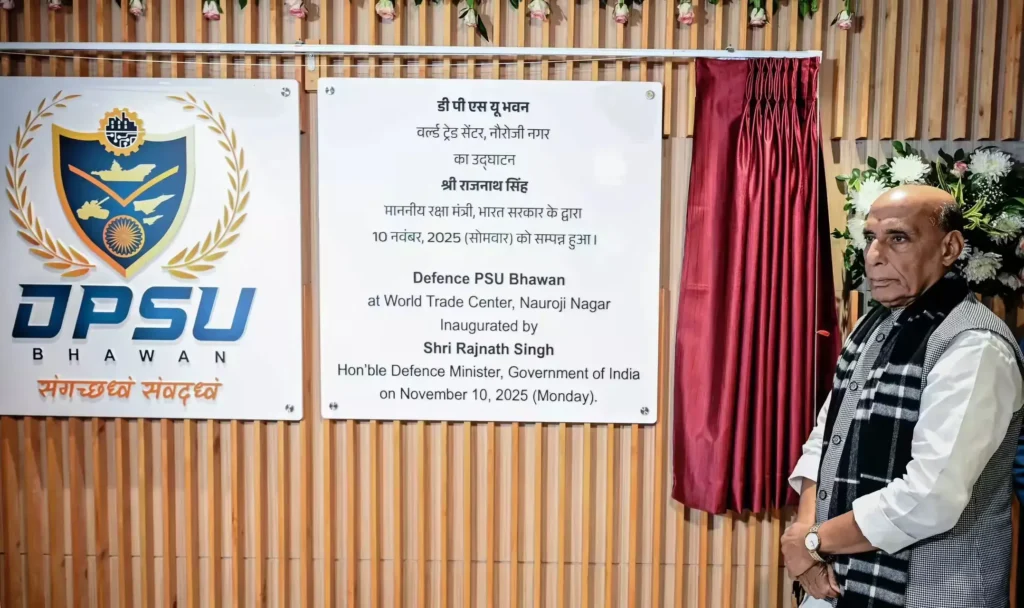
Rajnath Singh Inaugurates DPSU Bhawan, Launches R&D and Green Manufacturing Initiatives to Boost Defence Self-Reliance

In a significant move to strengthen India’s defence manufacturing ecosystem, Defence Minister Rajnath Singh inaugurated the state-of-the-art DPSU Bhawan at Naoroji Nagar, New Delhi, on November 10, 2025. The new facility aims to serve as a central hub for collaboration and innovation among the country’s 16 Defence Public Sector Undertakings (DPSUs), promoting synergy under the national vision of Atmanirbhar Bharat. The event also featured the launch of a comprehensive R&D roadmap for DPSUs and the unveiling of HAL’s R&D Manual, designed to enhance indigenous design, intellectual property creation, and collaboration with Indian academia. Singh said the roadmap represents India’s shift “from manufacturing under licence to manufacturing through innovation,” reinforcing the goal of technological self-sufficiency. Highlighting the sector’s growth, Singh revealed that India’s defence production in FY25 touched a record ₹1.51 lakh crore, with DPSUs contributing over 71%. Defence exports also surged to ₹6,695 crore, showcasing global confidence in Indian-made platforms. He urged DPSUs to continue their momentum by focusing on rapid indigenisation, quality enhancement, and timely deliveries. Four DPSUs — Munitions India Limited (MIL), Armoured Vehicles Nigam Limited (AVNL), India Optel Limited (IOL), and Hindustan Shipyard Limited (HSL) — were awarded Miniratna (Category-I) status, granting them greater operational autonomy and financial independence. To promote industry collaboration, three key MoUs were exchanged between HAL, BDL, Yantra India Limited (YIL), and MIDHANI. These agreements include the setup of a 10,000-ton forging press to reduce dependence on imported aluminium alloys and the establishment of a Metal Bank to secure critical raw materials for defence projects. HAL also announced an interest-free advance of ₹435 crore to YIL, while BDL committed to a sustained workload of 3,000 metric tonnes over the next decade. Rajnath Singh also launched SWAYAM (Sustainable and Green Defence Manufacturing) — a compendium highlighting eco-friendly practices adopted across DPSUs. Backed by the Comprehensive Energy Efficiency Action Plan (CEEAP) 2023, it promotes renewable energy, energy efficiency, and carbon reduction. He commended India Optel Limited (IOL) and Bharat Electronics Limited (BEL) for achieving 100% renewable energy usage, contributing significantly to India’s Net Zero goals. The newly inaugurated DPSU Bhawan brings all DPSUs under one roof, symbolizing unity and collective progress under the Sanskrit motto “Sangachhadhwam Samvadadhwam” — “Move together, dialogue together.” Equipped with modern simulation facilities, conference rooms, and exhibition spaces, it is set to become a showcase of India’s growing defence manufacturing capabilities. Concluding the event, Singh called on DPSUs to strengthen R&D, sustainability, and innovation to position India as a global hub for defence manufacturing. “Our goal is not just self-reliance but leadership on the world stage,” he said. Source: Economic Times

Rajnath Singh Inaugurates DPSU Bhawan, Launches R&D and Green Manufacturing Initiatives to Boost Defence Self-Reliance Read More »

PM Modi Unveils ₹1 Lakh Crore R&D Fund, Calls for Ethical and Inclusive Innovation at ESTIC 2025

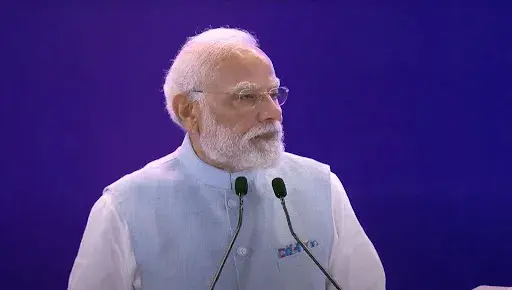
Prime Minister Narendra Modi addressed the Emerging Science, Technology and Innovation Conclave (ESTIC) 2025 at Bharat Mandapam on Nov 3, highlighting India’s growing leadership in science, technology, and innovation. Welcoming participants from India and abroad — including scientists, innovators, academics, and policymakers — the Prime Minister celebrated India’s landmark achievements in both sports and science. Opening his remarks, PM Modi congratulated the Indian women’s cricket team for their historic ICC Women’s World Cup victory, saying the nation was “immensely proud” of their achievement, which will inspire millions of young Indians. The Prime Minister also hailed India’s scientists for successfully launching the heaviest communication satellite, commending ISRO for its continued contribution to India’s space advancements. He noted that both achievements reflected India’s growing spirit of excellence and innovation. R&D Boost: ₹1 Lakh Crore RDI Scheme Announced Underscoring the government’s commitment to strengthening India’s research ecosystem, PM Modi formally launched the ₹1 lakh crore Research, Development and Innovation (RDI) Scheme Fund, designed to boost private sector–led R&D. He emphasized that, for the first time, capital will be made available for high-risk, high-impact research projects, and reaffirmed that the government is “building a modern innovation ecosystem” by easing financial rules, procurement norms, and regulatory frameworks to accelerate the journey from lab to market. He also referred to the establishment of the Anusandhan National Research Foundation (ANRF) to expand research and innovation across Indian universities. India’s Innovation Momentum PM Modi highlighted India’s transformation into a global innovation hub — noting that R&D spending has doubled in the past decade, patent registrations have risen 17-fold, and India now ranks as the world’s third-largest startup ecosystem. Over 6,000 deep-tech startups are driving progress in areas such as clean energy, materials science, and semiconductors, while India’s bio-economy has grown from $10 billion in 2014 to $140 billion today. He said, “India is no longer a consumer of technology — it is a driver of technological transformation,” citing the nation’s indigenous vaccine success during the COVID-19 pandemic and the reach of its Digital Public Infrastructure, which connects over two lakh gram panchayats with optical fibre. Empowering Women in Science Highlighting inclusive innovation, the Prime Minister celebrated the rising participation of women in STEM. He noted that women now make up 43% of STEM students in India — above the global average — and that annual patent filings by women have increased from fewer than 100 to over 5,000. He added that Indian women scientists are now at the forefront of space research and innovation. Encouraging the Next Generation PM Modi underscored the importance of nurturing scientific curiosity among youth. Recalling the public excitement around Chandrayaan and the recent Indian space station mission, he said these moments have inspired young minds to explore science. He announced plans to expand Atal Tinkering Labs from 10,000 to 25,000 labs, giving over one crore students a platform for hands-on innovation. The Prime Minister also shared that 10,000 new research fellowships will be awarded over the next five years under the Prime Minister’s Research Fellowship to further empower young scientists. India’s Vision for Ethical AI and Future Technologies Speaking about the future of emerging technologies, PM Modi stressed that science and technology must remain ethical, inclusive, and human-centric. He cited the India AI Mission, with an investment of ₹10,000 crore, aimed at making AI accessible and beneficial for all. He also announced that India will host the Global AI Summit in February 2026, focusing on inclusive and safe AI governance. Calling for innovation in critical areas such as nutrition security, biofortified crops, clean energy storage, bio-fertilisers, and genomic medicine, the Prime Minister urged scientists to work towards achieving self-reliance in key inputs and technologies. Concluding his address, PM Modi invoked the spirit of “Jai Vigyan, Jai Anusandhan”, reaffirming the government’s full support for researchers and innovators. He expressed confidence that the outcomes of ESTIC 2025 will chart a new roadmap for India’s scientific and technological future. Source: PIB

PM Modi Unveils ₹1 Lakh Crore R&D Fund, Calls for Ethical and Inclusive Innovation at ESTIC 2025 Read More »

Netflix joins hands with IICT and FICCI to nurture India’s next-gen creative tech talent

ardorcomm news

Streaming leader Netflix has entered into a strategic partnership with the Indian Institute of Creative Technology (IICT) and FICCI to build and strengthen the pipeline of creative-technology professionals in India. The memorandum of understanding (MoU) was signed during the 25th edition of FICCI Frames, marking a major step toward advancing India’s AVGC-XR (Animation, Visual Effects, Gaming, Comics, and Extended Reality) ecosystem. Under this collaboration, Netflix will utilize its Fund for Creative Equity to provide scholarships to selected students identified jointly with IICT. The fund aims to empower underrepresented talent in the media and entertainment industry by offering equitable learning and career opportunities. As part of the initiative, Netflix will actively participate in three of IICT’s national councils — R&D, Academic, and Industry Development — to foster synergy between academia, industry experts, and policymakers in shaping the future of India’s creative technology sector. Mahima Kaul, Director of Global Affairs, Netflix India, said the partnership is designed to strengthen the country’s AVGC sector and empower young creators. “Through this collaboration, we aim to equip aspiring storytellers and innovators with world-class tools and opportunities to fuel creativity and drive India’s digital entertainment economy,” she said. Dr. Vishwas Deoskar, CEO of IICT, emphasized that the alliance bridges the gap between academic learning and real-world industry experience. “By offering mentorship, practical exposure, and access to global best practices, we are preparing the next generation of creative technologists to thrive in the evolving AVGC-XR landscape,” he noted. Munjal Shroff, Chairman of the FICCI AVGC-XR Forum, added that the initiative will position India as a global hub for creative technologies. “This partnership not only builds future-ready talent but also fuels innovation and lays the foundation for sustainable growth in the sector,” he said. Source: PTI

Netflix joins hands with IICT and FICCI to nurture India’s next-gen creative tech talent Read More »

Goa Unveils New Startup Policy 2025 to Boost Innovation and Employment

ardorcomm news

The Goa government has launched an ambitious Startup Policy 2025 aimed at transforming the state into India’s “Creative Capital” by nurturing a thriving entrepreneurial ecosystem. The initiative targets the creation of 1,000 startups and 10,000 new jobs for Goans while extending strong support to women entrepreneurs, a state official announced. The policy, introduced by the Department of State Information Technology, Electronics and Communication (DITEC), focuses on fostering innovation through venture funding, government-industry collaborations, and partnerships with incubators, corporates, and academic institutions. Goa, which already hosts 696 DPIIT-recognised startups, is positioning itself as an emerging hub for technology and creativity. Vision and Key Goals With a goal to establish Goa as a leading startup destination by 2028, the policy outlines specific targets — including enabling 100 startups to secure venture capital, promoting collaboration between 50 startups and government bodies, and strengthening connections across the entrepreneurial ecosystem. Key Schemes and Incentives The policy introduces several initiatives to encourage innovation and skill development: Campus Innovation Scheme: Offers grants to students for entrepreneurial or research-based projects, reimbursing project development costs. Skill Enhancement Scheme: Provides reimbursement for professional training in areas such as Artificial Intelligence and other emerging technologies. Infrastructure Support: Encourages collaboration with private players and educational institutions to establish IT labs, Maker Labs, Centres of Excellence, and Innovation Hubs. Women Entrepreneurship Support: Launches a dedicated mentoring and funding programme, offering monthly allowances to women-led startups working on innovative solutions. Promotion and Marketing Assistance Scheme: Offers financial aid for startups participating in government-supported exhibitions and trade shows, covering a substantial portion of related expenses.  Officials said the Goa Startup Policy 2025 aims to build a robust innovation-driven environment that inspires the next generation of leaders, innovators, and creators. “This policy will serve as a catalyst for transforming Goa into a global hub for creativity, technology, and innovation — firmly establishing the state as the Creative Capital of India,” the DITEC spokesperson added. Source: PTI

Goa Unveils New Startup Policy 2025 to Boost Innovation and Employment Read More »

UK Plans Visa Fee Waiver to Attract Global Science and Tech Talent: Report

ardorcomm news

The UK government is reportedly considering a visa fee waiver as part of its push to attract top global talent in science, research, and technology, according to a Financial Times report on Monday. The proposal comes under the Global Talent Taskforce, a body launched in June and directly reporting to Prime Minister Keir Starmer and Chancellor Rachel Reeves. It is supported by a £54 million Global Talent Fund designed to cover relocation and research costs for exceptional individuals and their teams over five years. A senior government official told the newspaper that the idea of cutting visa fees “to zero” was being explored to target individuals from leading global universities or winners of internationally recognized awards. The move comes as the US, under President Donald Trump, imposed a steep one-time $100,000 fee on all new H-1B visa applications—widely used by the American tech sector, with Indians being among the largest beneficiaries. Chaired by Varun Chandra, the PM’s business adviser, alongside Science Minister Lord Patrick Vallance, the taskforce aims to simplify the UK’s Global Talent Visa route, which has long been criticized for being overly bureaucratic. The UK’s Department for Science, Innovation and Technology (DSIT) said the initiative sends a “clear signal” that Britain wants to remain a global hub for innovation by drawing in world-class researchers, entrepreneurs, investors, engineers, and creatives. “Competition for elite talent is fierce,” former business and trade secretary Jonathan Reynolds said at the launch, stressing that the policy would boost innovation in critical sectors, create jobs, and strengthen the economy. While the government says the plan supports its Immigration White Paper to fast-track “the brightest and best” into high-growth industries while limiting overall migration, opposition voices are pushing back. On Monday, Nigel Farage’s Reform UK party vowed to scrap the route to Indefinite Leave to Remain (ILR) if it comes to power, accusing the system of being misused and pledging a tougher citizenship process with higher salary thresholds. Downing Street dismissed these proposals as divisive and unworkable. Source: PTI

UK Plans Visa Fee Waiver to Attract Global Science and Tech Talent: Report Read More »

Govt Launches Adi Karmayogi Student Chapters; IIT Delhi Named Nodal Hub

ardorcomm news

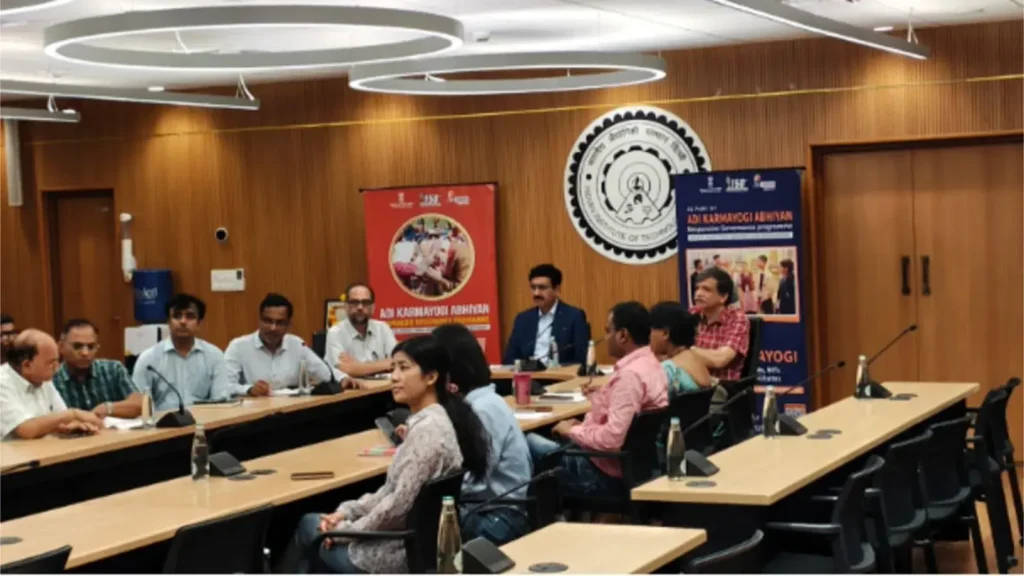
The Ministry of Tribal Affairs has rolled out Adi Karmayogi Student Chapters across India’s leading higher education institutions, including IITs, IIMs, AIIMS, NITs, and central universities, in a bid to empower tribal youth as leaders, innovators, and entrepreneurs. IIT Delhi’s Bhagwan Birsa Munda Cell will serve as the central coordinating hub for the initiative. According to IIT Delhi, the launch reflects a key milestone under the Adi Karmayogi Abhiyan—described as the world’s largest tribal leadership movement—unveiled by Prime Minister Narendra Modi on September 17 as part of Janjatiya Gaurav Varsh (2024–25). At the launch event, Tribal Affairs Secretary Vibhu Nayar said the chapters would act as a “bridge between premier institutions and tribal communities,” nurturing young changemakers to shape India’s educational, entrepreneurial, and social development. IIT Delhi Director Prof. Rangan Banerjee added that the initiative offers a platform for students to “mentor, innovate, and create meaningful impact in tribal regions.” In the first phase, the chapters will be established across a wide network of institutions. These include IITs such as Delhi, Kharagpur, Dharwad, and Hyderabad; IIMs at Sirmaur and Nagpur; AIIMS campuses in Nagpur, Gorakhpur, and Bhatinda; VMMC and Safdarjung Hospital; IISER Mohali; IIST Trivandrum; SVNIRTAR; and others. NITs in Delhi, Patna, Raipur, Puducherry, and Meghalaya, as well as IIITDM Kurnool, BIT Mesra, NERIST Arunachal Pradesh, DTU Delhi, and RGNUL Patiala, are also on board. Additionally, hotel management institutes such as IHM Kufri, IHM Tharamani, IHM Pusa, IHM Bhopal, and IHM Bhubaneswar are part of the launch phase. The Adi Karmayogi Student Chapters will engage in: Mentorship & Education: Linking students from top institutes with EMRS and Ashram schools to enhance learning. Entrepreneurship: Supporting tribal-led startups through a ₹50 crore venture capital fund. Innovation: Organizing hackathons and workshops to develop tech-based solutions for tribal communities. Village Development: Designing Vision 2030 plans, SWOT analyses, and sustainable models. Skill Development: Training in frontier areas such as semiconductors and emerging technologies, in collaboration with IISc Bangalore.  The programme will also facilitate internships with the Ministry of Tribal Affairs and state departments, alongside recognition and awards for outstanding student leaders and mentors. With strong backing from directors and leaders of IITs, IIMs, AIIMS, and IIST Trivandrum, the initiative aims to build a cadre of empowered tribal youth contributing to the vision of Viksit Bharat @2047. Source: Indian Express

Govt Launches Adi Karmayogi Student Chapters; IIT Delhi Named Nodal Hub Read More »

Pradhan discusses expansion of Indian schools in UAE, inaugurates Atal Incubation Centre at IIT Delhi-Abu Dhabi

ardorcomm news

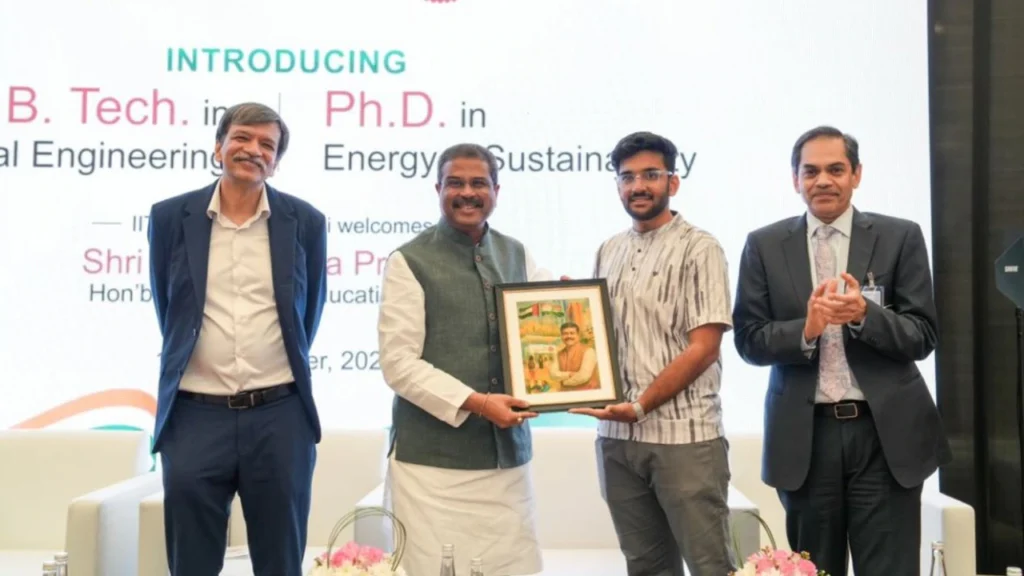
Union Education Minister Dharmendra Pradhan, during his two-day official visit to the United Arab Emirates, met Sara Musallam, Chairperson of the Abu Dhabi Department of Education and Knowledge. The discussions centred on strengthening educational collaboration between the two countries, including the establishment of more Indian curriculum-based schools in the UAE to cater to the growing Indian community. Pradhan also visited the Abu Dhabi campus of IIT Delhi, where he inaugurated the Atal Incubation Centre (AIC)—the first such facility hosted by an Indian institution abroad. The AIC is envisioned to nurture joint start-ups and research-led enterprises involving innovators from both India and the UAE, with a focus on deep tech, artificial intelligence, clean energy, healthcare, and other areas of mutual interest. It will also provide Indian start-ups with a gateway to Middle Eastern markets. Highlighting the legacy of IIT Delhi, Pradhan noted that the Abu Dhabi campus has grown remarkably from a concept into a full-fledged institution, symbolising the India-UAE knowledge partnership. He also launched B.Tech and Ph.D programmes in Chemical Engineering and Energy & Sustainability at the campus, expressing confidence in the students’ potential to set new benchmarks in global innovation and prosperity. Pradhan shared insights on the success of Atal Tinkering Labs in India and discussed the possibility of introducing Atal Innovation Labs in Indian schools across the UAE. The talks also explored opportunities for two-way student exchanges starting from the school level, further strengthening academic and cultural ties. As part of his UAE visit, the minister is scheduled to inaugurate the Dubai campus of IIM Ahmedabad and hold meetings with leaders, policymakers, academicians, and institutional representatives from both nations to broaden cooperation in education, innovation, and skill development. Source: PTI Image Credit: x.com/iitdelhi

Pradhan discusses expansion of Indian schools in UAE, inaugurates Atal Incubation Centre at IIT Delhi-Abu Dhabi Read More »

Curtin University to Lead Key Role in $271M National 3D Printing Innovation Drive

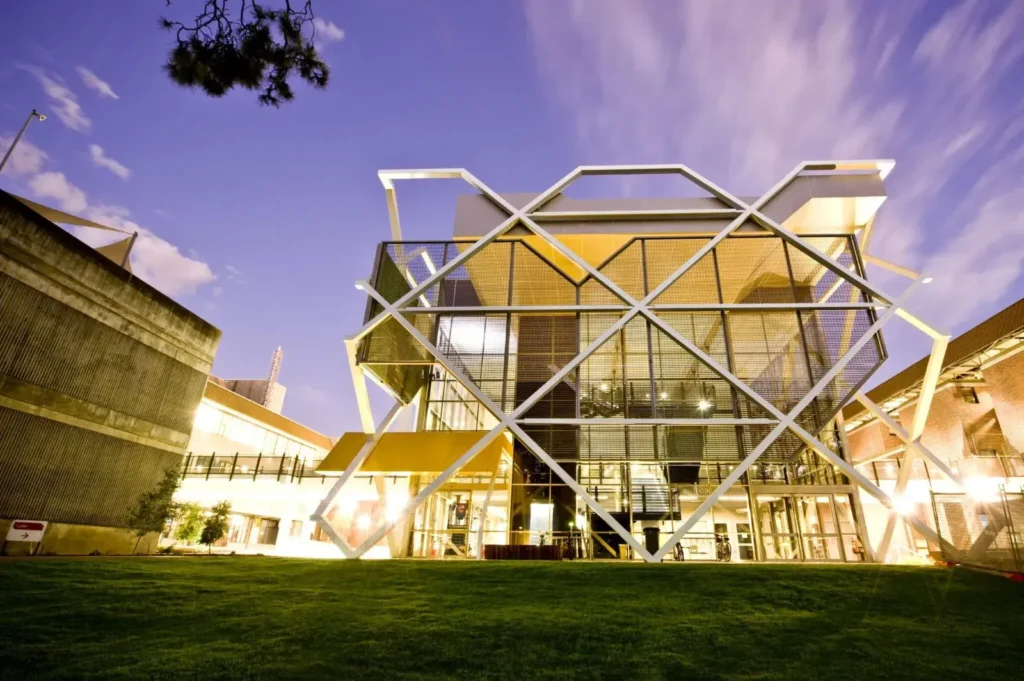
Curtin University is set to play a pivotal role in Australia’s $271 million Additive Manufacturing Cooperative Research Centre (AMCRC), a national initiative aimed at transforming the country’s manufacturing landscape through next-generation 3D printing technologies. Launched with $58 million in federal funding, the AMCRC will unite 14 research institutions and over 50 industry partners in a bid to build a connected, sovereign additive manufacturing ecosystem. This initiative targets advancements in sectors including defence, aerospace, healthcare, automotive, mining, and construction. Additive manufacturing—or industrial 3D printing—enables the creation of lighter, stronger, and more intricate components by building products layer by layer from digital designs, significantly reducing material waste. Curtin’s contribution will be driven by researchers from the John de Laeter Centre and the Curtin Corrosion Centre, who will collaborate with industry leaders such as Austal, Australia’s premier shipbuilder. Curtin’s strengths in materials science, corrosion research, and manufacturing will be key to developing innovative, sustainable solutions for industry. Curtin Deputy Vice-Chancellor Research, Professor Melinda Fitzgerald, hailed the initiative as a milestone for Australian manufacturing. “Curtin is proud to contribute to this national collaboration, using world-class research to support Australia’s sovereign capabilities and create new economic opportunities,” she said. Dr Karl Davidson and Associate Professor Zakaria Quadir, along with Associate Professor Kod Pojtanabuntoeng and Professor Vladimir Golovanevskiy, will spearhead Curtin’s involvement in AMCRC projects. Dr Davidson noted the transformative potential of additive manufacturing: “This opens new doors for materials innovation, improving supply chain resilience, efficiency, and sustainability.” The AMCRC will support research and commercialisation projects over the next seven years, also focusing on additive technologies in marine engineering, mining, and agriculture—strengthening Australia’s position in advanced manufacturing and industrial innovation. Source: Hindustan

Curtin University to Lead Key Role in $271M National 3D Printing Innovation Drive Read More »

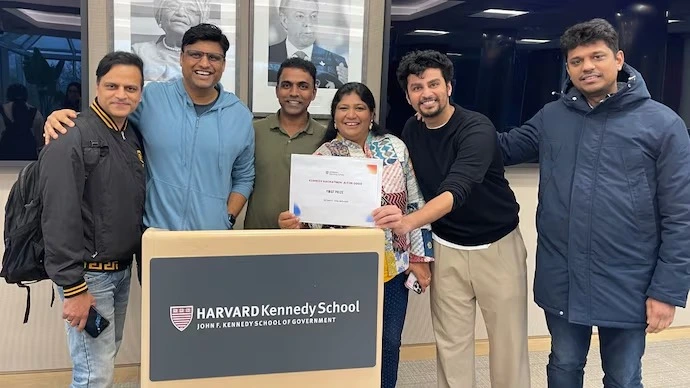
MEGHA Project from India Wins Top Prize at Harvard’s AI for Good Hackathon

In a significant global recognition for inclusive technology, the MEGHA (Meghalaya E-Governance Human-centred Assistance) project has secured first place at the Kennedy AI for Good Hackathon held at Harvard Kennedy School. The AI-powered, voice-first initiative aims to bridge the digital divide by enabling rural citizens in Meghalaya and beyond to access government schemes through any basic mobile phone. Designed for low-literacy users in remote areas, MEGHA operates via a toll-free number and responds in conversational language, making government schemes more accessible without the need for smartphones or internet connectivity. Built by a team of Indian public leaders and technologists currently at Harvard, MEGHA represents a people-centric approach to responsible AI deployment. The team behind MEGHA includes notable figures such as Manish Maheshwari (former Twitter India Head and Harvard Fellow), Dr. Aarushi Jain (Policy Director at Bharti Institute), Mohammed Y Safirulla K (IAS officer), Manudev Jain (IRS officer), and Ashish Tiwari (IPS officer and Fulbright Scholar). Their collaborative efforts have created a powerful tool for digital inclusion grounded in verified government data. Speaking about MEGHA, Manish Maheshwari said, “The true power of AI lies in thoughtfully connecting proven technologies to urgent human needs. As implementation costs fall, AI’s ability to unlock dignity, opportunity, and inclusion becomes one of the greatest forces for good.” Dr. Aarushi Jain added, “MEGHA is built to break information barriers by offering honest, concise guidance through a voice-first interface grounded in official documents.” MEGHA’s win is a testament to how empathetic innovation and AI can be harnessed to create impactful, inclusive solutions for real-world challenges. Source: India Today

MEGHA Project from India Wins Top Prize at Harvard’s AI for Good Hackathon Read More »