ArdorComm Media Group

Sunday, August 9, 2026 10:09 AM

Lok Sabha

Parliament Clears Bill to Expand Supreme Court Bench Strength to 37 Judges

Parliament has approved the Supreme Court (Number of Judges) Amendment Bill, 2026, paving the way for an increase in the sanctioned strength of Supreme Court judges from 33 to 37, excluding the Chief Justice of India. The Rajya Sabha passed the legislation after a discussion and returned it to the Lok Sabha, which had already cleared the Bill earlier this week. The legislation amends the Supreme Court (Number of Judges) Act, 1956 to accommodate the growing workload of the country’s highest court. Before the Bill was introduced, President Droupadi Murmu had promulgated an ordinance in May this year authorising the increase in the number of judges. Responding to the debate in the Rajya Sabha, Union Law and Justice Minister Arjun Ram Meghwal said the expansion of the apex court’s bench reflects the government’s broader judicial reform agenda under the vision of Sabka Saath, Sabka Vikas, Sabka Vishwas and Sabka Prayas. He stated that strengthening the Supreme Court’s capacity would improve judicial efficiency and help address the increasing complexity and volume of cases before the court. The minister noted that the government has been implementing several measures to accelerate the disposal of pending cases. He said the rise in litigation, evolving constitutional issues and growing legal challenges have made it necessary to enhance the court’s judicial strength. During the discussion, Congress MP Vivek Tankha questioned the government’s decision to first issue an ordinance for the move, pointing out that nearly 95,000 cases remain pending before the Supreme Court. Supporting the legislation, BJP MP Sangeeta Yadav described it as a landmark reform that would strengthen the justice delivery system and improve access to timely justice. She observed that many cases have remained unresolved for more than a decade, making the expansion of the bench essential. Several members from different political parties backed the Bill while raising broader concerns about judicial infrastructure and vacancies. TMC MP Dr Menaka Guruswamy highlighted that nearly 30 per cent of High Court posts remain vacant. DMK MP R Girirajan said the additional judges would help reduce the Supreme Court’s mounting backlog, while BJD MP Dr Sasmit Patra emphasised the need to improve infrastructure in both the Supreme Court and High Courts. YSRCP MP S. Niranjan Reddy pointed to the increasing number of cases handled by each judge. AIADMK MP I.S. Inbadurai welcomed the move, calling it a timely reform, and urged the Centre to fill vacant judicial posts in the Madras High Court, where only 52 judges are currently serving against a sanctioned strength of 75. Shiv Sena MP Dr Jyoti N. Waghmare said the legislation would strengthen public confidence in the judiciary and contribute to faster justice delivery. Members including Rajendra Jain (NCP), Sanjay Singh (AAP), Milind Deora (Shiv Sena), Vijay Chintakayala (TDP) and Mahua Maji (JMM) also participated in the debate. Following the passage of the Bill, the Rajya Sabha proceeded with Special Mentions, during which members raised issues of public importance, before adjourning for the day. Source: News on AIR

Parliament Clears Bill to Expand Supreme Court Bench Strength to 37 Judges Read More »

Lok Sabha Considers Public Examinations Amendment Bill, 2026 to Strengthen Anti-Paper Leak Law

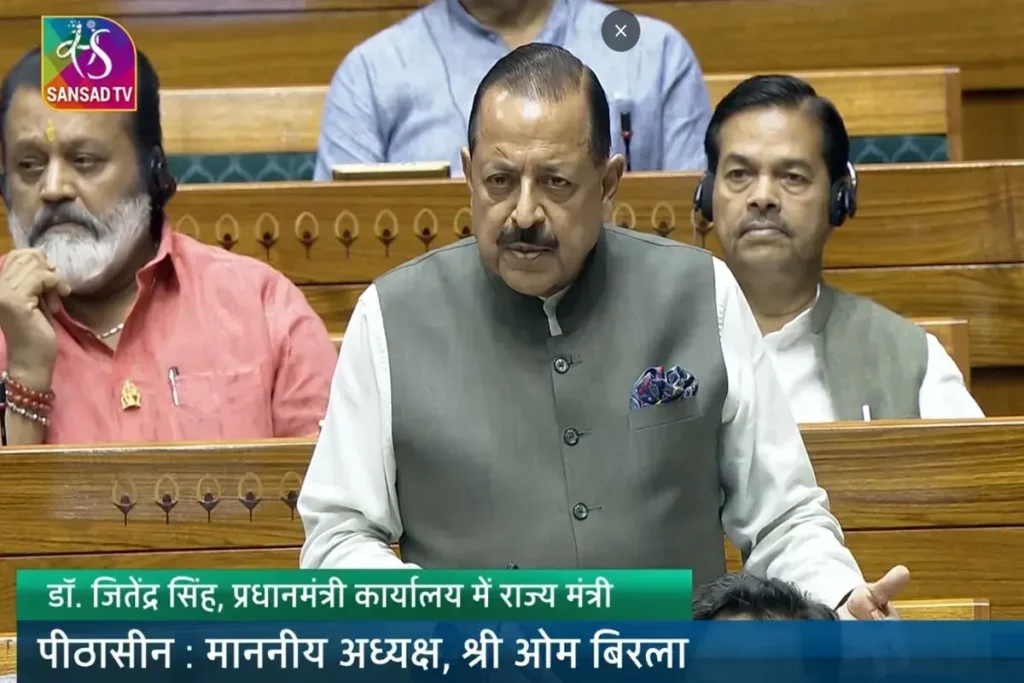
The Lok Sabha on Tuesday took up the Public Examinations (Prevention of Unfair Means) Amendment Bill, 2026 for consideration and passage, aiming to further tighten the legal framework against examination malpractices and paper leaks. The proposed legislation amends the Public Examinations (Prevention of Unfair Means) Act, 2024 by introducing stricter penalties for offenders. Under the Bill, those found guilty could face imprisonment of up to 10 years, fines of up to ₹10 crore, and confiscation of their properties. It also mandates every state and Union Territory to establish Special Fast Track Courts for day-to-day hearings to ensure swift justice. The Bill further requires investigations into offences to be completed within two months from the registration of a police case, while trials must conclude within three months of filing the chargesheet. Introducing the Bill, Minister of State for Personnel, Public Grievances and Pensions Dr Jitendra Singh said the amendment reflects the government’s commitment to protecting students and preserving the integrity of public examinations. He stated that the strengthened legal framework aligns with Prime Minister Narendra Modi’s resolve to safeguard the future of the country’s youth. Singh described the legislation as a landmark reform, adding that previous governments lacked a comprehensive law to effectively address paper leak cases. He said recent incidents of examination malpractice highlighted the need for stronger legal provisions, prompting the government to introduce the amendment to restore public confidence in the examination system. During the debate, Congress MP Gaurav Gogoi criticised the government, alleging that the amendment falls short of meaningful education reforms and serves only as a cosmetic change to the existing law. Backing the Bill, BJP MP Bansuri Swaraj called it a significant step towards ensuring transparent and fair examinations. She said organised examination mafias now operate across multiple states, making stronger legal measures essential. Swaraj also highlighted provisions for the creation of a Special Task Force to investigate paper leak cases and the establishment of Special Fast Track Courts for speedy trials. Samajwadi Party MP Akhilesh Yadav expressed concerns over recurring paper leaks and questioned the government’s outsourcing practices at the National Testing Agency (NTA), citing the alleged NEET-UG paper leak despite the enactment of the 2024 law. Supporting the legislation, AITC MP Abhishek Banerjee said every student deserves a fair examination process and emphasised that stringent laws are necessary to curb paper leaks and maintain the credibility of competitive examinations. Source: News on AIR

Lok Sabha Considers Public Examinations Amendment Bill, 2026 to Strengthen Anti-Paper Leak Law Read More »

Income Tax Department faces shortage of nearly 27,000 staff, government tells Parliament

The Income Tax Department is functioning with a shortage of 26,997 officers and support staff as of January 1, 2026, the government informed Parliament on Monday. In a written reply to the Lok Sabha, Minister of State for Finance Pankaj Chaudhary said vacancies across Group A, B and C posts currently stand at 26,997. He noted that filling vacancies is an ongoing process and appointments are made regularly through direct recruitment by the Union Public Service Commission (UPSC) and the Staff Selection Commission (SSC), as well as through departmental promotions in accordance with recruitment rules. The minister also highlighted that the New Income Tax Act, 2025 has simplified tax laws by removing outdated provisions, restructuring the legislation and making it easier to understand. He added that the government is modernising tax administration through digital technologies, including simplified return filing, quicker processing, data analytics and faceless assessments. Responding to another query, Chaudhary said 11 individuals have been declared Fugitive Economic Offenders (FEOs) under the Fugitive Economic Offenders Act, 2018, since 2024. Properties worth ₹1,303.16 crore linked to these offenders have been confiscated. He further informed the House that Red Notices have been issued against eight of the offenders, while extradition requests have been sent for four individuals whose locations have been identified. Additionally, 12 Mutual Legal Assistance Requests (MLARs) have been submitted to facilitate international cooperation. The minister said the government has taken steps to return confiscated assets to legitimate victims of economic offences. So far, properties valued at around ₹73,015.03 crore have been restored, with restitution amounts reaching ₹15,262.30 crore in FY 2024–25, ₹32,677.97 crore in FY 2025–26, and ₹9,873.11 crore during FY 2026–27 up to the present. In a separate response, Chaudhary said net private transfers, primarily remittances sent home by Indians working overseas, increased from $124.6 billion in 2024–25 to $144.8 billion in 2025–26, according to the Reserve Bank of India’s Balance of Payments data. He added that monthly net transfers rose from $9.4 billion in April 2025 to $16 billion in April 2026, despite the impact of ongoing global conflicts. Source: PTI

Income Tax Department faces shortage of nearly 27,000 staff, government tells Parliament Read More »

Lok Sabha Clears Enhanced Education Budget; Dharmendra Pradhan Says Higher Education Funding Up 78%

The Lok Sabha on Thursday approved the demands for grants of the Ministry of Education, with Union Education Minister Dharmendra Pradhan highlighting a significant rise in budgetary allocations for the sector over the past decade. He stated that India’s education spending has increased from ₹4.3 lakh crore in 2013-14 to ₹9.19 lakh crore at present, underlining the government’s commitment to building a strong knowledge-driven economy by 2047. Replying to the discussion in the House, Pradhan said quality education remains central to India’s vision of becoming a 30-trillion-dollar economy. He noted that the budget allocation for higher education has witnessed a 78% increase since 2013-14. The minister emphasized that the government has focused on ensuring education is accessible, equitable, affordable, accountable, and of high quality. He highlighted the expansion of higher education institutions across the country, including IITs and IIMs. According to him, the number of universities has risen from 760 in 2014-15 to 1,168 currently. Pradhan also spoke about the PM JANMAN scheme, aimed at improving educational access for Particularly Vulnerable Tribal Groups (PVTGs). He said the Centre plans to construct 500 hostels for tribal students under the initiative, with work already underway on 119 hostels. He further stated that the government is actively promoting Indian Sign Language and strengthening inclusive education measures. Highlighting women’s representation in education, the minister pointed out that Aligarh Muslim University has appointed its first woman Vice-Chancellor. He also mentioned an increase in the number of female teachers in schools. Opening the debate, BJP MP Tejasvi Surya said India has witnessed major improvements in educational infrastructure and quality over the last decade. He added that this year’s Union Budget places special emphasis on youth skill development, employment generation, and self-reliance, targeting skill training for nearly four crore young people. Surya noted that the higher education department’s budget has increased from ₹26,750 crore in 2013-14 to more than ₹47,000 crore now. Opposition members, however, raised concerns over vacancies and the quality of education. Congress MP Mohammad Jawed highlighted that nearly 4.8 lakh teaching positions in schools and over 61,000 posts in central universities remain vacant. TMC MPs Pratima Mondal and Sougata Roy criticized the government’s education policies, alleging inadequate focus on skill development and declining higher education standards. Roy also expressed concern over the growing number of Indian students pursuing higher studies abroad, citing that nearly 8.96 lakh students left the country last year. RLP leader Hanuman Beniwal demanded strict action against the “coaching mafia” and raised concerns over repeated paper leak incidents. MPs including Asaduddin Owaisi, Malvinder Singh Kang, Kamakhya Prasad Tasa, Priya Saroj, Sambit Patra, and Kanimozhi also participated in the discussion before the House adjourned for the day. Source: News on AIR

Lok Sabha Clears Enhanced Education Budget; Dharmendra Pradhan Says Higher Education Funding Up 78% Read More »

OTT Platforms to Stay Outside CBFC Oversight, Government Tells Lok Sabha

The Centre has reaffirmed that content streamed on over-the-top (OTT) platforms will not fall under the purview of the Central Board of Film Certification (CBFC). The clarification was given in the Lok Sabha in response to a query raised by MP Dr. M K Vishnu Prasad. Minister of State for Information and Broadcasting Dr. L. Murugan stated that digital streaming content is regulated under the Information Technology (Intermediary Guidelines and Digital Media Ethics Code) Rules, 2021, and not through the film certification body. Under the existing framework, OTT platforms are mandated to adhere to a prescribed Code of Ethics. This includes complying with all applicable laws, refraining from prohibited content, and adopting age-based content classification to guide viewers. To monitor compliance, the IT Rules provide for a three-level regulatory mechanism. At the first level, publishers are responsible for self-regulation and addressing complaints related to their content. The second level involves oversight by self-regulatory bodies constituted by the publishers themselves. The third and final level empowers the Central Government to intervene when necessary. Complaints related to OTT content are initially handled by the concerned platform, allowing publishers to resolve issues internally in accordance with the IT Rules, 2021. Dr. Murugan highlighted that this multi-tier system is designed to strike a balance between safeguarding creative expression and ensuring legal accountability, with digital content regulation being managed through a structured grievance redressal process rather than CBFC certification. Source: Economic Times

OTT Platforms to Stay Outside CBFC Oversight, Government Tells Lok Sabha Read More »

BCCI still not a national sports federation, Mandaviya tells Lok Sabha

The Board of Control for Cricket in India (BCCI) is not recognised as a National Sports Federation (NSF), Union Sports Minister Mansukh Mandaviya informed the Lok Sabha on Monday, reaffirming a long-standing position that is likely to change after the National Sports Governance Act is fully implemented next year. Responding to a question from Trinamool Congress MP Mala Roy, who sought clarity on whether the government plans to step in to oversee major sports bodies such as the BCCI and the financially strained All India Football Federation (AIFF), Mandaviya said NSFs are autonomous, voluntary organisations expected to adhere to sound governance practices. He clarified that the BCCI has so far remained outside the NSF framework because it does not depend on government funding. However, once the new law comes into force, the BCCI will be required to register as an NSF, as cricket has been included in the Olympics and is scheduled to feature in the 2028 Los Angeles Games in the T20 format. Passed in August, the National Sports Governance Act provides for the creation of a National Sports Board (NSB), which will introduce stricter accountability norms. Under the new system, all NSFs must secure NSB recognition to be eligible for central government funding. Addressing concerns related to transparency, Mandaviya noted that the government has eased provisions related to the Right to Information (RTI) Act. Only sports bodies that receive government grants or assistance will fall under the RTI framework, offering relief to the BCCI, which has consistently opposed RTI coverage. The minister also told the House that NSFs receiving annual grants exceeding ₹1 crore are subject to audits by the Comptroller and Auditor General (CAG) of India. Source: PTI

BCCI still not a national sports federation, Mandaviya tells Lok Sabha Read More »

Parliament Panel Seeks Legal, Tech Framework to Combat AI-Driven Fake News

ardorcomm news

A parliamentary panel has urged the government to put in place robust legal and technological mechanisms to track, identify, and penalize those responsible for spreading AI-generated fake news. In its draft report, the Standing Committee on Communications and Information Technology — chaired by BJP MP Nishikant Dubey — emphasized the need for a balanced use of Artificial Intelligence. While AI is being applied to detect misinformation, the report cautioned that the same technology can also generate and amplify it. The report has been submitted to Lok Sabha Speaker Om Birla and will be tabled in the upcoming session. The committee has recommended stronger coordination between the Ministry of Information and Broadcasting, the Ministry of Electronics and Information Technology (MeitY), and other concerned departments. Among its proposals are exploring licensing requirements for AI content creators and introducing mandatory labelling for AI-generated text, videos, and images. It also highlighted ongoing government-backed projects such as deep learning-based speech detection systems and software tools designed to identify deepfake videos and images. The MeitY has already set up a nine-member panel to study deepfake-related challenges. While ministries have cautioned that AI in its current state cannot independently fact-check complex issues, the committee suggested using AI as a first filter to flag suspicious content, followed by human verification. Calling fake news a “serious threat” to democracy and public order, the panel urged amendments in penal laws, higher fines, and greater accountability. It also suggested mandating fact-checking units and internal ombudsmen in all media organizations, while stressing that such measures should be built through consensus among stakeholders. Although committee recommendations are not binding, they often guide government policy due to their bipartisan weight. Source: PTI

Parliament Panel Seeks Legal, Tech Framework to Combat AI-Driven Fake News Read More »

Online Gaming Bill 2025 introduced in Lok Sabha: Blanket ban on money games sparks debate

Union IT Minister Ashwini Vaishnaw on Wednesday introduced The Promotion and Regulation of Online Gaming Bill, 2025 in the Lok Sabha, even as opposition members voiced protests. The Bill, cleared by the Union Cabinet a day earlier, proposes a complete ban on online games involving monetary stakes, citing growing concerns of addiction, financial distress, and suicides among youth. Soon after the Bill was tabled, proceedings were adjourned until 2 PM. MeitY clarifies intent Explaining the move, IT Secretary S. Krishnan said the Bill addresses two key issues — recognising the scope of the online gaming industry while also curbing harmful real-money games. He emphasised that this is a “societal decision,” noting that the government had weighed concerns of job losses but prioritised public well-being. He added that a regulatory authority will be established to classify permissible and banned games. eSports and social games, including subscription-based formats without monetary rewards, will remain legal. What the Bill proposes Under the draft law: Offering online money games could attract up to three years in jail or fines up to ₹1 crore. Advertising such services could lead to two years in jail or fines up to ₹50 lakh. Banks and financial institutions enabling transactions for money games may also face penalties. Repeat offenders risk harsher sentences — three to five years in jail and higher fines. Importantly, the Bill does not criminalise players, treating them as victims rather than offenders. The legislation defines an “online money game” as any game where players pay fees, deposit money, or stake assets with the expectation of monetary returns — irrespective of whether it is skill-based or chance-based. It aims to curb gambling risks, financial exploitation, money laundering, and mental health crises while fostering a safe space for eSports and game development in India. Industry backlash Industry groups, including the All India Gaming Federation (AIGF), E-Gaming Federation (EGF), and the Federation of India Fantasy Sports (FIFS), have warned of severe fallout. In a letter to Home Minister Amit Shah, they claimed the blanket ban could wipe out over 2 lakh jobs, force the shutdown of more than 400 companies, and push users toward unregulated and illegal platforms. They highlighted that online skill gaming has become a ₹2 lakh crore industry, generating ₹31,000 crore in revenue and contributing ₹20,000 crore in taxes annually. The sector, growing at 20% CAGR, was projected to double by 2028, with India’s gamer base already exceeding 50 crore players by 2024. Industry voices fear that the ban could derail India’s progress as a digital innovator, discourage foreign investment, and trigger large-scale unemployment. Public health perspective Supporters of the Bill, however, argue it is a much-needed safeguard. “This is more than regulation — it is protection,” said Preetha Reddy, Vice Chairperson of Apollo Hospitals. “Online money games have exposed children and youth to exploitation and mental health risks. This step puts wellbeing first.” Source: Economic Times  

Online Gaming Bill 2025 introduced in Lok Sabha: Blanket ban on money games sparks debate Read More »

Lok Sabha Passes National Sports Governance Bill to Reform India’s Sporting Framework

New Delhi – The Lok Sabha on Monday cleared the landmark National Sports Governance Bill, a key reform aimed at creating a transparent, accountable, and world-class sports administration system as India prepares to bid for hosting the Olympics. The bill was passed in the absence of the opposition, which was protesting over the revision of Bihar’s electoral rolls. Union Minister for Youth Affairs and Sports Mansukh Mandaviya described the legislation, alongside the National Anti-Doping (Amendment) Bill 2025, as a vital step toward strengthening the country’s sports ecosystem to meet international standards. He noted that while sports have been an integral part of Indian heritage — often linked to warfare — post-independence, the sector did not receive the necessary focus. “Despite our size, India’s Olympic and global sporting performance has been below expectations. This bill aims to change that,” he said. Key Features of the Bill: The National Sports Governance Bill establishes a legal framework to regulate National Sports Federations (NSFs), ensuring fair governance, athlete protection, and administrative accountability. Its provisions include: Transparent governance standards for NSFs. Implementation of safe sport protocols and grievance redressal systems. Standardized election processes to avoid disputes. Measures to ensure gender diversity in leadership roles. Stronger athlete representation in decision-making bodies. Financial transparency and stricter oversight. One of its most notable provisions brings the Board of Control for Cricket in India (BCCI) under the NSF governance framework. Once enacted, the BCCI will be required to seek annual recognition, and its legal disputes will be handled by a new National Sports Tribunal. Neither the BCCI nor its affiliated state bodies will be able to directly approach courts for dispute resolution. The bill also tackles ten chronic issues in Indian sports administration, ranging from recurring litigation and lack of dedicated dispute resolution bodies to the absence of legal backing for safe sport mechanisms. Age & Tenure Provisions: Addressing long-standing debates, the bill permits office-bearers to complete their term even if they turn 70 during tenure. It also sets clear tenure rules — a maximum of three terms of four years each (12 years in total) — with a mandatory cooling-off period of one term before re-election if they have served three consecutive terms. This legislation, previously returned twice by the Cabinet and once by Parliament due to disagreements, now marks a significant policy win for the BJP-led NDA government. Source: Economic Times

Lok Sabha Passes National Sports Governance Bill to Reform India’s Sporting Framework Read More »

Despite Rise in MBBS Seats, Nearly 2,850 Vacant in 2024: Government Data

Despite a 39% surge in MBBS seats over the last few years, 2,849 undergraduate medical seats remained vacant in the 2024–25 academic year, according to the latest figures from the National Medical Commission (NMC). The data was shared in the Lok Sabha on August 1 by Anupriya Patel, Minister of State for Health and Family Welfare, in response to an unstarred question posed by TDP MP Putta Mahesh Kumar. India’s MBBS seat count rose from 83,275 in 2020–21 to 1,15,900 in 2024–25, driven by the establishment of new medical colleges and enhanced infrastructure and faculty availability. However, vacancies in undergraduate medical admissions (excluding AIIMS and JIPMER) peaked at 4,146 in 2022–23 before decreasing to 2,849 this year. The NMC has introduced the Minimum Standard Requirement Regulations, 2023, to ensure that institutions maintain robust standards in infrastructure, clinical materials, faculty strength, and other essential facilities. Among the states, Uttar Pradesh, Tamil Nadu, Karnataka, Maharashtra, and Gujarat accounted for the highest number of medical seats in both 2020–21 and 2024–25. To further boost medical education, the government has implemented a centrally sponsored scheme to upgrade district and referral hospitals into medical colleges, especially in underserved regions. Of the 157 medical colleges approved under this initiative, 131 are currently operational. Additionally, another centrally sponsored scheme is focused on expanding the capacity of existing state and central government medical colleges by strengthening infrastructure and increasing both MBBS and postgraduate seats. As part of the Pradhan Mantri Swasthya Suraksha Yojana (PMSSY), 75 Super Speciality Block projects have been approved to upgrade government medical colleges, with 71 already completed. Under the central sector initiative to establish new AIIMS, 22 institutes have been approved, and undergraduate courses have started in 19 of them. Source: Indian Express

Despite Rise in MBBS Seats, Nearly 2,850 Vacant in 2024: Government Data Read More »