ArdorComm Media Group

Friday, February 27, 2026 3:30 AM

Maharashtra

Droupadi Murmu Inaugurates National Arogya Fair 2026 in Shegaon, Stresses Global Potential of AYUSH

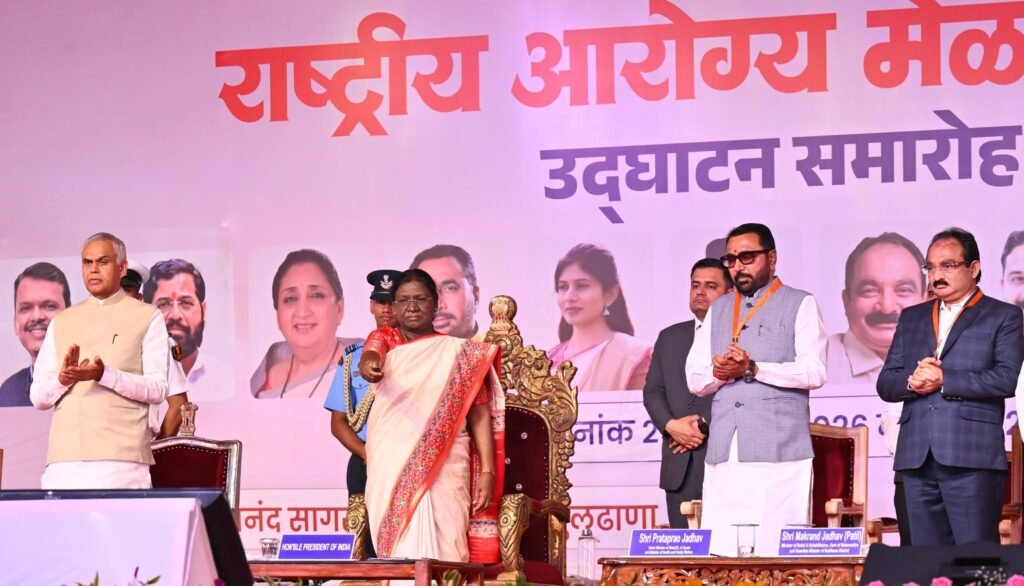
President Droupadi Murmu on Wednesday inaugurated the National Arogya Fair 2026 at Shegaon in Maharashtra’s Buldhana district, emphasising the vital role of AYUSH systems in promoting holistic healthcare. During the event, the President felicitated six senior Vaidyas in recognition of their outstanding contributions to the field of traditional Indian medicine. Addressing the gathering, President Murmu highlighted that in Indian philosophy, good health is considered the highest form of happiness, and healthy citizens are fundamental to nation-building. She noted that AYUSH systems — including Ayurveda, Yoga and Siddha — have long supported public health and continue to complement modern medicine. The President underlined India’s rich natural heritage, pointing out that farms, kitchens and forests are abundant sources of medicinal plants and healing herbs. She stressed the importance of conserving and enhancing this biodiversity to ensure sustainable raw materials for medicines while maintaining ecological balance. Cultivation of medicinal plants, she added, boosts farmers’ incomes and supports soil conservation. She further stated that strengthening AYUSH not only promotes physical well-being but also drives economic growth and environmental sustainability. Systems such as Ayurveda and Yoga, she said, offer comprehensive guidance for leading a balanced and healthy lifestyle. Observing growing global interest, President Murmu remarked that integrative medicine is gaining recognition worldwide, with increasing adoption of yoga for stress management and Ayurveda for preventive and therapeutic care. She emphasised the need for evidence-based research, standardisation of medicines, and robust quality control measures to enhance the global credibility and acceptance of AYUSH systems. Expressing satisfaction over ongoing efforts, the President said the Ministry of AYUSH has aligned research and drug development guidelines with international standards. With continued scientific validation and global collaboration, she expressed confidence that traditional Indian medicine will play a pivotal role in advancing holistic healthcare globally. Source: DD News 

Droupadi Murmu Inaugurates National Arogya Fair 2026 in Shegaon, Stresses Global Potential of AYUSH Read More »

Maharashtra’s Record-Breaking Solar Pump Rollout Earns Guinness Recognition

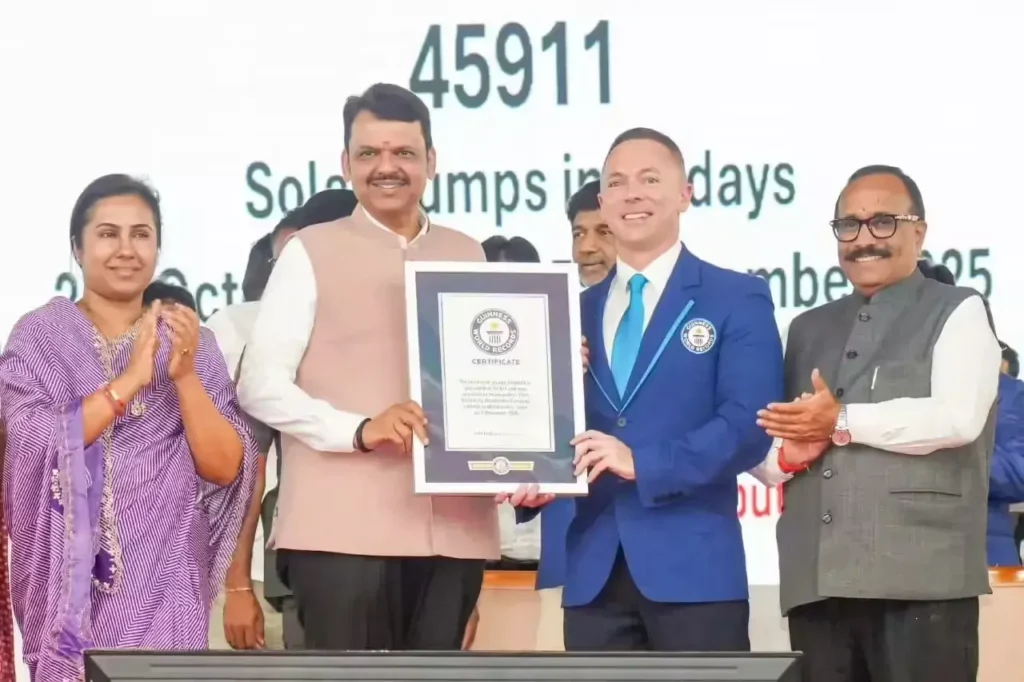
Maharashtra has entered the Guinness World Records after installing 45,911 off-grid solar agricultural pumps within just one month — one of the fastest large-scale renewable irrigation deployments worldwide, second only to China. The rapid rollout, executed under the PM-KUSUM scheme and the Magel Tyala Saur Krushi Pump Yojana, was completed in 30 days and formally certified by Guinness. A special ceremony in Chhatrapati Sambhajinagar marked the achievement, attended by Chief Minister Devendra Fadnavis, New and Renewable Energy Minister Atul Save, and senior officials. Fadnavis said the milestone represents a transformative shift in agricultural energy access, promising improved irrigation security, higher farm incomes, and reduced dependence on traditional power sources. He also directed officials to target 10 lakh solar pump installations by next year, building on the 7.5 lakh pumps already deployed. The massive rollout was enabled by pre-planned inventory, digital monitoring, multiple parallel installation teams, and a structured execution model that prioritised drought-prone areas. Strict service-level agreements ensured farmer grievances were addressed within three days, with automatic escalation for delays. Pump allocation followed land-based criteria: 3 HP for up to 2.5 acres, 5 HP for up to 5 acres, and 7 HP for larger farms. MSEDCL CMD Lokesh Chandra said the achievement stems from systematic planning, transparent vendor processes, and rigorous compliance. Maharashtra has now installed over 7.47 lakh solar pumps and is targeting 10.45 lakh units, making it one of India’s largest renewable irrigation transitions. The model — combining PM-KUSUM (Component B) and the state scheme — is being projected as scalable for other Indian states and Global South nations aiming for energy-secure, climate-friendly agriculture. The state plans to continue the accelerated rollout, gradually shifting all new agricultural power connections to off-grid solar systems, supporting long-term decarbonisation and reducing the load on the conventional grid. Source: Economic Times

Maharashtra’s Record-Breaking Solar Pump Rollout Earns Guinness Recognition Read More »

India Set to Become World’s 3rd Largest Economy by 2028: Morgan Stanley

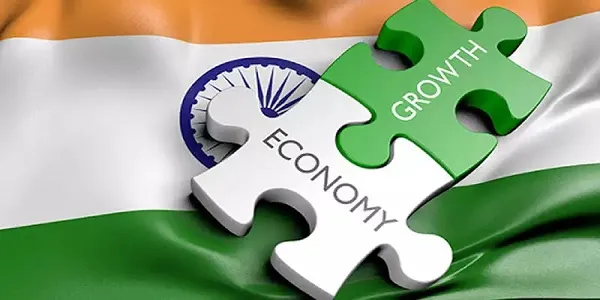
India is on course to become the third-largest economy in the world by 2028 and is expected to more than double its GDP to $10.6 trillion by 2035, according to a new report by Morgan Stanley released on Wednesday. The report highlights that several Indian states — notably Maharashtra, Tamil Nadu, Gujarat, Uttar Pradesh, and Karnataka — could individually near the $1 trillion GDP mark, placing them among the globe’s top 20 economies by the next decade. “Currently, Maharashtra, Gujarat, and Telangana lead the economic race among states,” the report noted, adding that states like Chhattisgarh, Uttar Pradesh, and Madhya Pradesh have climbed significantly in economic rankings over the past five years. India to Drive Global Growth Morgan Stanley projects that India will account for roughly 20% of global economic growth over the next ten years. As a result, the country is positioned to become a major growth engine for global corporations and investors. The report underscores the pivotal role of India’s federal structure — with 28 states and eight Union Territories — in propelling economic progress. It points out that each state manages its fiscal policies independently and competes to attract business and investment through favourable industrial policies and ease-of-doing-business reforms. “Every investment decision, factory setup, or enterprise ultimately lands in a particular state,” the report explains. Competitive Federalism as a Growth Catalyst The study places strong emphasis on “competitive federalism” — a model in which states innovate and vie with one another for economic advancement. This approach, Morgan Stanley argues, will be critical for India to become a global manufacturing powerhouse, significantly raise per capita income, and maintain a robust capital market performance over the coming years. As India moves toward its projected $10.6 trillion economic size, the role of states will become even more vital. Their ability to legislate independently and shape business environments allows them to create conducive ecosystems for growth. Infrastructure Boom Underway The report also points to a decade of strong infrastructure development. Central government capital expenditure has surged, growing from 1.6% of GDP in FY15 to 3.2% in FY25. This investment has led to a 60% increase in national highway length, a doubling of airports, and a fourfold expansion of metro rail systems. National-level programs such as PM Gati Shakti, the National Infrastructure Pipeline, Bharatmala, Sagarmala, and UDAN have all complemented state-led initiatives in infrastructure, energy, water, and urban development. For India to realize its long-term economic aspirations, the report concludes, continuous collaboration between the central and state governments will be essential. Source: IANS

India Set to Become World’s 3rd Largest Economy by 2028: Morgan Stanley Read More »

India Clinches 7th Spot at IMO 2025 with Record-Breaking Score, Wins 3 Gold Medals

Education news

India delivered a stellar performance at the 66th International Mathematical Olympiad (IMO) 2025 held in Sunshine Coast, Australia, by securing three gold, two silver, and one bronze medal. This remarkable feat placed the country 7th in the global rankings with a record-high score of 193 out of 252 points. The gold medalists were Kanav Talwar and Arav Gupta from Delhi, along with Aditya Mangudi from Maharashtra. Silver medals were awarded to Abel George Mathew from Karnataka and Adish Jain from Delhi, while Archit Manas, also from Delhi, earned the bronze. According to a release from the Homi Bhabha Centre for Science Education in Mumbai, a total of 630 students participated in the global contest, including 69 female contestants. This is only the second time since 1998 that India has claimed three golds in a single IMO. Last year, in 2024, India achieved a historic milestone with four golds. Since debuting at the IMO in 1989, India has now earned 23 gold medals—12 of which were won between 2019 and 2025, including an impressive nine in the last three years. Source: Newsonair  

India Clinches 7th Spot at IMO 2025 with Record-Breaking Score, Wins 3 Gold Medals Read More »

India Sees Uptick in COVID-19 Cases: Active Infections Near 4,000, Deaths Reported Across Key States

Ardorcomm news

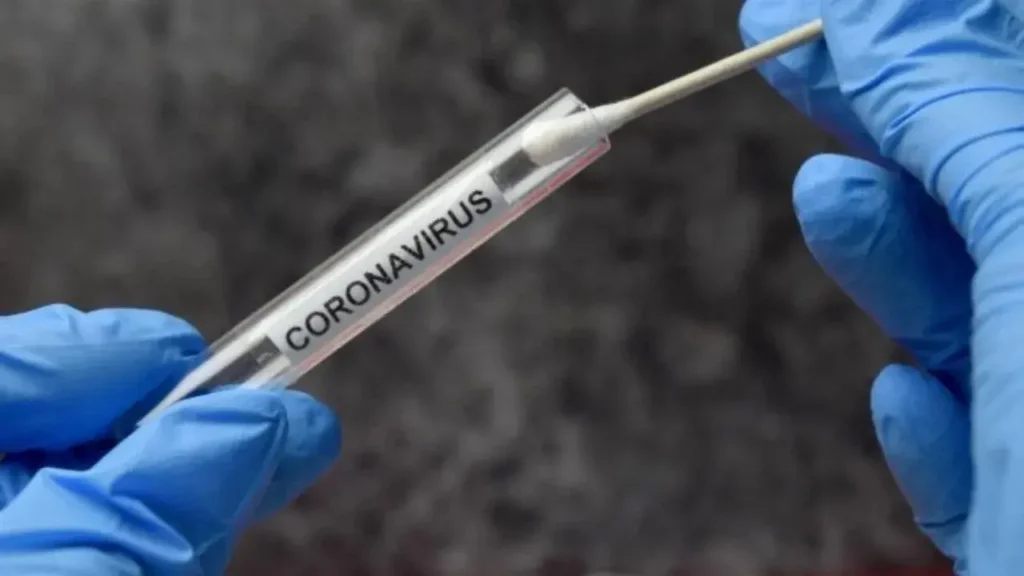
India is witnessing a steady rise in COVID-19 infections, with active cases reaching 3,961 as of Monday, June 2—a jump of 566 cases from the previous day, according to data from the Ministry of Health and Family Welfare (MoHFW). The recent surge is driven primarily by states like Kerala, Maharashtra, and Delhi, which are reporting the highest case numbers. Since the start of the year, the country has registered 32 COVID-related deaths, including four in the last 24 hours. One fatality each was reported from Delhi, Kerala, Maharashtra, and Tamil Nadu. The deceased include a 22-year-old woman from Delhi with a history of post-tuberculosis complications and a 44-year-old man from Maharashtra suffering from acute respiratory distress and aortic valve problems. While Kerala confirmed another death, specific details are awaited. Delhi Records Steepest Daily Spike; Tamil Nadu, Karnataka Also Report Fatalities Delhi saw the most significant daily rise in active infections among major states, adding 47 new cases and logging one death. Tamil Nadu, with 189 active cases, reported the passing of a 25-year-old man with underlying bronchial asthma and acute kidney complications. Karnataka, currently reporting 253 active cases, recorded a fresh fatality, while Uttar Pradesh reported two deaths and has 157 active cases. In total, 16 states and Union Territories have recorded COVID-related deaths in 2025. However, the majority of cases remain mild, with limited hospital admissions. Kerala Leads in Caseload; Maharashtra, West Bengal Also on High Alert Kerala continues to report the highest number of active COVID-19 cases at 1,435, rising from 1,336 the previous day. Maharashtra follows with 506 active cases, and Delhi with 483. West Bengal has also seen a surge, reporting 331 active infections. Other notable figures include: Gujarat: 338 Karnataka: 253 Tamil Nadu: 189 Uttar Pradesh: 157 Rajasthan: 69 States like Madhya Pradesh (23), Haryana (28), and Odisha (12) have recorded smaller increases. In the last 24 hours, 203 patients have recovered, pushing the total number of recoveries and migrations this year to 2,188. Authorities Urge Caution, Not Panic Health experts and officials maintain that the situation is under control, emphasizing that most new cases are mild and manageable at home. Dr. Rajiv Behl, Director General of the Indian Council of Medical Research (ICMR), reassured the public that while increased vigilance is necessary, there’s no immediate cause for alarm. The rise in cases coincides with the detection of new Omicron sub-variants—LF.7, XFG, JN.1, and NB.1.8.1—identified in genome sequencing studies from western and southern India. These have been classified by the World Health Organization as “Variants Under Monitoring,” indicating they don’t currently pose a significant global threat. Preparedness Measures in Place as Precaution In response, state health departments—particularly in Delhi, Maharashtra, and Kerala—are ramping up hospital readiness and reviewing medical supply logistics. Citizens, especially vulnerable groups such as the elderly and those with pre-existing health issues, are being encouraged to wear masks in crowded or poorly ventilated settings. Experts stress that while the virus is spreading faster due to more contagious but less severe sub-variants, preventive strategies such as timely testing, vaccination, and community awareness remain key to containing its impact. Though the overall caseload is still far lower than during peak waves, the recent tenfold increase over two weeks underscores the need for continued monitoring, public cooperation, and proactive measures to avoid another significant outbreak. Source: Economic Times Photo Credit: iStock   

India Sees Uptick in COVID-19 Cases: Active Infections Near 4,000, Deaths Reported Across Key States Read More »

States Asked to Keep Vigil After 8 Zika Cases in Maharashtra

On Wednesday, the Centre ordered states to maintain vigilance due to Zika virus spread in Maharashtra, with eight cases reported by July 2: six in Pune, one each in Kolhapur and Sangamner. Spread by Aedes aegypti mosquitoes, Zika usually causes mild symptoms but poses risks for pregnant women, potentially causing microcephaly in the fetus. Atul Goel, Director General of Health Services, issued an advisory for constant monitoring. The Health Ministry urged screening pregnant women and tracking fetal growth as per guidelines, given the infection’s neurological consequences. Affected areas must prioritize vigilance, screening, and monitoring efforts. The Centre on Wednesday asked states to maintain a state of constant vigil over the Zika virus situation in the country amid reports of the spread of the mosquito-borne infection in various districts of Maharashtra. As of July 2, Maharashtra has reported eight cases of Zika virus infection: six from Pune and one each from Kolhapur and Sangamner. Zika virus is transmitted by Aedes aegypti mosquitoes, similar to dengue and chikungunya. It spreads when a mosquito carrying the virus infects a person. Experts say the infection doesn’t cause severe symptoms in most cases and subsides in a few days. However, in the case of pregnant women, the infection is known to affect the fetus and cause microcephaly (reduced head size), making it a major concern. According to the health ministry, Director General of Health Services Atul Goel has issued an advisory to states highlighting the need for maintaining constant vigilance. As Zika is associated with microcephaly and neurological consequences in the fetus of the affected pregnant woman, the health ministry said on Wednesday, states have been advised to alert clinicians for close monitoring. “States are urged to instruct the health facilities to screen pregnant women, monitor the growth of the fetus of expecting mothers who have tested positive for Zika and act as per central guidelines,” it said.

States Asked to Keep Vigil After 8 Zika Cases in Maharashtra Read More »

Maharashtra College Bans Jeans, T-Shirts, and Jerseys on Campus

Acharya Marathe College in Chembur, Maharashtra, has sparked controversy by banning jeans on campus and enforcing a formal dress code for male students. The official notice stated that students wearing jeans would not be allowed to enter the college premises. The notice also specified that male students must wear formal attire, while female students are permitted to wear ethnic or Western dress, provided it does not reveal their religion. The notice emphasized that students should not wear any dress that displays religious affiliation or cultural disparity. “Students can wear half shirts or full shirts and trousers. Girls can wear any Indian or Western outfit. Students shall not wear any dress which reveals religion or shows cultural disparity,” the notice read. It further stated, “Nakab, Hizab, Burkha, Stole, Cap, Badge, etc., shall be removed while going to common rooms on the ground floor and then only they can move throughout the college campus. Torn jeans, T-shirts, revealing dresses, and jerseys are not allowed.” Following the release of the notice, some students who did not attend college on the day the notice was issued were barred from entering the premises the next day due to the new dress code. In response, at least nine female students approached the Mumbai High Court to challenge the college’s order.

Maharashtra College Bans Jeans, T-Shirts, and Jerseys on Campus Read More »

Maharashtra Govt Allocates ₹9.4 Crore for Healthcare Facilities During Ashadhi Ekadashi Wari

The Maharashtra government has allocated over ₹9.4 crore to provide healthcare facilities for pilgrims during the Ashadhi Ekadashi Wari. Of this, ₹2.40 crore is earmarked for medicines and ₹3 crore for food and snacks for the healthcare staff and pilgrims. The State Public Health Department issued a general resolution regarding this on June 13. Dr. Abhijit More, a health activist, raised concerns about the higher budget for food compared to medicines and medical equipment. He questioned the logic behind such allocation and called for an investigation into the matter. A senior Health Ministry official, speaking anonymously, explained that the costs shown for medicines and food are just allocations. Funds can be redirected as necessary. The official noted that the food budget appears higher due to the large number of doctors and healthcare staff deployed from various parts of the state and beyond. These staff members are provided with meals and water during and after the Wari, considering the increased cost of food due to inflation. The health department will set up four health camps for pilgrims and provide OPD, IPD, and ICU facilities at 258 medical units. Additionally, 707 ambulances will be available for the Palkhi procession. This year, approximately 3,362 healthcare staff, including doctors, 1,500 volunteers, and 500 department staff, will be deployed to ensure the health and safety of the pilgrims.

Maharashtra Govt Allocates ₹9.4 Crore for Healthcare Facilities During Ashadhi Ekadashi Wari Read More »

Maharashtra Govt Alleges Injustice to State Students in NEET Exam Results; Seeks Cancellation

The Maharashtra government has demanded the immediate cancellation of last month’s NEET exam results, citing injustice to students from the state. Several aspirants of the National Eligibility-cum-Entrance Test (NEET-UG), conducted on May 5 at 4,750 centers in 571 cities, previously alleged that mark inflation led to a record 67 candidates achieving the top rank, including six from the same exam center in Haryana. The results were declared on June 4. The National Testing Agency (NTA) denied any irregularities, attributing the high scores to changes in NCERT textbooks and grace marks for time lost at exam centers. Maharashtra Medical Education Minister Hasan Mushrif stated, “The NEET exams were probably conducted after taking money. The results are such that no student of Maharashtra will get admission for the MBBS course in government or private colleges in the state.” He mentioned that many parents have approached him regarding the issue and that the state might approach the court for resolution. NEET-UG is the qualifying entrance exam for various medical and dental courses, with over 80,000 MBBS seats available in more than 540 medical colleges across India. Congress leader Priyanka Gandhi Vadra called for an investigation into the alleged irregularities, stating, “First the NEET exam paper was leaked and now the students allege that there has been a scam in its results as well.” Tamil Nadu Chief Minister M K Stalin also criticized NEET, claiming it undermines social justice and federalism. He highlighted issues like question paper leaks, clustering of toppers at specific centers, and mathematically improbable grace marks as major concerns.  

Maharashtra Govt Alleges Injustice to State Students in NEET Exam Results; Seeks Cancellation Read More »

Maharashtra’s Education Budget Sees 9.8% Surge Amidst Concerns Over Allocation Distribution & Scheme Cutbacks

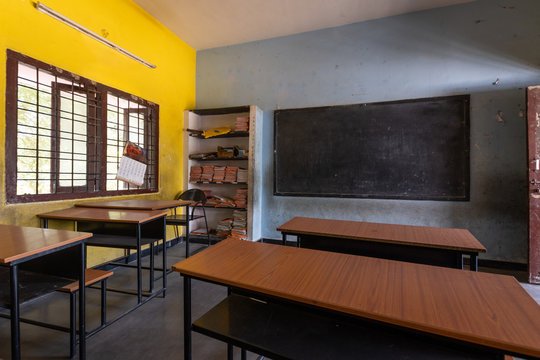
The education sector in Maharashtra has witnessed a notable 9.8% increase in budget allocation for the interim period of 2024-25, with figures rising from Rs 87,314 crore to Rs 95,875 crore compared to the previous year. However, despite this surge, concerns have emerged over the distribution of allocations and cutbacks in flagship schemes. While both school and higher education departments have experienced a boost in funding, a significant portion of the hike is attributed to routine expenditures, particularly salaries for teachers and staff. Notably, expenditure on some key education schemes has been reduced, raising apprehensions about the state’s educational development trajectory. Of particular concern is the reduction in budgetary provisions for reimbursing private schools for admitting socio-economically disadvantaged students. This allocation has dwindled from Rs 200 crore to Rs 173 crore, aggravating grievances from schools claiming outstanding dues amounting to Rs 2,400 crore. Moreover, reductions in the state’s contributions to centrally sponsored schemes like midday meals and Samagra Shiksha have been recorded, despite recent initiatives such as introducing eggs in school meals. However, the budget does allocate Rs 81 crore towards the PM SHRI scheme aimed at upgrading schools in alignment with the New Education Policy. Finance Minister Ajit Pawar’s budget speech outlined plans for youth skill development initiatives, including the establishment of international skill development centers and various training programs. However, actual allocations for these schemes were notably absent from the budget document, raising questions about their implementation. Despite these concerns, there are pockets of positive developments, such as the increased subsidy for the Dr. Zakir Hussain Madrasa Modernization Scheme, aimed at integrating minority students into the mainstream education system. Additionally, measures to address uniformity in scholarships and fellowships for marginalized communities have been articulated, addressing previous criticisms regarding fellowship provisions for doctoral pursuits.  

Maharashtra’s Education Budget Sees 9.8% Surge Amidst Concerns Over Allocation Distribution & Scheme Cutbacks Read More »