ArdorComm Media Group

Tuesday, February 17, 2026 3:21 PM

Nirmala Sitharaman

FM Nirmala Sitharaman Launches Nationwide Drive to Return ₹1.84 Lakh Crore in Unclaimed Assets

ardorcomm news

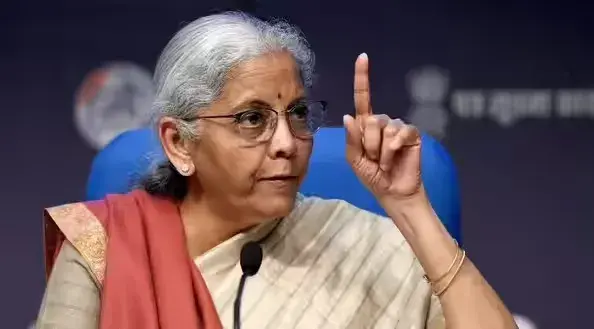
Finance Minister Nirmala Sitharaman on Saturday unveiled a major national campaign aimed at returning nearly ₹1.84 lakh crore worth of unclaimed financial assets to their rightful owners. These funds are currently lying idle across banks, the Reserve Bank of India (RBI), insurance companies, mutual funds, provident fund accounts, and other financial institutions. The three-month-long initiative focuses on creating public awareness and simplifying the process for individuals and families to reclaim their lost or forgotten assets. “These unclaimed amounts are not the government’s property — they belong to citizens,” Sitharaman emphasized, noting that people have long demanded action to recover such funds from entities like the RBI or the Investor Education and Protection Fund (IEPF). Explaining the reasons behind unclaimed assets, she said they often result from missing documents, untracked policies, or lack of awareness, describing the situation as “a ripe fruit hanging within reach but not yet claimed by those it belongs to.” The campaign is structured around three core pillars — Awareness, Access, and Action. Awareness: Educating citizens about the existence of unclaimed money. Access: Enabling easier tracking through the RBI’s UDGAM portal. Action: Ensuring officials follow up on even the smallest clues to help people reclaim their assets. Reassuring the public, the Finance Minister said the funds remain safe and are merely held in custody by the government and financial institutions, not owned by them. “Whether with banks, SEBI, or any other body, the money is securely maintained,” she said. Unclaimed deposits are transferred to the RBI, while unclaimed shares and securities are moved to the IEPF. The government aims to use this drive to reconnect individuals with their financial assets and enhance public trust in the country’s financial ecosystem. Source: TNN

FM Nirmala Sitharaman Launches Nationwide Drive to Return ₹1.84 Lakh Crore in Unclaimed Assets Read More »

GST Council Unveils New 5% and 18% Tax Slabs, Effective September 22

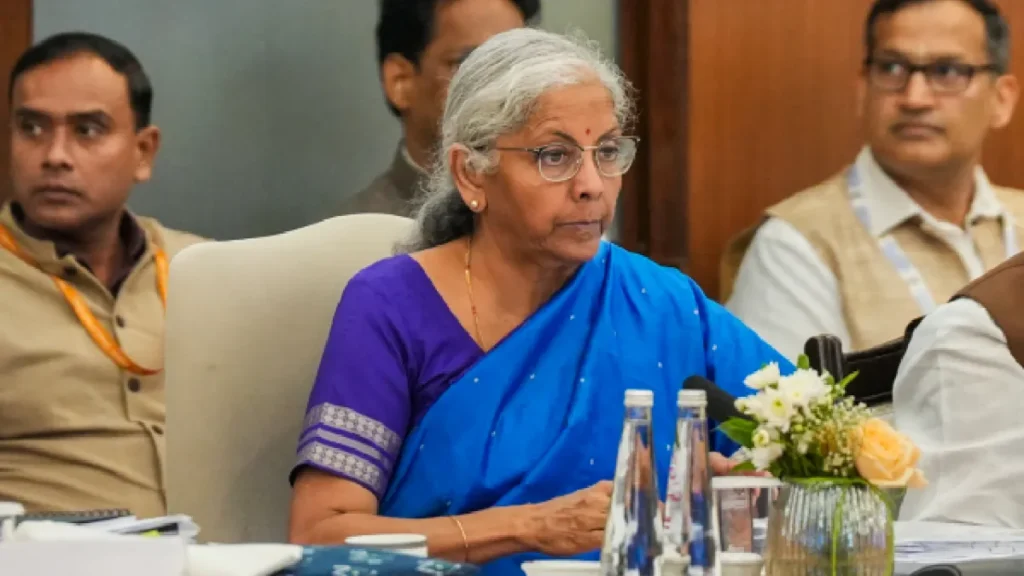
In a landmark move, the GST Council in its 56th meeting, chaired by Finance Minister Nirmala Sitharaman, approved a simplified tax structure by removing the 12% and 28% slabs. The new framework will now feature two primary slabs of 5% and 18%, along with a special 40% bracket for luxury and sin goods. The revised rates will come into force from September 22. The marathon meeting, which lasted over 10 hours, saw the Centre and states reaching a consensus on rationalisation. West Bengal Finance Minister Chandrima Bhattacharya pegged the estimated revenue loss from this restructuring at ₹47,700 crore, while Uttar Pradesh Finance Minister Suresh Khanna noted that the final tax incidence on demerit goods could still see further review. Speaking to the press, Sitharaman highlighted that the reforms prioritise the middle class and common man. Daily-use products such as hair oil, soaps, shampoos, toothbrushes, toothpaste, bicycles, kitchenware, and tableware will now attract a 5% rate. Items reduced from 5% to nil tax include UHT milk, paneer, chena, and all varieties of Indian breads. Several food and FMCG items like namkeen, sauces, pasta, noodles, chocolates, coffee, butter, ghee, preserved meat, cornflakes have been brought down to 5%. Goods earlier taxed at 28%—including air conditioners, larger television sets, dishwashers, small cars, and motorcycles up to 350 cc—will now fall under the 18% bracket. The highest GST category of 40% will be applicable to products like cigarettes, gutka, chewing tobacco, bidis, zarda, paan masala, and certain sugary or caffeinated beverages including carbonated drinks and fruit-based fizzy beverages. Prime Minister Narendra Modi welcomed the move, calling it a step towards ease of living. He said the decision, made jointly by the Centre and states, will significantly benefit farmers, MSMEs, the middle class, women, and youth. During my Independence Day Speech, I had spoken about our intention to bring the Next-Generation reforms in GST. The Union Government had prepared a detailed proposal for broad-based GST rate rationalisation and process reforms, aimed at ease of living for the common man and… — Narendra Modi (@narendramodi) September 3, 2025 Hon’ble Prime Minister Shri @narendramodi announced the Next-Generation GST Reforms in his Independence Day address from the ramparts of Red Fort. Working on the same principle, the GST Council has approved significant reforms today. These reforms have a multi-sectoral and… pic.twitter.com/NzvvVScKCF — Nirmala Sitharaman Office (@nsitharamanoffc) September 3, 2025 Source: India TV Photo Credit: PTI

GST Council Unveils New 5% and 18% Tax Slabs, Effective September 22 Read More »

Cable TV Operators Seek GST Cut to 5% Amid Rising Costs

The All India Digital Cable Federation (AIDCF) has urged Finance Minister Nirmala Sitharaman to lower the goods and services tax (GST) on cable television services from 18% to 5%, citing mounting financial stress and rising consumer bills. In its appeal, the federation argued that such a move would not only align with Prime Minister Narendra Modi’s vision for GST reforms but also ensure affordable access to television services for millions of households across India. According to AIDCF, cable TV currently reaches more than 64 million homes and sustains around 1–1.2 million jobs. However, the sector is struggling with steep hikes in broadcaster tariffs, shifting consumer preferences, and growing competition from unregulated OTT platforms. “Satellite channel prices have spiked by nearly 600% in recent years, causing a 35–40% surge in monthly consumer bills. A GST cut would help ease this burden and maintain affordability,” said Manoj P. Chhangani, Secretary General of AIDCF. The federation highlighted that the industry, made up of 852 multi-system operators and about 1.6 lakh local cable operators—most of them small entrepreneurs in towns and villages—is under severe liquidity pressure. A lower GST rate, it said, would help sustain operations, curb subscriber churn, and enable investment in broadband services, complementing the government’s Digital India initiative. Representing over 60% of India’s cable TV market, AIDCF has requested that the demand be considered at the 56th GST Council meeting scheduled for September 3–4 in New Delhi. The council is also reviewing a proposal to simplify the GST structure by merging the current four-tier system (5%, 12%, 18%, 28%) into two slabs—5% and 18%. Source: Economic Times  

Cable TV Operators Seek GST Cut to 5% Amid Rising Costs Read More »

Budget 2025: No Income Tax Up to ₹12 Lakh, Major Relief for Middle Class

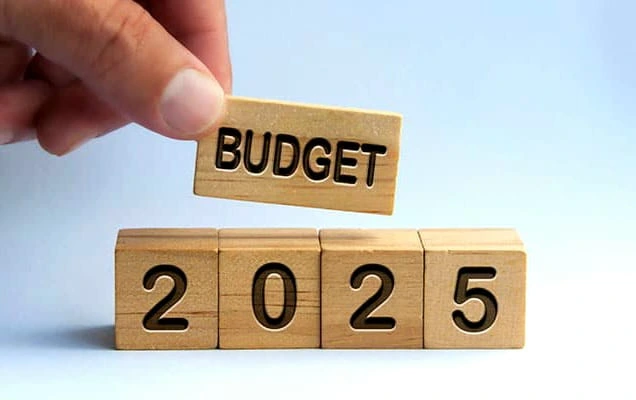
In a landmark announcement, Finance Minister Nirmala Sitharaman declared in her Budget 2025 speech that individuals earning up to ₹12 lakh annually will pay no income tax under the new tax regime. The move has been welcomed as a major relief for India’s middle class. The Budget also introduced key financial reforms, including raising the Foreign Direct Investment (FDI) limit in the insurance sector and modifying cess and surcharge structures. Additionally, the government plans to simplify the Tax Deduction at Source (TDS) regime to ease compliance burdens. Sitharaman announced that a new, streamlined Income Tax Bill will be introduced next week, designed to be more concise and user-friendly. Other tax reforms include raising the Tax Collected at Source (TCS) limit on remittances under the RBI’s Liberalised Remittance Scheme from ₹7 lakh to ₹10 lakh. Further, in a push towards domestic manufacturing, the Budget provides tax exemptions on 35 goods used in EV battery production and 28 goods for mobile phone battery manufacturing. New Income Tax Slabs (New Regime) ₹4 – 8 lakh: 5% ₹8 – 12 lakh: 10% ₹12 – 16 lakh: 15% ₹16 – 20 lakh: 20% ₹20 – 24 lakh: 25% Above ₹24 lakh: 30% The Budget 2025-26 focuses on tax reforms, investment liberalization, and industry-friendly policies, signaling the government’s intent to support economic growth and ease financial burdens on taxpayers. Source: Financial Express

Budget 2025: No Income Tax Up to ₹12 Lakh, Major Relief for Middle Class Read More »

Union Budget 2025: Reactions from Education Leaders on Key Announcements

The Union Budget 2025-26, presented by Finance Minister Nirmala Sitharaman, has unveiled a range of initiatives aimed at transforming India’s education sector. With a strong focus on skill development, digital infrastructure, and higher education expansion, the budget sets the stage for a future-ready education system. Education leaders across the country have shared their insights on the impact and implications of these measures. Key Announcements in Education: Atal Tinkering Labs: 50,000 labs to be set up in government schools over five years to foster innovation and scientific temper among students. Broadband Connectivity: Extension of broadband under BharatNet to all government secondary schools, ensuring digital access for students in rural areas. Bharatiya Bhasha Pustak Scheme: Digital-format books in Indian languages to support multilingual education. Expansion of Medical Education: Addition of 10,000 medical seats next year, with a long-term goal of 75,000 new seats over five years. National Centres of Excellence for Skilling: Five centres to be set up with global partnerships for skill development in manufacturing and emerging technologies. Expansion of IIT Infrastructure: Capacity expansion in five IITs and hostel expansion at IIT Patna to accommodate growing student demand. Centre of Excellence in AI for Education: Establishment of a specialized AI centre with a budget allocation of Rs 500 crore to integrate AI into educational methodologies and research. Industry Leaders React to Budget Announcements: “The Union Budget 2025-26 demonstrates a strong commitment towards fostering inclusive and quality education in India. The government’s initiatives such as setting up 50,000 Atal Tinkering Labs in government schools, providing broadband connectivity to rural schools, and launching Centres of Excellence in AI for education with a ₹500 crore outlay reflect a forward-looking approach. The expansion of IIT capacity and the establishment of five National Centres of Excellence for skilling are crucial steps in equipping the youth with industry-relevant skills. Moreover, the PM Research Fellowship, offering 10,000 fellowships for technological research, will strengthen India’s innovation ecosystem. India, a nation of young entrepreneurs, is making its mark on the global stage by prioritizing skill development and future-ready education, a recognition further validated by the QS World Future Skills Index. These efforts collectively pave the way for a skilled and empowered workforce, driving the nation towards ‘Viksit Bharat’.” – Dr. Madhu Chitkara, Pro-Chancellor, Chitkara University. “The Union Budget 2025-26 demonstrates a strong commitment to India’s education sector, allocating ₹1.28 lakh crore—₹78,572 crore for school education and ₹50,078 crore for higher education. Key initiatives include adding 6,500 IIT seats, establishing a ₹500 crore Centre of Excellence in AI for education, and setting up 50,000 Atal Tinkering Labs to enhance STEM learning. Additionally, 10,000 medical college seats will be added next year, contributing to 75,000 new seats over five years. Despite these advancements, the allocation remains below the 6% GDP target recommended by NEP 2020, potentially impacting India’s Gross Enrollment Ratio (GER) goal of 50% by 2035. India’s education spending (4.1%-4.6% of GDP) aligns with global benchmarks, but a stronger focus on PreK-12 education, regulatory support for private schools, and equitable investment in digital infrastructure is necessary to ensure holistic growth across all levels.” – Reekrit Serai, Managing Director, Satluj Group of Schools. “Budget 2025 takes a bold step toward a knowledge-driven India, emphasizing AI, skilling, and digital access. With 50,000 Atal Tinkering Labs, broadband in government schools, and a ₹500 crore Centre of Excellence for AI in Education, technology is becoming a great equalizer. The Deeptech Fund and PM Research Fellowship Scheme further strengthen India’s innovation ecosystem. Expanding IIT infrastructure, setting up skilling centers, and increasing teacher recruitment will boost education quality. The focus on STEM, sustainability, and socio-emotional learning aligns with 21st-century needs. While the budget is ambitious, achieving the long-promised 6% GDP allocation for education remains a challenge. More collaboration between private and public schools, alongside better governance, is essential. With its emphasis on AI, upskilling, and cultural preservation, this budget is a significant leap forward—an 8/10 effort, with brownie points for integrating Indian sanskaar with futuristic growth.” – Kanak Gupta, Group Director, Seth M.R. Jaipuria Schools. “The 2025 budget takes commendable steps in expanding IIT infrastructure, AI-driven education, and skill development, but a truly transformative vision must go beyond elite institutions. With 90% of higher education provided by private and deemed universities, targeted support for these institutions is essential for inclusive growth. Additionally, ₹500 crore for AI in education is just a starting point—India needs bolder investments to lead globally in AI-driven learning. A more holistic approach will ensure that quality education reaches every student, not just those in premier institutions.” – ⁠Dr. Ramakrishnan Raman, Vice Chancellor, Symbiosis international University, Pune. “The Union Budget 2025-26 reinforces India’s commitment to education and skill development with a ₹1.28 lakh crore allocation. Key initiatives include broadband connectivity for all government secondary schools under BharatNet, the establishment of 50,000 Atal Tinkering Labs, and five National Institutes of Excellence for Skilling. The focus on AI, STEM education, and industry-driven skill programs will equip youth for a tech-driven future. Strengthening academia-industry collaboration and digital learning will accelerate India’s journey towards self-reliance and global leadership in education and innovation.” – Kunwar Shekhar Vijendra, Co-founder and Chancellor of Shobhit Deemed University, Meerut. “The Budget 2025-26 reaffirms India’s commitment to becoming a global knowledge superpower. With an allocation of ₹128,650 crore for education, this budget strengthens accessibility, equity, and quality. Key Highlights: School Education (₹78,572 crore, +16%) – Expansion of Samagra Shiksha (₹41,250 crore), PM POSHAN (₹12,500 crore), and PM SHRI (₹7,500 crore) will enhance infrastructure and learning. 50,000 Atal Tinkering Labs will foster innovation in government schools. Higher Education (₹50,078 crore, +7.74%) – Expansion of IITs, 10,000 new medical seats, and the PM Research Fellowship Scheme will boost research and innovation. AI & Digital Education (₹500 crore) – Establishment of the Centre of Excellence in AI will revolutionize education. The Bharatiya Bhasha Pustak Scheme will enhance inclusivity through digital Indian language books. Skilling & Employability – Five National Centres of Excellence for Skilling with global partnerships will align education with industry needs. Education Accessibility –


Union Budget 2025: Reactions from Education Leaders on Key Announcements Read More »

Banking Laws (Amendment) Bill Aims to Strengthen Governance and Enhance Customer Experience

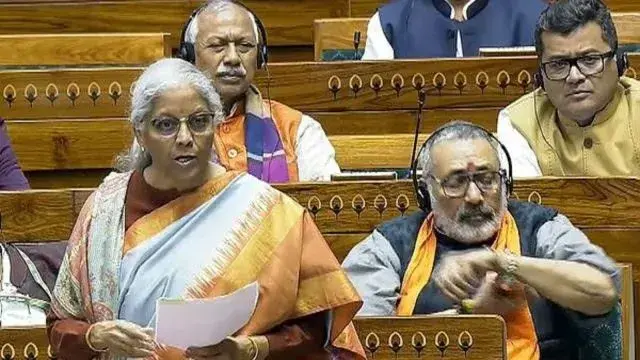
The Banking Laws (Amendment) Bill, 2024, presented by Finance Minister Nirmala Sitharaman in the Lok Sabha, introduces significant reforms to enhance governance in the banking sector and improve customer convenience. The bill proposes 19 amendments across key legislations, including the Reserve Bank of India Act, 1934; the Banking Regulation Act, 1949; and acts governing the State Bank of India and public sector banks. Key changes aim to: Strengthen Governance: Improve audit quality, reporting consistency, and depositor protection. Enhance Customer Convenience: Allow account holders up to four nominees and redefine ‘substantial interest’ limits for directorships, raising the threshold from ₹5 lakh to ₹2 crore. Safeguard Investor Interests: Transfer unclaimed dividends, shares, and bond-related interests to the Investor Education and Protection Fund (IEPF) with provisions for claims or refunds. Sitharaman highlighted the evolving banking sector’s need for robust reforms. “These amendments will improve governance, safeguard investors, and provide enhanced customer convenience,” she said. For cooperative banks, the amendments increase director tenure from 8 to 10 years, align with constitutional reforms, and grant Central Cooperative Bank directors eligibility to serve on State Cooperative Bank boards. Additional proposals include: Auditor Remuneration Flexibility: Empowering banks to decide statutory auditor payments. Regulatory Compliance Simplification: Redefining reporting dates to the 15th and last day of every month, replacing the current second and fourth Fridays. These reforms are poised to ensure better protection for depositors, streamline regulatory frameworks, and improve operational efficiency across India’s banking landscape. Source: Indian Express Photo Credit: Indian Express

Banking Laws (Amendment) Bill Aims to Strengthen Governance and Enhance Customer Experience Read More »

Lok Sabha Passes Bill to Allow Government Expenditure for FY 2024-25

The Lok Sabha on Monday approved about ₹140 lakh crore in expenditure demands by different ministries of the Central Government, completing two-thirds of the legislative approvals needed for the full Budget of 2024–25. The lower house, which last week debated the Budget, approved demands for grants as well as the Appropriation (No 2) Bill 2024, which authorizes the government to use certain sums out of the Consolidated Fund of India for the services of the financial year 2024-25. This followed a guillotine being applied after a discussion on grants for four ministries — Railways, Education, Health, and Fisheries. The Lok Sabha will now discuss the Finance Bill (No 2), 2024, which essentially contains the tax proposals in Finance Minister Nirmala Sitharaman’s Budget for 2024–25. The Rajya Sabha is also simultaneously discussing demands for grants for four other ministries — Agriculture, New and Renewable Energy, Cooperation, Housing, and Urban Affairs. It will also discuss the Finance Bill, but as per the Constitution, it can only return such bills to the Lower House. The budgetary exercise will be complete after the passage of the Finance Bill (No 2), 2024, by the Lok Sabha. While the guillotine is literally a large, weighted blade used for executing a condemned person, in legislative parlance, it means to bunch together and fast-track the passage of financial business. It is a fairly common procedural exercise in the Lok Sabha during the Budget Session. Reference from Business Standard

Lok Sabha Passes Bill to Allow Government Expenditure for FY 2024-25 Read More »

Government Allocates ₹15.27 Lakh Crore for Major Sectors in Union Budget 2024

Finance Minister Nirmala Sitharaman presented her seventh Union Budget yesterday , allocating ₹15.27 lakh crore for major sectors such as defense, rural development, social welfare, and commerce. This budget marks the first of Prime Minister Narendra Modi’s third term. Key Allocations and Expenditures Defense Allocation: ₹4.54 lakh crore, a significant decrease from ₹6.21 lakh crore in the interim budget. Capital Outlay: ₹1.62 lakh crore for military capital expenditures, including weapons, ammunition, aircraft, and warships. Rural Development Allocation: ₹2.66 lakh crore. MGNREGA Funding: Increased from ₹60,000 crore in FY24 to ₹86,000 crore in FY25. Agriculture and Allied Activities Allocation: ₹1.52 lakh crore. Focus: Sustainable practices, digital infrastructure, and increased production. Home Affairs Allocation: ₹1.51 lakh crore. Specific Allocations: ₹42,277 crore for Jammu and Kashmir. ₹5,985 crore for Andaman and Nicobar. ₹5,862 crore for Chandigarh. ₹5,958 crore for Ladakh. Education Allocation: ₹1.26 lakh crore. Additional Allocation: ₹1.48 lakh crore for schooling, employment, and skilling. IT and Telecom Department of Telecommunications: ₹1.16 lakh crore. Ministry of Electronics and Information Technology: ₹22,000 crore. Health Allocation: ₹89,287 crore. Pharmaceutical Industry: ₹2,143 crore. Notable Announcement: Exemption of three more cancer medications from customs duties. Energy Allocation: ₹68,679 crore. New and Renewable Energy: ₹19,100 crore. Solar Power (Grid): ₹8,500 crore. Government Revenue and Expenditures Revenue Sources: Borrowings and other liabilities: 27%. Income tax revenue: 19%. GST and other taxes: 18%. Corporation taxes: 17%. Expenditures: States’ share of taxes and duties: 21%. Interest payments: 19%. Central sector schemes: 16%. Subsidies, pensions, and other payments: 19%. Additional Highlights Custom Duty Reductions: Three cancer drugs and two components for manufacturing X-ray machines. Tax Regime Tweaks: Raised standard deduction from ₹50,000 to ₹75,000, saving salaried employees up to ₹17,500. First-Time Professionals: One month’s salary as Provident Fund contribution for first job holders, benefiting 210 lakh youngsters. Capital Gains Exemption: Limit raised to ₹1.25 lakh per year. Angel Tax Reduction: For all investor classes. This budget reflects the government’s priorities across various sectors, balancing between infrastructure development, social welfare, and fiscal prudence.

Government Allocates ₹15.27 Lakh Crore for Major Sectors in Union Budget 2024 Read More »

Union Budget 2024: Health Sector Sees Marginal Increase, NHM Allocation Rises Amid Infrastructure Cuts

The Union Budget 2024, presented by Finance Minister Nirmala Sitharaman, revealed a modest 1.7% increase in the health sector allocation, bringing the total outlay to Rs 87,656 crore for the fiscal year 2024-25. Despite the increase, major announcements for the health sector were noticeably absent. One of the significant allocations was for the Ayushman Bharat health insurance scheme, which provides a Rs 5 lakh cover to the poorest 40% of the population. The allocation for this scheme increased slightly from Rs 7,200 crore last year to Rs 7,300 crore this year. The National Health Mission (NHM) received a substantial boost, with its allocation rising to Rs 36,000 crore from Rs 29,000 crore last year. The NHM focuses on reproductive, maternal, newborn, child, and adolescent health services, non-communicable diseases control, and enhancing access to comprehensive primary health care. However, the PM-Ayushman Bharat Health Infrastructure Mission (PM-ABHIM) saw a reduction in its budget from Rs 4,200 crore last year to Rs 3,200 crore this year. The revised estimate for this mission was even lower at Rs 2,100 crore. PM-ABHIM was launched to improve health infrastructure, including health centers, labs, and critical care hospital blocks, especially during the pandemic. Another infrastructure mission, the PM Swasthya Suraksha Yojana, also faced budget cuts, with its allocation dropping from Rs 3,365 crore last year to Rs 2,200 crore this year. This scheme supports the establishment of new AIIMS and the upgradation of district hospitals. The Ayushman Bharat Digital Health Mission (ABDM), which aims to create a digital health record platform for every citizen, saw its budget reduced from Rs 341 crore last year to Rs 200 crore this year. Despite this, the government plans to roll out its U-Win vaccine management portal as part of a 100-day plan, linking it to ABHA accounts for seamless health records. The tele-mental health program’s allocation decreased from Rs 133.7 crore to Rs 90 crore. This program was launched in the 2022 Budget to address mental health issues post-Covid-19 through a network of 23 mental health centers of excellence under NIMHANS. In contrast to the interim Budget’s significant health sector announcements, such as expanding the Ayushman Bharat insurance scheme and promoting HPV vaccination, the current Budget made only minor mentions. The Finance Minister’s speech included a reduction in custom duty on three cancer drugs and components for manufacturing X-ray machines.

Union Budget 2024: Health Sector Sees Marginal Increase, NHM Allocation Rises Amid Infrastructure Cuts Read More »

Employee Associations Urge Merger of RRBs with Sponsor Banks for Enhanced Efficiency

Bank employee associations have called on Union Finance Minister Nirmala Sitharaman to merge Regional Rural Banks (RRBs) with their respective sponsor banks. This move aims to ensure overall efficiency and viability in the banking sector. A joint statement from the All India Bank Officers’ Confederation and the All India Bank Employees Association, representing over 6 lakh bank employees, emphasized the need for this merger. “Competition among Public Sector Banks and RRBs is leading to the wastage of scarce financial resources by offering the same types of services,” the statement read. The associations argue that despite this competition, a significant portion of the rural population is not benefiting from modern, technology-driven banking products. RRBs were established under the RRB Act of 1976 with the capital provided by the Government of India, state governments, and sponsored banks. Currently, there are 43 RRBs sponsored by 12 scheduled commercial banks, operating around 22,000 branches, 30 crore deposit accounts, and 3 crore loan accounts across 702 districts. Ninety-two percent of RRB branches are located in rural and semi-urban areas, highlighting their importance in the rural banking ecosystem. The associations believe that merging RRBs with sponsor banks would ensure uniformity in the product range offered to customers, thus accelerating the growth of the rural economy and prioritizing sector lending. “Such integration will update the skills of RRB employees to modern banking practices and effectively address staff shortages in both RRBs and sponsor banks,” they added. Additionally, they noted that the salary structures and benefits of RRB employees are broadly similar to those in sponsor banks, which would facilitate a seamless integration. “The proactive step of merging RRBs with their respective sponsor banks will facilitate enhanced supervision, governance, and accountability, ensuring greater sustainability of the entire banking sector,” the statement concluded.

Employee Associations Urge Merger of RRBs with Sponsor Banks for Enhanced Efficiency Read More »