ArdorComm Media Group

Monday, November 9, 2026 4:29 AM

Rajasthan

Defence Ministry panel to discuss military modernisation, border security in Jaisalmer

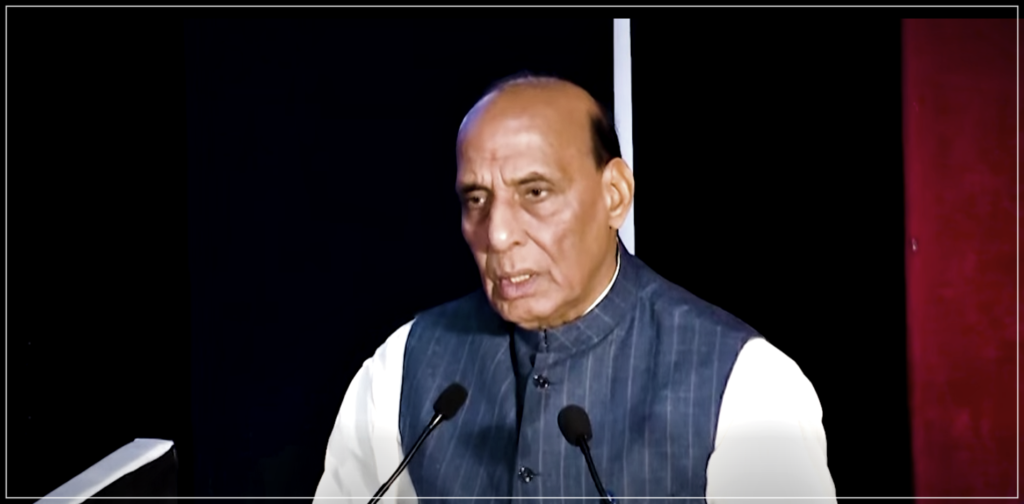
The Defence Ministry’s Consultative Committee is scheduled to meet in Jaisalmer, Rajasthan, under the chairmanship of Defence Minister Rajnath Singh to discuss key national security matters and the preparedness of the Indian Armed Forces. The discussions are expected to focus on modernising the armed forces, promoting the use of indigenous defence equipment and incorporating emerging military technologies into India’s defence capabilities. The committee will also review security preparedness along the western border and explore measures to strengthen the operational effectiveness of the armed forces. Other key areas likely to feature in the deliberations include addressing evolving security threats and preparing the military to tackle future strategic and operational challenges. Defence Minister Rajnath Singh has arrived in Jaisalmer to attend the meeting, accompanied by several Members of Parliament from both the Lok Sabha and the Rajya Sabha. Senior officials from the Defence Ministry and representatives of the armed forces are also expected to participate. The meeting will provide a platform for discussions on India’s defence priorities, military preparedness and the role of indigenous technologies in strengthening national security. Source: News on AIR  

Defence Ministry panel to discuss military modernisation, border security in Jaisalmer Read More »

India’s Single-Teacher Schools Decline by 3,282, But Five States Record Sharp Rise

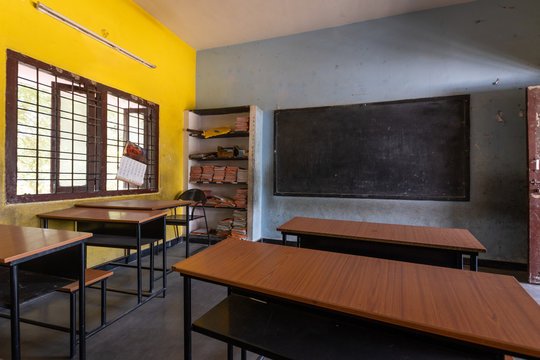
India recorded a net decline of 3,282 single-teacher schools in 2025-26, with their total number falling from 1,04,125 in 2024-25 to 1,00,843, according to data from the Unified District Information System for Education Plus (UDISE+). The figures were also presented in the Rajya Sabha in late July in response to a question concerning teacher vacancies. A single-teacher school is one where one teacher handles multiple classes and subjects, making it an important indicator of staffing shortages and resource constraints in school education. However, the national decline masks significant differences between states. Five states alone reported a combined reduction of more than 11,000 single-teacher schools, more than three times the overall national decline. This was offset by substantial increases in several other states, resulting in a net reduction of 3,282 schools nationally. Madhya Pradesh records biggest decline Madhya Pradesh reported the largest reduction, with its number of single-teacher schools dropping from 7,217 in 2024-25 to 2,269 in 2025-26 — a fall of 4,948 schools. Chhattisgarh recorded the second-largest decline, reducing its count by 3,512, from 5,973 to 2,461. Uttar Pradesh, which continues to have one of the highest numbers of such schools among major states, saw the figure fall from 9,508 to 7,874, a reduction of 1,634. Punjab and Gujarat also registered notable declines, with their single-teacher school numbers falling by 682 and 601 respectively. Andhra Pradesh sees largest increase In contrast, Andhra Pradesh recorded the biggest increase in the country. The state’s single-teacher schools rose from 12,912 in 2024-25 to 16,357 in 2025-26, an increase of 3,445. Maharashtra reported an addition of 1,117 such schools, while Rajasthan saw an increase of 1,083. Karnataka and Jharkhand recorded increases of 693 and 655 respectively. The contrasting trends indicate that the national improvement has not been evenly distributed across the country. Government response does not explain state-wise variation The Centre’s response in the Rajya Sabha did not provide a state-specific explanation for the sharp variations. It cited factors such as teacher retirements, resignations, creation of new posts, rationalisation of teacher deployment and changes in student enrolment as general reasons for teacher vacancies. The government also did not provide the state-wise sanctioned, working and vacant teacher positions sought in the original question. It said such information is maintained by individual state governments and Union Territory administrations. Instead, the response provided the number of teachers currently in position and the number of single-teacher schools based on UDISE+ 2025-26 data. This means the available figures alone cannot establish whether reductions in single-teacher schools were primarily due to new teacher appointments. Other factors, including school mergers, closures or changes in classification, could also have contributed. Pupil-teacher ratio indicates improvement The latest data also point towards relatively favourable pupil-teacher ratios, although the two years cannot be compared directly because the figures were presented differently. UDISE+ 2024-25 reported an overall national pupil-teacher ratio of 24 students per teacher. For 2025-26, the government provided level-wise ratios of 19 at the primary level, 17 at upper primary, 15 at secondary and 23 at higher secondary. All four ratios are below the 2024-25 composite figure. The government said these figures remain within the benchmarks outlined under the National Education Policy (NEP) 2020, which recommends a pupil-teacher ratio below 30 nationally and below 25 in areas with a high proportion of socio-economically disadvantaged students. While the figures suggest an improvement in teacher availability, the different methods of reporting mean they should not be treated as a direct year-on-year comparison. Source: Indian Express


India’s Single-Teacher Schools Decline by 3,282, But Five States Record Sharp Rise Read More »

NMC Announces 1.37 Lakh MBBS Seats for 2026–27; Karnataka Leads Surge in Private Medical College Capacity

The National Medical Commission (NMC) has released the undergraduate (UG) medical seat matrix for the 2026–27 academic session, notifying a total of 1,36,939 MBBS seats across government and private medical colleges in India. The announcement comes as aspirants continue to await the revised NEET UG 2026 results. According to the latest seat matrix, 63,297 seats are available in government medical colleges, while 73,643 seats are offered by private institutions. This marks an overall increase of 7,913 MBBS seats compared to the previous academic year. However, education experts believe the effective increase could exceed 9,900 seats, as several newly approved colleges were not operational last year due to pending state-level clearances. Private medical colleges have accounted for the majority of the expansion this year. While government institutions added 1,739 seats, private colleges contributed 6,175 additional seats, highlighting the growing role of the private sector in expanding medical education infrastructure. Karnataka has emerged as the biggest contributor to this growth, increasing its total MBBS seats from 13,944 to 15,395, the highest among all states. The state continues to hold the top position in terms of total medical undergraduate seats nationwide. Other states that recorded notable increases include Tamil Nadu with 949 additional seats, Rajasthan with 750, Telangana with 710, West Bengal with 701, and Uttar Pradesh with 575 new seats. Despite already having a large medical education network, Maharashtra added 275 seats this year. Admission experts have cautioned that not all seats listed by the NMC may be available during the counselling process. Although colleges have received approval from the NMC, they must also secure clearances from their respective state authorities and affiliated universities before admissions can begin. Similar delays last year resulted in several approved seats remaining unavailable during counselling. Among the states with the largest MBBS capacity are Karnataka, Uttar Pradesh, Tamil Nadu, Telangana, and Maharashtra, each offering over 10,000 undergraduate medical seats. In contrast, Arunachal Pradesh, Mizoram, and Nagaland have the lowest intake, with only 100 MBBS seats each. Other regions with limited capacity include Chandigarh (200 seats), Goa (250 seats), and Manipur (250 seats). Source: Indian Express

NMC Announces 1.37 Lakh MBBS Seats for 2026–27; Karnataka Leads Surge in Private Medical College Capacity Read More »

Private Universities Drive India’s Higher Education Expansion, Growing Three Times Faster Than Public Institutions Over a Decade

India’s higher education landscape has witnessed a major transformation over the past decade, with private universities emerging as the primary drivers of institutional growth. According to the Ministry of Education’s All India Survey on Higher Education (AISHE) 2023-24, the number of private universities increased from 219 in 2013-14 to 546 in 2023-24, registering a remarkable 149.3% growth. In comparison, government universities rose from 504 to 733 during the same period, reflecting a comparatively modest 45.4% increase. Overall, the total number of universities in the country climbed from 723 to 1,279, marking a 76.9% rise over the decade. The data indicates that private universities expanded at more than three times the pace of their government counterparts. At the state level, Gujarat recorded the highest increase in private universities, adding 51 institutions to reach 67 private universities in 2023-24, overtaking Rajasthan, which now has 57. Madhya Pradesh followed with 52 private universities, while Uttar Pradesh and Maharashtra reported 45 and 42, respectively. Government universities, however, continued to maintain a strong presence across the country. Uttar Pradesh remained the leading state in terms of public universities, increasing its count from 35 to 58, followed by Karnataka, which expanded from 32 to 51 government institutions. Despite the rapid rise in private universities, public institutions continue to educate the majority of university students. Government university enrolment increased from 51.9 lakh students in 2013-14 to 73.9 lakh in 2023-24, although their share of total enrolment declined from 81.3% to 68.1% over the decade. Private universities, on the other hand, recorded a much sharper increase in student numbers. Enrolment nearly tripled from 11.9 lakh to 34.6 lakh students, representing a 191.8% growth. Their share of total university enrolment rose from 18.6% in 2013-14 to 31.9% in 2023-24, highlighting their growing role in India’s higher education ecosystem. The AISHE findings also point to broader progress in higher education participation. India’s Gross Enrolment Ratio (GER) for the 18–23 age group improved from 23.0 in 2013-14 to 30.0 in 2023-24. Female participation continued to outpace that of males, with the female GER reaching 31.2, compared to the male GER of 28.9, marking the seventh consecutive year in which women recorded a higher enrolment ratio. Source: Indian Express  

Private Universities Drive India’s Higher Education Expansion, Growing Three Times Faster Than Public Institutions Over a Decade Read More »

PM Narendra Modi Rolls Out Nationwide HPV Vaccination Drive for 14-Year-Old Girls

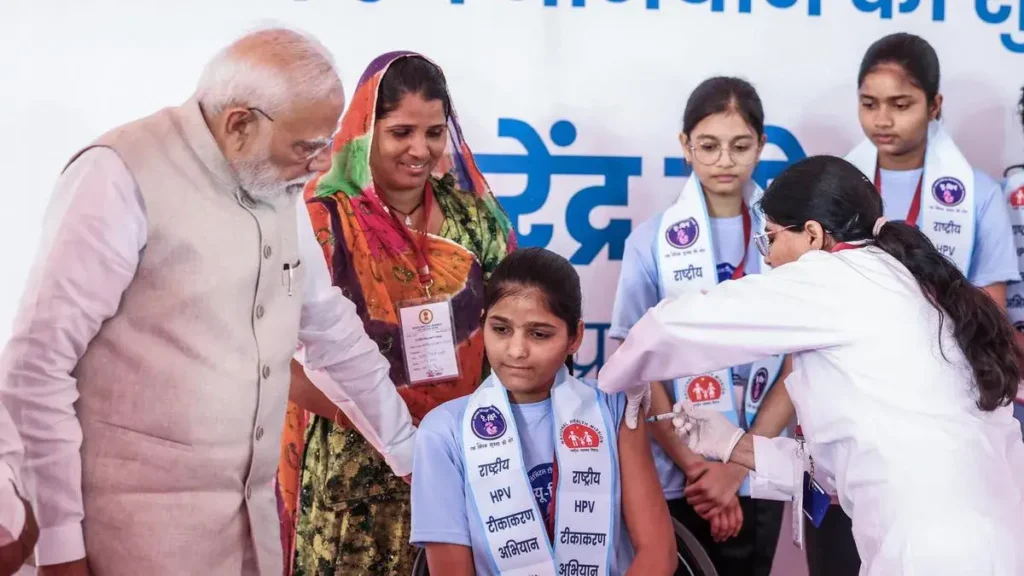
Prime Minister Narendra Modi on Saturday launched a nationwide Human Papillomavirus (HPV) vaccination campaign targeting 14-year-old girls. The initiative was inaugurated from Ajmer in Rajasthan on February 28, 2026. The cervical cancer prevention drive was formally introduced at a programme in Kayad, Ajmer, where several girls received the vaccine in the presence of the Prime Minister. He also interacted with beneficiaries during the event, highlighting the importance of preventive healthcare for young women. Under the campaign, a single-dose “Gardasil 4” vaccine — a quadrivalent HPV vaccine — will be administered. The vaccine offers protection against HPV types 16 and 18, which are the leading causes of cervical cancer, as well as types 6 and 11. The Union Health Ministry, in a communication issued to all States on February 25, confirmed that every 14-year-old girl across the country will receive a single dose of the vaccine free of cost. The vaccination will be carried out at government health facilities, including Ayushman Arogya Mandirs (Primary Health Centres), Community Health Centres, sub-district and district hospitals, as well as government medical colleges and hospitals. The nationwide rollout marks a significant step in India’s public health efforts to reduce the burden of cervical cancer through early immunisation and preventive care. Source: The Hindu

PM Narendra Modi Rolls Out Nationwide HPV Vaccination Drive for 14-Year-Old Girls Read More »

CBSE Revokes Affiliation for 21 Schools, Downgrades 6 in Surprise Inspections in Delhi and Rajasthan

The Central Board of Secondary Education (CBSE) has disaffiliated 21 schools and downgraded 6 others across Delhi and Rajasthan following surprise inspections conducted on September 3, 2024. These inspections aimed to ensure compliance with the Board’s Affiliation and Examination Bye-Laws, specifically addressing mandatory attendance requirements. CBSE’s actions target the issue of “dummy” or non-attending admissions, which compromise the quality of education and student growth. During the inspections, several schools were found in violation of these standards, resulting in Show Cause Notices. Schools had 30 days to respond to the Board’s concerns, but following a review of responses and video evidence, CBSE decided to take disciplinary action. Key Actions Taken: Disaffiliation: 21 schools lost CBSE affiliation due to high numbers of non-attending students in classes IX-XII. Downgrading: 6 schools were downgraded from Senior Secondary to Secondary level. CBSE reiterated its commitment to quality education and a zero-tolerance stance against dummy enrollments. This initiative emphasizes lawful educational practices and encourages all affiliated institutions to uphold these values. Schools Losing Affiliation Include: Khemo Devi Public School (Delhi) The Vivekanand School (Delhi) Sant Gyaneshwar Model School (Delhi) Prince Uch Madhyamik Vidyalaya (Sikar, Rajasthan) Lord Buddha Public School (Kota, Rajasthan) Downgraded Schools Include: Adarsh Jain Dharmic Shiksha Sadan (Delhi) B.S. International School (Delhi) Bharat Mata Saraswati Bal Mandir (Delhi) These measures by CBSE underscore its commitment to uphold educational integrity and maintain rigorous standards across affiliated schools. Source: ABP Live Photo Credit: ABP Live

CBSE Revokes Affiliation for 21 Schools, Downgrades 6 in Surprise Inspections in Delhi and Rajasthan Read More »

ArdorComm – Education Leadership Symposium Friday, 23 Aug2024 | kota

“ArdorComm – Education Leadership Symposium” – A RoundTable Meet Event Theme: The Future of Education in India #ELS2024 #ELSKota #EducationLeadershipSymposium The Future of Education in India is a critical topic as the country navigates the 21st century’s challenges and opportunities. With a young population and a rapidly evolving economy, India’s education system must adapt to foster innovation, critical thinking, and digital literacy. The introduction of the National Education Policy 2020 aims to revolutionize traditional teaching methods, integrate technology, and promote inclusivity. This roundtable discussion will explore these changes, the impact of globalization, and the role of public-private partnerships in shaping a future-ready workforce, ultimately aiming to bridge the gap between education and employability. The upcoming “ArdorComm – Education Leadership Symposium” – A RoundTable Meet on 23rd Aug at Kota, Rajasthan, we are inviting senior leadership from the education fraternity to have a meaningful brainstorming session. KEY DISCUSSION POINTS Bridging the Digital Divide: Ensuring Equitable Access to Education From Classroom to Boardroom: Cultivating Young Entrepreneurs Overcoming Digital Illiteracy: Preparing Students for a Tech-Driven World AI Tutors: The Future of Personalized Education Assistance Empowering Educators: Training Teachers for a Digital Future Rural Innovation Hubs: Bringing Technological Advancements to Remote Areas Who Should Attend: Educators Academicians Chancellors Vice-Chancellors CEOs Directors Principals Deans Eminent Speakers AGENDA Time Topic 3:30 – 4:00 PM Registration & Networking Tea 4:00 – 4:05 PM Welcome Note: ArdorComm Media Group 4:05 – 4:15 PM Samsung – Keynote Address 4:15 – 6:30 PM Roundtable Discussion – Moderated by ArdorComm Media 6:30 – 6:45 PM Samsung Presentation 6:45 – 7:15 PM Felicitation Ceremony 7:15 PM Onwards Networking Cocktails followed by Dinner VENUE Country Inn & Suites by Radisson Kota Plot No. 4 & 5, Rajeev Gandhi Nagar, Kota, Rajasthan 324005

ArdorComm – Education Leadership Symposium Friday, 23 Aug2024 | kota Read More »

Delhi Reports First Case of JN.1 COVID Variant: Live Updates and Emerging Trends in India’s Pandemic Landscape

Delhi has reported its first case of the JN.1 COVID variant, as per live updates on the pandemic. The All India Institute of Medical Sciences (AIIMS) in Delhi has promptly issued guidelines in response to this new case. As of December 26, India has recorded a total of 109 JN.1 COVID variant cases, according to sources from the Health Ministry. The distribution of cases reveals 36 in Gujarat, 34 in Karnataka, 14 in Goa, 9 in Maharashtra, 6 in Kerala, 4 in Rajasthan, 4 in Tamil Nadu, and 2 in Telangana. Wednesday witnessed a spike in the daily COVID-19 cases in India, with 529 new infections reported in a single day. The active infection count in the country stands at 4,093, with three new fatalities documented within 24 hours – two in Karnataka and one in Gujarat. This surge in cases follows a period of relative decline, with daily case numbers dropping to double digits until December 5. The resurgence is attributed to the emergence of a new variant and cold weather conditions. Internationally, the World Health Organization (WHO) has classified JN.1 as a variant of interest, distinct from its parent lineage BA.2.86. However, the WHO has emphasized that, based on current evidence, the overall risk posed by JN.1 remains low. The classification of JN.1 as a variant of interest underscores the ongoing efforts to monitor and understand the evolution of the virus.

Delhi Reports First Case of JN.1 COVID Variant: Live Updates and Emerging Trends in India’s Pandemic Landscape Read More »

BJP Leadership Shuffle: Bhajan Lal Sharma, Mohan Yadav, and Vishnu Deo Sai Take Charge as Chief Ministers in Rajasthan, Madhya Pradesh, and Chhattisgarh

News on Government

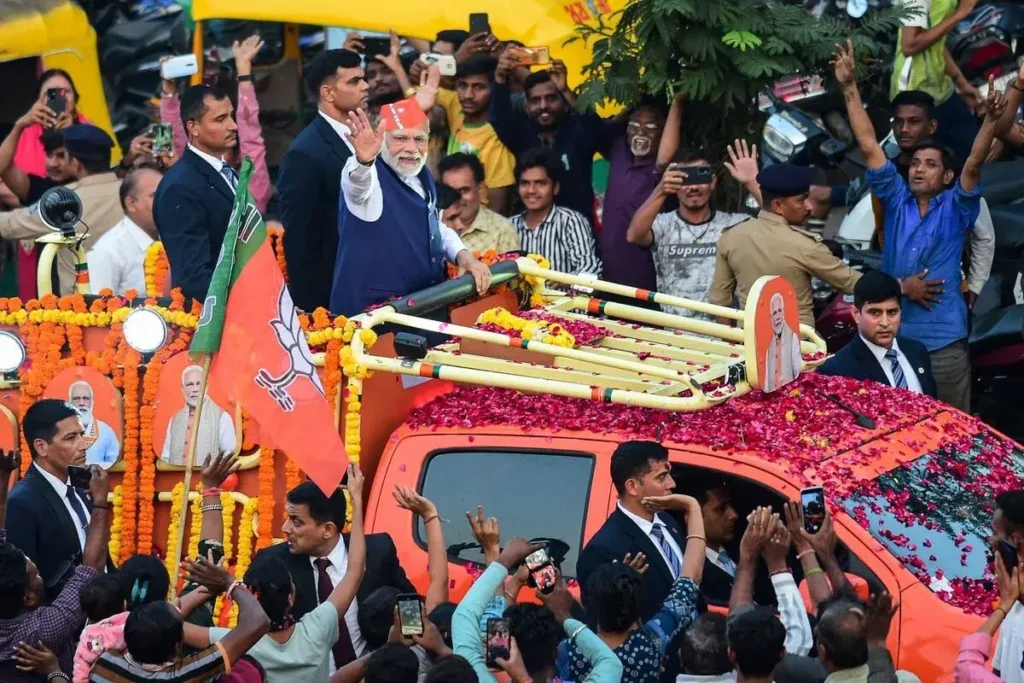
The Bharatiya Janata Party (BJP) officially announced Bhajan Lal Sharma as the new Chief Minister of Rajasthan, following a conclusive BJP Legislature Party meeting held in Jaipur yesterday. The meeting, which commenced at 4 pm, saw the presence of all 115 BJP MLAs at the party office, marking a crucial moment in Rajasthan’s political landscape. The selection process was overseen by Defence Minister Rajnath Singh, Rajya Sabha member Saroj Pandey, and BJP National General Secretary Vinod Tawde, appointed as observers by the BJP to ensure a smooth and transparent selection of the Rajasthan Chief Minister. The saffron party emerged victorious in the Rajasthan Assembly polls on December 3, securing a clear majority and displacing the Congress party. Notably, the BJP’s strategy in selecting chief ministers has taken an interesting turn in states like Chhattisgarh and Madhya Pradesh, where the party also claimed victory. In Chhattisgarh, tribal leader Vishnu Deo Sai was chosen, while in Madhya Pradesh, Mohan Yadav, the party’s OBC face and former education minister, secured the chief ministerial position. Both choices surprised many as the BJP opted for fresh faces over seasoned leaders. Mohan Yadav, a three-time MLA from Madhya Pradesh’s Ujjain South, is set to take the oath as the chief minister at Bhopal’s Lal Parade Ground. In Chhattisgarh, Vishnu Deo Sai, a four-time Lok Sabha MP and three-time state BJP chief, will be sworn in as the CM at the Science College ground in Raipur. In Madhya Pradesh, Rajendra Shukla and Jagdish Devda are expected to be sworn in as deputies of Mohan Yadav. However, in Chhattisgarh, the BJP is yet to make an official announcement regarding the deputy CMs. Speculations suggest that Arun Sao and Vijay Sharma might assume these roles alongside Sai. The swearing-in ceremonies in Bhopal and Raipur are anticipated to witness the presence of political heavyweights, including Prime Minister Narendra Modi, Union Home Minister Amit Shah, and Uttar Pradesh Chief Minister Yogi Adityanath. The BJP’s choices for chief ministers in these states reflect a strategic shift, opting for fresh and dynamic leadership over experienced veterans.

BJP Leadership Shuffle: Bhajan Lal Sharma, Mohan Yadav, and Vishnu Deo Sai Take Charge as Chief Ministers in Rajasthan, Madhya Pradesh, and Chhattisgarh Read More »

Damodar Prasad Goyal, Founder President, Society for Unaided Private Schools of Rajasthan shares his observation of school education sector in last 5 years

“We have to rethink and we have to recalibrate our system also that how the public will perceive about us,” says Damodar Prasad Goyal, Founder President, Society for Unaided Private Schools of Rajasthan in an interview with Chandan Anand, CEO & Group Editor, ArdorComm Media Group at the ‘ArdorComm New Normal – Education Leadership Summit & Awards 2022’ #ELSAJaipur #ELSARajasthan According to you what does New Normal stands for? For me, New Normal stands for the changed circumstances. There are private schools, government schools, NVS, KVS, preschool are also coming under the umbrella of NEP would you like to comment on it? Actually, we should stop talking about the private schools and government schools, we should talk about the education. We, all stakeholders have a commitment to develop the education in India for the future of the country. So, the preschool or the private school, the government school, KV school every institution is doing only one work, to impart education and we have to be very sincere in imparting education. We have to be honest to ourselves, we have to be honest to the students and as well as to the parents also. As you define yourself as the observer of the education, how do you observe this school education sector in last five years now? It has become quite strictly regulated and there are reasons for strict regulations because now it had not been a real service only it has become a commercial activity according to government and to some extent it is true. So, we have to rethink and we have to recalibrate our system also that how the public will perceive about us. In last five years there are strict regulations and we have less liberty to work according to our own choice. Many people follow you, they take your advice, any message would you like to give to any of the Educators or who’s planning to open a school or who is successfully running schools? Think about the education, think about the future and benefits will come to you automatically this is my advice. How does certain kind of symposiums help when we see the edtech players, academicians and government policy makers are here so what is an outcome of certain events? Actually, we talk and then we forget. We have to follow what we have talked so that is the only thing which can help otherwise every day, every month, every year there are conferences, programs, seminars but it doesn’t bring any fruit until and unless these are properly examined and executed. I’m happy to share that recently ArdorComm Media celebrated its first anniversary, any message would you like to give to this young ArdorComm Media Group? I am glad that you have come out with a new format of the conference and new format of the program and you are reaching to the different states. So, that is a new concept otherwise everybody was focusing on giving awards and having a national ceremony and glittering ceremony and that is good to attend but the purpose of the meeting with the people in small gathering will be more useful. Thank you and congratulations, and I hope a long and great success in your endeavour.

Damodar Prasad Goyal, Founder President, Society for Unaided Private Schools of Rajasthan shares his observation of school education sector in last 5 years Read More »