ArdorComm Media Group

Wednesday, February 25, 2026 5:05 PM

Author name: admin

Breakthrough Discovery Unveils Potential for Sustainable Energy Revolution
Researchers have unveiled a discovery that could pave the way for a sustainable energy revolution. The breakthrough centers around a novel technology that harnesses the power of ambient vibrations to generate electricity, offering a promising solution to the global quest for cleaner and more efficient energy sources. The innovation, spearheaded by a team of scientists at a leading research institution, revolves around the concept of energy harvesting from ambient vibrations in the environment. By tapping into these ubiquitous vibrations, the researchers have successfully created a prototype device capable of converting them into usable electrical energy. This opens up the possibility of generating power in diverse settings, from urban environments with constant human activity to remote locations with natural vibrations. The implications of this discovery are far-reaching, as it holds the potential to revolutionize the energy landscape. Unlike traditional energy sources that often rely on finite resources and contribute to environmental degradation, this breakthrough offers a renewable and sustainable alternative. The technology’s scalability and adaptability make it a viable option for various applications, ranging from powering small electronic devices to providing energy for entire communities. The researchers anticipate that this innovation could play a pivotal role in addressing the pressing global challenges related to climate change and the need for cleaner energy solutions. The next steps involve further testing and refinement of the technology to optimize its efficiency and practicality. As the world grapples with the urgency of transitioning to sustainable energy, this discovery marks a significant stride towards a more eco-friendly and resilient future. This breakthrough not only signifies a leap forward in scientific achievement but also underscores the potential for unconventional approaches to meet the growing energy demands of our planet. The journey towards a sustainable energy revolution has just taken a promising turn, bringing renewed hope for a greener and more environmentally conscious future.

Breakthrough Discovery Unveils Potential for Sustainable Energy Revolution Read More »

Mattel Unveils Animated ‘Bob the Builder’ Movie Starring Anthony Ramos

Toy giant Mattel is set to bring the beloved character “Bob the Builder” to the big screen in its first animated theatrical movie. Renowned actor Anthony Ramos, known for his role in “In the Heights,” lends his voice to the titular character, now named Roberto, as he embarks on a construction adventure in Puerto Rico. The film promises to delve into various issues across the island, offering a unique perspective on construction and introducing audiences to the vibrant Caribbean-Latin culture. Following the success of Mattel’s “Barbie” movie, which grossed over $1.4 billion at the box office, the toy company continues to expand its cinematic endeavors. “Bob the Builder” joins a slate of upcoming projects by Mattel Films, including the Netflix animated series “Masters of the Universe: Revolution” centered on the iconic “He-Man” franchise. Additionally, a live-action “Polly Pocket” film, directed by Lena Dunham, is in the works, drawing inspiration from the popular 1980s dolls. Mattel Films is not stopping there, as they are actively developing projects based on other well-known toy lines such as American Girl, Hot Wheels, Magic Ball, Barney, and more. The move into filmmaking reflects Mattel’s commitment to leveraging its diverse portfolio of iconic brands to captivate audiences across different media. The “Bob the Builder” movie is a nostalgic nod to the early 2000s British animated children’s series, created by Keith Chapman. The TV show, spanning 12 seasons, featured the lovable contractor and his friends. Mattel acquired the rights to “Bob the Builder” and other preschool properties when it purchased Hit Entertainment in 2011 for $680 million. Robbie Brenner, president of Mattel Films, expressed hopes that the animated movie would introduce the beloved character to new audiences, cementing Mattel’s position as a key player in the entertainment industry.

Mattel Unveils Animated ‘Bob the Builder’ Movie Starring Anthony Ramos Read More »

AIIMS Bhubaneswar Successfully Tests Drones for Healthcare Delivery in Odisha

AIIMS Bhubaneswar achieved a significant milestone on January 23 by successfully conducting an experimental trial utilizing drones to enhance healthcare services in Odisha. The unmanned aerial vehicle covered a remarkable distance of 120 km from AIIMS Bhubaneswar to the Community Health Centre in Tangi in just 1.10 hours, marking a groundbreaking advancement in medical logistics. The drones were specifically designed to transport essential blood supplies, weighing approximately 2 kg, with the entire journey executed seamlessly, showcasing the potential for integrating drone technology into the healthcare system. AIIMS Bhubaneswar Director, Ashutosh Biswas, expressed his satisfaction with the trial, emphasizing the commitment of the national institute to develop a model that seamlessly integrates technology to supplement existing logistics methods. Director Biswas highlighted the significance of this technology in bolstering healthcare services in remote, tribal, and semi-urban areas. Drones have the capacity to transport a variety of medical supplies, including vaccines, essential drugs, and diagnostic samples. This successful trial by AIIMS Bhubaneswar, a leading tertiary healthcare provider, opens new possibilities for enhancing healthcare accessibility for the people of Odisha. In an exclusive statement to ANI, Director Biswas stated, “Induction of drone delivery can boost the healthcare services in rural, tribal, and semi-urban locations. These drones can carry multiple health products, including vaccines, essential drugs, and diagnostic samples. AIIMS Bhubaneswar, as a leading tertiary healthcare provider, has created this opportunity for the people of Odisha.” The successful integration of drones in healthcare delivery marks a transformative step towards more efficient and timely medical services in challenging terrains and remote regions.

AIIMS Bhubaneswar Successfully Tests Drones for Healthcare Delivery in Odisha Read More »

Karnataka Government Honors Commitment, Implements Old Pension Scheme for 13,000 Employees

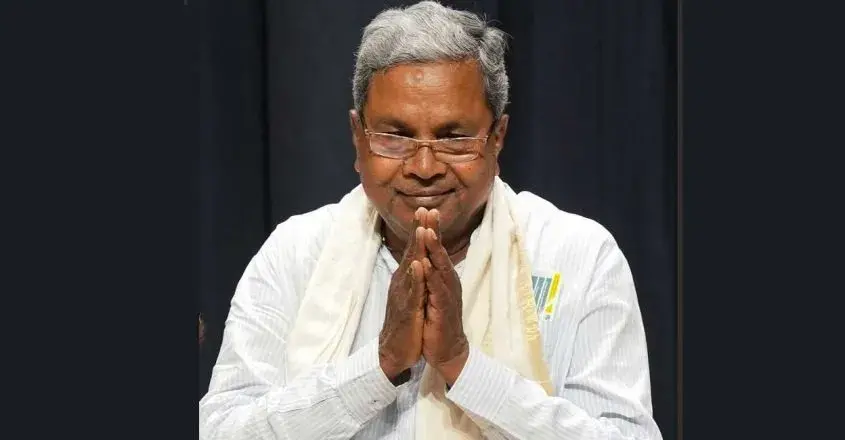
In a significant move, the Karnataka government has officially announced the implementation of the Old Pension Scheme for approximately 13,000 state government employees who were recruited after 2006. This decision comes as a fulfillment of Chief Minister Siddaramaiah’s commitment made during a strike by government employees opposing the introduction of the new pension scheme. 2006 ಏಪ್ರಿಲ್‌ ಪೂರ್ವ ನೇಮಕಾತಿ ಅಧಿಸೂಚನೆಯಾಗಿ 2006 ರ ನಂತರ ನೇಮಕಾತಿಗೊಂಡ ರಾಜ್ಯ ಸರ್ಕಾರದ ಸುಮಾರು 13,000 ಸರ್ಕಾರಿ ನೌಕರರಿಗೆ ಹಳೆ ಪಿಂಚಣಿ ಯೋಜನೆ ವ್ಯಾಪ್ತಿಗೆ ಒಳಪಡಿಸಿ ಆದೇಶ ಹೊರಡಿಸಲಾಗಿದೆ. ಚುನಾವಣೆಗೂ ಪೂರ್ವದಲ್ಲಿ ಎನ್.ಪಿ.ಎಸ್ ನೌಕರರು ಮುಷ್ಕರು ಮಾಡುವ ವೇಳೆ ಸ್ಥಳಕ್ಕೆ ಭೇಟಿನೀಡಿ ನಾವು ಅಧಿಕಾರಕ್ಕೆ ಬಂದ ನಂತರ ಬೇಡಿಕೆ… pic.twitter.com/IJTzZACw2R — Siddaramaiah (@siddaramaiah) January 24, 2024 Chief Minister Siddaramaiah affirmed the government’s dedication to meeting the demand of the employees, stating, “An order has been issued to cover the old pension scheme to about 13,000 government employees of the state government recruited after 2006. Even before the election, I visited the place when the National Pension System (NPS) employees were on strike and promised to fulfill the demand after we came to power.” He expressed hope that the decision brings comfort to the families of the 13,000 NPS employees affected by the transition. Old Pension Scheme vs. New Pension Scheme The Old Pension Scheme guarantees a monthly pension post-retirement, usually amounting to half of the last drawn salary, providing financial security for retired government employees. In contrast, the New Pension Scheme involves employees contributing a portion of their salaries to a pension fund, leading to a one-time lump sum payment upon superannuation. The transition from the old to the new scheme occurred in December 2003, with the new scheme being implemented on April 1, 2004. Taking the opportunity to address broader issues, Chief Minister Siddaramaiah criticized the central government, accusing it of failing to deliver on its promise of creating two crore jobs per year. “Prime Minister Narendra Modi, who promised to create 2 crore jobs per year, failed to do so. 20 crore jobs were to be provided in ten years, which did not happen,” he remarked. These comments were made during the inauguration of a project aimed at rejuvenating 150 lakes and ponds in 79 villages in Periyapatna taluk from the Cauvery River at Muthtina Mullusoge on Wednesday, January 24.

Karnataka Government Honors Commitment, Implements Old Pension Scheme for 13,000 Employees Read More »

Sony Confirms Termination of $10 Billion Merger Deal with Zee Entertainment, Legal Battle Looms

Sony Corporation officially announced on Monday the termination of its proposed $10 billion mega-merger deal with Zee Entertainment, marking the collapse of the ambitious alliance that aimed to create India’s largest entertainment company. The agreement was intended to provide substantial financial prowess, positioning the unified entity to compete with global streaming giants like Netflix Inc. and Amazon.com Inc., as well as local conglomerates such as Reliance Industries Ltd, currently exploring potential partnerships with Disney. The termination notice served by Sony brings an abrupt end to the negotiations, which had been anticipated as Sony Group Corp signaled its hesitancy to extend the discussions beyond the originally agreed-upon deadline. The termination follows a report on January 21 by ET (Economic Times) indicating that Sony was unlikely to prolong the good faith negotiations with Zee Entertainment Enterprises Ltd. (ZEEL). Zee Entertainment, in response to Sony’s move, expressed its intention to take legal action against the Japanese conglomerate, setting the stage for a potential legal battle between the two entities. The fallout from the failed merger deal adds a layer of complexity to the media landscape, with Zee Entertainment now reassessing its strategic options. In a prior development, Zee had requested Sony to extend the merger deadline from December 21, 2023, citing the need for more time. The merger deal, initially inked on December 22, 2021, faced hurdles and uncertainties, ultimately leading to its termination. The termination of the Sony-Zee merger deal raises questions about the future trajectory of both companies in the highly competitive Indian entertainment market. Industry observers are closely watching the aftermath of this high-profile breakdown and its potential implications for the broader media and entertainment landscape in India.

Sony Confirms Termination of $10 Billion Merger Deal with Zee Entertainment, Legal Battle Looms Read More »

Byju’s Seeks Fresh Funds, Slashes Valuation by 90% to Tackle Financial Woes

Indian education giant Byju’s is reportedly planning to raise funds through a share issuance next month, seeking over $100 million from existing investors. The catch, however, is that the valuation of the once $22 billion startup will plummet by more than 90%, now placing the company at less than $2 billion. Sources familiar with the matter revealed that Byju’s founder, Byju Raveendran, will partake in the share sale to maintain his stake in the company. The move comes as Byju’s grapples with financial challenges, planning to utilize the proceeds to settle outstanding payments to vendors and stabilize its operations. Byju’s had previously attained a valuation of $22 billion during its funding round in late 2022, marking a significant decline in its perceived value. The company has been navigating a cash crunch for several months and is concurrently engaged in a legal dispute with creditors over a missed interest payment on a $1.2 billion term loan. In a bid to alleviate financial pressures, Byju’s is set to sell its US-based kids’ digital reading platform for approximately $400 million. The spokesperson for the company has declined to comment on the recent developments. Post the share sale, Byju’s aims to refocus on its core business and intensify efforts in the realm of generative artificial intelligence for hyper-personalized learning. Backed by prominent investors like the Chan Zuckerberg Initiative, General Atlantic, and Prosus NV, Byju’s had previously embarked on a global acquisition spree before encountering the challenges of a tech funding downturn. Noteworthy participants in the upcoming share sale include existing shareholders, such as the Chan Zuckerberg Initiative, General Atlantic, and Prosus NV. Byju’s endeavors to rebuild its business amid the financial restructuring, emphasizing innovation in education technology. The company’s proactive measures highlight the resilience of Byju’s leadership in adapting to market dynamics while ensuring a sustainable future for the prominent education technology firm.

Byju’s Seeks Fresh Funds, Slashes Valuation by 90% to Tackle Financial Woes Read More »

Closing the Women’s Health Gap: A $1 Trillion Opportunity for Global Well-being

Blog on Health

In a study by the McKinsey Health Institute in collaboration with the World Economic Forum (WEF), the report titled “Closing the women’s health gap: A $1 trillion opportunity to improve lives and economies” sheds light on the profound impact of gender disparities in healthcare on both individual well-being and global economic prosperity. The study, focused on addressing the health gap between men and women, reveals startling statistics that demand urgent attention and action. Key Findings: Unraveling the Women’s Health Gap The report brings to light the alarming fact that while women tend to live longer than men, they spend 25 percent more of their lives grappling with poor health. This health disparity translates into a staggering 75 million years of life lost annually due to illnesses or premature death among women. The study identifies key areas contributing to the women’s health gap: Health Conditions Affecting Both Genders: 95 percent of the health burden on women is attributed to conditions affecting both men and women, such as sexual and reproductive health, maternal and child health, and endometriosis. Prevalence of Conditions in Women: 56 percent of the health burden on women arises from conditions that are either more prevalent or manifest differently in women. The Case of India: A $22 Billion Opportunity In the context of India, the study highlights that closing the gender gap in healthcare could lead to a substantial economic boost. The report estimates that India’s GDP could rise by at least $22 billion by addressing the health disparities between men and women. The top health conditions contributing to this potential GDP impact include premenstrual syndrome, gynecological diseases, migraine, depressive disorders, and anxiety disorders. Global Root Causes: Science, Care Delivery, Investment, and Data The report identifies four primary global root causes contributing to the women’s health gap: Science: Historically, the study of human biology has predominantly focused on the male body, leading to less effective treatments for women. Over 50 percent of interventions with sex-disaggregated research are found to be less effective for women than men. Care Delivery: Women often face barriers to care, diagnostic delays, and suboptimal treatment due to healthcare systems designed and run predominantly by men. Investment: There has been lower investment in women’s health conditions relative to their prevalence, perpetuating limited scientific understanding and data on women’s bodies. Data: Health burdens for women are systematically underestimated, with incomplete datasets that exclude or undervalue crucial conditions affecting women. Closing the Gap: A Trillion-Dollar Opportunity The report emphasizes the potential economic and societal benefits of addressing the women’s health gap: Economic Growth: For every $1 invested in women’s health, the projection is nearly $3 in economic growth. Global Impact: Closing the health gap could add 7 more days of healthy living for each woman annually, contribute at least $1 trillion to the global economy by 2040, and generate an impact equivalent to 137 million women accessing full-time positions. Reduced Health Burden: Addressing the gaps in women’s health could reduce the time women spend in poor health by almost two-thirds, positively impacting 3.9 billion women. Strategies for Change To achieve health equity and foster economic growth, the report suggests a comprehensive strategy involving various stakeholders: Invest in Research: Prioritize women-centric research to fill knowledge and data gaps in women-specific conditions. Data Collection: Systematically collect and analyze sex-, ethnicity-, and gender-specific data for accurate representation of women’s health burden. Enhance Access: Improve access to gender-specific care, from prevention to diagnosis and treatment. Financing Models: Incentivize new financing models to support women’s health initiatives. Business Policies: Establish business policies that actively support women’s health. Raise Awareness: Promote awareness and advocacy to draw attention to the women’s health gap. By prioritizing women’s health in research, care, and investment, societies can unlock immense economic potential while ensuring a healthier

Closing the Women’s Health Gap: A $1 Trillion Opportunity for Global Well-being Read More »

Survivors of Russian Plane Crash in Afghanistan in ‘Good Health,’ Taliban Reports

Taliban administration announced that four survivors of a charter plane crash in northern Afghanistan are in “good health.” The incident involved a plane en route to Moscow, and while the survivors appear to be in stable condition, the bodies of two passengers killed in the crash are being transported to the Afghan capital. Russian aviation authorities reported on Sunday that the plane, carrying six individuals, disappeared from radar screens over Afghanistan on Saturday night. Afghan police received reports of a crash in the mountainous Badakhshan province. Taliban spokesperson Zabihullah Mujahid stated, “Four people from the crashed plane in Badakhshan were transferred to Kabul, the medical and rescue teams of the Ministry of Aviation and the Ministry of Defence have provided them with first aid.” Video footage released by Mujahid’s office showed the survivors disembarking from a helicopter accompanied by Taliban officials. The footage revealed visible injuries on some survivors, with one individual displaying bloodstains on his clothes. An unnamed Taliban official in the video affirmed the good health of the survivors, expressing gratitude for finding the crash site. The bodies of the deceased passengers have been moved to Fayzabad, a northern provincial city, and are en route to Kabul. According to Russian state-run TASS news agency, the crashed flight had conducted a private medical evacuation from Thailand’s Pattaya, a popular destination for Russian tourists, to Moscow. Approximately 25 minutes before disappearing from radar screens, the pilot reportedly issued a warning about low fuel and indicated an attempt to land in Tajikistan, as reported by the Russian news outlet SHOT.

Survivors of Russian Plane Crash in Afghanistan in ‘Good Health,’ Taliban Reports Read More »

India Witnesses Third COVID-19 Wave, Officials Confirm JN.1 Variant Impact

As India grapples with the ongoing challenges posed by the COVID-19 pandemic, official sources have confirmed the emergence of the JN.1 variant. However, reassuringly, the available data suggests that this variant is not causing an exponential rise in new cases, nor is it associated with a surge in hospitalizations and mortality rates. India has experienced three distinct waves of COVID-19, with the most significant impact observed during the Delta wave in April-June 2021. At its peak, the country reported a staggering 4,14,188 (4.14 lakh) new cases and 3,915 deaths on May 7, 2021. The latest data indicates that the JN.1 variant is not leading to a scenario similar to the Delta wave peak. This information comes as a relief amid concerns about the potential impact of new variants on the country’s healthcare system. Since the onset of the pandemic in early 2020, India has witnessed more than 4.50 crore people contracting the virus, with over 5.30 lakh fatalities recorded over the course of about four years. This underscores the persisting challenges and the need for ongoing efforts to combat the spread of the virus and mitigate its impact on public health. As the situation continues to evolve, health authorities are closely monitoring the spread and characteristics of the JN.1 variant. The confirmation that the variant is not currently associated with a severe increase in cases provides valuable insights for public health strategies.

India Witnesses Third COVID-19 Wave, Officials Confirm JN.1 Variant Impact Read More »

Alarming Rise in Out-of-School Children across Pakistan Sparks Concerns

The News International reports that as of the academic year 2021-22, Pakistan is grappling with a staggering 26.2 million out-of-school children, indicating a persistent challenge in achieving universal education. The data underscores that 39 percent of children in the school-going age group are currently not enrolled, raising concerns about the nation’s educational landscape. Balochistan emerges as a cause for heightened concern, as it leads with a startling 65 percent of children out of school, while Islamabad Capital Territory reports the lowest percentage. Among the major provinces, Khyber Pakhtunkhwa performs relatively better with a 30 percent out-of-school rate. Despite a slight decrease in the percentage of out-of-school children from 44 percent in 2016-17 to 39 percent in 2021-22, the absolute number has surged from 22.02 million to 26.21 million during the same period. This surge is primarily attributed to the population growth rate outpacing the decrease in out-of-school children. The report further reveals a disconcerting scenario at the higher secondary level, with a projected 60 percent of children expected to be out of school in the current academic year. Additionally, the analysis indicates out-of-school rates of 44 percent, 30 percent, and 36 percent at high, middle, and primary levels, respectively. Highlighting the urgent need for targeted interventions, the data shows that a significant portion of the out-of-school children, totaling 10.77 million, are at the primary level. Economic disparities also play a crucial role in limiting educational access, with children from the poorest quintile facing the highest disadvantage across all education levels. This revelation underscores the need for comprehensive efforts to address these challenges and ensure education for all in Pakistan.

Alarming Rise in Out-of-School Children across Pakistan Sparks Concerns Read More »