ArdorComm Media Group

Tuesday, April 21, 2026 4:47 AM

Author name: admin

Zee Entertainment Launches ‘KidZ’ on Zee5, Re-enters Children’s Entertainment Segment

Zee Entertainment Enterprises has made a fresh push into the children’s entertainment space with the launch of KidZ, a dedicated kids’ service on its digital platform Zee5. The new vertical brings together a blend of learning-focused and fun programming curated for young audiences. To expand its family-focused offerings, the company has teamed up with top content creators and aggregators from India and abroad, ensuring a safe, engaging and education-driven experience for kids. Accessible via a special profile on Zee5 across all devices, KidZ launches with over 140 titles in several languages, with new episodes and shows arriving every Friday. The line-up includes well-known favourites such as Boonie Bears, Vir, Chacha Bhatija and Inspector Chingum. Zee is also building an exclusive slate of premium original kids’ shows set to debut from December 2025, combining story-driven narratives with informative elements and established character IPs. Chandan Khandelwal, Business Head for the Kids Division at Zee5 India & Global, said the goal is to build a safe, immersive destination that inspires curiosity and joy. The initiative ties into the strategic roadmap highlighted in the company’s May 2025 investor update, which identified children’s content as a high-growth segment. With digital consumption among younger viewers continuing to surge, Zee aims to strengthen its content library and scale its reach across entertainment verticals. KidZ marks Zee’s renewed focus on the kids category, more than a decade after the company exited its earlier edutainment experiment with ZeeQ, launched in 2012 but later discontinued as part of a strategic shift. Source: Economic Times  

Zee Entertainment Launches ‘KidZ’ on Zee5, Re-enters Children’s Entertainment Segment Read More »

CSIR, ICMR Chart Joint Roadmap to Boost Collaborative Health Research

The Council of Scientific and Industrial Research (CSIR) and the Indian Council of Medical Research (ICMR) held a high-level strategy meeting to advance a unified roadmap for collaborative health research, the Ministry of Science & Technology said on Tuesday. The session took place at the CSIR Science Centre in New Delhi and was co-chaired by N. Kalaiselvi, Director General of CSIR, and Rajiv Bahl, Director General of ICMR and Secretary, Department of Health Research. The two organisations reviewed progress on major joint initiatives, including CSIR-developed molecules progressing toward clinical trials, updates on ICMR-supported Centres of Advanced Research within CSIR labs, and implementation of large-scale national projects. The meeting also emphasised expanding wastewater surveillance for a wider range of pathogens across cities, hospitals and communities, aligning with the One Health Mission. Discussions included defining the roles of CSIR and ICMR in drug development, clinical trials, and leveraging ICMR’s large-animal toxicity testing infrastructure. The joint AcSIR–ICMR Ph.D. programme was also reviewed, with a focus on widening opportunities for young researchers by integrating ICMR and CSIR fellowship pathways. Both Dr. Kalaiselvi and Dr. Bahl stressed the importance of combining CSIR’s scientific and technological expertise with ICMR’s public health capabilities to deliver national-scale outcomes. They highlighted the need for structured, time-bound collaboration, particularly for co-developing technologies such as a digitally operated medical emergency drone service. Experts concluded by reaffirming plans to deepen cooperation in biomedical sciences, diagnostics, digital health, environmental surveillance, and other emerging healthcare domains. Source: IANS

CSIR, ICMR Chart Joint Roadmap to Boost Collaborative Health Research Read More »

IMF Considering Reclassification of India’s Forex Management Framework

The International Monetary Fund is reportedly reviewing India’s foreign-exchange (FX) management regime and may soon alter its classification, according to a recent Bloomberg report. India is currently placed under a “stabilised arrangement,” a category it was moved to in December 2023 from the earlier “floating” status. The possible reclassification comes amid heightened rupee volatility, particularly since Sanjay Malhotra took charge as the Governor of the Reserve Bank of India. The RBI has repeatedly disagreed with the IMF’s assessment, calling the current categorisation “incorrect” and “unjustified.” Despite the debate, the IMF acknowledges that India’s forex reserves are robust. As of November 14, the country’s foreign exchange stockpile rose by $5.54 billion, reaching $692.57 billion. Under its Integrated Policy Framework, the IMF recommends that India allow greater exchange-rate flexibility and limit forex market interventions to moments of severe disruption. This, it argues, could lower the need for heavy reserve buffers, push firms to hedge currency risks more actively, and strengthen overall market development. However, the Fund also notes that in periods of severe global financial stress, targeted FX interventions by the RBI may be warranted to stabilise markets and shield the economy from inflationary or output shocks. Source: Economic Times

IMF Considering Reclassification of India’s Forex Management Framework Read More »

Government to Support 100 Engineering Colleges with ₹1 Crore Each for Quantum Research Labs

The Centre will extend financial assistance of ₹1 crore each to 100 engineering colleges to establish quantum research laboratories aimed at strengthening undergraduate minor programmes, according to Department of Science and Technology (DST) Secretary Prof Abhay Karandikar. Speaking at Indian Institute of Technology Bombay on Monday, he revealed that over 500 proposals have already been submitted, from which the final 100 institutions will be chosen. Prof Karandikar also announced that the DST plans to create a specialised quantum algorithms technical group to enhance capacity building, aid start-ups, and accelerate research and technological development in the quantum domain. He highlighted the significant strides made under the National Mission on Interdisciplinary Cyber Physical Systems and the National Quantum Mission (NQM), with IIT Bombay playing a pivotal role. He noted that the Technology Innovation Hub at IIT Bombay has been instrumental in supporting start-ups, driving innovation, and initiating work on Indian-language large language models. Under the NQM, all four quantum hubs—Indian Institute of Science Bengaluru, Indian Institute of Technology Madras, Indian Institute of Technology Delhi and IIT Bombay—have shown rapid advancement, with IIT Bombay’s quantum sensing hub earning particular recognition. During his visit to IIT Bombay, Union Minister for Science and Technology Jitendra Singh announced two major state-of-the-art quantum fabrication and central facilities under the NQM. With an investment of ₹720 crore, these facilities at IIT Bombay and IISc Bengaluru aim to indigenise the fabrication of quantum computing chips and sensors—reducing dependence on foreign infrastructure. Two smaller facilities will also be set up at IIT Delhi and Indian Institute of Technology Kanpur. These fabrication centres will be open to academia, industry, start-ups, MSMEs, and strategic agencies, enabling faster prototyping, technology development, and small-scale production. The minister added that these advancements will significantly strengthen India’s capabilities in superconductivity, cryogenic engineering, quantum computing, sensing, photonics, healthcare applications, and green energy devices. A new cryogenics facility, equipped with an efficient helium recovery system, is also expected to substantially reduce the cost of cryogenic experiments while conserving the scarce resource. Singh emphasised that as global demand for quantum technologies grows, India must expand its cryogenics infrastructure accordingly. He further remarked that IIT Bombay exemplifies how collaboration between academia, government, and industry can build a world-class scientific ecosystem capable of shaping future technologies. Source: PTI Photo Credit: Getty Images

Government to Support 100 Engineering Colleges with ₹1 Crore Each for Quantum Research Labs Read More »

Broadcasters Gear Up for Legal Battle Against TRAI’s Ad Cap Notice

TV broadcasters are preparing to challenge the recent show cause notices issued by the Telecom Regulatory Authority of India (TRAI) over alleged violations of the 12-minute-per-hour advertising cap. Broadcasters, along with industry bodies such as the Indian Broadcasting and Digital Foundation and the News Broadcasters and Digital Association, are evaluating legal strategies, with a final decision expected next week. Executives across the sector said the notices caught them off guard, especially as the matter is still pending before the Delhi High Court. They argued that enforcing the cap now could worsen the financial stress on broadcasters, who are already grappling with rising operational costs, weak advertising demand, and audience migration to OTT streaming platforms and DD Free Dish. The notices, issued on November 18, have given broadcasters 15 days to explain why action should not be taken for allegedly exceeding the advertising time limit. Industry leaders say many free-to-air channels currently rely heavily on ad-heavy prime-time slots for revenue, and cutting inventory now would strain them further. They added that despite reduced inventory theoretically pushing up ad rates, the current muted advertiser sentiment makes price hikes unrealistic. Executives also questioned the regulatory imbalance, pointing out that digital video platforms face no similar restrictions on ad volumes. They argued that the TV sector is over-regulated at a time when it is already losing market share. According to TAM AdEx, TV ad volumes fell 10% year-on-year in the first nine months of 2025. The FICCI EY media report showed that TV advertising revenues dropped 6% to ₹29,400 crore in 2024 due to reduced ad volumes and a decline of over 10% in the number of advertisers. Legal experts said TRAI may push for an expedited hearing on the ad cap case, which has been pending for more than a decade. The Delhi High Court had granted interim protection in 2013, barring coercive action against broadcasters. The case is now scheduled for its next hearing on January 27, 2026, with the interim order remaining in force until then. Source: Economic Times

Broadcasters Gear Up for Legal Battle Against TRAI’s Ad Cap Notice Read More »

New Study: 45% of Heart Attack Risks Go Undetected by Current Screening Methods

A new study has revealed that widely used cardiac screening methods may be overlooking 45% of individuals who are genuinely at risk of a heart attack. The research, conducted by experts at the Mount Sinai, highlights a significant gap in current patient assessment practices, showing that depending solely on standard risk scores and symptoms may leave many vulnerable. The findings, published in JACC: Advances, point to the dangers of silent plaque buildup in arteries—often undetected until it becomes life-threatening. Lead author Amir Ahmadi said population-based risk tools fail to capture true individual risk. He noted that if patients were assessed just two days before their heart attack, nearly half would not have qualified for further testing or preventive treatment under current guidelines. Researchers evaluated two major tools—the traditional ASCVD risk score and a newer, more detailed model called PREVENT calculator—using data from 474 patients under age 66 with no known coronary artery disease. They found that: ASCVD would have classified almost 50% of patients as low or borderline risk. PREVENT would have misclassified more than 60% of them. Additionally, 60% of patients reported no symptoms—such as chest discomfort or breathlessness—until less than two days before their heart attack, making symptom-based screening unreliable. The study suggests shifting from symptom- and score-based evaluation to atherosclerosis imaging, which can detect silent plaque early and potentially prevent heart attacks before they occur. Source: IANS

New Study: 45% of Heart Attack Risks Go Undetected by Current Screening Methods Read More »

Parliament to Introduce Bill Creating a Single Higher Education Regulator to Replace UGC, AICTE, NCTE

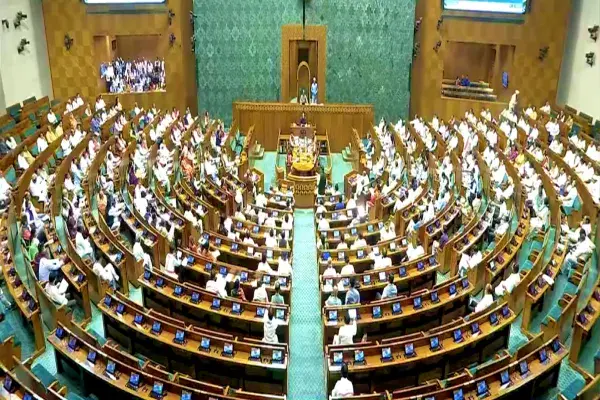
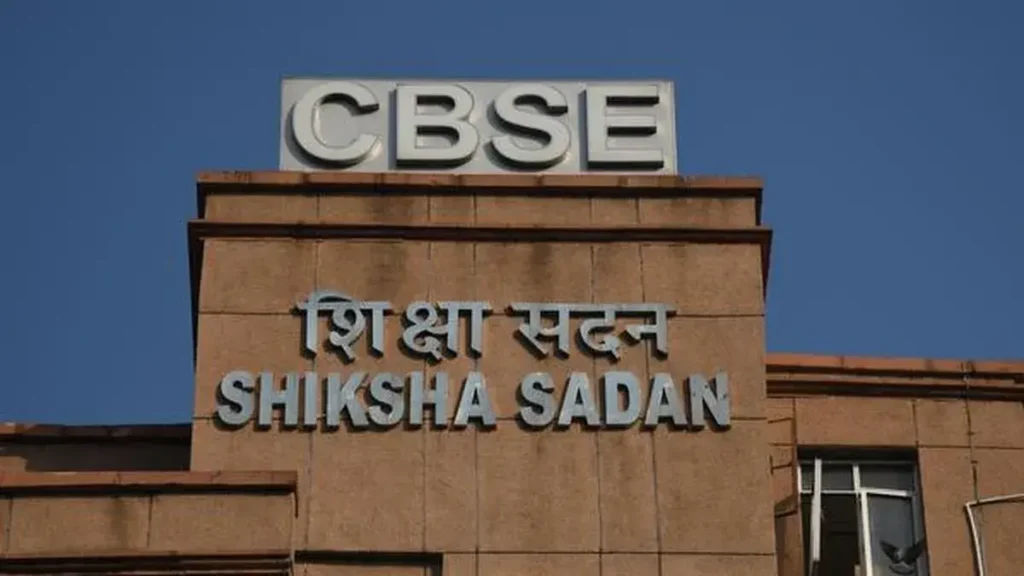
Parliament is set to take up a landmark reform bill aimed at overhauling India’s higher education regulatory framework. The Higher Education Commission of India (HECI) Bill, scheduled for introduction in the winter session beginning December 1, proposes replacing key regulatory bodies—the University Grants Commission (UGC), the All India Council for Technical Education (AICTE), and the National Council for Teacher Education (NCTE)—with one unified authority. According to the Lok Sabha bulletin, HECI will act as the central regulator for higher education across the country, except for medical and legal education. The new body will focus on regulation, accreditation, and setting professional standards. Funding responsibilities, however, will continue to remain with the administrative ministry and not under HECI’s purview. The concept has been in discussion for years, with a draft bill first released in 2018 for public feedback, proposing the repeal of the UGC Act. Efforts to revive the plan gained momentum after Dharmendra Pradhan became the Union Education Minister in 2021. The National Education Policy (NEP) 2020 strongly advocates for such a unified regulator, noting that India’s higher education system requires a complete structural overhaul. The policy stresses that regulation, accreditation, funding, and academic standard-setting should function independently yet cohesively under empowered bodies to strengthen the sector. Source: Indian Express

Parliament to Introduce Bill Creating a Single Higher Education Regulator to Replace UGC, AICTE, NCTE Read More »

From Wages to WFH: 12 Key Labour Rule Changes Every Employee Should Know Under New Codes

The Union government has rolled out a major transformation of India’s labour laws, bringing 29 separate regulations under four comprehensive labour codes effective November 21. These include the Code on Wages (2019), Industrial Relations Code (2020), Code on Social Security (2020), and the Occupational Safety, Health and Working Conditions Code (2020). This overhaul aims to modernise the labour landscape, improve ease of doing business, and ensure stronger protection for workers. Whether you work full-time, part-time, on contract, or through digital platforms, these changes will influence your pay structure, job conditions, benefits, and rights. Here are the major updates employees should be aware of: Universal Minimum Wages: Every worker—across organised and unorganised sectors—will now be entitled to statutory minimum wages. A national “floor wage” will be set by the central government. Revised Wage Structure & Lower Take-Home: A uniform definition of “wages” requires that basic pay must form at least 50% of total salary. While this may reduce take-home income, it boosts long-term PF and gratuity benefits due to higher contributions. Social Security for Gig & Platform Workers: For the first time, gig workers are covered under social security. Aggregators must allocate a share of their annual turnover to a dedicated fund offering life, disability, and health benefits. Quicker Gratuity for Fixed-Term Employees: Fixed-term staff can now claim gratuity after just one year of service instead of five, offering improved financial protection. Mandatory Appointment Letters: All employers—including those in the unorganised sector—must issue formal appointment letters, ensuring documentation of employment terms, wages, and entitlements. Double Pay for Overtime: Any work done beyond standard hours must be compensated at no less than twice the regular wage rate. Enhanced Leave Benefits: The number of days required to qualify for annual leave has been reduced from 240 to 180, enabling newer employees to enjoy paid leave sooner. Women Allowed in Night Shifts: Women can now legally work night shifts in all sectors, provided they consent and employers ensure safety and security. Gender-based wage discrimination is strictly prohibited. Work-From-Home Option: WFH provisions are now officially recognised for service-based industries through mutual agreement. Free Annual Health Checkups: Employees aged 40 and above must be given free yearly health check-ups by their employers. Timely Wage Payments: Wages must be paid within fixed timelines—for example, within seven days of the following month for monthly wage earners, and within two working days after employment ends. Travel-Related Accidents Covered: Commuting accidents between home and workplace are now deemed work-related, making employees eligible for compensation. Source: NDTV

From Wages to WFH: 12 Key Labour Rule Changes Every Employee Should Know Under New Codes Read More »

Thyrocare rolls out GLP-1 Health Check packages to support safe use of weight-loss and diabetes drugs

Thyrocare Technologies Ltd. has introduced a new set of diagnostic packages called the GLP-1 Health Check, designed to help individuals using GLP-1–based medications for weight management and type 2 diabetes track their overall health. The nationwide offering includes up to 81 tests, starting at ₹2,799, aimed at monitoring key metabolic, nutritional, liver, kidney and thyroid markers both before beginning GLP-1 therapy and during ongoing treatment. GLP-1 agonists—drugs that replicate the action of the hormone glucagon-like peptide-1—have rapidly grown in demand for obesity and diabetes management. With their rising use, doctors have stressed the need for continuous health monitoring to ensure treatment efficacy and early detection of adverse reactions. According to Thyrocare, the panels were developed with guidance from leading clinicians to help users establish baseline health data, identify possible nutrient deficiencies and track metabolic changes. The test menu includes lipid profile, fasting glucose, fasting insulin, HOMA-IR, liver and kidney function tests, and cardiac risk markers. Kidney assessments have been emphasized as GLP-1 medicines may cause dehydration or electrolyte disturbances. Since these therapies can suppress appetite and contribute to vitamin deficiencies, the packages also check vitamin D, vitamin B12 and hemoglobin levels. Tests for amylase and lipase help screen for pancreatitis, while thyroid markers (T3, T4, TSH) monitor potential therapy-related hormonal shifts. Thyrocare said that offering all these tests in one bundle simplifies comprehensive monitoring for people on GLP-1 medications. Rahul Guha, managing director and CEO of Thyrocare, said the growing adoption of GLP-1 drugs in India calls for reliable diagnostic support. “These therapies are powerful and effective when used responsibly, and consistent monitoring ensures better outcomes,” he noted. Endocrinologist Dr. Shehla Shaikh added that structured medical oversight is crucial for safe weight-management treatment. Comprehensive testing, she said, helps safeguard nutritional balance, organ function and long-term safety. The GLP-1 Health Check packages can be booked through Thyrocare, PharmEasy, and partner platforms, aligning with Thyrocare’s broader push toward preventive and precision healthcare for metabolic and lifestyle-related conditions. Source: Economic Times

Thyrocare rolls out GLP-1 Health Check packages to support safe use of weight-loss and diabetes drugs Read More »

Reliance Power forms new Board of Management to boost governance, sharpen oversight

Reliance Power Ltd., part of the Anil Ambani-led Reliance Group, has approved the creation of a Board of Management (BOM) to strengthen governance standards and enhance strategic oversight across the organisation. The new structure, cleared by the board on November 19, will include the company’s CEO, key managerial personnel, and senior business leaders. The company said the move reflects its push toward a more agile, future-ready operating model, aligned with global best practices in corporate governance and long-term value creation for stakeholders. During the meeting, the board also reviewed growth developments at its subsidiary Reliance NU Energies, which has emerged as a leading player in the solar-plus-BESS (Battery Energy Storage Systems) segment. The subsidiary has secured up to 4 GW of solar capacity and 6.5 GW of BESS capacity through competitive bids, positioning it as a major force in India’s clean energy transition. Reliance Power said the formation of the BOM, along with its expanding renewable energy footprint, underscores its strategy to build a strong foundation for sustainable and forward-looking growth. Source: The Hindu

Reliance Power forms new Board of Management to boost governance, sharpen oversight Read More »