ArdorComm Media Group

Friday, January 30, 2026 8:32 AM

Author name: admin

Disney Star India to launch Odia channels Star Kirano & Star Kirano HD

Disney Star India plans to launch two new Odia channels on June 1. The network has informed all television channel distributors (DPOs) that Star Kirano and Star Kirano HD would go online on June 1, 2022. Last week, the network announced the launch of Pravah Picture and Pravah Picture HD, two new marathi cinema channels set to debut on May 15, 2022. Pravah Picture, according to the network’s official statement, will bring the finest of Marathi film on one platform and will begin with a rich catalogue of 200+ titles. Every week, the channel will air a Marathi film. The network also stated in the intimation letter that the launch of the eleven channels will be postponed till further notice from Star India. Star Gold Thrills, Jalsha Josh, Star Movies Select, Star Sports 1 Tamil HD, Star Sports 1 Telugu HD, Disney Channel HD, Hungama HD, Star Gold 2 HD, Vijay Super HD, and Asianet Movies HD are among the eleven channels. The network postponed the debut of 15 new channels and the renaming of one until further notice last November. The broadcaster confirmed the debut of new channels in October 2021, while also declaring the new tariff in conformity with New Tariff Order (NTO) 2.0. Star India announced the launch of 15 new channels across genres and languages in December 2021 and January 2020. “This is to notify all distributors of television channels (DPOs) that the launch of the following fifteen (15) channels, as well as the name change of the following one channel, have been postponed until further notice by Star,” the broadcaster wrote in a public notice.

Disney Star India to launch Odia channels Star Kirano & Star Kirano HD Read More »

Edtech startup Skill-Lync builds EV to help students gain insight into auto industry

Skill-Lync, an engineering edtech startup, announced on Tuesday that it has built an in-house electric vehicle to help its students gain insights into the automotive industry’s future. The vehicle was created by a team of six in-house experts at Skill-Lync in collaboration with professionals from the country’s leading OEMs. The EV, which would be built over the course of nine months at a cost of approximately Rs 5 lakh, would provide students with practical knowledge of what goes into building an EV. The EV currently has a top speed of 45 kilometres per hour and a range of 40 kilometres. It has a five-person carrying capacity and can accelerate from zero to top speed in six seconds. “The automotive industry is undergoing significant change, which is being driven by sustainability and an increasing base of conscious consumers.” “Skill-Lync cofounder SuryaNarayanan PaneerSelvam said in a statement. “In addition to our coursework, we offer first-hand experience building an EV from the scratch, providing a holistic view of the automotive industry’s future.” The company stated that it intends to release a series of masterclass videos that will visually depict the EV building process, and that it aims to build more such EV prototypes.  “EVs are a major part of the global sustainable journey and there is a pronounced need for a new crop of automotive engineers that can design, develop, and test these vehicles that are built on newage, sophisticated systems,” Sarangarajan V Iyengar, cofounder, Skill-Lync, said.

Edtech startup Skill-Lync builds EV to help students gain insight into auto industry Read More »

DCGI claims India on course to become global drugs hub

Dr. VG Somani, Drug Controller General of India (DCGI), claimed that India is on track to become a “global hub for medicines,” claiming that there has been a fourfold increase in applications for investigational new drugs in the country. “We are getting the applications of the investigational new drugs. Earlier, there used to be hardly 5-10 applications. At present, there are 23 applications in the pipeline for the investigational new drug and this is a great achievement of our country,” Somani said, speaking at the Indian Drug Manufacturers’ Association (IDMA) Annual Conclave. He believes that “Made in India” drugs will make a difference and spread throughout the world in the coming years. The DCGI official also explained how drug controllers work while making vaccine and drug decisions. “We have been in regular contact with the WHO and all global regulators via the ICMR, ICH platform, and so on. There are various platforms for vaccine and drug approval, including trials. That is exactly what we did with remdesivir.  There is no single decision-making platform,” he added. He went on to say that India has been designated as a “world pharmacy,” and that “we want to become the well-managed pharmacy of the entire world so that our potential can be recognised.” Source: ANI

DCGI claims India on course to become global drugs hub Read More »

CBSE will bring back a single board exam next year

According to Ministry of Education sources, the Central Board of Secondary Education (CBSE) has decided to return to the pre-pandemic single-exam format beginning with the next academic year, which means that the Class X and XII board exams will not be divided into two parts. For the 2021-22 academic year, the CBSE has instituted a bifurcated format with two terms: the Term-I board exams were held in November-December last year, while the Term-II exams will begin on April 26. It has been learned that the Term II exams will be weighted more heavily. Following the cancellation of board exams for the 2020-21 academic year due to the second wave of the Covid-19 pandemic, the decision was made. Previous exam results, practical exams, and internal assessments were used to grade students. According to a senior official, the board decided to reinstate the single-exam pattern after hearing from schools. “The CBSE has never stated that the two-term exam format will be continued in the future.” It was a one-time formula. Now that schools are fully operational, the decision has been made to stick to the one-time exam format for the time being,” said the official. However, in terms of syllabus rationalisation, CBSE will stick to the policy it implemented over the last two years, which saw the syllabus reduced by 30%. “The NCERT will send us the rationalisation details, upon which an announcement will be made.” “The existing books can be used to teach the reduced syllabus in schools,” said the official. To “eliminate the high stakes aspect of board exams,” the National Education Policy (NEP) 2020 proposes allowing all students to take the board exams up to two times in an academic year — “one main examination and one for improvement.” “While Grades X and XII board exams will be continued, the current system of board and entrance examinations will be reformed to eliminate the need for coaching classes.” According to the NEP, board exams will be redesigned to encourage holistic development in order to reverse the harmful effects of the current assessment system.

CBSE will bring back a single board exam next year Read More »

According to the researchers, cell-derived therapy may aid in the repair of abnormal heart rhythms

Article on Health

According to a new study from Cedars-Smidt Sinai’s Heart Institute, vesicles secreted by human heart cells may repair damaged tissue and prevent lethal heart rhythm disorders. The study, published in the European Heart Journal, could pave the way for a new approach to treating ventricular arrhythmia, a leading cause of sudden cardiac death. Experts describe the research as “poised to turn this entire field on its head” in an accompanying editorial. Ventricular arrhythmias can develop after a heart attack damages tissue, resulting in chaotic electrical patterns in the lower chambers of the heart. The heart eventually becomes so fast that it cannot support the circulation, resulting in a lack of blood flow and, if left untreated, death. The current options for treating ventricular arrhythmias caused by heart attacks are far from ideal. These include medications with severe side effects, implanted devices that deliver an electric shock, and radiofrequency ablation, a procedure in which parts of the heart are purposefully destroyed to disrupt disruptive electrical signals. Unfortunately, all of these have high recurrence rates. “An ablation is a counterintuitive approach because you are destroying heart muscle in an already weakened heart,” said Eugenio Cingolani, MD, senior author of the study and director of the Cardiogenetics-Familial Arrhythmia Program at Cedars-Sinai. “We thought, ‘What if, instead of destroying damaged tissue, we tried to repair it?’” With this in mind, the team set out to test a new approach in laboratory pigs that had suffered a heart attack. They injected some of the laboratory pigs with exosomes, which are tiny, balloon-like vesicles produced by cardiosphere-derived cells (CDCs), which are progenitor cells derived from human heart tissue. Exosomes are tough particles that contain molecules as well as the molecular instructions to make various proteins, making them easier to handle and transfer than parent cells or CDCs. Eduardo Marban, MD, PhD, executive director of the Smidt Heart Institute at Cedars-Sinai and the Mark S. Siegel Family Foundation Distinguished Professor, was the first to develop and characterise CDCs. They’ve been used in a number of clinical trials for a wide range of diseases, most recently Duchenne muscular dystrophy. In one group of pigs, CDC-derived exosomes were injected into their hearts, while the other received a placebo. “The exosomes reduced the amount of scar tissue formed in the injured regions of the heart, normalising the rhythm without weakening the heart,” said co-author Dr. Marban. MRIs and tests to assess the electrical stability of the heart were performed on the animals. The laboratory pigs that had received the exosome therapy showed significantly improved heart rhythms and less scarring in their hearts four to six weeks after injection. Marine Cacheux, PhD, and Fadi G. Akar, PhD, both of Yale University, summarise the pros and cons of various experimental gene and cell-based approaches being studied for cardiac arrhythmias in an editorial published in the same issue of the European Heart Journal. According to Cacheux and Akar, Cedars-Sinai researchers “appear to have successfully combined the best features of cell and gene therapies to address a major unmet clinical need.” The authors note that Cedars-approach Sinai’s to repairing scarring in the heart is novel, and they describe the study as “a paradigm-shifting body of work.” Source: With inputs from ANI

According to the researchers, cell-derived therapy may aid in the repair of abnormal heart rhythms Read More »

UGC allows students to pursue two full-time academic programmes at the same time

On Tuesday, the University Grants Commission (UGC) announced that students will now be able to pursue two full-time academic programmes in physical mode. The commission has developed a set of guidelines in this regard, which are now available on the official website, ugc.ac.in. Previously, UGC regulations prohibited students from pursuing two full-time programmes, and they could only pursue one full-time degree in addition to online/short-term/diploma courses. The guidelines will apply to all programmes offered throughout the country. Students can select between a diploma programme and an undergraduate (UG) degree, two master’s programmes, or two bachelor’s programmes. If a student is eligible to pursue a postgraduate (PG) degree and also wishes to enrol in a bachelor’s degree in a different domain, he or she will be able to do so. The class times for both programmes must not overlap. “It was decided at the last commission meeting on March 31 to issue guidelines that will enable students to pursue two academic programmes simultaneously because the NEP 2020 emphasises the need to facilitate multiple pathways to learning involving both formal and non-formal education forms, in the sense that a combination of the physical model, as well as the online form, should be used to provide more freedom to the students to acquire multiple skills,” UGC chairman, Mamidala Jagadesh Kumar said. Students will be able to pursue two degree programmes across domains such as sciences, social sciences, arts, humanities, and a wide range of disciplines under the new guidelines. Adopting these guidelines is optional for universities, and they can only be implemented with the approval of the universities’ governing bodies. The eligibility criteria for each programme will remain unchanged, and admissions will be made in accordance with current UGC and university norms. “A student can pursue two full-time academic programmes in the physical mode provided that in such cases, class timings for one programme do not overlap with the class timings of the other programme. Universities will have the flexibility to decide if they want to offer such a scheme of programmes or not. The guidelines will only be applicable to lecture-based courses, including undergraduate, postgraduate, and diploma programmes. MPhil and PhD programmes will not fall under the same scheme,” Kumar added. The change allows a student to enrol in not only two physical programmes at the same time, but also two academic programmes, one in full-time physical mode and the other in open and distance learning mode. They can also enrol in a physical programme at a university in addition to an online programme. Students can also pursue two online degrees simultaneously as a third option. Universities will have to develop attendance criteria for these courses because all academic programmes have minimum attendance requirements for students to be able to take exams. “UGC does not mandate any attendance requirements, and these are university policies,” Kumar added. “With the rapid increase in demand for high-quality higher education and the limitation of only enrolling about 3% of students on physical campuses, many developments in the fields of open and distance learning, as well as online education, have occurred.” Many universities now offer both offline and online programmes,” Kumar said, adding that the UGC will release revised regulations for online education in a few weeks, after which many top-tier institutes in India will begin offering online degrees.

UGC allows students to pursue two full-time academic programmes at the same time Read More »

Amazon’s free streaming service IMDb TV will be renamed Freevee

Amazon announced on Wednesday that IMDb TV, its free streaming service, will be renamed Amazon Freevee. According to a company news release, the new name will go into effect on April 27. The retailer also stated that the streaming service will increase its original programming by 70% in 2022, with spinoffs of shows like “Bosh: Legacy” and other series. It will also include more original films. According to Amazon.com Inc., the ad-supported service has tripled its monthly active users in the last two years and is set to launch in Germany later this year. “We’re looking forward to building on this momentum with an increasing slate of inventive and broadly appealing Originals, and are excited to establish Freevee as the premier AVOD (advertising-based video on demand) service with content audiences crave,” Jennifer Salke, head of Amazon Studios, said in the news release. The announcement on Wednesday comes as the retail giant embarks on a strategy to expand its streaming services. Amazon closed a $8.5 billion deal to acquire Hollywood studio MGM last month, making it the company’s second-largest acquisition after its $13.7 billion deal with Whole Foods in 2017. Source: AP

Amazon’s free streaming service IMDb TV will be renamed Freevee Read More »

Need to embrace principles of corporate governance: Shah

On Tuesday, Union Home and Cooperation Minister Amit Shah stated that “we must all accept professionalism and embrace all principles of corporate governance in a cooperative spirit.” In his address to the national convention on cooperative policy here, he stated that Prime Minister Narendra Modi has set the cooperative sector the goal of ‘Sahakar se Samridhi’ by creating a separate Ministry for Cooperation. “If we are able to do this, then in the coming 20-25 years, we can take the cooperative sector to new heights and create a situation in which the cooperative sector should have a large share in the country’s development,” he added. “We have to accept professionalism and embrace all principles of corporate governance with a cooperative spirit and while creating an economic model for rural development and providing employment to the poor people, so that they can live a dignified life, cooperatives to play a huge role,” the Minister said. He also stated that for a large portion of the country that is economically backward, cooperative is the only model that can make 80 crore people financially prosperous in the country. Describing that only cooperatives can achieve equitable profit distribution, where the entire profit goes to the stakeholders and management costs are kept to a minimum, cooperatives are the only way to achieve this. Shah also stated that there are many models in our country, such as IFFCO and Amul, that have maintained the cooperative spirit while following in the footsteps of corporate governance. “There are about 8,55,000 cooperatives running in the country today, 1,77,000 are credit societies, another 700,000 are cooperative societies, 17 are national-level cooperative unions, 33 are state cooperative banks, there are more than 63,000 active PACS and more than 12 crore members, and today around 91 per cent of the villages have presence of cooperatives,” he said. Describing the need for a new cooperative policy, the Minister also stated that the impediments that exist must be removed by making new provisions, new policies, and harmonisation, and this can only happen if a cooperative policy is developed to meet all of today’s needs in a holistic manner. He also stated that a completely updated cooperative policy will be prepared within the next eight to nine months. Computerisation of the entire cooperative sector and modernisation and professionalism will also have to be brought in the working of big cooperative societies, he further said, adding that after the brainstorming in this two-day discussion will make a new policy. Source: IANS

Need to embrace principles of corporate governance: Shah Read More »

Chennai-based IT firm gifts cars to its 100 employees for loyalty, hard work

Idea2IT, a Silicon Valley-based IT firm with a delivery centre in Chennai, has given 100 Maruti Suzuki cars to its employees as a token of appreciation for their hard work and loyalty. The models include the S-Cross and the Baleno, for which the company has spent approximately Rs 15 crore. Ideas2IT maintains that this is not an attempt to retain people solely because the company has a 2.5% attrition rate, but rather a way to express gratitude to its employees and demonstrate that it values their hard work and contribution to the company’s success. The company, which has a delivery centre in Chennai, decided to share its success and profits with all employees who have worked for the company for at least ten years, regardless of role. Murali Vivekanandan, founder and chairman of Ideas2IT, believes that the company’s loyal and deserving employees have earned these cars. While this is the first time the employees have received cars, the Company is known for sharing its wealth and success with its employees. Employees have previously received gold coins and iPhones as gifts. The company began as a consulting firm with a small team of six engineers and has since expanded to a 500-person workforce. It has offices in several countries, including India, Mexico, and the United States. Its clients include Microsoft, Facebook, Motorola, Bloomberg, Oracle, and Roche, and it has experienced rapid growth in the last four years.

Chennai-based IT firm gifts cars to its 100 employees for loyalty, hard work Read More »

Country setting new benchmarks in field of health: PM Modi

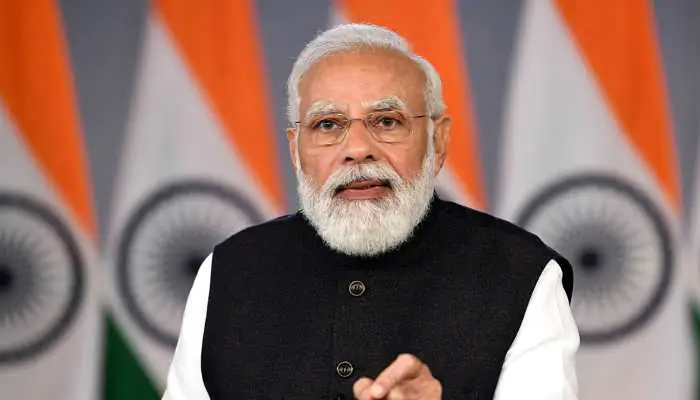
Prime Minister Narendra Modi praised people’s determination in the fight against Covid on Tuesday, saying that whether it’s the world’s largest free vaccination campaign or medical infrastructure development, India is setting new health benchmarks. Modi posted a graphic on Twitter highlighting the accomplishments of India’s Covid vaccination campaign, which has resulted in over 185 crore cumulative doses administered in the country. “The resolve shown by 130 crore people in the country in the fight against coronavirus signifies the strength of New India,” Modi said in a tweet in Hindi. “Whether it is the world’s largest free vaccination campaign with indigenous vaccines or the development of medical infrastructure, the country is setting new benchmarks in the field of health,” PM said. Source: PTI

Country setting new benchmarks in field of health: PM Modi Read More »