ArdorComm Media Group

Thursday, February 19, 2026 8:00 AM

Author name: admin

IIT Kanpur Hosts Workshop on Watershed Development Under PMKSY 2.0, Showcasing AI-Driven Sustainable Practices

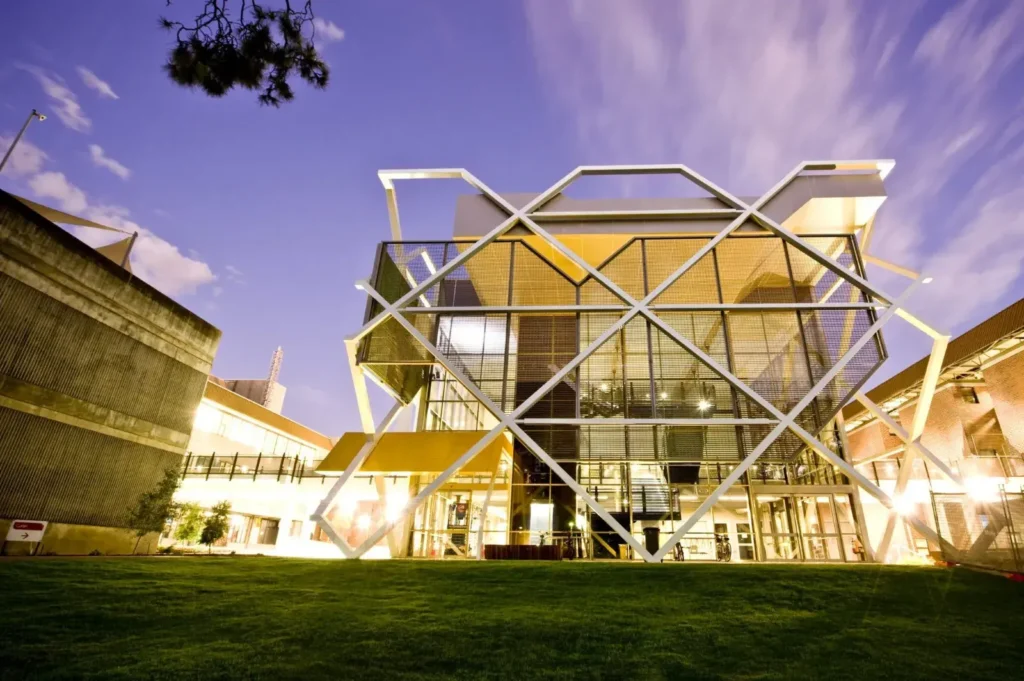
Prof. Sachchida Nand Tripathi, Dean of the Kotak School of Sustainability, emphasized the significance of the workshop on Watershed Development under the Pradhan Mantri Krishi Sinchayee Yojana (PMKSY) 2.0, held on April 4, 2025, at IIT Kanpur. The event marked a major step toward holistic and sustainable development. The workshop focused on Watershed Development & Climate Resilience, aiming to refine strategies for water conservation and sustainable agriculture. Experts explored the role of AI, IoT, and modern technologies in optimizing water resource management. The event showcased innovative approaches to mitigating climate change and enhancing agricultural productivity, drawing insights from 150 participants. Dr. Heera Lal Patel, IAS, Chief Executive Officer, Government of Uttar Pradesh, addressed the gathering as the Chief Guest. He stressed the importance of respecting “Mother Earth,” which he described as encompassing “jal, jungle, zameen” (water, forest, and land), emphasizing the need to honor and protect these resources for collective progress. Prof. Mahendra Verma, IIT Kanpur: “Climate change has a direct impact on agriculture. Scientific strategies in water conservation can mitigate these effects and boost productivity.” Dr. Rupendra Oberoi, Delhi University: “Sustainable practices must evolve with technological advancements. AI and IoT are game changers in efficient water resource management.” Prof. Devlina Chatterjee, IIT Kanpur, Department of Management Science, highlighted that the training for PMKSY 2.0 is set to commence soon, integrating AI into ancient Asian water conservation practices. She emphasized that the modern era is driven by AI, with smart water management systems leveraging AI and IoT to revolutionize agricultural processes. Disclaimer: ‘ArdorComm Media’ Journalist was not involved in creation of this content.

IIT Kanpur Hosts Workshop on Watershed Development Under PMKSY 2.0, Showcasing AI-Driven Sustainable Practices Read More »

Newsmax Soars 180% on Day Two After Blockbuster NYSE Debut

Conservative cable news network Newsmax (NMAX.N) continued its stunning rally on Tuesday, surging 180% just a day after a phenomenal debut on the New York Stock Exchange (NYSE). Riding a wave of retail investor enthusiasm, Newsmax’s stock skyrocketed to $234 per share, up from $84 on Monday and vastly above its $10 IPO price — catapulting its market valuation to $28.3 billion. This surge mimics the rise of “meme stocks”, with Newsmax trending at the top of social media forums like Stocktwits.com, where retail traders have compared it to Trump-linked names such as Trump Media & Technology Group (DJT.O) and Rumble (RUM.O). “This has all the makings of a classic meme stock,” said Dann Ryan of Sincerus Advisory. Trading volume echoed the frenzy, with 10.9 million shares changing hands, far exceeding the 7.5 million shares offered in its “mini IPO” last week, which raised $75 million. The channel’s dramatic market debut comes amid renewed political volatility and Donald Trump’s return to the White House, making it, in the words of Peter Andersen of Andersen Capital, “a perfect time for Newsmax to launch.” Key Highlights: Retail frenzy drives Newsmax stock up 180% on Day 2, following a 700%+ debut gain. Trading volume surpassed JPMorgan, with $147 million traded early Tuesday alone. Founder Christopher Ruddy retains control, with his stake now valued at $9.1 billion. Financials remain shaky: Newsmax lost $72.2 million on $171 million in revenue in 2024. Faces defamation lawsuits from Smartmatic ($40M settlement) and Dominion ($1.6B claim, trial in April). Despite losses, investor optimism aligns with pro-Trump media momentum and 2024 election buzz. The stock’s rally is drawing mixed reactions on platforms like Reddit, with some touting its anti-mainstream stance, while others raise concerns over its unprofitability and legal liabilities. As Newsmax continues to ride the meme wave, its long-term viability may depend on more than investor sentiment — including how it navigates legal challenges and turns its growing audience into sustainable revenue. Source: Reuters

Newsmax Soars 180% on Day Two After Blockbuster NYSE Debut Read More »

India’s M&A Deal Activity Hits 3-Year High at $27.5 Billion in Q1 2025

Domestic transactions and private equity drive surge despite IPO slowdown India’s mergers and acquisitions (M&A) landscape saw a robust revival in Q1 2025, with deal activity soaring to a three-year high of $27.5 billion, a 29.6% year-over-year jump, according to LSEG Deals Intelligence. This marks the most active quarter since Q1 2023 in both deal value and volume, which rose by 13.6%. The spike was largely driven by domestic M&A, which saw a massive 145.4% increase, totaling $21.6 billion—the highest first-quarter total since 2018. Meanwhile, private equity-backed acquisitions surged by 227.6% to reach $5.3 billion, highlighting the growing confidence in India’s private sector. However, the positive momentum in M&A contrasts sharply with India’s equity capital markets (ECM), which stumbled after a record-setting 2024. Equity proceeds fell 59% year-over-year to $6.5 billion. IPOs contributed $2.3 billion—a 7% dip—while follow-on offerings slumped by 69%, raising just $4.2 billion. Block trades saw the sharpest fall, down 85%, amid increased market volatility and geopolitical uncertainty. Despite the slowdown, India maintained its presence on the global IPO stage, contributing 8.8% of total global IPO proceeds, behind only the U.S. (33.5%) and Japan (12.4%). Inbound M&A faced a downturn, dropping 67.8% to $3.7 billion—a nine-year low—while outbound M&A more than tripled to $2.1 billion, showcasing India’s growing appetite for international expansion. Top sectors for M&A included: Energy & Power: $7.3 billion, a 15-fold increase (26.7% market share) Financials: $5.2 billion, up 36% (18.8% market share) Media & Entertainment: $4.5 billion, up 15.5% (16.4% market share) In investment banking, total fees slipped 8% to $253.3 million. However, M&A advisory fees bucked the trend, soaring 142% to $101.5 million, with Jefferies leading the charge, earning $48.9 million (19.3% share). Bond market activity also saw an uptick, with offerings totaling $28.8 billion, up 13.8%, the strongest first quarter since 2019. HDFC Bank topped the bond underwriter list with $3.4 billion in proceeds. India’s Q1 2025 deal landscape reflects a dynamic shift—M&A and bond markets are heating up, while equity markets face temporary headwinds. With domestic confidence surging and private equity interest at record highs, India’s financial engines are gearing for a new cycle of growth and consolidation. Source: Hindustan

India’s M&A Deal Activity Hits 3-Year High at $27.5 Billion in Q1 2025 Read More »

Nagaland University Researchers create New Framework for personalized learning styles for Students

LUMAMI, NAGALAND, 3rd April 2025: Nagaland University Researchers have proposed a ‘Flexible Learning System’ (FLS) designed to create personalized learning styles and content based on each student’s context, facilitating a one-to-one learning experience. They have designed a framework to integrate ‘Multi-Access Edge Computing’ (MEC) to support real-time adaptive learning in Intelligent Tutoring Systems (ITS), which are computer-based educational systems that use AI to provide personalized, adaptive instruction. This System, mooted for higher education institutions, will help the learner to pass the course with easy, moderate, or advanced content. It will also be helpful to guide the learners where they are not performing up to the mark. Multi-access Edge Computing (MEC) is an extension of cloud computing technology to provide an application deployment platform close to the end users. This Flexible Learning System is designed to implement the advantages of such a new policy and to integrate the flexibility for learning subjects where it provides the content to achieve one-to-one learning. In the Field Trials conducted by the Researchers at School of Engineering & Technology, Nagaland University, the FLS has demonstrated a remarkable reduction in task processing time by 94 per cent, enabling real-time responses that enhance flexible learning experiences. This research is more about showing the process of developing the FLS through complex algorithms. However, the researchers propose that this framework should be tested after it is successfully developed and the preliminary output can be relied on before testing it in an actual class. The Research was led by Er. Ramesh Singh, Er. Chenlep Yakha Konyak, and Er. Akangjungshi Longkumer, Faculty, Department of Computer Science and Engineering, Nagaland University. The findings were published in the reputed, peer-reviewed International Journal of Information Technology (https://doi.org/10.1007/s41870-025-02460-w) Welcoming this new centre for the university, Prof. Jagadish K. Patnaik, Vice Chancellor, Nagaland University, said, “This proposed system will help the learner to pass the course with easy, moderate or advanced content. It will also be helpful to guide the learners where they are not performing up to the mark.” Prof. Jagadish K. Patnaik added, “In the future, the model will be Internet of Things (IoT) enabled to generate deeper insights into the learner’s learning needs. Immersive learning will be enabled by integrating augmented reality and virtual reality. The system will be enhanced for ultra-low power consumption. Accessible in a wide range of services to address education services for all.” The Key Advantages of developing such FLS by Nagaland University Researchers include Providing real time feedback from learner to instructor. Providing flexibility to the learner, where they are assigned contents according to their level of knowledge. Facilitating one to one learning to allow learners to learn at their own pace. Elaborating on this Research, Er. Chenlep Yakha Konyak, Assistant Professor, Department of Computer Science and Engineering, Nagaland University, said, “The research team identified a significant gap in Intelligent Tutoring Systems (ITS), particularly the lack of real-time adaptive learning features. This deficiency limits the ability of these systems to provide personalized learning experiences tailored to individual learners’ needs.” Er. Ramesh Singh, Assistant Professor, Department of Computer Science and Engineering, Nagaland University, added, “Unlike existing ITS tools, our research emphasizes the use of Multi-access Edge Computing to optimize network bandwidth and processing tasks efficiently. The FLS not only categorizes learners and content automatically but also allows for enhanced interaction between learners and instructors.” Further, Er. Akangjungshi Longkumer, Assistant Professor, Department of Computer Science and Engineering, Nagaland University, said, “The implementation of this solution has the potential to revolutionize educational practices by providing tailored learning experiences that can significantly improve student engagement and outcomes. By addressing the needs of larger institutions, the research could lead to widespread adoption of ITS, ultimately benefiting learners across various educational settings. Currently, the research is in the development phase, with ongoing efforts to refine the FLS and expand its capabilities. The way forward includes further testing and potential commercialization of the system to make it accessible to educational institutions nationwide” TECHNICAL ASPECTS In this research, a novel Flexible Learning System in the MEC environment is proposed where the personal context parameters of learners are used to generate learning styles and personalized content to achieve one-to-one learning. The MEC environment enables the FLS to perform task processing for content generation with fast response time and efficient network bandwidth usage. The proposed FLS has achieved the goals of generating learning styles and personalized content and improved task processing time by 94% when executed at the MEC layer. Continuous learner improvement via a feedback loop for effective learning will be in-cooperated. Computing resources at the local network will be leveraged by utilizing edge computing in regions with limited infrastructure. The FLS will address the challenges of the learning experience with more personalized, efficient, and accessible in real-time. Disclaimer: ‘ArdorComm Media’ Journalist was not involved in creation of this content.

Nagaland University Researchers create New Framework for personalized learning styles for Students Read More »

Health Ministry Releases National Guidelines on Medical Oxygen Management

The Union Health Ministry has released the National Guidelines on Medical Oxygen Management, underscoring the critical importance of maintaining and utilizing medical oxygen infrastructure in healthcare facilities. The announcement was made at a workshop held at AIIMS Delhi, where Health Secretary Punya Salila Srivastava emphasized the need for efficient oxygen management to enhance clinical outcomes and emergency preparedness. The event also marked the launch of the National Capacity Building Programme on Oxygen Management, which aims to train 200 master trainers. These trainers will help hospital administrators and medical officers across India improve oxygen handling, reduce wastage, and optimize usage. Key Highlights of the Initiative: The National Guidelines provide a structured framework for the procurement, storage, and administration of medical oxygen. AIIMS Delhi will spearhead the capacity-building program, ensuring training at all levels of healthcare. The initiative, led by the Disaster Management Cell of the Ministry of Health and Family Welfare, is focused on patient safety, infrastructure preparedness, and best practices in oxygen management. Learnings from India’s COVID-19 response have been incorporated into the guidelines to strengthen future pandemic readiness. Addressing the gathering, Dr. M. Srinivas, Director of AIIMS, stressed the importance of awareness and training to ensure optimal oxygen management. The standardized guidelines are expected to enhance India’s healthcare resilience, ensuring hospitals nationwide are better equipped to handle medical oxygen needs during emergencies. Source: Business Standard

Health Ministry Releases National Guidelines on Medical Oxygen Management Read More »

Trump Administration Initiates Massive Layoffs at HHS, Ends Collective Bargaining

In a sweeping overhaul of the U.S. Health and Human Services (HHS) Department, up to 10,000 employees are set to be laid off following President Donald Trump’s move to strip workers of collective bargaining rights. The restructuring, announced last week, aims to consolidate federal health agencies and reduce the workforce by nearly a quarter. On Tuesday, employees across HHS received dismissal notices, with long lines forming outside the department’s headquarters as workers awaited confirmation of their employment status. Some gathered in coffee shops after being turned away, learning they had lost their jobs after decades of service. At the National Institutes of Health (NIH), the cuts coincided with the first day of its new director, Dr. Jay Bhattacharya. Four directors of NIH’s 27 institutes were placed on administrative leave, while entire communications teams were let go. Some senior staffers were offered possible transfers to the Indian Health Service, with limited time to respond. At the Food and Drug Administration (FDA), dozens of employees responsible for regulating drugs and tobacco products were dismissed, including the entire team working on electronic cigarette regulations. The FDA’s tobacco chief was also removed from his position. The Centers for Disease Control and Prevention (CDC), which monitors disease outbreaks and public health threats, is set to lose 2,400 employees. Democratic Senator Patty Murray warned that the cuts would weaken the government’s ability to respond to crises, saying, “They may as well be renaming it the Department of Disease.” The layoffs come alongside a broader rollback of federal spending, with HHS pulling back over $11 billion in COVID-19-related funding, leading to additional job losses at state and local health departments. HHS Secretary Robert F. Kennedy Jr. defended the restructuring, calling the agency an inefficient “sprawling bureaucracy” with a $1.7 trillion budget that has “failed to improve the health of Americans.” Meanwhile, Trump’s executive order ending collective bargaining for thousands of federal workers has drawn backlash from Democratic lawmakers, who argue it weakens labor protections and limits government accountability. Representatives Gerald Connolly and Bobby Scott criticized the move, stating that it hands more control to Trump adviser Elon Musk to dismantle public service institutions. Breakdown of Job Cuts: 3,500 positions at the FDA 2,400 positions at the CDC 1,200 positions at the NIH 300 positions at the Centers for Medicare and Medicaid Services The sweeping changes mark one of the most significant federal workforce reductions in recent history, sparking concerns over the future of public health services in the U.S. Source: Hindustan

Trump Administration Initiates Massive Layoffs at HHS, Ends Collective Bargaining Read More »

India and Nepal Sign MoUs for 10 Development Projects in Education, Health, and Culture

India and Nepal have signed Memorandums of Understanding (MoUs) for 10 High Impact Community Development Projects (HICDPs) in the fields of education, health, and culture. The agreements were formalized between the Embassy of India in Kathmandu, Nepal’s Ministry of Federal Affairs and General Administration, and various project implementing agencies. These projects, supported by India’s grant assistance of NPR 625 million, include the construction of schools, health posts, and cultural institutions across multiple provinces in Nepal. Among the initiatives are: Education: New buildings for Sanba Secondary School (Taplejung), Ninyukharka Secondary School (Gulmi), Naya Gaun Secondary School (Rupandehi), and Siddhanath Secondary School (Kailali). Healthcare: Health post buildings in Sindhupalchowk and a Nepal-Bharat Maitri Hospital in Humla. Culture: The Ngagyur Nyngma Palyul Dhongag Chholing Monastery in Solukhumbu and a Nepal-Bharat Maitri E-Library in Chitwan. The projects will be implemented through Nepal’s local government bodies, including metropolitan and rural municipalities. The Indian Embassy in Kathmandu emphasized that these developments aim to enhance infrastructure and services at the grassroots level, benefiting Nepalese communities. Since 2003, India has undertaken 573 HICDPs in Nepal, with 495 already completed, spanning education, healthcare, infrastructure, irrigation, and electrification. These collaborations highlight the deep-rooted partnership between India and Nepal, reinforcing their commitment to sustainable development and mutual progress. Source: Hindustan

India and Nepal Sign MoUs for 10 Development Projects in Education, Health, and Culture Read More »

AIIMS Chief Discusses Good Governance at PGIMER’s Prof IC Pathak Oration

The Post Graduate Institute of Medical Education & Research (PGIMER) hosted the fifth Prof IC Pathak Oration, honoring the late Prof Iqbal Chand Pathak, former Director and founding Chairman of the Department of Paediatric Surgery. Prof M. Srinivas, Director of AIIMS New Delhi and a distinguished paediatric surgeon, delivered the oration on “Good Governance & Transparency for Transformation of an Institute”. He emphasized the importance of governance principles in healthcare and the need for transparency in institutional administration. PGI Director Prof Vivek Lal reflected on Prof Pathak’s legacy, highlighting his contributions to paediatric surgery and the institute’s development. Prof JK Mahajan, Head of the Department of Paediatric Surgery, introduced Prof Srinivas, detailing his achievements. During his address, Prof Srinivas outlined methods for ensuring transparent administration, particularly in patient care. He discussed challenges in procurement and recruitment in the government sector and stressed the significance of corporate social responsibility (CSR) initiatives from major industries and public sector undertakings in strengthening healthcare services. The event witnessed participation from over 225 attendees, including more than 100 paediatric surgeons who joined virtually through PGIMER’s telemedicine services. Dean (Academics) Prof RK Ratho extended a vote of thanks, underscoring the importance of collaboration between AIIMS and PGIMER in advancing medical education and governance. Source: tribuneindia

AIIMS Chief Discusses Good Governance at PGIMER’s Prof IC Pathak Oration Read More »

IIM Lucknow Celebrates 39th Convocation with 811 Graduating Students

Lucknow, 31st March 2025 – Indian Institute of Management Lucknow (IIM Lucknow) hosted its 39th convocation ceremony today, marking a significant milestone for its graduating students. During the ceremony, 811 students were awarded their degrees by Mr. N. Chandrasekaran, Chairperson, Board of Governors, IIM Lucknow, and Prof. Archana Shukla, Director, IIM Lucknow. Dr. Devi Prasad Shetty, Founder & Chairperson, Narayana Health, graced the occasion as the Chief Guest and delivered Convocation address. In his inspirational address, Hon’ble Chief Guest Dr. Devi Prasad Shetty shared insights on the need for innovation and efficiency in traditional industries. He said, “Many sectors still operate as they did decades ago, and adopting automation, digital solutions, and restructuring can drive progress by improving efficiency and accessibility. While entrepreneurship fosters growth, rigid systems struggle to scale. History shows that young professionals, recognising inefficiencies, have taken services directly to communities, enhancing accessibility and impact. To excel in any field, early intervention is crucial, routine evaluations can prevent major issues, and essential services must seamlessly integrate into everyday life. Innovation, efficiency, and technology are key to building scalable, sustainable solutions. To create meaningful change, we must challenge outdated models and think differently.” Details of Graduating Cohort Program Number of Graduating Students 39th batch of the Post Graduate Programme in Management (MBA) 501 20th batch of the Post Graduate Programme in Agri-Business Management (MBA-ABM) 67 Doctoral Programme in Management (Ph.D.) 21 Executive Fellow Programme in Management (Ph.D.) 05 9th Batch of the Post Graduate Programme in Sustainable Management (MBA-SM) 44 17th batch of the International Programme in Management for Executives 110 19th batch of the Post-Graduate Programme in Management for Working Executives 63 Details of Award Winners Post Graduate Programme in Management Chairman’s Gold Medal Yogya Mittal Director’s Medal Manasi Parakh PGP Chairman’s Medal Potabattula Sridivya Hari Shankar Singhania Medal for Best All Rounder Arpita Rathi Post Graduate Programme in Sustainable Management (PGPSM) Chairman’s Gold Medal Kumar Ankur International Programme in Management for Executives (IPMX) Chairman’s Gold Medal Nitin Kumar Jain Director’s Medal Hasthavaram Sesha Reddy Post-Graduate Programme in Management for Working Executives (PGPWE) Chairman’s Gold Medal Mandeep Singh Singroha Speaking during the event, Mr. N. Chandrasekaran, Chairperson, Board of Governors, IIM Lucknow, said, “You are stepping into a world of immense opportunities, where rapid advancements in AI, blockchain, and digital technologies are reshaping industries. India stands at a unique inflection point, with a young, ambitious workforce and growing demand across infrastructure, logistics, and innovation. Whether you pursue high-tech sectors, traditional industries, or entrepreneurship, your education at IIM Lucknow will be a strong foundation for success. The institute’s significant leap in global rankings and the establishment of the Center for Blockchain Technology reflect its commitment to excellence and innovation. As you move forward, embrace change, push boundaries, and lead with integrity, The world needs leaders who not only excel but also inspire transformation, and I have no doubt you will rise to this challenge.” Presenting the Director’s report, Prof. Archana Shukla, said, “Today is a moment of immense pride as we celebrate the achievements of our graduating class. Their dedication and perseverance have brought them to this milestone. This convocation is not just the culmination of years of hard work but the beginning of a journey that will shape the future of business, leadership, and society. As our students step into the world, we are confident they will make meaningful contributions and lead with integrity and compassion. No matter where life takes them, IIM Lucknow will always be their home.” Prof. Shukla further said, “This year, our faculty and students have made remarkable strides, publishing impactful research, earning top industry accolades, and excelling in global competitions. Our programs continue to rank among the best, and our alumni are making significant contributions across industries. As we move forward, we remain committed to nurturing future leaders who are not only academically proficient but also socially responsible and driven to create lasting impact. The world needs leaders who are not just brilliant thinkers but also ethical changemakers, and I have no doubt our graduates will rise to that challenge.” The 39th convocation served as a testament to IIM Lucknow’s unwavering commitment to academic excellence, successful student placements, and impactful societal contributions. The institute continues its legacy as a premier institution shaping future business leaders and driving advancements in management education. YouTube Live Steam Link: https://www.youtube.com/watch?v=vKoV8ftQy7Q Disclaimer: ‘ArdorComm Media’ Journalist was not involved in creation of this content.

IIM Lucknow Celebrates 39th Convocation with 811 Graduating Students Read More »

Gennova Biopharma Partners with CEPI to Develop mRNA Nipah Vaccine

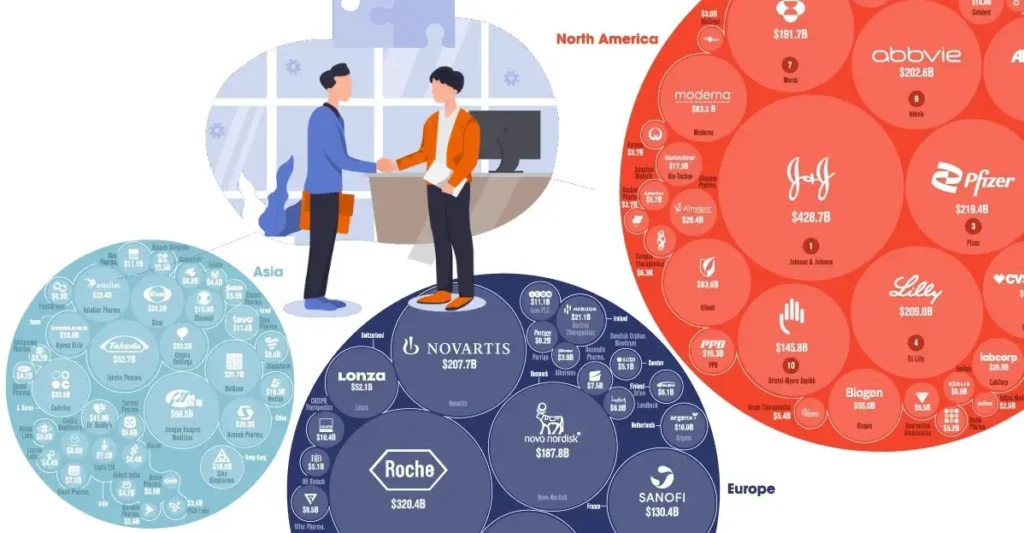
Gennova Biopharmaceuticals, a subsidiary of Emcure Pharmaceuticals, has announced a partnership with the Coalition for Epidemic Preparedness Innovations (CEPI) to develop a self-amplifying mRNA (saRNA) vaccine for the Nipah virus. The collaboration has secured up to $13.38 million in funding from CEPI to accelerate research and development. Innovative Approach to Vaccine Development As part of this initiative, Gennova will work with the Houston Methodist Research Institute (HMRI), a CEPI partner based in the United States, to integrate artificial intelligence (AI) into vaccine design. AI-driven analysis will be used to identify optimal vaccine targets, enhancing immune response efficiency. Clinical trials are set to begin in India, where Nipah outbreaks have previously occurred. The Nipah Virus Threat Nipah virus, a highly lethal pathogen from the Paramyxovirus family, has caused multiple outbreaks in South and Southeast Asia, with a fatality rate of up to 75%. Though outbreaks have been geographically limited, the virus’s natural reservoir—fruit bats—inhabits regions home to over two billion people, making it a serious global health concern. CEPI’s Commitment to Global Health Kent Kester, Executive Director of Vaccine R&D at CEPI, emphasized the urgency of the project, stating: “With no approved vaccines or specific treatments for Nipah, CEPI is leading the global effort to develop countermeasures. Gennova’s saRNA technology could not only help fight Nipah but also enhance pandemic preparedness, enabling rapid responses within 100 days of identifying a new viral threat.” The Advantage of saRNA Vaccines Unlike traditional mRNA vaccines, which introduce pre-made antigenic proteins, saRNA vaccines provide genetic instructions that enable the body’s own cells to produce these proteins. This approach enhances the immune response while requiring lower doses, making it a promising platform for future vaccine development. A Long-Term Collaboration Gennova’s partnership with CEPI is not new. In August 2023, CEPI granted the company $3.6 million to optimize its saRNA technology for developing vaccines against unknown pathogenic threats, often referred to as Disease X. Sanjay Singh, CEO of Gennova Biopharmaceuticals, commented on the collaboration: “By harnessing our saRNA platform, we aim to develop a next-generation Nipah vaccine. This partnership sets a new benchmark for rapid vaccine development while ensuring equitable access and strengthening global health security.” Ensuring Equitable Access CEPI has invested over $100 million in Nipah vaccine research. Through this collaboration, Gennova has pledged to uphold CEPI’s Equitable Access Policy, ensuring that the vaccine, if successfully developed, will be made available first to at-risk populations at an affordable price. The agreement also includes provisions for technology transfer, which could support future vaccine development efforts against emerging infectious diseases.

Gennova Biopharma Partners with CEPI to Develop mRNA Nipah Vaccine Read More »