ArdorComm Media Group

Friday, February 20, 2026 1:03 AM

Author name: admin

China Calls for Post-War Governance in Gaza, Strengthens Diplomatic Ties with Egypt and Saudi Arabia

As the first phase of the ceasefire in Gaza nears its end, China has called for the swift development of a governance and reconstruction plan for the war-torn region. Beijing has reaffirmed its commitment to Palestinian self-rule and a two-state solution. The call was made during a phone conversation between Chinese Foreign Minister Wang Yi and his Egyptian counterpart, Badr Abdelatty, according to a report by the South China Morning Post. The discussion marks one of Beijing’s first direct engagements on Gaza’s post-war governance since Israel and Hamas agreed to a phased ceasefire last month. The truce consists of three stages, with the second aiming for a lasting ceasefire and the third focused on rebuilding efforts. China Backs Two-State Solution for Palestine China emphasized that any post-war governance framework for Gaza must align with Palestinian self-determination, recognizing Gaza as an integral part of Palestinian territory. Beijing continues to advocate for the two-state solution based on the 1967 borders, which would require dismantling Israeli settlements in the West Bank and ensuring Palestinian sovereignty over both the West Bank and Gaza. Egypt Rejects Trump’s Gaza Displacement Plan During the discussion, Wang expressed China’s support for Egypt’s reconstruction plan, which stresses the importance of Palestinians remaining in their homeland. Egypt has consistently opposed any proposals that could lead to mass displacement. Cairo reaffirmed this stance during a recent meeting between Abdelatty and US Secretary of State Marco Rubio in Washington, where Egypt rejected the Trump administration’s proposed displacement plan for Gaza. China’s Growing Influence in West Asia China has also engaged Saudi Arabia on the issue. Wang met with Saudi Foreign Minister Prince Faisal bin Farhan bin Abdullah on the sidelines of the G20 summit in Johannesburg, where discussions covered the Israeli-Palestinian conflict. Riyadh acknowledged China’s longstanding support for Palestinian rights and expressed confidence in Beijing’s role in promoting regional peace. Wang reiterated China’s commitment to standing with Arab nations in addressing historical injustices. Beijing’s diplomatic push comes amid growing rejection in the region of Trump’s proposals for Gaza’s future. Last week, at the United Nations Security Council, China strongly opposed any political maneuvering over Gaza’s fate. Additionally, China has pledged humanitarian support, announcing plans to send 60,000 food parcels to Gaza following the US decision to halt foreign aid contributions.

China Calls for Post-War Governance in Gaza, Strengthens Diplomatic Ties with Egypt and Saudi Arabia Read More »

Global Survey Exposes Low Awareness of Shingles Among Older Indians

A global survey conducted by GSK across nine countries has revealed that 56.6% of Indians aged 50 and above are unaware of shingles, despite 90% of them carrying the virus in their bodies. Released during Shingles Awareness Week, the findings underscore a critical gap in awareness about age-related health risks and the need for better public health education. Shingles, caused by the reactivation of the varicella-zoster virus—the same virus responsible for chickenpox—is a painful disease that can lead to severe and long-lasting complications. While the virus remains dormant in most individuals, it can reactivate with age as the immune system weakens. Symptoms often include a painful rash, burning or stabbing pain, and, in some cases, chronic nerve damage known as post-herpetic neuralgia (PHN). Severe cases may also result in vision loss or an increased risk of heart attack and stroke. The survey highlighted that 61% of Indian respondents aged 50 and above reported having chronic conditions such as diabetes, cardiovascular disease, chronic obstructive pulmonary disease (COPD), asthma, or chronic kidney disease. However, only 49.8% expressed significant concern about developing shingles. Globally, awareness levels were even lower, with only 13% of those with chronic illnesses viewing shingles as a major health concern. Commenting on the findings, Shalini Menon, Medical Director at GSK India, stated, “The survey results highlight a concerning gap in awareness, which underscores the importance of educating individuals about age-related health risks. Proactive health management, including regular screenings, healthy lifestyle choices, and discussions with healthcare providers about vaccination, can significantly improve health outcomes for older adults.” Despite the lack of awareness, the survey also revealed a positive perception of ageing among Indian respondents. Over 55.7% reported feeling younger than their actual age, with 24% stating they feel at least a decade younger. However, only 25% of Indian respondents actively take steps to prevent age-related diseases, emphasizing the need for greater education and proactive health measures. Shingles Awareness Week, organized in collaboration with the International Federation on Ageing (IFA), aims to promote informed discussions between older adults and healthcare professionals. The initiative encourages individuals to recognize the risks associated with ageing and take preventive steps to safeguard their health. The global survey, conducted by Ipsos on behalf of GSK, gathered responses from 8,400 adults aged 50–60 across Brazil, China, Germany, India, Ireland, Italy, Japan, Portugal, and the USA. In India, 500 respondents participated in the study, which explored perceptions of ageing, awareness of age-related diseases, and the impact of declining immune function on health. Shingles typically presents as a rash with painful blisters across the chest, abdomen, or face. The pain, often described as aching or shock-like, can persist for weeks or even months. The most common complication, post-herpetic neuralgia (PHN), affects 5–30% of shingles cases and can lead to chronic nerve pain. In rare cases, shingles can cause vision impairment or severe cardiovascular complications. Source: Business Standard

Global Survey Exposes Low Awareness of Shingles Among Older Indians Read More »

Granules India Acquires Swiss CDMO Firm Senn Chemicals for ₹192 Crore

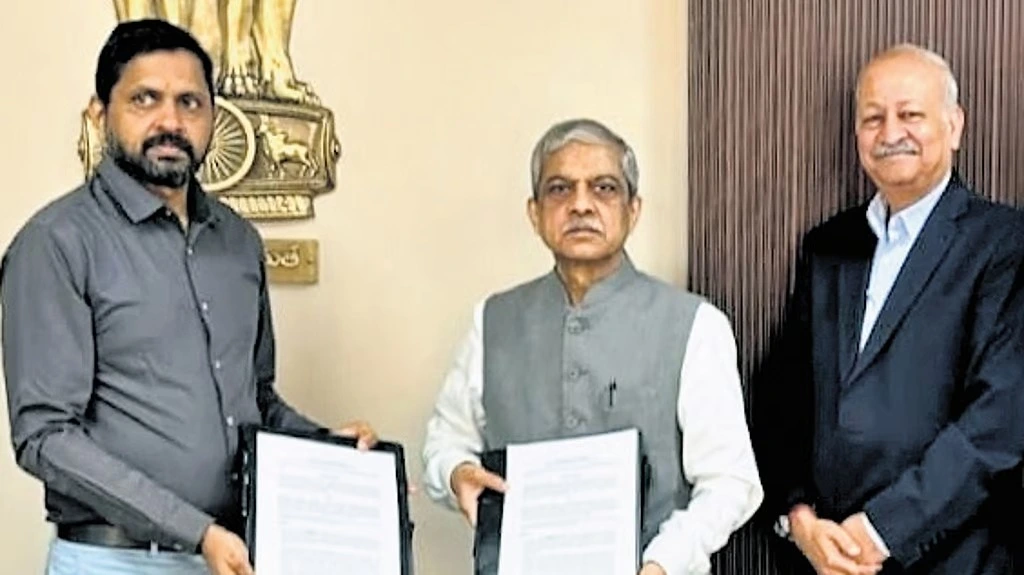
Hyderabad-based pharmaceutical company Granules India has acquired Switzerland-based CDMO firm Senn Chemicals AG for CHF 20 million (₹192 crore), marking its foray into the Contract Development and Manufacturing Organization (CDMO) space. Senn Chemicals specializes in peptide synthesis and peptide-based applications, catering to global clients with contract research, development, and manufacturing services. The acquisition is expected to be completed in the first half of 2025, Granules India stated. “By entering the rapidly growing peptide therapeutics segment and acquiring CDMO capabilities, we are expanding into next-generation therapeutics that align with our commitment to innovation and affordability,” said Krishna Prasad Chigurupati, Chairman & Managing Director of Granules India. With Senn’s expertise in peptide synthesis and Granules’ large-scale, cost-efficient manufacturing capabilities, the company aims to deliver high-quality peptide-based solutions globally. Rico Wiedenbruch, Chairman of Senn Chemicals AG, emphasized the strategic fit between the two companies: “With Granules’ scale, operational efficiency, and global reach in the pharmaceutical industry, we see tremendous potential to accelerate our growth and expand our capabilities in the rapidly growing peptide therapeutics segment.” This acquisition strengthens Granules India’s position in the global pharmaceutical landscape, expanding its footprint in next-generation therapeutics and peptide-based drug development. Source: Business Standard
Granules India Acquires Swiss CDMO Firm Senn Chemicals for ₹192 Crore Read More »

CBSE Plans Biannual Board Exams from 2026, Global Curriculum for Foreign Schools

The Central Board of Secondary Education (CBSE) is set to introduce a biannual board examination system starting from the 2026 academic session. The Ministry of Education, in a high-level meeting chaired by Union Minister Dharmendra Pradhan, discussed the proposal and stated that it aims to create a stress-free learning environment for students. The detailed framework for this reform will soon be placed for public consultation. Currently, CBSE conducts Class 10 and 12 board exams in February-March. The board is considering three models: conducting exams in a semester system with the first board in January-February and the second in March-April, or scheduling a second set of exams in June alongside supplementary and improvement exams. A similar two-term board exam structure was temporarily implemented during the Covid pandemic, but the system reverted to the traditional single-exam format the following year. Additionally, CBSE has been directed to launch a Global Curriculum for Foreign Schools in the academic year 2026-27. The initiative, discussed in the presence of officials from CBSE, NCERT, KVS, NVS, and representatives of global schools, aims to align CBSE education standards with international curricula. The board has been tasked with preparing a comprehensive action plan for its implementation. With these major changes on the horizon, CBSE aims to modernize the education system and provide greater flexibility to students while enhancing the global reach of its curriculum Source: Hindustan

CBSE Plans Biannual Board Exams from 2026, Global Curriculum for Foreign Schools Read More »

PM Modi Stresses Leadership Development at SOUL Conclave; Bhutan PM Seeks India’s Support

Prime Minister Narendra Modi emphasized the critical role of leadership in driving national progress and called for a structured approach to nurturing leaders across various sectors. Speaking at the inaugural session of the SOUL (School of Ultimate Leadership) Conclave, Modi highlighted the need for leadership excellence in politics, business, technology, governance, and education. “SOUL will be an institution that fosters critical thinking, risk-taking, and a solution-driven mindset. The leaders emerging from this institution will be equipped to navigate disruptive changes and drive meaningful transformation,” Modi stated. A significant moment at the event was the presence of Bhutanese Prime Minister Dasho Tshering Tobgay, who likened Modi’s leadership to that of Bodhisattvas, attributing wisdom, courage, and compassion to his governance. Tobgay praised Modi for lifting 30 crore people out of poverty and positioning India towards the vision of ‘Viksit Bharat’ (Developed India). Tobgay also spotlighted Bhutan’s Gelephu Mindfulness City (GMC) project, a model of sustainable urban development spearheaded by King Jigme Khesar Namgyel Wangchuck. He credited Modi’s support in strengthening Bhutan-India relations and extended an invitation to Indian businesses to invest in GMC. “GMC will be the legacy of two enlightened leaders, creating global opportunities and reinforcing the enduring friendship between our nations,” Tobgay remarked. With SOUL’s focus on fostering dynamic leadership and Bhutan’s vision for sustainable growth, the conclave marked a significant step in India-Bhutan relations and leadership development on a global scale. Source: TOI

PM Modi Stresses Leadership Development at SOUL Conclave; Bhutan PM Seeks India’s Support Read More »

India’s Got Latent Controversy: Govt Urges OTT, Social Media to Follow Regulations

Amid the controversy surrounding remarks made by YouTuber and podcaster Ranveer Allahbadia on comedian Samay Raina’s YouTube show India’s Got Latent, the Ministry of Information and Broadcasting (MIB) has reiterated the importance of adhering to the Information Technology (IT) Rules, 2021. According to a Livemint report, the MIB has advised OTT platforms and social media networks to ensure compliance with content regulations, particularly regarding age-based classifications. The ministry emphasized self-regulation and the need for strict adherence to guidelines for content rated “A”, aiming to protect children from exposure to inappropriate material. Government’s Advisory on OTT and Social Media Following public backlash over Allahbadia’s comments regarding parents and sex, the MIB issued an official advisory, marking the second reminder in two months on content regulation. The ministry highlighted concerns raised by Members of Parliament, statutory bodies, and the general public over the alleged spread of obscene and vulgar content on digital platforms. The advisory stated: “OTT platforms must comply with applicable laws and the Code of Ethics under IT Rules, 2021, particularly in maintaining age-based content classification. Self-regulatory bodies of these platforms should proactively take action against violations of the Code of Ethics.” Parliament & Supreme Court’s Response The issue has also reached the Parliamentary Standing Committee on Information Technology and Communications, which expressed concerns about the lack of proper regulation of digital content. Lawmakers have called for stricter enforcement of IT laws to prevent the spread of explicit material. Meanwhile, the Supreme Court weighed in on the matter while hearing Allahbadia’s bail plea. With multiple FIRs filed against him across states for obscenity, the top court granted interim protection from arrest but issued strong warnings regarding online content moderation. The Supreme Court observed: Social media influencers must be mindful of their societal impact. Popularity does not grant immunity from accountability. Freedom of speech has limitations and does not justify inappropriate remarks. A bench of judges remarked: “Would anyone find such language acceptable in any setting? He is insulting people, including parents. His mindset, reflected in his words, is deeply troubling.” The court also hinted at government inaction in regulating digital platforms, stating: “If the government does not take action, we will step in. There is a regulatory vacuum that needs to be addressed.” With growing scrutiny, the controversy has reignited debates over freedom of expression, content moderation, and government intervention in digital media.

India’s Got Latent Controversy: Govt Urges OTT, Social Media to Follow Regulations Read More »

Tamil Nadu-Centre Tussle Over NEP and Education Funds Escalates

The debate over the National Education Policy (NEP) 2020 has intensified, with Tamil Nadu strongly opposing the Centre’s insistence on implementing the policy in its entirety. Union Education Minister Dharmendra Pradhan recently stated that unless Tamil Nadu fully accepts the NEP, funds under the Samagra Shiksha scheme—amounting to over ₹2,158 crore—will not be released. This remark, made at the Kashi Tamil Sangamam in Varanasi, has triggered sharp reactions from Tamil Nadu’s political leadership. Tamil Nadu School Education Minister Anbil Poyyamozhi responded by accusing the BJP-led central government of “paving the way for another language war.” He questioned why Tamil Nadu, which has successfully followed a two-language policy for decades, should be forced to adopt the three-language formula. Citing former Chief Minister CN Annadurai, he asserted that the demand for Tamil Nadu’s rightful share of funds was not a request for alms but a constitutional entitlement. The state government highlighted that over 4 million students and 32,000 teachers rely on these funds, with Tamil Nadu itself spending ₹76 crore per month on teacher salaries and ₹400 crore annually on the Right to Education (RTE) scheme. Several schemes for girl child education have also been affected due to funding delays. The Tamil Nadu government has argued that withholding funds to push NEP implementation suppresses dissent and reignites the decades-old language debate in India. Chief Minister MK Stalin strongly criticized the Centre, calling Pradhan’s stance “rash blackmail” and warning that Delhi must be prepared to face Tamil Nadu’s resistance. Finance Minister Thangam Thennarasu also questioned the conditional nature of central funds, pointing out that Tamil Nadu contributes 9% to India’s GDP without any such stipulations. Anbumani Ramadoss, president of the Pattali Makkal Katchi (PMK), took a more balanced approach, stating that the Centre is duty-bound to disburse these funds irrespective of NEP compliance. He emphasized that NEP implementation and financial allocations should remain separate matters. The Centre’s rigid stance on enforcing NEP, particularly through financial coercion, has been widely criticized as an overreach that disregards federal principles. The debate is now at the heart of a larger battle over education policy, language rights, and state autonomy in India. Source: Hindustan

Tamil Nadu-Centre Tussle Over NEP and Education Funds Escalates Read More »

Donald Trump Calls for Federal Takeover of Washington, D.C. Citing Crime Concerns

President Donald Trump has called for Washington, D.C., to be placed under direct federal control, citing rising crime and homelessness as major concerns. Speaking aboard Air Force One, Trump stated, “I think we should take over Washington, D.C. — make it safe,” reinforcing his stance that the federal government should govern the nation’s capital. Currently, D.C. operates under a Home Rule system, which allows Congress to review and overturn local laws. However, some Republican lawmakers are pushing for a broader intervention that would significantly reduce the city’s autonomy and return governance to direct federal oversight. While acknowledging his personal regard for D.C. Mayor Muriel Bowser, Trump criticized the city’s leadership for failing to address key issues. He pointed to crime rates and the growing number of homeless encampments, saying, “Too much crime, too many tents on the lawns — these magnificent lawns.” Trump also expressed concerns about the city’s global image, particularly when hosting foreign dignitaries. He emphasized the need to maintain Washington, D.C.’s aesthetic appeal, stating, “You just can’t let that happen. You can’t have tents on all your beautiful — your once magnificent plaza and lawns.” His comments come amid a broader national debate on crime, homelessness, and urban governance, with Republican lawmakers increasingly calling for stricter federal oversight in cities they claim are mismanaged. Whether Congress will act on Trump’s proposal remains uncertain, but the discussion is likely to fuel ongoing political debates over federal and local control.

Donald Trump Calls for Federal Takeover of Washington, D.C. Citing Crime Concerns Read More »

Supreme Court Stresses Caution in Media Reporting While Quashing Defamation Case

The Supreme Court of India has emphasized that media professionals, especially those in key positions, must exercise utmost caution and responsibility before publishing any statements, news, or opinions. The court underscored the significant influence of the press in shaping public sentiment while also affirming the paramount nature of the right to freedom of speech and expression under Article 19(1)(a) of the Constitution. A bench comprising Justices J B Pardiwala and R Mahadevan made these observations while quashing a defamation case against the editorial director and journalists of the Times of India. The case stemmed from an article questioning the authenticity of paintings auctioned by Bid & Hammer – Fine Art Auctioneers. The top court noted procedural irregularities in the magistrate’s summoning order and ruled that the complainant failed to provide sufficient evidence that the article had harmed its reputation. The complainant had alleged that the publication fostered unjustified suspicion about the authenticity of its auctioned artworks, affecting public perception. Quoting English writer Edward Bulwer-Lytton’s famous phrase, “The pen is mightier than the sword,” the court highlighted the power of media and the necessity for accuracy and fairness in reporting. It noted that while journalism plays a crucial role in public discourse, incorrect or misleading reporting can have far-reaching consequences on the reputation of individuals and institutions. The Supreme Court concluded that remanding the case for further examination of witnesses would serve no useful purpose, as over a decade had passed since the publication, and the auction had already been completed. This verdict reaffirms the delicate balance between press freedom and responsible journalism, ensuring that while media remains a pillar of democracy, it must also uphold principles of fairness and credibility.

Supreme Court Stresses Caution in Media Reporting While Quashing Defamation Case Read More »

International Conference on Advancing Ocean Governance to be Held on March 28-29, 2025

The Centre for Trade and Investment Law (CTIL), Gujarat National Law University (GNLU), Gujarat Maritime University (GMU), and the South Asia International Economic Law Network (SAIELN) are jointly organizing an international conference titled “Advancing Ocean Governance for a Sustainable Future: The Role of International Law.” The event is scheduled for March 28-29, 2025. This conference will bring together experts, policymakers, academicians, researchers, and industry professionals to explore legal, economic, and environmental aspects of ocean governance and the blue economy. The event will feature keynote addresses, panel discussions, and paper presentations focusing on marine sustainability, fisheries law, and governance frameworks such as the United Nations Convention on the Law of the Sea (UNCLOS). The conference will have two tracks: Panel Discussion Track – Experts will share insights on the evolving landscape of ocean governance and the blue economy. Paper Presentation Track – Selected authors will present their research, with five minutes allocated for presentations and another five minutes for Q&A. Key Themes: Recent developments in international fisheries governance, including WTO fisheries subsidies The blue economy, sustainability, and conservation UNCLOS and marine sustainability Registration Fees: Foreign academics/professionals: USD $100 Indian academics/professionals: ₹1,000 Foreign students: USD $50 Indian students: ₹500 Abstract Submission: Deadline: February 28, 2025 Word Limit: 500 words Notification of Acceptance: March 10, 2025 Selected student presenters will be eligible for SAIELN scholarships worth ₹3,000. Source: barandbench

International Conference on Advancing Ocean Governance to be Held on March 28-29, 2025 Read More »